Garden Soil vs Potting Soil: Which One Should You Use and When?
Use garden soil in outdoor planting beds and potting soil in containers. Garden soil is usually too dense for pots, while potting soil can be too light and costly to fill a whole garden bed.
Are you tempted to scoop dirt from the yard into a planter, or wondering why a bag labeled “soil” seems to cost more than the stuff outside? The right choice depends on where your plants grow and how water needs to move around their roots.
I once filled a few containers with soil from a garden bed because it looked dark and crumbly. After watering, it packed down like a damp brownie, and I spent the afternoon replacing it before the plants could settle in. It’s a common mistake, not a dumb one.
I wrote this to help you pick the right material without getting tangled up in bag labels or garden-center jargon. You’ll get a clear way to choose for beds, raised beds, houseplants, and outdoor pots.
Get the choice right, and you’ll give roots room to breathe, water a path to drain, and plants a better start. Choose poorly, and you may end up with soggy containers, wasted bags, or a garden bed that dries too fast.
This article should take about 9 minutes to read. By the end, you’ll know how to:
- Match the growing medium to your planting space.
- Spot the useful differences between garden soil and potting soil.
- Fix drainage and watering problems before they become a headache.
- Decide when bagged products or a soil test make sense.
Garden Soil vs Potting Soil: the Fast Answer
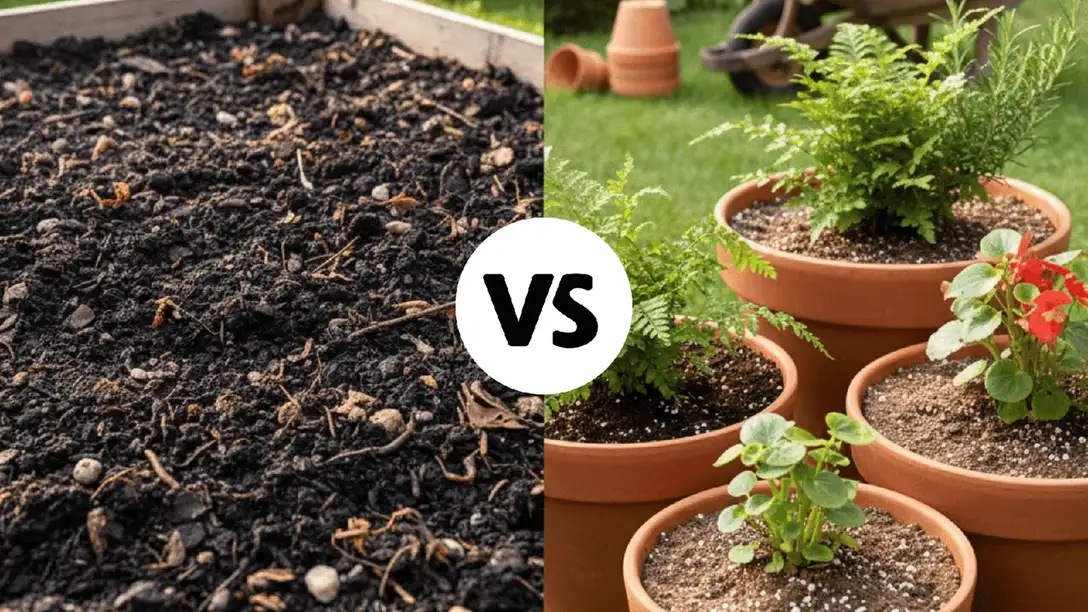
Garden soil belongs in in-ground beds, while potting soil is made for containers. A tomato in an outdoor bed needs soil that blends with the ground around it; a tomato in a patio pot needs a lighter mix that leaves air space and lets excess water drain.
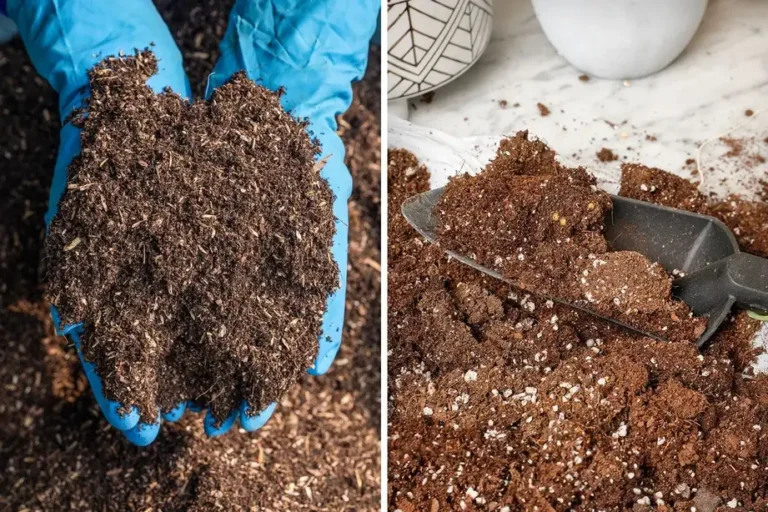
Garden soil is mineral soil, often blended or sold with organic matter for use in outdoor beds. Its texture comes from particles such as sand, silt, and clay, and those particles affect how quickly water moves and how tightly soil packs.
Potting soil is a packaged growing medium designed for pots and planters. Many products contain ingredients such as peat moss or coir, bark, and perlite, rather than being made mostly of garden soil. The exact recipe varies by brand and product.
| Growing medium | Best use | Typical behavior | Main caution |
|---|---|---|---|
| Garden soil | In-ground beds and some outdoor bed projects | Blends with native soil; texture and drainage vary | Often too dense for containers |
| Potting soil | Houseplants, patio pots, and other containers | Usually lighter, with more space for air and drainage | Dries at a different rate than bed soil |
| Raised-bed mix | Raised beds, depending on the product label | Often blends soil and organic matter | Check whether the mix suits the depth and plants |
| Topsoil | Filling or leveling outdoor areas, depending on its quality | Varies widely by source | May need organic matter or other changes for planting |
A product called potting mix may not contain much, or any, mineral soil. Product names aren’t used consistently, so the label’s intended use and ingredient list tell you more than the word “soil” alone. If the distinction between potting mix and potting soil is throwing you off, focus on what the product is made for and whether its label names container growing.
Why does the difference matter so much in a small pot? Roots have limited space, and air pockets disappear quickly when a dense material settles; a container with poor drainage can stay wet long after the surface looks dry.
Garden soil can also carry weed seeds, insects, or disease organisms from the yard into a container. That doesn’t mean every scoop is dangerous, but it’s another reason I’d use a product labeled for containers instead of hauling bed soil indoors.
Pro Tip: Check the bag’s intended use before buying. A product labeled for in-ground beds isn’t automatically a good container medium, even if it looks rich and loose in the bag.
Choose the Right Soil for Beds, Pots, and Raised Gardens
Match the growing medium to the planting space first, then adjust for the plant and local conditions. A container needs a medium that can hold water while leaving air around roots; a garden bed needs soil that works with the ground beneath it.
For an in-ground bed, use garden soil only when you’re adding it in a way that suits the site. A thin layer of a different soil over native ground can create a sharp change in texture, and water may move differently across that boundary.
In many beds, improving the existing soil with organic matter is a better starting point than replacing all the soil. Organic matter, such as finished compost, supports soil structure and helps soil hold water and nutrients; the right amount depends on the current soil and the plants.
For outdoor containers and houseplants, pick a potting product made for the job. A hanging basket, a large patio pot, and a small indoor planter don’t all dry at the same pace, so plant type and pot size matter after you’ve chosen a container medium.
Raised beds sit between those two situations. They hold a larger volume of growing material than a flowerpot, but they still need a blend that drains well and suits the depth of the bed; garden soil, raised-bed mix, or a combination may fit, depending on the product and the soil below.
A raised-bed product is not always the same thing as topsoil. If you’re weighing topsoil and garden soil differences, check what the bag says the material is meant to do and whether it’s intended for planting or filling.
What should you do if your bed soil is heavy clay? Don’t try to fix it by adding a small amount of sand, which can leave you with an even denser mix; adding suitable organic matter and improving the bed over time is usually the safer direction.
A soil test can help when plants repeatedly struggle, or when you need to know the soil’s pH and nutrient levels before adding amendments. Soil pH measures how acidic or alkaline soil is, and it affects how available some nutrients are to plants.
The type of plant matters, too. Cacti and other plants that prefer fast drainage need a suitable cactus mix or a product amended for that purpose, while many leafy houseplants do well in a general container mix.
I once treated a container’s slow drainage as a watering problem and kept cutting back on water. The pot still stayed wet because the medium had compacted, so changing the medium fixed more than my watering schedule could. A plant that stays soggy needs a drainage check, not just a longer gap between waterings.
Important Tip: Don’t add fertilizer or lime just because a plant looks unhappy. Yellow leaves and slow growth can have several causes, and a soil test or product label can keep you from adding something the plant doesn’t need.
Use, Water, and Troubleshoot Your Soil
A good growing medium still needs the right container, watering habits, and basic care. A potting product can drain well on its own, but blocked drainage holes or a pot sitting in water can undo that advantage.
Use this quick process when you’re setting up a new planting area:
- Identify the planting space. Decide whether the plant will grow in the ground, a raised bed, or a container.
- Choose a product for that space. Check the bag for its intended use and ingredient list.
- Check the container or bed. A pot needs open drainage holes; a bed needs a plan for how water will drain from its site.
- Plant at the right depth. Follow the plant’s care guidance, and avoid packing the medium tightly around its roots.
- Water and watch. Check how quickly the medium drains and dries before setting a regular watering routine.
Drainage holes let extra water leave a pot, but they don’t mean the plant can’t be overwatered. Water needs vary with the plant, pot size, light, temperature, and season, so check the medium rather than watering by the calendar alone.
A drainage saucer catches water beneath a container, but standing water in the saucer can keep the bottom of the pot wet. Empty it after watering when water collects, especially for plants that prefer drier roots.
If water runs straight through a potting medium, the mix may have dried out and become hard to rewet, or the medium may be too coarse for that plant. Water more slowly, and check whether moisture reaches the root zone instead of assuming that a wet surface means the whole pot is watered.
If a container stays wet for days, check the drainage holes, pot size, light, and the plant’s water needs before adding anything to the mix. A pot that’s far larger than the root ball can hold more wet medium than the plant can use.
For garden beds, don’t judge soil quality from color alone. Dark soil can still drain poorly or lack nutrients, while lighter-colored soil may support healthy growth if its structure and nutrient levels suit the plants.
When you open a bag, avoid breathing in dust and wash your hands after handling soil or compost. Store unused material as the label directs, and keep it away from children and pets.
Pro Tip: Water a container until you see excess water leave the drainage holes, then let the pot drain freely. Don’t leave the pot sitting in a full saucer.
Common problems often point to a mismatch between the material and the growing space:
- Water pools on the surface: The medium may be compacted, too dense, or already very wet.
- A pot dries unusually fast: The container may be small, exposed to heat or wind, or filled with a coarse medium.
- Plants struggle in a new bed: Soil texture, pH, watering, or nutrients may need checking before you add amendments.
- Weeds appear in a container: Seeds may have arrived with soil, compost, wind, or nearby plants.
Don’t try to correct every problem by adding more compost or fertilizer. Too much of an amendment can change how water moves through a bed or add nutrients the plant doesn’t need.
FAQs About Garden Soil vs Potting Soil
Can I use garden soil in pots?
Garden soil usually isn’t a good choice for pots because it can compact and leave too little air around roots. Container plants do better with a medium labeled for pots, which is usually lighter and made to drain in a confined space. Use garden soil in outdoor beds unless the product or a trusted local growing guide says otherwise.
Can I use potting soil in a garden bed?
Potting soil can be used in a garden bed, but it may be costly and may behave differently from the native soil around it. For a bed, check the product label and consider how the added material will blend with the existing ground. Improving the bed’s soil structure may be more practical than replacing it with container mix.
Is potting soil the same as potting mix?
Potting soil and potting mix are often used as overlapping product names, but the ingredients can differ. Many potting mixes are made largely from organic materials and components that create air space, with little or no mineral soil. Read the label for ingredients and intended use rather than relying on the product name.
Do I need to replace potting soil every year?
No, potting soil doesn’t always need a full replacement every year. A mix may be reused if it’s still loose, drains well, and hasn’t had serious pest or disease problems. Refreshing the top layer or replacing depleted, compacted mix can help, while a plant that has outgrown its pot may need fresh medium and a larger container.
Should I add fertilizer to potting soil?
Only add fertilizer when the product label, plant needs, or growing conditions call for it. Some potting products include nutrients, while others don’t, and the amount of feeding time varies by product. Adding extra fertilizer without checking can damage roots or create excess salts in a container.
Make the Soil Choice That Fits Your Space
The practical choice is straightforward: use garden soil for beds and potting soil for containers, then check the product label for any special use or plant need. I’d avoid trying to make one material do every job, because the wrong texture can turn watering into a constant guessing game.
If you’re filling a pot today, pick a container-labeled mix and make sure the pot has drainage holes. If you’re preparing a bed, start with the soil already there and improve it only after you know what it needs. That small check can save you time, money, and a lot of soggy roots.