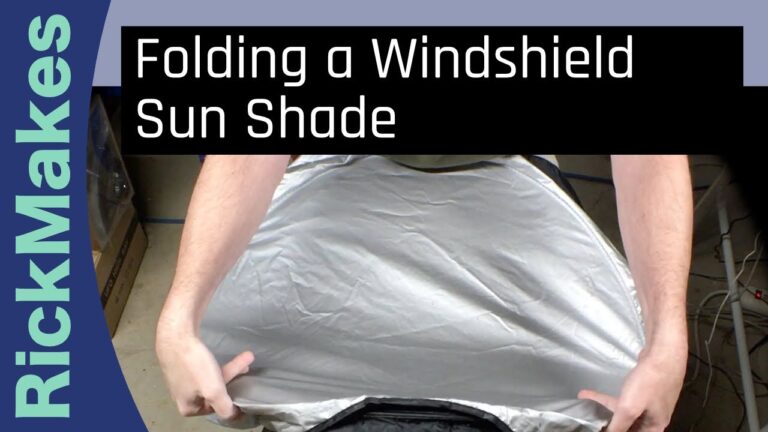
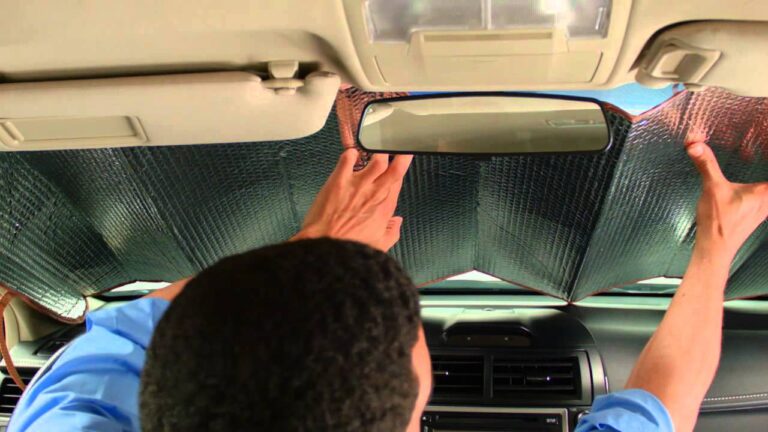
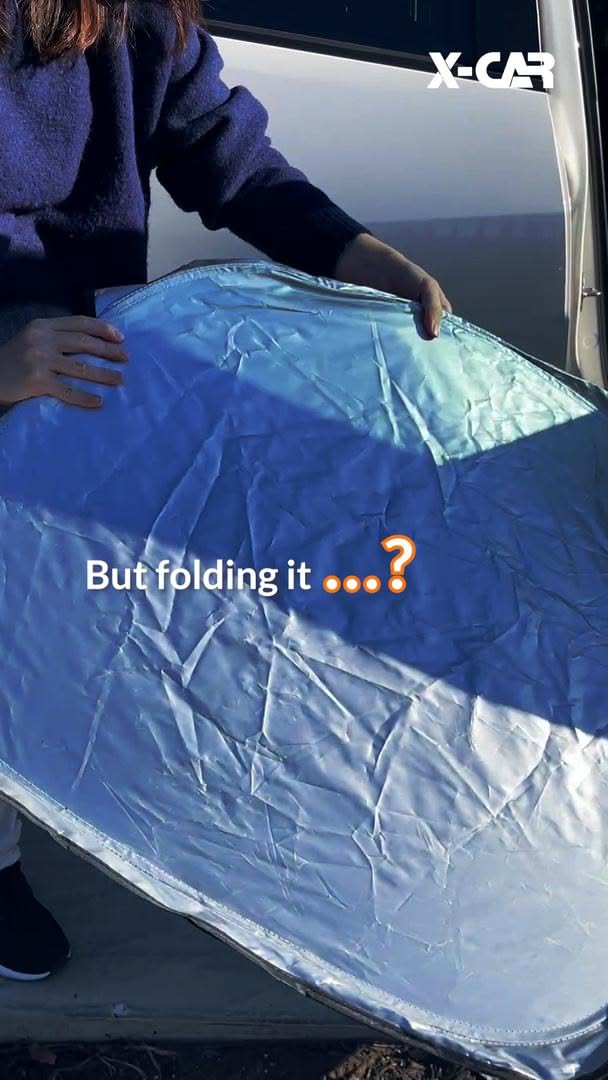
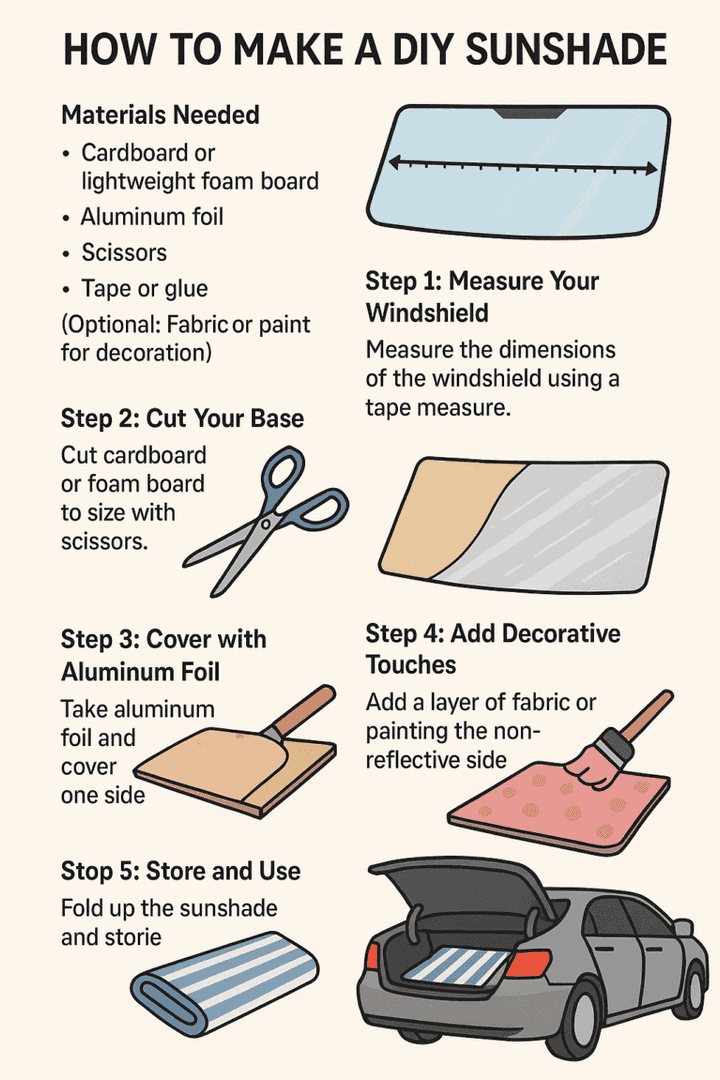
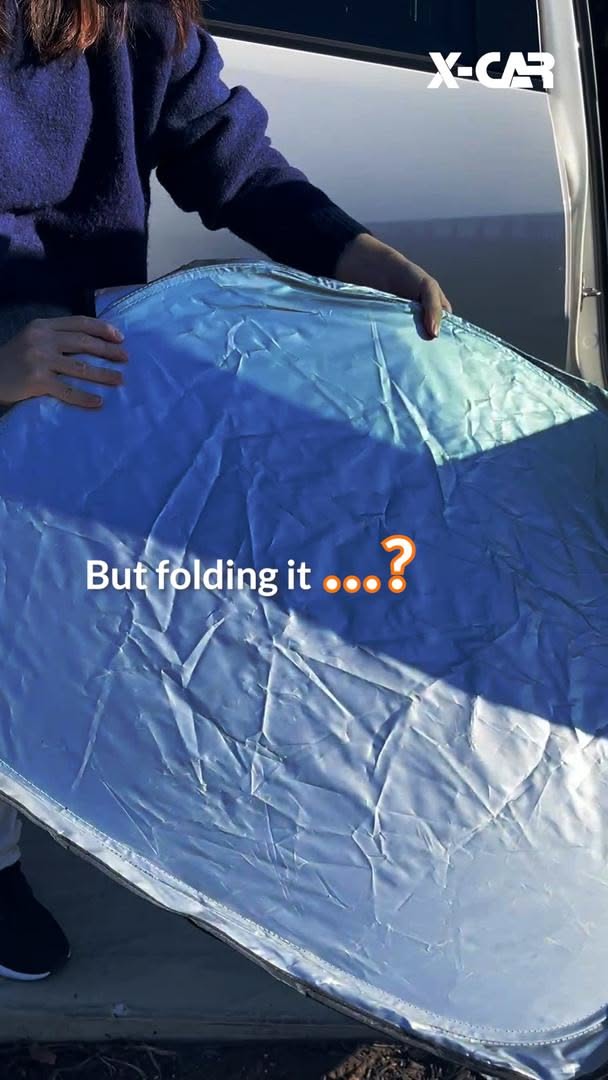
To use a windshield sun shade, park the vehicle, unfold or open the shade, place its reflective side toward the windshield and sunlight, fit it against the glass, and lower the sun visors to hold it securely in place.
For drivers across the United States, a windshield sun shade is especially useful when a vehicle spends hours parked in direct sunlight. From hot summer parking lots in the Southwest and Southeast to sunny afternoons elsewhere in the country, sunlight entering through the windshield can quickly heat the dashboard, steering wheel, seats, and other interior surfaces. A properly positioned shade blocks or reflects some of that incoming solar energy before it reaches much of the cabin.
Using one is simple, but orientation and fit matter. The shade should normally sit inside the parked vehicle, close to the windshield, with the reflective surface facing outward when the product has a reflective summer side. The lower edge rests near the base of the windshield, the upper portion is raised behind the rearview mirror area, and the vehicle’s sun visors can usually be lowered to keep it from falling.
This guide explains how to use a windshield sun shade step by step, how different shade designs work, which side should face outward, what to do when a shade does not fit correctly, and how to remove and store it without damaging the shade or your vehicle.
The basic process takes only a few moments once you are familiar with your shade. The exact motion varies slightly between accordion-style, roll-up, pop-up, umbrella-style, and custom-fit shades, but the goal is the same: cover as much of the windshield as practical while the vehicle is parked.
Before installing the shade, put the vehicle in Park, switch off the engine as appropriate, and make sure you have finished driving. A front windshield sun shade can substantially block the driver’s view, so it should never remain deployed when the vehicle is moving.
Source: free-manuals.com
Step 1: Park the vehicle
Park safely and completely before handling the shade. If possible, parking in natural shade provides additional protection from direct solar exposure.
Step 2: Open the sun shade
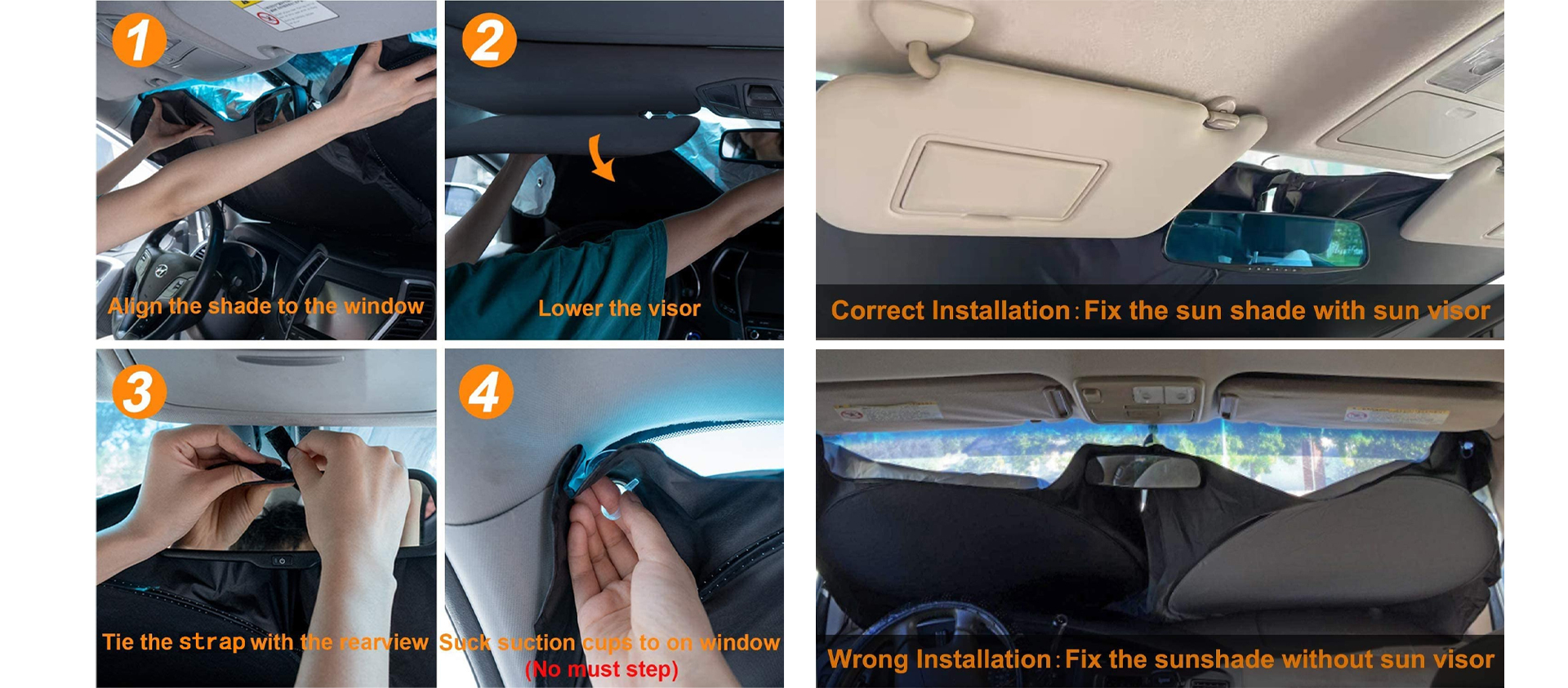
Unfold an accordion shade, unroll a roll-up model, open a pop-up shade carefully, or extend an umbrella-style shade according to its design.
Step 3: Check the orientation
If one surface is reflective and intended for summer use, face that surface toward the windshield and incoming sunlight.
Step 4: Position the bottom edge
Set the lower edge on or just above the dashboard at the base of the windshield, taking care not to obstruct or damage dashboard-mounted equipment.
Step 5: Raise the upper portion
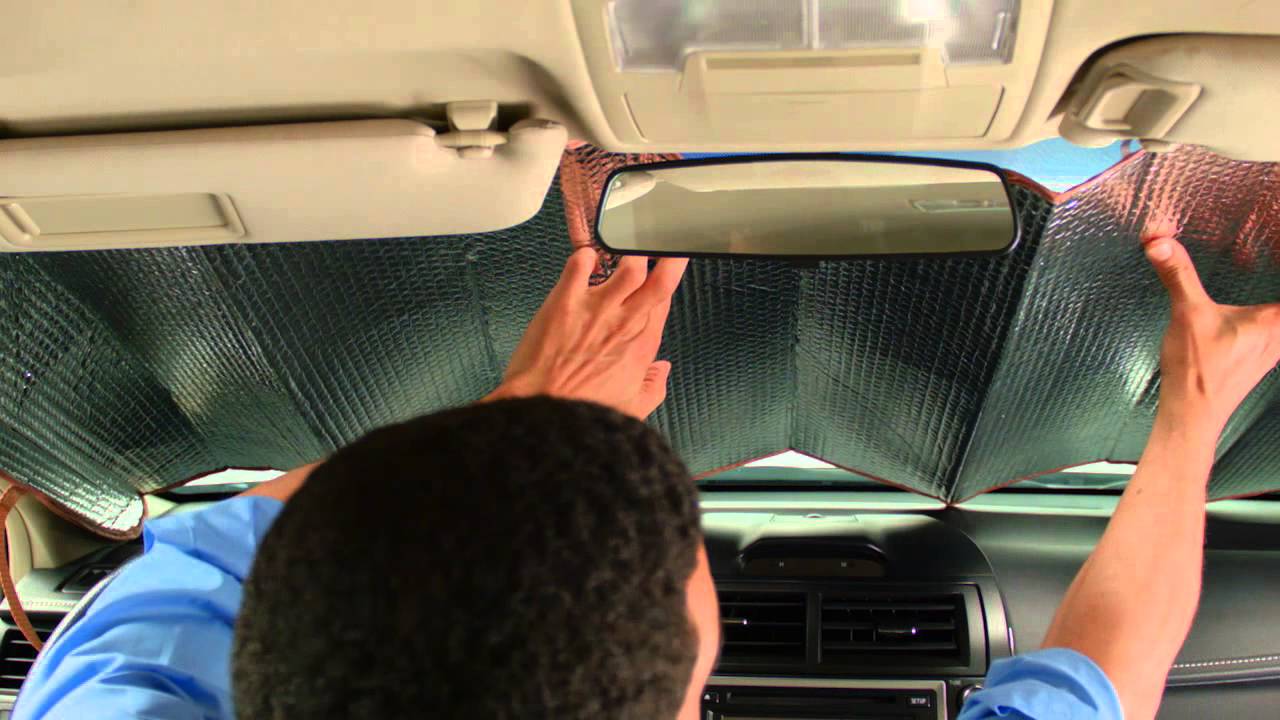
Lift the shade toward the top of the windshield and position it around the rearview mirror area as the shade design allows.
Step 6: Lower the sun visors
Rotate the driver’s and passenger’s sun visors downward so they help support the upper portion of the shade.
Step 7: Check the coverage
Make sure the shade covers most of the windshield and stays in place without being forced against cameras, sensor housings, the mirror, or delicate trim.
What a Correctly Installed Sun Shade Should Look Like
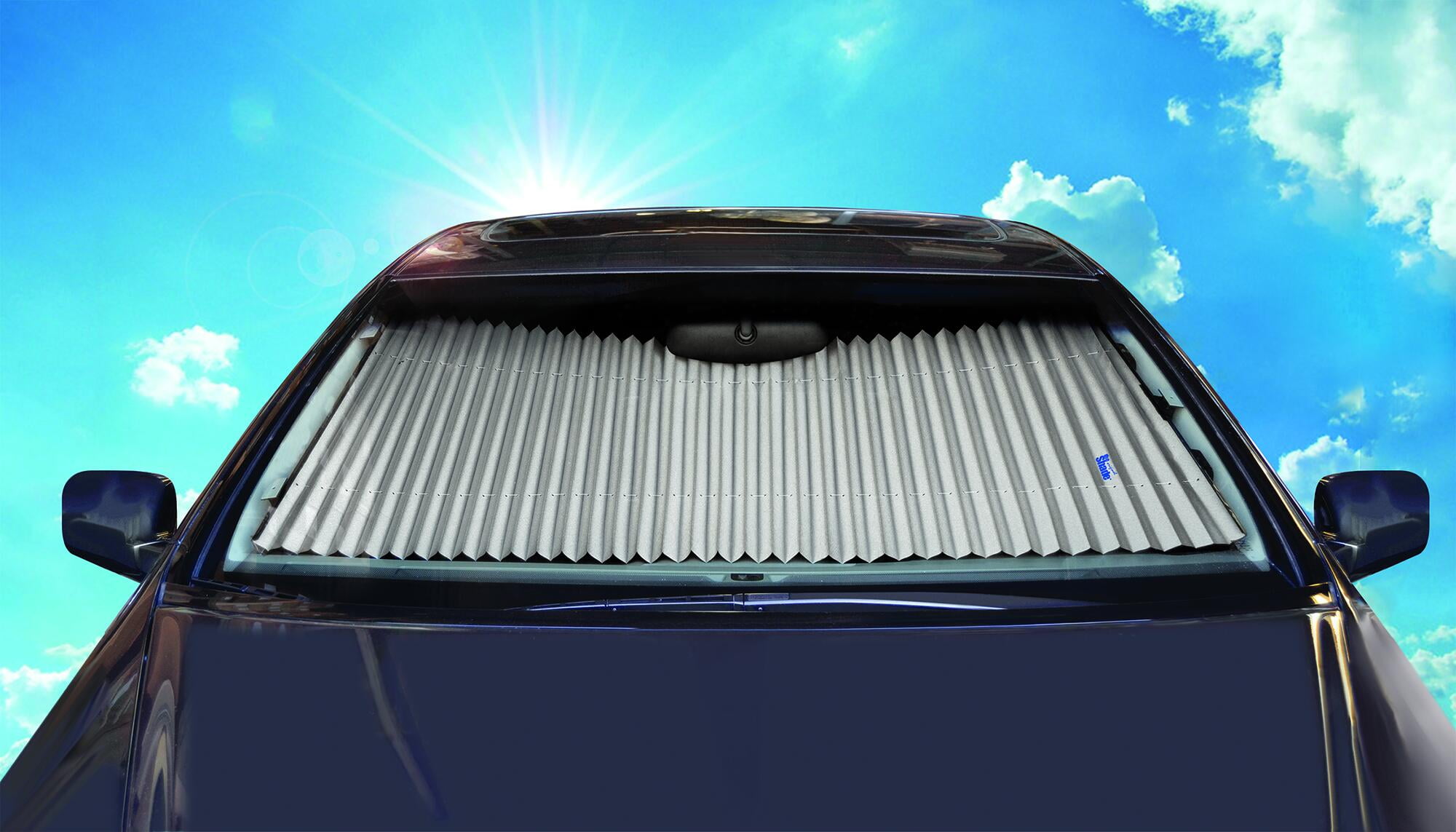
When installation is successful, most of the visible windshield area will be covered from inside the vehicle. Small gaps around the windshield pillars, mirror, or sensor housing are normal with many designs. The shade should remain upright when you release it, especially after the factory sun visors are lowered.
Do not force an oversized shade into a tight space. Excessive bending can damage rigid insulating panels, wire frames, dashboard trim, or other components.
Stable position
The shade stays upright rather than sliding down the dashboard.
Good coverage
Most direct sunlight entering through the front windshield is blocked.
No excessive pressure
The shade fits without putting strong pressure on the mirror, windshield-mounted electronics, trim, or glass.
Which Side of a Windshield Sun Shade Faces Out?
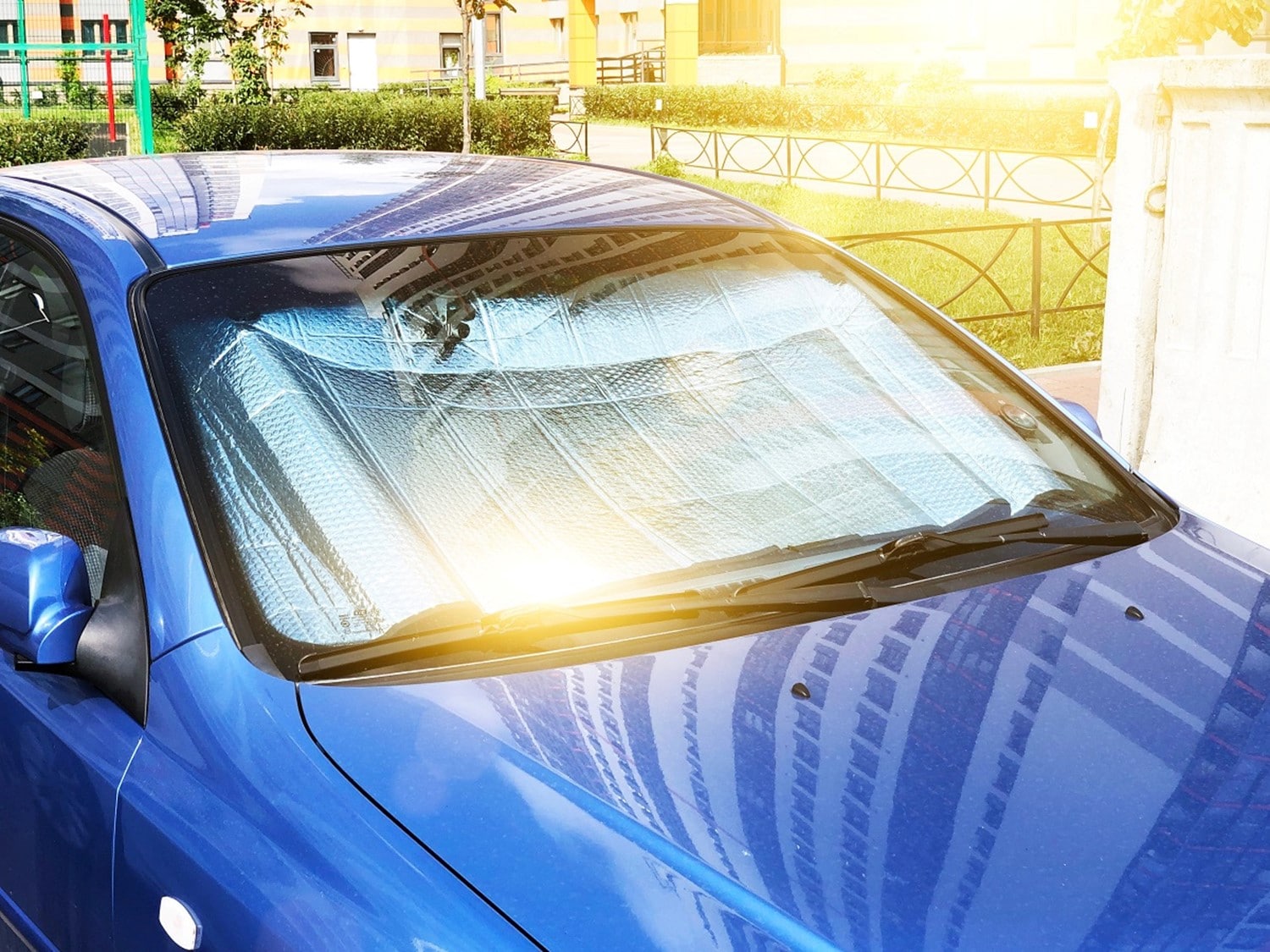
For a conventional summer windshield shade with one reflective surface, the reflective side normally faces outward toward the windshield and sunlight. That orientation is designed to reflect part of the incoming solar radiation rather than allowing as much of it to be absorbed by the shade and surrounding interior surfaces.
However, not every windshield shade is constructed the same way. Some are reflective on both sides, some have printed surfaces, and some reversible products are designed with different summer and winter sides. If your shade includes manufacturer instructions, follow those instructions rather than assuming that color alone determines orientation.
A common mistake is placing a silver reflective side toward the passenger compartment because it looks more finished or decorative. On a typical single-reflective-side summer shade, that reverses the intended orientation.
Source: cxcars.com
Silver or metallic summer surface
Usually faces outward toward the windshield.
Dark backing surface
Usually faces toward the vehicle interior unless the manufacturer specifies a reversible winter function.
Two-sided reflective shade
Either face may work if the manufacturer identifies both sides for the same purpose.
Why Orientation Matters
Sunlight passing through automotive glass can warm the dashboard, seats, steering wheel, center console, and other surfaces. Those heated surfaces then transfer heat to the surrounding cabin air. A reflective windshield barrier reduces direct solar exposure to many of the surfaces immediately behind it.
A sun shade does not make a parked vehicle safe for a person or animal. Vehicle interiors can become dangerously hot even when the outside temperature does not seem extreme, and partially opening the windows does not eliminate that danger.
How to Position a Sun Shade Around the Rearview Mirror
The rearview mirror is one of the main areas that affects windshield sun shade fit. Many universal shades have a notch, split, overlapping center panels, or enough flexibility to fit around the mirror stem. Custom-fit shades may be shaped around the mirror and windshield-mounted equipment.
Start at the bottom of the windshield instead of trying to push the entire shade behind the mirror at once. Once the lower edge is positioned, lift the upper half carefully. Center the shade around the mirror area, then lower the sun visors.
Modern U.S.-market vehicles may also have forward-facing cameras, rain sensors, driver-assistance hardware, toll devices, dash cameras, or other equipment near the top center of the windshield. Do not wedge a rigid shade forcefully behind these components.
Source: hitchesguide.com
Mirror cutout
Align a built-in notch or opening with the mirror stem if the shade has one.
Sensor housing
Allow space around large housings instead of crushing the shade against them.
Dash camera
Position the shade without pulling on the camera, power cable, adhesive mount, or suction mount.
Do Small Gaps Mean the Shade Is Installed Wrong?
Not necessarily. Universal shades rarely match every windshield contour perfectly, and even some vehicle-specific designs intentionally leave clearance around windshield pillars, mirrors, handles, or sensor housings.
Coverage matters more than achieving a complete blackout. A narrow gap at an edge is generally preferable to repeatedly forcing a shade that is too large into the windshield area.
How Different Types of Windshield Sun Shades Are Used
Most windshield sun shades perform the same basic job, but their installation and storage methods differ. Knowing the type you own can prevent unnecessary bending, twisting, or damage.
Source: vroom.zone
Accordion-style shade
Unfold the panels across the windshield, position the lower edge first, lift the top, and secure it with the sun visors. Fold the panels back along their original creases for storage.
Roll-up shade
Unroll it across the inside of the windshield and secure it as designed. Roll it loosely when removing it rather than creating sharp folds.
Pop-up wire-frame shade
Allow the flexible frame to expand, position the panels against the windshield, and use the visors if needed. Twist and fold it according to its intended collapsing pattern for storage.
Umbrella-style shade
Open it carefully inside the cabin, position the canopy against the windshield, and verify that the handle and frame are not pressing hard against the dashboard, display, mirror, or glass.
Custom-fit rigid shade
Place the lower edge near the base of the windshield, lift the shaped panel into position, and use the sun visors to support it.
Which Type Is Easiest to Use Every Day?
The easiest design depends on the vehicle’s cabin space and how often you use the shade. Accordion and custom-fit rigid shades are straightforward because their folding pattern is predictable. Pop-up shades can store very compactly but require learning the correct twisting motion. Umbrella-style shades can deploy quickly but need sufficient clearance around the dashboard and windshield-mounted equipment.
Fit is often more important than style. A shade that matches the windshield dimensions and can be installed without fighting the mirror or dashboard is more likely to be used consistently.
Why Use a Windshield Sun Shade?
A windshield sun shade primarily reduces direct solar exposure through the front windshield while the vehicle is parked. That can make frequently touched surfaces such as the steering wheel, dashboard, and front seats less exposed to intense sunlight and can make returning to the vehicle more comfortable.
It can also reduce the amount of direct ultraviolet and solar exposure reaching covered portions of the dashboard and other interior materials. This does not mean a shade completely blocks every source of heat or ultraviolet radiation because sunlight can still enter through side windows, the rear glass, and uncovered windshield areas.
The most realistic expectation is temperature and solar-load management, not refrigeration. The vehicle can still become extremely hot, especially during warm, sunny U.S. weather.
Source: hitchesguide.com
Reduces direct sunlight
The shade blocks or reflects sunlight that would otherwise strike much of the front dashboard and seating area.
Makes hot surfaces easier to manage
Reducing direct exposure can help limit how intensely some covered interior surfaces heat in the sun.
Provides interior coverage
A windshield shade also reduces the direct view into the front portion of the parked vehicle, although it should not be treated as a security device.
A Sun Shade Does Not Make a Parked Car Safe for Occupants
Never use a windshield shade as a reason to leave a child, vulnerable adult, or pet unattended inside a parked vehicle. Enclosed vehicles can heat rapidly in sunlight, and cracking the windows is not a dependable way to prevent dangerous heat buildup.
When returning to a hot vehicle, remove the shade completely before driving, ventilate the cabin as needed, and check hot surfaces before placing a young child into a car seat.
Common Windshield Sun Shade Mistakes to Avoid
Most sun shade problems come from incorrect orientation, poor sizing, forcing the shade around equipment, or forgetting to remove it before driving. Correcting these issues usually requires no special tools.
Installing the reflective side backward
For a conventional reflective summer shade, face the reflective surface toward the windshield unless the manufacturer’s instructions say otherwise.
Using a shade that is too small
Large uncovered areas allow more direct sunlight to reach the dashboard and interior surfaces.
Forcing an oversized shade into place
Excessive pressure can deform the shade and may interfere with the rearview mirror, trim, sensors, cameras, or dashboard equipment.
Leaving the sun visors up
Many shades rely on the factory visors for support and may slide down without them.
Blocking defroster areas unnecessarily
Position and remove the shade carefully around the base of the windshield and dashboard vents rather than jamming material into openings.
Driving with the shade installed
A front windshield shade obstructs visibility and must be completely removed before the vehicle is driven.
What If the Windshield Sun Shade Keeps Falling?
First confirm that both sun visors are lowered over the upper edge of the shade. Next, check whether the bottom edge is seated near the base of the windshield rather than resting too far back on the dashboard.
If it still collapses, the shade may be too narrow, too short, excessively worn, or poorly matched to the windshield shape. A vehicle-specific shade or a correctly sized universal model may stay in position more reliably.
What If the Sun Shade Is Too Big?
A slightly flexible shade can sometimes overlap modestly, but a rigid shade should not require substantial bending or force. If the edges buckle severely, the mirror is pushed out of position, or the shade presses hard against sensors or trim, use a more appropriate size.
Do not trim a shade unless its manufacturer specifically indicates that the material is designed to be cut. Cutting can expose internal layers, damage reinforcement, or cause the edges to deteriorate.
How to Remove and Store a Windshield Sun Shade
Remove the shade before starting to drive. On a sunny day, the outward-facing surface may be warm or hot, so handle it carefully. Raise the factory sun visors, support the shade with one hand, and lower it away from the windshield rather than letting it fall across the dashboard.
Store the shade using the method intended for its construction. Accordion shades should follow their existing folds. Roll-up models should be rolled rather than sharply creased. Pop-up wire-frame shades should be twisted into their designed storage shape instead of being forced into random folds.
A dry storage area under a seat, in a seat-back pocket if suitable, or in the trunk can keep the shade from becoming a loose object in the passenger compartment. Avoid placing a bulky shade where it can interfere with pedals, steering, visibility, or access to vehicle controls.
Remove gently
Release the visors and guide the shade down instead of pulling forcefully around the mirror.
Fold along existing lines
Following the designed folds helps accordion-style shades retain their shape.
Keep it dry
Allow a damp shade to dry before long-term storage to reduce odor and material deterioration.
Store securely
Keep the folded shade where it will not interfere with vehicle operation or become an unnecessary loose object.
When Should You Replace a Windshield Sun Shade?
Replacement makes sense when the shade can no longer stay upright, its internal structure has broken, reflective layers are peeling badly, sharp parts are exposed, or the material has warped enough that it no longer covers the windshield properly.
Normal cosmetic wear alone does not necessarily mean the shade has stopped being useful. Focus on whether it still opens safely, fits correctly, maintains its shape, and provides practical windshield coverage.
How to Get Better Results From a Windshield Sun Shade
A sun shade works best as one part of a broader strategy for managing a parked vehicle’s solar exposure. Whenever practical, choose a shaded parking space first and then install the windshield shade. Natural shade reduces the amount of direct solar radiation reaching the entire vehicle rather than just the front windshield.
Before leaving the vehicle, straighten the shade so it covers the broadest practical area of glass. Large folded sections or a shade lying halfway down the dashboard leave more interior surface exposed to direct sunlight.
When you return, remove the shade before driving and ventilate the vehicle if the cabin is uncomfortably hot. Air conditioning can then cool the interior normally once the vehicle is operating.
Choose shade when available
A shaded parking location reduces direct solar exposure to more of the vehicle.
Use the correct size
Better windshield coverage generally means less direct sunlight reaches the dashboard through uncovered glass.
Keep the shade close to the windshield
Position it in the intended windshield area rather than leaving it lying flat across the dashboard.
Consider side-window protection when parked
A front shade covers only the windshield, so significant sunlight may still enter through other windows.
Does a Windshield Sun Shade Need to Touch the Glass?
No. A shade does not need perfect full-surface contact with the windshield to be useful. Many designs naturally sit a short distance from portions of the glass because of windshield curvature, the dashboard shape, mirror housings, or sensors.
The practical goal is broad, stable coverage without forcing the shade against vehicle components.
Frequently Asked Questions
Q
Do you put a windshield sun shade inside or outside the car?
A standard windshield sun shade is normally installed inside the parked vehicle, against or close to the interior side of the windshield. Exterior windshield covers are a separate product category and are installed differently.
Q
Does the silver side of a car sun shade face in or out?
On a typical summer shade with one silver reflective side, the silver surface normally faces outward toward the windshield and sunlight. Check the product instructions if the shade is reversible or has a special two-sided design.
Q
Should I use the car’s sun visors with a windshield shade?
Yes, for many common designs. After positioning the shade against the windshield, lower the driver’s and passenger’s sun visors over its upper edge. The visors help prevent the shade from falling forward.
Q
Can I drive with a windshield sun shade installed?
No. Remove the front windshield shade completely before driving. It obstructs the driver’s view through the windshield and is intended for use while the vehicle is parked.
Q
Does a windshield sun shade keep a car completely cool?
No. A sun shade can reduce direct solar exposure through the windshield and may make some interior surfaces less intensely heated, but a parked vehicle can still become dangerously hot. Sunlight also enters through side and rear glass, and outside air temperature remains an important factor.
Q
Can I leave a child or pet in a car if I use a sun shade?
No. A windshield shade does not make a parked vehicle safe for an unattended child, pet, or vulnerable adult. Vehicle interiors can reach dangerous temperatures rapidly, including on days that may not initially feel extremely hot.
Q
Why does my windshield sun shade not cover the entire windshield?
Small gaps may result from windshield shape, mirror placement, pillar angles, cameras, sensors, or the dimensions of a universal shade. Minor edge gaps do not necessarily indicate incorrect installation. If large sections of glass remain uncovered, however, the shade may be the wrong size.
✦ Wrapping Up
Conclusion
Learning how to use a windshield sun shade takes only a minute. With the vehicle safely parked, open the shade, orient the reflective summer side toward the windshield, position the lower edge near the base of the glass, lift the shade into place, and lower both sun visors to support it. Check that it covers most of the windshield without being forced against the rearview mirror, cameras, sensors, or dashboard equipment.
For U.S. drivers who regularly park outdoors, especially during sunny summer weather, consistent use can reduce direct solar exposure to the dashboard, steering wheel, seats, and other front interior surfaces. Just keep its limits in perspective: a windshield shade helps manage sunlight but cannot make a closed parked vehicle safe for occupants.
💡 Key Takeaway
Next time you park in direct sun, install the shade with its reflective summer surface facing outward, secure it with both sun visors, and completely remove it before driving.
Learn how to fold a collapsible windshield sun shade using the simple figure-eight method, plus tips for storage, troubleshooting, and different shade designs.
Learn how to install a windshield sun shade correctly in your car. Follow simple steps for folding, roll-up, and umbrella-style shades, plus fit, safety, storage, and troubleshooting tips.
Learn how to fold a pop up windshield sun shade safely and quickly. Follow simple steps, avoid common mistakes, and store your car sun shade without damaging its frame.
Learn how to fold a windshield sun shade correctly with simple steps for pop-up, accordion, and umbrella styles, plus storage and troubleshooting tips.