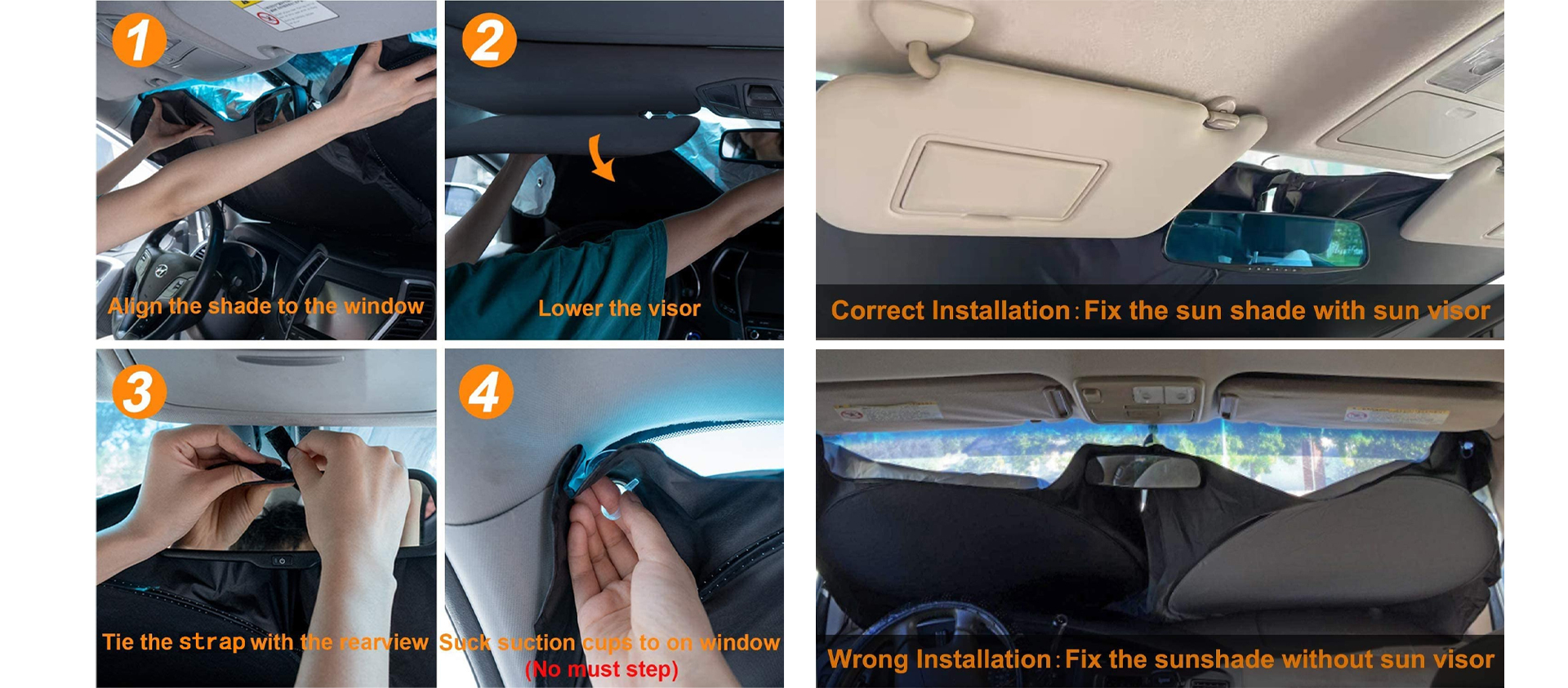
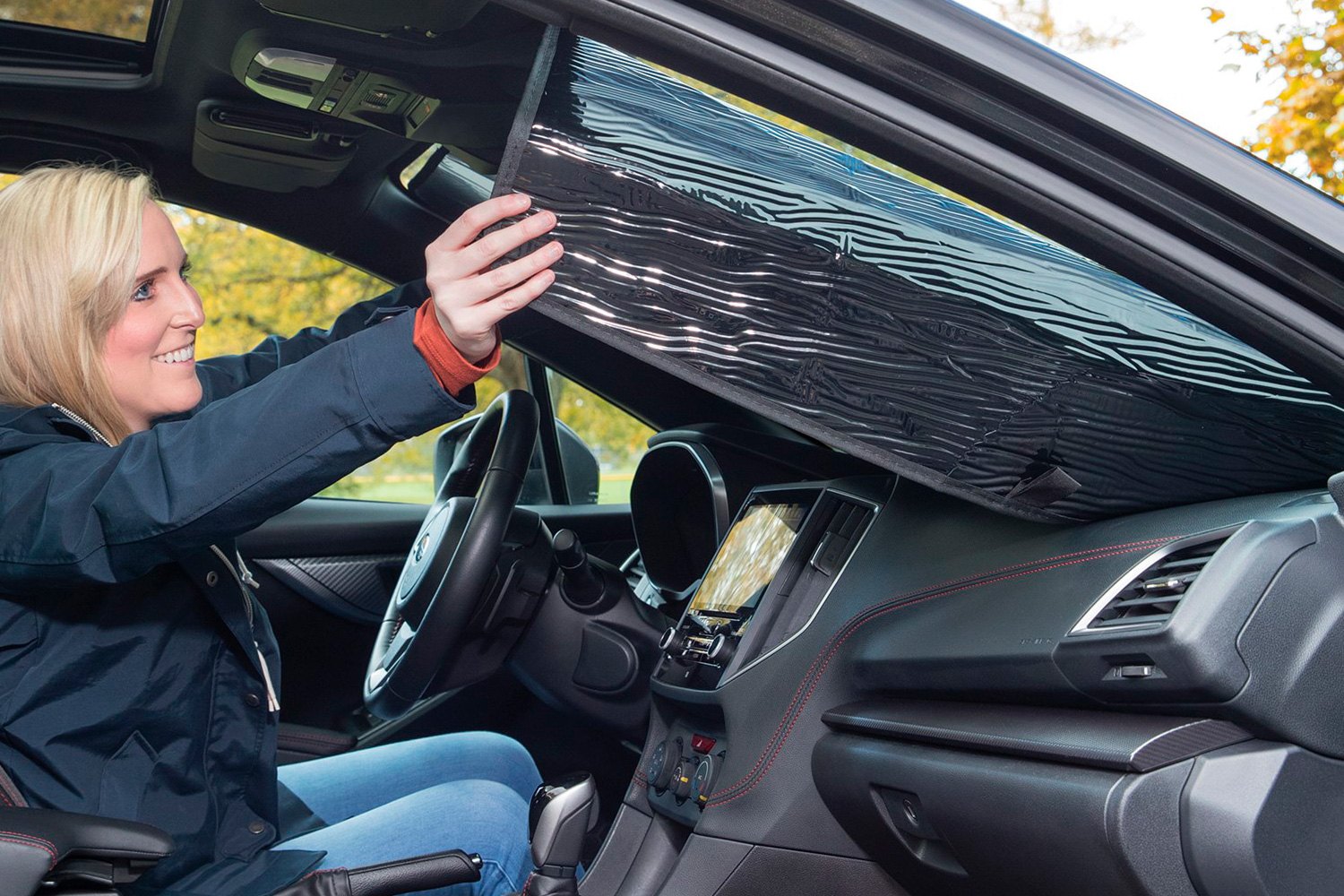
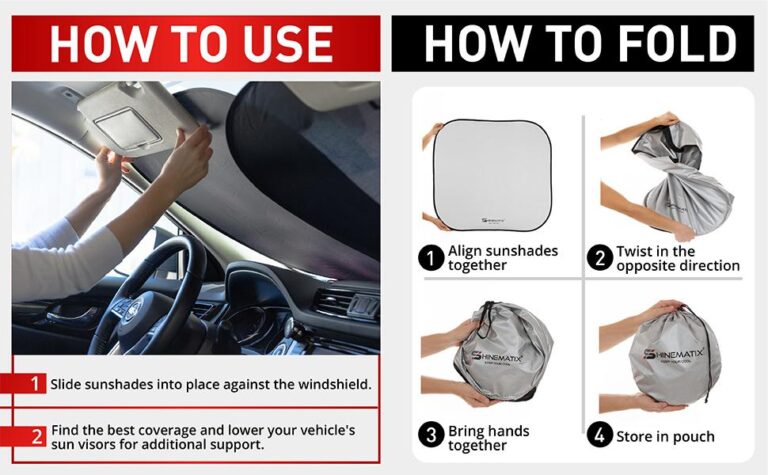
To install a windshield sun shade, park the vehicle, unfold or open the shade inside the cabin, position it tightly against the inside of the windshield with the reflective side facing the sun when the manufacturer specifies that orientation, then secure it with the sun visors or the shade’s built-in supports. Remove the shade before driving.
For drivers in the United States, a windshield sun shade is a simple way to cover the front glass when a car is parked in a sunny driveway, workplace lot, shopping-center parking lot, or other outdoor space. Most temporary shades do not require tools or permanent installation. The main goal is to cover as much of the windshield as the shade is designed to cover while keeping it securely in place.
The exact installation method depends on the design. Folding and accordion-style shades usually rest against the windshield and are held by the vehicle’s sun visors. Roll-up shades use a similar placement method, while umbrella-style shades open against the glass and are commonly stabilized by the visors. Custom-fit shades may have a shaped edge or cutout for the rearview mirror and windshield-mounted sensors. Always give the product instructions priority when they differ from this general guide.
What You Need Before Installing a Windshield Sun Shade
You normally need only the sun shade and a properly parked vehicle. Most temporary windshield shades are designed to be installed and removed without tools, screws, adhesives, or permanent brackets.
Before putting the shade in place, check the packaging or manufacturer’s instructions for the correct orientation and vehicle fit. A shade made for a particular year, make, and model may have contours or openings that correspond to the windshield shape, rearview mirror, or mounted sensors.
Source: free-manuals.com
A compatible windshield sun shade
Choose a shade that matches the windshield size and shape. A poor fit can leave large uncovered areas or make the shade difficult to secure.
A parked vehicle
Install the shade only while the vehicle is stationary. The shade should never remain in place while driving if it blocks or interferes with the driver’s view.
Clean contact surfaces
A reasonably clean windshield and dashboard make positioning easier and reduce the chance of dirt being trapped between the shade and glass.
The manufacturer’s instructions
Use the product instructions for model-specific details, especially if the shade has clips, suction cups, brackets, magnets, an unusual folding mechanism, or a designated sensor opening.
Check the Shade Type
Folding and accordion shades are opened and placed against the windshield, then commonly held by the sun visors. Roll-up shades follow a similar basic placement process but may have a different storage or securing mechanism. Umbrella-style shades open from a central handle and are positioned directly against the windshield. Retractable or permanently mounted systems can require separate hardware and should be installed according to their specific instructions.
Folding or accordion
Open the panels fully and position the lower edge near the base of the windshield.
Roll-up
Unroll the shade carefully so the material lies flat and does not become twisted.
Umbrella-style
Open the mechanism inside the cabin and place the expanded shade against the windshield.
How to Install a Windshield Sun Shade Step by Step
For a typical temporary windshield sun shade, installation takes only a few basic movements. Work from inside the vehicle and avoid bending rigid or reinforced edges more than necessary.
The following sequence applies broadly to folding, accordion, and many roll-up shades. If your product uses a different securing system, follow its instructions instead of forcing the general method.
Source: orientalauto.co.nz
1. Park and prepare the vehicle
Park in a suitable location, stop the vehicle, and make sure the windshield is accessible from inside the cabin. If the glass is heavily dirty, clean it according to the vehicle and glass-cleaning product instructions.
2. Open the sun shade inside the vehicle
Unfold, unroll, or open the shade while you are inside the cabin. Opening large folding shades inside the vehicle makes it easier to control the panels and avoid catching them on the door frame.
3. Identify the correct side
If one side is labeled reflective, silver, or intended to face the sun, place that side toward the windshield exterior and sunlight. Do not assume this orientation for every product because some designs have different intended uses.
4. Position the lower edge
Place the bottom of the shade near the base of the windshield and dashboard. Keep it clear of dashboard controls, vents, or other components that the product instructions say not to cover.
5. Lift the shade into position
Raise the upper portion toward the top of the windshield and gently press or fit it against the glass. Center the shade so the side edges follow the windshield as evenly as the design permits.
6. Work around the rearview mirror
If the shade has a center notch or opening, align it with the rearview mirror or mirror mounting area. Do not force a solid edge around the mirror if the shade is not designed for that movement.
7. Lower the sun visors
Bring the driver’s and passenger’s sun visors down to hold the shade where the product design calls for them. Use gentle pressure rather than bending the shade or visor.
8. Check the final fit
Look across the windshield from inside the vehicle. The shade should remain stable, sit close to the glass, and cover the intended area without being folded sharply against trim or sensors.
How to Install an Umbrella-Style Windshield Sun Shade
Umbrella-style shades use a different opening mechanism but the final positioning is similar. Sit inside the parked vehicle, open the shade using its handle or release mechanism, and place the expanded canopy against the inside of the windshield. Center it so the edges cover the intended glass area, then lower the sun visors if the design uses them for additional support.
Do not force the umbrella ribs against the rearview mirror, camera housing, rain sensor, or windshield trim. If the shade does not fit without excessive pressure, close it and check whether the model is compatible with your vehicle.
Open it inside the cabin
This gives you better control over the expanding frame and reduces the chance of catching the shade on the vehicle’s exterior.
Center the handle and frame
Position the shade so its central structure does not press unnecessarily against the mirror or sensor housing.
Use the visors when designed to do so
Lower the visors gently over the shade to stabilize the upper edge without placing excessive pressure on the frame.
How to Get the Best Fit on the Windshield
A good fit comes from matching the shade to the windshield rather than forcing the shade into place. Custom-fit shades are shaped for specific vehicle applications, while universal shades are designed to work across a range of windshield sizes and may leave some space around the edges.
Center the shade first, then adjust the top, bottom, and side edges. Small areas that remain uncovered can occur with universal products or vehicles with unusual windshield shapes, large pillars, mirror housings, or mounted sensors.
Source: storage.googleapis.com
Center before securing
Start by aligning the middle of the shade with the middle of the windshield. This prevents one side from having a much larger gap than the other.
Keep the lower edge close to the glass
Position the bottom edge near the windshield-to-dashboard junction while keeping vents and dashboard components clear when required.
Use the shade’s intended cutouts
If the shade includes a notch for the mirror or another component, use it rather than bending the material around that component.
Do not force the corners
Rigid or reinforced corners can be damaged if they are sharply bent. Let the shade follow its intended shape.
What About Windshield Cameras and Sensors?
Many modern vehicles have equipment mounted near the top-center of the windshield, including forward-facing driver-assistance cameras or rain sensors. A shade may have to fit around this area rather than pressing directly against it. If your shade has a dedicated opening or contour, use it as intended.
Because sensor locations and vehicle designs differ, do not modify a shade around a windshield-mounted device unless the manufacturer specifically provides instructions for doing so. If a shade cannot be positioned without pressing hard against the equipment, choose a compatible design or consult the vehicle or shade manufacturer.
Check the area behind the mirror
Look for cameras, sensors, housings, or other equipment before positioning the top-center portion of the shade.
Avoid unnecessary pressure
The shade should not need to be forced against sensor housings or attached windshield equipment.
How to Remove and Store a Windshield Sun Shade
Remove the sun shade before moving the vehicle. The safest approach is to reverse the installation without pulling or twisting the shade unnecessarily.
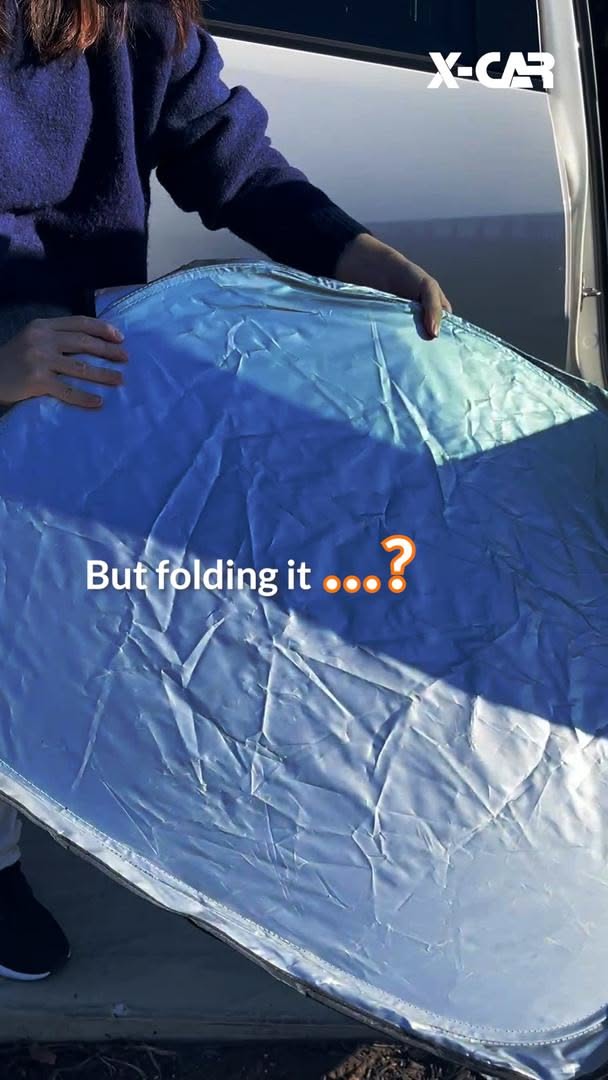
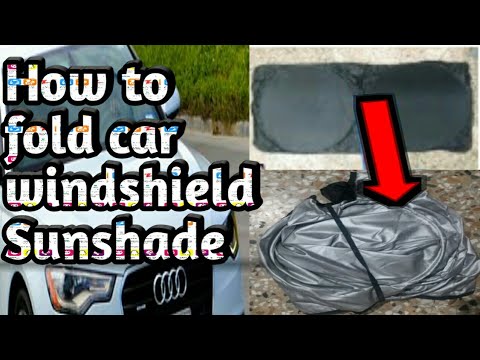
Lower the shade away from the windshield, release the sun visors, and fold or roll the shade according to its design. Keep the shade secured in its storage strap, case, or sleeve if one is supplied.
Source: autotribute.com
Release the visors
Raise the sun visors gently before removing the shade so the material is not trapped or sharply bent.
Pull the shade away evenly
Avoid yanking one corner, particularly if the shade has a rigid or reinforced frame.
Fold or roll as designed
Follow the product’s folding pattern rather than creating new creases that could damage the frame or reflective material.
Secure it for storage
Use the supplied strap or case and store the shade where it will not become a hazard to passengers or interfere with vehicle controls.
Signs the Shade Is Stored Correctly
The shade should remain in its intended compact shape without forced bends, crushed corners, or a distorted frame. If the product repeatedly becomes difficult to open or no longer sits flat against the windshield, inspect it for damage before using it again.
Frame remains aligned
The folding or spring frame should not have obvious bends or twists.
Material remains intact
Look for tears, separated seams, damaged reflective layers, or loose components.
Common Windshield Sun Shade Installation Problems
Most installation problems come from an incorrect size, incorrect orientation, improper positioning, or a shade that does not match the vehicle’s windshield design. Start with fit and positioning before attempting to modify the product.
Source: hitchesguide.com
The shade keeps falling down
Check that it is centered and that the sun visors or built-in supports are positioned as intended. A shade that is too small or too flexible for the windshield may not stay in place reliably.
There are large gaps around the edges
Confirm that the shade is the correct size and that the bottom and top edges are positioned properly. Universal shades may leave some gaps because they are not molded to one windshield.
The shade will not fit around the mirror
Look for a designated mirror opening or notch. Do not bend or cut the shade unless the manufacturer specifically permits modification.
The shade presses against a sensor
Stop and check the fit. A different shade design may be necessary if the product does not provide clearance for windshield-mounted equipment.
The folding frame will not stay open
Inspect the frame for twisting, damage, or incorrect folding. If the frame has become permanently distorted, replacement may be safer than forcing it into position.
The shade blocks the driver’s view
Remove it before driving. A parked-car shade is intended for use while the vehicle is stationary and should never be left in a position that obstructs the driver’s field of view during travel.
When You Should Stop and Check the Instructions
Stop installation if the shade requires unusual force, interferes with a windshield-mounted camera or sensor, catches on interior trim, or appears too large for the glass. Check the product manual and vehicle documentation before cutting, drilling, gluing, or permanently attaching anything.
Unusual resistance
Do not force a rigid frame into a space that does not accommodate it.
Unclear mounting hardware
If the shade includes brackets, clips, suction cups, or other hardware, use the manufacturer’s installation procedure.
Vehicle-specific equipment
Check compatibility when the windshield has cameras, sensors, special trim, or other equipment that changes the available space.
Windshield Sun Shade Safety Tips
A windshield sun shade is a parking accessory, not something to leave in place while driving when it obstructs visibility. Before starting a trip, remove the shade completely and store it securely.
Take extra care with shades that use rigid frames, spring steel, suction cups, adhesive components, or permanent mounting hardware. Follow the product instructions and do not place a temporary shade where it interferes with vehicle controls or required visibility.
Source: ausgo4wd.com.au
Remove the shade before driving
The windshield must provide the driver with the necessary forward view. Never drive with a parked-car shade covering the windshield.
Do not obstruct vehicle equipment
Avoid forcing the shade against cameras, sensors, mirrors, vents, or other components.
Do not modify without instructions
Cutting or reshaping a shade can weaken its frame or change how it fits. Use a compatible product when the original design does not fit.
Keep the shade out of the driver’s path
After removal, store it so it cannot slide under pedals, interfere with controls, or become a loose object in the cabin.
Reflective Side Versus Dark Side
Many windshield shades use a reflective surface intended to face outward toward the sun. Other products have two sides with different functions, so the correct orientation can vary. Follow the labeling or instructions supplied with your particular shade rather than assuming that every silver or dark surface should face the same direction.
Use the labeled orientation
Follow markings such as reflective side, summer side, or winter side when provided.
Do not generalize across products
Different materials and dual-purpose designs can have different intended orientations.
How to Choose the Right Windshield Sun Shade
The right shade is primarily a fit and usability decision. A custom-fit shade can follow the contours of a particular windshield, while a universal shade may be easier to replace or move between vehicles but can leave more uncovered space.
Consider how the shade will be stored, how often it will be installed, and whether your windshield has a large rearview mirror housing or driver-assistance equipment. The simplest design is usually the one that fits the windshield without requiring force or complicated hardware.
Source: youtube.com
Custom-fit shade
Designed around a particular vehicle application and generally shaped to follow that windshield more closely.
Universal shade
Made to accommodate multiple windshield sizes and shapes, but it may leave larger edge gaps.
Folding shade
Useful when compact storage and quick installation are priorities.
Umbrella-style shade
Opens from a central mechanism and can be convenient for vehicles where that design fits the windshield and mirror area.
Roll-up shade
Provides another compact storage option and can be practical when the vehicle has limited cabin storage.
What Matters More: Size or Material?
For installation, correct size and compatibility come first. A highly reflective material is less useful if the shade does not stay positioned against the windshield. Compare the stated vehicle fit, dimensions, mounting method, storage requirements, and material construction rather than choosing solely from appearance.
Prioritize compatibility
Make sure the shade is intended for your windshield size and vehicle configuration.
Consider storage
Choose a folding, roll-up, or umbrella-style design that fits comfortably in the vehicle when removed.
Frequently Asked Questions
Q
Which way should a windshield sun shade face?
If the manufacturer identifies a reflective or sun-facing side, place that side toward the outside of the windshield and sunlight. Because some shades have dual-purpose surfaces, check the product instructions rather than assuming one orientation applies to every model.
Q
Do you put a sun shade inside or outside the windshield?
Most temporary windshield sun shades are designed to be installed inside the vehicle against the interior side of the windshield. Exterior covers are a different type of product and should be used only according to their specific instructions.
Q
Should I use the car’s sun visors to hold the shade?
Yes, when the shade is designed to be secured with the vehicle’s sun visors. Lower the visors gently over the shade after positioning it. If the shade has another built-in securing system, follow those instructions instead.
Q
How do I install a sun shade around a rearview mirror?
If the shade has a center notch or opening, align it around the mirror or its mounting area. Do not force a rigid edge around the mirror, and avoid pressing the shade against windshield-mounted cameras or sensors.
Q
Can I leave a windshield sun shade installed while driving?
No. A temporary windshield sun shade should be removed before driving if it obstructs the driver’s view. Store it securely after removal so it cannot interfere with the pedals, controls, or other parts of the cabin.
✦ Wrapping Up
Conclusion
Installing a windshield sun shade is usually a quick process: open the shade inside the parked vehicle, position it against the windshield, align the mirror and sensor areas, and use the sun visors or the product’s built-in supports to keep it secure. The shade should sit naturally without excessive bending or pressure.
The most reliable installation comes from using the correct size and following the manufacturer’s instructions for your specific design. If the shade will not fit around the mirror, windshield sensors, or interior trim without force, do not modify it blindly. Choose a compatible design or check the manufacturer’s guidance instead.
Before driving, remove the shade completely and store it safely. That final step matters as much as the installation itself because a parked-vehicle sun shade is not intended to compromise the driver’s forward visibility.
💡 Key Takeaway
For the next sunny parking stop, open the shade inside the vehicle, center it against the windshield, secure it with the intended support points, check the fit around the mirror and sensors, and remove it before driving.
Learn how to fold a windshield sun shade correctly with simple steps for pop-up, accordion, and umbrella styles, plus storage and troubleshooting tips.
Learn how to fold a round windshield sun shade correctly without bending the frame. Follow these simple steps, avoid common mistakes, and store it neatly.
Learn how to fold a pop up windshield sun shade safely and quickly. Follow simple steps, avoid common mistakes, and store your car sun shade without damaging its frame.