To measure a windshield for a sun shade, measure the usable glass width at its widest point and the usable glass height from the top edge to the bottom edge. Check the measurements against the shade manufacturer’s sizing chart before buying.
For drivers in the United States, the easiest way to get the right windshield sun shade size is to measure the actual windshield rather than relying only on your vehicle’s make, model, or a generic size label. Windshields vary in shape, slope, curvature, and available glass area, even among vehicles that use similar dimensions.
Use a flexible tape measure, record the measurements in inches, and measure the glass area the shade needs to cover. For a conventional foldable or roll-up shade, a close fit across the windshield usually works better than choosing an oversized shade that cannot sit flat. If a manufacturer provides a vehicle-specific fit guide, use your measurements to confirm the listed size.
You only need a few simple tools to measure a windshield for a sun shade. A flexible tape measure is preferable because it can follow the general shape of the glass. A rigid ruler can work for shorter measurements, but it is less convenient across a wide windshield.
Park the vehicle safely on level ground before measuring. Turn off the engine, apply the parking brake, and make sure you have enough room to move around the front seats. If the vehicle is outdoors, avoid measuring while traffic or other hazards could distract you.
Source: storage.googleapis.com
Flexible tape measure
Use a tape marked in inches so your measurements match most U.S. automotive accessory sizing charts.
Paper or phone
Record the width, height, and any unusual features so you do not have to repeat the measurements.
Vehicle information
Have the vehicle year, make, and model available. This information can help you compare your measurements with a manufacturer’s fit guide.
Measure the Glass, Not the Vehicle
The goal is to determine the area the shade must cover, so measure the windshield glass itself. Do not measure from one outside edge of the vehicle to the other, and do not use the dashboard width as a substitute for windshield width.
The usable glass area may be smaller than the windshield’s full outside dimensions because of the windshield frame, trim, dashboard, or other surrounding parts.
Use the visible windshield area
Measure between the practical left and right edges of the glass where the shade will rest.
Keep the reference points consistent
Measure from the same type of edge at both sides and record exactly where each measurement was taken.
How to Measure Windshield for a Sun Shade
Start with the windshield width because this is often the easiest measurement to compare with a sun shade’s listed dimensions. Then measure the usable height. If the windshield has a strongly curved shape, take additional measurements so you can identify where the shade needs more or less coverage.
For the most useful result, measure the area from the driver’s side edge of the usable glass to the passenger-side edge at the widest practical point. Next, measure vertically from the upper usable edge of the windshield to the lower usable edge. Record both dimensions in inches.
Source: exoisypje.blob.core.windows.net
Step 1: Clean the reference area
Make sure the windshield edges are visible so dirt, trim, or dashboard objects do not cause you to choose the wrong reference point.
Step 2: Measure the widest usable width
Measure across the windshield from the left usable edge to the right usable edge. Record the result in inches.
Step 3: Measure the usable height
Measure from the upper usable edge of the glass down to the lower usable edge where the shade will sit.
Step 4: Check the shape
Look for significant curves, tapered corners, a steep lower section, or other features that could prevent a rectangular shade from sitting correctly.
Step 5: Repeat important measurements
If the windshield is noticeably curved or tapered, measure width at more than one height and compare the results.
Step 6: Compare with the manufacturer’s size
Use the recorded measurements with the manufacturer’s sizing chart or vehicle fit information before purchasing.
How to Measure Windshield Width
Measure horizontally across the usable windshield glass at its widest practical point. Keep the tape approximately level rather than following the windshield’s slope from front to back. The objective is to establish the side-to-side span the shade must cover.
If the windshield narrows significantly toward the top or bottom, take a second width measurement at another height. This can reveal whether a rectangular shade is likely to leave substantial gaps or bunch at the corners.
Widest point
Use the widest practical span when comparing the vehicle with a listed shade width.
Multiple widths
Take additional width measurements when the windshield tapers noticeably.
How to Measure Windshield Height
Measure the usable height from the upper edge of the windshield glass to the lower edge where the shade needs to reach. The lower measurement can be affected by the dashboard, windshield curvature, and the way the shade is intended to be held in place.
Do not automatically use the longest diagonal distance across the windshield. A diagonal measurement describes a different dimension and can make a rectangular shade appear more suitable than it really is.
Use Your Measurements to Choose the Right Shade Size
Once you have the measurements, compare them with the shade’s stated dimensions rather than choosing a size based solely on a generic label such as small, medium, or large. Manufacturers can use different size ranges, so those labels are not standardized across every sun shade.
A useful comparison is to look at both width and height. A shade that matches the width but is substantially too short may leave a large uncovered area. A shade that is much wider than the windshield may be difficult to position and can interfere with the doors, dashboard, or windshield trim.
Source: raianasvibes.com
Compare width first
Make sure the listed shade width is appropriate for the windshield’s usable side-to-side measurement.
Compare height too
Check that the shade’s height provides the coverage you need without being impractically large.
Check the stated fit
If the manufacturer lists compatible vehicle years, makes, models, or windshield dimensions, use that information alongside your measurements.
Consider the shade design
A rigid, accordion-fold, roll-up, or custom-fit shade may accommodate windshield shapes differently, so compare measurements for the specific design.
A Simple Hypothetical Measurement Example
Suppose a hypothetical U.S. vehicle has a usable windshield width of 58 inches and a usable height of 28 inches. Those measurements become your reference points when reviewing sun shade dimensions. You would then compare the manufacturer’s stated width and height and confirm whether the shade is designed to fit that vehicle or dimension range.
The example does not establish a universal ideal size. The correct fit depends on the actual vehicle, the shade design, and the manufacturer’s sizing instructions.
Recorded width
58 inches in this hypothetical example.
Recorded height
28 inches in this hypothetical example.
Next step
Compare both measurements with the specific shade manufacturer’s dimensions and fit information.
What Can Change the Measurement?
Windshield shape matters as much as the basic width and height. Modern vehicles can have sharply curved glass, tapered corners, large rearview mirrors, cameras, rain sensors, or other equipment mounted near the windshield. These features can affect how a sun shade sits even when the listed dimensions appear close.
A shade does not necessarily need to cover every millimeter of glass to be useful, but large gaps can reduce coverage. If you want a close fit, prioritize a vehicle-specific or custom-fit option when one is available and verify its dimensions before ordering.
Source: ar.inspiredpencil.com
Curved windshields
Strong curvature can make a flat shade harder to position and may require additional measurements.
Tapered corners
A windshield can be wide at one point and considerably narrower at another, affecting how a rectangular shade fits.
Rearview mirror
The mirror can limit how a shade is positioned, particularly with rigid or tightly fitted designs.
Cameras and sensors
Driver-assistance cameras and other windshield-mounted equipment can affect clearance and shade placement.
Dashboard shape
A high or deeply curved dashboard can change how far the lower edge of a shade can extend.
Common Windshield Sun Shade Measuring Mistakes
Most sizing problems come from measuring the wrong surface, taking only one dimension, or treating a generic size label as a universal standard. A few extra checks can prevent an otherwise avoidable mismatch.
Source: hitchesguide.com
Measuring the dashboard
The dashboard does not represent the windshield’s usable glass area. Measure the glass instead.
Measuring the outside body
The exterior dimensions around the windshield are not the same as the dimensions the shade must cover.
Using only width
A shade can have an appropriate width but still be too short or too tall for the windshield.
Ignoring windshield shape
A flat rectangular measurement does not fully describe a windshield with pronounced curves or tapered edges.
Assuming all large or medium sizes are equal
Size labels vary among manufacturers, so compare actual dimensions whenever possible.
Relying on a diagonal measurement
A diagonal dimension is not a substitute for the width and height needed to evaluate a rectangular shade.
How to Tell If Your Measurement Is Probably Right
A good measurement process produces repeatable numbers. Measure the same dimension twice and confirm that the results are close. If the numbers change significantly, check whether the tape moved, the reference points changed, or the windshield shape made the measurement difficult.
Before buying, place your recorded measurements next to the manufacturer’s dimensions and check both numbers. If the manufacturer provides a vehicle-specific fit list that conflicts with your measurements, investigate the difference rather than guessing.
What to Do If No Standard Size Fits
If your measurements fall between standard sizes or the windshield has an unusual shape, look for a vehicle-specific or custom-fit shade. These products are designed around particular windshield dimensions or vehicle applications rather than relying only on broad universal categories.
If you are choosing between two universal sizes, do not assume that the larger one is automatically better. Check the manufacturer’s fitting instructions and consider whether the extra material could make installation difficult or prevent the shade from sitting properly.
Source: storage.googleapis.com
Recheck your measurements
Confirm width and height before concluding that the available sizes are unsuitable.
Look for vehicle-specific fitment
A manufacturer may list a compatible year, make, and model even when universal sizing is unclear.
Consider custom sizing
Custom-fit products can be useful for unusually shaped windshields or when close coverage is a priority.
Contact the manufacturer
If the published size chart does not clearly cover your measurements, ask the manufacturer to confirm fit rather than relying on an assumption.
How to Install and Check the Fit After Measuring
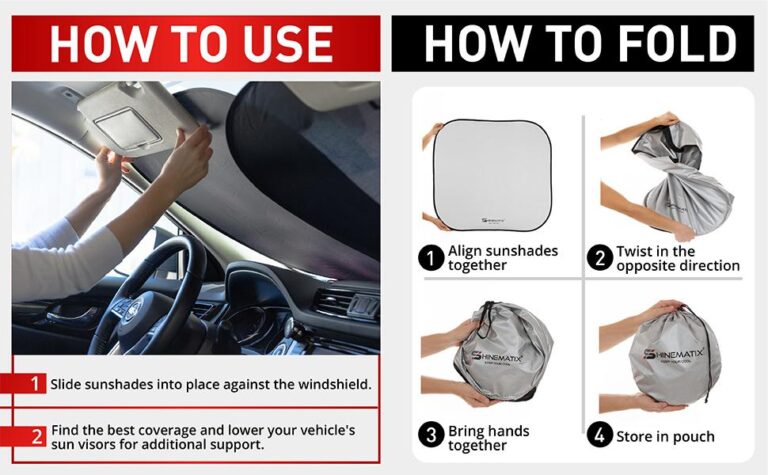
After purchasing the shade, place it against the inside of the windshield and check the coverage before leaving the vehicle parked for an extended period. The shade should sit securely according to its instructions without obstructing controls or creating a condition that makes it unsafe to drive.
A properly selected shade should cover the intended windshield area without excessive bunching. Small gaps at curved corners can occur with universal shades, but large uncovered areas indicate that the size, shape, or installation method may not match the windshield.
Source: pinterest.com
Center the shade
Align the shade from side to side so coverage is distributed across the windshield.
Check the top and bottom
Make sure the shade reaches the intended areas without excessive material interfering with the dashboard.
Check the corners
Look for major gaps or bunching that could indicate a poor size match.
Follow the product instructions
Use the shade’s specified supports, straps, suction devices, or other retention method as directed.
Remove it before driving
A windshield sun shade is intended for use while the vehicle is parked. Remove it and store it as instructed before operating the vehicle.
Signs of a Good Fit
A good fit provides broad windshield coverage, stays positioned as intended, and does not require excessive folding or bending to remain in place. The shade should also work with the vehicle’s interior features according to its design.
Broad coverage
The shade covers most of the intended windshield area without unusually large gaps.
Stable placement
The shade stays in its intended position using the manufacturer’s recommended installation method.
No excessive distortion
The shade does not need to be forced into a shape that is clearly incompatible with the windshield.
Frequently Asked Questions
Q
How do I measure my windshield for a sun shade?
Measure the usable windshield glass from left to right at the widest practical point, then measure the usable height from the upper edge to the lower edge where the shade needs to sit. Record both measurements in inches and compare them with the manufacturer’s sizing chart.
Q
Should I measure the windshield from the inside or outside?
For choosing an interior windshield sun shade, measure the usable glass area from inside the vehicle. This gives you a practical reference for how the shade will sit against the interior of the windshield.
Q
Should a sun shade be bigger than the windshield?
Not necessarily. The correct dimensions depend on the shade design and the manufacturer’s fitting instructions. A small amount of extra material may be acceptable for some universal shades, but an excessively large shade can be difficult to position and may bunch around the edges.
Q
What if my windshield is curved?
Take more than one width measurement at different heights and compare the shape with the shade design. For strongly curved or unusually shaped windshields, a vehicle-specific or custom-fit shade may provide a more predictable fit than a universal rectangular shade.
Q
Can I use my vehicle’s year, make, and model instead of measuring?
Sometimes. A manufacturer’s vehicle-specific fit guide can be useful and may identify a compatible shade without requiring you to calculate the dimensions yourself. Measuring is still a useful way to verify that the listed product dimensions make sense for your particular vehicle.
✦ Wrapping Up
Conclusion
Learning how to measure a windshield for a sun shade is straightforward: measure the usable glass width, measure the usable height, check the windshield’s shape, and compare those dimensions with the manufacturer’s sizing information. Measuring the actual glass is more reliable than guessing from a generic small, medium, or large label.
If the windshield has pronounced curves, tapered corners, or unusual interior features, take additional measurements and consider a vehicle-specific or custom-fit option. Once the shade arrives, check its coverage and positioning while the vehicle is parked, and always remove the shade before driving.
💡 Key Takeaway
Measure your windshield twice, record the widest usable width and usable height in inches, then compare both numbers with the exact sun shade manufacturer’s fit chart before buying.
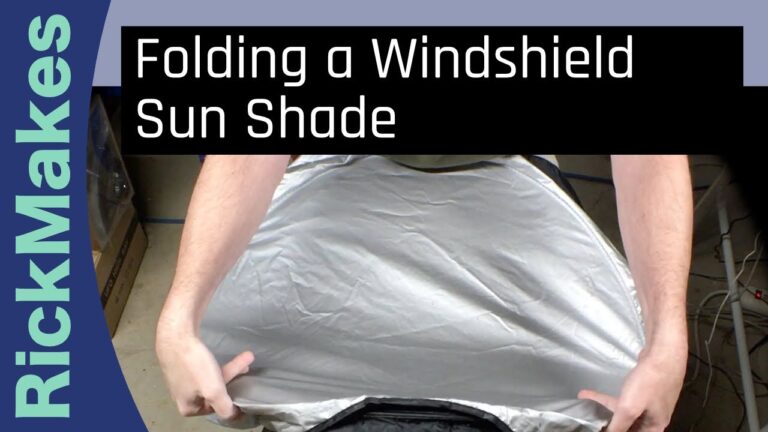
Learn how to fold a collapsible windshield sun shade using the simple figure-eight method, plus tips for storage, troubleshooting, and different shade designs.
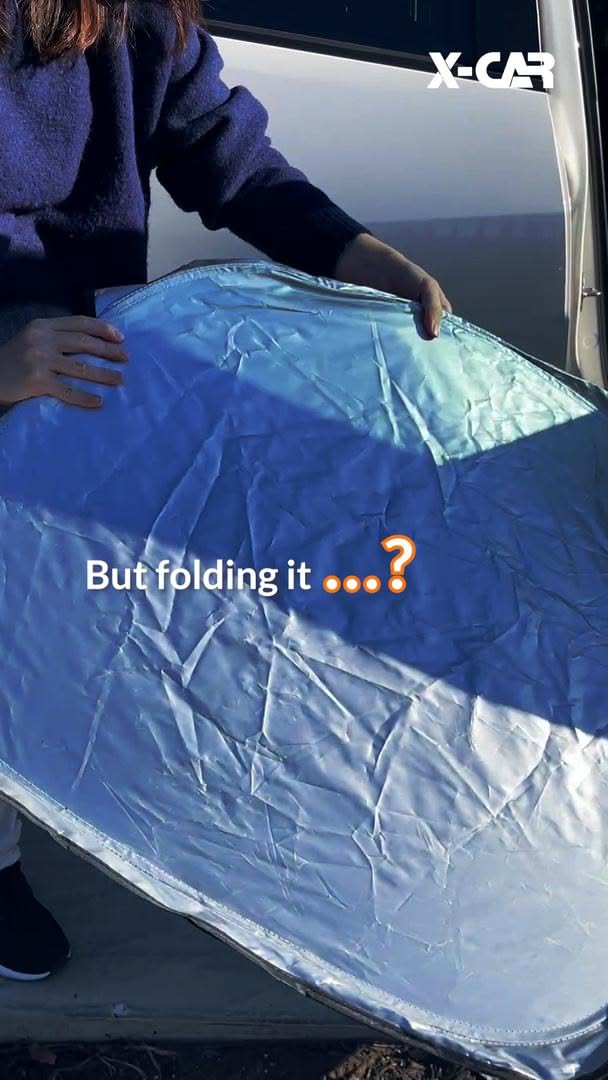
Learn how to fold a pop up windshield sun shade safely and quickly. Follow simple steps, avoid common mistakes, and store your car sun shade without damaging its frame.
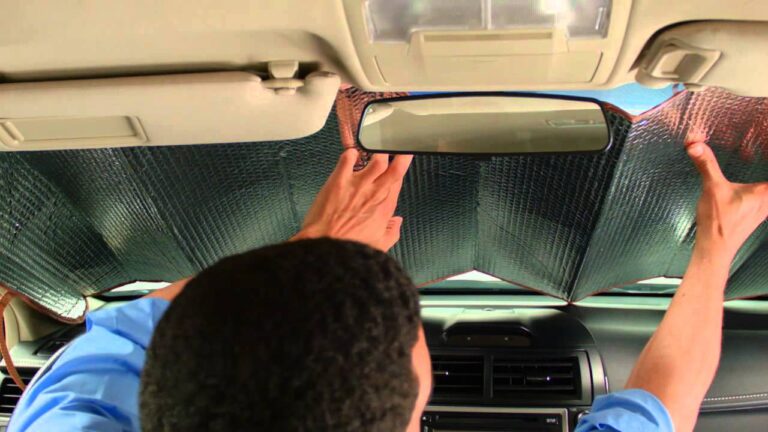
Learn how to install a windshield sun shade correctly in your car. Follow simple steps for folding, roll-up, and umbrella-style shades, plus fit, safety, storage, and troubleshooting tips.
Learn how to fold a windshield sun shade correctly with simple steps for pop-up, accordion, and umbrella styles, plus storage and troubleshooting tips.