What Is Potting Soil? Types, Ingredients, and How to Use It Right
Potting soil is a growing medium made for plants in containers, where roots need air, water, and room to grow. Despite the name, many potting soils contain little or no actual soil; they’re usually blends of materials such as peat moss, bark, and perlite.
Are your potted plants drying out by lunchtime, or staying soggy for days after watering? The right mix can help with both, but the label can make a simple bag of growing material seem like a chemistry quiz.
I learned that the hard way after using garden soil in a container that needed a lighter mix. The soil packed down into a dense, dark mass, and I spent extra time trying to fix a problem I could’ve avoided at the start. It’s a common mistake, not a dumb one.
I wrote this to help you understand what potting soil does, what’s in the bag, and which kind makes sense for your plants. You’ll also find practical guidance for watering, troubleshooting, and knowing when a mix has had its day.
Get the mix right, and you’ll have healthier roots, fewer watering surprises, and less frustration when you repot. Choose poorly, and you can end up with a heavy pot, yellowing leaves, or roots that stay wet long after the surface looks dry.
This takes about 18 minutes to read. By the end, you’ll be able to:
- Tell potting soil apart from garden soil and potting mix.
- Match a growing medium to vegetables, flowers, succulents, and houseplants.
- Read bag labels without getting lost in the ingredient list.
- Fix common problems caused by poor drainage or uneven watering.
What Is Potting Soil, and What Does It Do?
Potting soil is a container growing medium that supports plant roots and holds a usable balance of water and air. A suitable mix also gives roots room to grow, while helping hold nutrients near the plant until it can use them.
In garden beds, roots can spread through surrounding soil, and extra water can drain into the ground. A plant in a pot doesn’t have those options. The growing medium inside the container has to supply most of the root support, moisture, air pockets, and available nutrients.
The name can be confusing because potting soil may not contain mineral soil from the ground. Many commercial products are soil-free blends, and some bags use “potting soil” as a broad product name for container growing media. Read the ingredients and directions instead of judging the bag by its front label.
Good potting soil isn’t just soft or dark. It needs to hold enough water for roots to draw from, while letting extra water drain and fresh air reach the root zone. A dense mix can stay wet and leave roots short of oxygen; a coarse, dry mix may let water run through before roots can use it.
The difference matters most when you grow a plant in a small space. A tomato in a bucket, a pothos in a living-room pot, and a cactus in a shallow planter all depend on the mix behaving well in that particular container.
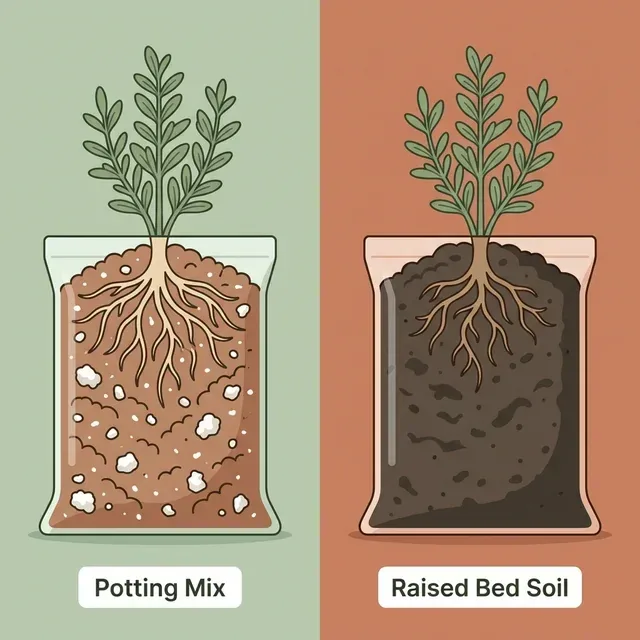
For a close comparison of the labels, potting mix versus potting soil comes down to what’s in the bag and how the product is intended to perform. In everyday garden-center use, the names can overlap, so the ingredient list and plant instructions tell you more than the wording alone.
Why container roots need air and water
Roots take up water and nutrients, but they also need oxygen. Air space, sometimes called pore space, is the network of small gaps between pieces of growing medium. Water moves through those gaps, and air fills some of them after excess water drains.
If those gaps collapse, the pot can remain waterlogged. Roots then struggle to function, even though the plant has plenty of water around them. A plant with stressed roots may droop, yellow, or stop growing, symptoms that are easy to mistake for thirst.
The other extreme causes trouble too. A mix with too many large, fast-draining particles may dry quickly, especially in a small pot or a hot, sunny spot. The top can look dry while moisture remains deeper down, or the whole root ball can dry before you notice.
What does a good mix feel like in your hand? It should generally feel loose rather than sticky or packed, though the right texture depends on the plant and the ingredients. A mix for a moisture-loving fern won’t feel exactly like one meant for a cactus.
Potting soil versus garden soil
Garden soil is the natural mineral soil found in outdoor beds. It can contain clay, silt, sand, organic matter, and living organisms, with the proportions varying from place to place. That natural mix can work outdoors because water can move away and roots can grow beyond one small container.
In a pot, ordinary garden soil often settles and compacts. Its small particles can close air spaces, making drainage sluggish and leaving roots with too little oxygen. A container that feels like a brick after watering is a strong sign the medium is too dense.
Potting soil is made or packaged for container use, so it’s usually lighter and more consistent than soil dug from a yard. That doesn’t mean every product fits every plant. A basic all-purpose blend may work for a leafy houseplant but hold too much water for a cactus.
Don’t scoop soil from an outdoor bed just because it looks rich and crumbly. Its texture may change once it’s confined in a pot, and outdoor soil can carry weed seeds, insects, or plant disease organisms. A clean, container-labeled product is the safer starting point for most potted plants.
What potting soil can and can’t do
Potting soil can support roots and manage water, but it isn’t a substitute for a pot with drainage holes or sensible watering. If the container has nowhere for excess water to leave, even a well-draining mix can stay too wet at the bottom.
A growing medium also can’t supply every plant’s needs forever. Nutrients may run low as a plant grows and gets watered, so many container plants need fertilizer according to the product label and their growth stage. Some mixes include fertilizer at the start, while others don’t.
Potting soil won’t fix poor light, a pot that’s much too small, or watering that swings between bone-dry and soaked. Think of it as the plant’s root environment, not a one-bag cure-all. A healthy plant depends on the container, light, water, and feeding working together.
What’S in Potting Soil?
Potting soil is usually a blend of materials chosen to hold moisture, create drainage, and leave space for air around roots. The exact recipe varies by brand and plant type, so the ingredient list is the best way to tell what a bag is likely to do.
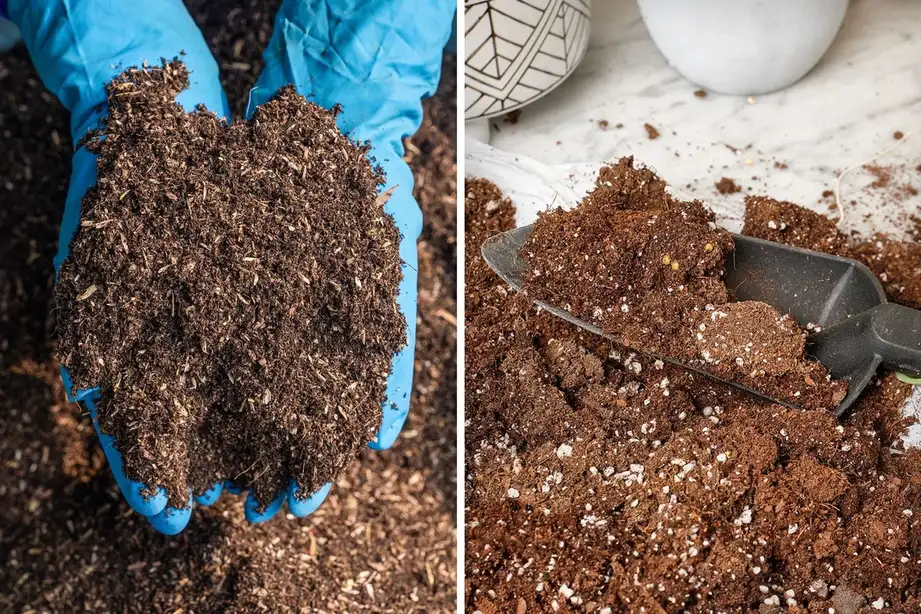
A typical mix may include an organic base, such as peat moss or coir, plus coarse materials that improve air flow and drainage. Some blends also contain bark, compost, fertilizer, lime, or wetting agents. Each ingredient changes the texture and how the mix handles water.
| Ingredient | What it does | What you may notice |
|---|---|---|
| Peat moss | Holds moisture and helps create a light base | Can be hard to wet again if it dries out |
| Coir | Holds water and adds structure | Often sold as compressed blocks or mixed into bagged blends |
| Perlite | Creates air space and helps excess water move through | White, lightweight pieces in the mix |
| Vermiculite | Holds water and some nutrients | Soft, flaky particles that retain moisture |
| Bark | Adds coarse structure and air pockets | Visible chips, often in blends for orchids or woody plants |
| Compost | Adds organic matter and may supply some nutrients | Dark, earthy material with a variable texture |
| Lime | Adjusts acidity in some peat-based blends | Usually listed as an added ingredient |
| Starter fertilizer | Supplies nutrients early in plant growth | Label may state how long feeding is expected to last |
Organic ingredients that hold water
Peat moss comes from partly decomposed plant material harvested from peatlands. It’s light and can hold water, which makes it common in potting products. When peat dries out completely, it may resist wetting, so water can slip down the sides of a dry root ball instead of soaking it evenly.
Coir is made from coconut husk fiber. It can hold moisture while keeping a workable texture, and it’s sold in both loose form and compressed blocks. A compressed block needs water to expand before use, so follow its package directions rather than guessing how much water to add.
Compost is decomposed organic material. It can add organic matter and some nutrients, but its nutrient content, salt level, and texture can vary. A small amount in a blend may be useful; a potting medium made mostly of dense compost can hold too much water or settle as it breaks down.
Some products include composted bark, which adds larger pieces and helps keep the mix from becoming uniformly fine. Bark breaks down over time, so a blend with bark can change texture as the growing season goes on. That’s one reason old potting soil may feel more compact than fresh material.
Materials that improve drainage and air space
Perlite is a lightweight, expanded mineral that looks like small white pieces. It helps create larger air spaces and lets water move through the medium. Perlite doesn’t feed plants, but it can improve the physical structure of a mix.
Vermiculite is a lightweight mineral that holds water and can hold some nutrients. It’s useful in mixes for plants that benefit from steadier moisture, though it may not suit a plant that needs a fast-drying root zone. A bag’s ingredient list can give you a clue about how moisture-retentive the finished blend may be.
Bark chips, pumice, and other coarse materials can create space between smaller particles. They’re common in specialty mixes, including some blends for orchids, succulents, and other plants that need extra drainage or a chunkier texture. The particle size matters: fine bark behaves differently from large chips.
A bag with more perlite or coarse bark may drain more quickly than a fine, peat-heavy blend. That’s not automatically better. If you grow a thirsty plant in a small pot, a very fast-draining medium may mean frequent watering on hot days.
Fertilizer, pH, and other additions
Some potting soils contain starter fertilizer, a small supply of plant nutrients intended to support early growth. The label may describe the nutrients or suggest a feeding schedule. Don’t assume that a fertilized mix will feed a plant for its entire life in the pot.
pH measures how acidic or alkaline a growing medium is. It affects how easily plants can take up certain nutrients, but home gardeners usually don’t need to adjust potting soil unless a plant has a specific need or there’s a clear reason to test it. Adding lime or other amendments without checking the product directions can shift the mix too far.
Some blends include a wetting agent to help water spread through dry material. Others may contain mycorrhizal fungi, a group of fungi that can form a relationship with plant roots. Those additions may be useful in some settings, but they don’t make a poor match between plant and medium disappear.
The label is more useful than a long list of claims on the front of the bag. Check what plants the product is meant for, whether it contains fertilizer, and whether the maker gives a feeding or watering note. If you’re growing a plant with special needs, match the blend to those needs rather than buying the bag with the most add-ons.
Why mixes change after opening
Potting soil can settle during shipping and storage. Fine particles may sink, while larger pieces rise, so a quick stir before filling pots helps spread the ingredients more evenly. If a bag has been open for a while, check for water damage, pests, or a sour smell before using it.
Dry peat-based material can be stubborn when it hasn’t been stored well. Add water gradually and mix it through until the material feels evenly damp, not dripping wet. If water pools on the surface or runs along the pot wall, the mix may be too dry to absorb it evenly.
Pro Tip: Before planting, moisten a new mix in a tub or bucket and stir it by hand. Even moisture from the start makes it easier to judge how much water the finished pot needs.
How to Choose Potting Soil for Your Plant
Choose potting soil based on the plant’s moisture needs, the pot’s size and drainage, and where the container will sit. The right product is the one that supports the plant without making watering a daily guessing game.
A plant’s label can help, but your growing conditions matter too. A fern beside a bright, warm window may dry faster than the same fern in a cooler room. A patio pot in full sun may need a more moisture-retentive blend than a similar plant kept indoors.
If you’re comparing products, potting soil options for your plants are easiest to judge by intended use, texture, and fertilizer details. A specialty label isn’t automatically a better fit, and a basic mix can work well when the plant and conditions match.
Match the mix to the plant
| Plant or use | What to look for | Why it helps |
|---|---|---|
| Houseplants | A loose indoor or all-purpose blend | Gives roots support without using heavy garden soil |
| Vegetables in containers | A container mix with steady moisture retention and drainage | Helps support active growth in a confined root space |
| Seed starting | A fine-textured, low-fertilizer seed-starting medium | Gives small roots a uniform space to emerge |
| Succulents and cacti | A coarse, fast-draining mix | Helps the root zone dry more quickly between waterings |
| Orchids | A specialty bark-based orchid medium, depending on the orchid | Provides a much airier root environment than ordinary potting soil |
| Moisture-loving plants | A blend that holds moisture without staying waterlogged | Reduces how quickly the root ball dries |
An all-purpose potting soil is a reasonable starting point for many common houseplants, annual flowers, and container vegetables. Check the product directions because “all-purpose” doesn’t promise the same recipe from one bag to another.
Succulents and cacti usually need a mix that drains faster than a standard houseplant blend. You can buy a specialty product or adjust a suitable base with coarse ingredients, but changes should be modest until you know how the mix behaves. A very gritty blend can dry so quickly that you have to water often.
Seed-starting medium is usually finer and intended for young seedlings. A large, chunky mix can leave small seeds and roots sitting in wide gaps, while a heavily fertilized mix may be more than delicate seedlings need. Once seedlings grow and develop stronger roots, they can be moved into a suitable potting mix.
Orchids often need a medium that lets air move around their roots. Many common orchids grow in bark-based products rather than ordinary potting soil. Check the orchid’s type and care needs before repotting, because “orchid mix” can still vary in bark size and ingredients.
Consider the pot and where it will sit
A container with drainage holes lets extra water escape. A decorative pot without holes can hold water around the plant’s roots, even if you place a second pot inside it. After watering, empty any water that collects in the outer container.
Pot size changes how quickly a root ball dries. A small pot has less medium to store water, so it may need more frequent checks. A much larger pot can stay wet longer around a small root system, especially if the plant hasn’t grown into the extra space.
Outdoor containers may dry faster in sun, wind, and warm weather. Indoor pots can dry slowly in lower light or cool rooms. Those differences can change which blend feels easiest to manage, even for the same plant.
Don’t choose a heavier, wetter mix just because a plant droops in the afternoon. First check the soil at root depth and look at the pot’s drainage. A plant can wilt from dry roots or from roots damaged by staying wet, and adding water to the second problem can make it worse.
Read the bag before you buy
The front label tells you the intended use, but the back often explains more. Look for the ingredients, fertilizer information, instructions for wetting or feeding, and any warning that the product isn’t meant for a certain use.
Check whether the product is a potting soil, a potting mix, a seed-starting medium, or a specialty blend. Those labels aren’t perfectly consistent across brands, so compare the listed materials and intended plants. A product made for raised beds or outdoor garden beds isn’t automatically right for a houseplant pot.
Bag size matters if you have several containers, but don’t buy more than you can store properly. Keep unused material closed and protected from rain. A wet, open bag can become heavy, clumpy, and more inviting to pests.
What if the bag doesn’t list every detail you want? Choose a product with clear plant-use directions and a texture that suits your plant, then test it in one container before filling a whole row of pots. That small trial can save you from rebuilding several planters.
When you may want to adjust a mix
A basic potting soil can often be used as sold. Adjustments make sense when you have a specific reason, such as a plant that needs faster drainage or a blend that stays too wet in your conditions. Avoid adding several amendments at once, or you won’t know which change helped.
For a coarser mix, gardeners may blend in materials such as perlite, pumice, or bark, depending on the plant. For more moisture retention, a mix may include materials such as coir or vermiculite. The right amount depends on the base product and the plant, so make a small batch first.
Adding garden soil to potting soil can undo the structure you bought it for. A few handfuls may seem harmless, but fine mineral soil can settle between larger particles and reduce air space. If the goal is to save money on a large container, compare products made for containers rather than cutting a mix with yard soil.
I once tried to make a container blend behave differently by adding a second ingredient without testing a small batch first. The result drained much faster than I expected, and the plants needed more frequent checks than I could give them. A modest test batch would’ve caught the change before the full pot was planted.
How to Use Potting Soil and Fix Common Problems
Use potting soil by preparing a clean container with drainage, filling it without packing it tight, planting at the right depth, and watering until the root ball is evenly moist. Then check moisture regularly, because a fixed calendar can’t account for changing weather, light, or pot size.
Fill and plant without compacting the mix
- Check the container. Wash a reused pot, clear its drainage holes, and confirm that water can escape. Don’t rely on a layer of gravel to create drainage; the holes and the mix are what let excess water leave.
- Pre-moisten dry potting soil. Add water in stages and stir until the mix is evenly damp. If the mix is extremely dry, give it time to absorb water rather than dumping in a large amount all at once.
- Add enough mix to set the plant at the correct height. Keep the root ball near the level it was growing before. Burying a stem too deeply can cause trouble for some plants, while leaving roots exposed can make them dry out.
- Fill around the roots. Add medium around the root ball and press gently to remove large gaps. Don’t stomp or squeeze the mix into a hard layer.
- Water slowly. Water until the whole root area is moist and excess begins to drain. If water rushes down the sides, pause, then apply another gentle round after the first has soaked in.
A new plant can settle a little after its first watering. If the surface drops, add more mix while keeping the stem and crown at the right height. Don’t fill the pot to the rim, because a small gap makes watering less messy.
Water by checking the root zone
A dry surface doesn’t always mean the whole pot needs water. Push a finger into the mix or use a clean wooden stick to check below the top layer. A large pot can stay damp in the center while the surface looks dusty.
Lightweight plastic pots dry differently from heavy ceramic pots. A clay pot can lose moisture through its sides, while a plastic pot holds moisture longer. The plant, pot, room, and weather all affect the pace, so checking the medium beats following a strict schedule.
When you water, wet the root zone evenly rather than giving the plant a small splash every day. A thorough watering followed by time to drain encourages roots to grow through the pot. Constant shallow watering can leave the center of the root ball dry.
If water runs straight through a dry mix, don’t assume the potting soil is bad right away. Very dry organic material can repel water or leave gaps along the pot wall. Apply water slowly in stages, or set the pot in a shallow tray briefly so the medium can draw in moisture, then let it drain fully.
Important Tip: Never leave a container sitting in standing water for long periods unless the plant’s care instructions call for that setup. Water trapped below the pot can keep the root zone too wet.
Diagnose yellow leaves, drooping, and slow growth
Yellowing leaves can come from several causes, including overwatering, underwatering, low light, or nutrient shortage. Check the moisture in the root zone and the pot’s drainage before adding fertilizer. Feeding a plant with waterlogged roots won’t solve the root problem.
Drooping is another symptom with more than one possible cause. Dry, crumbly medium points toward a need for water, while soggy medium and a sour smell suggest excess moisture or poor drainage. A droopy plant doesn’t automatically need a drink.
Slow growth may come from low light, a root-bound plant, exhausted nutrients, or a mix that stays too wet. Look for roots circling the inside of the pot, then compare the plant’s light and feeding conditions with its care needs. Don’t repot just because growth pauses during a cooler or darker season.
| What you notice | Possible cause | What to check first |
|---|---|---|
| Water pools on the surface | Compacted or very fine mix | Whether the medium is wet, clumpy, or packed |
| Water rushes down the pot wall | Very dry medium or a gap around the root ball | Whether the center of the root ball is dry |
| Leaves yellow while the mix stays wet | Poor drainage or overwatering | Drainage holes and moisture below the surface |
| Plant wilts while the mix is dry | The root ball needs water | Moisture at root depth and whether water reaches the center |
| A white crust forms on the surface | Mineral or fertilizer salts may be collecting | Water quality, feeding rate, and drainage |
| Mix smells sour or rotten | The root zone may be staying too wet | Standing water, compacted mix, and damaged roots |
If a pot smells sour, lift the plant gently if it’s safe for the roots and check for dark, soft roots. Healthy roots are generally firm, though color varies by plant and medium. Remove clearly decayed material with clean tools, correct the drainage issue, and repot in fresh mix if the old medium has broken down badly.
A white crust can come from minerals in water or accumulated fertilizer salts. Scrape away a small amount of surface buildup and water thoroughly so excess drains out, if the plant tolerates that approach. If the pot has no drainage, correct that setup rather than repeatedly rinsing salts into a closed container.
Know when to replace old potting soil
Potting soil doesn’t have one expiration date that works for every bag or plant. Fresh material may remain usable if it’s been stored dry and protected, while a mix in an active pot can break down as organic ingredients decompose and roots fill the container.
Replace the mix when it has become dense, drains poorly, smells sour, or is full of old roots and debris. A plant that needs repotting because its roots have filled the pot may also benefit from fresh medium. If the plant is healthy and the mix still drains well, a full change may not be needed just because time has passed.
Old potting soil can sometimes be reused for less demanding outdoor containers, but use judgment. Don’t reuse medium from a plant with a serious disease or insect problem, and don’t count on old mix to supply nutrients. Its structure and nutrient content may have changed since the previous planting.
Before reusing any material, remove large roots and debris, check its smell and texture, and consider blending it with fresh potting soil. If it clumps into a heavy mass when wet or stays soggy, it’s a poor choice for another container. Fresh mix is usually the simpler path when the old one has clearly lost its structure.
Store and handle potting soil safely
Keep unused potting soil sealed or covered in a dry place, away from rain and direct contact with the ground. Store it where children and pets can’t get into the bag. Follow the product label if it gives extra handling or storage directions.
Avoid breathing dust when pouring or mixing dry material. Work outdoors or in a well-ventilated area, and dampen dusty mix lightly before handling if the product directions allow it. Wash your hands afterward, especially before eating or handling food.
Wear gloves if you have sensitive skin or if a product label recommends them. Keep potting soil out of your eyes, and don’t use an unlabeled product with a strong, unexpected odor. If a bag is moldy or waterlogged, use caution and don’t shake dust into the air.
Good handling is simple, but it’s easy to skip when you’re eager to get a plant into its new pot. A few minutes to check the bag and prepare the work area can keep a routine repotting job from becoming a dusty cleanup.
FAQs About What Is Potting Soil
Is potting soil the same as potting mix?
The terms are often used for similar container products, but there isn’t one universal recipe that every brand follows. Potting soil may contain no mineral soil, while a potting mix is generally described as a blend made for containers. Read the ingredients and intended use to judge a specific bag.
Can I use potting soil for indoor plants?
Yes, many indoor plants grow well in an all-purpose potting soil labeled for containers. Match the mix to the plant’s moisture needs, and use a pot with drainage holes. Succulents, orchids, and other plants with special root needs may do better in a specialty blend.
Can I use potting soil in my garden?
Yes, potting soil can be used in outdoor containers or mixed into some planting projects, but it usually costs more than material meant for garden beds. Don’t assume it can replace topsoil across a large area. Check the product’s label for its intended use and directions.
Does potting soil have fertilizer in it?
Some potting soils contain starter fertilizer, while others contain little or no added fertilizer. Check the label for nutrient details and feeding guidance. Even a mix with starter fertilizer may need a later feeding, depending on the plant, how long it has been growing, and how often it’s watered.
How often should I replace potting soil?
Replace potting soil when it has broken down, become compacted, drains poorly, smells sour, or contains roots from a plant that needs repotting. A dry, well-stored bag doesn’t have a single expiration date that applies to every product. Check the texture and smell before use.
Can I reuse potting soil from last year?
Sometimes, if the old medium came from a healthy plant and still drains well. Remove old roots and debris, then consider mixing in fresh material because reused soil may have fewer available nutrients and a weaker texture. Don’t reuse soil from a plant with a serious disease or pest problem.
Choose the Mix That Makes Watering Easier
Potting soil is the root environment inside a container, and the best choice depends on what you’re growing and how quickly the pot dries. A basic container blend works for many plants, while succulents, orchids, and seedlings may call for a more specific texture.
I’d choose a clearly labeled mix that suits the plant over a bag with the fanciest claims. Then I’d check drainage, water the whole root ball, and pay attention to how the medium behaves in that spot. Those simple habits tell you more than a label can.
Your next step is straightforward: check the plant’s needs, choose a container mix made for that use, and inspect the pot for drainage holes before planting. Do that, and you’ll give the roots a much better start without turning the potting bench into a science lab.