Potting Mix vs Potting Soil: The Real Difference and Which to Buy
For most containers, choose potting mix: it’s usually lighter and drains more freely than potting soil. Potting soil can work in large outdoor pots, but check the bag because the names aren’t used consistently.
Are you staring at two bags at the garden center, wondering whether one will drown your plant or dry out by lunchtime? And if you’ve already got a potting blend at home, are you trying to figure out whether it’s right for a houseplant, vegetable pot, or seed tray?
I once grabbed a dense bag for a container planting because the words on the front sounded close enough. After watering, the mix stayed heavy and soggy, and the seedlings didn’t take off the way I expected. That’s a common mix-up, not a dumb one; the labels really can make this harder than it needs to be.
I wrote this to help you choose by what’s inside the bag and what your plant needs, not by a name that may mean different things from one brand to another. You’ll get practical guidance for containers, seedlings, houseplants, and the occasional confusing label.
Choose well, and your roots get a useful balance of air and water, your pots drain more predictably, and you’re less likely to buy a bag that doesn’t suit the job. Choose poorly, and you may be dealing with compacted roots, soggy soil, or a pot that dries out faster than your watering routine can handle.
This takes about 16 minutes to read. By the end, you’ll be able to:
- Pick a bag based on ingredients and drainage rather than the front label.
- Match a growing medium to seedlings, vegetables, houseplants, and succulents.
- Spot common watering and root problems before they set a plant back.
- Decide when to amend a mix and when to leave it alone.
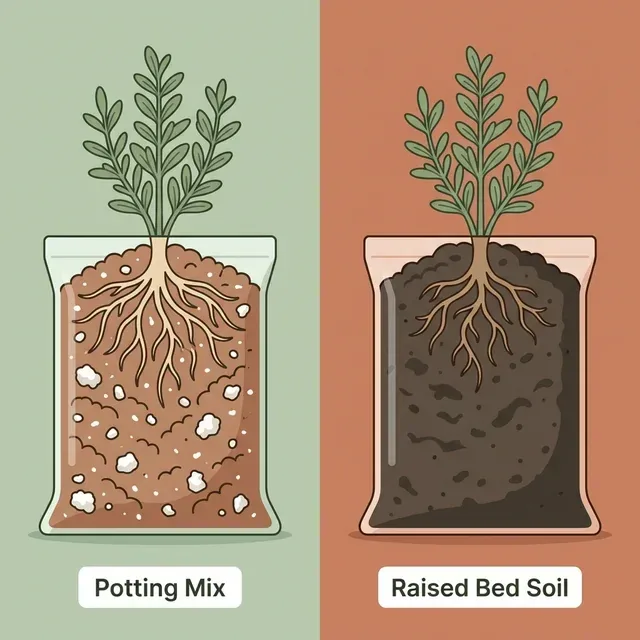
Potting Mix vs Potting Soil: Which One Should You Buy?
For most pots, buy a potting mix with a loose, even texture and ingredients suited to the plant; choose potting soil only when its label clearly fits the job. A bag marked potting mix is often made without ordinary field soil, while potting soil may contain mineral soil, compost, or other ingredients that make it heavier.
That distinction is useful, but not foolproof. Some brands use “potting soil” as a broad name for a container blend, and some products called potting mix contain compost or other heavier materials. The ingredient list and label directions tell you more than the name on the front.
| Growing medium | Common contents | Typical feel and drainage | Often suits |
|---|---|---|---|
| Potting mix | Peat moss or coir, bark, perlite, vermiculite, compost, or a combination | Light to medium; varies by recipe | Houseplants, containers, and seed starting when labeled for that use |
| Potting soil | May include mineral soil, compost, bark, peat, or other organic matter | Often heavier; drainage varies | Large outdoor pots when the label and texture fit |
| Garden soil | Mineral soil and organic matter from the ground | Dense in a pot; may compact | In-ground beds and landscaping |
| Topsoil | Surface soil, with composition varying by product | Variable; often not formulated for pots | Filling or grading outdoor areas, as directed on the bag |
A growing medium is the material surrounding roots in a pot or planting area. It anchors the plant, holds water and nutrients, and leaves air spaces so roots can function. In a container, the mix has to do all of that inside a small space, without help from the surrounding ground.
If you’re looking for the basic definition and common ingredients, what potting soil means are worth knowing before you compare bags. The practical point is simple: “soil” on a label doesn’t automatically mean the contents are unsuitable, and “mix” doesn’t automatically mean they’ll suit every plant.
For an indoor pothos or a patio tomato in a standard pot, I’d start with a potting blend labeled for containers and check that it looks loose rather than muddy or packed. For a cactus, a seed tray, or a moisture-loving plant, match the blend to that specific job instead of assuming one bag can do everything.
- The product name is a clue, not a reliable recipe.
- For containers, check the ingredient list, intended use, and drainage.
- Garden soil and topsoil are usually poor choices for filling ordinary pots.
Why the Names Don’T Tell the Whole Story
“Potting mix” often refers to a blend of materials designed for containers, while “potting soil” may mean a similar blend or a heavier product that includes actual soil. Because there isn’t one recipe shared by every brand, compare the contents and use directions instead of relying on a strict name-based rule.
A typical soilless potting mix might use peat moss or coir to hold water, perlite to open up air spaces, and bark to add structure. Some blends also include compost, fertilizer, or water-holding ingredients. “Soilless” means the blend doesn’t use ordinary mineral field soil as its base; it doesn’t mean the product contains no natural materials.
Potting soil can include mineral soil along with organic matter such as compost, peat, or bark. That can make it heavier and more prone to settling in some containers. But the label matters: a product sold as potting soil may still be a light container blend, so don’t reject it based on the name alone.
A quick look and a squeeze can tell you something. A loose blend with visible bark or perlite usually has a more open structure than a fine, dense blend that clumps when damp. Texture alone can’t confirm how a product will perform, but it can flag a bag that seems poorly matched to a small indoor pot.
Are the words “garden soil” or “topsoil” printed on the bag? Those products are meant for outdoor ground work unless their directions say otherwise, and they can become dense when used in a container. The distinction in garden soil versus potting soil is especially useful when you’re deciding what belongs in a raised bed and what belongs in a flowerpot.
“Organic,” “natural,” or “premium” on the front doesn’t tell you whether a blend drains quickly or holds water for a long time. Those claims don’t replace the ingredient list, the stated intended use, or a texture check.
What the Main Ingredients Do
The ingredients in a growing medium control how much water it holds, how quickly excess water drains, and how much air reaches the roots. A blend can be excellent for one plant and a headache for another, even when both bags carry a familiar name.
Peat moss holds water and gives many mixes a light texture. Once very dry, peat-based blends can be slow to rewet, so a plant may seem thirsty even after water runs through the pot. That’s one reason to avoid letting peat-based container mixes dry into a hard, shrunken mass.
Coir, made from coconut husk fiber, is another water-holding ingredient. It can be used in blends much like peat, but products vary in texture and may need different watering habits. Don’t assume a coir-based bag is automatically more or less suitable; check what else has been added and how the label describes its use.
Perlite is a light, porous material added to help keep a blend open. It can improve drainage and airflow, though a handful of perlite can’t rescue every heavy or poorly structured mix. A container still needs drainage holes, and the plant still needs watering suited to its roots.
Vermiculite holds water and can hold some nutrients, so it can be useful in seed-starting blends and mixes for plants that prefer steadier moisture. A blend with more vermiculite may stay wetter than one with more perlite. That’s a practical difference if you tend to water often or your pot sits in a cool, dim room.
Compost adds organic matter and can contribute nutrients, but too much can make a mix dense or hold more water than a particular plant wants. Bark adds structure and creates larger spaces in some blends, which is one reason bark-based mixes are often used for orchids and other plants that need more air around roots.
Some products include a starter fertilizer, a small amount of plant food intended to support early growth. Others have no fertilizer at all, or list a limited feeding period on the package. If you add fertilizer without checking the bag, you could give a plant more than it needs.
Pro Tip: If you can’t identify an ingredient on the front, turn the bag around and read the contents and care directions before buying. If the package gives no useful details, choose a clearly labeled product for your plant type rather than gambling on an unfamiliar blend.
Match the Mix to the Plant and Container
The right growing medium depends on the plant’s water needs, root structure, pot size, and growing location. A dense blend in a large outdoor planter may behave differently from the same blend in a small pot on a cool windowsill.
| Plant or use | What to look for | Watch out for |
|---|---|---|
| Most houseplants | A container blend with a loose texture and ingredients suited to the plant | Dense mixes that stay wet in a low-light room |
| Seed starting | A fine, clean blend labeled for seeds or seedlings | Coarse chunks that make it hard for small roots to establish |
| Outdoor vegetables | A container mix labeled for outdoor pots, with enough structure to hold moisture | A tiny pot that dries quickly, regardless of the mix |
| Succulents and cacti | A fast-draining blend labeled for these plants, or a suitable mix adjusted with coarse material | Treating “fast-draining” as permission to water on a rigid schedule |
| Orchids | An orchid blend with coarse bark or similar airy components | Standard fine potting mix that can stay too wet around roots |
| Large patio planters | A container product that balances water retention and drainage | Filling a very large planter with dense soil that becomes heavy |
For seed starting, use a blend labeled for seeds or seedlings. Young roots are small, and large bark chunks or a coarse, uneven texture can make it difficult for seeds to stay in contact with moisture. Some gardeners use a seed-starting mix, a fine, light medium made for germination and early root growth, then transplant seedlings into a richer container blend as they grow.
Houseplants don’t all want the same thing. A peace lily generally needs more consistent moisture than a cactus, while a pothos can tolerate some drying between waterings. Start with a blend suited to the plant, then adjust your watering to the light, room temperature, pot size, and season.
For outdoor vegetables, the container itself has a big effect. A small pot heats up and dries faster than a roomy one, and a tomato in a shallow planter has less growing medium to draw from. A bag labeled for outdoor containers can help, but a suitable mix can’t make a too-small pot behave like a raised bed.
Succulents and cacti usually do better in a blend that drains quickly and doesn’t stay wet for long. Don’t use a calendar as your only signal. Check how damp the mix is below the surface, and account for weather and light; a sunny patio and a dim indoor shelf are very different setups.
If a recipe is meant for orchids, don’t swap in an ordinary potting blend just because both packages say “potting.” Orchid roots often need a much more open material than the fine, moisture-holding blend used for many houseplants. A standard mix can work for some terrestrial orchids, but check the needs of the particular plant.
I once repotted a plant into a blend that seemed fine in the bag, then kept watering it on my old schedule. The pot stayed wet longer than I expected, and the leaves began to look tired; the lesson was to change the watering routine whenever the mix changes. It’s an easy detail to miss when you’re focused on getting the plant into its new pot.
How to Read a Potting-Mix Label
A useful label tells you what the product is for, what it contains, and whether it includes fertilizer or other added materials. Read the back before buying, since a bright front label can make a blend sound more universal than it really is.
Check these details:
- Intended use: Look for houseplants, containers, seed starting, orchids, succulents, or another specific use.
- Ingredient list: Note whether the blend contains peat, coir, perlite, vermiculite, bark, compost, mineral soil, or fertilizer.
- Drainage or moisture notes: The wording can help you decide whether the blend is meant to dry quickly or hold water longer.
- Fertilizer directions: Check whether fertilizer is included and how long the package says it should feed plants.
- Storage and handling: Follow directions for storing an opened bag and keeping the product dry and clean.
A label that says “feeds for several weeks” is a reason to pause before adding more fertilizer. The exact feeding period varies by product, so follow the package rather than assuming all potting mixes behave alike.
Also check whether a product is intended for indoor or outdoor containers. Some blends contain ingredients or fertilizer amounts that suit outdoor vegetables but may be less convenient for indoor use. A bag doesn’t need to have every feature; it needs to fit the plant and the way you care for it.
Do you need a sterile mix? Most home gardeners don’t need to sterilize a new commercial potting product. If you’re dealing with diseased plants, old containers, or reused growing material, focus on cleaning the pot and removing contaminated roots or debris rather than assuming a new bag will fix every problem.
Can You Use Garden Soil or Topsoil in a Pot?
Garden soil and topsoil are generally poor choices as the main material in an ordinary container because they can compact and restrict airflow around roots. They’re designed for outdoor ground use, where soil interacts with a much larger volume of earth, not for a pot with limited space and drainage.
Garden soil is soil taken or sold for use in garden beds, and its texture depends on where it came from and how it was made. Topsoil refers to surface soil or a product sold for surface-level outdoor work, but the contents can vary. Neither term tells you that the material has been adjusted for containers.
When a dense soil fills a pot, water may move slowly and air spaces can shrink. Roots need oxygen as well as water, so a mix that stays waterlogged can lead to weak growth and root damage. A potting blend is usually a safer starting point for a container because it’s formulated with the small, confined growing space in mind.
Are you filling a raised bed rather than a flowerpot? That changes the decision. Raised beds hold a larger volume and are open to the ground or have different drainage and structure than a small container, so a garden-bed product may fit that job better.
The comparison of garden soil, potting soil, and topsoil helps keep those uses straight.
Avoid filling a pot with soil from the yard unless you know what’s in it and have a clear reason to use it. Yard soil can vary in texture and may contain weed seeds, roots, or other material you don’t want in a container. It can also behave differently from one part of the yard to another.
Important Tip: Don’t pour leftover garden soil into a houseplant pot just to use it up. Keep it for an outdoor bed where it belongs, or follow the product’s directions for the intended planting area.
Should You Amend a Potting Mix?
Amend a potting mix only when you have a clear reason, such as improving drainage for a plant that needs it or adjusting a blend that stays too wet in your conditions. Adding a handful of this and a scoop of that without a plan can make moisture and nutrients harder to manage.
For a fast-draining succulent blend, coarse perlite or another suitable airy ingredient may help, but use a product intended for growing media and mix it evenly. A small adjustment can change the texture; a big addition can leave a blend too dry, unstable, or low in water-holding capacity.
For a moisture-loving plant, adding a water-holding ingredient may help if the blend dries too quickly, though the pot and the environment matter just as much. A plant near a warm window may use water faster than one across a cool room. Don’t amend a mix to solve a watering problem until you’ve checked light, temperature, pot size, and drainage holes.
Avoid adding garden soil to “give the mix more body.” That can make a container blend heavier and less open. Compost may be useful in some blends, but the amount and quality matter; a large dose can change drainage and nutrient levels.
If you’re new to container gardening, start with a bag labeled for the plant type and leave the recipe alone for a while. You’ll learn how it behaves in your home or yard, and you can make a small change later if there’s a clear problem. I’d rather see a beginner learn one reliable blend than juggle several homemade recipes before knowing what their plants actually need.
Watering, Drainage, and Root Health
A suitable mix should hold enough water for the plant while leaving air spaces for roots and allowing excess water to escape. “Good drainage” doesn’t mean water should race straight through; it means the pot can shed excess water without leaving roots in a soggy, airless mass.
Use a pot with drainage holes for most container plants. Without them, water can collect at the bottom, even if the mix itself is loose. A layer of rocks at the bottom doesn’t replace drainage holes, and it can leave less room for roots and growing medium.
Water thoroughly until water drains from the holes, then empty a saucer that holds standing water. How often you repeat that depends on the plant, pot size, season, room conditions, and mix. A large outdoor pot in warm weather may need water far more often than a small indoor pot in winter.
Don’t judge dryness by the surface alone. The top inch can feel dry while the lower part remains damp, especially in a deep pot or a moisture-holding blend. Use your finger or a wooden stick to check deeper, and learn the feel of the mix when it’s wet versus when it needs water.
Signs that the mix may be staying too wet include a sour smell, persistent sogginess, yellowing leaves, or roots that look soft and dark. These signs can also have other causes, so check the drainage holes and watering pattern before changing the growing medium. If roots are damaged or the plant keeps declining, remove it from the pot and assess the root ball rather than guessing from the leaves alone.
Signs of a mix that dries too quickly can include wilting soon after watering, water running down the sides without wetting the root ball, or a plant needing water unusually often. A very dry peat-based mix can resist water, and a root-bound plant may also dry rapidly. Rewet the root ball gradually and check whether roots have crowded out most of the mix.
Pro Tip: Keep a simple note of how long a particular pot takes to dry after watering. A quick phone note can help you spot changes after repotting, moving a plant to brighter light, or switching to a different blend.
When to Repot or Replace the Mix
Repot when the plant has outgrown its container, the mix has broken down, or drainage has become unreliable. A bigger pot isn’t automatically better; too much unused wet mix around a small root system can stay damp for too long.
Common signs that a plant may need a new pot or fresh mix include:
- Roots circling tightly around the root ball or coming through drainage holes.
- Water draining very slowly through a mix that used to drain well.
- A blend that has collapsed into a dense, compacted mass.
- A plant that dries extremely quickly because roots fill most of the pot.
- Salt or fertilizer crust on the surface, especially when paired with other signs of trouble.
Choose a pot only modestly larger than the current root ball unless the plant’s growth habit calls for more space. A huge container can hold a lot of wet mix that the roots can’t use quickly. That’s a recipe for an unhappy plant, not a shortcut to faster growth.
When repotting, loosen only what comes away easily and trim dead or mushy roots with clean tools. Don’t strip healthy roots just to make them fit; choose a suitable pot instead. Add fresh mix around the root ball, settle it gently, and water according to the plant’s needs and the new blend’s behavior.
Old potting mix isn’t automatically trash, but don’t reuse it blindly. If it came from a healthy plant and still has a good texture, it may have a second use in an outdoor planting area, depending on the product and local gardening practice. Don’t reuse mix from a plant with serious root disease or pests, and don’t use depleted, compacted material as the only growing medium for a new container plant.
Wash a reused pot before filling it, especially if the previous plant had pests or disease. Clean tools and containers reduce the chance of carrying problems into fresh mix. Bag directions may also give handling or disposal details, so check those if the product contains added fertilizer or other amendments.
Storage and Handling Without Wasting a Bag
Store opened potting mix in a cool, dry place inside a closed bag or covered container, away from rain and pests. The goal is to prevent contamination and keep the blend from becoming waterlogged before you use it.
A damp bag can develop unpleasant smells or conditions that make the mix less useful. If the blend has a sour odor, visible mold throughout, or has become a compacted, muddy mass, don’t use it for delicate seedlings or sensitive houseplants. A little surface growth can appear in moist organic material, but persistent wetness and a bad smell call for caution.
Use gloves if a product’s label recommends them or if you have sensitive skin, and avoid breathing dust when pouring a dry blend. Wash your hands after handling growing media, particularly before eating or touching your face. Keep bags away from children and pets, and follow any warnings printed on the package.
If you spill mix indoors, sweep or vacuum it up before watering plants nearby. Dry particles can spread across floors, while damp material can stain or cling to surfaces. A scoop and a tray make repotting less messy, and a small bit of prep can save you from finding potting mix in the hallway a week later.
Common Potting-Mix Problems and Fixes
Most problems blamed on “bad soil” come from a mismatch between the plant, container, mix, and watering routine. Check those pieces before replacing the whole bag.
| What you notice | Possible cause | First thing to check |
|---|---|---|
| Water sits on the surface | Compacted mix, dry peat, or a blocked pot opening | Check for drainage holes and whether the mix is dry or waterlogged |
| Mix stays wet for days | A dense blend, a pot that’s too large, low light, or frequent watering | Check moisture below the surface and empty standing water |
| Pot dries quickly | Small pot, warm conditions, root crowding, or a coarse blend | Check root space, light, and how water enters the root ball |
| Seedlings struggle to emerge | Coarse texture, uneven moisture, or planting depth | Check the seed packet and use a seed-starting blend |
| Leaves yellow after repotting | Watering stress, damaged roots, or adjustment to new conditions | Check root health and moisture before adding fertilizer |
| White crust appears on the surface | Fertilizer or mineral salts from water | Review feeding and watering practices before adding more products |
If water runs around the root ball instead of soaking in, wet the mix slowly in more than one pass. Don’t keep pouring a large volume into the pot if the medium is repelling water; pause, let the root ball absorb some moisture, and try again.
If the mix stays wet, don’t immediately add a drainage amendment to a planted pot. First check the holes, saucer, room light, temperature, and watering frequency. Changing one factor at a time helps you learn what actually fixed the problem.
If the plant has root rot, changing the mix alone may not solve it. Remove damaged roots, use a clean container with drainage, and repot into a fresh blend suited to the plant. If the root system is mostly healthy, correcting watering and drainage may be enough.
FAQs About Potting Mix vs Potting Soil
Is potting mix better than potting soil?
Potting mix is often the better starting choice for containers because many blends are light and designed to support drainage. Potting soil can also work if its ingredients and directions suit the plant. Compare the label and texture, since the product name doesn’t guarantee a particular recipe.
Can I use potting mix for houseplants?
Yes, a potting mix labeled for indoor containers works for many houseplants. Match the texture to the plant’s moisture needs, and check that the pot has drainage holes. A cactus or orchid may need a more specialized blend than a pothos or peace lily.
Can I use potting soil for vegetables in pots?
Yes, if the potting soil is labeled for containers and drains well enough for the vegetable and pot size. Outdoor vegetables often need more frequent watering than houseplants, especially in warm weather. Don’t use ordinary garden soil in a pot as a substitute for a container blend.
Is potting mix the same as seed-starting mix?
No, seed-starting mix is usually finer and made for small seeds and young roots, while general potting mix may contain larger pieces. Some seeds grow well in a regular container blend, but a dedicated seed mix can make moisture and seed-to-medium contact easier to manage.
Can potting soil go in a raised bed?
Sometimes, but check the bag’s intended use and consider how much material the bed needs. Raised beds are larger than ordinary pots and often use products intended for garden beds. A small bag of potting soil can be costly for filling a large bed.
How long does an opened bag of potting mix last?
An opened bag can last through a growing season or longer if it stays dry, sealed, and free of pests or contamination. Check its smell and texture before use. If the blend is sour, waterlogged, or badly compacted, don’t use it for seedlings or sensitive plants.
Choose the Bag That Fits the Job
For most container plants, I’d pick a clearly labeled potting mix with a texture suited to the plant, then adjust watering after repotting. Potting soil isn’t automatically wrong, but the label and ingredients need to make sense for the pot you’re filling.
The simplest decision is to ask what the roots need: steady moisture, quick drainage, or something between the two. Then check that the product is meant for containers and that the pot can drain. That small pause can save you from buying the wrong bag and wondering why the plant looks miserable.
Next time you’re in the garden aisle, turn the bag around before you put it in your cart. A minute with the ingredients and directions is often more useful than the biggest words on the front.