To change windshield washer fluid, park safely, turn off the engine, locate the washer reservoir under the hood, remove its cap, add the correct washer fluid, close the cap, and test the washers.
For drivers across the United States, keeping the windshield washer reservoir filled is a small maintenance job that can make a noticeable difference in visibility. Rain, road salt, dust, pollen, insects, slush, and highway grime can quickly cover a windshield, and conditions vary widely from hot Southern summers to freezing winters in northern states. Fortunately, learning how to change windshield washer fluid requires only a few minutes and usually no tools.
In most cars, windshield washer fluid does not require a scheduled drain-and-replacement procedure like engine oil or coolant. Normally, you simply refill the reservoir as the fluid is used. A more complete change may make sense when switching from a summer formula to a freeze-resistant winter fluid, when an unsuitable liquid was accidentally added, or when the existing fluid is contaminated. This guide explains how to identify the correct reservoir, select suitable fluid, refill or replace the fluid safely, test the system, and diagnose common problems if the washers still do not work.
What You Need Before Changing Windshield Washer Fluid
Changing or refilling windshield washer fluid is one of the simplest maintenance jobs on a typical passenger vehicle. In most cases, all you need is the correct washer fluid and, optionally, a clean funnel. Before starting, read the fluid container label and check your owner’s manual if your vehicle specifies a particular fluid or filling procedure.
Park the vehicle on a level surface, engage the parking brake, turn the engine off, and allow a hot engine compartment to cool. Some commercially available washer fluids contain alcohols that help with cleaning and freeze protection, so avoid pouring them onto hot engine components. Keep the fluid away from children and pets and follow the handling instructions printed on the container.
For normal refilling, there is no reason to remove the washer reservoir or disconnect hoses. The filler cap is designed to provide easy access from the engine compartment.
Source: smart.dhgate.com
Windshield washer fluid
Choose an automotive washer fluid suitable for your climate and follow the label directions, particularly if it is a concentrate.
Clean funnel
A funnel is optional but reduces spills when the reservoir opening is small or difficult to reach.
Clean cloth
Keep a cloth nearby to wipe up small spills and clean dirt away from the reservoir opening.
Owner’s manual
Use it if you cannot identify the washer reservoir or need vehicle-specific information.
How to Choose the Right Washer Fluid
Choose fluid according to climate rather than color alone. The dye used in washer fluid is not a reliable indicator of its temperature rating or formulation. Read the bottle label for its intended use and minimum operating temperature.
General-purpose or all-season washer fluid is suitable for many drivers. In areas that experience freezing temperatures, use a winter-rated formula with freeze protection appropriate for expected conditions. Summer-focused formulas may emphasize removal of bugs and road film.
Concentrated products must be mixed according to their manufacturer’s instructions. Ready-to-use products can normally be poured directly into the reservoir. Do not arbitrarily add water to a ready-to-use winter formula because dilution can reduce its freeze protection.
Warm climates
A general-purpose or bug-removing washer fluid can handle common dust, insects, pollen, and road residue.
Cold climates
Select a winter-rated product whose stated freeze protection covers the temperatures the vehicle is likely to encounter.
Mixed seasonal driving
An all-season formula can be convenient, provided its temperature rating is adequate for winter conditions.
How to Change Windshield Washer Fluid Step by Step
If the reservoir is simply low, changing windshield washer fluid usually means refilling it. You do not normally need to drain the remaining fluid first. Follow these steps carefully and confirm the washer system works when you finish.
Source: storage.googleapis.com
Step 1: Park and shut off the vehicle
Park on level ground, apply the parking brake, switch off the engine, and open the hood. If the engine compartment is very hot, allow it to cool before adding fluid.
Step 2: Find the washer fluid reservoir
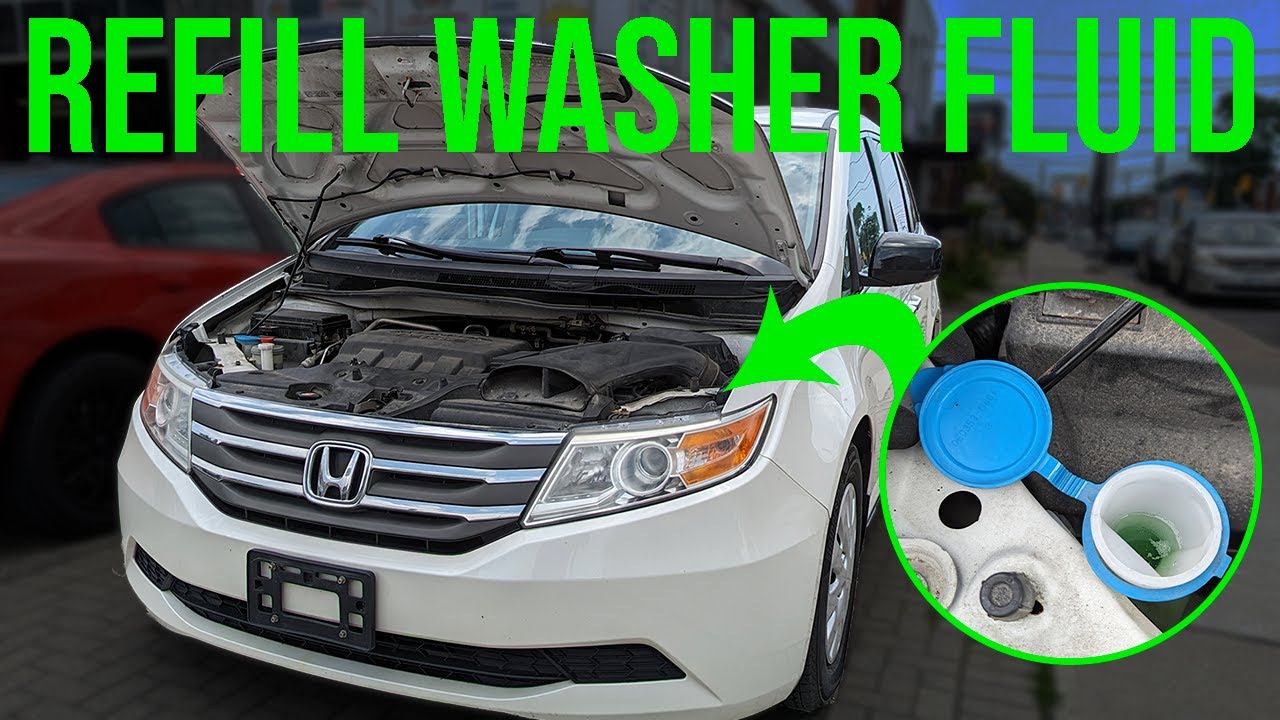
Look for a translucent plastic reservoir or filler neck with a cap showing a windshield-and-spray symbol. Its exact position varies by vehicle.
Step 3: Confirm the correct reservoir
Do not open a container unless you are certain it is the washer reservoir. Coolant, brake fluid, power steering fluid on applicable vehicles, and other systems have different reservoirs.
Step 4: Clean around the opening
Wipe away loose dirt around the cap so debris does not fall into the reservoir.
Step 5: Open the washer reservoir cap
Most caps flip open or pull upward. Some designs unscrew. Do not force a cap that appears to use a different mechanism.
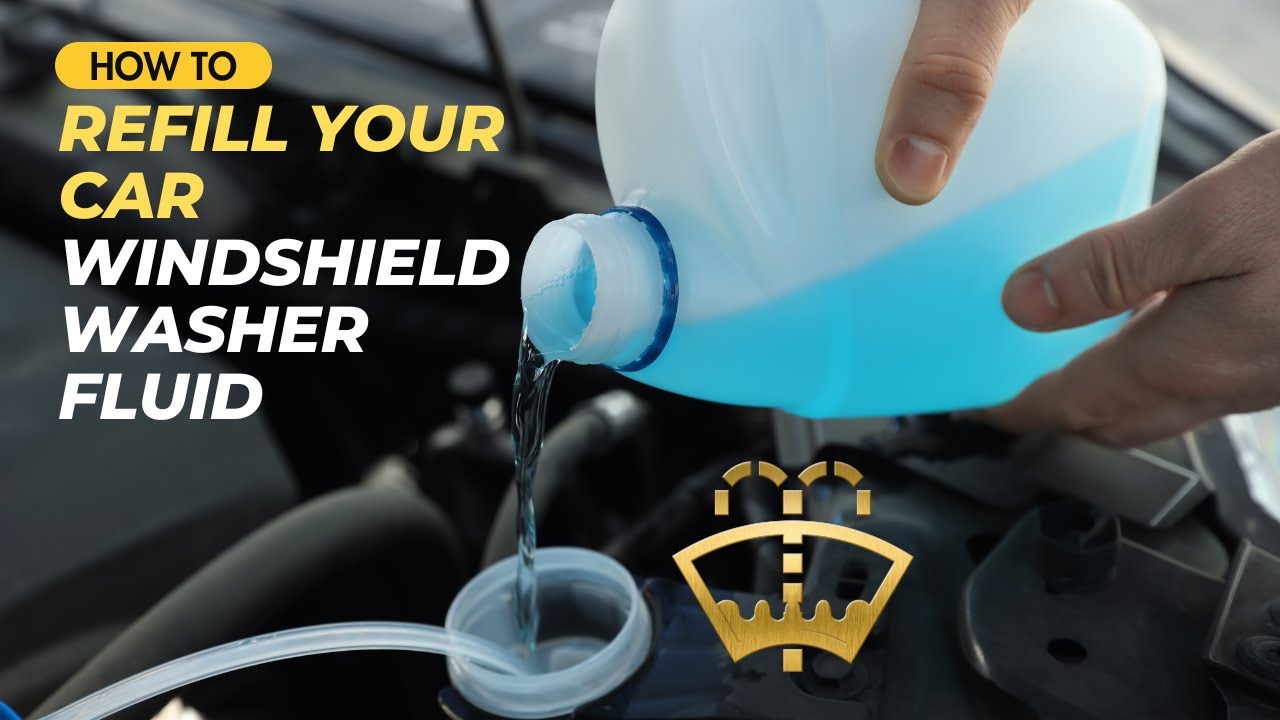
Step 6: Add washer fluid
Pour slowly into the filler opening. A clean funnel can prevent spills. Stop at the full indicator when one is visible, or before fluid reaches the point where it could overflow.
Step 7: Secure the cap
Close or tighten the reservoir cap completely so dirt cannot easily enter the system.
Step 8: Test the washers
Close the hood, start the vehicle if required for washer operation, and activate the washer control briefly. Confirm that fluid reaches the windshield and the wipers clear it normally.
How Do You Know the Job Was Successful?
A successful refill should produce a normal spray pattern after the pump and lines contain fluid. The reservoir should not leak, the cap should remain secure, and fluid should reach the intended portion of the windshield.
If the tank had been completely empty, the system may need a few brief activations before fluid reaches the nozzles. Avoid holding the washer switch continuously for a long period when no fluid is spraying because prolonged dry operation can place unnecessary stress on the washer pump.
Normal spray
Fluid reaches the windshield from the washer nozzles.
No visible leakage
Fluid remains inside the reservoir and washer lines instead of dripping beneath the vehicle.
Clearer windshield
The wipers distribute the fluid and remove normal dirt without severe smearing.
How to Completely Replace Old Washer Fluid
Routine washer-fluid maintenance normally involves topping off the reservoir, not completely draining it. However, replacing most or all of the existing fluid can be useful before severe winter weather, after the wrong product has been added, or when contamination is visible.
The simplest method when the existing fluid is compatible and uncontaminated is to use it normally until the reservoir is nearly empty, then fill the reservoir with the new formula. This avoids unnecessary disassembly and waste.
If you need to remove unsuitable fluid immediately, consult the vehicle’s service information before disconnecting the reservoir or washer hoses. Access varies significantly among vehicles, and on some models the reservoir is partly hidden behind a fender liner, bumper component, or other bodywork.
Source: storage.googleapis.com
Seasonal change
Use most of the old fluid first, then refill with the appropriate seasonal formula before temperatures become extreme.
Contaminated reservoir
If dirt, oil, coolant, soap, or another unsuitable substance has entered the tank, avoid simply topping it off and assuming dilution will solve the problem.
Wrong automotive fluid added
Do not operate the washer system unnecessarily. Check the vehicle’s service information or have the reservoir drained and cleaned properly.
Can You Mix Different Windshield Washer Fluids?
Compatible ready-to-use washer fluids can often coexist in a reservoir, but mixing formulas may change cleaning characteristics and, more importantly, reduce predictable freeze protection. This matters most when preparing for a U.S. winter.
If freeze protection is critical, the safer approach is to use down most of the old fluid and refill with a winter product whose labeled temperature rating meets local conditions. Do not assume that adding a small amount of low-temperature fluid to a mostly water-based mixture gives the entire reservoir the same freeze rating as the new product.
Check the label
Follow manufacturer instructions concerning compatibility, dilution, and temperature protection.
Avoid unknown mixtures
A reservoir containing unidentified liquid makes its freeze resistance difficult to predict.
Common Mistakes When Changing Windshield Washer Fluid
The refill itself is straightforward, but using the wrong reservoir or wrong liquid can turn a simple job into a repair. Confirm the reservoir before pouring anything and use a product intended for automotive windshield washer systems.
Engine antifreeze is not a substitute for windshield washer fluid. Automotive coolant belongs only in the cooling system and can create visibility, paint, and system problems if poured into the washer reservoir. Household detergents and improvised mixtures can also produce excessive foam, deposits, streaking, freezing problems, or incompatibility with washer-system components.
Source: storage.googleapis.com
Using plain water in freezing weather
Water can freeze in the reservoir, pump, hoses, or nozzles and prevent the system from operating.
Pouring fluid into the wrong reservoir
Always verify the washer symbol or consult the owner’s manual before filling.
Ignoring concentrate instructions
Some products require dilution while others are sold ready to use. Follow the product label rather than guessing.
Overfilling carelessly
Pour slowly and stop before the filler neck overflows onto surrounding engine components.
Using a dirty funnel
Oil, coolant, or other residue from a previously used funnel can contaminate the washer system.
Forgetting winter protection
Drivers traveling from a warm region into freezing temperatures should verify the washer fluid’s freeze rating before the trip.
Special Considerations for U.S. Winter Driving
A vehicle that spends summer in Florida, Texas, Arizona, or another warm area may contain fluid that is poorly suited to a winter trip into colder parts of the United States. Check the bottle’s freeze-protection rating rather than assuming every blue washer fluid provides the same protection.
Prepare before temperatures fall below the fluid’s rating. Once weak or water-heavy washer fluid freezes inside the system, adding stronger winter fluid to the reservoir may not immediately thaw frozen hoses or nozzles.
During freezing conditions, allow the windshield to warm sufficiently before spraying if there is a risk that washer fluid could freeze on the glass. Reduced visibility from frozen fluid can be hazardous.
Check expected temperatures
Choose fluid according to the coldest conditions the vehicle is reasonably expected to encounter.
Prepare before a road trip
Verify the washer system before traveling into snow, ice, road salt, or below-freezing weather.
What to Do If the Windshield Washers Still Do Not Work
A full washer reservoir does not guarantee that fluid will spray. If you refill the tank and nothing reaches the windshield, work through the system logically instead of repeatedly holding the washer switch.
First, confirm that fluid is actually present and that it has not frozen. Then listen for the washer pump when the control is activated. A pump sound with no spray can point toward a restriction, disconnected hose, leak, frozen line, or nozzle problem. No pump sound can indicate an electrical problem, fuse issue, switch problem, damaged wiring, or failed pump, although the exact diagnostic process depends on the vehicle.
Look beneath the vehicle and around the reservoir after operating the system briefly. A rapid loss of fluid may indicate a cracked reservoir, loose hose, damaged fitting, or pump seal leak.
Source: storage.googleapis.com
Weak spray
Possible causes include low fluid, a partially restricted nozzle, leaking hose, weak pump, or freezing.
No spray but pump can be heard
Check for leaks, frozen fluid, disconnected hoses, or restricted washer lines and nozzles.
No spray and no pump sound
The vehicle may have an electrical, fuse, switch, wiring, connector, or washer-pump fault.
Fluid disappears quickly
Inspect for a leaking reservoir, hose, fitting, or pump connection.
One nozzle works and another does not
A localized blockage, damaged hose branch, or nozzle problem is more likely than an empty reservoir.
When to Get Professional Help
Professional diagnosis makes sense when the reservoir is difficult to access, fluid leaks behind body panels, the pump repeatedly fails to operate, electrical testing is required, or the washer system remains inoperative after basic checks.
Do not start removing bumpers, fender liners, electrical connectors, or washer pumps unless you understand the vehicle-specific procedure and can support the vehicle safely when required. A simple refill should not require major disassembly.
Persistent leak
A technician can pressure-check or visually inspect hidden hoses, reservoir seams, pump seals, and fittings.
Electrical fault
Proper circuit testing can determine whether the problem involves the fuse, power supply, ground, switch, control module, wiring, or pump.
Hard-to-access reservoir
Some vehicles require removal of trim or body components to service the tank or pump.
Frequently Asked Questions
Q
Do you have to drain old windshield washer fluid before adding new fluid?
Usually, no. Windshield washer fluid is normally topped off rather than drained at scheduled intervals. If the existing fluid is suitable for the climate and is not contaminated, you can add compatible washer fluid as needed.
Draining becomes more relevant when the reservoir contains an unsuitable substance, contaminated fluid, or a mixture that may not provide adequate freeze protection for upcoming winter conditions.
Q
Can I use water instead of windshield washer fluid?
Water alone is generally a poor long-term substitute. It lacks the cleaning and freeze-protection characteristics of properly formulated washer fluid and may freeze in cold weather. Minerals in some tap water can also leave deposits.
Use an automotive windshield washer product appropriate for the operating temperature and follow its dilution instructions when applicable.
Q
How often should I refill windshield washer fluid?
There is no universal mileage interval because consumption depends on weather, road conditions, driving distance, and how frequently the washers are used. Check the level periodically and whenever washer performance becomes weak or a low-fluid warning appears.
Drivers may use considerably more fluid during U.S. winter conditions because road salt, slush, and spray from other vehicles can repeatedly dirty the windshield.
Q
How much windshield washer fluid should I add?
Reservoir capacity varies by vehicle. Fill to the marked full level if your reservoir has one. If the tank does not provide a visible mark, pour slowly and stop before fluid overflows from the filler neck.
You do not need to know the exact reservoir capacity simply to top it off. Consult the owner’s manual or vehicle specifications when an exact capacity is required.
Q
What happens if I put windshield washer fluid in the wrong reservoir?
Do not start the engine or operate the affected system until you have identified where the fluid went. Washer fluid does not belong in the coolant, brake, engine-oil, transmission, or other fluid systems.
If a significant amount was added to another reservoir, professional removal and system-specific corrective service may be necessary. The correct response depends on which reservoir was contaminated.
✦ Wrapping Up
Conclusion
Knowing how to change windshield washer fluid gives you an easy way to maintain clear visibility without a trip to a repair shop. For most vehicles, the process is simply to park safely, switch off the engine, identify the washer reservoir, add the appropriate fluid, secure the cap, and test the washers.
For U.S. drivers, climate is the most important variable when choosing washer fluid. A general-purpose formula may be adequate in mild conditions, while vehicles exposed to freezing temperatures need fluid with suitable freeze protection. Avoid engine antifreeze and improvised household mixtures, and investigate the washer system if a full reservoir still produces little or no spray.
💡 Key Takeaway
Check your washer-fluid level today, confirm that the fluid is suitable for your local U.S. weather conditions, top off the reservoir if needed, and test the washers before your next drive.
Learn how to install a windshield sun shade correctly in your car. Follow simple steps for folding, roll-up, and umbrella-style shades, plus fit, safety, storage, and troubleshooting tips.
Learn how to fold a windshield sun shade correctly with simple steps for pop-up, accordion, and umbrella styles, plus storage and troubleshooting tips.