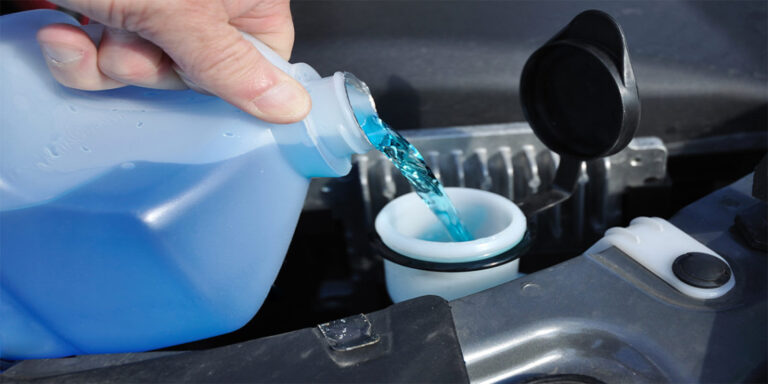
To check the windshield washer fluid level, park on level ground, turn off the engine, open the hood, locate the washer fluid reservoir, and look through the translucent tank or remove the cap if the level cannot be seen from outside. Refill with appropriate windshield washer fluid if the reservoir is low.
For drivers in the United States, keeping enough windshield washer fluid in the reservoir is a small maintenance task that can make a significant difference in visibility. Road salt in northern states, dust in dry western regions, pollen during spring, insects during highway driving, and everyday road spray can quickly coat a windshield. A working washer system helps remove those contaminants when normal wiper action alone is not enough.
Checking the level usually takes only a few minutes and normally requires no tools. The main challenge is identifying the correct reservoir because engine compartments differ by vehicle. This guide explains how to check windshield washer fluid level, recognize the reservoir and its symbol, determine when the tank needs fluid, refill it correctly, and troubleshoot situations in which the washer system still does not work after the reservoir has been filled.
How to Check Windshield Washer Fluid Level Step by Step
Checking windshield washer fluid is one of the simpler under-hood maintenance jobs. Before beginning, park the vehicle on reasonably level ground, switch the engine off, engage the parking brake, and allow yourself enough light to see the reservoir clearly. Checking on level ground makes the visible fluid level easier to judge.
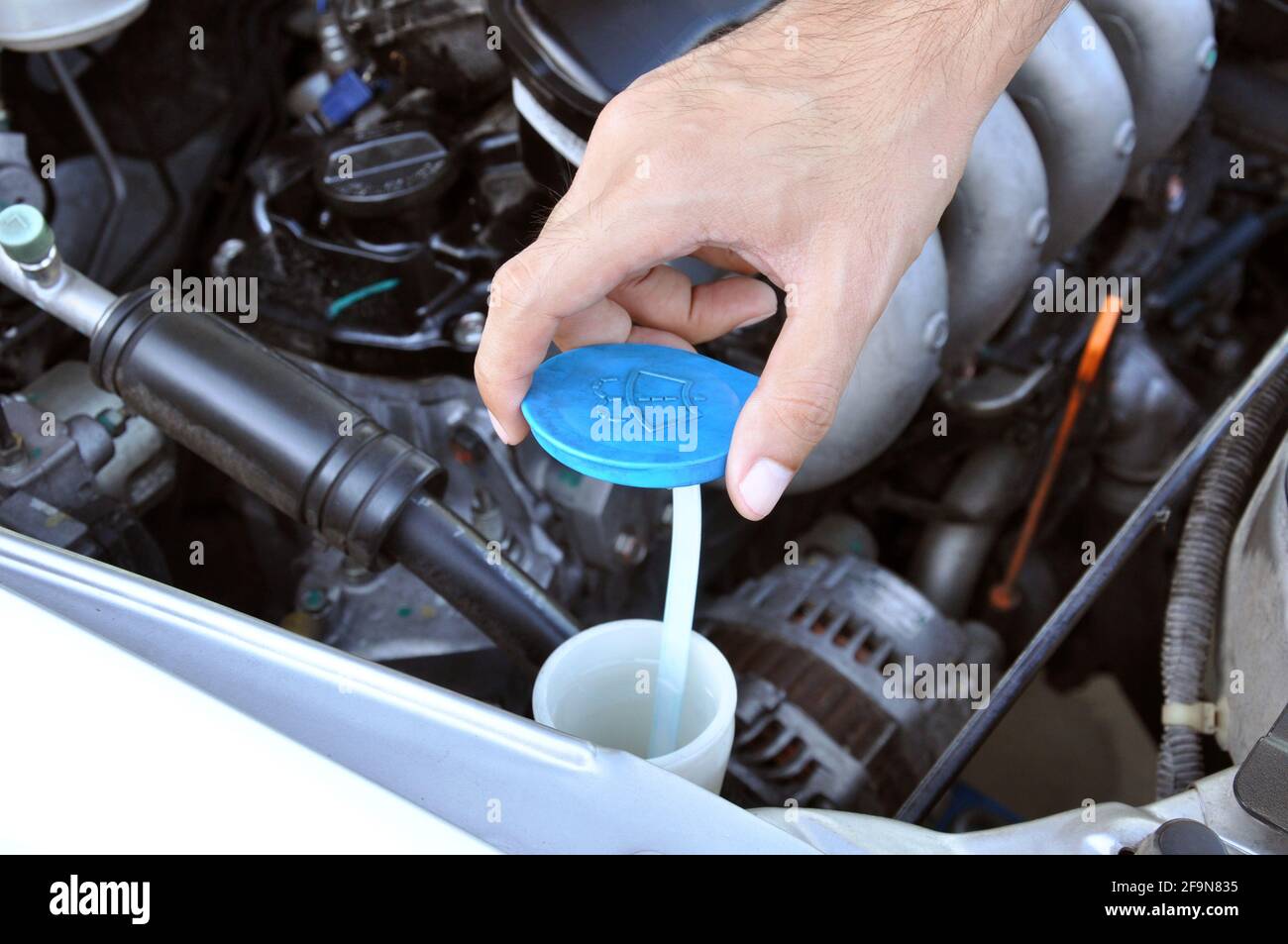
Most washer reservoirs are made from white or translucent plastic. Depending on the vehicle, the entire tank may be visible, or only its filler neck and cap may be accessible from the top of the engine compartment.
Source: alamy.com
Step 1: Park safely
Stop on a level surface, place the transmission in Park or in gear as appropriate, apply the parking brake, and turn the engine off.
Step 2: Open the hood
Use the interior hood release and the secondary safety latch at the front of the hood. Secure the hood using its support rod if the vehicle does not have self-supporting struts.
Step 3: Find the washer reservoir
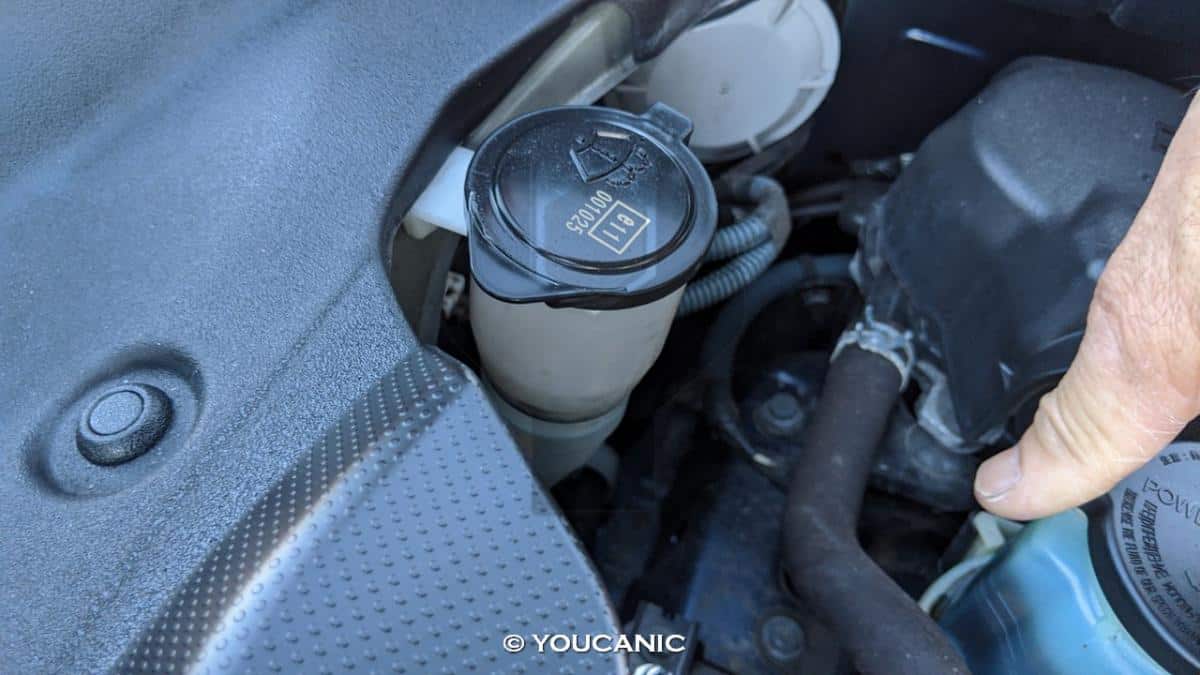
Look for a plastic reservoir with a cap marked by a symbol resembling a windshield with water spraying onto it.
Step 4: Look at the fluid level
If the tank is translucent, inspect the side of the reservoir and compare the fluid level with any molded full or minimum markings.
Step 5: Check through the filler opening if needed
If the reservoir cannot be viewed from the outside and the owner’s manual permits it, open the washer fluid cap and look into the filler neck with adequate lighting.
Step 6: Refill when low
Add suitable windshield washer fluid slowly until the reservoir reaches its recommended full level or is nearly full when no level marking is provided.
Step 7: Close and test
Secure the reservoir cap, close the hood properly, and operate the washers briefly to confirm that fluid sprays onto the windshield.
What Should a Normal Washer Fluid Level Look Like?
A normal level is generally at or close to the reservoir’s full mark. Some vehicles use molded MIN and MAX markings, while others have no clearly marked level line. With an unmarked translucent reservoir, a tank that is visibly well filled usually does not require immediate attention.
Washer fluid does not need the same precision as engine oil or brake fluid. The reservoir mainly provides storage for the washer system, so being slightly below the top is normally not a problem. The practical goal is to have enough fluid available whenever the windshield needs cleaning.
How Do You Know the Reservoir Is Low?
A visibly low level is the clearest sign. On vehicles equipped with a washer fluid level sensor, a dashboard warning may also appear when the fluid falls below a predetermined point. The exact warning symbol or message differs by vehicle.
Weak or absent washer spray can happen when the reservoir is empty, but it does not prove that the tank is low. A clogged nozzle, frozen fluid, damaged hose, electrical fault, or failed washer pump can cause similar symptoms.
How to Find the Windshield Washer Fluid Reservoir
The windshield washer fluid reservoir is usually located near one of the outer edges of the engine compartment. Manufacturers often position the main tank low in the engine bay to use otherwise available space, so you may see only the filler neck and cap from above.
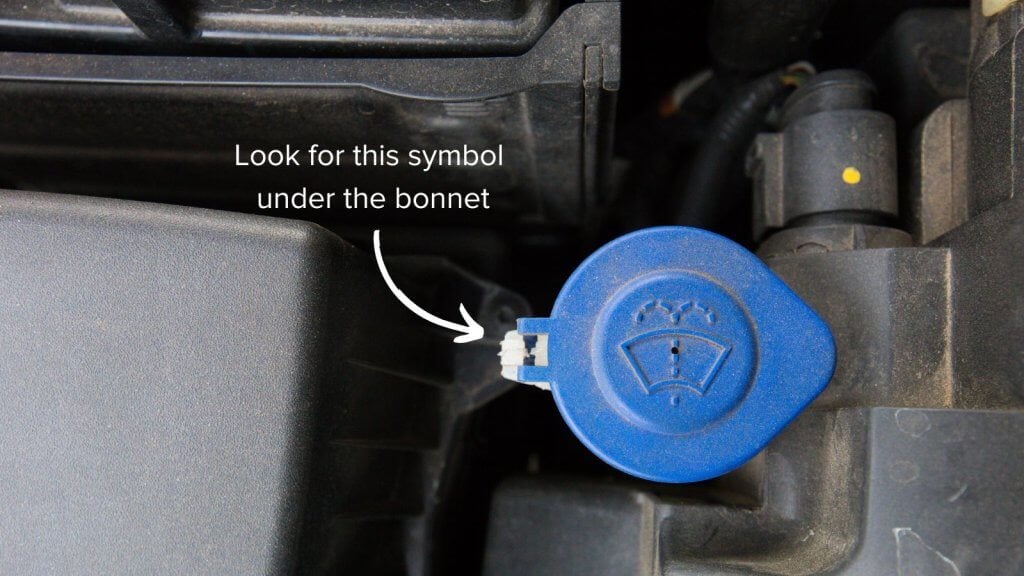
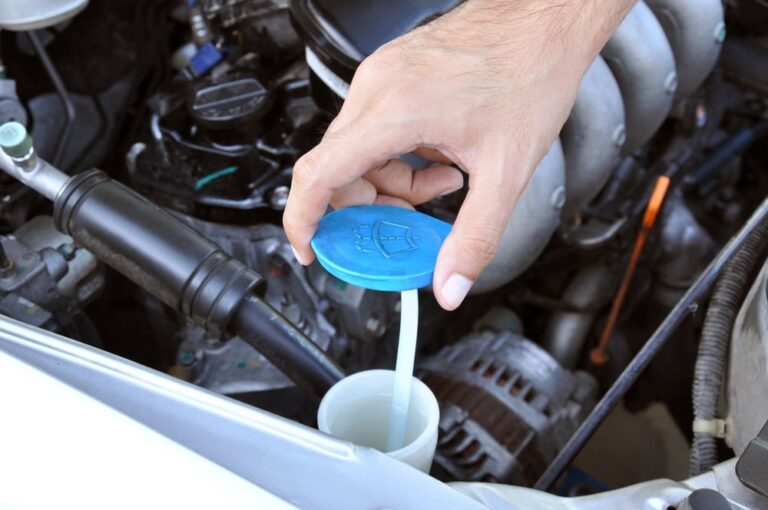
The easiest identification method is the cap symbol. Look for an icon showing a windshield with a spray pattern above it. Cap colors vary and should not be used as the only identifying feature. Depending on the vehicle, the cap may be blue, black, yellow, or another color.
Source: storage.googleapis.com
Look for the windshield spray symbol
The washer cap normally uses a standardized pictogram that resembles water spraying over a windshield.
Check near the front corners
Many reservoirs are positioned near a fender, headlight, or front corner of the engine compartment.
Follow the filler neck
If you see only a narrow neck beneath the cap, the larger reservoir may sit farther down behind the bumper, inner fender, or other components.
Use the owner’s manual when uncertain
The vehicle owner’s manual is the most reliable reference when the reservoir is difficult to identify.
Do Not Confuse Washer Fluid With Other Automotive Fluids
Before opening any reservoir, confirm its identity. The engine compartment can contain separate reservoirs for engine coolant, brake fluid, power steering fluid on some vehicles, and windshield washer fluid. Adding washer fluid to the wrong system can create a serious maintenance problem.
Never identify a reservoir only by the color of the cap or fluid. Check the molded symbol, nearby labels, and the owner’s manual. The washer reservoir is typically designed specifically for cleaning solution and should not be treated as interchangeable with any other fluid container.
How to Read the Washer Fluid Level
The method for reading the level depends on the reservoir design. A translucent reservoir is the easiest because the liquid line can normally be seen through the plastic. Brightly colored washer fluid may make the boundary easier to identify, although washer fluid color varies by formulation and does not indicate a universal type or specification.
Inspect the side of the tank under good lighting. If dirt covers the outside of the reservoir, wipe the surface with a cloth so the fluid line becomes easier to see. Never assume that staining on the plastic represents the current fluid level.
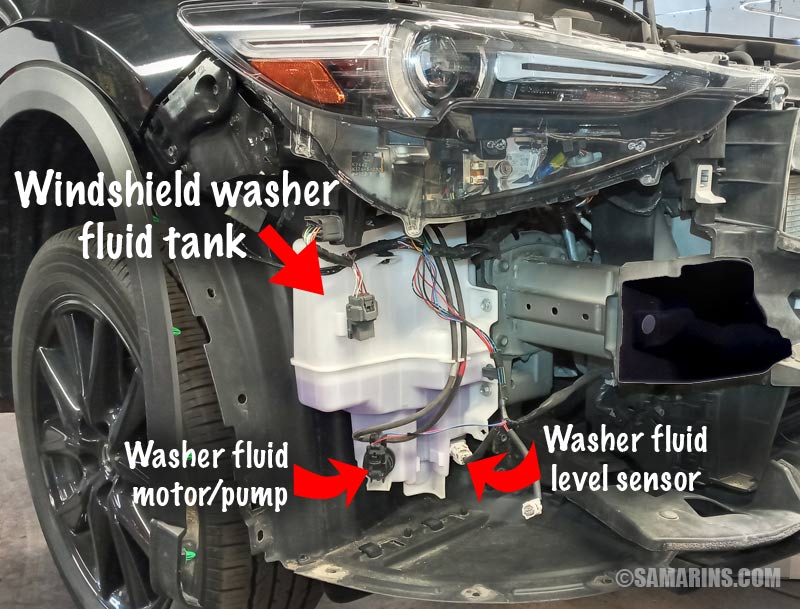
Source: samarins.com
Full or near full
The liquid reaches the full marking or sits high in an unmarked reservoir with adequate expansion space.
Partially filled
The system can normally still operate, but topping it up may be worthwhile before a long trip, winter weather, or heavy highway driving.
Very low
Only a small amount of fluid remains near the bottom of the visible tank, so refill the reservoir before relying on the washers.
Apparently empty
No fluid can be seen in the reservoir. Refill it and inspect for leakage if the fluid level previously dropped unusually quickly.
What If You Cannot See the Fluid Through the Reservoir?
Some tanks are hidden or made from plastic that is difficult to see through. In that situation, consult the owner’s manual for any recommended checking method. You may be able to remove the washer cap and view the fluid through the filler opening, but a long filler neck can prevent you from seeing the main reservoir.
Do not insert improvised tools, sticks, wires, or contaminated objects into the reservoir to estimate its depth. If the level cannot be determined reliably, adding the correct washer fluid slowly while monitoring the filler neck is generally more useful than probing inside the system.
What Does the Washer Fluid Level Sensor Do?
Some vehicles have a sensor mounted in or near the washer reservoir. When the fluid drops below a certain point, the vehicle may display a washer fluid warning light or message. The warning indicates a low detected level rather than measuring the exact amount of fluid remaining.
If the warning remains on after the reservoir has been properly filled, the sensor, its wiring, the electrical connector, or contamination around the sensing mechanism may need inspection.
How to Add Windshield Washer Fluid Safely
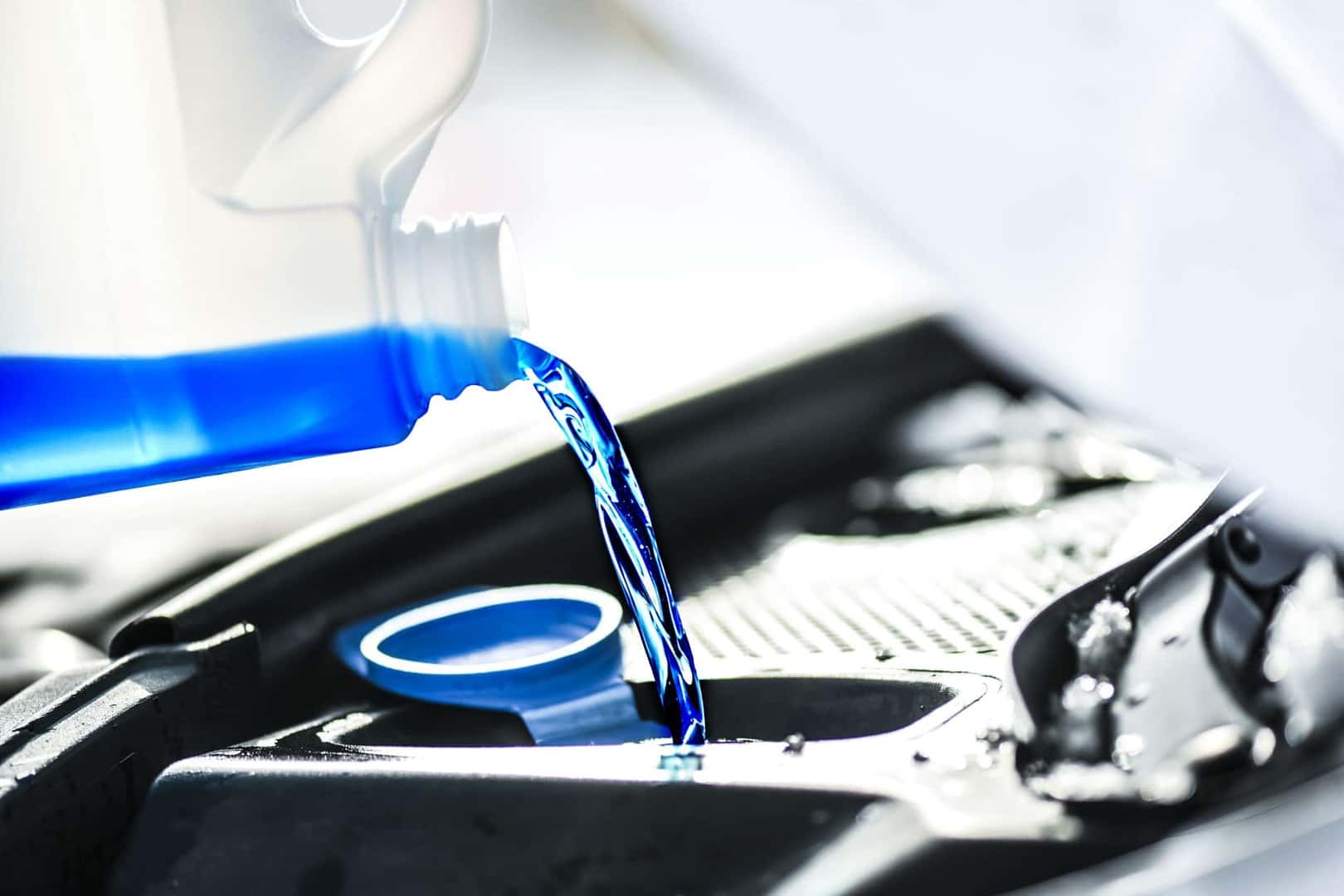
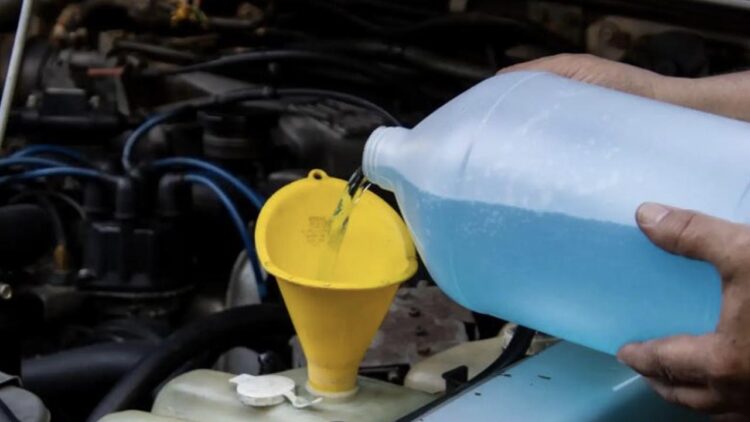
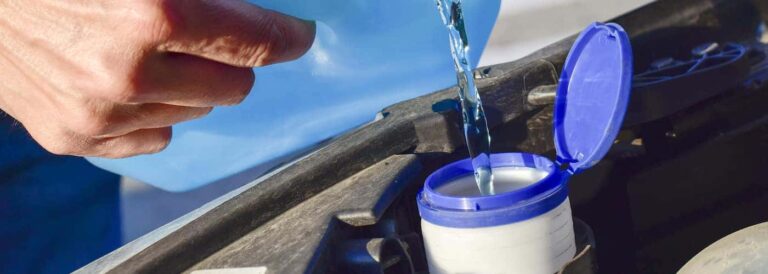
Once you confirm that the reservoir is low, refill it using windshield washer fluid appropriate for the vehicle and operating conditions. Open the cap carefully and pour the fluid into the filler neck. A clean funnel can reduce spills when access is tight.
Pour slowly, especially if you cannot see the entire tank. Stop when the fluid reaches the indicated full level. On reservoirs without a visible full line, avoid forcing fluid into an already filled filler neck. Wipe up spills and secure the cap when finished.
Source: storage.googleapis.com
Choose an appropriate formula
Use automotive windshield washer fluid designed for the temperatures and driving conditions you expect.
Use winter-rated fluid in freezing climates
Drivers in colder parts of the United States should select a formulation with freeze protection appropriate for anticipated temperatures and follow the product directions.
Pour slowly
Slow filling reduces splashing and makes it easier to notice when the reservoir is approaching full.
Close the cap securely
A properly seated cap helps keep dirt and debris out of the reservoir.
Can You Use Water Instead of Windshield Washer Fluid?
Plain water can rinse a windshield, but it is generally a poor substitute for proper washer fluid, especially in much of the United States. Water can freeze when temperatures fall below 32 degrees Fahrenheit, potentially preventing washer operation and contributing to damage in the reservoir, pump, hoses, or nozzles.
Purpose-made washer fluid may also contain cleaning agents that improve the removal of road grime, insects, and oily films. Some formulations are designed for freezing conditions, while others focus on warm-weather cleaning. Follow the vehicle manual and the fluid manufacturer’s directions.
Can Different Washer Fluids Be Mixed?
Many conventional washer fluids can coexist in the same reservoir, but formulations differ. Mixing products can change freeze protection and cleaning performance, and specialized products may have their own compatibility instructions.
If freeze protection is important, do not assume that adding a winter product to a reservoir already containing a large amount of water or warm-weather solution will provide the temperature rating printed on the new container. Follow the product directions, especially before severe freezing weather.
What to Do If the Washer Fluid Is Full but Nothing Sprays
A full reservoir with no windshield spray means the problem is somewhere else in the washer system. Start with simple observations before replacing parts. Switch the ignition to the position required by the vehicle, operate the washer control briefly, and listen for the washer pump.
A pump sound with no spray often points toward a blocked nozzle, disconnected hose, frozen line, or leak. No pump sound may indicate an electrical problem, damaged wiring, a blown fuse, a control issue, or a failed pump, although the exact diagnostic sequence depends on the vehicle.
Source: carblogindia.com
Check for freezing
In cold weather, unsuitable or diluted fluid may freeze in the reservoir, hose, pump, or nozzles.
Inspect the nozzles
Dirt, wax, mineral deposits, ice, and debris can restrict the small openings that direct fluid onto the windshield.
Look for leaks
Inspect accessible areas for wet spots, dripping fluid, disconnected hoses, or fluid collecting beneath the vehicle.
Listen for pump operation
A humming or buzzing sound when the washer control is operated suggests that the pump is receiving power and attempting to move fluid.
Check the fuse information
If the pump is silent, consult the owner’s manual or fuse diagram before checking the washer pump circuit.
Why Does the Reservoir Keep Losing Fluid?
Frequent washer use can naturally lower the level, especially during winter road-salt conditions or long highway trips. However, a reservoir that becomes empty shortly after being filled may have a leak.
Possible leak locations include the reservoir body, pump seal, hose connections, washer tubing, and headlight washer components on vehicles equipped with them. If fluid visibly leaks underneath the vehicle as soon as you fill the tank, further inspection is warranted.
Why Is the Low Washer Fluid Warning Still On?
First confirm that the reservoir actually contains enough fluid. If the level is correct but the warning remains illuminated after normal vehicle operation, a washer fluid level sensor or its electrical circuit may be malfunctioning.
Some washer fluids or contamination can also affect certain sensing systems. Vehicle-specific diagnostic information is useful before replacing the sensor because the warning system design varies by make and model.
Common Mistakes When Checking Washer Fluid
The task is straightforward, but several common mistakes can create unnecessary problems. The most serious is adding washer fluid to the wrong reservoir. Taking a few seconds to verify the windshield spray symbol is far safer than relying on reservoir location or cap color.
Another mistake is treating an empty reservoir as the only possible explanation for poor washer performance. The washer system includes a pump, hoses, fittings, nozzles, electrical components, and sometimes heating or headlight-washer equipment. Checking the fluid level should be the first diagnostic step, not automatically the final one.
Source: exybwflzx.blob.core.windows.net
Opening the wrong reservoir
Confirm the windshield washer symbol before adding any fluid.
Relying only on cap color
Cap colors are not standardized enough to identify the washer reservoir safely across all vehicles.
Using plain water during freezing weather
Water can freeze and prevent the washer system from operating when visibility may be especially important.
Ignoring rapid fluid loss
A reservoir that repeatedly empties without heavy washer use may have a leak that should be located.
Overfilling unnecessarily
Fill to the indicated level rather than repeatedly forcing additional fluid into a full filler neck.
Operating a dry system repeatedly
If you know the reservoir is empty, refill it before repeatedly commanding the washer pump.
How Often Should You Check Windshield Washer Fluid?
There is no single checking interval that fits every driver because consumption depends heavily on weather and road conditions. A useful habit is to check the level during routine under-hood inspections and before long road trips.
More frequent checks make sense during snowy winters, spring pollen season, dusty conditions, or periods of heavy highway driving. If your vehicle has a reliable low-level warning, the system provides an additional reminder, but periodically looking at the reservoir can reveal leaks or unexpectedly high consumption before it becomes empty.
Frequently Asked Questions
Q
Can I check windshield washer fluid when the engine is hot?
The washer reservoir itself is not a pressurized hot coolant system, so checking it does not normally require the engine to be completely cold. However, a hot engine compartment can contain very hot components, moving fans, and other hazards. Turning the engine off and avoiding contact with hot components is the safer approach.
Never confuse the windshield washer reservoir with the engine coolant reservoir or radiator cap. A hot cooling system can be pressurized and can cause serious burns if opened improperly.
Q
Where is the windshield washer fluid located?
Windshield washer fluid is stored in a dedicated plastic reservoir under the hood on most passenger vehicles. The reservoir is commonly near a front corner of the engine compartment, although its exact location varies.
Look for a cap displaying a windshield with a spray symbol. If the location is unclear, consult the vehicle owner’s manual rather than opening an unidentified reservoir.
Q
How can I tell if my car has a low washer fluid sensor?
Vehicles equipped with a level sensor commonly display a dashboard warning symbol or text message when the reservoir becomes low. The owner’s manual will identify whether that warning is available and explain what its symbol looks like.
The absence of a warning does not guarantee that the reservoir contains enough fluid because some vehicles do not monitor the level electronically.
Q
How much windshield washer fluid should I add?
Add enough fluid to reach the reservoir’s full indication. If the tank has no visible marking, add fluid gradually and stop when the reservoir or filler neck indicates that it is nearly full.
Reservoir capacities differ substantially between vehicles, so there is no universal number of quarts or gallons that applies to every car, SUV, or pickup.
Q
What does the windshield washer fluid symbol look like?
The common washer fluid symbol resembles a windshield with droplets or a spray pattern directed toward it. It may appear on the reservoir cap and, on equipped vehicles, as part of a low-fluid dashboard warning.
Do not confuse it with coolant temperature, brake, or oil symbols. Check the owner’s manual whenever an under-hood symbol is unfamiliar.
Q
Why can I not see the washer fluid level?
The reservoir may be hidden deep in the engine compartment, the plastic may have become difficult to see through, or the filler neck may be the only exposed part of the tank. Dirt on the exterior can also hide the visible fluid line.
Clean the accessible exterior surface first. If the tank still cannot be viewed, check the owner’s manual and add the correct fluid cautiously when necessary rather than inserting objects into the reservoir.
✦ Wrapping Up
Conclusion
Knowing how to check windshield washer fluid level gives you a quick way to maintain dependable windshield cleaning. Park safely, open the hood, identify the reservoir by its windshield spray symbol, inspect the visible level, and add appropriate washer fluid when needed. The whole process usually requires only a few minutes.
For U.S. drivers, pay particular attention to seasonal conditions. A warm-weather solution may not provide adequate freeze protection during winter, while drivers dealing with insects, pollen, dust, or highway grime may use washer fluid more quickly than expected. If the reservoir is full but the washers still do not spray, move on to checking the nozzles, hoses, pump operation, freezing, leaks, and relevant electrical components instead of assuming more fluid will solve the problem.
💡 Key Takeaway
Check your washer reservoir during routine under-hood maintenance and before long trips, keep a suitable washer fluid available for your local U.S. climate, and investigate leaks or washer-system faults if the level falls unusually quickly or the system does not spray after refilling.
Learn how to fold a pop up windshield sun shade safely and quickly. Follow simple steps, avoid common mistakes, and store your car sun shade without damaging its frame.