How to Read Hot Wheels Card Codes: Complete Collector Guide
How to read Hot Wheels card codes helps collectors understand important information printed on Hot Wheels packaging, including production details, case identification, and manufacturing information. These codes can help collectors organize collections, identify releases, and track different versions of Hot Wheels cars.
The complete details are explained below. You will learn where Hot Wheels codes are located, what different markings mean, how case codes work, and what information collectors can and cannot determine from a card.
What Are Hot Wheels Card Codes?
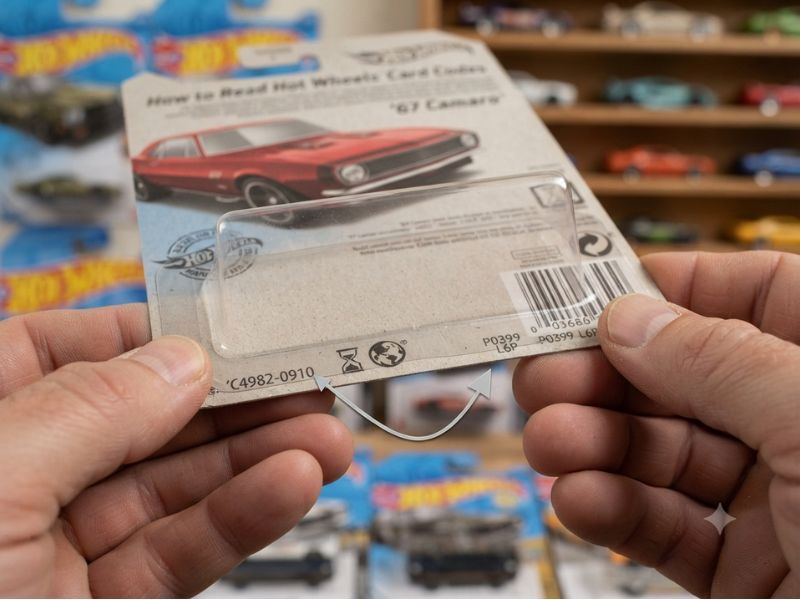
Hot Wheels card codes are small letters, numbers, and markings printed on the packaging of Hot Wheels toy cars.
Collectors often look at these codes to learn more about a release, such as:
- Production information
- Packaging series
- Case identification
- Factory details
- Release timing
- Collector organization information
These markings are useful for collectors who search for specific models, chase cars, Treasure Hunts, and different packaging variations.
However, Hot Wheels does not provide a public universal decoding system that reveals every detail about a car directly from the card code.
Some codes can provide clues, while others are mainly internal manufacturing or distribution identifiers.
Where Are Hot Wheels Card Codes Located?
Hot Wheels packaging contains several different numbers and markings.
Common locations include:
Back of the Card
The back of the card may contain:
- Product information
- Copyright details
- Barcode
- Manufacturing information
- Assortment details
Bottom Corner of the Card
Many collectors check the small printed codes near the bottom area of the blister card.
These markings may include production or assortment information.
Near the Barcode
The barcode area often contains numbers used for retail inventory and product identification.
On the Toy Base
The car itself may also have markings underneath, including:
- Copyright year
- Model name
- Scale information
- Manufacturing location
The card code and the casting code on the vehicle are not always the same thing.
How to Read Hot Wheels Date Codes
One of the most commonly discussed Hot Wheels markings is the date code.
Modern Hot Wheels products often include a production date code consisting of a letter followed by numbers.
A common format looks like:
L42
or:
A12
Collectors often interpret these codes as manufacturing date indicators.
The letter generally represents the production year, while the numbers represent the production week.
For example, a code may indicate:
- The year the item was produced
- The week of production during that year
However, the exact letter-to-year relationship can change over time, and Mattel does not always publish a complete collector decoding chart.
Because of this, collectors usually compare codes with known releases to estimate production periods.
What Do Hot Wheels Case Codes Mean?
Hot Wheels case codes are used to identify assortment waves.
A typical Hot Wheels basic car case may have a letter designation representing a specific assortment release.
Collectors commonly refer to releases as:
- A Case
- B Case
- C Case
- D Case
- E Case
- F Case
- G Case
- H Case
- J Case
- K Case
- L Case
- M Case
Each case contains a different selection of vehicles released during that period.
Case codes help collectors know:
- Which wave a car belongs to
- Which models may appear in a shipment
- When new assortments arrive
- Which Treasure Hunts may be included
For example, collectors searching for a newly released Treasure Hunt often track specific case waves because certain models appear in specific assortments.
How Collectors Use Hot Wheels Case Codes
Collectors use case information mainly for hunting and organizing.
Case codes help answer questions like:
- Is this a new release?
- Which models should be found in this shipment?
- Is this car from an older assortment?
- Which wave included this Treasure Hunt?
Retail stores receive shipments based on assortment cases.
A collector who understands case releases can identify whether a store has received a new shipment or an older one.
This is especially useful when collecting:
- Treasure Hunts
- Super Treasure Hunts
- Limited releases
- Premium models
- Convention cars
How to Identify Hot Wheels Treasure Hunts Using the Card
Hot Wheels Treasure Hunts are special collectible versions mixed into normal releases.
Collectors usually identify them through:
- Special symbols
- Unique graphics
- Different wheels
- Special paint
- Card markings
A common Treasure Hunt indicator is a small flame logo hidden on the card or vehicle.
Super Treasure Hunts usually have additional features such as:
- Spectraflame paint
- Real Rider wheels
- Special markings
The card code alone does not confirm whether a car is a Treasure Hunt.
Collectors should inspect the actual vehicle and packaging details.
Can Hot Wheels Card Codes Tell the Exact Value?
No.
A card code alone does not determine a Hot Wheels car’s value.
Collector value depends on factors such as:
- Model rarity
- Production quantity
- Condition
- Packaging condition
- Demand
- Special editions
- Treasure Hunt status
- Factory variations
For example, two cars from the same production case may have completely different values.
A common mainline car may be worth only retail price, while a rare variation from the same assortment may be highly collectible.
Understanding Hot Wheels Barcode Numbers
The barcode on a Hot Wheels card is mainly used for retail inventory.
It helps stores identify the product.
Barcode information may include:
- Product identification
- Retail tracking information
- Packaging details
Collectors sometimes compare barcodes between releases, but barcode numbers are not designed as a collector rarity code.
A barcode cannot reliably tell you:
- Whether a car is rare
- Whether it is a Treasure Hunt
- Production quantity
- Future value
It is mainly a retail and inventory tool.
Hot Wheels Base Codes vs Card Codes
Collectors often confuse card codes with the markings found on the bottom of the vehicle.
The base of a Hot Wheels car may include:
- Model name
- Copyright year
- Mattel logo
- Manufacturing location
- Scale information
These markings identify the casting and production information of the toy itself.
The card code relates to packaging and distribution.
Both can be useful, but they provide different information.
How to Read Hot Wheels Factory Information
Some Hot Wheels markings indicate manufacturing information.
Mattel has produced Hot Wheels in different manufacturing locations over the years.
Collectors may see markings related to:
- Factory location
- Production information
- Copyright year
- Manufacturing region
These details are useful when comparing older releases or identifying variations.
However, factory markings alone do not always indicate rarity.
A factory variation may be collectible, but demand determines its actual value.
Do Hot Wheels Codes Reveal Hidden Cars in Cases?
Many collectors search for information about case codes because they want to know what models may appear before opening a shipment.
Case information can provide clues about assortment contents.
However:
- Case contents can vary
- Retail shipments may be mixed
- Regional differences may exist
- Inventory can change
A case code does not guarantee that a specific vehicle will be inside.
Collectors often combine case information with community reports and store observations.
How to Keep Track of Hot Wheels Using Codes
Serious collectors often create databases containing:
- Model name
- Series
- Case letter
- Production code
- Purchase location
- Purchase date
- Condition
- Variation details
This helps organize large collections.
Useful information to record includes:
- Mainline number
- Year
- Color variation
- Wheel type
- Packaging variation
- Treasure Hunt status
Codes are only one part of identifying a collectible.
Common Mistakes When Reading Hot Wheels Codes
Collectors often misunderstand what codes mean.
Assuming Every Code Has a Public Meaning
Not every number or letter combination can be decoded.
Some markings are internal manufacturing information.
Confusing Date Codes With Value
A newer production date does not automatically mean a car is rare.
Ignoring Condition
A damaged card can reduce collector value even if the vehicle is rare.
Relying Only on Packaging
The actual car, wheels, paint, and variation are often more important than the card code.
Assuming Case Codes Guarantee Specific Cars
Case information provides possibilities, not guarantees.
Can You Tell If a Hot Wheels Car Is Rare From the Card Code?
Not by the card code alone.
To identify rarity, collectors usually look at multiple factors:
- Treasure Hunt symbols
- Super Treasure Hunt features
- Production variations
- Wheel differences
- Color differences
- Packaging differences
- Collector demand
The code may help identify when or where a car was released, but rarity requires additional information.
Final Thoughts
So, how to read Hot Wheels card codes depends on what information you are trying to find. Some markings can provide clues about production timing, case assortment, and manufacturing details, while others are mainly internal inventory information.
Hot Wheels collectors use card codes as one tool for organizing collections and tracking releases, but codes alone do not determine rarity or value.
The best way to identify a collectible Hot Wheels car is to combine card information with the vehicle’s casting details, variation, condition, and collector demand.