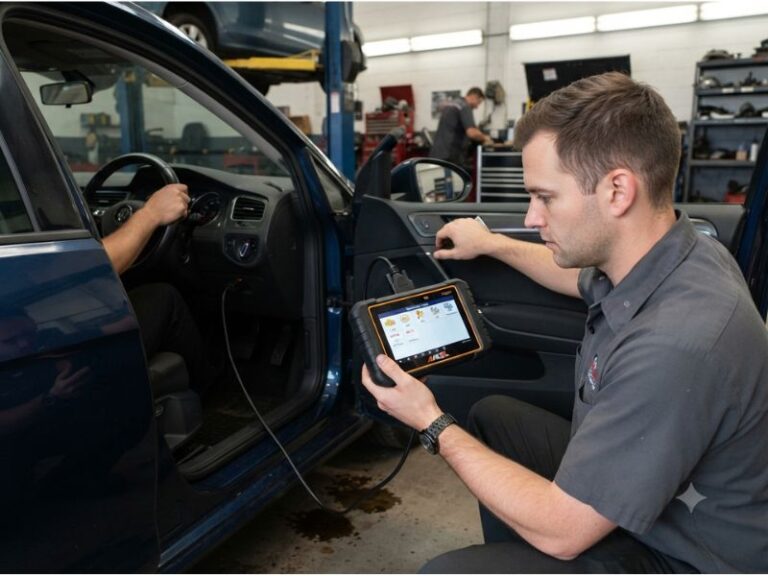
Can a Code Reader Clear Check Engine Light: Explained Clearly
Yes, a code reader can usually clear a check engine light by erasing the stored diagnostic trouble code (DTC), but it cannot repair the problem that triggered the warning. If the underlying fault remains, the light may return immediately or after the vehicle completes another drive cycle.
That distinction matters because two cars can show the same amber engine symbol while requiring completely different decisions. One vehicle may have a loose fuel cap that is easy to correct, while another may have an active misfire that can damage the catalytic converter if driving continues. A reader can reset both lights, but resetting the second one only hides a warning temporarily and may erase useful diagnostic information.
This article explains what a code reader actually does, when clearing the light is reasonable, why the warning comes back, and which symptoms make clearing it unsafe. You will also learn the difference between a basic code reader and a scan tool, what happens to emissions readiness monitors, when a repair should be verified before resetting the light, and when professional diagnosis is the better next step.
What a Code Reader Does When It Clears
A code reader communicates with the vehicle’s onboard diagnostics system, commonly called OBD-II on cars and light trucks sold in the United States. When a control module detects an emissions-related or engine-management fault, it stores a trouble code and may command the malfunction indicator lamp (MIL), commonly called the check engine light, to turn on.
When you choose “erase,” “clear codes,” or a similar option, the reader sends a command to remove stored fault information from the relevant control module. In many vehicles, this also turns off the warning light immediately, provided there is no fault being detected at that exact moment.
Clearing a code is not the same as fixing a vehicle. The reader does not adjust a sensor, repair a vacuum leak, restore an electrical connection, replace a damaged catalytic converter, or correct a fuel-delivery problem. It only resets information and warning status stored by the vehicle’s computer.
Some vehicles may turn the light back on as soon as the system performs the test again. Others may need several miles, multiple starts, or specific operating conditions before the computer confirms that the fault remains. That delay can make a vehicle seem repaired when it is only temporarily free of a warning.
When Clearing the Check Engine Light Makes Sense
Clearing the light can be appropriate after the cause has been identified and corrected. For example, if a fuel cap was not tightened properly, tightening or replacing it may resolve an evaporative-emissions fault. Erasing the code afterward can remove the stored warning, although the vehicle may also turn it off by itself after successful self-tests.
It can also be useful after a repair when you want to confirm that the fix worked. A technician or informed vehicle owner may clear the code, drive under normal conditions, and check whether the fault returns. This is a verification step, not proof that the original repair was correct before testing is complete.
There are other limited reasons to clear a code:
- To remove a stored code after a known temporary event has been corrected.
- To confirm whether a repaired wiring, sensor, or hose problem is still present.
- To prepare the vehicle for a properly timed emissions inspection after repairs.
- To distinguish a current fault from an old, inactive code during diagnosis.
Before erasing anything, record the code numbers and any available freeze-frame data. The freeze-frame record captures operating conditions such as engine speed, coolant temperature, load, and vehicle speed when the computer recognized the problem. That information can help identify an intermittent fault and may be lost when codes are cleared.
Why Clearing the Light Does Not Repair the Cause
The engine computer continuously checks systems such as ignition, fuel control, oxygen sensors, evaporative emissions, and the catalytic converter. If a monitored value falls outside an expected range, the computer may store a code. Erasing that code does not change the condition that produced the abnormal reading.
A code also does not always identify a failed part. A code referring to an oxygen sensor, for example, may be caused by an exhaust leak, wiring damage, an intake leak, fuel-pressure trouble, or an actual sensor failure. Replacing the named component without testing the related system can waste money and leave the warning unresolved.
Consider a code for an engine misfire. The underlying issue could involve a worn spark plug, failed ignition coil, injector trouble, low compression, or an air leak. Clearing the misfire code may turn off the light for a short time, but the engine computer will likely detect the condition again when the cylinder misfires under similar circumstances.
The same principle applies to an evaporative-emissions code. A loose cap may be simple, but a cracked vapor hose, defective purge valve, leaking fuel tank, or faulty pressure sensor requires further diagnosis. The reader reports what the computer observed; it does not independently prove which component is defective.
What Happens After You Erase Diagnostic Codes
Clearing codes often resets more than the visible warning lamp. It can also erase freeze-frame data, reset fuel-trim information, and set the vehicle’s emissions readiness monitors to “not ready.” These monitors need time and specific driving conditions to run their tests again.
Readiness monitors are important for state emissions inspections. A vehicle can have no check engine light showing and still fail an inspection because too many monitors have not completed. The exact rules vary by state and vehicle model, so clearing the light shortly before an inspection can create a separate problem.
After a reset, the car may temporarily behave differently while the computer relearns fuel adjustments. Idle quality, transmission shifting, or fuel economy may change slightly until the control module rebuilds its adaptive values. That does not mean clearing the code repaired the fault.
If the warning stays off after a complete drive cycle, the issue may have been temporary or successfully repaired. However, a light that returns only under certain conditions still deserves attention. Intermittent faults can be harder to diagnose because they may disappear during a brief scan at a repair shop.
How to Clear the Light With a Code Reader
The procedure varies by device and vehicle, but the general process is straightforward. Use a reader designed for the vehicle’s OBD-II system and follow the device’s instructions rather than guessing at menu selections.
- Park safely, switch off accessories, and set the parking brake.
- Locate the OBD-II diagnostic connector, usually beneath the driver’s side dashboard.
- Plug in the reader with the ignition off unless the device instructions specify otherwise.
- Turn the ignition to the on position without starting the engine, then allow the reader to communicate.
- Select “read codes” first and write down every stored, pending, or permanent code.
- Save freeze-frame information if the reader provides it.
- Select the erase or clear-code function only after the information has been recorded.
- Turn the ignition off, restart the vehicle, and confirm whether the light remains off.
A vehicle may have pending codes that have not yet turned on the light and permanent codes that cannot be erased by a normal scan command. Permanent codes remain until the computer verifies that the fault has been repaired through its own testing process.
Do not disconnect the battery as a substitute for using a reader. Battery disconnection may erase codes and adaptive memory, but it can also create radio-security issues, reset windows or other settings, and leave the real cause unidentified. It is also less controlled than using the correct diagnostic procedure.
When You Should Not Simply Clear the Warning
A steady check engine light without unusual symptoms is often suitable for prompt diagnosis rather than an emergency stop. Even then, avoid treating the light as harmless indefinitely, because an emissions or performance fault can worsen and increase repair costs.
A flashing check engine light is more urgent. It commonly indicates an active, severe misfire that may overheat and damage the catalytic converter. Reduce engine load, avoid hard acceleration, and stop driving when it is safe if the flashing continues or the vehicle runs badly.
Do not clear the light and continue driving normally if the vehicle has any of these warning signs:
- Strong shaking, bucking, or severe loss of power.
- Flashing rather than steady check engine light.
- Fuel odor, smoke, overheating, or unusual exhaust odor.
- Very poor acceleration or an engine that may stall.
- Oil-pressure, temperature, or other critical warning lights.
- Knocking, loud mechanical noise, or rapidly worsening operation.
In these situations, clearing the code can remove evidence that helps a technician identify the failure. More importantly, it can encourage continued driving when the vehicle may be unsafe or at risk of expensive damage.
Basic Code Reader Versus a Professional Scan Tool
A basic code reader is generally designed to retrieve and erase common powertrain codes. It may be sufficient for a loose-cap warning, a simple check after a repair, or an initial conversation with a repair shop. Its capabilities depend on the vehicle and the particular device.
A more advanced scan tool can access manufacturer-specific codes, live sensor data, system tests, service functions, and modules beyond the engine computer. Some faults are stored in the transmission, airbag, anti-lock brake, or body-control systems and will not appear on a basic engine-code reader.
Live data is often more useful than the code description alone. A technician can compare oxygen-sensor activity, fuel trims, coolant temperature, misfire counters, air-flow readings, and other values to determine whether the system is operating normally. This helps prevent unnecessary parts replacement.
Some consumer readers advertise the ability to reset maintenance reminders or perform additional service functions. Those features are not the same as clearing a check engine code. Confirm that the device supports the vehicle’s model year and the specific diagnostic system involved.
Can Clearing a Code Hide a Problem?
Yes. Clearing the light can hide the warning until the vehicle reruns the relevant test, and it can remove data needed for diagnosis. It may also make a quick inspection appear normal even though the vehicle has not completed its self-checks.
That does not mean clearing codes is always improper. It becomes problematic when someone uses the function to conceal a known fault, sell a vehicle without disclosure, or pass an inspection before the system has demonstrated that the repair succeeded. The absence of a light immediately after a reset is weak evidence by itself.
For a used vehicle, check whether the readiness monitors are complete and ask why the system was recently reset. A scan tool can reveal that the monitors are not ready, although that finding alone does not prove misconduct. It does indicate that more driving or investigation is needed before judging the vehicle’s condition.
FAQ: Can a Code Reader Clear Check Engine Light?
Can a code reader clear check engine light warnings
Most OBD-II code readers can erase common engine and emissions codes, but compatibility varies. A basic reader may not access manufacturer-specific faults, hybrid systems, or non-engine modules. The vehicle’s model year, communication protocol, and the reader’s capabilities determine what it can read and clear.
Will the check engine light stay off after a code
It will stay off only if the vehicle no longer detects the fault during its self-tests. If the problem is still active, the light may return immediately. If the fault is intermittent, it may take several trips or specific conditions before the computer turns the warning on again.
Can a code reader clear a check engine light without
Yes, it can erase the warning without correcting the cause. The light may disappear temporarily, but the underlying issue remains and can affect drivability, emissions, reliability, or component life. Always diagnose the code and verify the repair instead of treating a reset as a solution.
Does clearing a code erase the diagnostic information?
It often erases stored codes and freeze-frame data from the control module. Record the code numbers and operating information before selecting “clear.” Some permanent codes or manufacturer records may remain, but you should not rely on being able to recover every detail after a reset.
Can clearing the light make a car pass an emissions
Usually not immediately, because clearing codes resets the emissions readiness monitors. The vehicle must complete its required drive cycles before the monitors become ready. If the fault returns, the car may fail the inspection even if the light was initially off.
Should I clear a flashing check engine light?
No, a flashing light should be treated as a potentially serious active fault. It often accompanies a damaging misfire, especially when the engine shakes or loses power. Avoid hard driving and seek diagnosis promptly; stop operating the vehicle if conditions are unsafe.
Conclusion: Clear the Code Only After Understanding the Cause
A code reader can turn off a check engine light by erasing stored diagnostic information, but it cannot repair the mechanical, electrical, or emissions fault behind it. Record the code first, address the cause, and use the reader afterward to confirm whether the warning returns.
The major limitation is that a reset can erase useful data and leave emissions monitors incomplete. If the light flashes, the engine runs poorly, or other serious symptoms appear, do not rely on clearing the code—reduce driving and arrange professional diagnosis as the next step.