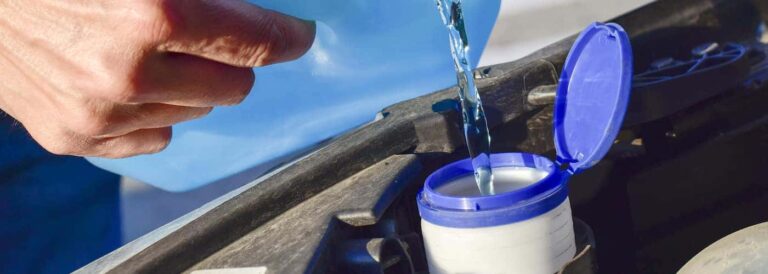
To add windshield washer fluid, park on level ground, open the hood, locate the washer-fluid reservoir by its windshield-and-spray symbol, remove the cap, pour in suitable washer fluid until the reservoir is appropriately filled, replace the cap, and test the washers.
For drivers in the United States, keeping the windshield washer reservoir filled is a simple maintenance task that can make a noticeable difference in visibility during everyday driving. Road spray, dust, pollen, insects, salt residue, and winter grime can quickly coat a windshield, especially during highway travel or changing seasonal conditions. A properly filled washer system gives you a fast way to clear that contamination without stopping the vehicle.
The basic refill process is similar on most U.S.-market cars, SUVs, pickups, and vans, but the reservoir location, capacity, and recommended fluid can vary. Drivers in freezing parts of the country should pay particular attention to the temperature rating of the fluid because plain water or warm-weather washer products may freeze. This guide explains how to add windshield washer fluid, identify the correct reservoir, choose an appropriate formula, avoid common mistakes, confirm that the system works, and troubleshoot the washer system if refilling does not restore normal spray.
What You Need Before Adding Windshield Washer Fluid
Adding washer fluid requires very little equipment. In most vehicles, you only need a container of suitable windshield washer fluid. A clean funnel can make pouring easier when the reservoir opening is narrow or positioned awkwardly.
Check your owner’s manual if you cannot confidently identify the reservoir or if your vehicle specifies a particular washer-fluid type. This is especially useful on vehicles with crowded engine compartments, rear-window washer systems, headlamp washers, or unusual reservoir locations.
Choose the washer fluid according to driving conditions rather than relying only on color. Products sold in the United States may be formulated for general cleaning, insect removal, water repellency, or freezing temperatures. The freeze-protection rating is especially important if temperatures where you live or travel can drop below 32 degrees Fahrenheit.
Source: pinterest.com
Windshield washer fluid
Use a ready-to-use automotive washer fluid or a concentrate mixed exactly according to its label.
Clean funnel
Optional, but helpful for preventing spills around a small reservoir opening.
Owner’s manual
Useful when the reservoir location, fluid specification, or filling procedure is unclear.
Paper towel or clean cloth
Useful for wiping small spills and keeping dirt away from the reservoir opening.
Should You Use Water Instead of Windshield Washer Fluid?
For routine use, automotive windshield washer fluid is the better choice. Proper washer fluid contains cleaning ingredients designed to remove road film and other windshield contamination, and many formulations also provide freeze protection.
Plain water is particularly unsuitable for cold-weather use because it can freeze inside the reservoir, hoses, pump, or nozzles. Even in warm climates, water generally does not clean oily road film and insect residue as effectively as a purpose-made washer solution.
How to Find the Windshield Washer Fluid Reservoir
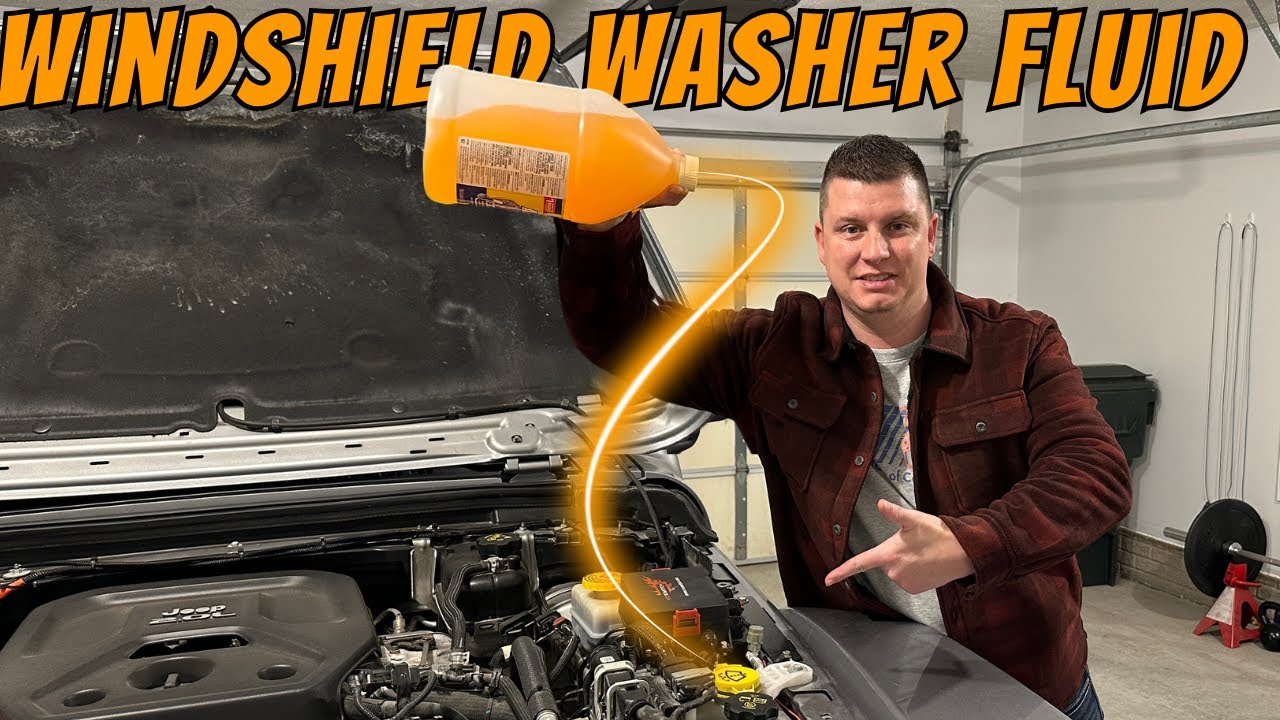
Open the hood and look for a plastic reservoir with a cap displaying a windshield symbol with spray or water lines above it. Depending on the vehicle, the cap may be blue, black, yellow, or another color, so the symbol is more useful than relying on cap color.
The washer-fluid reservoir is commonly located near one of the front corners of the engine compartment. In some vehicles, most of the tank sits lower behind body panels and only the filler neck and cap are easy to see.
Do not pour fluid into a reservoir unless you are certain it is the washer reservoir. Coolant expansion tanks, brake-fluid reservoirs, and other under-hood containers serve completely different systems. Adding washer fluid to the wrong reservoir can create a repair problem rather than solving a maintenance need.
Source: youtube.com
Look for the symbol
The most useful identifier is a windshield with spray lines rather than a particular cap color.
Check the owner’s manual
Use the manual if several reservoirs are close together or the filler neck is difficult to identify.
Never guess
If you are not certain which reservoir is correct, identify it before opening or filling anything.
Is the Front and Rear Washer Fluid Reservoir the Same?
Many hatchbacks, SUVs, crossovers, and wagons use one main reservoir to supply both front and rear windshield washers. A pump and hose network routes fluid to the appropriate nozzles. However, vehicle designs vary, so consult the owner’s manual if you are troubleshooting a rear washer that does not work.
How to Add Windshield Washer Fluid Step by Step
The refill itself usually takes only a few minutes. Work with the vehicle parked safely on level ground and use the correct reservoir before pouring.
Source: youtube.com
1. Park safely
Park on a level surface, shift into Park or the appropriate gear, set the parking brake, and switch off the engine.
2. Open the hood
Release the hood from inside the vehicle, then use the secondary hood latch if your vehicle has one and secure the hood.
3. Locate the washer reservoir
Find the reservoir cap marked with the windshield-and-spray symbol and confirm it before adding fluid.
4. Clean around the cap
Brush or wipe away loose dirt around the opening so debris does not fall into the reservoir.
5. Remove the cap
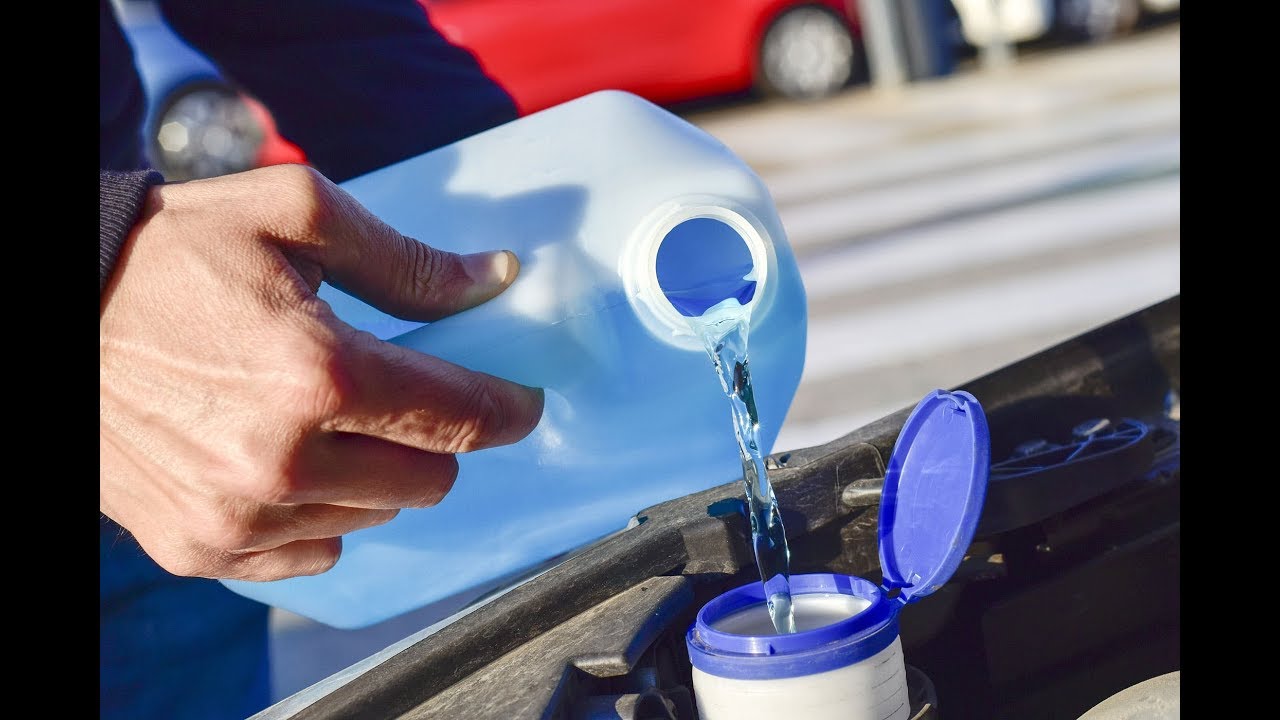
Open or remove the washer reservoir cap carefully. Some caps flip open while others pull or twist off.
6. Pour in washer fluid
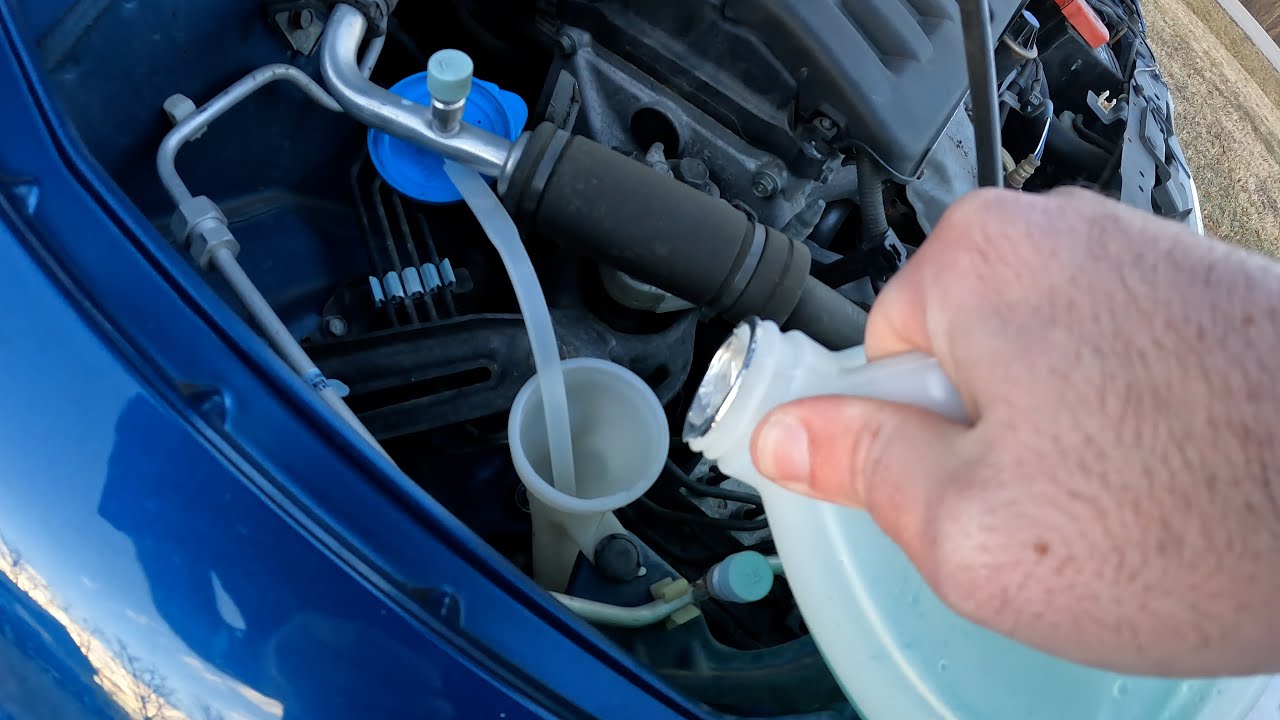
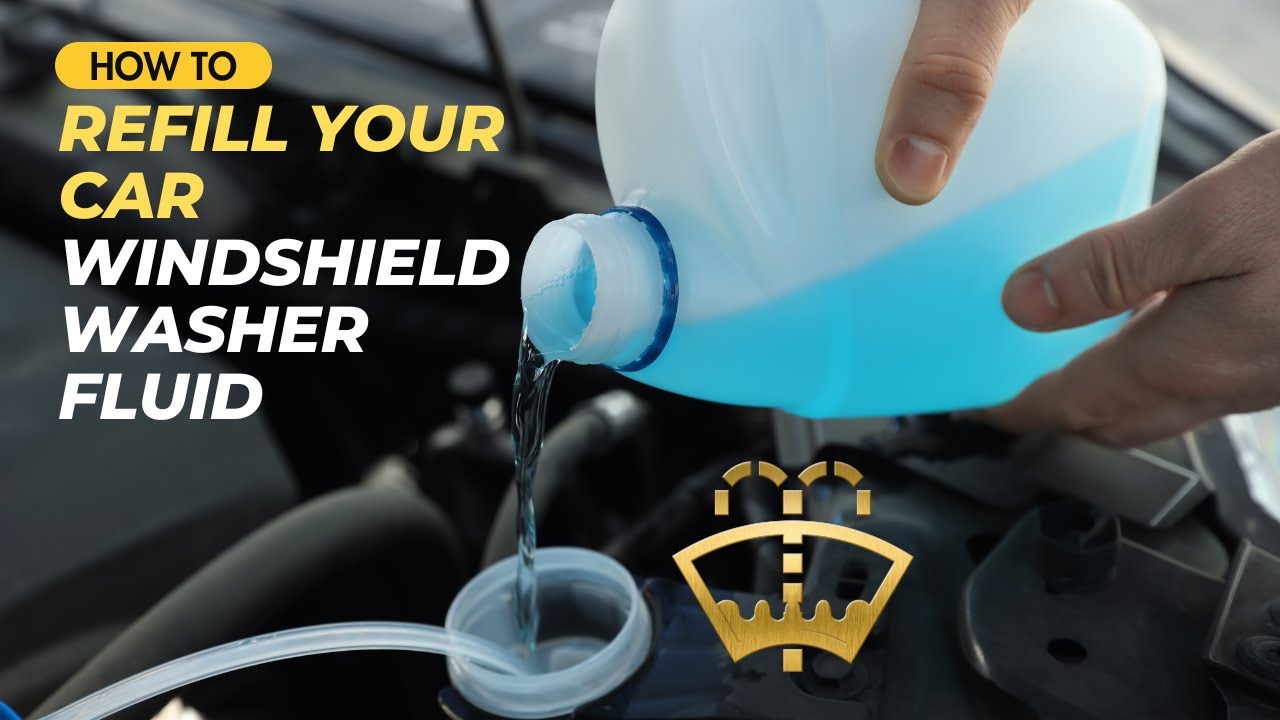
Pour slowly into the filler neck. Use a clean funnel if needed to reduce spilling.
7. Stop when appropriately filled
If the tank is visible, stop near its indicated full level or before fluid reaches a point where it would overflow. Follow any level guidance in the owner’s manual.
8. Replace the cap
Close the cap securely so dirt and debris cannot enter the reservoir.
9. Close the hood
Lower the hood according to the vehicle manufacturer’s procedure and verify that it is fully latched.
10. Test the washers
Operate the windshield washers briefly and confirm that fluid reaches the glass in a usable spray pattern.
How Do You Know When the Washer Reservoir Is Full?
Some reservoirs are translucent and allow you to see the fluid level directly. Others are hidden behind bodywork, making the level difficult to see. In that situation, pour gradually and stop before the filler neck begins backing up with fluid.
Do not keep pouring once the reservoir is clearly full. A small accidental spill is usually manageable, but deliberately overfilling provides no benefit.
What Does a Successful Refill Look Like?
After refilling, the washer jets should deliver fluid to the windshield when you activate the washer control. The wipers should then distribute the fluid across the glass. A healthy system should not immediately leave a large puddle of washer fluid beneath the vehicle.
Choosing the Right Windshield Washer Fluid for U.S. Conditions
The most appropriate washer fluid depends largely on temperature and the contamination you normally encounter. U.S. drivers may experience very different conditions depending on region and season, ranging from freezing winter weather and road salt to summer insects, pollen, dust, and heavy rain.
Read the container label before buying or pouring the product. If freezing weather is possible, choose a washer fluid with a freeze-protection rating comfortably below the lowest temperature you expect to encounter. This matters even if your home area is relatively mild but you plan to drive into colder elevations or northern states.
Some products are sold as concentrates rather than ready-to-use fluid. A concentrate must be diluted exactly as its manufacturer instructs. Adding undiluted concentrate or making an arbitrary mixture can alter cleaning performance and freeze protection.
Source: youtube.com
All-season fluid
A practical general-purpose choice when its temperature rating matches your local conditions.
Winter washer fluid
Designed with lower-temperature protection for locations where freezing conditions occur.
Bug-removing fluid
Formulated to help loosen insect residue and may be useful during warm-weather highway driving.
Concentrated washer fluid
Requires mixing according to the product instructions before use unless the label specifically says otherwise.
Can You Mix Different Windshield Washer Fluids?
Different compatible automotive washer fluids will often physically mix, but combining them can change the final freeze protection or cleaning characteristics. The safer approach is to follow the vehicle and fluid manufacturers’ guidance, especially when preparing for very cold weather.
If the reservoir contains an unknown fluid and severe freezing temperatures are expected, simply topping it up with winter fluid does not guarantee that the entire mixture will achieve the temperature rating printed on the new container.
Common Mistakes to Avoid When Adding Washer Fluid
Most washer-fluid refills are straightforward, but mistakes can occur when a driver rushes or identifies the wrong reservoir. Taking a few seconds to verify the cap and fluid type prevents most problems.
Source: youtube.com
Pouring into the wrong reservoir
Never rely solely on cap color. Verify the windshield-and-spray symbol or consult the owner’s manual.
Using plain water in freezing weather
Water can freeze and leave the washer system unable to operate when you need it.
Using household glass cleaner
Do not assume household window cleaner is suitable for an automotive washer reservoir. Use a product designed for vehicle washer systems.
Ignoring concentrate instructions
Mix concentrated fluid according to the product label rather than estimating the dilution.
Allowing dirt into the reservoir
Keep the filler area and any funnel clean because contamination may contribute to blocked nozzles or other washer-system problems.
Forcing an overfill
Once the reservoir is appropriately full, stop adding fluid rather than trying to fit in the remainder of a container.
What If You Accidentally Spill Washer Fluid?
For a small spill around the washer reservoir, wipe up the fluid with a clean cloth and follow any handling or cleanup instructions printed on the washer-fluid container. Avoid leaving spilled fluid where children or animals could contact or ingest it.
If you poured washer fluid into the wrong vehicle reservoir, do not start driving as though nothing happened. The appropriate response depends on which system was contaminated. Consult a qualified technician or the vehicle manufacturer’s service guidance before operating the vehicle when contamination could affect a critical system.
What to Do If Washer Fluid Does Not Spray After Refilling
A full reservoir does not guarantee that the washer system will spray. If nothing comes out after refilling, first make sure the cap is secure, then activate the washer briefly and observe what happens.
Listen for the washer pump while operating the control. A pump sound without fluid at the windshield can point toward an empty pickup area, blocked nozzle, disconnected or damaged hose, leak, or frozen fluid. No pump sound may indicate an electrical problem, switch issue, wiring fault, blown fuse, or failed pump, depending on the vehicle.
Avoid holding the washer control continuously when no fluid is being delivered. Repeatedly operating a system with a fault does not identify the cause and may unnecessarily stress components.
Source: storage.googleapis.com
Check for visible leaks
Look beneath the vehicle and around accessible washer hoses for rapidly escaping fluid.
Check the nozzles
Dirt, wax, ice, or debris around the washer jets can interfere with the spray pattern.
Consider freezing
In cold weather, unsuitable fluid may freeze in the reservoir, hoses, or nozzles.
Listen for the pump
The presence or absence of pump noise provides a useful clue, although it does not by itself identify the failed component.
Seek diagnosis when necessary
If the reservoir remains full but the system still does not operate after basic checks, professional diagnosis may be appropriate.
Why Does Washer Fluid Run Out Again Quickly?
If you refill the reservoir and the level drops unusually fast, inspect for leakage rather than repeatedly adding more fluid. Common leak locations can include the reservoir, pump seal area, hose connections, and washer hoses.
A puddle that appears soon after filling is especially useful evidence of a leak. The exact repair depends on where fluid is escaping.
Why Is the Washer Spray Weak?
Weak spray can be associated with restricted nozzles, a partially blocked hose, a leak, low fluid level, freezing, or reduced pump performance. Start with simple visible checks before replacing components.
When and How Often Should You Check Washer Fluid?
There is no single refill interval that applies to every vehicle because washer-fluid consumption depends on weather, road conditions, driving distance, reservoir capacity, and how often the washers are used. Checking the level periodically is more useful than following an arbitrary mileage interval.
Consider checking washer fluid before a long road trip, before winter weather, during periods of heavy road salt or slush, and whenever washer output becomes intermittent. If your vehicle displays a low-washer-fluid warning, refill the reservoir when practical rather than waiting until it becomes completely empty.
Frequent windshield cleaning can consume more fluid than many drivers expect. Highway travel during wet winter conditions, for example, can require repeated washer use because surrounding traffic throws salty road spray onto the glass.
Source: storage.googleapis.com
Before long trips
Verify that you have enough washer fluid before extended highway travel.
Before freezing weather
Confirm that the fluid already in the system is suitable for expected temperatures.
After a low-fluid warning
Refill the system instead of continuing until the reservoir is completely empty.
When use suddenly increases
Check for a leak if the reservoir needs filling far more frequently than normal.
Frequently Asked Questions
Q
Can I add windshield washer fluid while the engine is hot?
The washer reservoir itself is not the engine cooling system, but working around a hot engine compartment increases the chance of burns from nearby components. Parking safely, switching off the engine, and allowing extremely hot under-hood areas to cool before reaching around them is the more cautious approach.
Q
Do I need to empty the old washer fluid before adding new fluid?
Normally, no. You can usually top up an existing compatible washer fluid. However, if you are changing to a winter-rated product before severe freezing weather, remember that leftover warm-weather fluid can dilute the new mixture and alter its overall freeze protection.
Q
How much windshield washer fluid does a car hold?
Reservoir capacity varies substantially by vehicle, so there is no universal amount. The owner’s manual or manufacturer service information is the appropriate source when you need the exact capacity for a particular year, make, and model.
Q
What happens if the windshield washer fluid reservoir is completely empty?
The washers will stop supplying fluid to the windshield. Refill the correct reservoir and test the system. If it remains inoperative after filling, inspect for another problem such as a leak, blockage, frozen fluid, electrical fault, or pump failure.
Q
Can I use summer windshield washer fluid during winter?
Only if its stated freeze-protection rating is suitable for the temperatures the vehicle will experience. A formula intended for warm conditions may freeze during a U.S. winter. Check the temperature rating on the product and choose one appropriate for the lowest expected conditions.
Q
Why does my washer-fluid warning stay on after I refill the reservoir?
If the reservoir is properly filled but the warning remains, the vehicle may have a level-sensor, wiring, connector, or related electrical issue. Some vehicles may also require a short period of normal operation before the display updates. Consult the owner’s manual and seek diagnosis if the warning persists.
✦ Wrapping Up
Conclusion
Learning how to add windshield washer fluid is one of the simplest vehicle-maintenance tasks a U.S. driver can handle. Park safely, identify the reservoir by the windshield-and-spray symbol, use a washer fluid suitable for your local temperatures, pour it in carefully, secure the cap, and test the system.
The most important part is avoiding shortcuts that create new problems. Do not guess which reservoir is correct, do not rely on plain water when freezing temperatures are possible, and do not assume that a full reservoir means the entire washer system is healthy. If fluid does not spray after a refill, check for leaks, blockage, freezing, and pump operation before moving to more involved diagnosis.
💡 Key Takeaway
Check your washer-fluid level before your next long drive and before freezing weather, refill it with a climate-appropriate automotive washer fluid, then test the spray pattern to confirm the system is ready for the road.