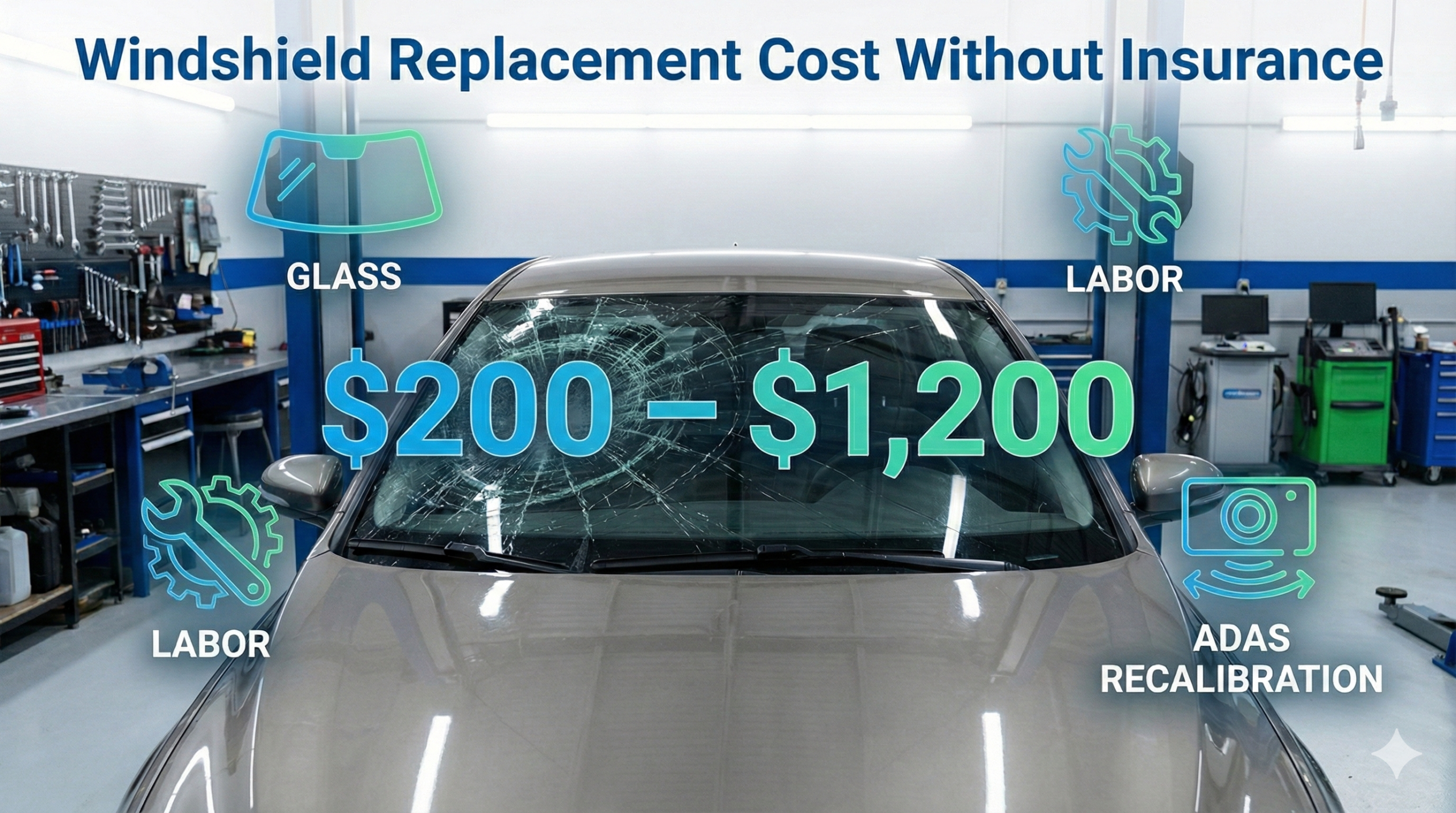
In the United States, windshield replacement without insurance commonly costs about $250 to $1,500 or more, although a straightforward replacement on an older or simpler vehicle may stay near the lower end of that range. Newer vehicles with cameras, sensors, specialty glass, or required ADAS recalibration can cost substantially more.
If you are paying out of pocket in the U.S., there is no single nationwide windshield replacement price. Your vehicle identification, ZIP code, glass specification, labor requirements, and onboard technology all affect the final quote. A relatively basic passenger car may need only the windshield, adhesive, moldings, and installation labor. A newer SUV, pickup, luxury vehicle, or car with a forward-facing camera can require more expensive glass and an additional calibration procedure.
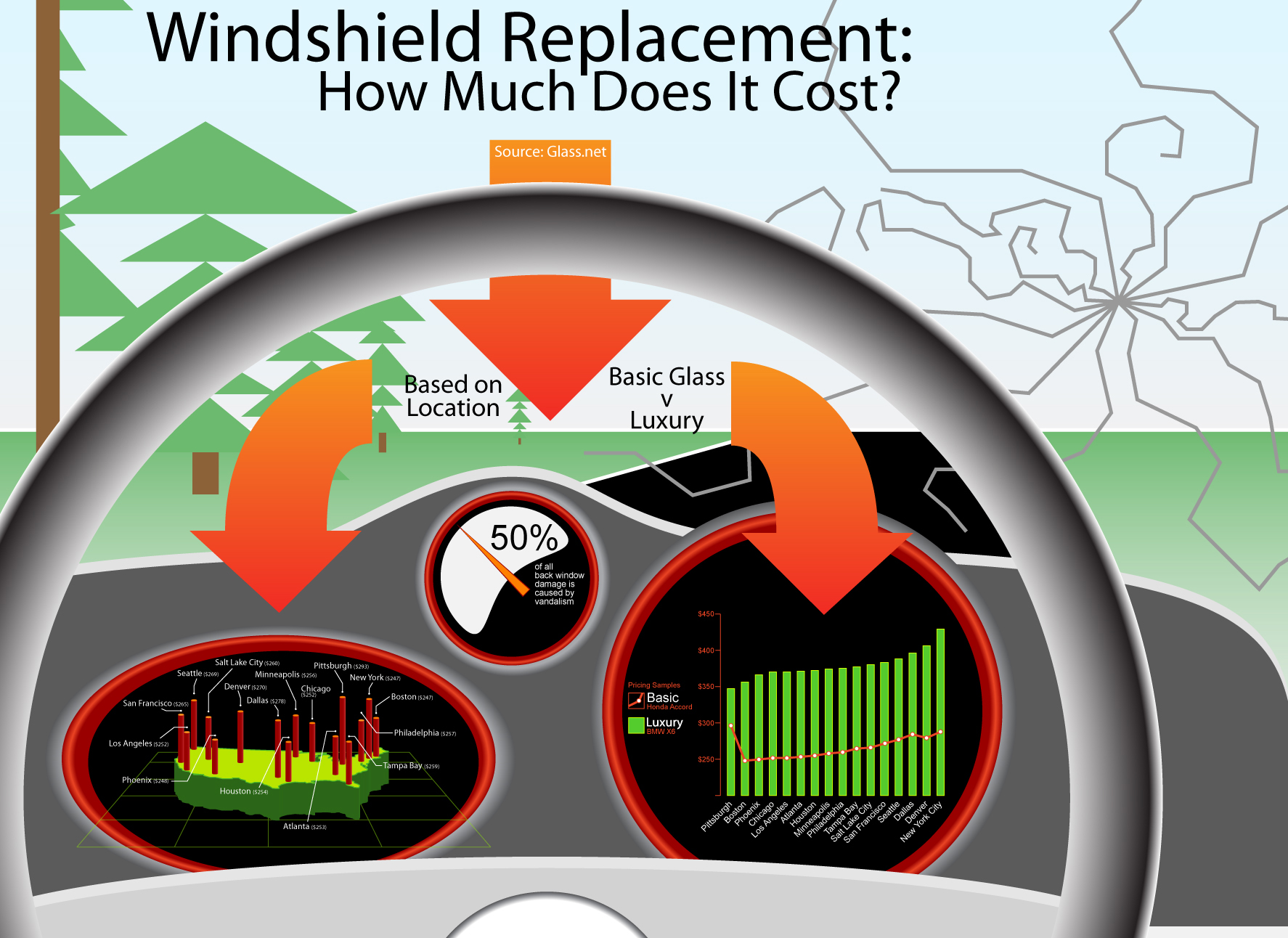
A useful budgeting range is roughly $250 to $500 or $600 for many basic replacements, while vehicles with advanced equipment can move into the $600 to $1,500-plus range. Specialty and premium vehicles can exceed that. The most reliable way to know your cost is to obtain quotes using your exact year, make, model, trim, VIN when requested, and ZIP code, and then confirm whether the quoted total includes labor, moldings, taxes, disposal charges, mobile service, and ADAS recalibration.
How Much Does Windshield Replacement Cost Without Insurance in the U.S.?
For a U.S. driver paying entirely out of pocket, a reasonable planning range for full windshield replacement is approximately $250 to $1,500 or more. This is intentionally a wide range because replacing the windshield on a basic older sedan is a very different job from replacing camera-equipped glass on a late-model luxury SUV.
For many mainstream vehicles without complicated windshield-mounted technology, prices may cluster around roughly $250 to $500 or $600. Once cameras, sensors, special coatings, heating elements, acoustic glass, unusual windshield shapes, or calibration procedures become part of the job, a bill of $600 to $1,500 or more becomes easier to encounter.
Some luxury, performance, electric, specialty, or technologically complex vehicles can exceed $1,500. In unusual cases, the complete bill can exceed $2,000. That does not mean every late-model vehicle will cost that much. It means the vehicle’s required glass and procedures need to be identified before a useful price estimate can be made.
These figures should be treated as budgeting ranges rather than a guaranteed national average. Auto glass pricing changes by vehicle, supplier availability, labor market, and location. A quote for the same model can also change depending on whether OEM glass, OEM-equivalent glass, or another compatible aftermarket option is selected.
Source: hitchesguide.com
Basic replacement
Approximately $250 to $500 or $600 is a practical starting range for many common vehicles with relatively simple windshields.
Technology-equipped replacement
Approximately $600 to $1,500 or more may be realistic when special glass or ADAS recalibration is required.
Luxury or specialty applications
The total can exceed $1,500 and sometimes $2,000 when glass is expensive, difficult to source, highly specialized, or paired with complex calibration.
What Does an Out-of-Pocket Windshield Quote Usually Include?
A replacement quote normally starts with the cost of the windshield and installation labor. Depending on the shop and vehicle, additional items can include urethane adhesive, primer, moldings, clips, rain-sensor components, disposal or recycling fees, mobile-service charges, taxes, and ADAS recalibration.
Do not assume two quotes cover the same work simply because both say windshield replacement. Ask for the final installed price and whether calibration and required materials are included. A low initial quote can become less attractive if necessary services are added later.
Glass
The correct windshield for the vehicle and its installed options.
Installation
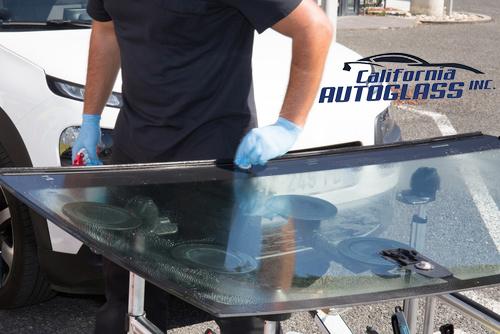
Removal of the damaged glass, preparation of the opening, adhesive application, and installation.
Associated materials
Adhesive, primer, clips, moldings, or other vehicle-specific components when required.
Calibration
ADAS camera or sensor calibration when specified for the vehicle after replacement.
What Makes Windshield Replacement More Expensive?
The largest price differences usually come from the windshield itself and the technology connected to it. Year, make, model, trim, options, glass availability, and local labor conditions can all change the cost.
A modern windshield can be more than a transparent piece of laminated safety glass. It may provide a viewing area for a forward camera, contain heating elements, support a rain sensor, reduce cabin noise with an acoustic layer, incorporate special tinting or coatings, or include an area designed for a head-up display.
Two vehicles with the same model name may even use different windshields because one trim level has driver-assistance equipment and another does not. Providing the VIN when a shop requests it can help identify the correct glass and reduce the chance of receiving an inaccurate quote.
Source: faithlowpriceautoglass.com
Vehicle make, model, and year
Common glass that is widely stocked can cost less than uncommon or difficult-to-source windshields.
ADAS equipment
A windshield-mounted camera can require compatible glass and recalibration after installation.
Head-up display
Windshields engineered for a head-up display can cost more because the glass must handle projected information correctly.
Heating and de-icing features
Embedded heating elements or specialized heated areas can increase replacement-glass cost.
Acoustic glass
Noise-reducing laminated glass may be more expensive than a simpler windshield specification.
Rain and light sensors
Sensor brackets, gel pads, mounting hardware, and compatible glass specifications can affect the final bill.
Location
Labor rates, taxes, local competition, supplier inventory, and transportation costs vary throughout the United States.
Mobile service
Some companies include mobile installation while others charge separately or restrict calibration work to an equipped shop.
Why Your ZIP Code Matters
Auto glass companies frequently request a ZIP code because pricing and availability are local. Labor expenses, state and local taxes, supplier inventory, technician availability, and travel distance can change the cost.
That is why a price reported by a driver in another state should not be treated as the amount you will necessarily pay. Local quotes using your exact vehicle are much more useful than a national price anecdote.
Why the Exact Vehicle Trim Matters
Windshield options often change within the same model year. A base trim may have relatively simple glass, while a higher trim may add a forward camera, heated windshield area, humidity sensor, rain sensor, acoustic treatment, or head-up display.
When requesting an estimate, provide accurate vehicle details and answer equipment questions carefully. Ordering the wrong windshield can delay the job and invalidate the original estimate.
How Much Does ADAS Calibration Add to Windshield Replacement?
ADAS calibration is one of the most important reasons a modern windshield replacement can cost more than expected. Advanced Driver Assistance Systems can use a camera mounted behind or near the windshield for functions such as lane-departure warning, lane-keeping assistance, automatic emergency braking, traffic-sign recognition, and adaptive cruise-control support.
Replacing the windshield can alter the camera’s position or its optical relationship with the road. Depending on the manufacturer’s procedure, the system may need static calibration, dynamic calibration, or both. Static calibration typically uses precisely positioned targets and specialized equipment. Dynamic calibration generally involves driving the vehicle under specified conditions while diagnostic equipment completes the procedure.
Current U.S. industry guidance and research show that calibration can add hundreds of dollars. A useful budgeting figure is several hundred dollars, although the actual amount depends on the vehicle, procedure, labor rate, equipment, and whether more than one calibration process is required.
For perspective, AAA research involving selected 2023 vehicles used approximately $360 in calibration labor within its windshield-related ADAS cost analysis. That figure is useful as an example, not as a universal calibration fee. Your vehicle may cost less or substantially more.
Source: cagiautoglass.com
Static calibration
Uses targets or reference equipment positioned around the vehicle according to specified measurements.
Dynamic calibration
Uses diagnostic equipment while the vehicle is driven under manufacturer-specified road and operating conditions.
Dual calibration
Some vehicles require both static and dynamic procedures.
Can You Skip Calibration to Save Money?
Do not skip required calibration simply to lower the bill. If the vehicle manufacturer calls for calibration after windshield replacement, it is part of restoring the driver-assistance system to the specified operating condition.
Before authorizing the job, ask whether your vehicle has windshield-mounted ADAS equipment, whether recalibration is required after replacement, whether the shop performs it, and whether the quoted price includes it. If the installer does not perform calibration, ask where it must be completed and what additional cost to expect.
Confirm the requirement
Ask the installer to identify the applicable procedure for your exact vehicle.
Get the calibration price
Make sure calibration is included in the estimate or obtain a separate quote before approving replacement.
Request documentation
When calibration is performed, retain the service documentation with your vehicle records.
How Windshield Technology Changes the Total
AAA research examining selected 2023 vehicles illustrates the effect of advanced equipment. Its modeled windshield-related costs using OEM glass and calibration reached roughly $901 for a Ford F-150 example, about $979 for a Toyota Camry example, and about $1,175 for a Nissan Rogue example under the study’s specific assumptions.
Those figures should not be used as current quotes for those vehicles because actual pricing varies by model configuration, year, location, supplier, labor rate, and glass choice. They are useful because they demonstrate why a camera-equipped windshield can approach or exceed four figures even before considering every possible local fee.
OEM vs Aftermarket Windshield: Which Costs Less?
Aftermarket windshield glass is often less expensive than glass sold through the vehicle manufacturer’s parts channel, but price alone should not determine the choice. The replacement glass must have the correct dimensions, curvature, mounting provisions, optical characteristics, sensor areas, and other specifications required by the vehicle.
OEM means original equipment manufacturer or vehicle-manufacturer-branded replacement glass, depending on how the term is being used in a particular quote. Aftermarket glass is produced for the replacement market and can vary by manufacturer and specification. Quality aftermarket glass can be suitable for many vehicles, but not every available windshield is interchangeable simply because it physically fits the opening.
Vehicles with windshield-mounted cameras deserve particular attention. The camera looks through a defined portion of the glass, so optical properties, camera brackets, ceramic shading, and other specifications can matter. Some manufacturers specify or strongly recommend particular replacement-glass requirements for certain ADAS-equipped vehicles.
Source: livewell.com
OEM glass
Often costs more and is built to the vehicle manufacturer’s specified replacement configuration.
Aftermarket glass
May reduce the cost when a properly specified compatible option is available.
ADAS compatibility
The windshield must be suitable for the vehicle’s camera and sensor configuration, and required calibration still needs to be completed.
Questions to Ask Before Choosing Cheaper Glass
Instead of asking only whether the windshield is OEM or aftermarket, ask whether the proposed glass matches all the equipment on your vehicle and whether it is appropriate for the manufacturer’s required calibration procedure.
You should also ask about the glass manufacturer’s warranty, the installer’s workmanship warranty, optical distortion coverage, leak coverage, and what happens if an ADAS calibration cannot be completed successfully with the installed glass.
Is this the correct part for my VIN and options?
This helps distinguish between windshields that may look similar but support different equipment.
Will my camera and sensors work with this glass?
Confirm compatibility before installation rather than discovering a calibration problem afterward.
What warranty is included?
Ask separately about defects in the glass, installation workmanship, water leaks, stress cracks, and calibration-related service.
How to Pay Less for Windshield Replacement Without Insurance
The safest way to reduce an out-of-pocket windshield bill is to compare equivalent quotes rather than automatically choosing the lowest advertised price. Three quotes are much more useful when each one covers the same glass specification, calibration requirement, labor, and additional fees.
Start by giving each company the same vehicle information. Ask for the final installed price, then verify what type of glass is being quoted and whether required calibration is included. A $350 quote without a $300 calibration procedure is not actually cheaper than a $600 quote that includes everything.
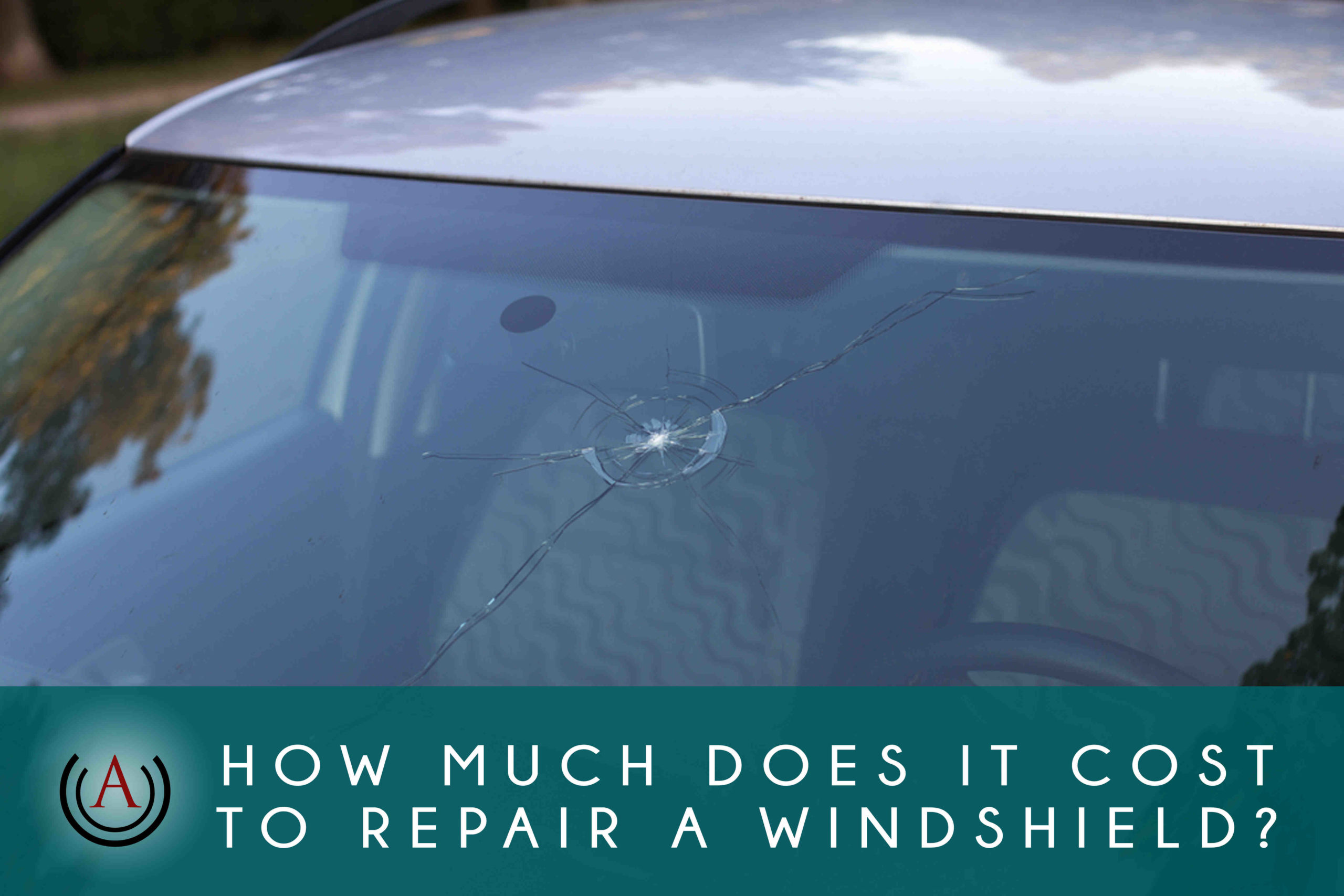
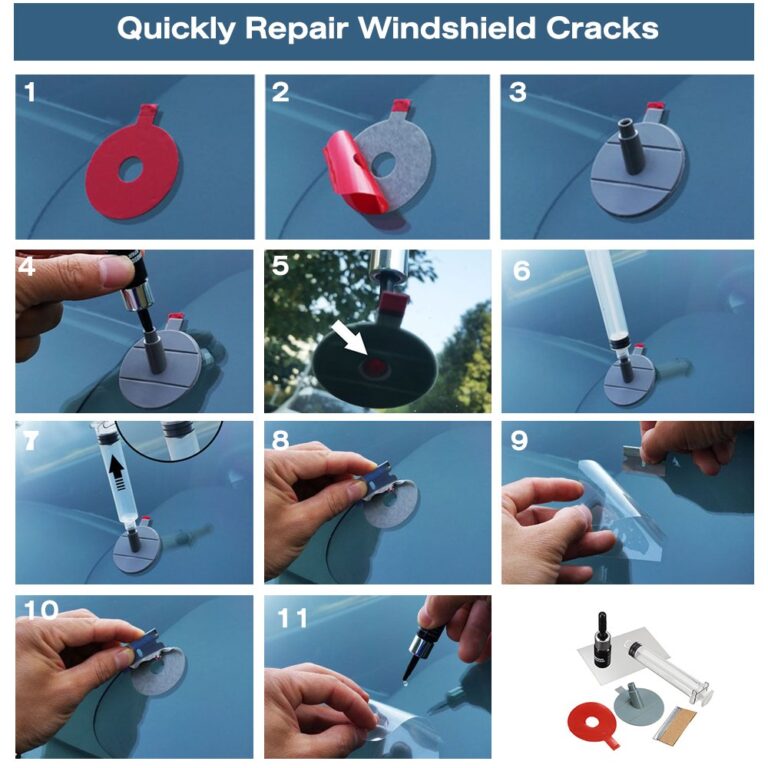
If the damage can still be safely repaired instead of replaced, addressing it early may save substantial money. Current U.S. guidance commonly places small chip or crack repair around $50 to $150, depending on the damage and service provider. Not every chip or crack qualifies for repair, however, and the decision depends on factors such as size, location, depth, number of damaged areas, and the condition of the surrounding glass.
Do not choose repair solely because it is cheaper if the windshield requires replacement. Damage affecting the driver’s critical viewing area, edges, structural integrity, internal laminate, or other important areas can change what is appropriate.
Source: storage.googleapis.com
Compare itemized quotes
Ask for glass, labor, calibration, moldings, mobile-service fees, disposal charges, and taxes to be identified.
Ask about compatible glass options
If more than one appropriate glass option exists, compare the installed prices and warranties rather than assuming the most expensive choice is automatically necessary.
Check for legitimate discounts
Some auto glass businesses provide discounts for memberships, military service, first responders, seniors, online booking, or other qualifying groups.
Repair eligible damage promptly
A repairable chip can be much less expensive than allowing damage to spread until replacement is needed.
Avoid suspiciously low quotes
Make sure a bargain estimate is not excluding required calibration, compatible glass, moldings, or necessary installation materials.
A Simple Quote Comparison Example
Consider a hypothetical driver who receives three estimates. Shop A quotes $425 for glass and installation but charges another $325 for calibration. Shop B quotes $690 including glass, installation, and calibration. Shop C quotes $560 but confirms that calibration must be completed elsewhere.
The advertised prices alone suggest Shop A is cheapest. Once the required procedures are included, Shop A totals $750, Shop B totals $690, and Shop C cannot be compared fairly until the driver obtains the separate calibration price. Comparing complete installed costs prevents this common mistake.
Ask for the Safe Drive-Away Time
A newly installed windshield is bonded with automotive urethane or another approved adhesive system that needs sufficient curing time before the vehicle can safely be driven. The required safe drive-away time depends on the adhesive system, temperature, humidity, installation conditions, and manufacturer instructions.
Follow the installer’s stated safe drive-away time. Do not assume that a car is ready to drive immediately just because the glass appears secure.
Should You Pay Out of Pocket or Use Insurance?
Even when researching how much windshield replacement costs without insurance, it is worth checking whether you already have glass coverage before paying the full amount yourself. Windshield damage is commonly handled through comprehensive auto coverage rather than liability-only coverage, subject to policy terms and state rules.
If you have only liability coverage, windshield damage to your own vehicle normally is not covered by that liability policy. If you have comprehensive coverage, compare the total replacement quote with your comprehensive deductible and any glass-specific provisions in your policy.
For example, suppose your replacement costs $450 and your comprehensive deductible is $500. An ordinary claim subject to that deductible would not provide a financial benefit because the repair cost is below the deductible. If the replacement costs $1,200 and the applicable deductible is $250, the potential insurance contribution is much more significant, subject to the actual policy terms.
Some states have special windshield or auto-glass insurance rules, and some insurers sell separate full-glass or reduced-deductible coverage. Requirements can change, so check the current policy documents and applicable state rules rather than relying on a general national statement.
Source: askcarmechanic.com
No comprehensive coverage
You will generally pay the windshield bill yourself unless another responsible party or separate coverage applies.
Cost below the deductible
Paying directly may be the practical result because the deductible can exceed the replacement price.
Cost substantially above the deductible
Reviewing the insurance option may be worthwhile because the potential covered amount is larger.
Special glass coverage
Some policies or state-specific rules can reduce or eliminate the deductible for qualifying glass claims.
Get the Cash Price Before Making the Insurance Decision
A useful first step is to obtain an out-of-pocket quote before deciding whether to file a claim. Once you know the full replacement price, compare it with your deductible and confirm your coverage with the insurer.
Do not assume that using insurance automatically makes the repair free, and do not assume paying cash is automatically cheaper. The answer depends on the replacement cost, deductible, policy, glass coverage, and applicable state rules.
Frequently Asked Questions
Q
What is the cheapest typical windshield replacement cost without insurance?
A basic replacement for a common vehicle may sometimes be found around the $250 range, but there is no guaranteed minimum price across the United States. Vehicle-specific glass, local labor costs, taxes, moldings, availability, and required technology can raise the total. Treat unusually low advertised prices cautiously until you know exactly what is included.
Q
Why does my windshield replacement quote cost more than $1,000?
A four-figure quote can be reasonable for some modern vehicles. Expensive glass, windshield-mounted cameras, ADAS recalibration, heating elements, acoustic construction, rain sensors, head-up-display compatibility, luxury branding, limited part availability, and higher local labor costs can all contribute.
Q
Is it cheaper to repair a windshield than replace it?
Yes, when the damage qualifies for safe repair. Small chip and crack repairs commonly cost far less than replacing the complete windshield. Current U.S. pricing guidance often places repair in approximately the $50 to $150 range. Whether repair is appropriate depends on the damage rather than price alone.
Q
Does a windshield replacement price include ADAS calibration?
Not always. Some shops include calibration in the complete quote, while others list it separately or send the vehicle to another facility. Ask specifically whether your vehicle requires recalibration and whether the quoted total includes the complete procedure.
Q
Can I drive immediately after windshield replacement?
Not necessarily. The adhesive needs enough time to reach the required strength. Your installer should provide a safe drive-away time based on the adhesive, environmental conditions, and installation procedure. Follow that instruction even if the glass appears firmly installed.
Q
Can I replace a windshield myself to save money?
Windshield replacement is generally not a good cost-cutting DIY project. Correct removal, bonding, glass positioning, leak prevention, trim installation, and safe adhesive curing require specialized materials and procedures. Modern vehicles may also require ADAS calibration. Installation errors can affect water sealing, visibility, camera operation, and the windshield’s role in the vehicle structure.
Q
How can I get an accurate windshield replacement quote?
Have your year, make, model, trim, ZIP code, and VIN available. Tell the shop about features such as a windshield camera, lane-keeping system, rain sensor, heated glass, head-up display, or acoustic windshield. Ask for an itemized installed price that identifies the glass type, labor, required moldings, calibration, mobile service, fees, and taxes.
✦ Wrapping Up
Conclusion
So, how much does windshield replacement cost without insurance? For U.S. drivers, approximately $250 to $1,500 or more is a realistic overall planning range. Many straightforward replacements for common vehicles can fall around $250 to $500 or $600, while newer vehicles with ADAS cameras, specialty glass, or premium components can move toward $600 to $1,500 and beyond.
The vehicle’s exact equipment is more important than a generic national average. Before approving the work, get several complete quotes based on your exact vehicle and compare what each includes. Confirm the glass specification, installation materials, moldings, taxes, fees, warranty, and especially any required ADAS recalibration.
💡 Key Takeaway
Get at least two or three itemized quotes using your exact vehicle information, then compare the complete installed price rather than the advertised glass price alone. If your car has windshield-mounted cameras or other driver-assistance equipment, verify the required recalibration and its cost before authorizing the replacement.
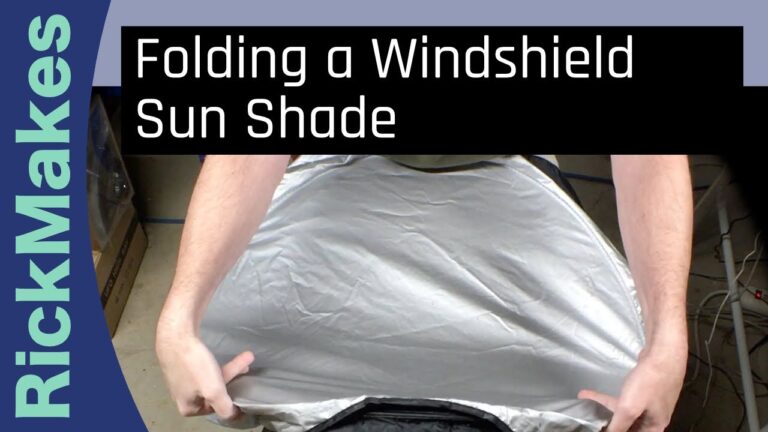
Learn how to fold a round windshield sun shade correctly without bending the frame. Follow these simple steps, avoid common mistakes, and store it neatly.
Learn how to fold a collapsible windshield sun shade using the simple figure-eight method, plus tips for storage, troubleshooting, and different shade designs.