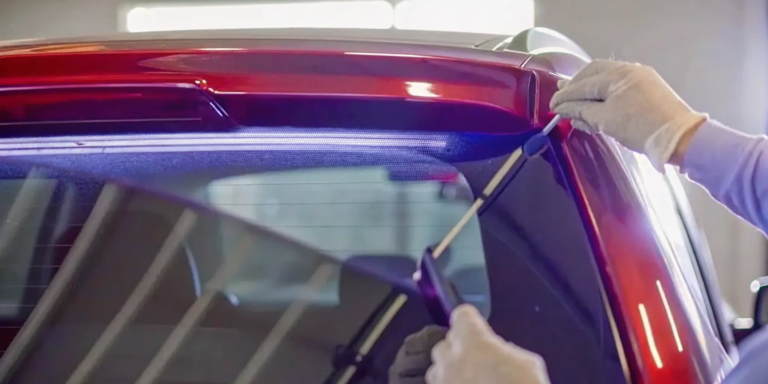
Windshield pitting is the gradual formation of many tiny, shallow indentations on the outer surface of a windshield, usually caused by repeated impacts from sand, grit, gravel, road debris, and other airborne particles.
For drivers in the United States, windshield pitting is especially common on vehicles that spend years traveling at highway speeds. Interstate driving, road construction, loose gravel, winter road treatments, desert dust, and debris thrown by trucks and other vehicles can repeatedly strike the glass. Each impact may be too small to notice, but thousands of them can slowly leave the windshield covered with microscopic surface defects.
A lightly pitted windshield may look normal during an ordinary daytime inspection. The problem often becomes obvious when driving toward a low morning or evening sun, facing oncoming headlights at night, or driving in rain. Light hits the uneven surface and scatters in many directions, producing sparkle, haze, halos, or starburst-like glare. This guide explains what windshield pitting looks like, why it happens, how it differs from chips and scratches, whether it can be repaired, when replacement becomes the practical option, and what U.S. drivers can do to slow future damage.
What Is Windshield Pitting and What Does It Look Like?
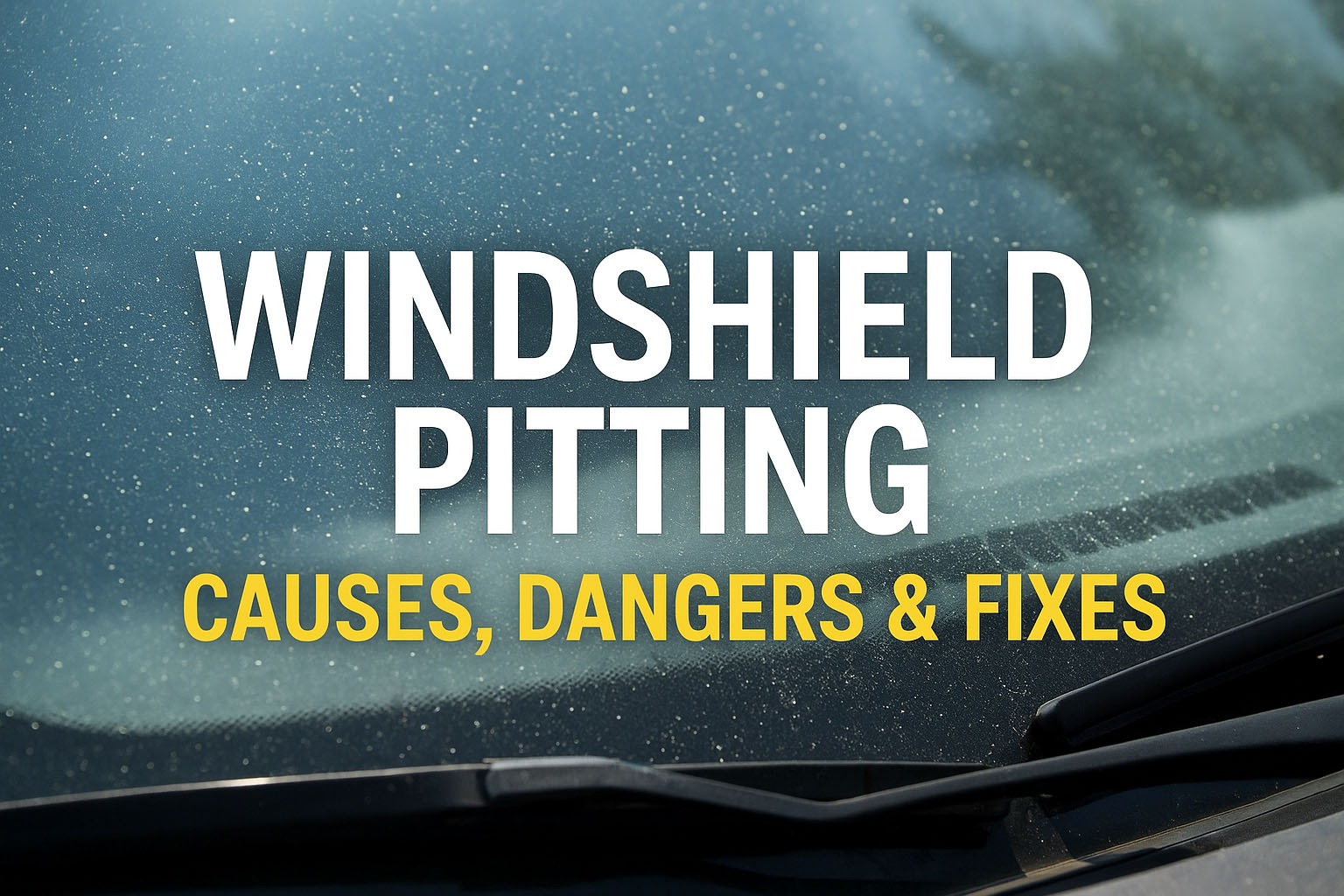
Windshield pitting is cumulative surface damage made up of very small indentations in the outer layer of automotive glass. Instead of one obvious impact mark, a pitted windshield normally contains many tiny defects distributed across part or all of the glass.
A useful way to picture the process is slow-motion sandblasting. Every trip exposes the windshield to airborne particles. Most impacts do not produce a recognizable chip. Over many thousands of miles, however, repeated contact can roughen what was originally a smooth optical surface.
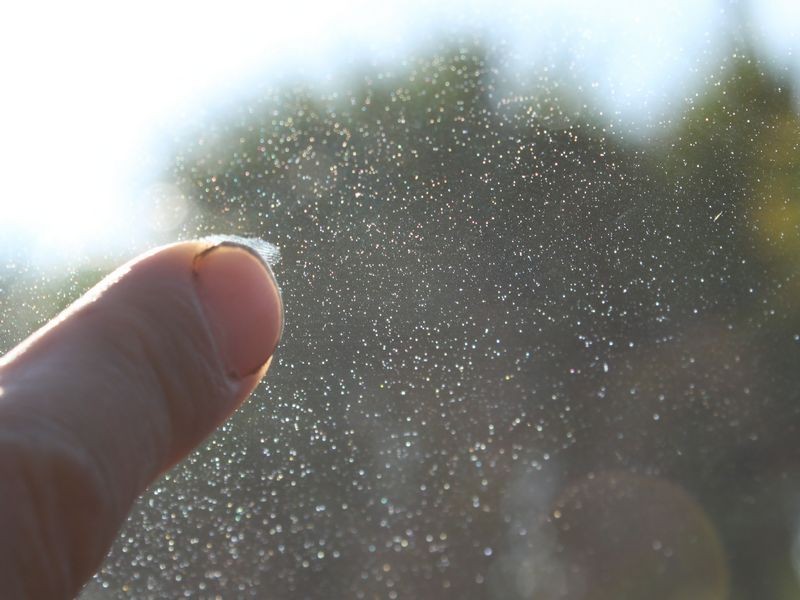
Individual pits may be almost invisible. Their combined effect is easier to recognize. Under direct sunlight, streetlights, or approaching headlights, the windshield may appear covered in tiny sparkling points. From the driver’s seat, the glass can seem hazy even after it has been thoroughly cleaned.
Pitting usually develops gradually. If a visible defect appeared immediately after one stone hit the windshield, that defect is more likely an individual chip, bull’s-eye, star break, or another localized impact rather than widespread pitting.
Source: smileysglass.com
Tiny surface marks
Pits generally appear as numerous small dots or shallow craters rather than one large damaged area.
Sparkle in bright light
Sunlight striking the pits can make the windshield look as though it contains many tiny reflective specks.
Nighttime halos
Oncoming headlights may spread into glare, halos, or starburst patterns because the uneven glass scatters light.
Persistent haze
A pitted windshield may continue looking cloudy or visually busy after the inside and outside surfaces have been properly cleaned.
How Pitting Differs From a Rock Chip
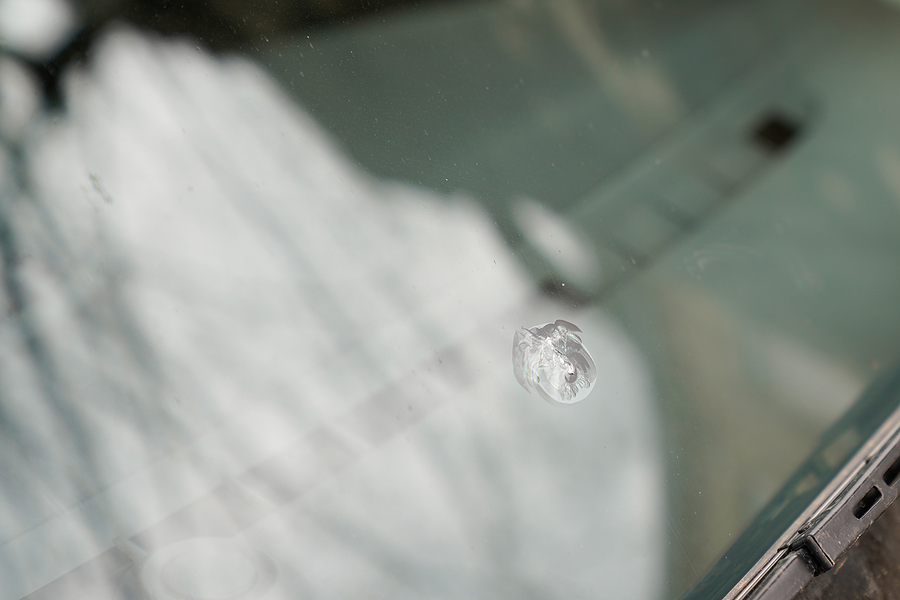
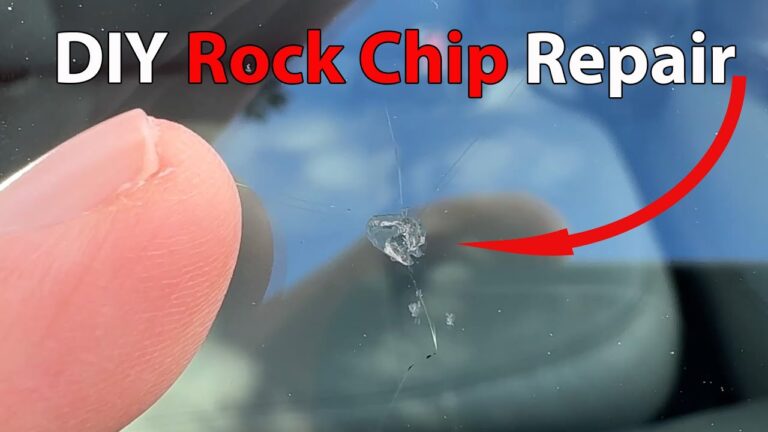
A rock chip is typically a concentrated impact site. Depending on its type, size, depth, and location, an auto glass technician may be able to stabilize a chip with repair resin. Pitting is different because the damage consists of many small surface defects spread over a larger area. There is no single cavity for a technician to inject and repair.
How Pitting Differs From Scratches
Scratches tend to form lines or arcs. They may result from contaminated wiper blades, abrasive cleaning, damaged scrapers, or particles dragged across the glass. Pits are small impact craters rather than continuous lines.
How Pitting Differs From Hard-Water Spots
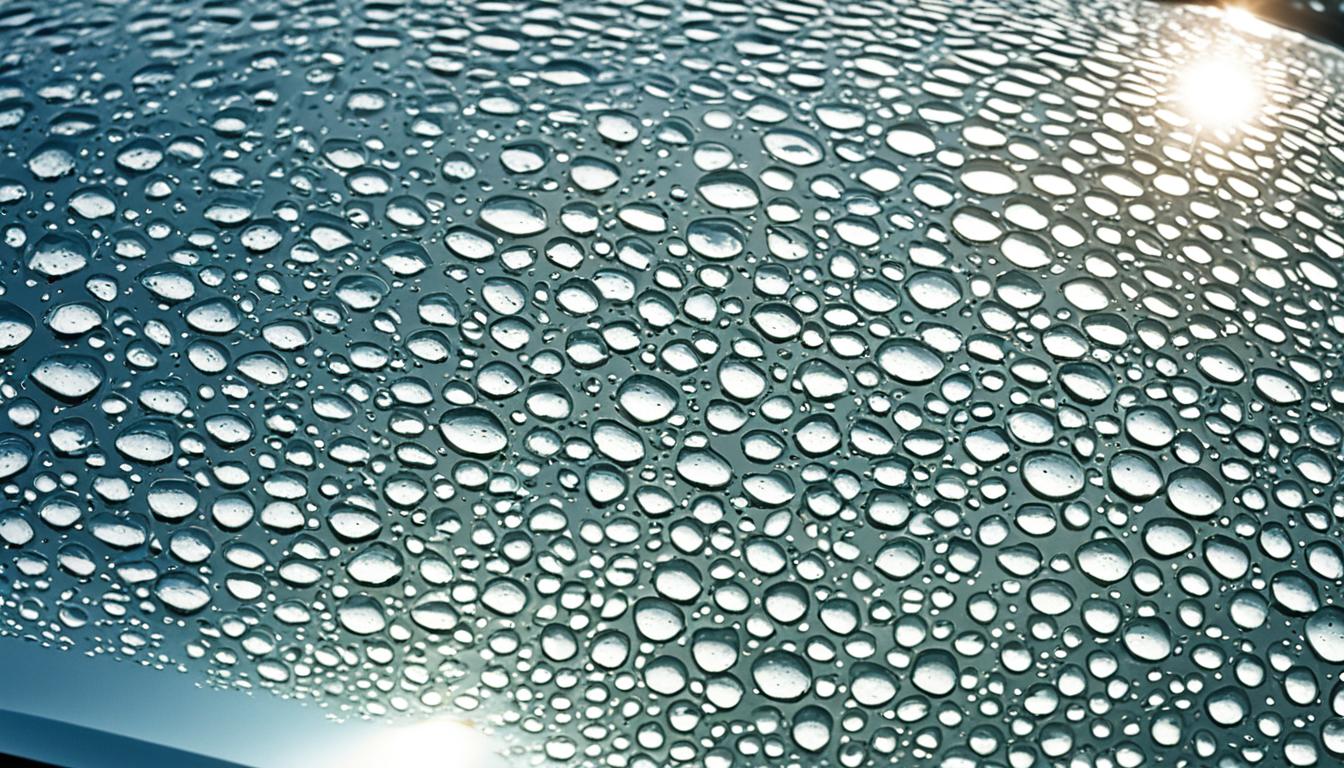
Mineral deposits sit on the surface of the glass and may leave circular or cloudy marks. Appropriate glass cleaning or professional decontamination may remove them. True pits are physical losses or deformations in the glass surface, so ordinary cleaning does not erase them.
What Causes Windshield Pitting?
The primary cause of windshield pitting is repeated contact with small airborne particles while a vehicle is moving. The faster the relative impact speed and the more frequently the windshield encounters loose debris, the more opportunities there are for microscopic surface damage to accumulate.
Highway mileage matters because a vehicle traveling at interstate speeds repeatedly meets particles with considerable relative velocity. Following another vehicle too closely can also increase exposure to grit and stones thrown from its tires.
Driving environment makes a difference. Vehicles used around construction zones, unpaved shoulders, gravel roads, dusty agricultural areas, or desert regions may encounter more abrasive material than vehicles driven primarily on clean urban streets.
In colder parts of the United States, winter roads can expose glass to combinations of sand, grit, salt, and loose pavement material. These substances do not automatically pit a windshield on contact, but particles lifted by traffic can repeatedly strike the glass.
Source: starwindshield.ca
Sand and dust
Fine airborne particles can gradually abrade the outer glass surface during repeated exposure.
Fine gravel
Small stones and aggregate thrown by tires can produce tiny impact marks.
Road construction
Fresh aggregate, loose pavement material, and construction debris can increase the amount of airborne grit around traffic.
Highway driving
Frequent high-speed travel increases both exposure time and the relative speed at which particles strike the windshield.
Winter road debris
Sand, grit, and loose material used or exposed during winter conditions may become airborne as vehicles pass.
Does Windshield Age Automatically Cause Pitting?
Age itself does not carve pits into glass, but older windshields have usually experienced more miles, weather, cleaning cycles, road debris, and impacts. A ten-year-old highway commuter can therefore have much more pitting than a similarly aged vehicle that has accumulated relatively little road exposure.
Can Bad Wiper Blades Cause Pitting?
Wiper blades are more commonly associated with streaking or scratches than impact-style pitting. However, dirty or deteriorated blades can drag abrasive particles across the windshield and add other forms of surface wear. Keeping the glass and blades clean helps prevent avoidable damage even though it cannot stop debris from striking the windshield while driving.
How to Tell if Your Windshield Is Pitted
Before deciding that a windshield is pitted, first make sure the apparent haze is not caused by road film, interior residue, mineral deposits, dirty wiper blades, or other removable contamination. Pitting should remain visible after the glass has been properly cleaned.
Start by cleaning both sides of the windshield with an appropriate automotive glass cleaner and clean microfiber towels. Inspect the glass in several lighting conditions rather than relying on one angle. Low-angle sunlight and bright artificial light can reveal defects that disappear in shade.
Look through the windshield from the driver’s normal seating position. The practical concern is not simply whether tiny marks exist, but whether those marks interfere with recognizing lane markings, pedestrians, vehicles, traffic signals, signs, or other hazards.
Do not deliberately drive into difficult conditions merely to test the windshield. If you already know glare becomes severe at night, in heavy rain, or when facing a low sun, use safer conditions for inspection and arrange professional evaluation.
Source: miracleagc.com
Clean-glass test
If the apparent dots or haze remain after cleaning both sides of the glass, physical surface damage becomes more likely.
Low-sun inspection
Pitting often becomes highly visible when morning or evening sunlight strikes the windshield at a shallow angle.
Night glare
Headlights may appear surrounded by excessive halos, streaks, or starburst effects.
Surface examination
Under close inspection, numerous tiny crater-like defects may be visible across the exterior surface.
Why a Pitted Windshield Creates Glare
An undamaged windshield has a relatively smooth optical surface that allows light to pass through predictably. Pits create many small irregular surfaces. When strong light reaches those irregularities, some of it is redirected rather than traveling cleanly through the glass. Across hundreds or thousands of pits, this produces the glare, sparkle, haze, and loss of contrast drivers notice.
Why Rain Can Make Pitting More Noticeable
Rain already creates reflections and changing optical surfaces on a windshield. When the underlying glass is heavily pitted, additional scattering and reduced contrast can make road details more difficult to distinguish. Wipers can remove water from the surface, but they cannot restore the original smoothness of damaged glass.
Can Windshield Pitting Be Repaired?
Widespread windshield pitting generally cannot be repaired in the same way as an isolated rock chip. Chip repair works by treating a localized impact area. Pitting may consist of hundreds or thousands of tiny defects spread across a broad portion of the windshield, making individual resin repair impractical.
Cleaning products, glass coatings, water repellents, and detailing treatments may improve contamination-related haze or water behavior, but they do not put missing glass back into microscopic craters. If a product makes genuine pitting seem less noticeable temporarily, that does not mean the physical damage has been removed.
Glass polishing requires more caution. Very light surface imperfections may sometimes be improved by a knowledgeable professional, but correcting true pitting by removing surrounding glass can require significant material removal. Uneven polishing can create optical distortion or a lens-like area that is distracting to look through.
For that reason, aggressive do-it-yourself polishing of the driver’s viewing area is not a good experiment. If visibility is impaired, have an established auto glass shop inspect the windshield and explain whether any limited corrective process is suitable or whether replacement is the better option.
Source: fusionwindshield.com
Cleaning
Useful for eliminating dirt, films, deposits, and residues that can imitate pitting, but it does not remove real pits.
Chip repair resin
Designed for suitable localized chips and cracks, not for thousands of distributed surface craters.
Glass polishing
May improve certain minor surface defects, but removing too much glass or polishing unevenly can create optical distortion.
Replacement
Usually the most dependable way to restore optical clarity when widespread pitting seriously affects the driver’s view.
Can You Fill Windshield Pits With Resin?
Trying to treat widespread pitting as though every tiny mark were a conventional rock chip is generally impractical. A repairable chip is a defined impact defect that can be evaluated individually. Surface pitting is distributed wear, so normal windshield repair methods do not scale to the entire affected area.
Can a Glass Coating Hide Pitting?
A coating may change water behavior or improve surface cleanliness, depending on the product, but it should not be treated as a structural or optical repair for missing glass. Persistent light scatter from genuine pits can remain even when the windshield is clean and coated.
When Should a Pitted Windshield Be Replaced?
There is no single pit count that tells every U.S. driver when a windshield must be replaced. The more useful question is whether the remaining damage prevents the windshield from providing a consistently clear, undistorted view under the conditions in which the vehicle is driven.
Replacement becomes increasingly reasonable when the windshield remains hazy after cleaning, oncoming headlights produce severe glare, low sunlight washes out important road detail, or pitting is concentrated in the driver’s primary viewing area. A professional inspection is particularly worthwhile when you find yourself changing your head position to see around a damaged area.
State vehicle inspection and windshield requirements vary across the United States, so a condition acceptable under one state’s inspection system may not necessarily be treated the same way elsewhere. If legal compliance is a concern, check the current requirements for the state where the vehicle is registered or inspected.
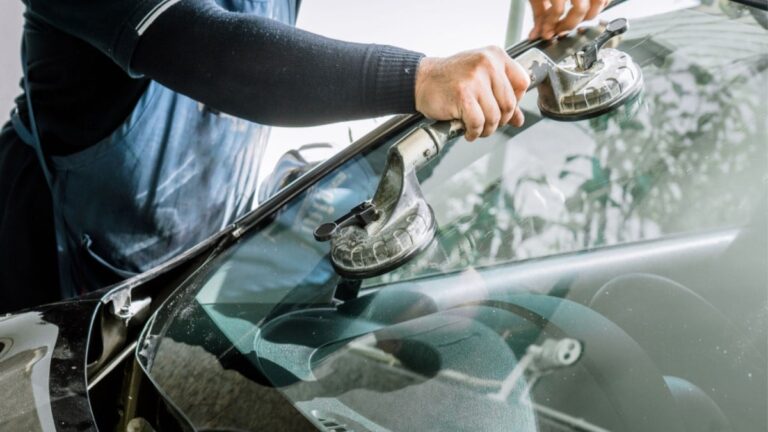
Modern vehicles add another consideration. Cameras and sensors for systems such as lane departure warning, lane keeping assistance, forward collision warning, or automatic emergency braking may be mounted at or near the windshield. Depending on the vehicle manufacturer and replacement procedure, calibration may be required after a new windshield is installed.
If replacement is recommended, ask the glass shop whether your particular vehicle has windshield-mounted driver-assistance equipment and what calibration procedure applies. Do not assume that every vehicle requires the same service.
Source: blog.glass.net
Persistent glare
Headlights or sunlight create enough scatter that you struggle to see road details clearly.
Driver-view damage
Heavy pitting is directly in the area you normally look through while driving.
Poor wet-weather clarity
The windshield remains visually distracting or difficult to see through during rain even with effective wipers.
Optical distortion
Objects or road markings appear distorted through the damaged portion of the windshield.
Other glass damage
Pitting exists along with significant chips or cracks that also require professional evaluation.
Is It Safe to Drive With a Pitted Windshield?
Minor pitting that does not meaningfully affect visibility can be primarily cosmetic. More extensive pitting can become a driving-safety concern because it increases glare and reduces contrast. A home inspection cannot establish that every pitted windshield is safe or unsafe.
If the windshield makes it difficult to see traffic, pedestrians, lane markings, signs, or hazards, especially at night, in rain, or while facing low sun, arrange professional inspection promptly. Avoid conditions in which you already know your vision through the windshield is substantially impaired.
What About ADAS Calibration After Replacement?
Many newer U.S.-market vehicles use a forward-facing camera positioned behind the upper center portion of the windshield. Windshield replacement can change the camera’s relationship to the road. Depending on the vehicle and manufacturer procedure, static calibration, dynamic calibration, or another specified process may be necessary after installation.
Can Auto Insurance Cover a Pitted Windshield?
Coverage depends on the policy, cause of damage, deductible, state rules, and insurer. Comprehensive auto coverage often applies to certain glass losses, but ordinary wear or gradual deterioration may be treated differently from a sudden covered event. Before scheduling non-emergency replacement, review your policy or ask your insurer specifically how pitting-related replacement would be handled.
How to Slow Future Windshield Pitting
No driving habit can prevent every particle from reaching a windshield, but reducing unnecessary exposure can slow cumulative damage. Leave adequate following distance, especially behind trucks carrying aggregate or vehicles traveling on loose surfaces. Slow down when conditions safely allow on gravel roads and around active construction.
Rinse heavy dust and grit from the windshield before rubbing it with towels or wipers. Replace deteriorated wiper blades, keep washer fluid available, and avoid scraping the glass with contaminated or unsuitable tools. These steps mainly prevent additional scratches and abrasion, but maintaining a clean surface also makes new damage easier to recognize.
Increase following distance
More distance can reduce exposure to stones and grit thrown directly from the tires of vehicles ahead.
Avoid dry wiping
Rinse or lubricate dusty glass before wiping so abrasive particles are less likely to be dragged across the surface.
Maintain wiper blades
Replace worn or damaged blades before they begin dragging debris or exposed blade components over the glass.
Clean the glass correctly
Use clean materials intended for automotive glass rather than dirty towels or harsh abrasives.
Frequently Asked Questions
Q
Does windshield pitting spread like a crack?
Pitting does not normally spread outward from one point in the same way a crack can. Instead, additional pits accumulate as the windshield continues to encounter sand, stones, and road debris. A single pit may remain tiny while the overall number of surface defects gradually increases.
Q
Can windshield pitting make headlights look blurry at night?
Yes. Numerous pits can scatter incoming light, making headlights appear surrounded by halos, streaks, sparkle, or starburst effects. This is one reason pitting can seem minor during the day but become much more distracting after dark.
Q
Why does my windshield look sandblasted?
A sandblasted appearance is often produced by cumulative exposure to fine road particles. Thousands of small impacts can roughen the outer glass and create a dense pattern of tiny reflective points. Clean the windshield thoroughly first because mineral deposits and road film can produce a superficially similar haze.
Q
Will new windshield wipers fix pitting?
No. New wipers can improve water removal and eliminate streaking caused by worn blades, but they cannot repair physical craters in the glass. If visibility remains poor with clean glass and properly functioning wipers, inspect the windshield for permanent damage.
Q
Is windshield pitting normal on an older car?
Some accumulated surface wear is common on vehicles with substantial highway mileage, but age alone does not determine whether a windshield is acceptable. An older windshield with little pitting can remain clearer than a newer one that has spent many miles around gravel, road construction, or abrasive debris. Visibility should guide the decision to seek professional inspection.
✦ Wrapping Up
Conclusion
Understanding what is windshield pitting starts with recognizing that it is cumulative surface wear, not simply dirt and not the same thing as one repairable rock chip. Repeated impacts from sand, grit, gravel, and other road debris create tiny craters across the exterior surface of the glass. As the number of pits increases, they can scatter sunlight and headlights enough to produce haze, glare, halos, and reduced contrast.
For U.S. drivers, the practical decision should be based on visibility rather than the mere presence of a few tiny marks. Clean both sides of the windshield, rule out deposits and wiper problems, and evaluate whether the remaining defects interfere with a clear view of the road. Minor pitting may require only monitoring, while widespread pitting that substantially affects nighttime, wet-weather, or low-sun visibility deserves professional evaluation and may justify windshield replacement.
💡 Key Takeaway
Clean and inspect the windshield under several lighting conditions. If permanent pitting continues to create substantial glare, haze, or distortion in the driver’s viewing area, have a qualified auto glass professional assess whether replacement is appropriate and whether your vehicle requires ADAS calibration afterward.