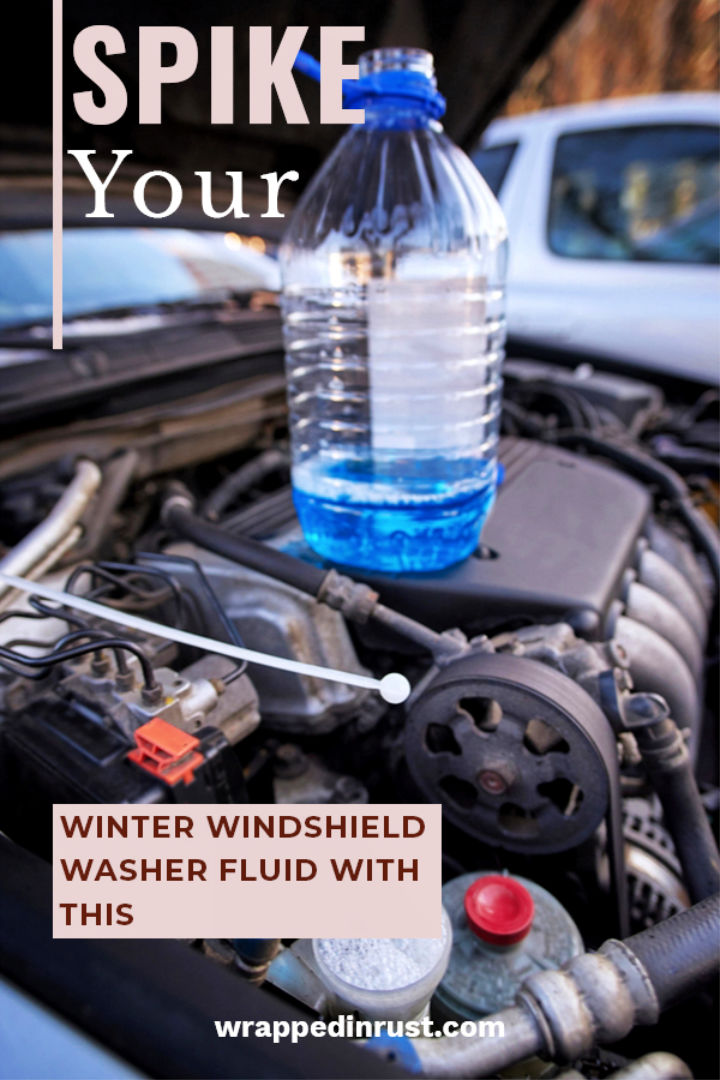
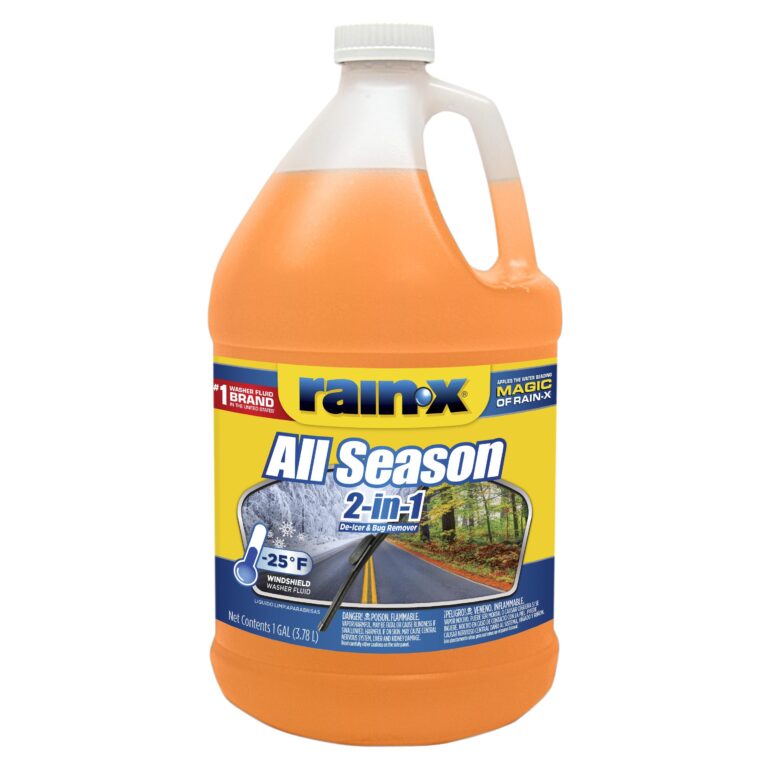
The safest way to lower the freezing point of windshield washer fluid is to replace or strengthen a weak mixture with a properly rated winter washer fluid or manufacturer-approved washer-fluid concentrate.
For drivers across the United States, windshield washer fluid that works perfectly in summer may become a problem as soon as winter temperatures arrive. A vehicle in Minnesota, North Dakota, Colorado, New England, or another cold-weather region can experience temperatures far below 32°F, while even normally mild states can occasionally see overnight freezes. If the washer fluid contains too much water or is rated for warmer conditions, it can freeze in the reservoir, hoses, pump, or spray nozzles when you need it most.
Lowering the freezing point means changing the washer-fluid mixture so it remains liquid at a colder temperature. Commercial winter formulas accomplish this with alcohol-based antifreeze components and other additives. For most vehicle owners, the practical solution is not experimenting with raw chemicals. It is choosing winter washer fluid with a freeze-protection rating comfortably below the lowest temperature expected in your area, or using a compatible concentrate exactly according to its mixing directions.
This guide explains how to lower freezing point of windshield washer fluid safely, how dilution affects cold-weather protection, how to change an existing weak mixture, what to do if the system has already frozen, and which common shortcuts can create unnecessary risks.
Windshield washer fluid is primarily a cleaning liquid that must remain pumpable through a reservoir, small hoses, and narrow spray nozzles. Water is an effective carrier and cleaner, but pure water freezes at 32°F. Washer fluid designed for colder weather contains ingredients that reduce the temperature at which the overall solution begins to freeze.
The important variable is the composition of the final mixture inside the vehicle. Even a bottle originally designed for winter can lose some of its freeze protection if the reservoir already contains a large amount of water or summer fluid. Filling a half-full reservoir of weak fluid with a stronger product produces a blend whose protection falls somewhere between the two.
That is why the temperature printed on a winter washer-fluid container should not automatically be assumed to represent the final fluid in your reservoir after mixing with whatever was already there.
Source: hitchesguide.com
Water content
More water generally raises the freezing point and reduces cold-weather protection.
Winter additives
Commercial cold-weather washer fluids contain antifreeze components formulated to keep the solution usable at lower temperatures.
Previous fluid
Summer fluid or added water remaining in the reservoir can weaken a newly added winter formula.
Freezing Point Versus the Temperature on the Bottle
A washer-fluid temperature rating applies to that product under its specified formulation. It does not guarantee that a diluted mixture in your vehicle will have the same protection. For reliable winter preparation, treat the labeled rating as meaningful only when the reservoir contains the product at the concentration intended by its manufacturer.
How to Lower Freezing Point of Windshield Washer Fluid
The most reliable method is to reduce the amount of weak or water-heavy fluid in the system and replace it with winter washer fluid that is rated for temperatures lower than your expected minimum. If you use a concentrated product, mix it according to the manufacturer’s cold-weather instructions.
Before beginning, check your owner’s manual for any vehicle-specific washer-fluid requirements. You will also need an appropriately rated winter washer fluid or approved concentrate and, if practical, a clean container or fluid-transfer tool for removing old fluid.
Source: hitchesguide.com
Check the forecast range
Choose protection below the coldest temperature reasonably expected where the vehicle will be parked or driven.
Read the fluid label
Confirm whether the product is ready to use or must be diluted.
Avoid unnecessary dilution
Do not add plain water during freezing weather unless the product instructions specifically require it.
Step 1: Identify What Is Already in the Reservoir
If you know the reservoir contains summer washer fluid, heavily diluted fluid, or mostly water, simply topping it off may not provide enough cold-weather protection. The more weak fluid that remains, the more it dilutes the winter product.
When the existing mixture is unknown and severe cold is expected, removing most of the old liquid before refilling provides a more predictable result.
Step 2: Select a Winter-Rated Washer Fluid
Look for a freeze-protection rating suitable for your climate. A rating below your expected outdoor temperature provides a useful margin because temperatures can fall below forecasts and exposed parts of a parked vehicle can remain cold for hours.
Drivers in colder northern states generally need substantially stronger winter protection than drivers who encounter only occasional light freezes.
Step 3: Remove Weak Fluid When Necessary
If the reservoir is nearly full of summer fluid or water, remove as much as practical while the fluid is still liquid. Use a clean transfer pump or another method appropriate for your vehicle rather than repeatedly running the washer pump simply to empty the tank.
Avoid spilling washer fluid. Many winter formulations contain alcohols that are toxic if swallowed and may be flammable. Keep the liquid away from children, pets, flames, sparks, and hot surfaces.
Step 4: Add the Correct Winter Mixture
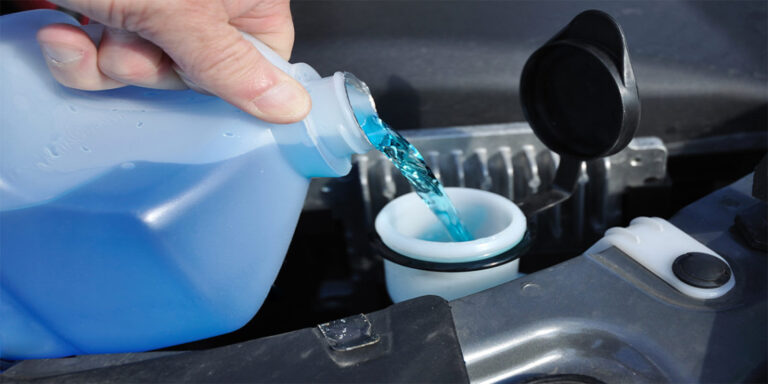
Pour premixed winter washer fluid into the reservoir if you are using a ready-to-use product. If you purchased concentrate, prepare the mixture according to the manufacturer’s temperature chart. Do not assume that making a concentrate stronger than instructed is beneficial; excessive concentration can introduce unnecessary cost, odor, material-compatibility concerns, or flammability risk.
Step 5: Circulate the New Fluid Through the System
After filling the reservoir, operate the washers briefly when the system is completely thawed and the windshield can be cleaned safely. This moves the winter mixture through the hoses and toward the nozzles, replacing weaker fluid trapped in the lines.
A successful conversion should produce normal washer spray without ice forming in the reservoir, lines, or nozzles under temperatures that remain within the product’s specified range.
Should You Add Alcohol to Windshield Washer Fluid?
Alcohol can lower the freezing point of a water-based solution, which is one reason commercial winter washer fluids commonly use alcohol-based ingredients. However, adding household alcohol or raw methanol directly to an automotive washer reservoir is less predictable than using a formulated product.
The resulting freezing point depends on the type and concentration of alcohol, the composition of the washer fluid already in the vehicle, and the quantities being mixed. Without knowing those values, there is no dependable way to determine the final protection simply by pouring in an arbitrary amount.
Raw methanol deserves particular caution. It is toxic and flammable and should not be handled casually as a home winterization ingredient. A commercially formulated winter washer fluid or compatible concentrate provides a much simpler way to obtain known cold-weather protection.
Source: itsoverflowing.com
Best option
Use a ready-to-use winter washer fluid with a clearly stated freeze rating.
Alternative
Use a dedicated washer-fluid concentrate and follow its published dilution instructions.
Less predictable option
Adding household alcohol to an unknown reservoir mixture can produce uncertain freeze protection.
Avoid raw methanol handling
Methanol is poisonous and flammable, so commercial automotive formulations are preferable for normal vehicle maintenance.
Why More Alcohol Is Not Automatically Better
The goal is not to maximize alcohol content. The goal is to obtain enough freeze protection for the actual climate while maintaining the cleaning, material compatibility, evaporation behavior, and safety characteristics expected from washer fluid. Follow the concentration specified by the product manufacturer instead of improvising an extreme mixture.
How to Use Washer Fluid Concentrate Correctly
A dedicated windshield washer concentrate gives you control over cold-weather strength, but only when you follow its own mixing chart. Different concentrates contain different active ingredients and concentrations, so one brand’s ratio should not be applied to another.
If a concentrate label tells you to mix a specified amount of concentrate with water for a particular protection temperature, measure both components accurately. Distilled or otherwise suitable clean water may be recommended by some manufacturers because minerals in hard water can leave deposits, but the product instructions should take priority.
Source: storage.googleapis.com
Confirm product type
Some containers labeled washer fluid are premixed and should not be diluted.
Choose the target temperature
Use the dilution ratio corresponding to a temperature safely below your expected minimum.
Measure accurately
Guessing the ratio can leave the mixture weaker than intended.
Account for fluid already in the tank
Residual water or summer fluid changes the final concentration.
A Simple Dilution Example
Suppose a concentrate manufacturer specifies one ratio for mild freezing conditions and a stronger ratio for severe winter weather. If your reservoir still contains a substantial amount of summer fluid, adding the recommended winter mixture does not instantly give the whole reservoir that same concentration. For the most predictable result, remove most of the old mixture first and then refill with the correctly prepared winter blend.
This is more useful than trying to calculate an exact final freezing point from incomplete information about an unknown fluid already in the vehicle.
What Not to Add to Windshield Washer Fluid
Several liquids can remain fluid below 32°F, but that does not make them suitable for a windshield washer system. Washer fluid must also clean glass, spray correctly, avoid excessive residue, and remain compatible with the reservoir, pump, hoses, seals, paint, and surrounding components.
Source: hitchesguide.com
Engine coolant
Do not substitute radiator antifreeze or engine coolant for windshield washer fluid. It is formulated for the cooling system rather than windshield cleaning and can leave residue or damage finishes.
Straight household cleaners
Many household cleaners are not formulated for automotive washer pumps, hoses, exterior finishes, or cold-weather use.
Large amounts of dish soap
Excess soap can foam, smear the windshield, and leave residue rather than improving freeze protection.
Plain water during winter
Water dilutes antifreeze ingredients and may raise the freezing point enough to create problems during a cold snap.
Unmeasured chemical mixtures
A mixture with unknown composition gives you no reliable freeze-protection temperature and can create avoidable safety or compatibility concerns.
Do Not Mix Washer Fluid With Engine Antifreeze
Engine antifreeze and windshield washer antifreeze serve different systems. Coolant is designed to circulate through an engine cooling system, while washer fluid must spray onto exterior glass and clear without leaving an oily or difficult-to-remove film. Keep the two products separate.
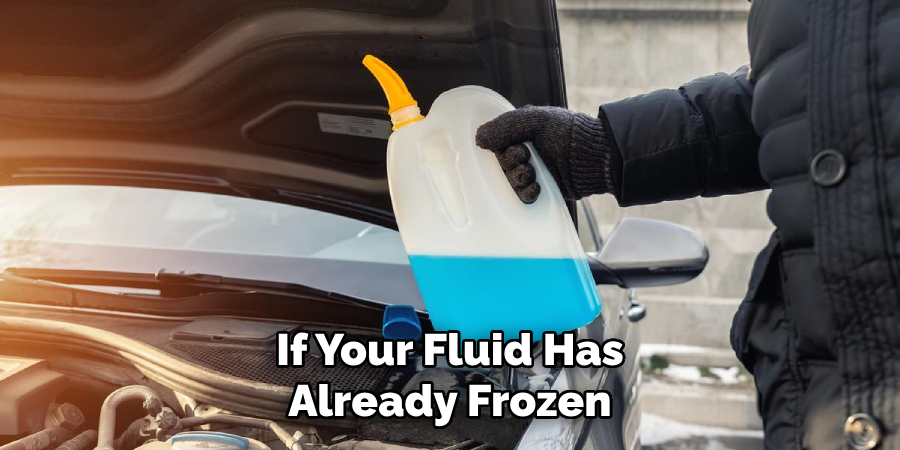
What to Do If Windshield Washer Fluid Is Already Frozen
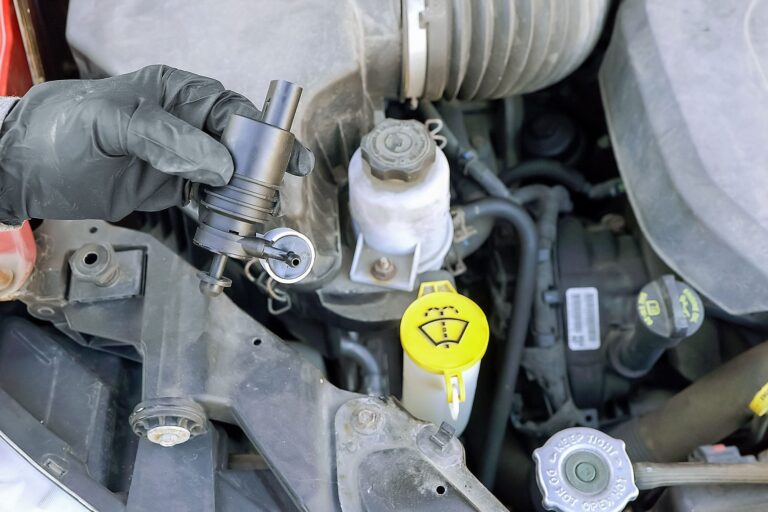
If the reservoir or washer lines are already frozen, the priority is thawing the system without damaging the pump, plastic reservoir, hoses, or windshield. Repeatedly holding the washer switch while the system is frozen can place unnecessary strain on the washer pump.
Move the vehicle into a heated garage when possible and allow the system to warm gradually. Once the reservoir becomes liquid, remove weak fluid and replace it with properly rated winter washer fluid. After the hoses and nozzles have thawed, briefly operate the system to circulate the stronger fluid throughout the lines.
Avoid pouring boiling water onto a frozen reservoir, windshield, or other cold vehicle components. Sudden temperature changes can damage materials, and adding more water to the washer system can further weaken freeze protection.
Stop operating the pump
If no fluid sprays and freezing is likely, avoid repeatedly activating the washer.
Warm the vehicle gradually
A heated garage is one of the safest ways to thaw the reservoir, hoses, and nozzles.
Replace the weak mixture
Once thawed, remove diluted fluid and refill with a winter-rated product.
Clear the lines
After everything is liquid, run the washer briefly so winter fluid reaches the hoses and nozzles.
Why the Reservoir May Thaw Before the Nozzles
The reservoir contains a relatively large volume of fluid, while washer hoses and nozzle passages hold only small amounts. Those exposed sections can remain frozen even after the main reservoir begins to thaw. Give the entire vehicle time to warm before assuming the pump or nozzle has failed.
When to Check for a Mechanical Problem
If the vehicle has been fully warmed and properly rated fluid is liquid but the washers still do not operate, check the reservoir level, hoses, nozzles, fuse, electrical supply, and washer pump. Persistent leaks or an inoperative pump may require repair rather than a change in fluid.
How Cold Should Your Washer Fluid Be Rated?
Choose a washer fluid with a freeze-protection rating below the lowest temperature the vehicle is likely to experience, rather than selecting a product that barely matches a typical winter day. The appropriate rating depends on where the vehicle travels, where it is parked, and whether unusual cold snaps occur.
A driver who stays in a relatively mild southern climate may need only modest winter protection, while someone traveling through the Upper Midwest, Mountain West, northern New England, Alaska, or another very cold region needs a substantially lower temperature rating.
Also consider travel. A vehicle prepared for a mild home climate can encounter much colder weather during a winter road trip.
Mild freeze exposure
Use a winter product rated comfortably below the coldest local forecast rather than relying on summer fluid.
Regular subzero conditions
Select a stronger winter formulation designed specifically for sustained low temperatures.
Winter road trips
Prepare for the coldest location on the route, not only the weather at home.
Why a Safety Margin Helps
Weather forecasts change, local temperatures vary, and the actual fluid in the reservoir may be slightly diluted by an older mixture. Choosing a product rated somewhat below the temperature you expect reduces the chance that an unexpected cold night will disable the washer system.
How to Keep Washer Fluid From Freezing Again
Preventing another freeze is mostly a matter of seasonal maintenance. Change from warm-weather fluid to a winter-rated formula before sustained freezing temperatures arrive, especially if your reservoir has been repeatedly topped up with water during summer.
After changing the reservoir fluid, remember that old liquid remains in the hoses. Spray the washers briefly while conditions are safe so the winter mixture reaches the entire system.
Switch before the first major freeze
Waiting until the reservoir freezes makes the conversion more difficult.
Do not dilute during winter
Adding water reduces the protection provided by winter fluid.
Carry spare winter fluid
Road salt, slush, and highway spray can increase washer-fluid use dramatically during winter travel.
Keep the reservoir capped
A secure cap helps keep dirt and contamination out of the washer system.
Inspect spray performance
Weak or uneven spray can indicate a clogged nozzle, damaged hose, low fluid level, freezing, or a pump problem.
Signs Your Winter Preparation Worked
The washer fluid should remain liquid within its intended temperature range, the pump should sound normal, and the nozzles should produce a consistent spray. The fluid should clear road grime without immediately turning to ice under conditions within the product’s stated capability.
Common Mistakes When Trying to Lower the Freezing Point
Most problems come from treating the reservoir as if its contents were known when they are not. The freezing behavior of the final mixture depends on everything already in the tank, not only the last product poured into it.
Only topping off a water-heavy reservoir
A small amount of winter fluid may not be enough to protect a large quantity of diluted summer fluid.
Assuming all blue washer fluids are winter formulas
Color does not establish freeze protection. Read the temperature rating and usage instructions.
Using concentrate as though it were premixed fluid
Some concentrates require dilution and should be prepared according to the label.
Mixing by guesswork
Without knowing the ingredients and quantities, you cannot reliably determine the resulting freeze point.
Forcing a frozen washer pump
Repeated operation cannot solve frozen fluid and may stress the pump.
Ignoring fluid trapped in the lines
Winter fluid in the reservoir does not immediately replace weaker fluid already sitting in hoses and nozzles.
A Practical Winter Washer Fluid Checklist
For most U.S. drivers, preparing the washer system does not require chemical calculations. A short seasonal checklist provides a safer and more repeatable approach.
Check expected winter lows
Include destinations you may visit during winter travel.
Read the current fluid rating
Do not assume a warm-weather product will survive freezing conditions.
Remove heavily diluted fluid
This prevents existing water or summer fluid from undermining your new winter mixture.
Fill with suitable winter fluid
Choose a ready-to-use formula or correctly mixed concentrate.
Circulate it through the washer lines
Operate the system briefly after the vehicle is fully thawed.
Store spare fluid safely
Keep it sealed, upright, away from heat, ignition sources, children, and pets.
When Professional Help Makes Sense
Most washer-fluid freeze problems can be handled by warming the vehicle and replacing the mixture. Professional inspection becomes useful when the system remains inoperative after it has completely thawed or when you find leaks, damaged hoses, cracked plastic, electrical faults, or a pump that no longer operates.
A repair shop can also drain a contaminated washer system when an inappropriate fluid has been added accidentally. If engine coolant, fuel, strong solvents, or another questionable chemical has entered the washer reservoir, avoid spraying it across the windshield and painted bodywork until the system has been properly cleaned.
Choosing Between Premixed Winter Fluid and Concentrate
Premixed winter washer fluid is the simpler choice because its cold-weather protection is already established when used as supplied. Concentrate can be useful when you need different strengths for changing climates or want to prepare a specific quantity, but it requires careful measurement.
For drivers who simply want dependable winter performance with minimal preparation, a ready-to-use formula rated for the expected climate is usually the easiest approach. Concentrate makes more sense when its instructions are clear and you are comfortable measuring the prescribed ratio.
Premixed winter fluid
Convenient, predictable, and requires no dilution calculation when used in an emptied or nearly emptied system.
Washer-fluid concentrate
Flexible for different temperature targets but requires correct measurement and suitable water when dilution is specified.
Why Windshield Washer Fluid Matters More in U.S. Winter Driving
Winter washer fluid does more than prevent a reservoir from freezing. U.S. roads in snowy regions are often treated with salt, brine, and other deicing materials that can combine with wet road spray and quickly create an opaque film on a windshield. A functional washer system helps the wipers remove that contamination and restore visibility.
This makes washer-fluid preparation a visibility issue rather than merely a maintenance convenience. Before a winter trip, check the fluid level, winter temperature rating, wiper condition, defroster operation, and washer spray pattern. A gallon of properly rated spare washer fluid can also be useful on long highway trips where repeated cleaning rapidly empties the reservoir.
Frequently Asked Questions
Q
Can I add rubbing alcohol to windshield washer fluid to stop it freezing?
Isopropyl alcohol can lower the freezing point of a water-based mixture, but adding an arbitrary amount to an unknown washer fluid does not provide a dependable temperature rating. A winter-rated automotive washer fluid or dedicated concentrate is easier to use correctly and provides more predictable protection.
Q
Can I add antifreeze to windshield washer fluid?
Do not add engine coolant or radiator antifreeze to the washer reservoir. Cooling-system antifreeze is formulated for a different purpose and can leave residue on glass or exterior surfaces. Use windshield washer fluid specifically formulated for freezing conditions.
Q
Does adding water raise the freezing point of windshield washer fluid?
Usually, yes. Adding water to winter washer fluid generally weakens its cold-weather protection. Concentrates are an exception when their instructions specifically require a measured amount of water to achieve a stated freeze rating.
Q
What should I do if washer fluid freezes overnight?
Move the vehicle into a warm location and allow the reservoir, hoses, and nozzles to thaw gradually. Avoid repeatedly running the washer pump while the system is frozen. Once thawed, replace the weak mixture with properly rated winter washer fluid and circulate it through the lines.
Q
Why did my washer fluid freeze even though I added winter fluid?
The winter fluid may have been diluted by summer fluid or water already in the reservoir, the temperature may have fallen below the product’s intended protection range, or weaker fluid may have remained inside the hoses and nozzles. Removing most of the old mixture before adding winter fluid provides more predictable protection.
Q
Should I completely drain summer washer fluid before winter?
A complete drain is not always necessary, but removing most of a water-heavy or warm-weather mixture is sensible before severe cold. Otherwise the old fluid can dilute the winter product and raise the final freezing point.
Q
Can windshield washer concentrate be used straight?
Only if the product instructions specifically permit it. Some concentrates are designed to be mixed with water at different ratios. Using them undiluted can be unnecessary or inappropriate, so follow the label rather than assuming stronger is better.
✦ Wrapping Up
Conclusion
The most dependable answer to how to lower freezing point of windshield washer fluid is to control the final mixture rather than guessing with household chemicals. Remove heavily diluted summer fluid, refill with a winter-rated washer fluid or correctly prepared automotive concentrate, and choose protection below the coldest temperature your vehicle is likely to encounter.
For U.S. drivers facing winter snow, ice, road salt, and rapidly changing temperatures, preparing the washer system before the first major freeze is much easier than thawing a frozen reservoir later. Once the new fluid is installed, circulate it through the hoses and nozzles so the entire system receives the same cold-weather protection.
💡 Key Takeaway
Before freezing weather arrives, check what is in your washer reservoir, remove weak or water-heavy fluid if necessary, refill with a properly rated winter formula, and run the washers briefly so the protected fluid reaches the entire system.
Learn how to install a windshield sun shade correctly in your car. Follow simple steps for folding, roll-up, and umbrella-style shades, plus fit, safety, storage, and troubleshooting tips.