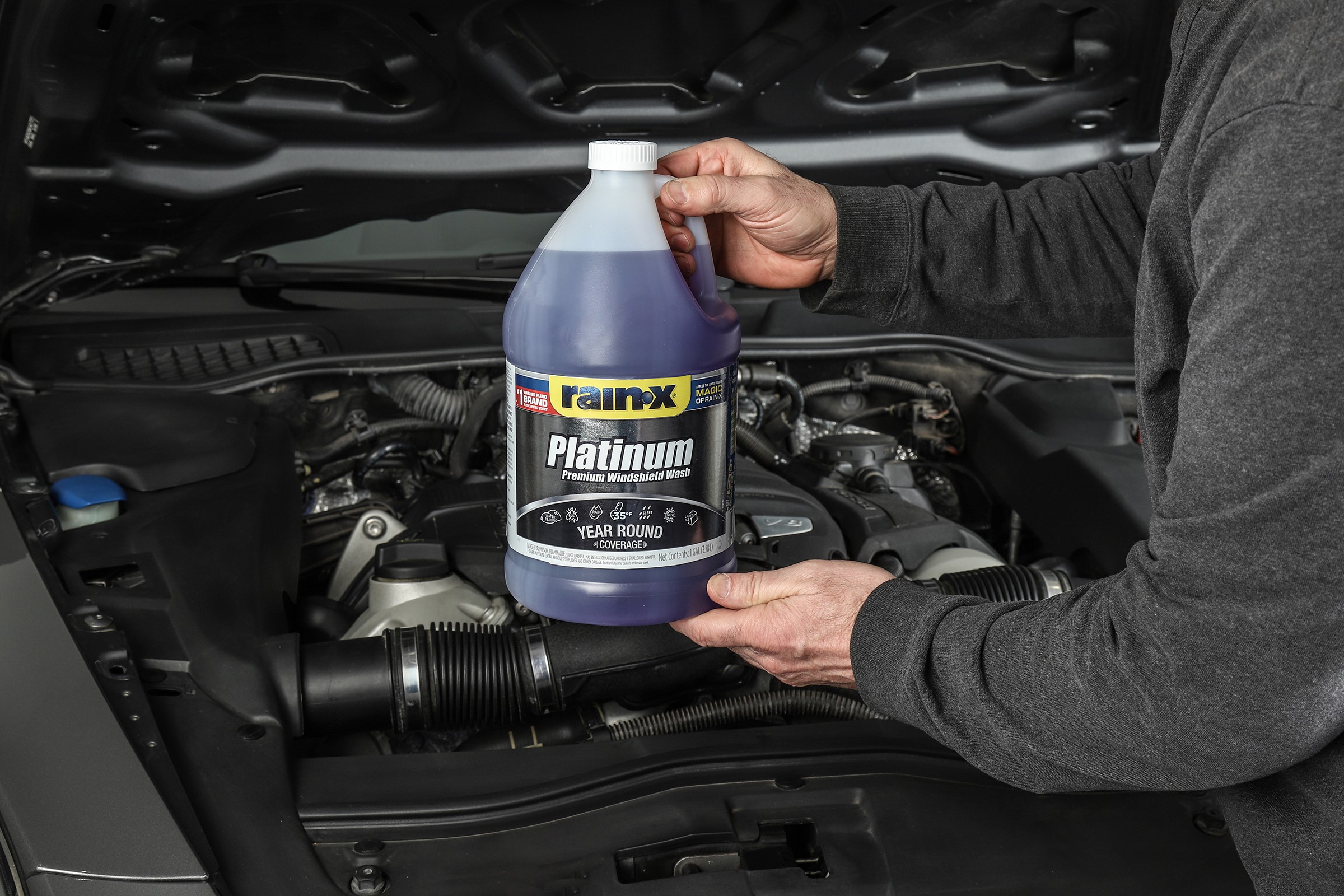
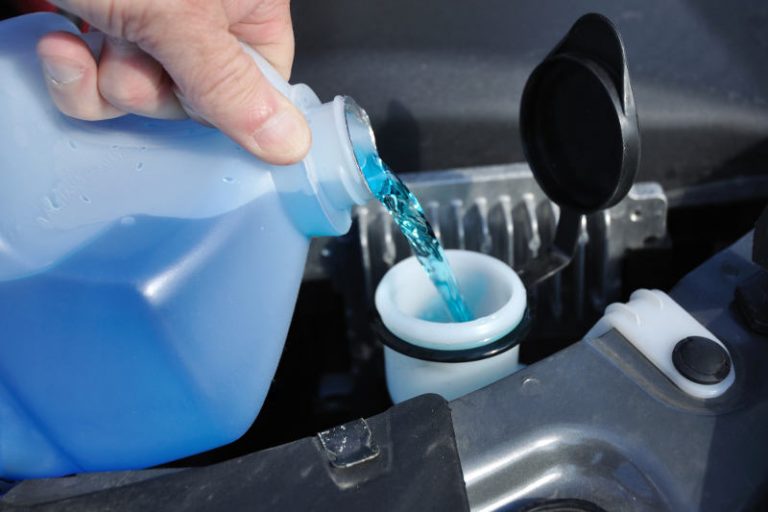
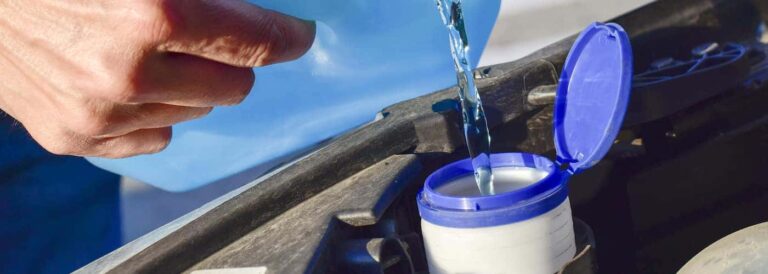
To use Rain-X windshield washer fluid, open your vehicle’s washer-fluid reservoir, pour in the correct Rain-X formula to the recommended fill level, close the cap, and operate the windshield washers to circulate the fluid.
For drivers in the United States, knowing how to use Rain-X windshield washer fluid correctly is especially useful because driving conditions vary dramatically by region. A vehicle in Florida may spend much of the year dealing with insects, pollen, heavy rain, and road film, while a vehicle in Minnesota, Colorado, New York, or other cold-weather areas may need washer fluid that continues working well below 32 degrees Fahrenheit. The basic refill procedure is simple, but choosing the appropriate Rain-X formula for your climate is just as important as pouring it into the correct reservoir.
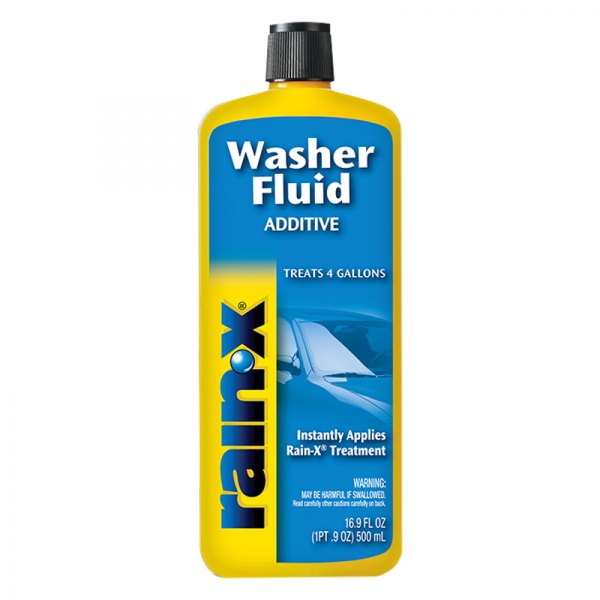
The most important distinction is whether you have ready-to-use Rain-X windshield washer fluid or Rain-X Windshield Washer Fluid Additive. Ready-to-use products such as certain Rain-X All-Season and 2-in-1 formulas are poured directly into the washer reservoir without dilution. The concentrated additive is different: Rain-X currently directs U.S. users of its 16.9-ounce additive to use 4 fluid ounces for one full gallon of water or washer fluid. Always read the label on the exact bottle you purchased because formulations, temperature ratings, and directions can differ.
How to Use Rain-X Windshield Washer Fluid Step by Step
Using Rain-X windshield washer fluid is a straightforward maintenance task that most U.S. drivers can complete in a few minutes. You normally need only the correct fluid and, if the bottle is difficult to pour cleanly, a funnel.
Before starting, park on a reasonably level surface, switch the vehicle off, set the parking brake, and allow yourself enough light to identify the washer reservoir clearly. The reservoir is commonly translucent plastic and usually has a cap marked with a windshield-and-spray symbol.
Do not pour washer fluid into a reservoir simply because it is plastic or located near the front of the engine compartment. Coolant reservoirs can sometimes look similar. If you cannot positively identify the windshield washer reservoir, check the vehicle owner’s manual before adding anything.
Source: lowes.com
Step 1: Check the Rain-X bottle
Determine whether the product is ready to use or a concentrated additive. Also check its stated freeze protection and usage directions.
Step 2: Open the hood
Release the hood from inside the vehicle, secure it properly, and locate the windshield washer reservoir.
Step 3: Identify the correct cap
Look for the windshield washer symbol, which normally resembles a windshield with spraying water.
Step 4: Check the existing level
If the reservoir is translucent, inspect the fluid level from the outside. Some vehicles also provide a low-fluid warning on the instrument panel.
Step 5: Pour in the fluid
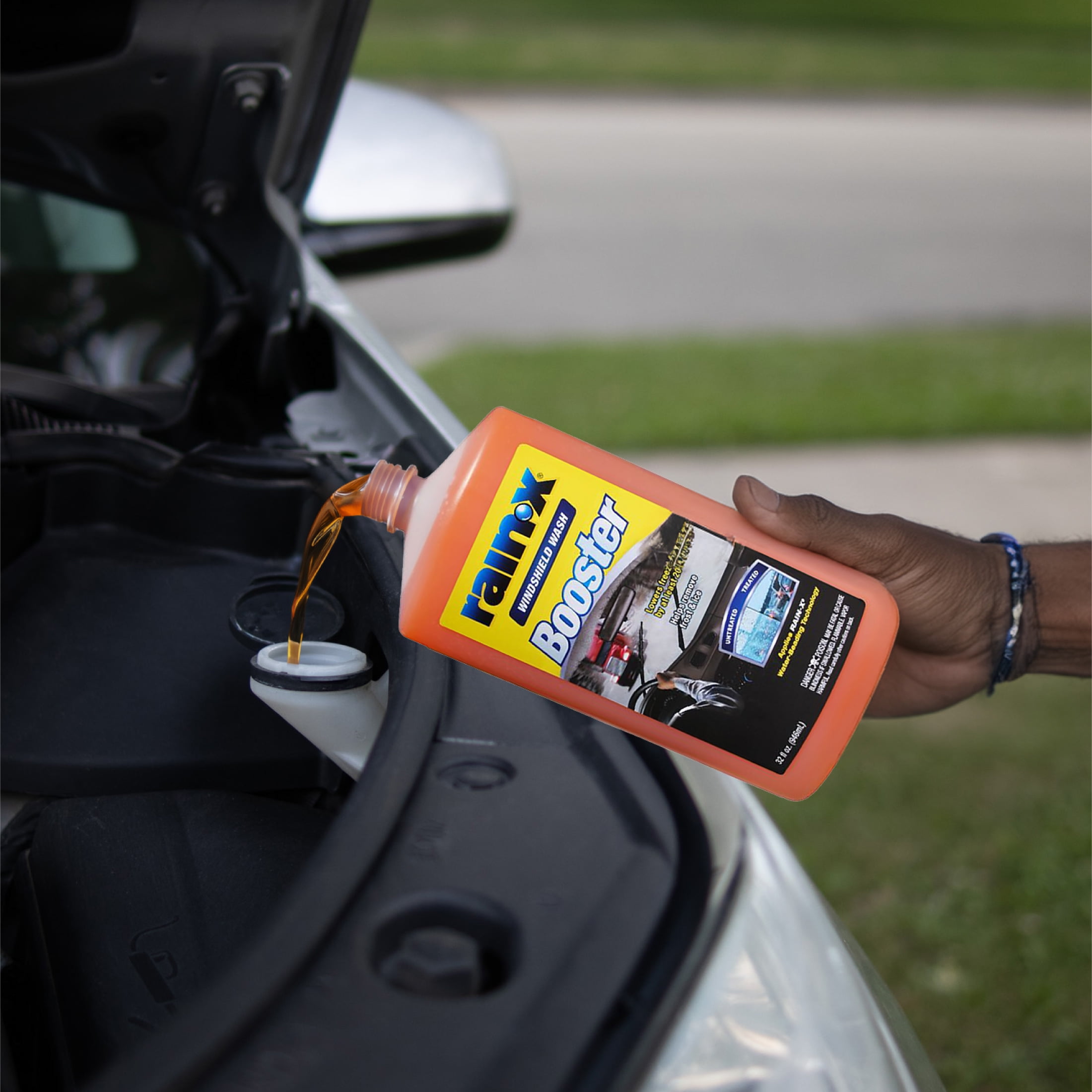
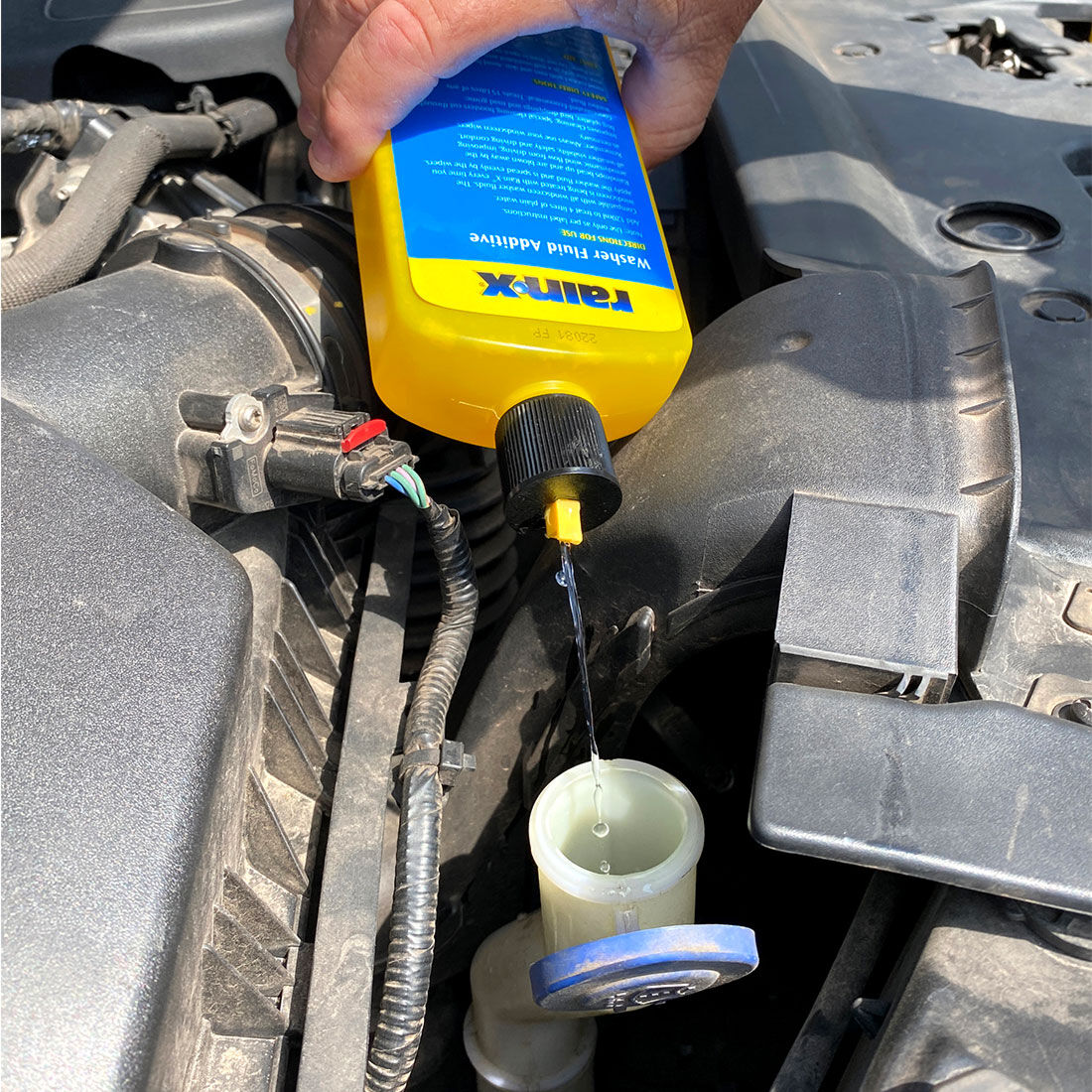
Slowly add ready-to-use Rain-X washer fluid directly to the reservoir. Use a clean funnel if necessary to prevent spills.
Step 6: Stop at the proper level
Fill to the reservoir’s full or maximum mark when one is provided. Avoid intentionally overfilling the neck.
Step 7: Replace the cap
Close the reservoir securely and make sure no tools, caps, or funnels remain in the engine compartment.
Step 8: Test the washers
Start the vehicle if required and operate the washer control briefly. Confirm that both the spray and wipers work normally.
What Successful Use Should Look Like
The washer jets should deliver a useful spray onto the windshield, and the wiper blades should spread and remove the fluid without leaving a major layer of dirt behind. Rain-X washer fluids that include water-repelling technology gradually leave the windshield with water-beading characteristics as the system is used.
Do not expect washer fluid to compensate for severely worn wiper blades, clogged nozzles, a damaged pump, heavy oil contamination, or a thick layer of ice. Those problems require separate attention.
Ready-to-Use Rain-X Fluid vs. Rain-X Washer Fluid Additive
The biggest mistake people make when learning how to use Rain-X windshield washer fluid is assuming that every Rain-X washer product is used the same way. It is not. Some gallon-size products are complete windshield washer fluids, while the smaller Rain-X Washer Fluid Additive is a concentrate.
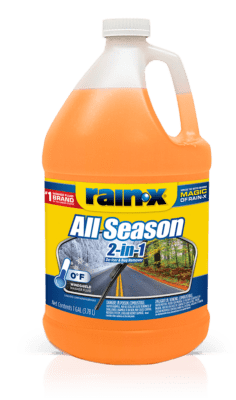
Rain-X currently instructs users of its ready-to-use All-Season and 2-in-1 windshield washer fluids to fill the windshield washer reservoir without diluting the product. Adding extra water can raise the fluid’s freezing point and reduce the performance for which the ready-mixed formula was designed.
Rain-X Washer Fluid Additive works differently. For the current U.S. 16.9-ounce product, the manufacturer directs users to add 4 fluid ounces to treat one gallon of water or washer fluid. Because product formulations can change, the bottle label should always take priority over a remembered mixing ratio.
Source: walmartimages.com
Ready-to-use gallon jug
Pour it directly into the washer reservoir according to the product label. Do not automatically add water.
Washer Fluid Additive
Measure the concentrate according to the label instead of pouring the entire bottle into a small reservoir.
Unsure which product you have
Look for words such as additive, concentrate, ready to use, or directions specifying a mixing quantity.
How Much Rain-X Additive Do You Need?
Using the current U.S. instruction of 4 fluid ounces per gallon as an example, a completely empty 1-gallon washer system would receive 4 fluid ounces of additive. If you were preparing only half a gallon of fluid, the proportional amount would be about 2 fluid ounces.
Vehicle washer reservoirs are not all the same size, and a partially full tank does not necessarily need an entire gallon of mixture. Measure according to the amount of fluid being treated rather than assuming the reservoir holds exactly one gallon.
Which Rain-X Windshield Washer Fluid Should You Use?
Choose Rain-X washer fluid according to weather conditions rather than fluid color alone. The temperature printed on the bottle matters because washer fluid that freezes can stop spraying and may contribute to problems in the reservoir, pump, hoses, or nozzles.
For U.S. drivers, climate differences make this particularly important. A warm-weather bug-removing formula may be practical during summer in Texas, Georgia, Arizona, or Florida, but the same fluid may be inappropriate for a winter trip into freezing conditions. Northern drivers should pay particular attention to the freeze rating before temperatures fall.
Current Rain-X offerings include formulas marketed for different temperature ranges. For example, Rain-X has sold All-Season fluid rated to 0 degrees Fahrenheit and 2-in-1 fluid rated to minus 25 degrees Fahrenheit, while its Bug Remover formula is designed primarily for warmer conditions. Rain-X also offers lower-temperature de-icer products. Availability and exact specifications can vary, so check the label on the jug you are actually using.
Source: supercheapauto.com.au
Warm weather and bug season
A bug-removing washer formula can help with insect residue, pollen, dirt, and road grime when freezing protection is not required.
Mixed seasonal driving
An all-season formula can be convenient, provided its stated freeze rating is below the temperatures you expect.
Cold U.S. winters
Choose a de-icing or low-temperature product with adequate freeze protection for the conditions in your region.
Road trips
Consider the coldest destination and route conditions, not merely the temperature where you live.
Should You Mix Different Washer Fluids?
Avoid routinely combining unrelated ready-to-use washer fluids simply to use up several bottles. Rain-X advises allowing the reservoir to become nearly empty before switching between different fluid types because mixing formulas can reduce winter performance or create compatibility concerns.
The Rain-X Washer Fluid Additive is an exception in the sense that it is specifically designed to be added to water or washer fluid according to its directions. That does not mean every ready-to-use fluid should be mixed with another product indiscriminately.
Common Mistakes to Avoid When Adding Rain-X Washer Fluid
Most washer-fluid problems during a refill come from using the wrong reservoir, choosing an unsuitable temperature rating, diluting a premixed product, or failing to investigate a system that does not spray after being filled.
Plain water is not an ideal substitute for proper washer fluid, particularly where freezing temperatures are possible. Water lacks the freeze protection and cleaning formulation of automotive washer fluid, and frozen water can prevent the washer system from operating when you need it.
Another common error is continuing to operate the washer pump for long periods when nothing sprays. A dry reservoir, frozen fluid, clogged jet, disconnected hose, or failed pump can prevent flow. Repeatedly holding the washer control is unlikely to correct those problems.
Source: bauersecure.com
Do not pour it into the coolant reservoir
Windshield washer fluid and engine coolant serve entirely different systems.
Do not dilute premixed fluid automatically
Extra water can reduce cleaning ability and compromise the labeled freeze protection.
Do not ignore the temperature rating
A formula suitable for summer can be unsuitable for freezing U.S. winter conditions.
Do not overfill aggressively
Use the full mark when provided and leave the filler neck in its normal condition.
Do not use a dirty funnel
A funnel contaminated with oil, coolant, or other automotive chemicals can introduce unwanted material into the washer system.
Do not leave spills unattended
Clean accidental spills promptly and follow the safety instructions on the bottle.
Washer Fluid Safety
Windshield washer products are automotive chemicals, not ordinary water. Keep them away from children and pets, avoid swallowing the fluid, and minimize skin and eye contact. Keep the container closed when it is not being used and follow the warnings printed on the product label.
If fluid gets in your eyes or you are exposed in a way addressed by the product’s safety instructions, follow the label or Safety Data Sheet guidance. Significant exposure, ingestion, persistent irritation, or concerning symptoms warrant appropriate medical or poison-control advice.
What to Do If Rain-X Washer Fluid Does Not Spray
If you fill the reservoir and no fluid reaches the windshield, first stop repeatedly activating the washers and check the simple causes. Confirm that you filled the correct reservoir, that the reservoir actually contains fluid, and that the outside temperature is within the fluid’s operating range.
Listen for the washer pump while briefly operating the control. A pump sound with no spray can point toward clogged nozzles, a frozen or disconnected line, or another flow problem. No pump sound may indicate an electrical, switch, fuse, wiring, or pump issue, although diagnosis varies by vehicle.
If the windshield is extremely cold and the fluid was not designed for that temperature, move the vehicle to a warmer environment if practical and allow the system to thaw naturally. Do not pour boiling water over a frozen windshield or washer components. Sudden temperature changes can create unnecessary risk to glass and nearby materials.
Source: rainx.com
Reservoir empty again
A rapidly disappearing fluid level can indicate a cracked reservoir, leaking hose, loose connection, or damaged pump seal.
Pump runs but nothing sprays
Inspect for frozen fluid, clogged washer jets, pinched hoses, disconnected lines, or leakage.
Weak or uneven spray
Check the fluid level and inspect washer nozzles for contamination or obstruction.
Heavy streaking
Clean the windshield and wiper blades and inspect the blades for wear, contamination, damage, or poor contact.
Persistent system failure
Consult the vehicle owner’s manual or have the washer pump, hoses, fuse, wiring, and nozzles inspected.
Why the Windshield May Still Streak
Fresh washer fluid cannot correct every visibility problem. Road oil, wax, pollen, stubborn grime, worn water-repellent coatings, and contamination on the wiper rubber can cause smearing, skipping, chattering, or streaks.
Clean both the glass and the wiping edge of the blades before assuming the Rain-X washer fluid itself is defective. Replace blades that are cracked, hardened, torn, or unable to maintain consistent contact with the windshield.
How Often Should You Refill the Washer Fluid?
There is no universal mileage interval for windshield washer fluid because consumption depends on weather, road conditions, reservoir capacity, and how frequently you clean the windshield. Check the level periodically and before long trips, especially during seasons when road salt, insects, mud, pollen, or slush increase washer use.
A useful U.S. seasonal habit is to review the washer-fluid formula before major weather changes. Drivers entering winter should make sure the reservoir contains a formula with adequate freeze protection before the first hard freeze rather than waiting until the system has already frozen.
If you are switching from a warm-weather product to a cold-weather formula, use most of the previous fluid first when practical, then refill with the properly rated winter product. This reduces dilution of the cold-weather formulation.
Source: autozone.com
Before a road trip
Top up the reservoir and verify that the washers actually spray.
Before winter
Check the freeze rating and transition to a suitable formula before freezing conditions arrive.
During heavy bug season
Check the level more frequently because repeated windshield cleaning can empty a small reservoir surprisingly quickly.
After a low-fluid warning
Refill soon instead of repeatedly running the washer pump with little or no fluid available.
Frequently Asked Questions
Q
Do you dilute Rain-X windshield washer fluid?
Do not dilute a ready-to-use Rain-X windshield washer fluid unless its label specifically tells you to do so. Rain-X currently instructs users of certain All-Season and 2-in-1 gallon products to pour them into the washer reservoir without dilution.
Rain-X Windshield Washer Fluid Additive is different because it is concentrated. The current U.S. direction for the 16.9-ounce additive is 4 fluid ounces per gallon of water or washer fluid. Check your exact bottle before mixing.
Q
Can I pour Rain-X washer fluid directly into my car?
Yes, if you have a Rain-X product labeled as ready-to-use windshield washer fluid. Pour it into the windshield washer reservoir, not the coolant or any other fluid reservoir. If the bottle says additive or concentrate, follow its mixing instructions instead.
Q
Can I add Rain-X windshield washer fluid to existing washer fluid?
Topping up with the same or compatible ready-to-use formula is straightforward, but routinely mixing different brands or seasonal formulas is not ideal. Rain-X advises letting the reservoir become nearly empty before switching between different washer-fluid types because mixing can affect winter performance or compatibility. Rain-X Washer Fluid Additive is specifically designed to be added to washer fluid when used according to its directions.
Q
Can Rain-X washer fluid be used in any car?
Rain-X ready-to-use windshield washer fluids are intended for automotive washer systems, including conventional vehicles and EVs according to current product information. However, the vehicle owner’s manual remains the best source for model-specific restrictions or special requirements.
Q
What happens if I use summer washer fluid in winter?
If the temperature falls below the fluid’s freeze-protection rating, the fluid can freeze or become unable to flow properly through the reservoir, pump, hoses, and nozzles. Choose a winter or de-icer formula rated for temperatures below the coldest conditions you expect.
Q
How do I know which reservoir is for windshield washer fluid?
Look for a cap marked with a windshield and spray symbol. The reservoir is often translucent plastic and commonly located toward one side of the engine compartment. Because layouts vary, use the owner’s manual if the correct reservoir is not obvious.
Q
Why is my Rain-X washer fluid not coming out?
Possible causes include an empty or frozen reservoir, clogged nozzles, a disconnected or frozen hose, a blown fuse, an electrical fault, or a failed washer pump. Check the fluid level and temperature first, then inspect the system or have it serviced if the problem continues.
✦ Wrapping Up
Conclusion
Learning how to use Rain-X windshield washer fluid is mostly a matter of identifying the correct product and filling the correct reservoir. Ready-to-use Rain-X washer fluid can generally be poured directly into the windshield washer reservoir, while Rain-X Washer Fluid Additive must be measured according to its mixing instructions.
For U.S. drivers, climate is the most important variable after proper installation. Choose a fluid whose freeze rating fits the temperatures where you drive, switch seasonal formulas before severe weather arrives, keep the reservoir adequately filled, and test the washer system after each refill.
💡 Key Takeaway
Check whether your Rain-X product is ready to use or concentrated, confirm its temperature rating, fill the windshield washer reservoir to the proper level, close the cap, and test the washers before driving.