To dilute windshield washer fluid, first confirm that the product is a concentrate, then mix it with the exact amount of water specified on its label. Do not dilute ready-to-use washer fluid unless the manufacturer specifically permits it.
For drivers in the United States, getting the dilution right matters because washer-fluid needs can change dramatically from one region and season to another. A mixture that works during a mild Florida summer may be unsuitable for a January morning in Minnesota, Colorado, or upstate New York. Concentrated windshield washer fluids are designed to be mixed according to a manufacturer-specified ratio, while many gallon jugs sold at US auto-parts stores, gas stations, big-box retailers, and supermarkets are already premixed and should be poured directly into the reservoir.
The safest way to learn how to dilute windshield washer fluid is to start with the product label rather than using a universal recipe. Concentrates vary widely. Some may use ratios such as 1 part concentrate to several parts water, while highly concentrated formulas can require much more water. Adding too much water can weaken cleaning performance and, with winter formulas, raise the freezing point enough to create problems in cold weather. This guide explains how dilution ratios work, how to calculate the amount you need, what type of water to use, how to mix the solution, and what mistakes to avoid.
How to Dilute Windshield Washer Fluid Step by Step
The basic process is simple: identify the fluid type, read the dilution instructions, measure the concentrate and water, combine them in the stated proportions, and then add the finished mixture to the washer reservoir. The important part is confirming that your product actually needs dilution.
Before opening the bottle, look for wording such as concentrate, concentrated formula, dilute before use, makes multiple gallons, or a stated mixing ratio. If the container says ready to use, premixed, or pour directly into reservoir, dilution normally is not required.
Whenever the package instructions conflict with a generic dilution example, follow the package. The manufacturer formulated that particular concentrate and its directions should determine the final mixture.
Source: minit-tune.com
Step 1: Confirm the product type
Determine whether you have concentrated washer fluid or a ready-to-use formula. Never assume that every small bottle is concentrate or every gallon bottle is premixed.
Step 2: Find the dilution ratio
Read the bottle for a ratio, measured dose, seasonal chart, or instructions showing how much finished washer fluid the container makes.
Step 3: Measure the ingredients
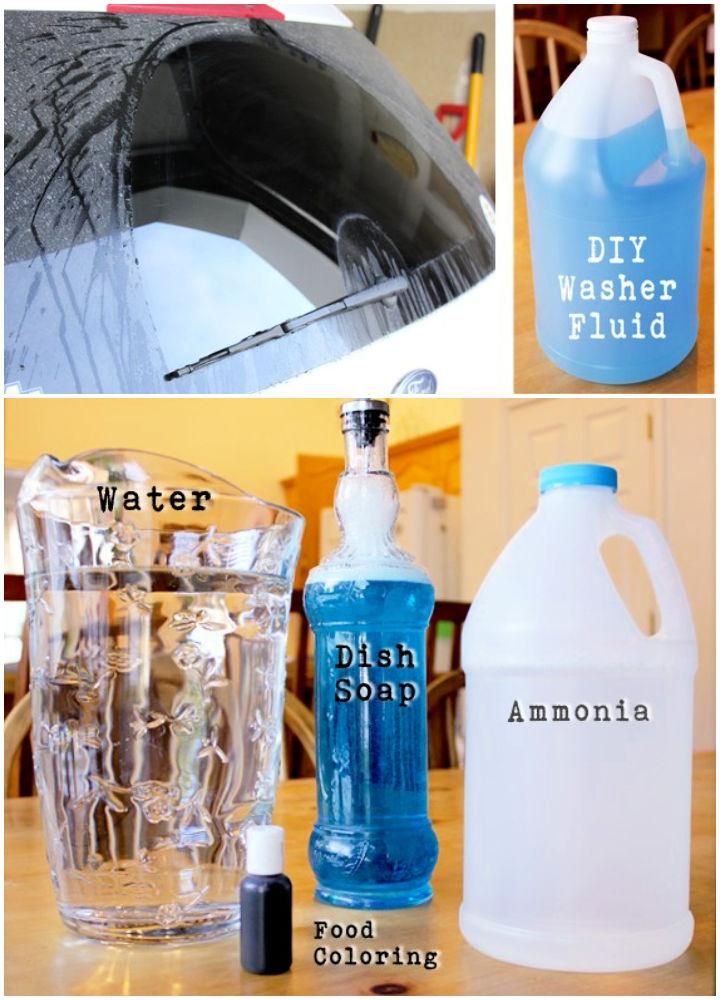
Use a clean measuring container that will not later be used for food or beverages. Measure both the concentrate and water according to the required ratio.
Step 4: Mix the solution
Combine the ingredients in a clean dedicated container when practical. Close it securely and mix gently.
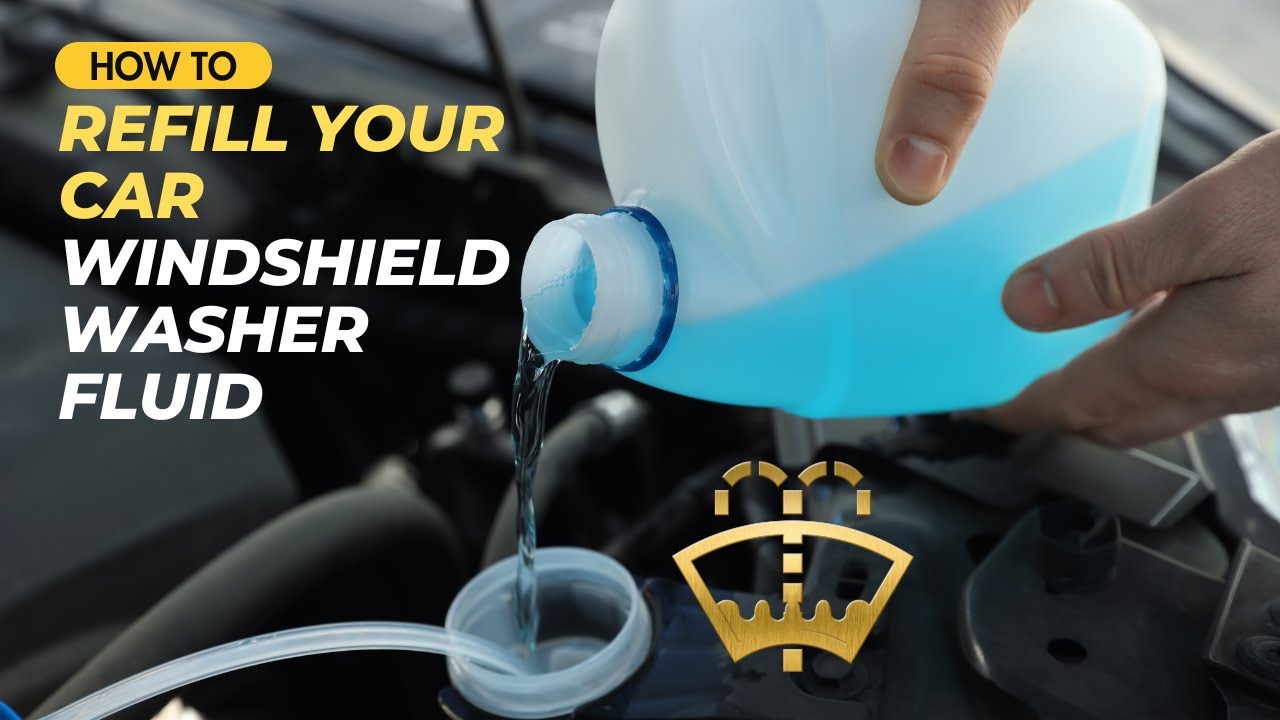
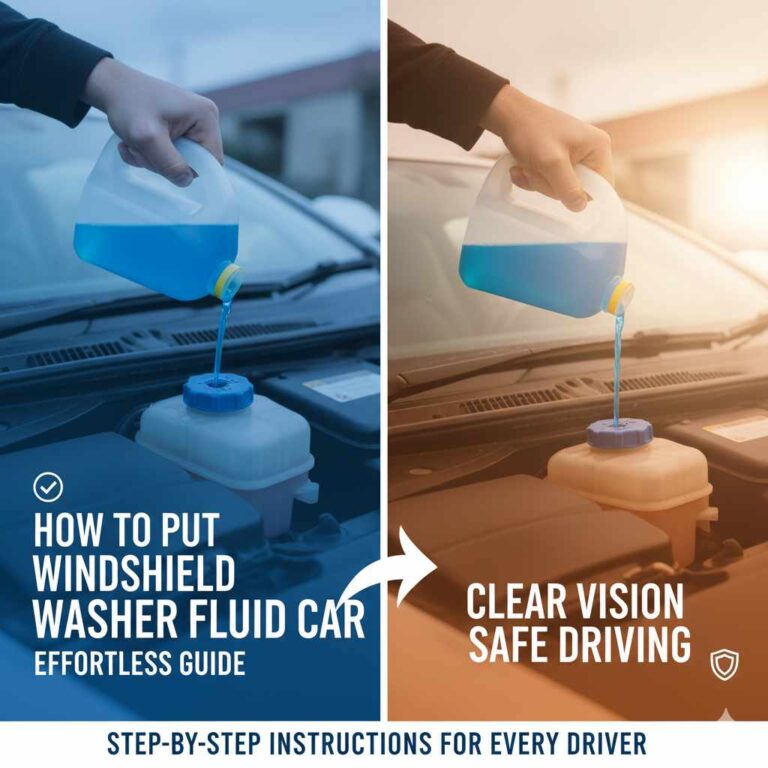
Step 5: Fill the reservoir
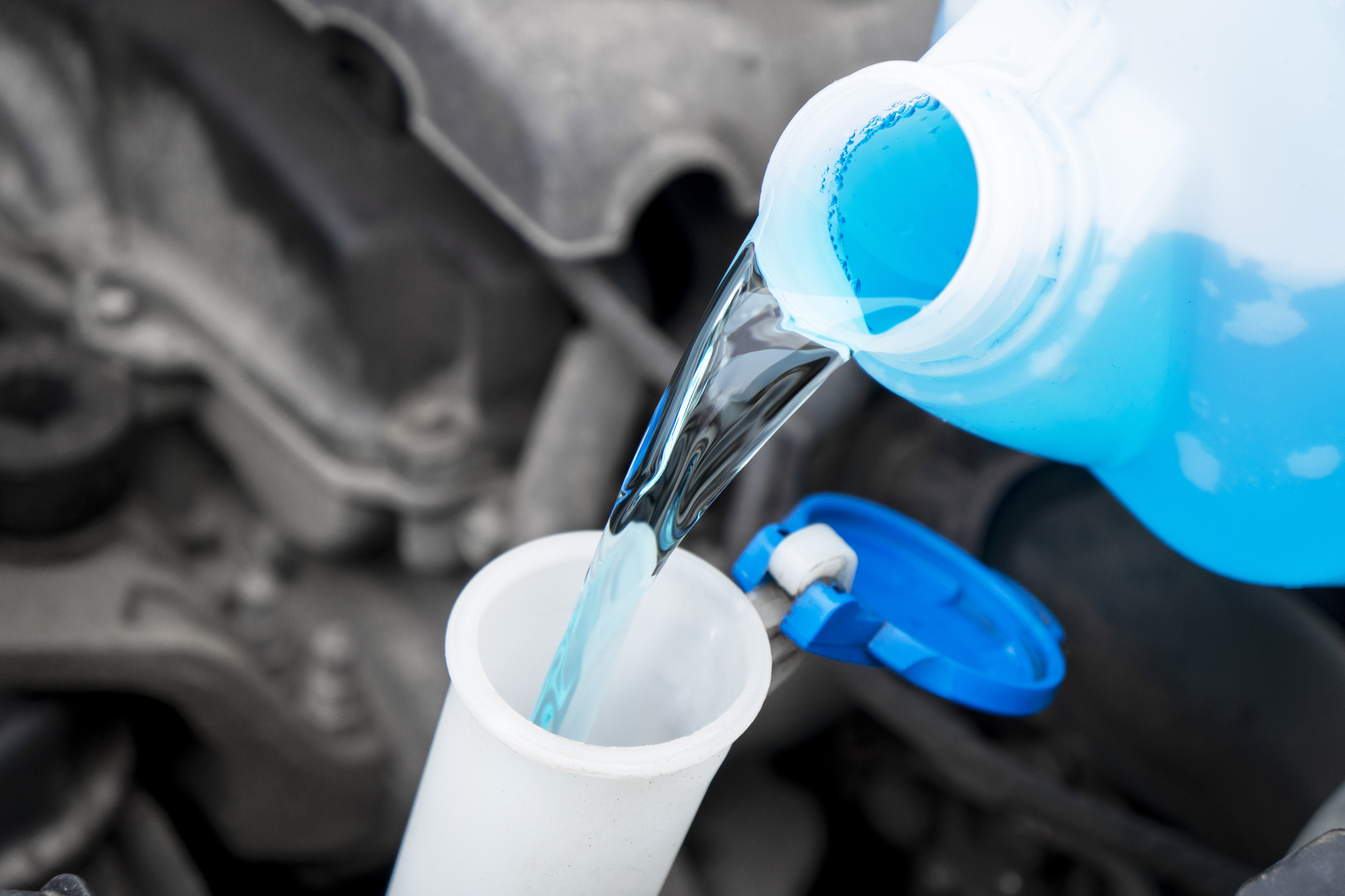
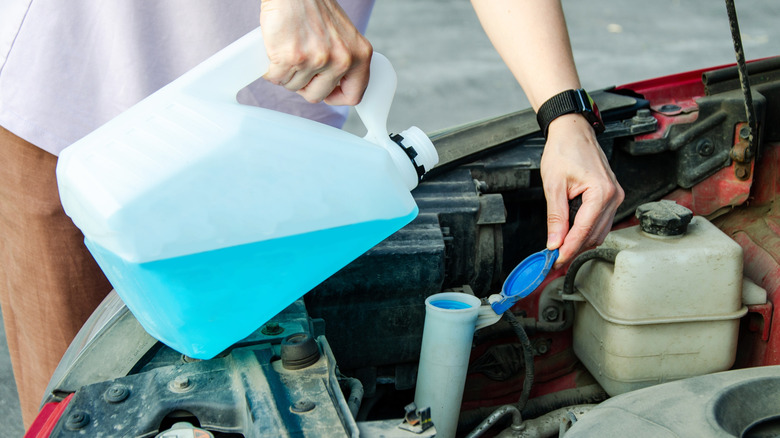
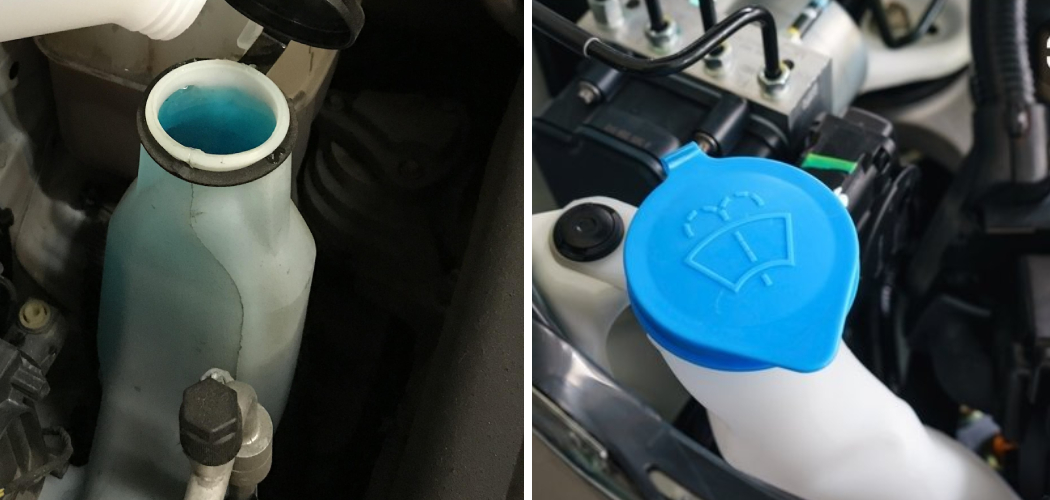
Locate the windshield washer reservoir under the hood, remove its cap, and pour in the finished mixture without exceeding the reservoir’s normal capacity.
Step 6: Test the system
Operate the washers briefly and confirm that fluid sprays normally and cleans the windshield without unusual residue or streaking.
What You Need Before Mixing
You generally need the washer-fluid concentrate, suitable water, a clean measuring container, and optionally a funnel. Keep the work area away from children, pets, food, open flames, sparks, and other ignition sources.
Washer-fluid concentrate
Use the original container so you can verify the correct instructions and safety warnings.
Water
Use the type recommended by the manufacturer. Distilled or deionized water can help reduce mineral deposits when the instructions allow water dilution.
Dedicated measuring container
Choose a clearly marked container that will never be confused with a drinking or food container.
Funnel
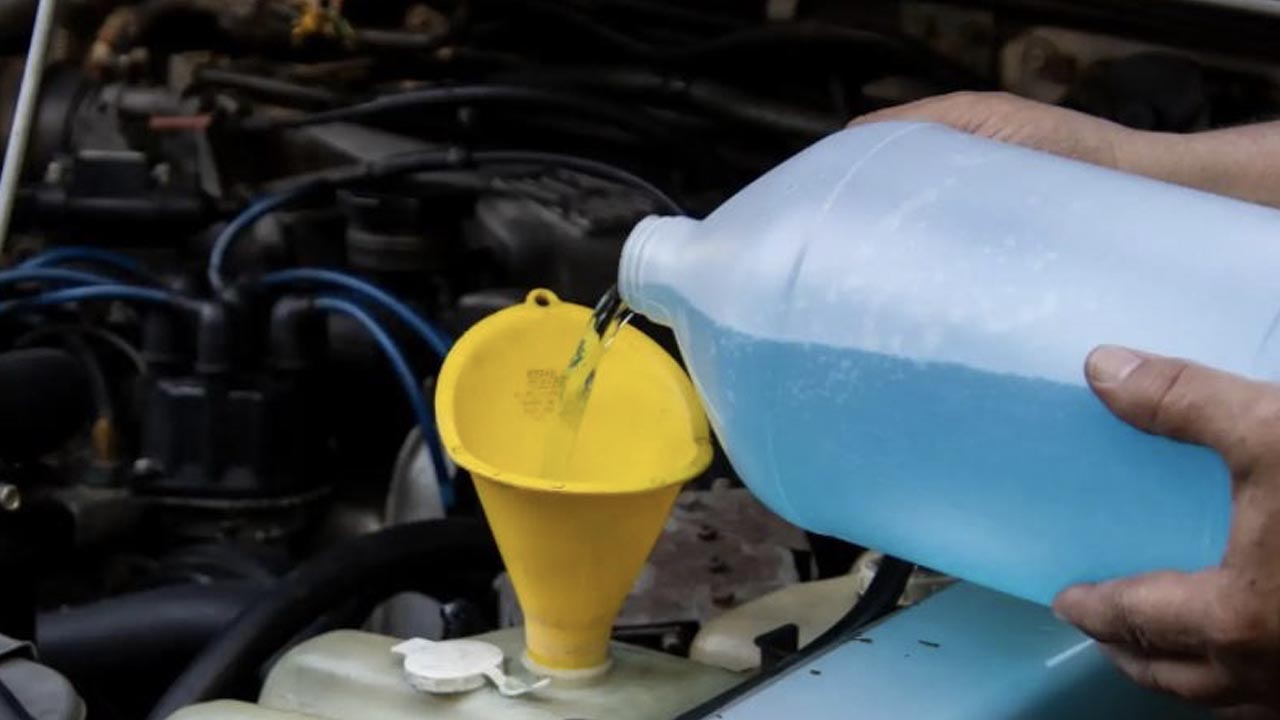
A clean funnel can reduce spills while transferring the finished fluid into the reservoir.
How to Know the Mixture Is Correct
A correctly diluted solution should match the label’s stated proportions, remain uniform after mixing, and spray normally through the washer system. The most reliable sign of correct dilution is accurate measurement rather than color or smell, because those characteristics differ among formulas.
Dilution ratios tell you how many parts of concentrate and water to combine. Understanding the notation prevents one of the most common mixing errors: treating a ratio as though it describes the final percentage rather than the number of component parts.
For example, if the directions say 1:4 and define that as 1 part concentrate to 4 parts water, the finished mixture contains 5 total parts. If you need 1 US gallon of finished solution, divide 128 fluid ounces by 5. That equals 25.6 fluid ounces per part. You would therefore use 25.6 fluid ounces of concentrate and 102.4 fluid ounces of water.
This calculation is only an example. Do not assume your concentrate uses a 1:4 ratio. Some formulas are considerably more concentrated, and some manufacturers give a measured dose rather than a conventional ratio.
Source: slashgear.com
1:1 example
If defined as concentrate to water, combine 1 equal part concentrate with 1 equal part water.
1:2 example
Combine 1 part concentrate with 2 equal parts water, giving 3 total parts.
1:4 example
Combine 1 part concentrate with 4 equal parts water, giving 5 total parts.
1:10 example
Combine 1 part concentrate with 10 equal parts water, giving 11 total parts.
Simple Formula for Calculating a Dilution
When a ratio is written as concentrate:water, add both numbers to find the total number of parts. Divide your desired final volume by that total, then multiply the result by each side of the ratio.
Hypothetical example: for 64 fluid ounces of finished solution at a 1:3 concentrate-to-water ratio, there are 4 total parts. Divide 64 by 4 to get 16 fluid ounces per part. Use 16 fluid ounces of concentrate and 48 fluid ounces of water.
Formula
Amount per part equals desired finished volume divided by total ratio parts.
Concentrate amount
Multiply the amount per part by the concentrate side of the ratio.
Water amount
Multiply the amount per part by the water side of the ratio.
Common Hypothetical Mixing Examples
These examples show the arithmetic only. Use them to understand ratios, not as recommendations for a specific washer-fluid product.
32 ounces at 1:1
Use 16 fluid ounces concentrate and 16 fluid ounces water.
32 ounces at 1:3
Use 8 fluid ounces concentrate and 24 fluid ounces water.
1 gallon at 1:7
Eight total parts means 16 fluid ounces per part, so use 16 fluid ounces concentrate and 112 fluid ounces water.
Should You Use Tap Water or Distilled Water?
Use the type of water specified by the washer-fluid manufacturer. When the instructions simply call for water, distilled or deionized water is a practical option because it contains far fewer dissolved minerals than hard tap water.
Hard water contains minerals such as calcium and magnesium. Repeated use can leave mineral residue as water evaporates, especially around washer nozzles or on glass. Whether this becomes noticeable depends heavily on local water hardness and the washer system.
Tap water is not automatically unsuitable if the product manufacturer allows it, and some concentrates are explicitly designed to be mixed with ordinary water. The safest approach is to follow the product directions rather than treating one water type as mandatory for every formula.
Source: garagesee.com
Distilled water
Contains very low levels of dissolved minerals and is useful when you want to minimize mineral residue.
Deionized water
Another low-mineral option that may be recommended for some concentrated automotive fluids.
Tap water
May be acceptable when the manufacturer permits it, although hard water can contain more mineral content.
Does Distilled Water Improve Freeze Protection?
Distilled water by itself does not provide the cold-weather protection associated with winter washer-fluid ingredients. Freeze performance depends mainly on the finished chemical formulation and dilution ratio. Follow the product’s temperature-specific instructions rather than assuming that changing the type of water will produce adequate winter protection.
How Weather Changes the Correct Washer Fluid Mixture
Weather can determine whether dilution is appropriate at all. In warm conditions, some concentrated products allow a relatively weak solution because freezing is not a concern. Winter formulas can require a stronger concentration to maintain their stated low-temperature performance.
This is especially relevant in the United States because climatic conditions differ enormously. Drivers in southern California, south Texas, or central Florida may rarely experience the temperatures seen in Montana, Minnesota, North Dakota, Maine, or the Rocky Mountain states. A single homemade dilution rule therefore cannot safely cover every US driver.
If a concentrate provides separate summer and winter ratios, use the ratio that matches the lowest temperatures you reasonably expect during the period the mixture will remain in the vehicle. Remember that fluid already in the reservoir mixes with newly added fluid, so topping off can alter the final concentration.
Source: carblogindia.com
Warm climates
Use the manufacturer’s warm-weather ratio when one is provided; do not weaken the mixture beyond its instructions.
Freezing conditions
Use a mixture specifically rated for the temperatures expected in your area.
Severe winter conditions
Avoid adding extra water to a winter-rated premixed fluid because doing so can reduce its freeze protection.
Seasonal travel
Consider the destination climate, not just the temperature where the vehicle is currently parked.
Why Over-Dilution Is Riskier in Winter
Adding water increases the proportion of water in the finished mixture and can raise its freezing point. If washer fluid freezes, the system may stop spraying when visibility is already compromised by snow, road salt, slush, or dirty winter spray. Frozen fluid can also place unnecessary stress on reservoirs, hoses, pumps, and fittings.
Do not estimate winter protection by looking at the fluid’s color. Use the dilution chart or freeze rating supplied with the product.
Common Mistakes When Diluting Windshield Washer Fluid
Most dilution problems come from treating all washer fluids as interchangeable. The concentration, cleaning chemistry, freeze protection, and intended usage can differ substantially between products.
The easiest way to avoid trouble is to keep the original packaging until the product has been completely used. The label contains the most relevant information about dilution, temperature range, hazards, storage, and compatibility.
Source: jeepfixes.com
Diluting ready-to-use fluid
Premixed fluid already contains its intended proportion of ingredients. Adding water may reduce cleaning ability and cold-weather protection.
Guessing the ratio
A ratio that worked for a previous concentrate may be completely wrong for another formulation.
Ignoring winter temperatures
A mixture suitable for summer may freeze when temperatures drop.
Using household glass cleaner
Products made for hand-cleaning household windows are not automatically suitable for a vehicle’s washer reservoir.
Using plain water year-round
Plain water provides limited cleaning performance and can freeze in cold conditions.
Mixing unidentified fluids
Avoid combining products when you cannot verify what they contain or whether the manufacturer considers them compatible.
Storing fluid in beverage containers
Never put washer fluid or concentrate in a bottle that could be mistaken for a drink.
Can You Add Concentrate Directly to the Washer Reservoir?
Only do so if the manufacturer’s directions explicitly instruct you to measure concentrate into the reservoir and then add a specified amount of water. Some concentrates are designed for this method, while others are easier to measure accurately when premixed in a separate container.
When mixing inside the reservoir, account for any washer fluid that is already there. If the reservoir is half full of an unknown mixture, you cannot precisely determine the final dilution simply by adding a measured dose of concentrate.
Can You Mix Different Washer Fluid Brands?
Different washer fluids are sometimes physically mixed when a reservoir is topped off, but that does not mean every combination will retain the same advertised cleaning or freeze performance. If you need a predictable winter rating or are switching between specialized formulas, using one known product according to its instructions is the clearer approach.
Windshield Washer Fluid Safety
Treat windshield washer fluid and concentrate as automotive chemicals rather than ordinary cleaning water. Some formulations contain methanol or other alcohols and solvents. Methanol is toxic and can enter the body through ingestion, inhalation, eye exposure, or skin exposure. It is also highly flammable.
Work in a ventilated area, avoid splashing the fluid, keep it away from flames and ignition sources, and wash exposed skin promptly according to the product’s safety instructions. Store washer fluid in its original labeled container with the cap secured and keep it away from children and pets.
Never taste washer fluid or use your mouth to siphon it. Never transfer it to a water, soda, sports-drink, juice, or other beverage bottle. The colored appearance of washer fluid does not make it harmless.
If someone swallows windshield washer fluid in the United States, contact Poison Control promptly at 1-800-222-1222. For a person who cannot wake up, is having difficulty breathing, or is having seizures, call 911.
Source: storage.googleapis.com
Read the label
Follow product-specific hazard warnings, first-aid instructions, and storage directions.
Avoid ingestion
Washer fluid can contain toxic ingredients and should never be swallowed.
Protect your eyes and skin
Avoid splashes and follow the label’s instructions if contact occurs.
Avoid flames and sparks
Alcohol-containing concentrates and washer fluids may be flammable.
Store securely
Keep the product in its original labeled container and out of reach of children and pets.
What If You Accidentally Added Too Much Water?
If the mixture is only slightly weaker and freezing conditions are not expected, consult the product instructions to determine whether additional concentrate can restore the correct ratio. Calculate the existing amounts before adding more rather than estimating by color.
If cold weather is approaching and you do not know the current concentration, the more dependable solution is to remove enough of the unknown mixture to establish a known starting point, then refill with a properly prepared winter-rated mixture according to the manufacturer’s instructions.
What If You Added Too Much Concentrate?
Check the manufacturer’s instructions before correcting the mixture. If the product permits additional dilution, calculate the amount of water needed to return it to the specified ratio. Do not assume a stronger-than-recommended concentration will clean better; excessive concentration may waste product and can behave differently from the formulation intended by the manufacturer.
What to Do If the Washer System Does Not Work After Refilling
If the reservoir contains the correct mixture but the windshield washers still do not work, the dilution itself may not be the problem. First confirm that there is enough fluid in the reservoir and that outdoor temperatures have not frozen an inappropriate mixture.
Next, listen for the washer pump when the control is activated. If the pump runs but little or no fluid reaches the windshield, inspect for a disconnected hose, leaking line, blocked nozzle, or frozen section of the system. If the pump makes no sound, an electrical fault, failed pump, fuse issue, switch problem, or wiring fault may require diagnosis.
Do not repeatedly operate a washer pump against a frozen or empty system. Resolve the fluid or mechanical problem first. If you cannot identify the cause or accessing the components requires dismantling unfamiliar parts, an automotive technician can inspect the washer system.
Source: storage.googleapis.com
No spray in freezing weather
Move the vehicle to a suitable warmer environment if possible and allow frozen components to thaw without using open flames or improvised heating methods.
Pump runs but no fluid sprays
Check the reservoir level, hoses, leaks, and washer nozzles.
Weak spray
Check for partially blocked nozzles, leaks, restricted hoses, low fluid level, or a weakening pump.
Pump does not run
The problem may be electrical or mechanical rather than related to fluid dilution.
When the System Is Working Correctly
A functioning washer system should deliver a useful spray pattern onto the windshield and allow the wipers to clear normal road film without leaving an excessive residue. Spray pattern differs by vehicle, so compare performance with the owner’s manual or the vehicle’s normal operation rather than expecting every car to spray identically.
Frequently Asked Questions
Q
Do you have to dilute windshield washer fluid?
Only if the product is sold as a concentrate or its instructions specifically call for water. Most ready-to-use gallon jugs are already mixed and normally should not be diluted.
Q
What is the correct windshield washer fluid to water ratio?
There is no single ratio that applies to every concentrate. Use the exact ratio on your product’s label. Concentration can vary significantly between brands and formulas, and winter instructions may differ from summer instructions.
Q
Can I dilute windshield washer fluid 50/50 with water?
A 50/50 mixture is correct only when the manufacturer specifies a 1:1 concentrate-to-water ratio. Do not use 50/50 as a default because another product may require substantially more or less water.
Q
Can I add water to winter windshield washer fluid?
Do not add water to ready-to-use winter washer fluid unless its manufacturer specifically allows it. Additional water can raise the mixture’s freezing point and reduce the cold-weather protection stated on the package.
Q
Can I use plain water instead of windshield washer fluid?
Plain water can lack the cleaning and low-temperature properties of purpose-formulated washer fluid and can freeze when temperatures fall. In much of the United States, especially during winter or interstate travel, a properly formulated washer fluid is the more dependable choice.
Q
Is concentrated washer fluid better than premixed fluid?
Neither format is universally better. Concentrate can reduce packaging and lets you prepare the amount specified by the manufacturer, while premixed fluid is convenient and removes the need to measure a dilution. The practical choice depends on climate, storage, product instructions, and how much fluid you use.
✦ Wrapping Up
Conclusion
Learning how to dilute windshield washer fluid comes down to one rule: use the ratio specified for the exact concentrate in your hand. Confirm that the fluid requires dilution, measure carefully, use an appropriate water source, mix the correct amount, and consider the lowest temperatures the vehicle is likely to encounter.
For US drivers, seasonal conditions deserve particular attention. A diluted mixture that performs normally during hot summer weather may not provide adequate freeze protection during a northern winter or a trip into colder elevations. Keep the original label available, avoid guessing at ratios, and never weaken a winter-rated premix simply to make it last longer.
💡 Key Takeaway
Check the washer-fluid bottle before mixing. If it is concentrated, follow its exact concentrate-to-water ratio and temperature guidance; if it is labeled ready to use, add it to the reservoir without dilution unless the manufacturer says otherwise.
Learn how to fold a pop up windshield sun shade safely and quickly. Follow simple steps, avoid common mistakes, and store your car sun shade without damaging its frame.