A lightly pitted windshield may sometimes be improved by careful glass cleaning and professional-grade polishing, but widespread or deep pitting generally cannot be safely restored with a typical windshield repair kit. If the pits create glare, distortion, or reduced visibility, replacement is usually the more dependable solution.
For drivers across the United States, windshield pitting is especially common on vehicles that spend years on interstates, highways, gravel roads, construction corridors, and winter roads treated with sand or other abrasive material. Thousands of tiny impacts from airborne road debris gradually roughen the outer glass surface. The windshield may still look acceptable in the shade, yet become noticeably hazy when facing sunrise, sunset, oncoming headlights, or bright street lighting.
The key to repairing a pitted windshield is first determining what kind of damage you actually have. A single stone chip may be suitable for resin repair, while widespread pitting is a different type of surface deterioration. Mild surface roughness may respond to conservative polishing, but deep or extensive pits usually require professional evaluation and often windshield replacement. This guide explains how to inspect the glass, clean it correctly, attempt a cautious repair when appropriate, recognize a successful result, and know when continuing with DIY work could make visibility worse.
A pitted windshield has numerous tiny depressions or craters across its outer surface. They are often so small that you do not notice each pit individually. Instead, the windshield may look dusty, sparkly, hazy, or sandblasted when light hits it from certain angles.
Pitting develops differently from a typical rock chip. A chip usually comes from one identifiable impact and creates a concentrated damaged area. Pitting develops gradually as countless small particles strike the windshield during normal driving. Because the damage is spread over a broad surface, treating it as though it were one large chip can lead to disappointing results.
A useful first check is to clean the windshield thoroughly and view it from inside the vehicle in several lighting conditions. If the hazy appearance remains after both sides of the glass are clean, surface wear is more likely. At night, severe pitting may produce scattered points of light, halos, or glare around headlights.
Source: woodlandglass.com
Fine surface pits
Tiny shallow marks may be visible only under direct sunlight or strong artificial lighting.
Sandblasted appearance
Large numbers of pits can make the windshield appear dull or frosted even after cleaning.
Nighttime glare
Each damaged point can scatter incoming light, making headlights appear brighter or less sharply defined.
Persistent roughness
The outside surface may feel less smooth than undamaged glass after contamination has been removed.
Pitting Versus Chips, Cracks, and Scratches
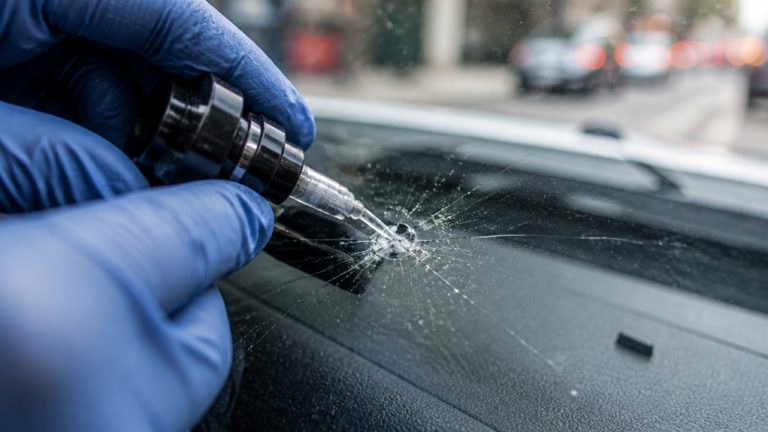
Correctly identifying the damage matters because the repair techniques are different. A localized rock chip can sometimes be treated by injecting optical resin into a defined break. A crack requires its own assessment and repair procedure. A superficial scratch may sometimes be polished if doing so will not create optical distortion.
Widespread pitting is different because there may be hundreds or thousands of tiny surface depressions rather than one repairable cavity. Filling individual pits across a large windshield with ordinary chip-repair resin is not a practical substitute for restoring the entire optical surface.
Chip
A concentrated impact break that may have a visible center and surrounding fracture pattern.
Crack
A line-shaped fracture extending through part of the laminated windshield structure.
Scratch
A narrow surface groove often caused by debris, damaged wipers, or improper cleaning.
Pitting
Distributed surface erosion caused by many small impacts over time.
Can You Really Repair a Pitted Windshield?
Sometimes you can improve a mildly worn windshield, but heavily pitted glass usually cannot be returned to like-new condition through normal DIY repair. The deciding factor is not simply whether pits exist. What matters is their depth, density, location, and effect on your view of the road.
A light polishing process removes an extremely small amount of material from the glass surface. This can reduce some superficial defects and contamination-related haze. It cannot safely remove deep craters without removing substantially more glass around them. Excessive polishing may leave an uneven optical surface that bends or distorts your view.
This is why a severely pitted windshield is fundamentally different from an isolated chip. Resin works well in appropriate localized damage because a technician can place it inside a defined break. Scattered surface pits do not provide one contained repair cavity.
Source: jeepfixes.com
Possible candidate for improvement
Very light surface pitting with no noticeable optical distortion and little or no effect on driving visibility.
Professional assessment recommended
Pitting concentrated in the driver’s viewing area or damage that creates noticeable glare after cleaning.
Replacement is often appropriate
Extensive pitting, deep surface erosion, persistent light scatter, or distortion that interferes with a clear view.
Why Windshield Repair Resin Is Not a Cure for Widespread Pitting
Standard windshield repair resin is primarily intended for specific repairable chips and cracks, not for coating a windshield covered with microscopic pits. Applying resin over widespread surface erosion does not recreate the original smooth optical surface in a controlled way.
If you discover one distinct stone chip among otherwise minor pitting, that chip should be evaluated separately. Do not assume a product intended for the chip can also restore the surrounding pitted glass.
What You Need Before Attempting Minor Windshield Restoration
Before doing any polishing, make sure you are dealing with minor surface deterioration rather than structural damage. Work on cool glass in a shaded area. Direct summer sun can heat a windshield rapidly, causing cleaning liquids and polishing slurry to dry before you can control them.
You do not need an aggressive collection of abrasives. The goal is controlled surface refinement, not grinding away enough glass to eliminate every depression. A dedicated automotive glass polishing compound, commonly based on cerium oxide or another product specifically labeled for automotive glass, is more appropriate than household abrasive cleaners.
Read the instructions for the specific polishing compound and pad you use. Products differ in recommended speed, moisture level, working time, and application method.
Source: engineerskill.blog
Automotive glass cleaner
Use it to remove road film, fingerprints, and oily contamination from both sides of the windshield.
Clean microfiber towels
Keep separate towels for cleaning, drying, and final inspection so abrasive debris is not rubbed back onto the glass.
Automotive glass polishing compound
Choose a compound specifically intended for glass and follow its manufacturer’s directions.
Compatible polishing pad
Use the type recommended for the glass compound rather than an aggressive paint-cutting pad.
Water
Many glass polishing processes require the working surface or compound to remain damp.
Eye protection and gloves
Protect yourself from polishing slurry, broken debris, and accidental contact with cleaning chemicals.
Inspect the Windshield Before You Polish
Look closely for cracks, star breaks, bull’s-eye chips, edge damage, and areas that appear deeper than ordinary surface wear. Also inspect the glass from inside the vehicle because some apparent surface damage may actually be on the interior.
If there is a crack, significant chip, deep impact point, damage at the windshield edge, or serious distortion in the driver’s view, skip experimental polishing and arrange an auto-glass inspection.
Check in daylight
View the glass from several angles so tiny pits become easier to see.
Check from the driver’s seat
Determine whether the damage interferes with the part of the windshield you actually look through.
Test after cleaning
Do not mistake mineral deposits, road film, or wiper residue for permanent pitting.
How to Repair a Pitted Windshield Step by Step
For minor surface pitting, the safest DIY approach is to begin with cleaning and then test a conservative glass-polishing process on a small area. The purpose is to determine whether surface refinement produces a meaningful improvement without creating distortion.
Do not begin by attacking the entire windshield with an aggressive compound or high-speed tool. A small controlled test tells you far more while limiting the amount of glass affected if the process does not work.
Source: jeepfixes.com
Step 1: Park in the shade and cool the glass
Let a hot windshield return closer to ambient temperature before working. Avoid suddenly cooling very hot glass with cold water.
Step 2: Wash the exterior thoroughly
Remove loose grit first so you do not drag abrasive particles across the windshield during cleaning or polishing.
Step 3: Remove bonded surface contamination
Use an automotive-glass-safe method suitable for deposits on your windshield. The objective is to determine what remains after contamination is gone.
Step 4: Clean the inside surface
Interior film can amplify glare and make exterior pitting look worse than it is.
Step 5: Inspect the clean glass
Check from the driver’s seat and from outside. If the pits remain widespread and clearly scatter light, set realistic expectations before continuing.
Step 6: Prepare a small polishing test area
Choose an inconspicuous portion of the pitted area and prepare the compound exactly as its instructions require.
Step 7: Polish gently and evenly
Use light, controlled passes. Keep the pad moving and keep the work area appropriately lubricated or damp according to the product directions.
Step 8: Prevent heat buildup
Frequently check the glass temperature. Stop if the area becomes noticeably hot rather than continuing to polish one spot.
Step 9: Clean and inspect the test area
Remove all polishing residue and compare the area with surrounding glass from both sides and from the driver’s seat.
Step 10: Continue only if clarity improves without distortion
If the test area looks clearer and optically normal, you can cautiously work neighboring areas using the same controlled technique.
Step 11: Stop if the pits remain obvious
Repeatedly removing more glass in an attempt to reach the bottom of deep pits can create optical problems. Persistent pitting should be evaluated for replacement.
How to Tell Whether the Polishing Worked
A successful minor restoration should make the treated area clearer without introducing waviness, magnification, blur, or uneven reflections. Check the windshield in daylight before driving and again under realistic lighting conditions when safe to do so.
The result does not need to look cosmetically perfect to be useful. The more important test is whether the windshield provides a natural, undistorted view. If glare or starbursts remain severe, further polishing may not be the right solution.
Good sign
The surface appears clearer while straight objects viewed through the windshield remain straight.
Warning sign
Objects appear wavy, stretched, blurry, or magnified through the polished area.
Stop condition
The glass is heating excessively, the pad is drying out, or repeated gentle passes are producing no meaningful improvement.
When a Pitted Windshield Should Be Replaced Instead
Replace or professionally evaluate the windshield when pitting materially interferes with visibility. This is particularly important because pitting can be far more distracting under difficult lighting than it appears while the vehicle is parked.
A badly pitted windshield scatters sunlight and headlight beams across numerous surface defects. For a U.S. driver traveling at highway speed, reduced contrast and increased glare can make lane markings, pedestrians, road debris, and other vehicles harder to identify quickly.
There is no useful reason to preserve an old windshield through increasingly aggressive polishing if the process cannot restore safe optical clarity. Once the amount of glass removal required becomes substantial, replacement is generally more predictable than trying to grind every pit away.
Source: carglassfix.com
Persistent glare
Oncoming headlights, streetlights, or low sun continue to create excessive scattering after the glass has been thoroughly cleaned.
Driver-view damage
Pitting is concentrated in the portion of the windshield used continuously while driving.
Widespread surface erosion
Thousands of visible pits cover a large portion of the windshield rather than a small isolated area.
Deep damage
The surface contains pronounced craters that would require aggressive material removal to reduce.
Other windshield damage
Cracks, significant chips, edge damage, or other defects are present in addition to the pitting.
Optical distortion
The view through the glass appears warped, blurred, or otherwise abnormal.
Modern Vehicles May Need Camera or Sensor Calibration
Many newer vehicles use forward-facing cameras or other driver-assistance hardware mounted near the windshield. These systems may support features such as lane-departure warning, lane-centering assistance, collision warnings, or automatic emergency braking.
When a windshield is replaced, the vehicle manufacturer may specify calibration procedures for affected driver-assistance systems. Ask the replacement facility whether your exact year, make, model, and equipment configuration requires calibration and whether it will be completed as part of the job.
Common Mistakes to Avoid During Pitted Windshield Repair
Most DIY problems come from trying to make deep damage disappear rather than trying to improve mild surface defects conservatively. Windshield glass is an optical surface. Removing material unevenly can affect how objects appear through it.
Another common mistake is confusing pitting with contamination. Mineral deposits, hard-water spots, tree residue, road film, old wiper marks, and interior haze can all reduce clarity. Proper cleaning should therefore come before polishing.
The opposite mistake is assuming that every tiny mark can be removed by cleaning. If the surface has genuinely lost material through thousands of road impacts, no chemical cleaner can rebuild the missing glass.
Source: youtube.com
Using a chip kit across the whole windshield
Chip resin is intended for suitable localized damage and is not a practical coating for widespread pitting.
Using excessive tool speed or pressure
Aggressive polishing increases heat and makes uneven glass removal more likely.
Holding the polishing pad in one place
Concentrated polishing can produce localized heat and an uneven optical surface.
Polishing dry
If the product requires moisture, allowing the compound and pad to dry can increase friction and reduce control.
Trying to remove every deep pit
The amount of surrounding glass that must be removed may be greater than is appropriate for a DIY restoration.
Ignoring the view from the driver’s seat
A cosmetically smoother windshield is not a successful repair if visibility becomes distorted.
How to Reduce Future Windshield Pitting
You cannot completely prevent windshield pitting because normal driving exposes glass to airborne particles, but you can reduce unnecessary wear and preserve visibility.
Distance from other traffic matters. Following dump trucks, gravel trucks, construction vehicles, or vehicles traveling on loose surfaces increases exposure to debris. Keeping additional following distance when conditions allow will not eliminate impacts, but it may reduce how much material reaches your windshield.
Wiper maintenance is equally important. Worn blades can leave poor visibility on their own, while grit trapped beneath a blade can drag across the glass. Keep the windshield and wiper blades clean and replace blades that have become hardened, torn, or ineffective.
Increase following distance
Avoid staying unnecessarily close behind vehicles that may throw gravel, sand, or construction debris.
Keep the windshield clean
Regular cleaning prevents road film from worsening glare and makes actual surface damage easier to recognize.
Maintain the wipers
Clean the blades and replace deteriorated wipers before they begin leaving streaks or dragging contamination.
Address stone chips promptly
A new localized chip is a different problem from pitting and may be repairable before it develops into a larger crack.
Inspect visibility periodically
Check the windshield during low-angle sun and nighttime driving because these conditions often reveal pitting earlier.
Frequently Asked Questions
Q
Can toothpaste fix a pitted windshield?
Toothpaste is not a dependable method for repairing windshield pitting. Some toothpastes contain mild abrasives, but they are not engineered to restore automotive glass to a controlled optical surface. At most, they may clean or slightly change the appearance of very superficial marks.
For actual glass polishing, use a product specifically intended for automotive glass and follow its instructions. Deep or widespread pits should not be attacked with progressively harsher household abrasives.
Q
Can windshield pitting be filled with resin?
Resin is commonly used for suitable localized windshield chips and cracks, but widespread pitting is not the same type of damage. A pitted windshield may contain hundreds or thousands of tiny surface craters without one defined cavity that can be injected and stabilized in the conventional way.
If one individual pit is actually a larger stone chip, an auto-glass technician can evaluate that particular impact separately.
Q
Will cerium oxide remove windshield pits?
Cerium-oxide glass polish may improve very shallow surface defects, haze, or fine marks when used correctly, but it should not be expected to erase deep pitting. Removing a deep pit means removing surrounding glass until the surface reaches approximately the depth of the defect, which can create optical distortion if taken too far.
Test a small area conservatively. If clarity does not improve without visible distortion, stop rather than increasing pressure or polishing time indefinitely.
Q
Is it safe to drive with a pitted windshield?
The answer depends on how much the pitting affects visibility. Minor pitting that is barely noticeable may not interfere with normal driving, while widespread pitting can scatter light and make it difficult to see clearly during nighttime driving, rain, sunrise, or sunset.
If the windshield produces significant glare, starbursts, haze, or distortion in the driver’s view even after thorough cleaning, arrange a professional auto-glass assessment.
Q
Does insurance cover a pitted windshield in the United States?
Coverage varies by state, insurer, policy, deductible, and the cause of the damage. Comprehensive auto coverage often applies to certain types of glass damage, but that does not mean every gradually pitted windshield will automatically qualify for replacement.
Check the glass provisions of your own policy and ask the insurer whether a claim would affect your deductible or other policy terms before authorizing work.
✦ Wrapping Up
Conclusion
Knowing how to repair a pitted windshield starts with recognizing the limits of repair. If the windshield has only minor surface haze or exceptionally shallow defects, thorough cleaning followed by careful, product-directed glass polishing may improve clarity. Work on a small test area first, control heat, use minimal pressure, and judge the result from the driver’s seat rather than by appearance alone.
Deep or widespread pitting is different. Ordinary chip resin does not restore an entire sandblasted surface, and aggressive polishing can introduce optical distortion while trying to remove too much glass. For U.S. drivers who notice persistent nighttime glare, low-sun haze, starbursts, or an unclear view through the driver’s portion of the windshield, professional inspection and replacement are generally the more dependable next steps.
💡 Key Takeaway
Clean the windshield thoroughly, test only minor pitting with conservative automotive-glass polishing, and stop if visibility does not clearly improve without distortion. When pitting interferes with your view of the road, have the windshield professionally evaluated for replacement.