You can make windshield washer fluid by combining distilled water, a small amount of low-sudsing dish soap, and isopropyl rubbing alcohol when additional cleaning or mild freeze protection is needed.
For drivers in the United States, the right homemade washer fluid depends heavily on where and when the vehicle is being driven. A mixture that works during a warm Florida summer may be unsuitable for a January morning in Minnesota, Colorado, Maine, or upstate New York. The main job of windshield washer fluid is to remove road film, insects, dust, pollen, salt residue, and other contamination while flowing reliably through the reservoir, pump, hoses, and washer nozzles.
A practical homemade formula can be made with distilled water, isopropyl alcohol, and only a very small amount of mild liquid dish soap. Distilled water minimizes mineral deposits, the soap helps loosen oily grime, and isopropyl alcohol improves cleaning and lowers the mixture’s freezing point. However, homemade mixtures do not come with a verified temperature rating. If your area is expected to experience freezing or subzero temperatures, a commercially formulated washer fluid with a clearly stated freeze-protection rating is the more predictable choice.
For normal warm-weather driving, the simplest approach is a mostly distilled-water mixture with a small amount of cleaning agent. Adding isopropyl alcohol improves the ability to cut oily road film and helps the liquid evaporate from the glass. It also provides some freeze resistance, although the actual freezing point depends on the concentration of alcohol in the finished mixture.
For approximately one gallon of general-purpose homemade windshield washer fluid, use about 15 cups of distilled water, 1 cup of 91 percent isopropyl rubbing alcohol, and 1 teaspoon of clear, mild, low-sudsing dish soap. This is best considered a warm-weather or mild-temperature cleaning formula rather than a severe-winter formula.
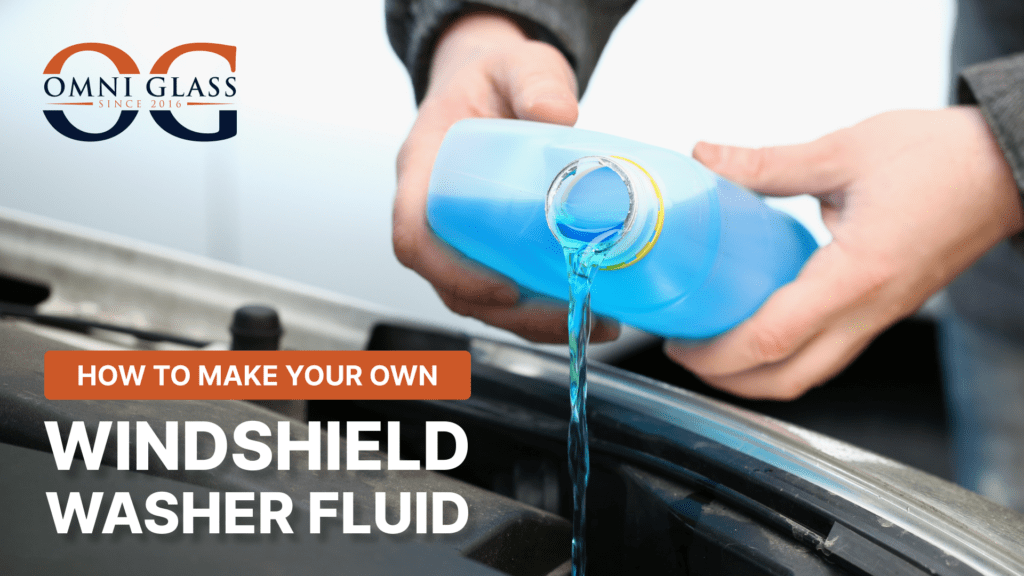
Source: omniautoglass.com
Distilled water
Use about 15 cups. Distilled water contains very little mineral content and is less likely than hard tap water to leave scale in small washer nozzles.
Isopropyl alcohol
Add about 1 cup of 91 percent rubbing alcohol for improved cleaning and modest freeze resistance.
Low-sudsing dish soap
Use approximately 1 teaspoon. More detergent is not necessarily better and can cause excessive foam or windshield streaking.
Clean gallon container
Use a chemical-safe container with a secure cap. Clearly label it as windshield washer fluid.
Funnel
A clean funnel makes it easier to transfer the finished mixture without spilling it around the engine compartment.
Step 1: Start With a Clean Container
Use a clean gallon jug that has not previously contained incompatible chemicals. Avoid milk jugs, soda bottles, juice bottles, and other containers that could cause someone to mistake the mixture for a drink. A clearly labeled automotive or chemical container is safer.
Step 2: Add the Distilled Water
Pour about 15 cups of distilled water into the container. Leaving some empty space makes it easier to add the remaining ingredients and mix the fluid without overflowing.
Step 3: Add the Isopropyl Alcohol
Add 1 cup of 91 percent isopropyl rubbing alcohol. Work in a ventilated area and keep the mixture away from cigarettes, heaters, sparks, pilot lights, and open flames because isopropyl alcohol is flammable.
Step 4: Add a Small Amount of Dish Soap
Add about 1 teaspoon of clear, mild dish soap. The detergent acts as a surfactant, helping water spread over the windshield and loosen oily road film, bug residue, and dirt. Avoid heavily scented, lotion-containing, antibacterial, bleach-containing, or highly foaming products.
Step 5: Mix Gently
Secure the cap and slowly turn the container several times. Do not shake it aggressively because that can produce a jug full of foam.
Step 6: Fill the Washer Reservoir
Locate the windshield washer reservoir under the hood. The cap normally displays a windshield-and-spray symbol. Check the owner’s manual if you are unsure. Pour the mixture through a clean funnel and stop at the reservoir’s indicated maximum level.
Step 7: Test the Washer System
Operate the washers for several seconds. A successful mixture should spray evenly, allow the wipers to clear the windshield without excessive foam, and leave little or no visible film after the glass dries.
Why Each Windshield Washer Fluid Ingredient Matters
Homemade windshield washer fluid does not need a long ingredient list. Each ingredient should have a specific purpose because unnecessary chemicals can introduce residue, compatibility problems, odors, or safety concerns.
The most useful basic combination is distilled water for the carrier, a very small amount of detergent for cleaning, and isopropyl alcohol when extra grease cutting or some freeze resistance is desired.
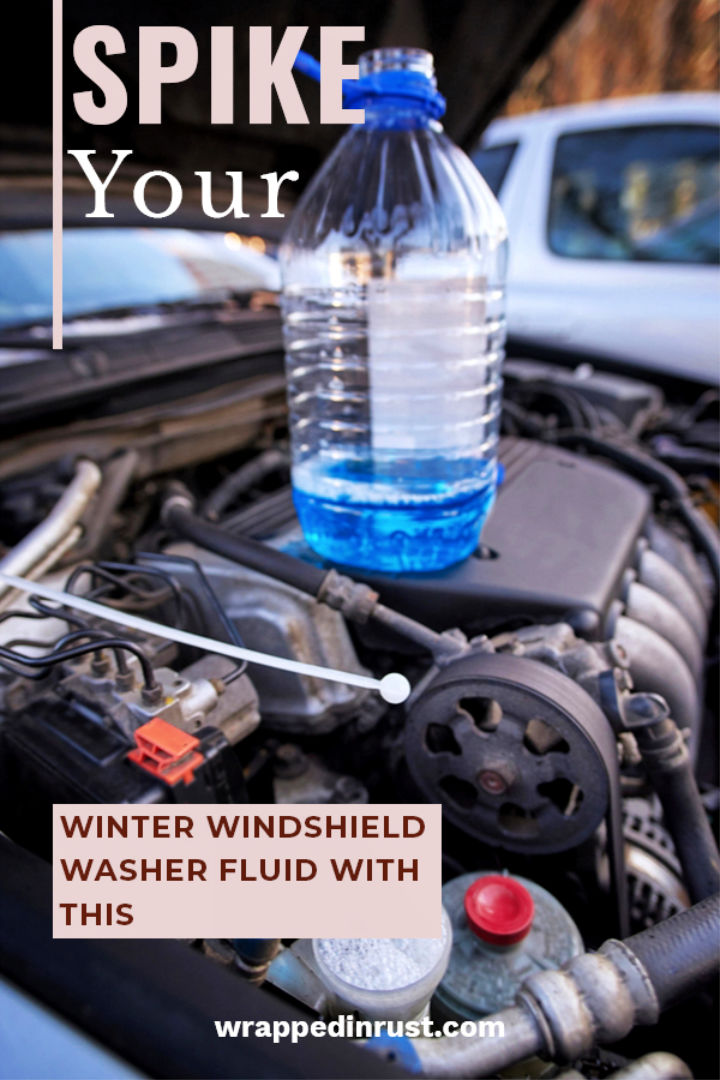
Source: itsoverflowing.com
Water carries away contamination
Water provides most of the liquid volume and helps rinse dust, pollen, salt, and loosened dirt from the windshield.
Soap breaks up oily grime
A small concentration of surfactant helps loosen insect residue, traffic film, grease, and other contamination that plain water may not remove effectively.
Alcohol improves cleaning
Isopropyl alcohol helps dissolve oily contamination and evaporates more quickly than water.
Alcohol changes freezing behavior
Increasing the concentration of isopropyl alcohol lowers the freezing point of a water-alcohol mixture, but the final freeze protection depends on both the alcohol concentration and the proportion used.
Why Distilled Water Is Better Than Tap Water
Tap-water quality varies considerably across the United States. In hard-water regions, dissolved calcium, magnesium, and other minerals can remain behind when water evaporates. Over time, mineral deposits can contribute to spots on the glass and deposits around small washer openings.
Using distilled water removes much of this variability. It is inexpensive, widely available in U.S. grocery and retail stores, and gives you a cleaner starting point for a homemade washer-fluid mixture.
Why You Should Not Add Extra Soap
A washer reservoir is not a bucket for washing a car. The goal is to create enough cleaning action to lift grime without producing a thick layer of suds. Excess soap can leave a film, cause streaking, create distracting foam while driving, and make the reservoir harder to rinse.
How to Make Windshield Washer Fluid for Winter
Winter is where homemade washer fluid becomes more complicated. Water freezes at 32 degrees Fahrenheit, and adding a modest amount of rubbing alcohol does not automatically make a mixture suitable for a Minnesota, Wisconsin, Michigan, Colorado, New England, or northern New York winter.
The freezing point depends on the actual concentration of isopropyl alcohol in the finished solution. The percentage printed on the bottle also matters. One cup of 70 percent rubbing alcohol does not contribute as much pure isopropyl alcohol as one cup of 91 percent product.
Because home recipes are not normally laboratory tested and certified to a specific freeze temperature, drivers who expect sustained temperatures near or below freezing should be conservative. In genuinely cold weather, use a commercially produced winter windshield washer fluid whose container specifies a freeze-protection temperature below the lowest temperature expected in your area.
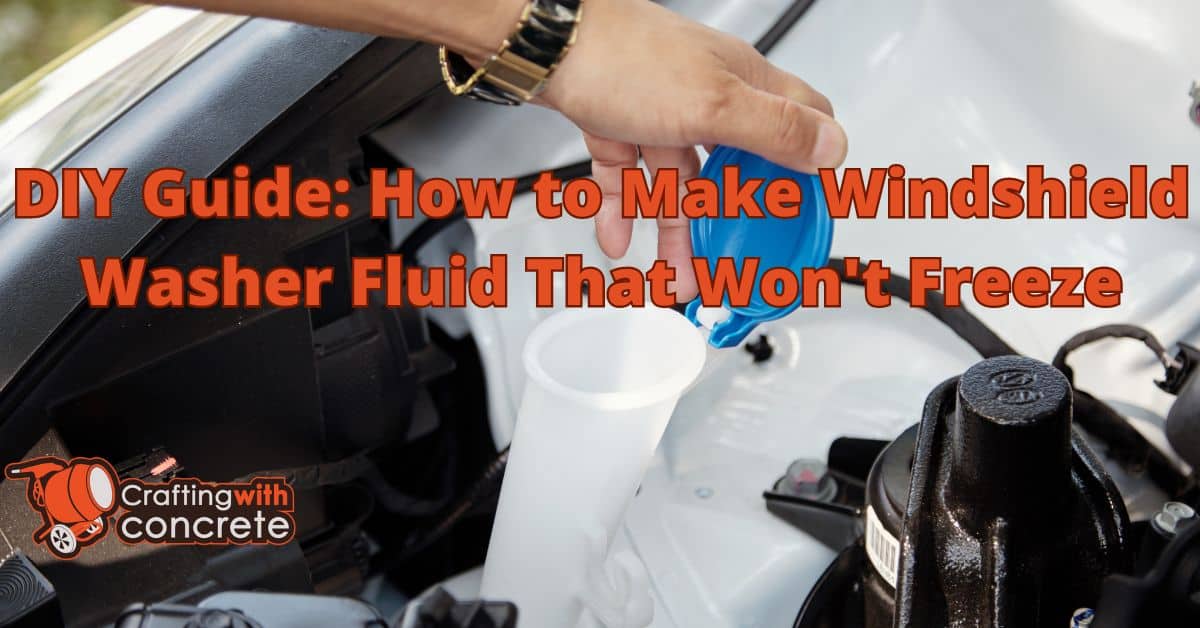
Source: storage.googleapis.com
Above-freezing weather
A water-heavy homemade formula is generally focused on cleaning rather than freeze protection.
Occasional light freezes
Adding isopropyl alcohol lowers the freezing point, but the mixture should not be assumed to have a specific temperature rating without testing.
Regular subfreezing conditions
A commercially rated winter washer fluid provides a known freeze-protection specification and is the more predictable option.
Severe subzero weather
Do not rely on an improvised household recipe. Use fluid specifically rated for temperatures below the forecast minimum.
Can You Freeze-Test Homemade Washer Fluid?
You can place a small, clearly labeled sample in a freezer to see whether it becomes slushy or solid at that freezer’s temperature. However, a household freezer test is only a rough screening method. It does not establish an exact automotive freeze rating, and outdoor temperatures may fall lower than the freezer temperature.
If a test sample becomes cloudy, slushy, or partly frozen, do not put that batch into a vehicle that will encounter similar or colder conditions.
Why a Frozen Washer System Is a Problem
Frozen fluid can prevent the windshield washers from operating precisely when road salt and slush are reducing visibility. Ice expansion and attempts to operate a frozen system may also place unnecessary stress on the reservoir, hoses, fittings, pump, and nozzles.
Ingredients You Should Avoid in Homemade Washer Fluid
A homemade recipe should remain simple. Adding stronger chemicals does not necessarily improve windshield cleaning, and some substances introduce avoidable health, fire, paint, coating, rubber, or compatibility concerns.
Methanol deserves particular caution. Commercial windshield washer fluids may contain methanol because it provides effective freeze protection, but methanol is highly toxic if swallowed and can cause severe poisoning, including vision damage and death. There is no practical reason for a typical home mechanic to formulate a DIY washer fluid with methanol.
Source: youtube.com
Methanol
Do not use methanol for a household DIY recipe. It is highly toxic and requires careful handling and storage.
Bleach
Bleach is unnecessary for windshield cleaning and can create compatibility, staining, corrosion, and chemical-mixing hazards.
Laundry detergent
Laundry products can produce excessive foam and may contain fragrances, brighteners, softeners, or other additives not intended for an automotive washer system.
Large amounts of dish soap
Too much detergent increases foam and may leave a distracting residue on the windshield.
Unknown chemical mixtures
Never combine household cleaners unless their compatibility is established. Some cleaning chemicals can react and release hazardous gases.
Should You Put Ammonia in Windshield Washer Fluid?
Although ammonia can cut grease and appears in some glass-cleaning formulas, it is unnecessary for this simple DIY recipe. Keeping ammonia out of the mixture avoids concerns involving overspray on surrounding automotive materials and certain aftermarket window films or coatings.
What About White Vinegar?
Diluted white vinegar can clean mineral residue from ordinary glass, which is why it appears in many homemade cleaner recipes. However, repeated washer-fluid use sends the solution over painted surfaces, rubber components, trim, and possibly specialty glass treatments. A distilled-water, isopropyl-alcohol, and minimal-soap formula avoids the need for vinegar.
Vinegar also should not be treated as a winter antifreeze. Its presence does not provide the predictable cold-weather protection required for severe U.S. winter conditions.
How to Add Homemade Washer Fluid to Your Car
Once the mixture is prepared, filling the vehicle is straightforward, but make sure you identify the correct reservoir. Windshield washer fluid should never be poured into the coolant reservoir, brake-fluid reservoir, power-steering reservoir, engine-oil opening, or any other underhood container.
Open the hood and look for a cap marked with a windshield and spray symbol. Reservoir location varies by make and model, so consult the owner’s manual if there is any uncertainty.
Source: artofit.org
Park safely
Park on a level surface, switch off the engine, and allow the underhood area to cool if the vehicle has recently been driven.
Identify the washer reservoir
Confirm the reservoir using its cap symbol or the vehicle owner’s manual.
Check the existing fluid
If winter is approaching and the reservoir contains an unknown mixture, running it low before changing formulations makes the final concentration easier to predict.
Pour slowly
Use a funnel if necessary and avoid exceeding the reservoir’s fill level.
Test the sprayers
Operate the washer system and confirm that both the fluid spray and wiper action provide a clear field of view.
Can You Mix Homemade Fluid With Existing Washer Fluid?
Small amounts of a simple distilled-water, isopropyl-alcohol, and mild-soap mixture can physically mix with many conventional washer fluids. The larger issue is that mixing fluids changes the final concentration, so any previous freeze rating can no longer be assumed to apply.
Before winter, the safest approach is to use up most of the old fluid and refill with a winter product that has an appropriate stated temperature rating.
How to Tell Whether Your Homemade Washer Fluid Is Working
A successful batch should do more than simply come out of the nozzles. The windshield should become visibly cleaner after one or two washer cycles without being covered by persistent foam, oily smears, or a cloudy detergent film.
Test the mixture while the vehicle is parked before depending on it in traffic. This gives you an opportunity to correct a streaking or foaming problem without affecting visibility while driving.
Source: artofit.org
Even spray pattern
Fluid should reach the intended windshield area rather than dribble weakly from the nozzles.
Low foam
A few bubbles are not unusual, but a thick layer of suds indicates too much detergent.
Clear drying
After the wipers pass and the remaining moisture evaporates, the windshield should not have a heavy cloudy film.
Effective dirt removal
Normal dust, light road grime, pollen, and insect residue should become easier for the wipers to remove.
Reliable flow
The solution should remain liquid under the temperatures in which the vehicle is operated.
What to Do if Homemade Washer Fluid Streaks
Streaking is commonly caused by excessive detergent, dirty wiper blades, worn wiper rubber, grease on the windshield, or contamination already inside the reservoir. If you added too much soap, dilute the mixture with distilled water after confirming that doing so will not create a freezing risk.
Clean the windshield and wipe the wiper-blade edges with an appropriate automotive glass-cleaning method. If streaking remains after the glass and blades are clean, inspect the blades for hardened, torn, or uneven rubber.
What to Do if the Washer Fluid Does Not Spray
First confirm that the reservoir contains liquid. If it does, check whether the fluid has frozen, whether the washer nozzles are blocked, and whether you can hear the washer pump when the control is activated.
If the pump runs but no fluid reaches the windshield, a blocked nozzle, disconnected hose, frozen line, or empty pickup area may be responsible. If the pump is silent and the reservoir is full, the problem may involve the pump, wiring, switch, fuse, or another part of the washer system rather than the fluid itself.
Safety and Storage Rules for Homemade Windshield Washer Fluid
Treat homemade washer fluid as an automotive chemical even when the recipe uses common household ingredients. Isopropyl alcohol is flammable and should not be swallowed. A labeled container and sensible storage are especially important in homes with children or pets.
Commercial washer fluid can contain methanol, which presents a particularly serious poisoning hazard. Never reuse a beverage container for either homemade or commercial washer fluid because the contents could be mistaken for water, juice, or another drink.
Source: pinterest.com
Label the container
Clearly write Windshield Washer Fluid and the ingredients or mixing date on the container.
Keep it away from children and pets
Store automotive chemicals in a secured location where they cannot be reached or mistaken for something safe to drink.
Keep away from ignition sources
Isopropyl alcohol is flammable, so keep the mixture away from open flames, hot work, sparks, smoking materials, and other ignition sources.
Do not use drink containers
Never store washer fluid in water, sports-drink, juice, soda, or other beverage bottles.
Clean spills promptly
Wipe up spills and rinse affected exterior vehicle surfaces rather than allowing a cleaning solution to dry repeatedly on paint or trim.
Respond quickly to ingestion
If washer fluid or a concentrated ingredient is swallowed, contact U.S. Poison Control at 1-800-222-1222 for immediate guidance. Severe symptoms or a suspected serious exposure require emergency medical attention.
How Long Can Homemade Washer Fluid Be Stored?
Make modest batches rather than storing large quantities indefinitely. Keep the container tightly closed in a cool, ventilated location away from direct heat and ignition sources. Discard a batch if you notice unusual separation, contamination, debris, an unexpected odor, or a damaged container.
Before using stored fluid during cold weather, reconsider whether its composition is appropriate for the current forecast. A batch mixed for summer may not be suitable several months later when freezing weather arrives.
Frequently Asked Questions
Q
Can I use tap water instead of distilled water for windshield washer fluid?
Tap water can work temporarily, but distilled water is preferable for regular use. Hard tap water contains dissolved minerals that can leave spots and contribute to deposits around the reservoir, hoses, or small washer nozzles. Distilled water provides a more consistent base regardless of local U.S. water hardness.
Q
Can I make windshield washer fluid without rubbing alcohol?
Yes, if the vehicle will remain safely above freezing, distilled water with a very small amount of suitable low-sudsing detergent can provide basic cleaning. Rubbing alcohol becomes useful for oily road film, quicker evaporation, and some reduction in the mixture’s freezing point.
A formula without alcohol should not be used when the vehicle may encounter freezing temperatures.
Q
How much dish soap should I put in homemade windshield washer fluid?
Start with about 1 teaspoon per gallon for a simple DIY mixture. The purpose is to provide mild surfactant action, not to create suds. If the windshield becomes foamy or develops detergent streaks, the concentration is too high.
Q
Can I use homemade windshield washer fluid in winter?
Only when you have adequate confidence that the mixture will remain liquid at the temperatures the vehicle will encounter. Adding isopropyl alcohol lowers the freezing point, but a homemade batch does not automatically have a verified temperature rating.
For areas with sustained freezing temperatures or severe U.S. winters, commercially formulated fluid labeled for a temperature below the expected minimum is the more reliable approach.
Q
Can I use windshield washer fluid to de-ice a frozen windshield?
A properly rated winter washer fluid may help loosen light frost, but the washer system should not be treated as a substitute for safely removing heavy ice and snow. Do not activate wipers when they are frozen to the glass, and never pour hot water onto a frozen windshield because rapid temperature change can stress the glass.
Use the vehicle’s defroster and an appropriate ice scraper, then operate the washers once the wipers and windshield are free enough to move safely.
Q
Why did my homemade windshield washer fluid freeze?
The most likely reason is that the mixture contained too much water for the temperature it encountered. The alcohol percentage printed on the rubbing-alcohol bottle and the amount used both affect the final alcohol concentration.
Allow the system to thaw naturally in a warmer location rather than repeatedly running a potentially frozen washer pump. For continued winter use, refill with a washer fluid that carries an appropriate published freeze rating.
✦ Wrapping Up
Conclusion
Learning how to make windshield washer fluid is straightforward when the goal is basic warm-weather cleaning. A simple mixture of distilled water, a modest amount of isopropyl alcohol, and about a teaspoon of low-sudsing dish soap per gallon can help remove normal pollen, dust, bugs, and road film without unnecessarily complicating the washer system.
The important limitation is temperature. The United States covers climates ranging from year-round warmth to extreme subzero winters, so one homemade recipe cannot be treated as a universal all-season formula. Homemade mixtures do not carry a verified freeze rating. When freezing temperatures are expected, especially in northern and high-elevation states, a commercial winter washer fluid rated below the expected temperature provides more predictable protection.
💡 Key Takeaway
For warm or mild weather, make a simple distilled-water, isopropyl-alcohol, and low-suds soap mixture, test it while parked, and keep it clearly labeled. Before freezing weather arrives, switch to a washer fluid with a verified cold-temperature rating appropriate for your local U.S. forecast.
Learn how to fold a windshield sun shade correctly with simple steps for pop-up, accordion, and umbrella styles, plus storage and troubleshooting tips.