Can OBD2 Scanner Read Transmission Codes? Full Diagnostic Guide
Can OBD2 scanner read transmission codes? Yes, many OBD2 scanners can read generic transmission-related trouble codes. However, a basic code reader may not access all faults stored inside the Transmission Control Module, or TCM. For complete transmission diagnostics, you may need an enhanced or full-system scanner that supports your vehicle’s make, model, and year.
The complete details are explained below. You will learn which transmission codes a basic scanner can retrieve, why some tools only show P0700, how to access the TCM, and what to check when the scanner reports no transmission codes.
Can OBD2 Scanner Read Transmission Codes on Every Vehicle?
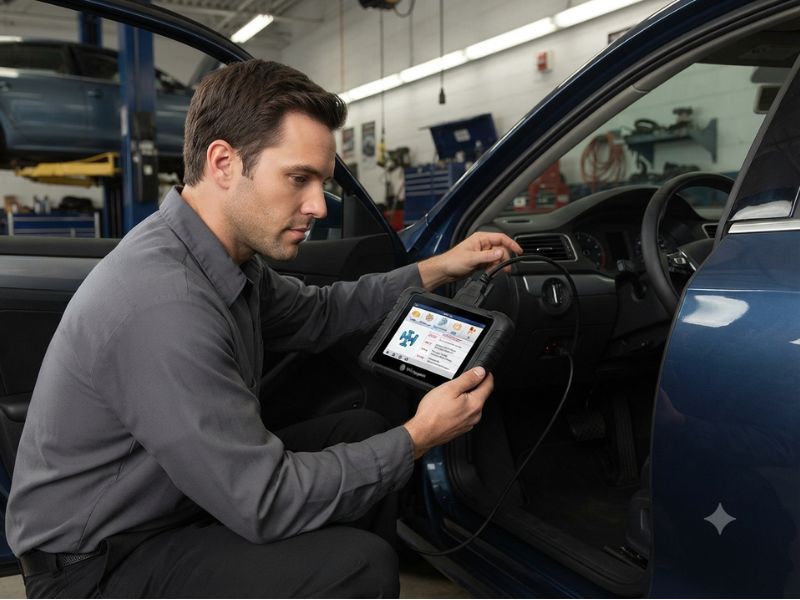
An OBD2 scanner may read transmission codes when the faults are available through the vehicle’s standardized powertrain diagnostic system.
Many transmission-related codes begin with P07, P08, or P09. Because these are powertrain codes, even an affordable scanner may retrieve some of them.
However, modern vehicles often use a separate transmission computer. This module may store detailed manufacturer-specific faults that are not available through a basic generic OBD2 scan.
A simple code reader might tell you that the transmission system has detected a problem. An advanced scanner can often communicate directly with the TCM and reveal the specific fault responsible.
Whether a scanner can read the codes depends on:
- The scanner’s software and capabilities
- The vehicle manufacturer
- The model year
- The transmission type
- The communication protocol
- Whether the fault is stored in the PCM or TCM
The term “OBD2 scanner” does not automatically mean the device supports full transmission diagnostics.
What Are Transmission Trouble Codes?
Transmission trouble codes are diagnostic codes stored when a vehicle computer detects an electrical, hydraulic, communication, or performance problem involving the transmission.
These codes may relate to:
- Shift solenoids
- Input speed sensors
- Output speed sensors
- Transmission fluid temperature
- Torque converter clutch operation
- Hydraulic pressure
- Gear ratio performance
- Transmission range sensors
- TCM communication
- Internal clutch operation
The code identifies the system or condition where the problem was detected. It does not always identify the exact part that needs replacement.
For example, a shift-solenoid code could be caused by a failed solenoid. It could also result from damaged wiring, low fluid, dirty fluid, a clogged hydraulic passage, low voltage, or an internal transmission problem.
Basic OBD2 Reader vs Transmission Scanner
A basic OBD2 reader is mainly designed for generic engine and emissions diagnostics.
It commonly provides access to:
- Stored powertrain codes
- Pending codes
- Permanent emissions codes
- Freeze-frame data
- Readiness monitors
- Check Engine Light status
Because the transmission is part of the powertrain, a basic reader may retrieve some generic transmission codes.
However, it may not provide direct access to the TCM.
A transmission-capable scanner can offer more detailed information, including:
- TCM-specific trouble codes
- Manufacturer-specific faults
- Commanded and actual gear
- Input and output shaft speed
- Transmission fluid temperature
- Solenoid command status
- Torque converter slip
- Hydraulic pressure commands
- Transmission adaptation values
Some professional tools can also perform active tests, programming, relearning, and transmission adaptation resets.
What Does P0700 Mean?
P0700 is one of the most common transmission-related codes found with a basic OBD2 scanner.
It generally means the transmission control system has detected a fault and requested that the Check Engine Light be turned on.
P0700 is not usually the main diagnostic code. It acts as a general warning that additional information is stored in the TCM.
A basic code reader may display only P0700. It may not be able to access the more specific transmission code.
For example, the TCM could contain a detailed fault involving:
- A shift solenoid
- A speed sensor
- Transmission fluid pressure
- Torque converter operation
- Incorrect gear ratio
- Internal communication failure
When P0700 appears by itself, use a scanner that can communicate directly with the transmission module.
Replacing parts based only on P0700 is not recommended.
Common Transmission Codes an OBD2 Scanner May Read
The following codes are common examples of transmission-related faults.
P0700: Transmission Control System Malfunction
This indicates that the TCM has requested the Check Engine Light. Additional codes are usually stored in the transmission module.
P0715: Input or Turbine Speed Sensor Circuit
This code relates to the sensor that measures transmission input shaft or turbine speed.
Possible causes include a failed sensor, damaged wiring, poor connection, or internal transmission problems.
P0720: Output Speed Sensor Circuit
This code indicates a problem with the transmission output speed signal.
The vehicle may experience incorrect speedometer operation, poor shifting, or limp mode.
P0730: Incorrect Gear Ratio
This means the computer detected that the actual transmission gear ratio did not match the commanded ratio.
Possible causes include low fluid, worn clutches, solenoid problems, hydraulic pressure loss, or internal damage.
P0740: Torque Converter Clutch Circuit
This code relates to the electrical or hydraulic operation of the torque converter clutch.
Symptoms may include poor fuel economy, overheating, shuddering, or failure to lock the torque converter.
P0750: Shift Solenoid A Malfunction
This indicates a problem involving one of the shift-solenoid circuits.
The fault could involve the solenoid, connector, wiring, transmission fluid, valve body, or control module.
P0841: Transmission Fluid Pressure Sensor Performance
This code means the transmission computer detected an incorrect pressure-sensor reading or performance problem.
Always confirm the exact definition for your vehicle because code descriptions and diagnostic procedures may vary.
Generic vs Manufacturer-Specific Transmission Codes
Generic transmission codes are standardized and can often be read by entry-level OBD2 scanners.
These codes commonly begin with P0.
Manufacturer-specific codes may begin with P1 or use a module-specific format. They often provide more detailed information for a particular transmission design.
Manufacturer-specific codes may involve:
- Individual clutch packs
- Mechatronic units
- Pressure control valves
- Dual-clutch systems
- Continuously variable transmissions
- Transmission adaptation limits
- Internal control module faults
A basic scanner may display an unknown code or no code at all when the fault is manufacturer-specific.
An enhanced scanner with vehicle-specific coverage is more likely to provide the correct description and diagnostic data.
How to Check Whether Your Scanner Reads Transmission Codes
Check the scanner’s product description and supported-system list.
Look for terms such as:
- Transmission diagnostics
- TCM access
- Enhanced powertrain
- Engine and transmission
- Full-system scan
- All-module diagnostics
- Manufacturer-specific codes
A scanner advertised only as a Check Engine Light reader may have limited transmission access.
After connecting the tool, look at its menu.
A transmission-capable scanner may display options such as:
Auto Scan: Searches all supported modules for faults.
Control Units: Allows you to manually choose the TCM.
Powertrain: Provides access to the engine and transmission systems.
Transmission: Opens the transmission diagnostic functions.
Full System: Scans the engine, transmission, ABS, airbags, body modules, and other systems.
When the scanner only shows a generic OBD2 or engine menu, it may not support direct TCM communication.
How to Read Transmission Codes With an OBD2 Scanner
Park the vehicle safely on a level surface and apply the parking brake.
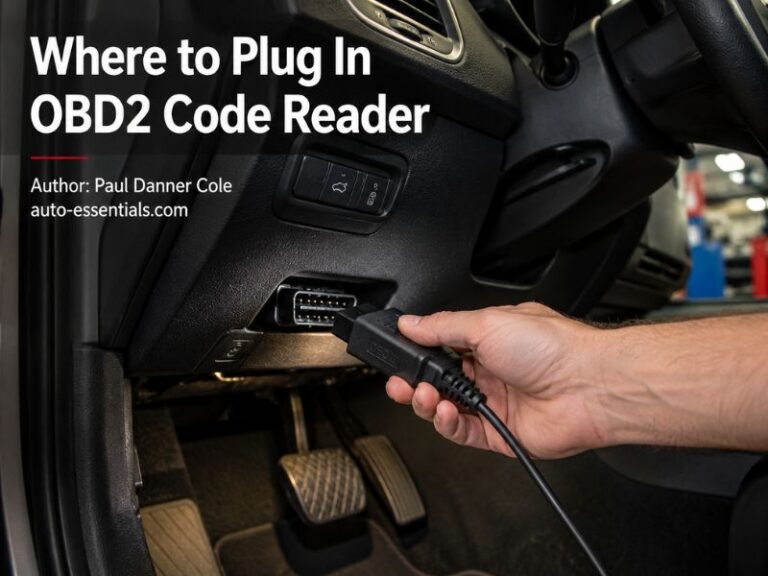
Turn off the engine and locate the OBD2 port under the driver’s side dashboard.
Connect the scanner firmly to the diagnostic connector.
Turn the ignition to the ON position without starting the engine unless the scanner instructs you otherwise.
Select the correct vehicle year, make, model, and engine. Some advanced scanners can automatically identify the vehicle through its VIN.
Open the transmission, TCM, powertrain, or full-system menu.
Select Read Codes and record all available information.
Save the following details:
- Code number
- Code description
- Current or active status
- Stored or history status
- Pending status
- Freeze-frame information
- Vehicle mileage
Do not clear the codes before recording them.
Important information may disappear after the memory is erased.
Why Does My Scanner Show No Transmission Codes?
A scanner may report no transmission codes even when the vehicle has clear shifting problems.
There are several possible reasons.
The Scanner Cannot Access the TCM
The scanner may only communicate with the engine computer.
If the fault is stored exclusively in the transmission module, the reader will not find it.
The Problem Has Not Set a Code
Mechanical problems do not always create an electronic trouble code.
A worn clutch, low fluid level, internal seal leak, or damaged gear may cause slipping without immediately setting a fault.
The Fault Is Intermittent
A temporary wiring, sensor, or connection issue may cause occasional symptoms without meeting the conditions required to store a confirmed code.
The Wrong Diagnostic Menu Was Used
Selecting only the generic engine menu may miss transmission-module faults.
Try an automatic full-system scan or select the TCM manually.
The Scanner Has Limited Vehicle Coverage
Some scanners support transmission diagnostics only on selected makes, models, or years.
The Scanner Software Is Outdated
Older software may not communicate correctly with newer vehicle modules.
A “No Codes Found” message does not guarantee that the transmission has no problem.
Can a Bluetooth OBD2 Scanner Read Transmission Codes?
Some Bluetooth OBD2 scanners can read transmission codes, but many low-cost adapters are limited to generic engine diagnostics.
Transmission access depends on both the physical adapter and the smartphone app.
The adapter must support the required communication network. The app must also include transmission-module access and vehicle-specific data.
A basic app may display generic P07xx codes stored in the powertrain computer.
Direct TCM access may require:
- A manufacturer-specific app
- An enhanced subscription
- A higher-quality adapter
- Vehicle-specific software
- A professional diagnostic platform
Confirm compatibility before purchasing the adapter or paying for an app subscription.
Can an OBD2 Scanner Display Transmission Live Data?
An enhanced scanner may display live information directly from the transmission control system.
Useful data can include:
- Commanded gear
- Actual gear
- Transmission fluid temperature
- Input shaft speed
- Output shaft speed
- Vehicle speed
- Shift-solenoid commands
- Torque converter slip
- Transmission range position
- Brake switch status
- Hydraulic pressure command
Live data can help separate an electrical problem from a hydraulic or mechanical fault.
For example, comparing input and output shaft speeds can help determine whether the transmission is slipping or whether a speed sensor is producing an incorrect signal.
Basic readers may not provide this information.
Can a Scanner Diagnose a Slipping Transmission?
A scanner can provide important clues, but it may not identify every cause of transmission slipping.
Electronic evidence may include:
- Incorrect gear ratio codes
- Excessive torque converter slip
- Speed sensor disagreement
- Solenoid performance codes
- Pressure-control faults
- High fluid temperature
However, slipping can also be caused by:
- Low transmission fluid
- Worn internal clutches
- Contaminated fluid
- Internal seal leakage
- Valve body wear
- Damaged torque converter
- Hydraulic pressure loss
A complete diagnosis may require fluid inspection, pressure testing, mechanical inspection, and manufacturer service information.
Can an OBD2 Scanner Reset a Transmission?
A basic OBD2 reader cannot normally reset or relearn a transmission.
Some advanced scanners can perform functions such as:
- Transmission adaptation reset
- Shift relearn
- Clutch relearn
- TCM initialization
- Solenoid calibration
- Transmission service reset
These functions should only be performed when required by the correct repair procedure.
Modern transmissions learn clutch pressure, shift timing, and component wear over time. Resetting those learned values without repairing the underlying problem can create harsh, delayed, or incorrect shifts.
Do not perform an adaptation reset simply because the transmission shifts poorly.
Can You Clear Transmission Codes?
A compatible scanner may clear transmission codes, but clearing them does not repair the problem.
When an active fault remains, the code may return as soon as you:
- Start the engine
- Shift into gear
- Begin driving
- Complete a self-test
- Reach certain operating conditions
Before clearing a code, save its description, status, and freeze-frame data.
Erasing the memory too early can make intermittent faults more difficult to diagnose.
Will Disconnecting the Battery Clear Transmission Codes?
Disconnecting the battery may clear some codes on older vehicles, but it is not a reliable diagnostic or repair method.
Many modern control modules store codes in non-volatile memory.
Battery disconnection may also reset:
- Radio and clock settings
- Engine fuel learning
- Transmission adaptations
- Emissions readiness monitors
- Window settings
- Steering sensor information
Resetting transmission adaptations unexpectedly may temporarily change shift quality.
Use a compatible scanner and follow the manufacturer’s recommended clearing procedure.
When Should You Stop Driving?
Stop driving and arrange professional inspection if the vehicle:
- Will not engage a gear
- Slips severely
- Shifts violently
- Produces grinding noises
- Leaks a large amount of fluid
- Smells like burned transmission fluid
- Displays an overheating warning
- Enters limp mode repeatedly
- Loses drive while moving
Continuing to drive with low fluid, overheating, or severe slipping can cause major internal damage.
When the vehicle drives normally but has stored transmission codes, avoid heavy towing, aggressive acceleration, and long trips until the problem has been diagnosed.
Final Thoughts
So, can obd2 scanner read transmission codes? Yes, many OBD2 scanners can retrieve generic transmission-related powertrain codes, including common P07xx faults.
However, a basic reader may only show a general code such as P0700 and fail to access the detailed fault stored inside the Transmission Control Module.
For complete diagnosis, choose an enhanced or full-system scanner that supports TCM communication for your exact vehicle. Record all codes before clearing them, review live data when available, and remember that a transmission code identifies where to begin testing rather than confirming which part has failed.
Send the next keyword when you’re ready.