What Is Vpwr on Obd2 Scanner: Key Facts and Helpful Explanations
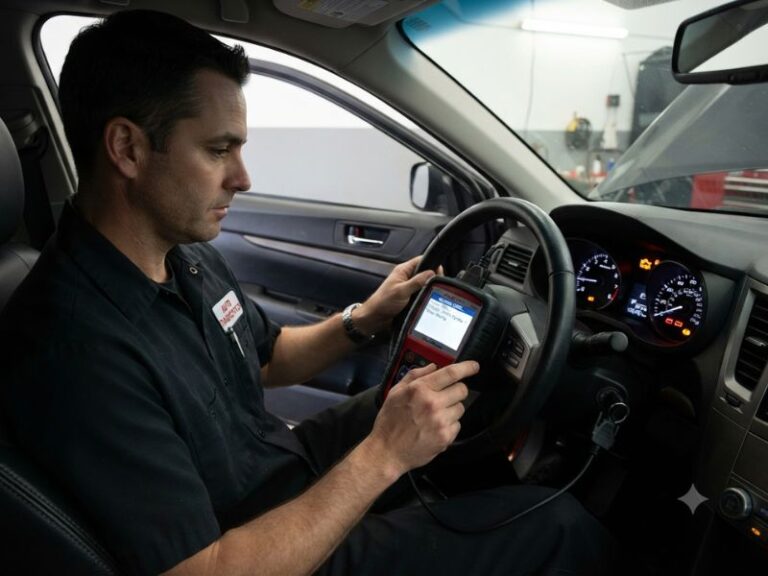
When you plug an OBD2 scanner into your vehicle, you’re interacting with a complex system designed to monitor your car’s performance and emissions. Among the various data points and sensor readings, you might encounter terms that aren’t immediately obvious, and “VPWR” is one of them. Essentially, VPWR stands for Vehicle Power, and it represents the voltage supplied to the vehicle’s Powertrain Control Module (PCM) or Engine Control Unit (ECU) and other critical sensors. The question “what is vpwr on obd2 scanner” becomes clearer once the surrounding conditions and practical details are considered.
Understanding what is VPWR on an OBD2 scanner is crucial for diagnosing certain electrical issues, especially those related to sensor operation or module communication. It’s a direct indicator of the electrical health of key components within your car’s diagnostic and operational systems.
Understanding VPWR on Your OBD2 Scanner
VPWR, or Vehicle Power, is a fundamental electrical measurement within your car’s onboard diagnostic system. It’s the nominal battery voltage that powers the various electronic modules and sensors connected to the vehicle’s data bus. This isn’t just a generic battery voltage; it specifically refers to the power supply that the PCM/ECU uses to operate and to provide reference voltage to many of its connected sensors.
Why VPWR Matters
The stability and correct level of VPWR are vital for the proper functioning of your vehicle’s electronic systems. If the VPWR is too low, too high, or intermittent, it can lead to a cascade of problems:
- Sensor Malfunctions: Many sensors (like oxygen sensors, MAP sensors, throttle position sensors) rely on a stable 5-volt or 12-volt reference supplied by the PCM, which in turn is powered by VPWR. Incorrect VPWR can cause inaccurate sensor readings.
- Module Communication Issues: The PCM and other control modules need stable power to communicate effectively over the CAN bus or other vehicle networks. Fluctuations can disrupt this communication, leading to diagnostic trouble codes (DTCs) related to network errors.
- Engine Performance Problems: Since the PCM controls fuel injection, ignition timing, and other critical engine functions, an unstable VPWR can directly impact engine performance, leading to misfires, rough idling, or even stalling.
- Diagnostic Trouble Codes (DTCs): Many DTCs, particularly those related to sensor reference voltage or module power supply, can be traced back to VPWR issues.
Typical VPWR Readings
A healthy VPWR reading on your OBD2 scanner should generally be consistent with your vehicle’s battery voltage. For most modern vehicles, this means:
- Engine Off: Approximately 12.0-12.6 volts (V), reflecting the static battery voltage.
- Engine Running: Approximately 13.5-14.7 V, indicating that the alternator is charging the battery and supplying power to the vehicle’s electrical system.
These values can vary slightly depending on the vehicle manufacturer, battery condition, and alternator performance. However, significant deviations outside this range should prompt further investigation.
Common Scenarios and Troubleshooting VPWR Issues
When you see an unusual VPWR reading on your OBD2 scanner, it’s a signal that something in your vehicle’s electrical system might need attention. Here are some common scenarios and how to approach them.
Low VPWR Reading
A VPWR reading consistently below the expected range (e.g., below 12V with the engine off, or below 13V with the engine running) can indicate several problems:
- Weak or Failing Battery: The most common cause. A battery that isn’t holding a charge properly will result in low voltage throughout the system.
- Failing Alternator: If the VPWR is low only when the engine is running, the alternator might not be generating enough power to charge the battery and supply the vehicle’s electrical demands.
- High Resistance in Power Circuit: Corrosion on battery terminals, loose connections, or damaged wiring between the battery/alternator and the PCM’s power input can cause a voltage drop, leading to low VPWR at the module.
- Excessive Electrical Load: While less common for consistently low VPWR, an excessive draw from accessories or a short circuit could temporarily pull down the system voltage.
Troubleshooting Low VPWR
- Check Battery Voltage: Use a multimeter directly at the battery terminals. Compare this to the VPWR reading on your scanner. If the battery voltage is significantly higher than VPWR, suspect wiring issues.
- Inspect Battery Terminals and Cables: Look for corrosion, looseness, or damage. Clean and tighten as necessary.
- Test Alternator: Many auto parts stores offer free alternator testing. You can also monitor battery voltage with the engine running; it should rise to the charging voltage (13.5-14.7V).
- Check Fuses: The PCM/ECU often has dedicated fuses for its power supply. A blown or corroded fuse can interrupt the VPWR.
High VPWR Reading
While less common than low VPWR, a consistently high reading (e.g., above 15V with the engine running) is also problematic and usually points to an issue with the charging system.
- Faulty Voltage Regulator: The voltage regulator, often integrated into the alternator, controls the output voltage. If it fails, it can allow the alternator to overcharge the system, leading to high VPWR.
Troubleshooting High VPWR
- Test Alternator/Voltage Regulator: As with low VPWR, an alternator test is crucial. A faulty voltage regulator will need the alternator replaced or repaired.
- Check for Ground Issues: While less direct, poor grounds can sometimes contribute to erratic voltage readings, though usually more towards low or fluctuating voltage.
Fluctuating or Intermittent VPWR
If your VPWR reading jumps around erratically, it suggests an unstable power supply, which can be even more challenging to diagnose than consistently high or low readings.
- Loose Connections: A loose battery cable, ground strap, or PCM power connector can cause intermittent power loss or fluctuations.
- Intermittent Short Circuit: A wire rubbing against metal, creating an occasional short, can cause voltage drops.
- Failing Alternator Rectifier: The rectifier converts AC voltage from the alternator into DC voltage for the car. A failing rectifier can cause AC ripple in the DC system, leading to fluctuating voltage.
Troubleshooting Fluctuating VPWR
- Wiggle Test: With the engine running and the scanner connected, gently wiggle battery cables, alternator wires, and PCM connectors. Observe if the VPWR reading changes.
- Inspect Wiring Harnesses: Look for chafed, pinched, or corroded wires, especially those leading to the PCM.
- Check Ground Straps: Ensure all engine and chassis ground straps are clean and securely fastened.
Practical Implications for Vehicle Owners
As a vehicle owner, understanding VPWR isn’t just for mechanics. It empowers you to better interpret your OBD2 scanner readings and communicate more effectively with technicians. If your scanner shows codes related to voltage, sensor reference, or module power, checking the VPWR live data stream should be one of your first steps.
For example, if you’re getting multiple sensor codes (e.g., P0135 for O2 sensor heater circuit, P0102 for MAF sensor low input), and your VPWR reading is consistently low, it’s highly probable that the underlying issue is a power supply problem rather than multiple individual sensor failures. This can save you time and money by directing diagnostics to the root cause.
Always remember that while your OBD2 scanner provides valuable data, it’s a diagnostic tool, not a repair tool. Interpreting the data correctly and knowing when to seek professional help is key.
Conclusion: What is VPWR on OBD2 Scanner and Its Importance
In summary, VPWR on an OBD2 scanner represents the crucial Vehicle Power supplied to your car’s primary control modules and sensors. It’s a direct reflection of the electrical health of these critical components. Monitoring VPWR can provide invaluable insights into issues ranging from a weak battery or failing alternator to subtle wiring problems. A stable and correct VPWR reading is fundamental for accurate sensor operation, reliable module communication, and overall vehicle performance. When troubleshooting diagnostic trouble codes, especially those related to voltage or sensor circuits, always consider checking your VPWR as a primary diagnostic step to pinpoint the root cause efficiently. A reliable answer to “what is vpwr on obd2 scanner” comes from applying these points to the specific situation rather than relying on one rule.