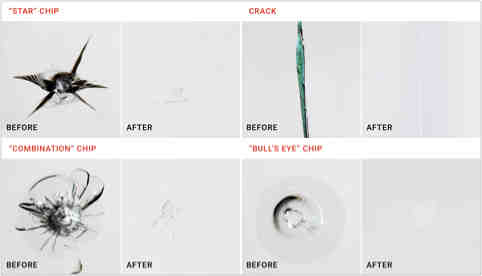
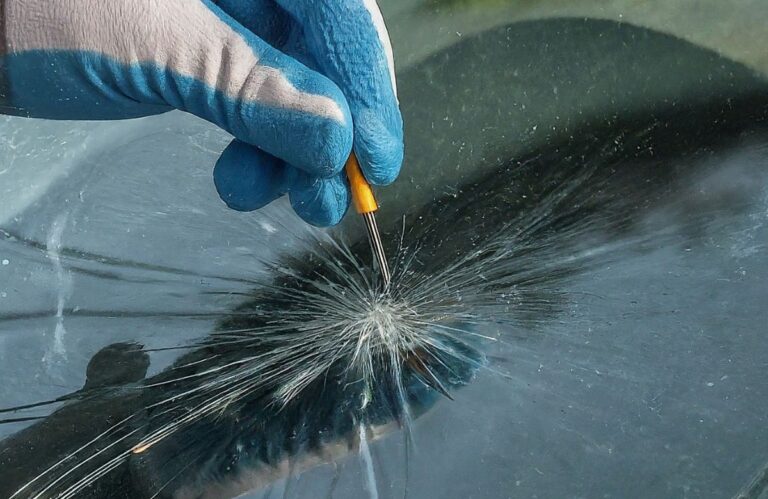
Small bullseye chips, star breaks, combination breaks, and some short cracks can often be repaired. The final decision depends on the damage’s size, depth, location, and effect on the driver’s view.
Across the United States, a stone kicked up by a truck on an interstate, a loose piece of road gravel, or sudden temperature changes can damage a car windshield. A small mark may look harmless at first, yet it can grow when the glass heats up, cools down, or flexes as the vehicle travels over rough roads. Knowing which types of windshield cracks can be repaired helps drivers choose a safe and sensible next step.
Most modern windshields use laminated safety glass. This glass has two layers of glass bonded to a plastic inner layer. When a stone strikes the outer surface, the damage may remain limited to a small chip, or it may spread into a longer crack. A qualified auto glass technician can assess the damage and determine whether a resin repair is suitable or the entire windshield needs replacement.
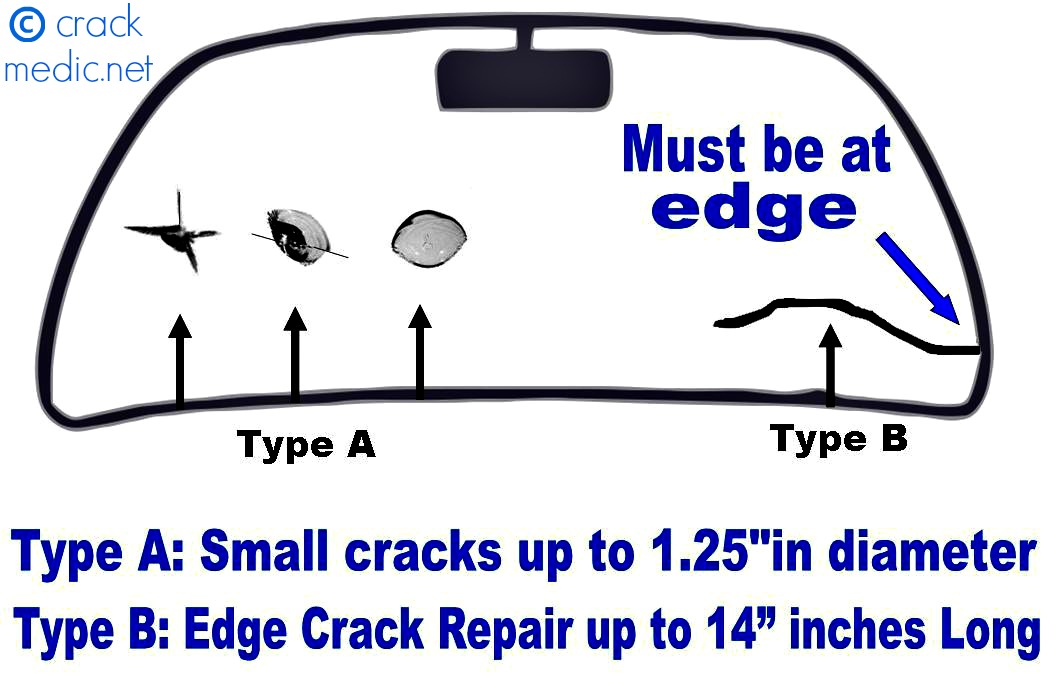
There is no single crack length that guarantees a repair will succeed on every vehicle. Some shops may repair certain longer cracks under specific conditions, while others follow stricter limits. Damage in the driver’s direct line of sight, at the edge of the glass, or through both glass layers often calls for replacement rather than repair.
The most repairable windshield damage is usually small, localized, and limited to the outer glass layer. A technician checks the shape, size, depth, location, and number of impact points before recommending a repair. The goal is to stop or reduce further spreading and restore as much strength and clarity as practical.
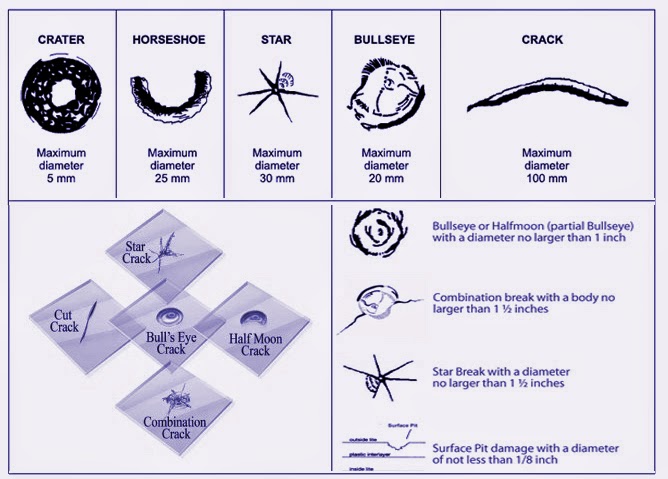
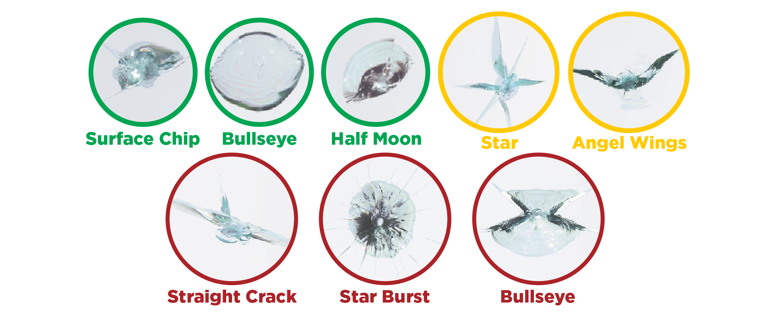
The main repairable patterns include bullseye chips, star breaks, combination breaks, small half-moon chips, and certain short cracks. These names describe the shape of the damage, not a promise that the damage can be repaired. Even a familiar pattern may need replacement if it reaches the edge, blocks the driver’s view, or extends too deeply into the glass.
The following table explains common damage types and the conditions that affect repair decisions. These are general guidelines rather than universal industry limits.
Source: hitchesguide.com
Bullseye chip
A rounded impact mark that may be repairable when it is small, clean, and away from critical viewing areas.
Star break
A central impact point with thin cracks spreading outward. Repair may work if the cracks are limited and can be filled fully.
Combination break
A mix of a rounded chip and radiating cracks. The technician must assess the whole damaged area, including hidden legs.
Short linear crack
A narrow crack may be repairable when it is short, stable, and not near the glass edge or driver’s primary viewing area.
Bullseye Chips
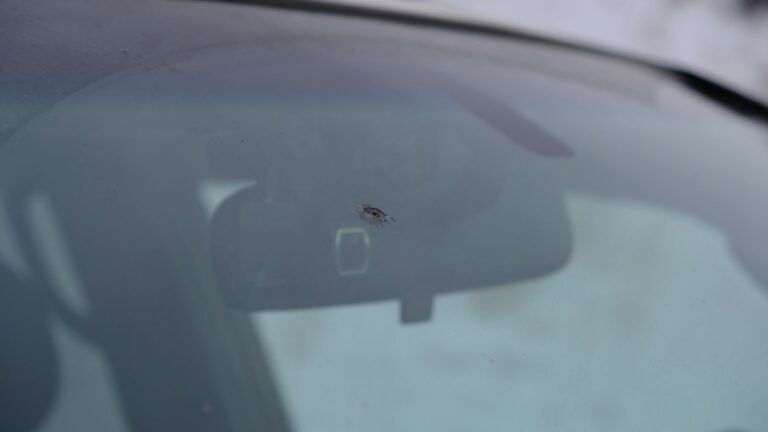
A bullseye chip has a round or circular shape around the point where an object struck the windshield. It may look like a small target, with a central point and one or more curved rings. Because the damage can remain concentrated in one area, it is often a good candidate for resin repair.
The technician cleans and prepares the damaged area, places a repair bridge or similar tool over it, and applies a suitable resin. The resin enters the small cavities and is cured according to the repair system’s instructions. The repaired spot may remain visible, but the process can improve clarity and reduce the risk of spreading.
Often repairable
A small bullseye with no long cracks and no edge involvement is commonly suitable for assessment.
May need replacement
A large or deep bullseye, or one that interferes with the driver’s view, may not be a suitable repair.
Star Breaks
A star break has several thin cracks radiating from a central impact point. It often forms when a small stone hits the windshield with enough force to create multiple fracture lines. Some star breaks can be repaired, but every branch must be assessed because a long or contaminated crack may not accept resin fully.
A star break can spread when the windshield flexes or experiences sudden temperature changes. Avoid directing very hot defroster air at cold damaged glass or pouring cold water over a hot windshield. A prompt professional assessment can help prevent a small break from becoming more complex.
Repair prospects
Small, contained star breaks may respond well when the fracture lines are accessible and the location is suitable.
Main limitation
Long radiating legs, multiple impact points, or poor visibility through the damage can make replacement the safer choice.
Other Windshield Damage That May Be Repairable
Not every repairable mark looks like a round chip. Windshield impact damage can take several forms, and some can be treated with resin when their size, depth, and location meet the repair criteria. A technician should inspect the complete pattern rather than judging only the visible center of the mark.
The terms used by auto glass shops can vary. One shop may describe a damage pattern by its shape, while another may use a broader category. Understanding the basic patterns makes it easier to describe the problem when requesting an inspection.
Source: austinwindshields.net
Half-moon or partial bullseye
A curved impact mark resembling part of a circle. Small examples may be repairable if the damage is confined and the viewing area remains acceptable.
Combination break
A chip that combines a central crater, curved sections, and short radiating cracks. Repair depends on the overall damaged area and the length of its branches.
Small surface chip
A localized mark may be repairable if it has not developed into a deep crack or affected both glass layers.
Some short cracks
A short, clean crack may be repairable under a shop’s approved process, but edge cracks and cracks in the primary viewing area require particular care.
Combination Breaks
A combination break contains more than one damage pattern, such as a bullseye with several star-like branches. This type of damage can be harder to repair because resin must reach the different cavities and fracture lines. A technician considers the widest part of the damage, the length of each crack, and whether any branches have reached the windshield’s edge.
Some combination breaks can be repaired when they remain compact and the resin can reach the damaged areas. If cracks are long, the glass is badly shattered, or the impact has affected the driver’s view, replacement may be necessary.
Check the full pattern
The visible chip may be only part of the damage. Small branches can extend beyond the central impact mark.
Expect a visible repair
A successful repair may leave a small blemish, even when it restores useful strength.
Short Linear Cracks
A linear crack is a narrow fracture that runs in one main direction. It may start at a stone impact or develop after a chip expands. Some short cracks can be stabilized with a specialized resin repair, but repair limits differ among technicians, materials, and vehicle requirements.
Do not assume a crack is repairable simply because it appears short. Its distance from the windshield edge, its position relative to the driver’s line of sight, and the depth of the fracture can matter more than length alone. If the crack is growing, reaches the edge, or crosses a critical viewing area, seek prompt professional advice.
Possible repair
A short crack away from the edge and outside critical viewing areas may qualify after inspection.
Likely replacement
A crack that runs into the edge, continues to grow, or compromises visibility may require a new windshield.
When Does a Windshield Crack Need Replacement?
Windshield replacement is usually the better option when damage cannot be repaired without leaving an unacceptable safety or visibility concern. A windshield is not just a barrier against wind and rain. It contributes to the vehicle’s structural performance and helps support proper airbag operation in a crash, depending on the vehicle design.
Resin repair works by filling suitable cavities and bonding parts of the damaged glass. It cannot turn severely fractured glass into a new, undamaged windshield. If the damage affects the glass’s structural integrity or the repair cannot restore acceptable visibility, replacement is the more appropriate choice.
Source: hitchesguide.com
Cracks at the edge
Damage near or reaching the windshield perimeter can weaken the bonded glass area and is often unsuitable for ordinary chip repair.
Damage in the driver’s primary viewing area
A repair can leave a visible mark or optical distortion. If it would interfere with clear vision, replacement may be needed.
Damage through both glass layers
A fracture that penetrates both layers of laminated glass is generally not suitable for a standard resin repair.
Large or complex damage
Extensive cracks, multiple impact points, or heavily shattered areas can exceed the limits of an approved repair method.
Damage that keeps spreading
A growing crack may be too extensive to repair safely, especially when it reaches the perimeter or crosses a critical viewing area.
Why Edge Cracks Need Special Attention
The windshield is bonded to the vehicle body around its perimeter. A crack that reaches this area can affect the strength of the glass assembly and may continue to spread under normal driving stress. For that reason, technicians often recommend replacement for edge cracks, even when the visible fracture does not seem very large.
The exact decision depends on the vehicle, damage pattern, and applicable repair criteria. Do not use a general size chart to overrule an inspection of edge damage.
Look for perimeter damage
Tell the technician if the crack touches the black border or reaches the edge of the glass.
Avoid delaying assessment
A crack that grows toward the edge may reduce the options available for repair.
Why Driver Visibility Matters
A repaired chip can leave a faint outline, a small spot, or some optical distortion. That may be acceptable in a location away from the driver’s main view, but the same result can be unsuitable directly ahead of the driver. The technician should consider whether the finished repair would leave a clear and safe view of the road.
The location rules and inspection standards can vary by state and by vehicle. When damage sits in the driver’s viewing area, ask the shop to explain whether a repair meets its safety criteria and applicable requirements.
Prioritize a clear view
Do not accept a repair that leaves a distracting mark or prevents you from seeing the road clearly.
Check local requirements
State inspection and vehicle rules may affect whether a damaged windshield is acceptable for road use.
How Size, Depth, and Location Affect Repairability
A windshield crack cannot be judged by length alone. A small but deep fracture near the edge may pose a greater concern than a wider, shallow chip in a more suitable location. Technicians assess several factors together to decide whether the glass can be repaired.
Repair policies differ among shops and repair systems. Some use published maximum dimensions for particular damage types, but those limits are not universal guarantees. The safest approach is to use size as an initial guide and let a qualified technician make the final assessment.
Source: blogspot.com
Damage Size
Smaller damage is generally easier to assess and may be easier to fill fully with resin. As the affected area grows, the chance of incomplete filling, residual visibility problems, or continued crack growth can increase. Several small chips can also present a different repair challenge from one isolated chip.
If a shop gives a maximum repair size, ask whether it applies to the overall damaged area, the crack length, or a specific chip pattern. Those measurements describe different things and should not be treated as interchangeable.
Measure the full damage
Include visible crack branches rather than measuring only the central chip.
Do not rely on a universal cutoff
Repair limits vary with the type of damage, location, and repair method.
Damage Depth
Most conventional chip repairs are intended for damage that does not penetrate both layers of laminated glass. The plastic interlayer holds the layers together, but it does not make every deep fracture repairable. If the impact has severely damaged the glass or compromised the laminate, replacement may be needed.
Depth can be hard to judge from outside the vehicle. Avoid probing the chip with a sharp tool or pressing on the glass to test it. A technician has the tools and training to inspect the damaged area without adding unnecessary stress.
Keep the glass undisturbed
Do not push on the crack or try to widen it to see how deep it goes.
Request a professional assessment
A surface view alone may not reveal the full extent of the fracture.
Age and Contamination
Fresh damage is often easier to repair because dirt, water, and road residue have had less time to enter the crack. Contamination can prevent resin from bonding well or can leave the finished repair more visible. A chip that has been exposed to rain, repeated washing, or road grime may be harder to treat successfully.
Arrange an assessment as soon as practical. If the damaged area is dry, a small piece of clear repair film may help keep out debris when the repair provider recommends it. Do not apply household glue, nail polish, or other improvised coatings, as these can complicate professional repair.
Act promptly
Early assessment may preserve repair options before cracks spread or dirt enters the damage.
Avoid home remedies
Unapproved products may contaminate the fracture and make a proper repair harder.
Windshield Repair vs. Replacement
Repair is usually the more limited service: a technician fills eligible damage with specialized resin and cures it. Replacement removes the damaged windshield and installs a new one with the appropriate bonding materials. The right option depends on safety, the vehicle’s design, and the type of damage.
Repair often takes less time and uses less material than replacement, but the lowest immediate cost is not the only factor. A repair is useful only when the damage qualifies and the result meets the required visibility and safety criteria. If the windshield must be replaced, proper installation and any required camera calibration are part of the job.
Source: faithlowpriceautoglass.com
What to Expect During a Repair
The technician first checks the damage and confirms that the repair is suitable. The damaged area is prepared, and a specialized tool helps draw air out of the cavity and deliver resin into the fracture. The resin is then cured and the surface is finished according to the repair system’s procedure.
A successful repair should help stabilize the damaged area and may improve its appearance. It will not always erase the mark. If the technician finds that the damage is too extensive or the location is unsuitable, the recommendation may change to replacement.
Before work begins
Ask what improvement to clarity is realistic and whether any visible mark will remain.
After the repair
Follow the technician’s care instructions and monitor the area for further spreading.
What to Expect During Replacement
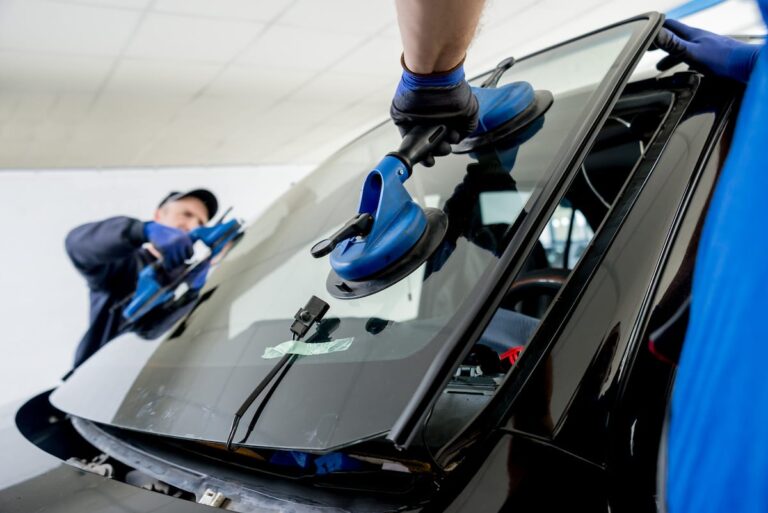
A replacement technician removes the old windshield, prepares the bonding surface, applies the correct adhesive, and installs glass that meets the vehicle’s specifications. The adhesive needs time to reach the manufacturer’s specified safe drive-away condition. The technician should tell you when the vehicle can be driven safely.
Many newer vehicles have cameras or sensors mounted near the windshield. When the glass is replaced, these systems may require calibration according to the vehicle manufacturer’s procedures. Ask whether calibration is needed and whether it is included in the service.
Confirm glass specifications
Check that the replacement is suitable for the vehicle’s features, including any required camera mounts, acoustic layers, or sensors.
Follow drive-away guidance
Do not drive before the installer confirms that the adhesive has reached the required safe condition.
What Should You Do When You Find a Windshield Crack?
When a chip or crack appears, protect the damaged area and arrange an inspection rather than waiting to see whether it spreads. A small impact mark can grow as the windshield heats up in the sun, cools in cold weather, or flexes over bumps. Early action can help preserve the chance of a repair.
If the windshield is badly cracked, visibility is impaired, glass is loose, or the damage appears to compromise safe driving, stop in a safe place and seek professional guidance about towing or other safe transport. Do not continue driving simply because the vehicle still starts and runs.
Source: ar.inspiredpencil.com
Step 1: Inspect the Damage From a Safe Position
Park in a safe location and look at the damage without pressing on the glass. Note the approximate size, shape, number of impact points, and distance from the edge. Also note whether the crack sits in the driver’s direct viewing area.
Record what you see
A clear photo taken from outside and inside the vehicle can help a shop make an initial assessment.
Check for spreading
If the crack changes length or branches appear, tell the technician.
Step 2: Protect the Damaged Area
Avoid sudden temperature changes, hard slams of the doors, and rough driving that may stress the glass. Do not blast a cold windshield with very hot air or use cold water to cool a hot windshield. Keep the area clean without scrubbing, pressing, or introducing liquid into the crack.
Avoid household adhesives
Glue, clear nail polish, and other improvised treatments can interfere with a proper repair.
Use protection only when appropriate
If a repair provider recommends a suitable temporary film, apply it only as directed and do not treat it as a repair.
Step 3: Contact a Qualified Auto Glass Technician
Describe the damage and share photos if the shop accepts them. Ask whether an in-person inspection is needed, whether the shop can repair the specific damage pattern, and what would trigger a replacement recommendation. A photo can help with initial screening, but it cannot always reveal crack depth or hidden branches.
Ask about the repair criteria
Find out how the technician evaluates size, location, depth, and the driver’s field of view.
Ask about warranties
Confirm what the repair warranty covers and whether it applies if the crack spreads later.
Step 4: Review Insurance and Local Rules
In the United States, comprehensive auto insurance may cover windshield damage, subject to the policy’s terms, deductible, and state rules. Some policies cover eligible repairs with little or no out-of-pocket cost, while replacement may be subject to a deductible. Coverage is not identical across insurers or states.
Check your policy before authorizing work if cost is a concern. State inspection requirements and laws about obstructed views also differ, so do not assume that a windshield with a large crack is legal to drive with everywhere.
Contact your insurer
Ask about coverage, deductibles, approved repair providers, and whether you need authorization before work starts.
Check applicable rules
Consult the relevant state vehicle inspection or motor vehicle agency guidance if legality is uncertain.
Common Windshield Crack Repair Mistakes
Many windshield problems become harder to assess when drivers delay inspection or try to fix the glass with unsuitable materials. A careful response can protect the damaged area and help the technician determine whether repair is still an option. Avoid actions that put pressure on the glass or conceal the true extent of the damage.
Source: automotivian.com
Waiting for the crack to stop growing
Cracks can remain stable for a while and then spread with temperature changes or road vibration. Arrange an assessment instead of relying on appearance alone.
Assuming every small crack is repairable
Edge location, depth, visibility, and fracture pattern can rule out repair even when the damaged area seems small.
Expecting an invisible result
Resin repair may leave a faint mark. The goal is to restore useful strength and acceptable clarity, not to make damaged glass identical to new glass.
Using an unsuitable do-it-yourself kit
A consumer kit may not work for complex, deep, contaminated, or poorly located damage. Do not use a kit when the windshield may be unsafe or replacement is indicated.
Ignoring driver-assistance systems
After replacement, some vehicles need camera or sensor calibration. Confirm that the required work is completed before relying on those systems.
Can You Repair a Windshield Crack Yourself?
Some small chips may be suitable for a consumer repair kit when the kit instructions explicitly cover that damage type. However, home repair is not a substitute for an assessment when a crack is long, near the edge, in the driver’s viewing area, or deep enough to raise structural concerns.
A poorly performed repair can leave trapped air, incomplete resin coverage, or a more visible blemish. If you are unsure whether the damage qualifies, ask a qualified technician before applying a product that could complicate later work.
A kit may be reasonable
Only consider one for a small, eligible chip that meets every condition in the product instructions.
Choose professional service
Use a technician for complex damage, uncertain depth, edge cracks, critical viewing-area damage, or any situation where safe driving is in doubt.
How Much Does Windshield Crack Repair Cost?
Windshield repair usually costs less than full replacement because it treats a limited area rather than removing and installing the entire glass assembly. However, the final price depends on the damage pattern, the number of chips, the vehicle, the repair provider, and the local market. A quote for one small chip should not be used to estimate the cost of a long or complex crack.
Replacement costs can vary much more because some vehicles require special glass, acoustic features, heating elements, camera brackets, or advanced driver assistance system calibration. Labor, adhesive, disposal, and mobile service may also affect the total. Obtain an itemized quote rather than relying on a generic price range.
Source: hitchesguide.com
What Affects the Price?
The most useful cost comparison is between two options that are both technically suitable for your vehicle. Ask the provider to explain whether repair is possible and, if not, which replacement specifications are required. A low quote is not a good value if it excludes necessary calibration or uses glass that does not meet the vehicle’s requirements.
Type and size of damage
A simple chip and a complex crack may require different procedures and labor.
Vehicle and glass specifications
Special features and the availability of compatible glass can change replacement costs.
Insurance terms
Coverage, deductibles, and approved-provider requirements may change the amount you pay.
Calibration and installation
Some vehicles need additional procedures after replacement, which should be included in the estimate when applicable.
Frequently Asked Questions
Q
What is the longest windshield crack that can be repaired?
There is no single maximum length that applies to every windshield and repair method. Some providers may accept certain longer cracks under specific conditions, while others use stricter limits. The location, depth, growth pattern, and effect on visibility matter as much as the measured length.
Ask a qualified auto glass technician to assess the full crack and explain the applicable repair criteria. Do not assume a long crack is safe to repair just because a shop advertises a general length limit.
Q
Can a crack in the driver’s line of sight be repaired?
A crack in the driver’s primary viewing area may require replacement because resin repair can leave a mark or optical distortion. The deciding factor is whether the finished glass provides acceptable visibility and meets applicable requirements.
Have the technician assess the exact location before authorizing repair. If the damage distracts from the road or obstructs vision, do not rely on a cosmetic repair to make the windshield safe.
Q
Can a windshield crack spread after repair?
Yes. Repair can stabilize suitable damage, but it cannot guarantee that a crack will never spread. Remaining stress, the original fracture pattern, incomplete resin penetration, temperature changes, and road vibration can affect the outcome.
Follow the technician’s instructions and contact the provider if the crack continues to grow. Ask about the repair warranty before the work begins.
Q
Will windshield crack repair make the damage disappear?
Usually, no. A repair may reduce the appearance of a chip or crack, but a faint mark can remain. The main goals are to fill suitable damage, improve clarity where possible, and reduce the risk of further spreading.
Ask the technician what visual result is realistic for your specific damage. If the remaining mark would interfere with the driver’s view, replacement may be the better choice.
Q
Is it safe to drive with a cracked windshield?
It depends on the location and severity of the damage. A small chip away from the driver’s view may not create the same immediate concern as a spreading crack across the windshield or damage near the edge. Even so, a crack can grow without warning.
If visibility is impaired, glass is loose, or structural integrity is in doubt, do not continue driving. Seek professional advice about safe transport and arrange an inspection promptly.
✦ Wrapping Up
Conclusion
Bullseye chips, small star breaks, combination breaks, half-moon chips, and some short cracks can often be repaired when the damage is limited and properly located. A repair uses specialized resin to fill the damaged area and may restore useful strength, but it usually does not erase every visible mark.
Cracks that reach the windshield edge, penetrate both glass layers, spread across the driver’s primary viewing area, or create extensive damage are more likely to require replacement. Size matters, but it must be considered alongside depth, location, visibility, and the vehicle manufacturer’s requirements.
For drivers in the United States, the best next step is to contact a qualified auto glass technician, review insurance coverage, and check relevant state rules when visibility or roadworthiness is uncertain. Prompt assessment can help preserve repair options and reduce the risk of driving with unsafe glass.
💡 Key Takeaway
Photograph the damage, avoid sudden temperature changes and pressure on the glass, and arrange a professional inspection. Ask whether the specific crack meets the shop’s repair criteria or whether replacement is needed for safety.