How to Read Car Paint Code: Find Your Vehicle Color Easily
How to read car paint code is an important skill when buying touch-up paint, repairing scratches, or repainting a damaged vehicle panel. A car paint code identifies the exact factory color formula used by the manufacturer and helps ensure a closer paint match.
The complete details are explained below. You will learn where to find your vehicle’s paint code, how to understand paint code labels, how different manufacturers format their codes, and why the paint code is more reliable than the color name.
What Is a Car Paint Code?
A car paint code is a unique combination of letters, numbers, or both that identifies the exact exterior paint color applied to a vehicle during manufacturing.
Every manufacturer uses its own paint code system. The code tells paint suppliers and repair shops the specific formula needed to recreate the factory color.
For example, a vehicle may have a color name like:
- Pearl White
- Midnight Black
- Metallic Silver
- Racing Red
However, thousands of different shades can have similar names.
The paint code provides the exact identification.
A paint code may look like:
- NH-731P
- 040
- WA8555
- U8624
- YZ
- 300
The format depends on the vehicle manufacturer.
Why Do You Need a Car Paint Code?
The paint code is necessary when you need an accurate color match for your vehicle.
Common reasons to find your paint code include:
- Repairing scratches
- Touching up stone chips
- Painting replacement body panels
- Fixing bumper damage
- Restoring older vehicles
- Matching aftermarket parts
- Ordering spray paint
Using only the color name is not enough because manufacturers often produce multiple versions of similar colors.
For example, two vehicles may both be called “black,” but one may use a deep gloss black while another uses a metallic black with different pigments.
The paint code ensures you receive the correct formula.
Where Can You Find the Paint Code on a Car?
The location of the paint code depends on the manufacturer and model.
Common places include:
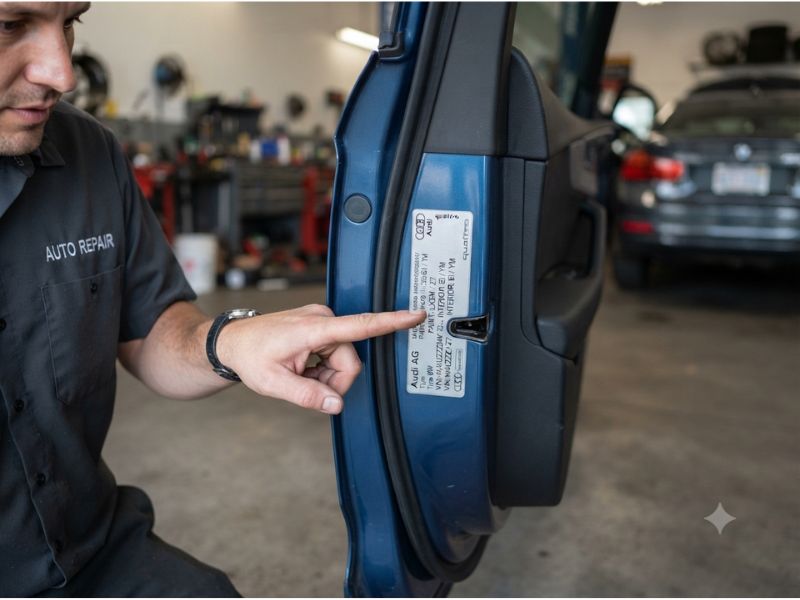
Driver Side Door Jamb
The most common location is the sticker inside the driver-side door opening.
Look for labels such as:
- Paint
- Color Code
- Exterior Color
- Paint No.
- PNT
- C/TR
The paint code is often printed near other vehicle information.
Vehicle Information Sticker
Many vehicles have a manufacturer label containing:
- VIN
- Tire information
- Manufacturing details
- Paint information
This sticker may be located on:
- Driver door pillar
- Door frame
- Inside door area
Under the Hood
Some manufacturers place paint information in the engine compartment.
Check areas such as:
- Firewall
- Radiator support
- Strut tower
- Hood support area
Trunk Area
Some vehicles place the paint label in:
- Spare tire compartment
- Trunk floor
- Cargo area
- Under trunk carpet
Owner Documents
Sometimes paint information may be available through:
- Original purchase paperwork
- Vehicle build sheet
- Dealer records
If the label is missing, a dealership may identify the paint code using the VIN.
How to Read a Car Paint Code Label
Finding the label is only the first step.
You must identify which information is the actual paint code.
Vehicle labels often contain many numbers, including:
- VIN
- Trim codes
- Production numbers
- Option codes
- Interior color codes
Look for terms like:
- COLOR
- PAINT
- PNT
- C/TR
- EXT PNT
- BC/CC
Examples:
C/TR: 040A
The paint code may be 040.
WA8555
The paint code may be the entire WA number.
COLOR: NH731P
The paint code is NH731P.
Do not confuse the paint code with the VIN or manufacturing number.
How Different Car Brands Format Paint Codes
Each manufacturer uses a different paint code system.
Toyota Paint Codes
Toyota paint codes are usually short combinations of numbers and letters.
Examples:
- 040
- 202
- 1G3
- 070
Toyota labels often show the code near:
- C/TR
- Color
- Trim information
Example:
C/TR: 202 FG13
The paint code is usually the first part.
Honda Paint Codes
Honda paint codes often contain letters and numbers.
Examples:
- NH-731P
- R-81
- B-92P
Honda uses letters to identify color families and finishes.
Examples:
- NH = Neutral Hue
- R = Red
- B = Blue
Ford Paint Codes
Ford paint codes are often short combinations.
Examples:
- YZ
- UX
- G1
- M7
Ford commonly places the paint code on the driver-side door label.
General Motors Paint Codes
GM commonly uses codes beginning with:
- WA
- U
- BC
Examples:
- WA8555
- U8624
GM paint information is usually found on the Service Parts Identification label.
BMW Paint Codes
BMW paint codes often include numbers and color names.
Examples:
- 300 Alpine White
- A52 Space Gray
- B39 Mineral Gray
The code may be located on a vehicle information sticker.
Mercedes-Benz Paint Codes
Mercedes paint codes are often three-digit numbers.
Examples:
- 040 Black
- 149 Polar White
- 197 Obsidian Black
The location can vary depending on the model.
Does the VIN Show the Paint Code?
The VIN itself usually does not directly contain the paint code.
A VIN provides information such as:
- Manufacturer
- Vehicle type
- Model
- Engine
- Production details
However, manufacturers store build information connected to the VIN.
A dealership or manufacturer database may use the VIN to find the original paint code.
If your paint sticker is missing, the VIN is often the best alternative.
Difference Between Car Color Name and Paint Code
Many vehicle owners confuse the color name with the paint code.
The color name is a marketing description.
The paint code is the technical identification.
Example:
Color Name:
Crystal Black Pearl
Paint Code:
NH731P
The color name helps customers recognize the color.
The paint code allows paint manufacturers to create the correct formula.
Always use the paint code when ordering replacement paint.
Can Two Cars Have the Same Color Name but Different Paint Codes?
Yes.
Different vehicles can share similar color names but use different paint formulas.
For example:
- Black
- White
- Silver
- Red
- Blue
are used by many manufacturers.
Even within the same brand, different model years may use different formulas.
A 2018 vehicle and a 2024 vehicle may both have “silver” paint but require different codes.
Why Does Paint Code Matching Sometimes Look Different?
Even with the correct paint code, the repaired area may not perfectly match the original paint.
This happens because vehicle paint changes over time.
Common causes include:
- Sun exposure
- UV damage
- Weathering
- Washing chemicals
- Previous repainting
- Clear coat aging
A new touch-up paint may match the factory formula but look slightly different from an older faded panel.
Professional body shops often blend the new paint into surrounding panels for a smoother result.
How to Buy Touch-Up Paint Using a Paint Code
Once you find your paint code, you can order matching paint.
Provide:
- Vehicle manufacturer
- Model
- Year
- Paint code
Paint suppliers use the code to create the correct color formula.
Touch-up paint is available as:
- Paint pens
- Bottles
- Spray cans
- Professional paint systems
Before applying:
- Clean the damaged area.
- Remove dirt and wax.
- Test the paint on a hidden area.
- Apply thin layers.
- Add clear coat if required.
Different finishes may require different application methods.
Can an OBD2 Scanner Read Car Paint Codes?
No, a normal OBD2 scanner cannot read the vehicle’s paint code.
OBD2 scanners are designed for electronic diagnostics, including:
- Engine faults
- Transmission problems
- ABS issues
- Emissions systems
The paint code is usually stored in:
- Vehicle labels
- Factory build records
- Manufacturer databases
Some professional dealer systems can access build information using the VIN, but standard scan tools cannot retrieve paint information.
How to Find Paint Code If the Sticker Is Missing
If the paint label is damaged or missing, try these methods:
Check Other Locations
Manufacturers sometimes place duplicate labels in:
- Trunk area
- Spare tire compartment
- Under hood
- Door frame
Contact a Dealer
Provide your:
- VIN
- Vehicle year
- Model
The dealer may access factory records.
Contact a Paint Supplier
Professional paint suppliers often have manufacturer databases.
They can sometimes identify the paint code using vehicle details.
Check Repair Records
Previous body repair invoices may include the paint code used during repairs.
Common Mistakes When Reading Car Paint Codes
Many people make mistakes when searching for their paint code.
Using the Color Name Only
Color names are not specific enough.
Confusing Trim Codes With Paint Codes
Interior and option codes may appear near the paint code.
Reading the VIN as the Paint Code
The VIN does not directly identify the paint formula.
Ignoring Metallic or Pearl Finishes
Some colors require special formulas and multiple layers.
Buying Universal Paint
Generic colors rarely provide a perfect match.
Always use the manufacturer paint code.
Does Paint Code Change After Repainting?
The original factory paint code remains the same even if the vehicle has been repainted.
However, previous repairs may use:
- Different paint formulas
- Custom blends
- Aftermarket colors
If the vehicle has been repainted, the factory paint code may not perfectly match the current surface.
A professional painter may need to scan the existing paint color to create a closer match.
Final Thoughts
So, how to read car paint code starts with finding the manufacturer label and identifying the correct combination of letters and numbers.
The paint code provides the exact factory color formula, while the color name only gives a general description. Always use the paint code when purchasing touch-up paint or repairing vehicle damage.
Remember that the correct code improves color accuracy, but factors like fading, previous repairs, and surface condition can affect the final result. For large repairs, professional color matching may still be the best option.