How Much Is a Check Engine Code Reader: Detailed Guide and Facts
A check engine code reader typically costs $20 to $150 for home use, while advanced professional scan tools can cost several hundred to several thousand dollars. A basic reader retrieves engine fault codes, but a more capable scanner can display live data, diagnose multiple vehicle systems, and perform service functions.
The unexpected cost is that the cheapest device may not be the least expensive choice. A low-priced reader can identify a code such as P0420 or P0301, yet still leave the difficult part unresolved: determining whether the problem is a sensor, wiring, catalytic converter, vacuum leak, or another component. This article explains the price differences, capability levels, and limitations that affect the value of a code reader.
Choosing early can prevent an unnecessary repair visit, but buying more diagnostic power than the vehicle or driver needs wastes money. The sections below compare basic, midrange, and professional tools; explain Bluetooth and app-based options; identify features worth paying for; and clarify when a code reader cannot safely replace a technician. By the end, you can estimate a realistic budget and decide which type of scanner fits your vehicle, skill level, and intended use.
Typical Check Engine Code Reader Prices
Most shoppers fall into one of four price ranges. The price generally reflects the scanner’s ability to communicate with vehicle computers, show data, provide repair information, and access systems beyond the engine.
- $20 to $50: Basic corded OBD-II code readers for reading and clearing common powertrain codes.
- $50 to $150: Better consumer scanners with live data, readiness monitors, graphing, code definitions, and broader vehicle coverage.
- $150 to $500: Advanced enthusiast tools that may access ABS, airbag, transmission, body, and other modules.
- $500 and above: Professional scan tools with extensive coverage, active tests, coding, service resets, subscriptions, and frequent software updates.
A reader priced below $20 may still work, but extremely low-cost products can have poor displays, unclear instructions, limited compatibility, or unreliable software. A higher price does not automatically mean accurate diagnosis; coverage, update support, and the quality of the data matter more than the number printed on the box.
What a Basic Code Reader Does
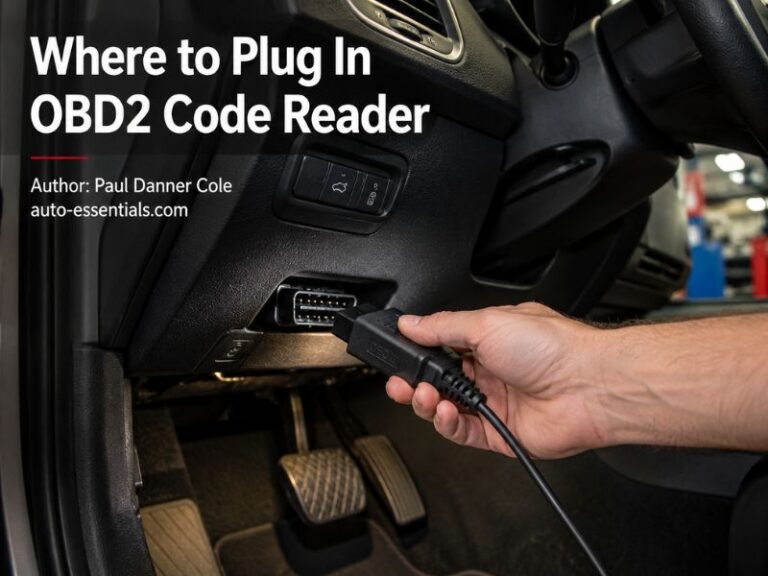
A basic reader plugs into the vehicle’s OBD-II diagnostic port, usually located beneath the dashboard near the steering column. It communicates with the powertrain control module and displays stored or pending diagnostic trouble codes, commonly called DTCs.
For many gasoline vehicles sold in the United States from the 1996 model year onward, a basic tool can retrieve emissions-related engine and transmission information. It may also erase codes and turn off the check engine light, although the light will return if the underlying fault remains.
Common features in this price range include:
- Reading stored, pending, and permanent trouble codes
- Displaying a short code description
- Clearing codes and resetting the malfunction indicator lamp
- Checking emissions readiness monitors
- Showing vehicle information such as the VIN on supported models
The main limitation is that a code is a clue, not a final diagnosis. A P0171 code may indicate a lean fuel mixture, but possible causes include an intake leak, weak fuel delivery, a dirty mass airflow sensor, or an exhaust leak near an oxygen sensor.
Midrange and Advanced Scanner Costs
A scanner in the $50-to-$150 range often provides more useful information without becoming a professional shop tool. Live data is one of the most valuable upgrades because it shows sensor readings while the engine runs, such as coolant temperature, engine speed, fuel trims, oxygen sensor activity, and throttle position.
Some midrange readers display data as graphs, record a short drive, or offer freeze-frame information. Freeze-frame data captures operating conditions at the moment a fault was recorded, including vehicle speed, engine load, and temperature. That context can help determine whether a fault occurred during cold starting, acceleration, or steady cruising.
Advanced consumer scanners may add:
- Access to ABS, airbag, transmission, and body control modules
- Battery registration or oil-life reset functions
- Steering-angle sensor calibration
- Electronic parking brake service mode
- Diesel data, where supported
- On-screen test procedures or repair suggestions
These functions vary greatly by vehicle. A tool may support an airbag module on one manufacturer’s model but not another, so buyers should verify compatibility by year, make, model, engine, and function before purchasing.
Bluetooth Readers and App Costs
Bluetooth OBD-II adapters commonly cost about $15 to $100. The adapter sends diagnostic information to a smartphone or tablet, while an app supplies the interface, code descriptions, dashboards, and additional features.
Low-cost adapters can read generic engine codes, but quality varies. An unreliable adapter may disconnect, provide incomplete data, or use outdated hardware. A reputable adapter with a well-supported app is usually a better value than the cheapest available device.
App pricing can change the total cost. Some applications are free for basic code reading, while advanced functions require a one-time purchase or a monthly or annual subscription. Subscription features may include enhanced manufacturer codes, repair databases, cloud reports, vehicle health monitoring, or service resets.
Before buying a Bluetooth reader, check whether the app works with the phone’s operating system, whether the adapter supports the vehicle’s communication protocols, and whether advanced functions require an additional fee. A $25 adapter can become a much more expensive tool if its useful features are locked behind recurring charges.
Why Professional Scan Tools Cost More
Professional equipment costs more because it does more than retrieve codes. Many professional scanners can communicate with nearly every electronic control module, run bidirectional tests, access manufacturer-specific information, and perform selected programming or coding procedures.
Bidirectional control allows a technician to command a component to operate. For example, a scanner might activate a cooling fan, fuel pump, relay, injector, or actuator while the technician observes the result. This can separate an electrical, mechanical, and control problem more efficiently than simply reading a code.
Professional tools may also require ongoing expenses:
- Annual software-update subscriptions
- Manufacturer coverage packages
- Security access for certain modules
- Special cables or adapters
- Cloud storage or repair-information subscriptions
- Training and equipment support
A shop may justify these costs because the tool is used daily across many vehicles. For an individual vehicle owner, a professional scanner is rarely necessary unless the owner performs advanced repairs, maintains several vehicles, or specifically needs a supported service function.
Features Worth Paying For
The best value depends on the intended task. Someone who wants to check a warning light before visiting a repair shop may need only reliable code retrieval and readiness-monitor information. A person diagnosing intermittent drivability problems may benefit much more from live data and graphing.
Useful features to prioritize include:
- Vehicle coverage: Confirm support for the exact model and systems, not merely the brand.
- Live data: Helpful for observing sensor readings and fuel-trim behavior.
- Freeze-frame data: Shows the conditions present when a fault was stored.
- Readiness monitors: Important after repairs or before an emissions inspection.
- Code definitions: Convenient, but never a substitute for diagnostic testing.
- Update policy: Determine how long updates remain available and whether they cost extra.
- Data recording: Valuable for faults that appear only during driving.
- Module access: Necessary when the warning involves ABS, airbags, transmission, or body electronics.
A color touchscreen may improve convenience, but it does not necessarily improve diagnostic accuracy. Spending money on confirmed vehicle coverage and useful data functions is generally more practical than paying for a larger display alone.
What a Code Reader Cannot Tell You
A code reader usually reports the system that detected an abnormal condition, not the failed part. For instance, an oxygen-sensor code may result from a defective sensor, damaged wiring, an exhaust leak, fuel-mixture problems, or an issue affecting the sensor’s heater circuit.
Clearing the code removes stored diagnostic information and resets some monitors. It does not repair the vehicle, and it may erase freeze-frame data that could help a technician. Clearing codes immediately before a vehicle inspection can also leave the emissions monitors incomplete.
Some warnings cannot be accessed with a basic engine reader. ABS, supplemental restraint, tire-pressure, body-control, and manufacturer-specific systems may require a scanner with separate module coverage. Even when a reader displays a code, accurate diagnosis may require a multimeter, pressure gauge, smoke machine, oscilloscope, wiring diagram, or mechanical inspection.
How to Use a Code Reader Safely
Park securely, set the parking brake, and follow the scanner’s instructions before connecting it. The ignition may need to be switched on without starting the engine, but the correct procedure depends on the tool and vehicle.
Record the codes and freeze-frame information before clearing anything. Search the code by its full designation, note whether it is stored or pending, and inspect obvious issues such as a loose fuel cap, damaged wiring, low fluid level, or disconnected hose only when the inspection can be done safely.
- Do not work beneath a vehicle supported only by a jack.
- Keep clear of belts, fans, hot exhaust parts, and moving components during live-data checks.
- Do not probe airbag circuits or disconnect restraint components without proper procedures.
- Do not assume that turning off a warning light makes the vehicle safe to drive.
- Stop driving and seek prompt help if the check engine light flashes, the engine runs severely, or power drops suddenly.
A steady light often allows a cautious trip for diagnosis, but the vehicle’s symptoms matter more than the light alone. A flashing light can indicate an active misfire capable of damaging the catalytic converter, so continuing to drive may create a much larger repair bill.
When Buying One Makes Financial Sense
A $20-to-$50 reader can be worthwhile for a driver who wants to identify a basic engine code, check whether a repair cleared the fault, or avoid paying for a simple code retrieval. It can also help provide a repair shop with useful information, provided the code is reported accurately and not treated as a diagnosis.
A midrange scanner is more suitable for a hands-on owner who wants to monitor sensor data, investigate recurring problems, or service more than one vehicle. The extra cost is easier to justify when the tool will be used repeatedly.
Buying a scanner may not be economical when the vehicle has a complex electrical problem, a safety-system warning, or a symptom requiring specialized testing. In those cases, the reader can still provide background information, but professional diagnosis may be cheaper than replacing parts based on guesswork.
FAQ: Check Engine Code Reader Prices
How much is a check engine code reader for basic
A basic home reader usually costs $20 to $50. It can commonly retrieve and clear generic engine codes and check emissions readiness, but it may not access ABS, airbag, body, or other vehicle modules.
Is a $20 code reader good enough?
A $20 reader can be adequate for simple code retrieval. Verify that it supports the vehicle, displays the complete code, and has dependable reviews or update support before relying on it.
Are Bluetooth code readers cheaper than handheld scanners?
Bluetooth adapters are often cheaper at the time of purchase. However, app subscriptions, paid upgrades, or limited phone compatibility can increase the total cost over time.
What is the difference between a code reader
A code reader usually performs basic engine-code functions, while a scan tool offers broader diagnostics. Scan tools may display live data, communicate with multiple modules, run active tests, and perform selected service resets.
Can a cheap reader tell me which part to replace?
No, a trouble code rarely identifies a failed part with certainty. The code narrows the diagnostic area, but testing wiring, sensors, air leaks, fuel pressure, and mechanical conditions may still be necessary.
Do code readers work on every vehicle?
Most basic OBD-II readers work with many U.S.-market vehicles from 1996 and newer for emissions-related data. Older vehicles, imported models, diesel applications, and non-engine modules may require different hardware or manufacturer-specific coverage.
Should I buy a professional scanner for one personal vehicle?
Usually not unless advanced diagnostics are a regular need. A reliable basic or midrange scanner is generally more practical, while complex safety, programming, and electrical work should be handled with appropriate equipment and training.
Conclusion: Choose the Capability You Will Actually Use
Most vehicle owners can expect to spend $20 to $150 on a useful check engine code reader, while advanced and professional tools cost substantially more because they access additional modules and service functions. The major limitation is that a code points to a detected condition rather than proving which component failed.
For a sensible next step, confirm the exact vehicle coverage and decide whether basic codes, live data, or advanced module access is needed. Record any code before clearing it, and seek professional diagnosis for flashing warnings, safety-system faults, severe symptoms, or repairs that require specialized testing.