To spray windshield washer fluid, turn the vehicle on or place the ignition in accessory mode, then pull, push, or twist the windshield-wiper control according to your vehicle’s design. Hold the control briefly so washer fluid sprays onto the windshield while the wipers sweep across the glass.
For drivers in the United States, windshield washer fluid is especially useful because road conditions can change dramatically with the season. Highway dust, insects, pollen, road salt, slush, and dirty spray from other vehicles can quickly reduce windshield visibility. Most modern cars, SUVs, and pickup trucks sold in the U.S. combine the windshield washer function with the wiper control stalk near the steering wheel, although the exact motion used to activate it varies by make and model.
Using the washer system is usually simple, but knowing how it works can help you avoid common problems such as running the pump with an empty reservoir, using inappropriate fluid in freezing weather, or assuming a clogged nozzle means the pump has failed. This guide explains how to spray windshield washer fluid correctly, how long to operate the control, how to confirm the system is working, and what to check when little or no fluid reaches the windshield.
The normal process takes only a few seconds. Your vehicle’s windshield washer system uses a small electric pump to move fluid from the washer reservoir through hoses to one or more nozzles near the windshield. Activating the washer control normally starts the pump and, on most vehicles, automatically operates the windshield wipers.
Before using the system, make sure the windshield is not completely covered by heavy ice or packed snow. Washer fluid and wipers are designed to clean light contamination from the glass, not to break through thick frozen material.
Source: storage.googleapis.com
Step 1: Start the vehicle or switch on accessory power
Most washer pumps require the ignition to be in the ON or accessory position. Some vehicles may require the engine to be running.
Step 2: Locate the windshield-wiper control
Look for the wiper control stalk beside the steering wheel. It normally carries symbols showing a windshield, wiper blade, or spray pattern.
Step 3: Activate the washer control
Depending on the vehicle, pull the stalk toward you, push it away, press a button on the end, or rotate a washer control. Check the owner’s manual if the control is unclear.
Step 4: Hold the control briefly
Hold it long enough to wet the windshield. In many vehicles, the wipers begin moving automatically while fluid is being sprayed.
Step 5: Release the control
Once enough fluid is on the glass, release the control. Many vehicles perform one or more additional wiper sweeps after you let go.
Step 6: Check the windshield
The glass should look clearer without broad dirty streaks. Repeat with another short spray if needed.
How Long Should You Spray Washer Fluid?
Usually, a short one- to three-second activation is enough for routine windshield cleaning. You do not need to hold the washer control continuously unless the windshield requires additional fluid.
Using repeated short sprays is generally more practical than operating the pump for a long uninterrupted period. It reduces unnecessary fluid use and helps prevent extended dry operation if the reservoir is nearly empty.
What Does Successful Washer Operation Look Like?
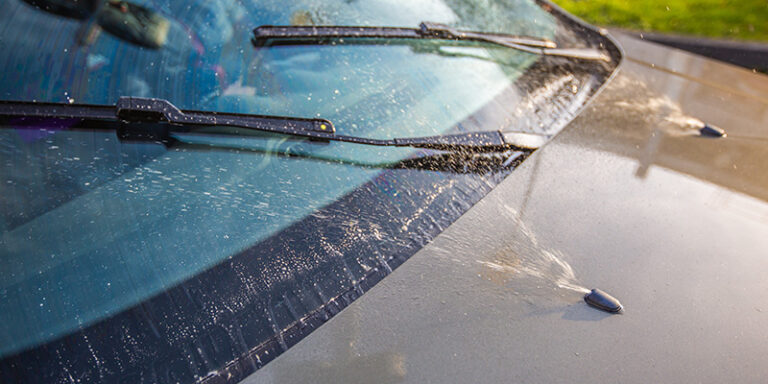
A properly functioning system should deliver fluid onto useful areas of the windshield rather than sending most of the spray over the roof, onto the hood, or below the wiper sweep area. The wipers should then spread the fluid and clear dirt from your line of sight.
Some vehicles use visible spray jets, while others use fan-style nozzles or washer outlets built into the wiper arms. The exact spray pattern varies, so it does not need to look identical from one vehicle to another.
Where Is the Windshield Washer Control?
In most U.S.-market passenger vehicles, the windshield washer control is located on one of the steering-column stalks. The same stalk commonly controls the front windshield wipers and their intermittent, low-speed, and high-speed settings.
There is no single activation method used by every automaker. One vehicle may spray the windshield when you pull the stalk toward the steering wheel, while another may use a button or rotating ring. Rear-window washers on SUVs, hatchbacks, and crossovers often use a separate position on the same stalk.
Source: youtube.com
Pull-type control
Pulling the wiper stalk toward the driver activates the front washer on many vehicles.
Push-type control
Some vehicles activate the washer when the control is pushed forward.
Button control
A button on the tip or side of the stalk may operate the washer system.
Rotary control
Some rear-window washer systems activate when a ring or knob is rotated and held.
How to Identify the Washer Symbol
Look for a symbol resembling a windshield with small spray lines or droplets above it. Because control layouts differ among vehicles, the owner’s manual is the most reliable reference when the stalk markings are unfamiliar.
What Happens When You Activate the Washer Fluid?
Activating the control sends electrical power to the windshield washer pump. The pump draws fluid from the reservoir and pushes it through small hoses toward the washer nozzles. The nozzles then direct the fluid onto the windshield.
On most modern vehicles, the washer system is linked to the wiper system. That is why the wipers normally begin moving when you activate the washer even if the regular wiper switch was previously turned off.
This coordination matters because washer fluid loosens dirt and provides lubrication between the rubber wiper blades and the glass. Trying to remove dry dirt using only the wipers can smear contamination and may cause the blades to chatter across the windshield.
Source: fyorrjyse.blob.core.windows.net
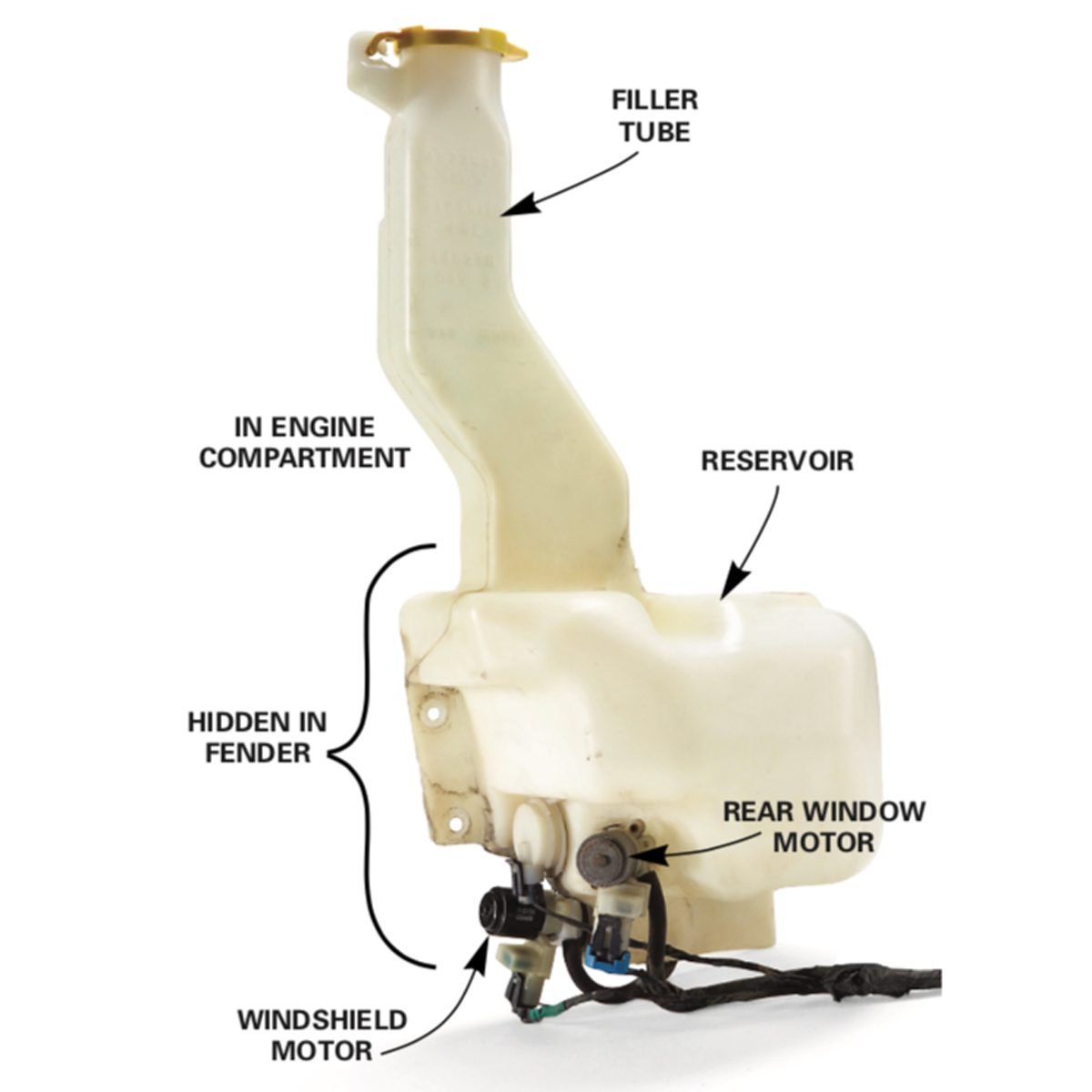
Reservoir
Stores the windshield washer fluid.
Washer pump
Moves fluid from the reservoir into the washer hoses.
Washer hoses
Carry fluid from the pump to the spray nozzles.
Nozzles
Aim or distribute the fluid across the windshield.
Wipers
Spread the fluid and remove loosened dirt and water.
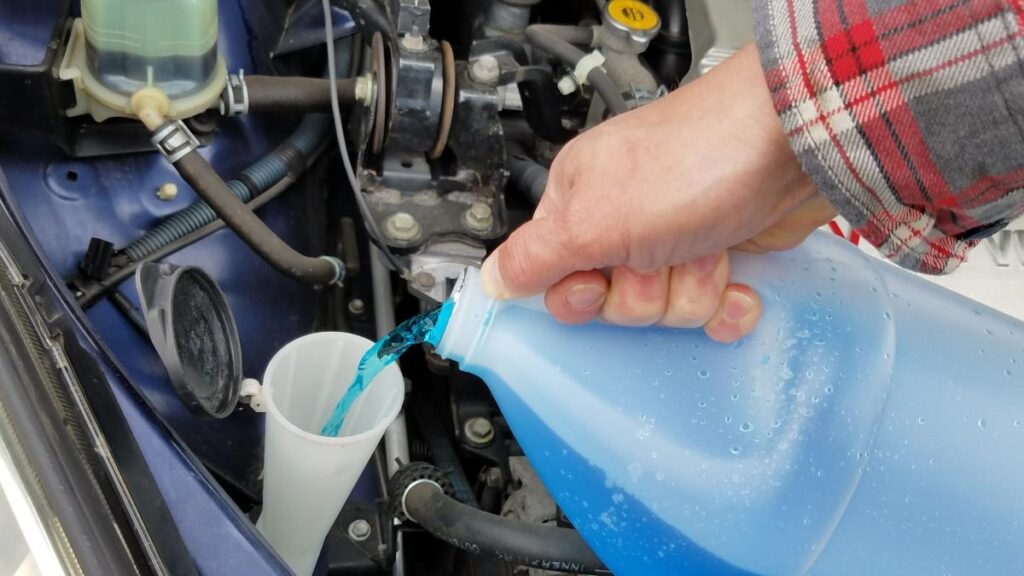
Before Spraying, Make Sure the Washer Reservoir Has Fluid
If the washer reservoir is empty, activating the control will not clean the windshield. You may hear the electric pump running without seeing fluid. Repeatedly operating a washer pump with no fluid available is unnecessary and can make troubleshooting more difficult because the system may simply need to be refilled.
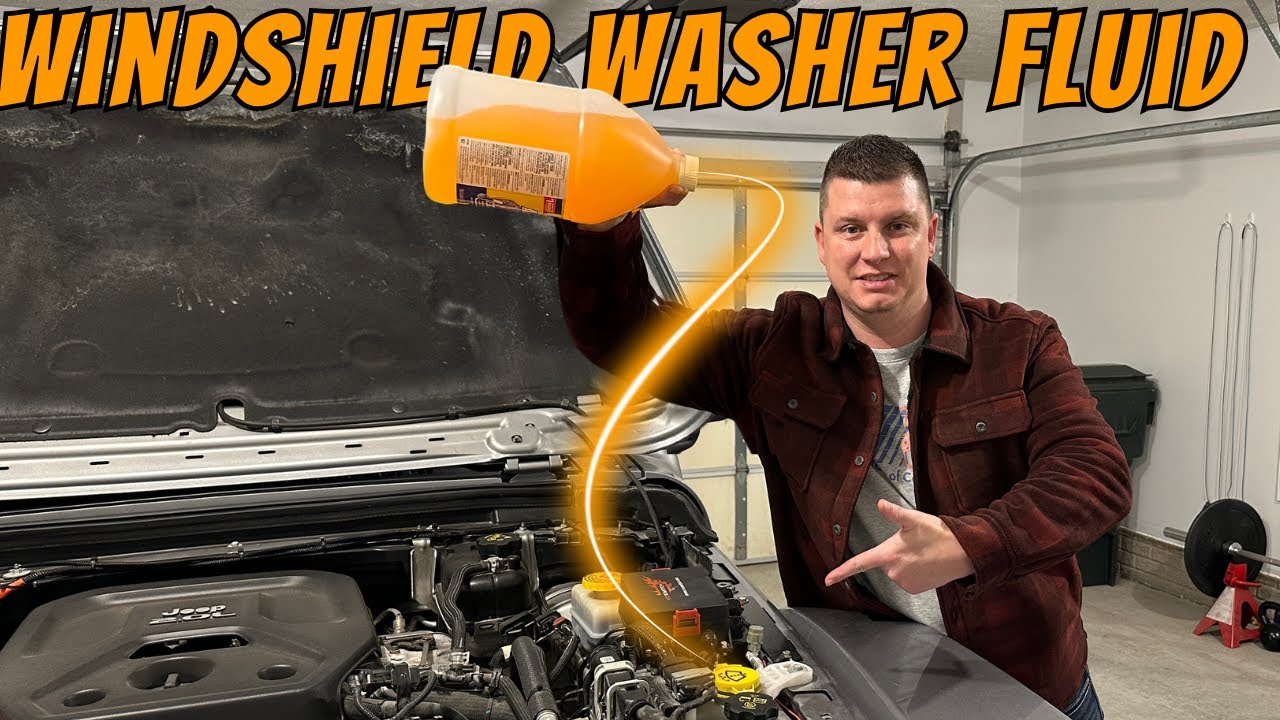
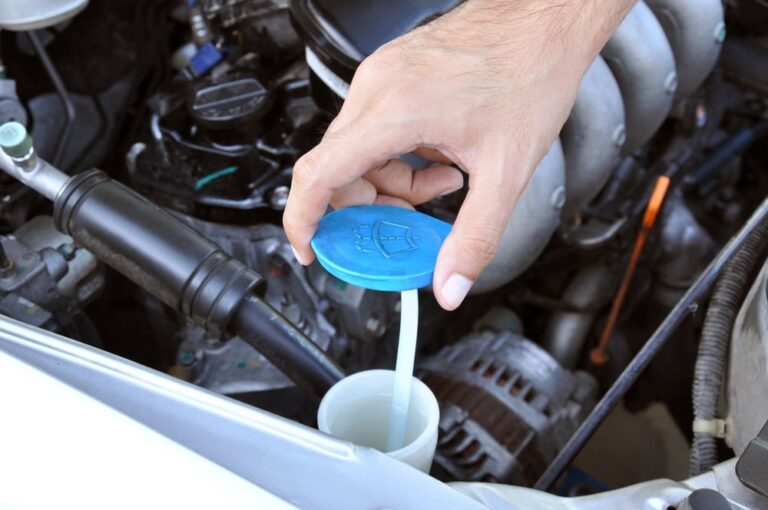
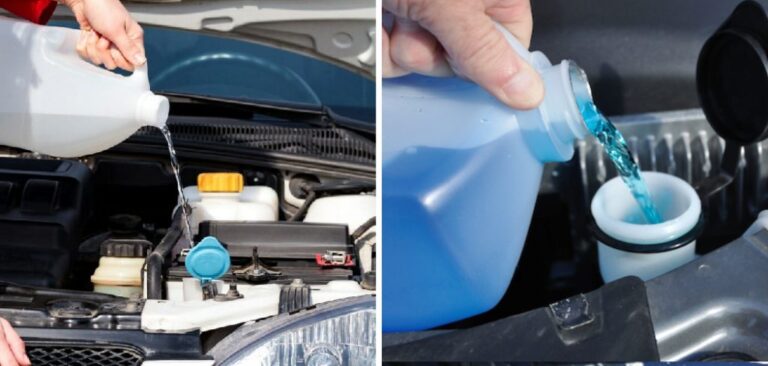
The washer-fluid reservoir is normally under the hood. Its cap commonly displays a windshield-and-spray symbol. Reservoir shape, capacity, and location vary among vehicles, so use the owner’s manual if you cannot identify it confidently.
Do not confuse the washer-fluid reservoir with coolant, brake-fluid, power-steering, or other under-hood reservoirs. Adding washer fluid to the wrong system can create a serious maintenance problem.
Source: blog.napacanada.com
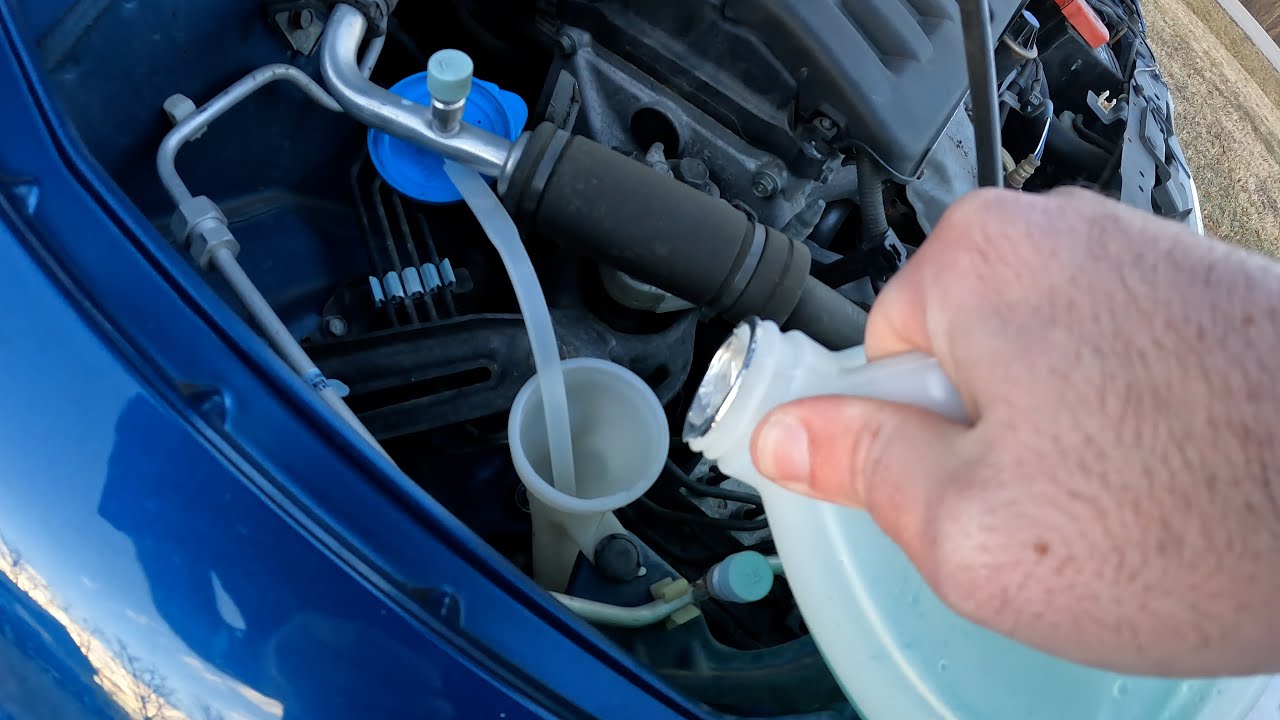
Park safely
Stop on a level surface, place the transmission in Park, and secure the vehicle.
Open the hood
Use the interior hood release and secondary hood latch according to your vehicle’s instructions.
Find the washer reservoir
Look for the windshield washer symbol rather than relying only on reservoir color.
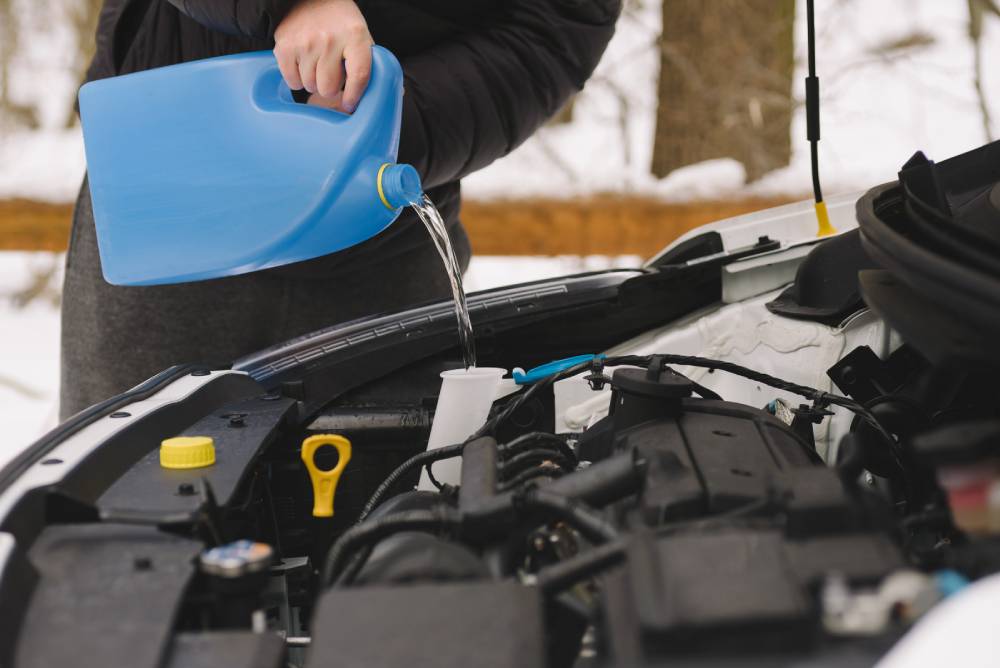
Add suitable washer fluid
Fill according to the vehicle and fluid manufacturer’s instructions without contaminating the reservoir.
Close the cap
Secure the reservoir cap before closing the hood.
Choosing Washer Fluid for U.S. Weather
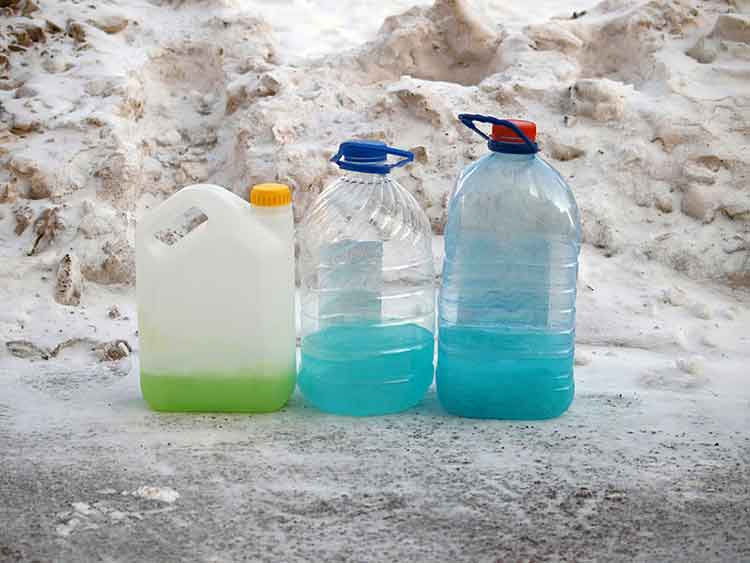
Climate matters. Drivers in states with freezing winters should use washer fluid rated for the temperatures they expect to encounter. A fluid unsuitable for low temperatures can freeze in the reservoir, hoses, or nozzles and prevent the system from spraying.
In warmer climates, bug-removing or all-season formulations may be useful depending on local driving conditions. Follow the product label and the vehicle manufacturer’s guidance rather than assuming every fluid is appropriate for every climate.
What to Do If Windshield Washer Fluid Will Not Spray
If you activate the control and no washer fluid reaches the windshield, start with the simplest checks. A no-spray condition does not automatically mean the pump needs replacement.
Pay attention to whether you can hear the washer pump. A humming or buzzing sound suggests the pump is receiving power and trying to operate, although it does not prove that the entire system is working correctly. Silence may point toward an electrical issue, failed pump, fuse problem, switch problem, or another fault.
Source: youtube.com
Check the fluid level
An empty or nearly empty reservoir is one of the simplest explanations for no spray.
Look for frozen fluid
Freezing temperatures can prevent fluid movement if the washer solution is not suitable for the conditions.
Inspect the nozzles
Dirt, wax, mineral buildup, or ice can obstruct the nozzle openings.
Inspect visible hoses
A disconnected, cracked, pinched, or leaking hose can prevent fluid from reaching the windshield.
Listen for the washer pump
Pump noise with no spray can indicate a blockage, leak, empty reservoir, damaged hose, or pump that is spinning without producing adequate flow.
Check the fuse information
If the pump is silent, consult the owner’s manual or fuse-box diagram before inspecting the appropriate circuit.
What If the Spray Is Weak?
Weak washer spray can result from low fluid, partially clogged nozzles, restricted hoses, a leak, cold-weather freezing, or declining pump performance. Compare the left and right nozzles if your vehicle uses separate outlets. If one is strong and one is weak, a localized nozzle or hose restriction is more likely than a complete pump failure.
What If Fluid Sprays in the Wrong Direction?
A spray stream that consistently misses the useful windshield area may indicate a misaligned or damaged nozzle. Some older nozzle designs can be adjusted carefully, while many modern fan-style nozzles are not intended for casual manual adjustment. Check the service information for your specific vehicle before inserting pins or tools into a nozzle because doing so can damage its calibrated opening.
Common Mistakes When Using Windshield Washer Fluid
The washer system is simple, but a few habits can reduce its effectiveness or create avoidable problems. The most important rule is to use the system as a visibility aid rather than waiting until the windshield becomes heavily contaminated.
If road spray suddenly covers the windshield while you are driving, keep your attention on traffic and vehicle control. Use the washer and wipers only when doing so can be performed safely without distracting you from the road.
Source: practicalmechanic.com
Running the pump with an empty reservoir
If you hear the pump but see no fluid, check the reservoir instead of repeatedly holding the switch.
Using the wrong seasonal fluid
A mixture that is unsuitable for freezing conditions may freeze and stop flowing.
Using the washers on a heavily iced windshield
Remove significant ice and snow appropriately before expecting the washer and wipers to clean the glass.
Ignoring worn wiper blades
Washer fluid cannot compensate for blades that are torn, hardened, cracked, or no longer contacting the windshield properly.
Assuming every nozzle is adjustable
Modern fan-style washer nozzles may require replacement rather than manual adjustment.
Putting washer fluid in the wrong reservoir
Always identify the washer-fluid cap before pouring any liquid under the hood.
When Should You Use Windshield Washer Fluid?
Use windshield washer fluid whenever a light layer of contamination interferes with a clear view through the windshield and the washer system can safely remove it. Typical examples include dried road spray, pollen, light dust, insect residue, and salt film.
On U.S. highways in winter, road salt and dirty slush can create a pale film that becomes particularly noticeable in low-angle sunlight or at night. In spring and summer, pollen, insects, and construction dust are common reasons to use the washer system.
Washer fluid is not a substitute for manually cleaning a windshield that is coated with thick mud, heavy grease, adhesive residue, packed snow, or substantial ice. Those conditions may require the vehicle to be safely parked so the glass can be cleaned before driving.
Source: storage.googleapis.com
Good use case
Light road grime, dust, pollen, salt film, or bug residue that can be loosened by fluid and removed by the wipers.
Poor use case
Heavy ice, packed snow, thick mud, or contamination that prevents normal wiper movement.
Sign you need maintenance
Repeated streaking after adequate washer-fluid application may indicate dirty glass, contaminated blades, or worn wiper blades.
Frequently Asked Questions
Q
Which button sprays windshield washer fluid?
There is no universal washer button. Most vehicles use the windshield-wiper stalk beside the steering wheel. Depending on the design, you may need to pull the stalk, push it, press a button on its end, or rotate a control. Look for the windshield-and-spray symbol or check the owner’s manual.
Q
Do I need to turn on the windshield wipers before spraying washer fluid?
Usually not. On most modern vehicles, activating the windshield washer automatically starts the wipers for several sweeps. If your vehicle behaves differently, follow its owner’s manual.
Q
Why can I hear the washer pump but no fluid comes out?
Possible causes include an empty reservoir, frozen washer fluid, clogged nozzles, a disconnected or leaking hose, or a pump that is operating but not producing enough flow. Start by checking the fluid level and looking for obvious leaks or frozen components.
Q
Can I spray windshield washer fluid while driving?
Yes. The system is designed to clean the windshield while the vehicle is being driven. Use it only when you can operate the control without taking your attention away from traffic. If the windshield is so dirty, icy, or obstructed that washer fluid cannot restore safe visibility, pull over safely and clean the glass.
Q
Why does my windshield look worse after using washer fluid?
Streaking can occur when the windshield is heavily contaminated, the wiper blades are dirty or worn, the washer fluid is unsuitable or contaminated, or the system does not apply enough fluid. Clean the windshield and wiper blades and inspect the blades for damage if streaks persist.
✦ Wrapping Up
Conclusion
Knowing how to spray windshield washer fluid is straightforward once you identify the correct wiper control. With the ignition on, activate the washer control by pulling, pushing, pressing, or twisting it according to your vehicle’s design. Hold it briefly until enough fluid reaches the windshield, then allow the wipers to clear the glass.
For reliable operation, keep the reservoir filled with washer fluid suitable for your local U.S. climate and address weak, uneven, or missing spray before poor weather makes visibility more difficult. If refilling the reservoir and checking the nozzles do not restore normal operation, inspect the hoses, fuse, pump, and related components or have the system diagnosed by a qualified technician.
💡 Key Takeaway
Find the windshield washer symbol on your wiper control, confirm the reservoir contains suitable fluid, and test the system with a short spray while the vehicle is safely parked.
Learn how to fold a pop up windshield sun shade safely and quickly. Follow simple steps, avoid common mistakes, and store your car sun shade without damaging its frame.