Windshield washer fluid may not spray because the reservoir is empty, the fluid is frozen, the nozzles or hoses are blocked, the washer pump has failed, or an electrical fault prevents the pump from running.
Across the United States, a working windshield washer system helps drivers clear road dust, pollen, salt, mud, and bug residue. When washer fluid stops spraying, even a short trip can become difficult if dirt or glare blocks the driver’s view. The safest approach is to find the cause before driving through conditions that require a clean windshield.
Start with simple checks. Confirm that the reservoir contains washer fluid, listen for the pump when you activate the washer control, and look for leaks beneath the hood or around the car. These clues can help you narrow the problem without replacing parts at random.
The repair depends on what you find. An empty reservoir needs a refill, a blocked nozzle may need cleaning, and a frozen system needs time to thaw safely. A silent pump, damaged hose, blown fuse, or electrical fault may require further diagnosis.
The cause usually falls into one of two groups: fluid cannot travel through the washer system, or the pump cannot move it. The washer system uses a reservoir to store fluid, a small electric pump to move it, hoses to carry it, and nozzles to direct it onto the windshield.
A failure at any point can cause weak spray or no spray. For example, an empty tank stops the supply, a clogged nozzle restricts the outlet, and a damaged hose can send fluid into the engine bay instead of onto the glass.
The best first step is to observe the symptoms rather than assume a part has failed. Whether the pump makes noise, whether fluid leaks under the car, and whether one or both nozzles work can point toward different causes.
Source: i.ytimg.com
No sound and no spray
Possible causes include a blown fuse, a faulty pump, a wiring problem, a bad electrical connection, or a washer control fault.
Pump sound but no spray
Check for an empty reservoir, frozen fluid, blocked nozzles, a disconnected hose, a leak, or a weak or damaged pump.
Only one nozzle sprays
A blocked nozzle or a damaged branch of the hose system is more likely than a complete pump failure.
Fluid sprays weakly
Low fluid, a partial blockage, a pinched hose, a leak, or a worn pump may reduce flow.
Fluid leaks without reaching the glass
Look for a loose hose, a cracked connector, a damaged reservoir, or a leaking pump seal.
How the Windshield Washer System Works
When you activate the washer control, an electrical signal tells the washer pump to run. The pump draws fluid from the reservoir and pushes it through small hoses to the spray nozzles.
The nozzles spread the fluid over the windshield so the wipers can remove dirt. If the fluid path is blocked or the pump cannot build enough flow, the windshield may remain dry even when the wipers move normally.
Reservoir
Stores the washer fluid and supplies it to the pump.
Pump and electrical circuit
Move the fluid when the washer control is activated.
Hoses and connectors
Carry fluid from the reservoir to the nozzles.
Spray nozzles
Direct the fluid onto the windshield.
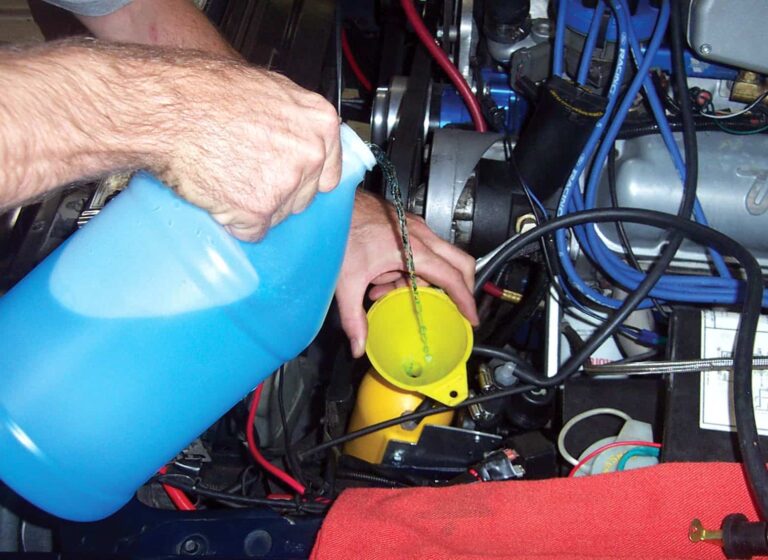
1. Check Whether the Washer Fluid Reservoir Is Empty
An empty washer fluid reservoir is one of the first things to check when the windshield washer stops spraying. The tank may run dry after repeated use, long trips, or heavy exposure to road dirt and insects.
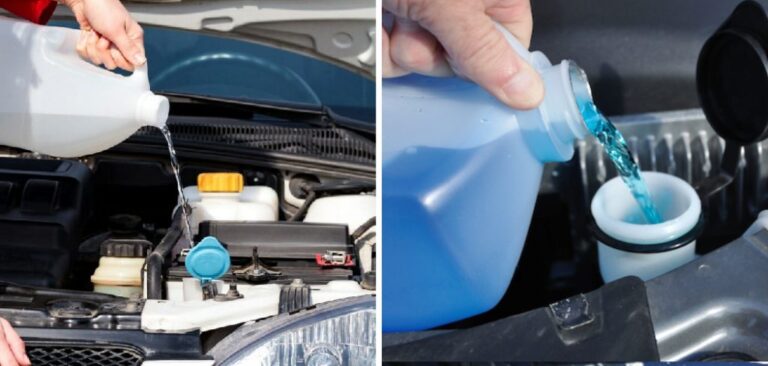
Open the hood and locate the washer fluid reservoir using the symbol shown in your owner’s manual. The cap often has a windshield-and-spray icon. Do not confuse it with the coolant reservoir or brake fluid container.
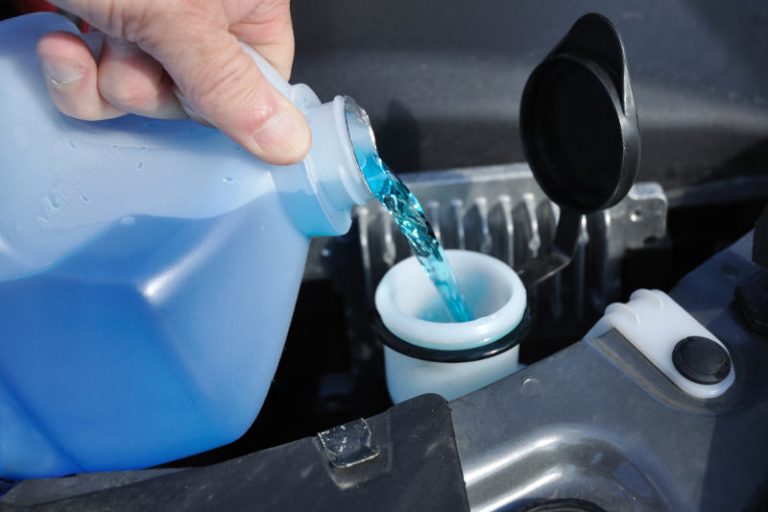
If the reservoir is empty, add windshield washer fluid that suits your climate and vehicle requirements. Follow the fill markings and avoid overfilling. Then activate the washer briefly to see whether normal spray returns.
If the tank is full but the system still does not spray, do not keep adding fluid. Move on to the pump, hoses, nozzles, and electrical checks.
Source: blog.1aauto.com
Use the correct fluid
Choose automotive windshield washer fluid, including a suitable cold-weather formula when freezing conditions are expected.
Check for a rapid drop in fluid level
A reservoir that empties soon after refilling may have a leak or a hose that has come loose.
Avoid household cleaners
Dish soap, glass cleaner, and other household products are not reliable substitutes for automotive washer fluid and may cause residue, foaming, or material compatibility problems.
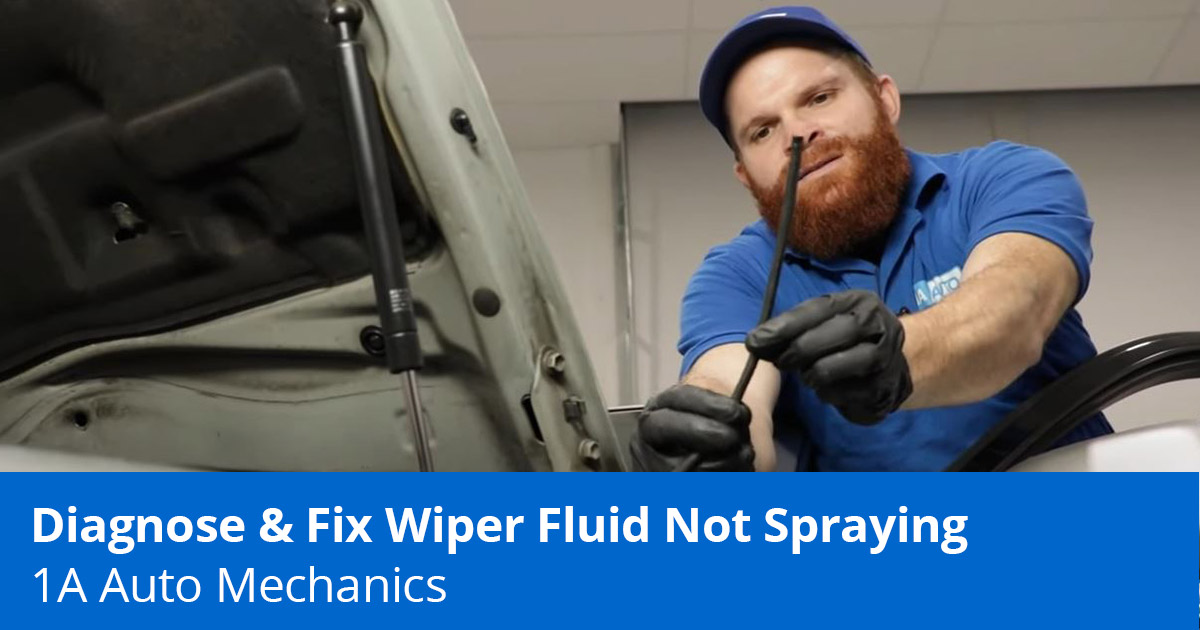
2. Listen for a Faulty or Failed Washer Pump
If the reservoir has fluid, listen carefully while briefly activating the washer control. Many vehicles make a soft buzzing or humming sound when the washer pump runs, although pump noise and control behavior vary by model.
If you hear the pump but see no fluid, the pump may be turning without moving enough fluid. A blockage, leak, damaged impeller, or air entering the fluid path may explain the symptom. The sound alone cannot confirm that the pump is healthy.
If there is no sound, the pump may not be receiving power, the fuse may be blown, the wiring may be damaged, or the pump itself may have failed. A control switch or vehicle-specific electronic fault can also prevent operation.
A mechanic can test the circuit and pump to determine whether the problem is electrical or mechanical. This is often more useful than replacing the pump based only on a silent response.
Source: i.ytimg.com
Pump hums but fluid does not spray
Inspect the fluid supply, hose connections, nozzles, and pump output before deciding the pump needs replacement.
Pump remains silent
Check the correct fuse and electrical supply if the owner’s manual provides a safe procedure. Seek professional diagnosis if the fault is not obvious.
Pump makes an unusual noise
A strained or irregular sound can accompany low fluid, a blockage, or pump wear. Stop repeated activation if the reservoir is empty or the pump appears to be struggling.
When Should You Replace the Washer Pump?
Pump replacement is appropriate when testing shows that the pump has failed or cannot deliver the required flow despite a clear fluid path and correct electrical supply. Some pumps are mounted at the bottom of the reservoir, where access may require removing a wheel-liner panel or other parts.
Before replacement, confirm that the pump connector, fuse, hoses, and reservoir supply are sound. The correct pump must match the vehicle’s make, model, year, and washer-system configuration.
Replace after diagnosis
Do not treat pump replacement as the first step when a clogged nozzle or disconnected hose could explain the same symptom.
Check vehicle compatibility
Some vehicles use separate pumps or outlets for the front and rear washer systems.
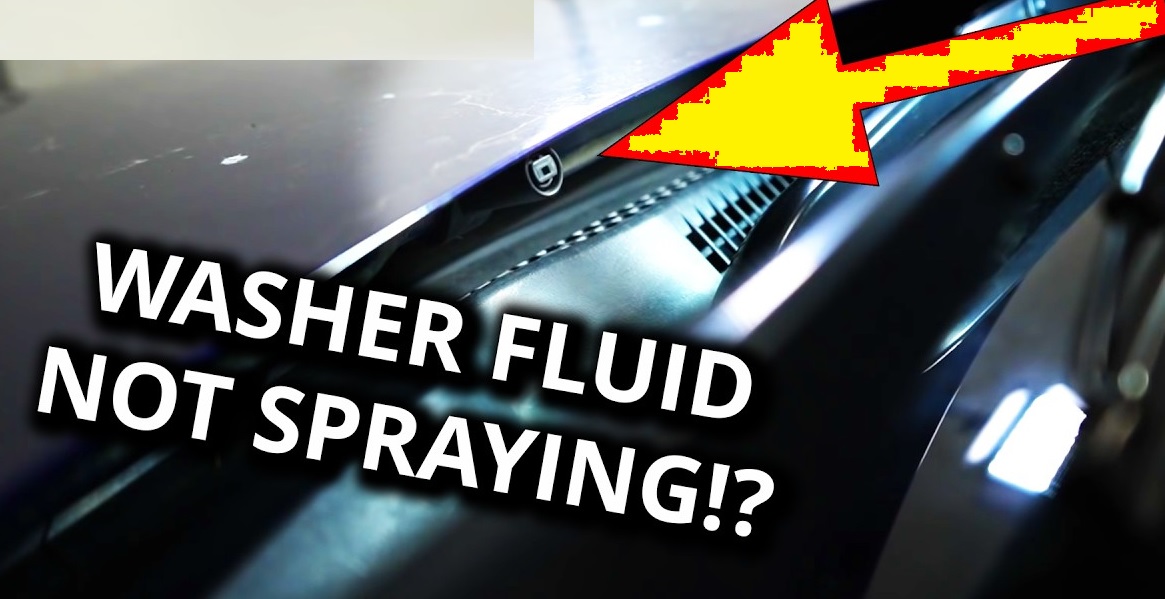
3. Clear Clogged Windshield Washer Nozzles
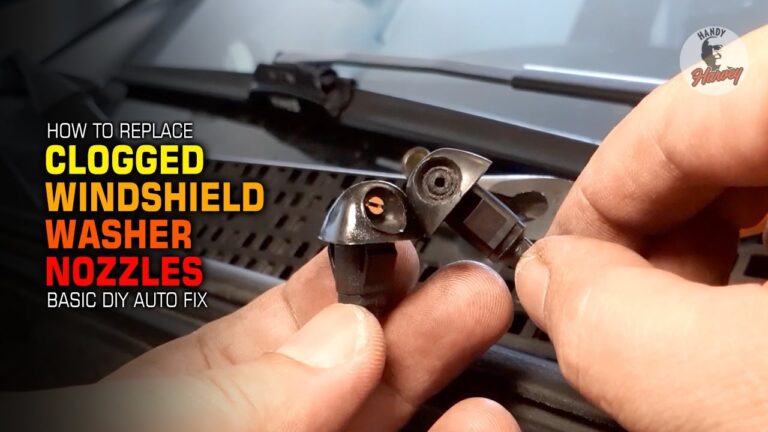
Clogged washer nozzles can prevent fluid from reaching the windshield even when the pump is working. Dirt, dried washer-fluid residue, mineral deposits, wax, and debris can restrict the tiny spray openings.
If one nozzle works and the other does not, start by checking the nozzle that has stopped spraying. If both nozzles fail at once, a shared supply problem, frozen fluid, or a pump issue may be more likely, although two blocked nozzles are also possible.
Look for visible dirt around each nozzle. Clean the outside gently with a soft cloth and follow the vehicle manufacturer’s instructions for clearing the opening. Avoid forcing a thick needle or sharp tool into the nozzle, as this can damage the outlet or alter its spray pattern.
After cleaning, test the system briefly. If the spray remains weak or points away from the windshield, the restriction may be deeper in the hose or the nozzle may need replacement or adjustment.
Source: i.ytimg.com
One nozzle is blocked
Inspect that nozzle and its branch hose for debris, a kink, or a loose connection.
Both nozzles are blocked
Check for contaminated fluid, deposits, freezing, or a restriction near the pump or shared hose.
Spray hits the wrong area
Check nozzle alignment and use the adjustment method specified for your vehicle.
Can You Clean Washer Nozzles at Home?
Basic cleaning may be possible if the nozzles are easy to reach and the owner’s manual permits it. Wipe away surface dirt first, then use only a cleaning method suitable for the nozzle design.
Some vehicles use fan-shaped nozzles that are sensitive to damage and are not meant to be adjusted with a pin. If the nozzle remains blocked, removing or replacing it according to the service instructions is safer than forcing debris through the opening.
Use gentle cleaning
Avoid scraping painted surfaces or pushing debris deeper into the fluid passage.
Test after cleaning
Confirm that the fluid reaches the glass and that the spray pattern is even.
4. Inspect Washer Hoses for Leaks or Disconnections
A loose, split, pinched, or disconnected washer hose can stop fluid from reaching the windshield. The pump may still run, but the fluid can leak into the engine bay, under the vehicle, or inside the hood area instead of flowing to the nozzles.
With the vehicle parked and the engine off, inspect visible hoses and connectors around the reservoir and along the route to the nozzles. Look for wet areas, cracked plastic fittings, loose joints, and signs of a hose that has slipped off its connector.
If the pump runs and fluid appears beneath the hood when the washer is activated, stop the test and trace the leak if it is safe to do so. Do not reach near moving belts, hot parts, or exposed electrical components. Let hot components cool before inspection.
A damaged hose or connector may be replaceable without changing the pump. Use the correct size and material for the vehicle, and route the hose away from sharp edges, hot parts, and moving components.
Source: i.ytimg.com
Wet area near the reservoir
Inspect the tank, pump seal, outlet connection, and nearby hose for a leak.
Fluid appears near the hood
Check the hose connections that feed the hood-mounted nozzles, if fitted.
No visible leak but no spray
A blockage, hidden hose damage, or pump problem may still be present.
5. Check Whether the Washer Fluid Is Frozen
Freezing weather can stop windshield washer fluid from spraying. Water-rich or summer-grade fluid may freeze in the reservoir, pump, hoses, or nozzles when temperatures fall below its effective operating range.
This issue can occur during winter in northern states and mountainous areas, especially after a cold night. If the system worked before the temperature dropped and then stopped, frozen fluid is a strong possibility.
Do not keep running the pump against a frozen system. Repeated attempts may strain the pump, and adding more fluid to a completely frozen reservoir will not solve the blockage. Move the vehicle to a safely heated location and allow the system to thaw gradually.
Once the fluid has thawed, check for leaks and confirm that the pump works. If the reservoir or hoses appear damaged, arrange a repair. Refill with automotive washer fluid rated for the expected local temperatures and follow the product label.
Source: i.ytimg.com
Use winter-rated fluid
Choose a formula with a stated freezing protection appropriate for the lowest temperatures your vehicle is likely to encounter.
Avoid direct high heat
Do not use a flame, heat gun, or boiling water to thaw the reservoir, pump, hoses, or nozzles.
Check again after thawing
Inspect for leaks and test briefly before relying on the system during a trip.
6. Inspect the Washer Pump Fuse and Electrical Circuit
A blown fuse or electrical fault can stop the washer pump from running. This is especially worth checking when the reservoir contains fluid, the nozzles are not visibly blocked, and the pump makes no sound when activated.
Find the fuse information in the owner’s manual or the vehicle’s fuse-box diagram. Fuse locations and labels vary by make, model, year, and equipment, so do not rely on a generic fuse number from another vehicle.
If the manual identifies a washer pump fuse and gives a suitable inspection procedure, check it with the vehicle switched off as directed. Replace a blown fuse only with one of the specified type and rating. Never install a higher-rated fuse or bridge the fuse with wire.
If the replacement fuse blows again, stop replacing fuses and seek professional diagnosis. A short circuit, damaged wiring, a seized pump, or another electrical fault may be drawing too much current. A technician can check the circuit, connectors, ground, control signal, and pump supply.
Source: i.ytimg.com
Fuse is blown
Replace it only with the exact rating specified by the vehicle manufacturer, then investigate if it fails again.
Fuse appears intact
A visual check cannot rule out every electrical fault. Testing may be needed to confirm power and ground at the pump.
Wiring or connector is damaged
Have damaged wiring repaired correctly rather than twisting wires together or bypassing a safety device.
7. Diagnose Weak Spray or Spray That Misses the Windshield
Weak spray does not always mean the washer pump is failing. A partial blockage, a low fluid level, a leak, a pinched hose, or a nozzle that is out of position can all reduce the amount of fluid reaching the glass.
First, refill the reservoir if needed and inspect the hoses for visible damage. If the pump runs normally, check whether both nozzles produce similar spray patterns. A difference between the two sides can help identify a local restriction.
If both nozzles spray weakly, the fault may lie in a shared hose, the pump, the fluid supply, or a blockage near the reservoir. If the spray is strong but misses the glass, consult the owner’s manual for the correct nozzle adjustment method.
Some modern vehicles use heated nozzles, integrated hood jets, or other designs that need model-specific service procedures. Avoid dismantling parts or adjusting components by force when the method is unclear.
Source: i.ytimg.com
Spray is weak on both sides
Check the fluid level, shared hose, possible leaks, and pump output.
Spray is weak on one side
Inspect that nozzle and its individual hose branch.
Spray is strong but misdirected
Check the nozzle’s aim and the vehicle-specific adjustment instructions.
8. Follow This Safe Troubleshooting Sequence
A clear order of checks can save time and prevent needless part replacement. Begin with checks that need no tools, then move to visual inspection and model-specific electrical diagnosis only when needed.
Park on level ground in a safe place, switch off the engine, and let hot parts cool before inspecting under the hood. Keep hands away from belts, fans, and other moving parts. Never test the washer system while driving in traffic.
Use the table below to match the main symptom to the next useful check. These are diagnostic clues, not guarantees; more than one fault can exist at the same time.
Source: i.ytimg.com
Step 1: Confirm the fluid level
Refill with suitable automotive washer fluid if the reservoir is empty.
Step 2: Consider the weather
If temperatures are below freezing, allow a possibly frozen system to thaw safely.
Step 3: Listen for the pump
Activate the washer briefly while parked and note whether the pump runs.
Step 4: Look for leaks
Inspect visible hoses, connectors, and the reservoir for fluid escaping.
Step 5: Check the nozzles
Look for dirt or damage and clean them only by an approved method.
Step 6: Check the fuse and seek diagnosis
Use the vehicle’s manual and consult a technician if the fault remains or the fuse blows again.
Symptom and Likely Cause Table
Use this comparison to choose the next check rather than replacing the first part that seems suspicious.
No spray and no pump sound
Start with the correct fuse and electrical supply, then consider the pump, wiring, control, or connector.
No spray but the pump hums
Check the reservoir, frozen fluid, hoses, nozzles, leaks, and pump output.
Only one side sprays
Inspect the nonworking nozzle and its hose branch.
Fluid leaks under the hood
Inspect hose connections, connectors, the pump seal, and the reservoir for damage.
System fails only in cold weather
Check whether the fluid is frozen and whether the fluid rating suits the temperature.
Spray is weak or misdirected
Check for partial blockage, hose restriction, a leak, low fluid, or nozzle alignment.
9. Common Mistakes to Avoid During Washer Repair
The wrong repair method can turn a minor washer problem into a damaged nozzle, electrical fault, or leaking system. Keep the diagnosis simple, follow the vehicle’s instructions, and stop when a repair requires tools or skills you do not have.
Do not keep activating a pump when the reservoir is empty or the system may be frozen. Do not force sharp tools into delicate fan-spray nozzles, and never use a higher-rated fuse to prevent repeated fuse failure.
Avoid pouring household cleaners or unapproved mixtures into the reservoir. Products designed for household glass or kitchen cleaning may not be suitable for the washer system, vehicle materials, paint, or local winter conditions.
Finally, do not assume that functioning wipers mean the washer system is working. Wiper motors and washer pumps are separate components on many vehicles, so one can operate while the other fails.
Source: i.ytimg.com
Replacing parts without testing
A blocked nozzle, loose hose, or blown fuse can mimic a failed pump.
Ignoring repeated fuse failure
A fuse that blows again may indicate a fault that needs electrical diagnosis.
Using the wrong fluid
Choose a product designed for automotive washer systems and the temperatures you expect.
Driving with poor visibility
If the windshield cannot be cleared safely, stop at a safe location and arrange a repair before continuing.
10. When to Call a Mechanic
Professional help is sensible when basic checks do not identify the cause, when the pump needs electrical testing, or when reaching the reservoir requires removing body panels or other vehicle parts. Some vehicles have tightly packaged components or electronically controlled washer systems that are not easy to service at home.
A technician can test the pump’s power supply and ground, inspect the fluid path, check the fuse circuit, and determine whether the pump, wiring, control, nozzle, or hose needs repair. Ask for the fault and test results before approving part replacement.
Seek prompt help if fluid leaks onto electrical components, a fuse repeatedly blows, wiring appears damaged, or the system has been affected by freezing and may have cracked parts. Stop using a pump that appears blocked or damaged.
The urgency also depends on driving conditions. A washer fault may be manageable while the vehicle is parked in dry weather, but it can become a serious visibility problem on wet, muddy, salty, or insect-heavy roads.
Source: theengineeringtools.com
Electrical faults
A technician should diagnose repeated fuse failure, damaged wiring, or a pump that receives power but does not work.
Hidden leaks or damaged components
Professional inspection may be needed when the reservoir, pump, or hoses are hard to access.
Persistent failure after basic checks
If fluid, weather, visible hoses, and accessible nozzles do not explain the problem, further testing can avoid guesswork.
Frequently Asked Questions
Q
Why can I hear my windshield washer pump but no fluid comes out?
A running pump with no spray may indicate an empty reservoir, frozen fluid, blocked nozzles, a disconnected hose, a leak, or a pump that turns but cannot move enough fluid. Check the fluid level and visible hose connections first, then inspect the nozzles using the vehicle’s approved cleaning method.
Q
Why is only one windshield washer nozzle working?
A blocked nozzle, damaged connector, or restricted hose branch can stop one side from spraying. Clean the affected nozzle gently and inspect its hose if accessible. If the problem remains, the nozzle or hose may need service or replacement.
Q
Can I use water instead of windshield washer fluid?
Water may provide limited cleaning in mild conditions, but it lacks the cleaning agents and cold-weather protection found in suitable automotive washer fluid. It can freeze in cold weather and may leave deposits depending on the water supply. Use washer fluid rated for the temperatures and conditions where you drive.
Q
Why did my windshield washer stop working in cold weather?
Fluid in the reservoir, hoses, pump, or nozzles may have frozen because its temperature rating was too high for the conditions. Allow the system to thaw gradually in a safely heated location, inspect for leaks or damage, and refill with a suitable winter-rated automotive washer fluid.
Q
Can a blown fuse stop windshield washer fluid from spraying?
Yes. If the washer pump loses electrical power because its fuse has blown, the pump may not run and no fluid will spray. Check the correct fuse information in the owner’s manual and use only the specified fuse rating. If the replacement fuse blows again, have the circuit diagnosed rather than repeatedly replacing it.
Q
Can I drive if my windshield washer fluid will not spray?
It depends on visibility and road conditions, but driving is unsafe when dirt, salt, mud, rain, or glare prevents a clear view. Do not rely on the wipers alone to clear a dirty windshield. Stop in a safe place if visibility becomes poor and repair the washer system before driving in conditions that require it.
✦ Wrapping Up
Conclusion
When windshield washer fluid stops spraying, start with the reservoir, weather, and pump sound. Then check visible hoses, nozzles, leaks, and the correct fuse. These simple checks can narrow the problem and help you avoid replacing parts that still work.
If the pump is silent, a fuse or electrical fault may be responsible. If it runs but fluid does not reach the glass, investigate the supply, hoses, nozzles, and pump output. Frozen fluid, damaged parts, and persistent electrical faults may need professional repair.
💡 Key Takeaway
Park safely, check the washer fluid level, listen briefly for the pump, and inspect visible hoses and nozzles. Use your owner’s manual for fuse checks, avoid repeated pump operation when the system is empty or frozen, and do not drive until you can maintain a clear view of the road.
Learn how to install a windshield washer nozzle on a U.S. vehicle, including tools, removal, hose connection, aiming, testing, troubleshooting, and safety tips.