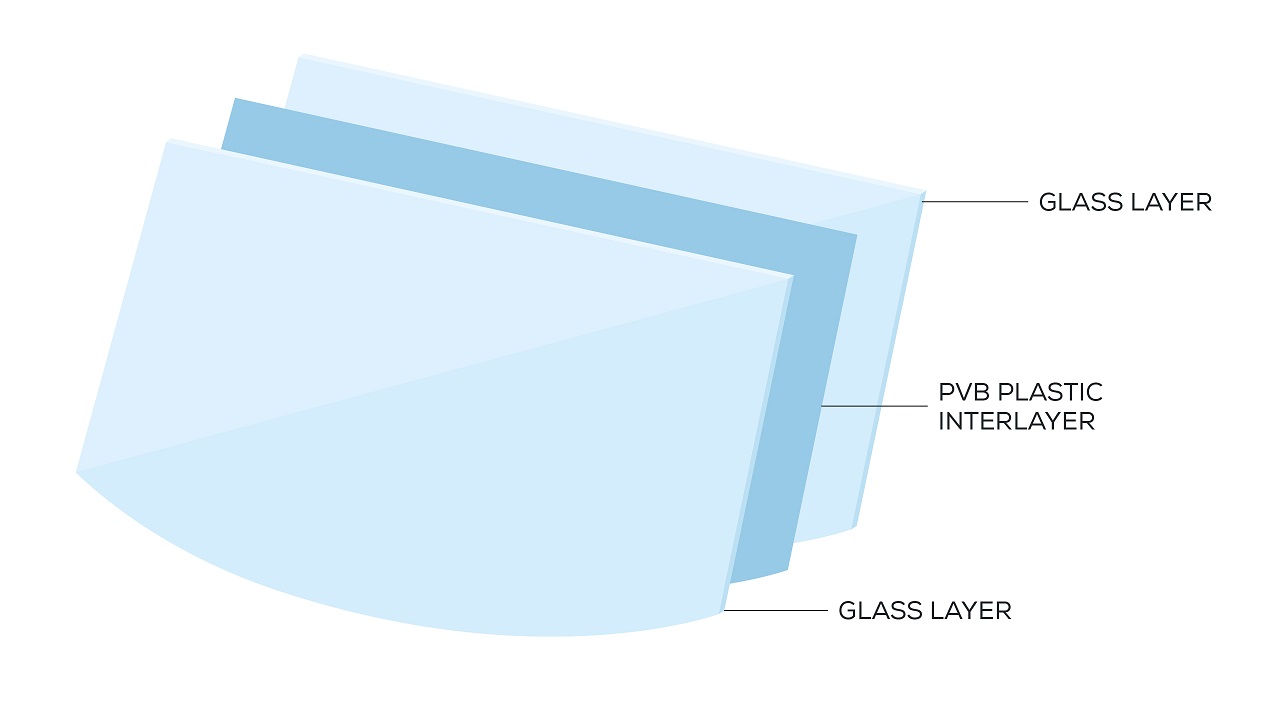
Modern U.S. passenger-vehicle windshields are primarily made of laminated safety glass: two layers of glass bonded around a transparent plastic interlayer, usually polyvinyl butyral, or PVB.
If you drive a car, pickup, SUV, or minivan on U.S. roads, the large piece of glass in front of you is much more sophisticated than an ordinary window pane. A windshield has to provide a clear view of the road while dealing with highway-speed debris, vibration, temperature changes, weather, and the forces generated during a collision. For that reason, automotive windshields are designed as laminated safety glazing rather than as a single sheet of ordinary glass.
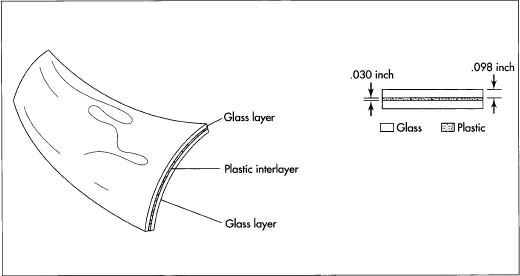
The basic construction is often described as a glass-plastic-glass sandwich. Two shaped glass sheets surround a thin, transparent PVB interlayer and are permanently bonded together with heat and pressure. If one or both glass layers crack, the plastic layer helps hold the fractured pieces together instead of allowing the entire windshield to break apart into loose shards. This guide explains what windshields are made of, what each layer does, how windshield glass is manufactured, how it differs from tempered side-window glass, and what modern coatings, acoustic layers, sensors, and other features can add to the basic structure.
The short answer is that a modern automotive windshield is made primarily from laminated safety glass. Rather than being a single thick pane, the windshield normally has two relatively thin glass plies with a flexible plastic layer bonded between them.
The transparent center layer is commonly made from polyvinyl butyral, abbreviated PVB. PVB adheres strongly to glass and remains flexible enough to help hold broken pieces in position after an impact. Once the three layers have been bonded into a finished windshield, they function as one glazing unit.
The glass itself begins with the same basic type of soda-lime glass chemistry widely used for flat glass. Its ingredients are based mainly on silica, with other compounds such as sodium and calcium oxides helping create glass with the required manufacturing and physical properties. The flat glass is then cut, shaped, curved, treated, printed where necessary, and laminated specifically for automotive use.
Calling a windshield laminated glass describes its construction rather than simply the chemical composition of the glass. The safety behavior comes from the combination of the glass layers, the plastic interlayer, their bond, and the way the finished glazing is installed in the vehicle.
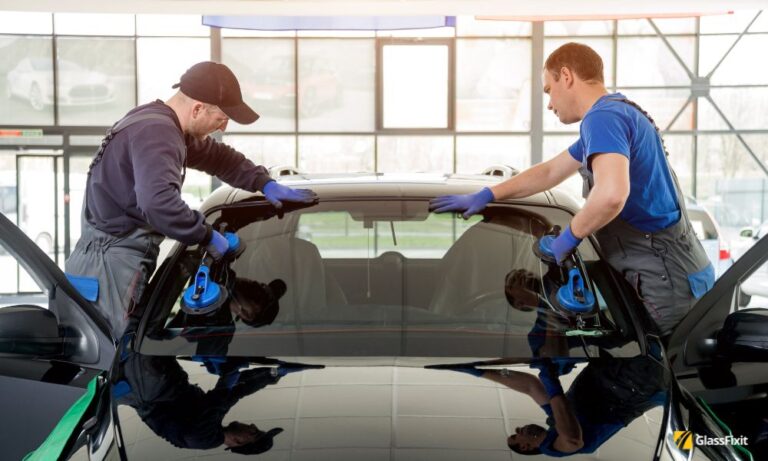
Source: thewindscreenco.co.uk
Outer glass layer
The exterior glass provides optical clarity and the hard surface exposed to rain, road grit, insects, wipers, and airborne debris.
PVB interlayer
The transparent plastic layer bonds the two glass plies and helps retain fragments when the glass cracks.
Inner glass layer
The cabin-side glass completes the laminated structure and provides another hard, clear surface.
Additional functional materials
Depending on the vehicle, the windshield may include ceramic frit, coatings, acoustic material, heating elements, antennas, sensor areas, or special optical zones.
What Is the PVB Layer in a Windshield?
PVB is a transparent polymer used as the bonding layer between the two glass plies. Its most recognizable job is fragment retention. When the windshield is hit hard enough to crack, broken glass tends to remain attached to the interlayer rather than separating into large loose pieces.
The interlayer also contributes to other characteristics. Laminated glazing can reduce ultraviolet transmission, and specialized interlayers may improve sound insulation or provide optical properties for technologies such as head-up displays. The exact interlayer construction varies among vehicles and windshield designs.
Fragment retention
PVB helps keep shattered glass attached to the laminated assembly.
Barrier function
The bonded structure is more difficult for an object to penetrate than a comparable unlaminated pane.
Optical transparency
Automotive-grade interlayers are designed to remain clear enough for the driver’s required field of view.
Is a Windshield Made of Tempered Glass?
A standard front windshield should not be confused with the tempered glass commonly found elsewhere on a vehicle. The defining feature of the front windshield is its laminated construction. Tempered glass is heat-treated so that, when it fails, it breaks into many relatively small pieces. Laminated windshield glass instead uses an interlayer to keep fractured pieces bonded together.
This difference explains why a damaged front windshield often develops visible cracks while remaining in the opening. A tempered side window subjected to a sufficiently severe impact may suddenly break into many small pieces.
Why Are Windshields Made With Multiple Layers?
Multiple layers allow the windshield to combine properties that a simple sheet of glass cannot provide as effectively. Glass offers hardness, scratch resistance, weather resistance, and excellent optical clarity. PVB adds bonding and flexibility. Laminating them together creates a windshield that can crack without immediately losing its basic form.
Imagine a stone striking your windshield on an interstate highway. The outer glass layer may chip or crack at the impact point. Because the glass is bonded to the PVB layer, the damage can remain localized instead of causing the entire glazing panel to collapse into the passenger compartment.
Lamination also matters in more severe impacts. The windshield is designed as part of the vehicle’s safety-glazing system, and its ability to remain substantially together after breakage can reduce exposure to loose sharp fragments. The windshield and its adhesive installation also interact with the vehicle body, so correct replacement involves more than simply putting a piece of glass into the opening.
The practical result is a useful compromise. A windshield remains transparent and hard during normal use but has controlled behavior when damaged.
Source: jh-analytical.com
Clear forward visibility
Glass provides the optical surface needed for a driver’s view through the windshield.
Reduced loose fragments
The interlayer helps retain broken pieces after the glass has cracked.
Resistance to penetration
Two bonded glass plies and a flexible interlayer create a more persistent barrier than a single ordinary pane.
Noise control
Some windshields use acoustic interlayers engineered to reduce certain frequencies of road, wind, and traffic noise entering the cabin.
Why Does a Cracked Windshield Stay Together?
A windshield stays together primarily because the fractured glass remains bonded to the plastic interlayer. That is why severe windshield damage can look like a network of cracks while much of the pane is still physically attached.
The fact that laminated glass can stay together does not mean a cracked windshield should be ignored. Cracks can spread because of vibration, body movement, additional impacts, and temperature changes. Damage can also interfere with visibility or with the optical path of windshield-mounted cameras.
Can Objects Still Penetrate Laminated Glass?
Yes. Laminated automotive glass is not an impenetrable shield. Enough force, repeated impacts, sharp objects, or severe collision forces can tear the interlayer or create an opening through the windshield.
The purpose of laminated safety glazing is to provide controlled breakage behavior and improved occupant protection compared with ordinary unlaminated glass, not to make a passenger vehicle windshield indestructible.
How Are Car Windshields Made?
Windshield manufacturing turns flat automotive glass and a polymer interlayer into a precisely curved laminated assembly. The details vary by manufacturer and vehicle design, but the major stages are broadly similar.
Manufacturers first produce and prepare the glass sheets. Two matching pieces are cut to the required windshield outline. Their edges are finished, and areas that need ceramic printing or other treatments can be processed before final lamination.
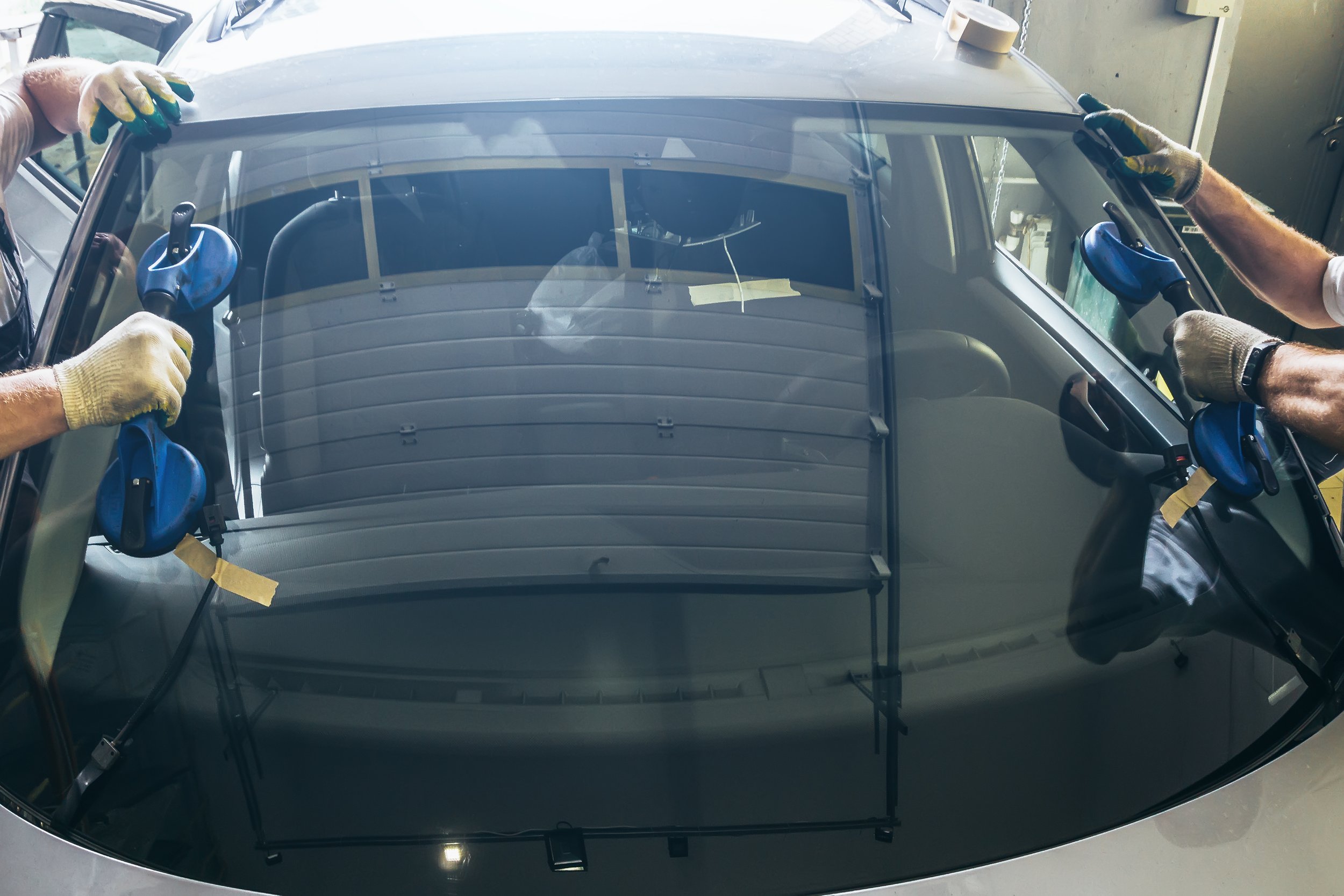
The glass then has to match the curvature of the vehicle. Manufacturers heat matching glass plies until they can be accurately formed. Depending on the process and windshield geometry, the glass can be shaped with controlled bending techniques so the two plies maintain the required fit and optical quality.
After shaping and cooling, the PVB sheet is placed between the glass plies. Air trapped between the layers must be removed. The assembly then undergoes heat and pressure, commonly in an autoclave, to create a permanent bond and transform the stack into a clear laminated windshield.
Inspection is especially important because the windshield sits directly in the driver’s forward field of view. Manufacturers check dimensions, curvature, optical quality, lamination, and other specifications before the finished glass is supplied for vehicle assembly or replacement.
Source: tsautoglass.com
1. Glass preparation
Two matching glass pieces are cut and finished for the specific windshield design.
2. Printing and preparation
Required markings and ceramic areas can be added before the final laminate is assembled.
3. Bending
Heat allows the glass plies to be formed to the vehicle-specific curvature.
4. Interlayer placement
A PVB sheet is positioned between the matching glass plies.
5. De-airing
Air is removed from between the layers to prepare the assembly for permanent bonding.
6. Heat and pressure bonding
Controlled temperature and pressure bond the glass and interlayer into a transparent laminate.
7. Inspection
The finished windshield is checked for dimensional, optical, and manufacturing defects.
What Is the Black Material Around a Windshield?
The dark border visible around many windshields is commonly called the ceramic frit. It is a fired ceramic coating rather than part of the PVB sheet. The frit helps create an appropriate surface and visual border around the bonded edge and helps protect the adhesive area from sunlight.
The dotted pattern that often transitions from the solid black border toward clear glass also helps make the visual transition less abrupt. Its exact pattern depends on the windshield and vehicle design.
Windshield Glass vs. Side and Rear Window Glass
Not every piece of glass on a vehicle is constructed like the front windshield. The front windshield of a modern road-going passenger vehicle uses laminated safety glass, while many door windows and rear windows have traditionally used tempered glass.
Tempered glass is strengthened through controlled heating and rapid cooling. The process creates internal stresses that change how the glass breaks. When sufficiently damaged, tempered glass tends to fragment into many relatively small pieces rather than producing the large sharp shards associated with ordinary annealed window glass.
Laminated glass behaves differently. Because broken glass remains bonded to the plastic interlayer, a cracked laminated pane can stay largely in its original shape. This is useful for the windshield because the driver’s forward glazing should continue acting as a barrier even after it has been damaged.
The distinction is becoming less universal for side windows. Some newer vehicles use laminated side glass, particularly for acoustic performance, security, or other design objectives. Reading the permanent markings near a corner of the glass can help identify the glazing type installed on a particular vehicle.
Source: catechusa.com
Front windshield
Typically laminated safety glass consisting of glass, a plastic interlayer, and another glass layer.
Side windows
Often tempered glass, although laminated side glazing is available on a growing number of vehicles.
Rear window
Often tempered safety glass and commonly incorporates electrical defroster conductors.
Roof glass
Construction varies by vehicle and may involve tempered or laminated glazing depending on the application.
Are Plastic Windshields Used on Vehicles?
Plastic glazing materials such as polycarbonate are used in some nontraditional applications, including certain off-road vehicles, powersports vehicles, racing applications, or specialty glazing systems. Polycarbonate is lightweight and has strong impact resistance, but its surface characteristics and regulatory application differ from those of conventional laminated automotive windshield glass.
For a normal passenger car or light truck driven on U.S. public roads, you should not assume that a generic polycarbonate panel is an acceptable replacement for the original windshield. Replacement glazing needs to be appropriate for the vehicle and comply with applicable safety requirements.
Laminated automotive glass
The standard construction for road-going passenger-vehicle front windshields.
Polycarbonate
Useful in selected specialty and off-road applications but not automatically interchangeable with federally compliant automotive windshield glazing.
What Else Can Be Built Into a Modern Windshield?
The basic glass-PVB-glass structure is only the starting point for many modern windshields. A windshield can now function as an optical surface, an electronics mounting location, an acoustic barrier, a solar-control component, and part of a driver-assistance system.
One increasingly important feature is the camera area near the top center of the windshield. Vehicles equipped with lane-departure warning, automatic emergency braking, lane-centering features, traffic-sign recognition, or other advanced driver-assistance functions may use one or more cameras looking through precisely defined regions of the glass.
Because the camera sees the road through the windshield, glass shape and optical characteristics matter. Replacing a windshield on a camera-equipped vehicle may therefore require a calibration procedure specified for that vehicle. A windshield that physically fits is not necessarily functionally equivalent if it lacks the required optical or equipment provisions.
Some windshields also use acoustic PVB intended to reduce cabin noise. Others incorporate solar-control technologies, electrical heating in selected areas, embedded antennas, humidity or rain-sensor mounting locations, or special layers designed for a head-up display.
These features explain why replacement windshields for visually similar vehicles can differ significantly. Vehicle trim level, model year, camera package, rain sensor, heating system, head-up display, acoustic glazing, and other equipment can affect the correct windshield specification.
Source: claritycarwashing.com
Acoustic interlayer
Special laminate construction can reduce the transmission of selected exterior noise frequencies.
Solar-control features
Tinting, coatings, or specialized layers may be used to manage solar energy entering the cabin.
ADAS camera area
A defined optical zone can provide the forward view for vehicle safety and driver-assistance cameras.
Head-up display compatibility
Some windshields require specialized optical construction so projected information appears correctly to the driver.
Heating elements
Certain vehicles use electrical elements in specific windshield areas or across larger portions of the glass.
Sensor and antenna provisions
Mounting points or integrated conductors may support rain sensors, communications, radio reception, or other vehicle systems.
How Can You Tell What Type of Windshield Your Car Uses?
Look near a lower corner of the windshield for the permanent manufacturer’s marking, sometimes informally called the glass bug. It usually contains information identifying the glazing manufacturer and compliance markings. The exact symbols and wording vary.
For replacement purposes, the vehicle identification number is often more useful than relying on appearance alone. Two windshields with the same outer shape can have different camera brackets, sensor provisions, acoustic construction, heating features, tinting, or head-up display compatibility.
Does Windshield Material Affect Repairability?
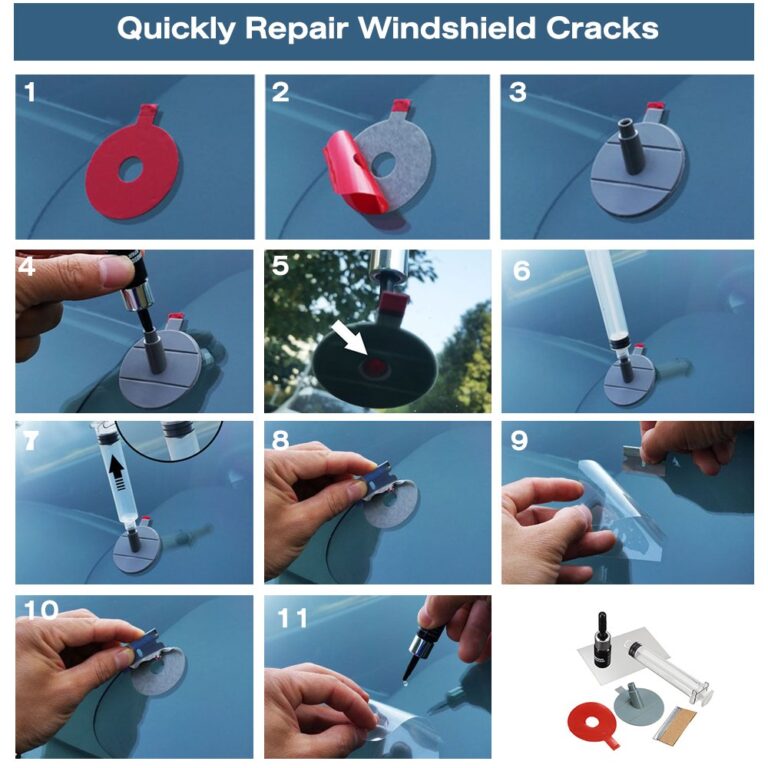
Yes. Laminated construction is one reason some small windshield chips can be repaired with specialized resin when the damage is limited and appropriately located. The technician cleans and prepares the damaged area, injects repair resin, and cures it to stabilize the break and improve its appearance.
Repair is not appropriate for every crack. Damage size, depth, position, contamination, proximity to the edge, obstruction of the driver’s view, and involvement of camera areas can change the decision. Severe damage or damage that compromises the windshield generally calls for replacement rather than repair.
Small localized chip
May be repairable depending on its type, location, depth, and condition.
Long or spreading crack
Often requires a professional assessment and may call for replacement.
Damage near an ADAS camera
Can affect optical performance and should be evaluated with the vehicle manufacturer’s requirements in mind.
Frequently Asked Questions
Q
Are windshields made of regular glass?
No. A modern automobile windshield is safety glazing designed specifically for vehicle use. Its laminated construction normally combines two glass plies with a transparent PVB interlayer. Ordinary household window glass does not provide the same laminated breakage behavior.
Q
What plastic is between windshield glass?
Polyvinyl butyral, commonly shortened to PVB, is the conventional plastic interlayer used in laminated automotive windshields. The PVB is permanently bonded between the glass plies and helps retain glass fragments after breakage.
Specialized windshield designs can use interlayers engineered for additional functions such as acoustic performance or optical characteristics, so not every laminate is identical.
Q
Why does a windshield crack instead of shatter into pieces?
The glass itself can fracture extensively, but the PVB layer helps hold the broken pieces together. That creates the familiar chip, star, or spiderweb appearance while much of the windshield remains attached to the interlayer.
By comparison, tempered side-window glass is engineered to fragment into many small pieces when its internal stress balance is disrupted.
Q
Are all car windows made from laminated glass?
No. Front windshields use laminated safety glazing, but many side and rear windows use tempered glass. Some vehicles also use laminated side windows for noise reduction, security, or other purposes.
Because glazing varies by vehicle, check the glass markings or vehicle-specific parts information rather than assuming every window uses the same material.
Q
Do modern windshields contain sensors?
The glass itself does not necessarily contain the entire sensor, but modern windshields frequently provide mounting locations and precisely controlled viewing areas for cameras and sensors. Rain sensors, forward-facing ADAS cameras, antennas, heating systems, and head-up display technology may all influence windshield design.
If a windshield-mounted camera is disturbed during replacement, the vehicle may require static, dynamic, or combined calibration according to the manufacturer’s service procedure.
Q
Can a windshield be made from polycarbonate?
Polycarbonate can be used as glazing in certain specialty, racing, recreational, and off-road applications because it is lightweight and impact resistant. However, that does not make a generic polycarbonate sheet an appropriate substitute for the laminated front windshield of a normal road-going passenger vehicle.
For a U.S. street vehicle, use replacement glazing intended for that vehicle and compliant with applicable motor-vehicle safety requirements.
Q
What should I look for when replacing a modern windshield?
Match the replacement to the exact vehicle configuration rather than selecting glass by size alone. Check for features such as forward cameras, rain sensors, acoustic glass, heated areas, head-up display capability, tinting, and antenna provisions.
If the vehicle uses a camera or other driver-assistance equipment that views through or mounts to the windshield, confirm whether calibration is required after installation. Correct adhesive installation and the required safe drive-away time are also important parts of the replacement process.
✦ Wrapping Up
Conclusion
So, what are windshields made of? For modern passenger vehicles in the United States, the front windshield is primarily laminated safety glass built from two glass plies bonded around a transparent plastic interlayer, usually PVB. The glass provides clarity, hardness, and weather resistance, while the flexible interlayer helps keep fractured glass together after an impact.
That layered construction is what separates a windshield from an ordinary pane and from the tempered glass still commonly used in side and rear windows. Modern versions can add acoustic laminates, solar-control features, heating, antennas, camera zones, rain-sensor mounts, and head-up display technology without changing the fundamental purpose of the windshield: maintaining a clear forward view while providing controlled safety performance when damaged.
💡 Key Takeaway
If your windshield is chipped, cracked, or needs replacement, identify the exact vehicle equipment before ordering glass and have damage near the driver’s view, windshield edge, or an ADAS camera area professionally evaluated.
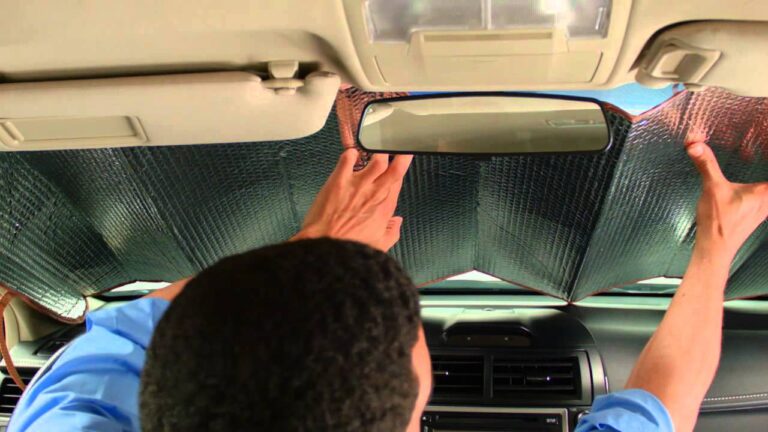
Learn how to install a windshield sun shade correctly in your car. Follow simple steps for folding, roll-up, and umbrella-style shades, plus fit, safety, storage, and troubleshooting tips.
![Automotive Windshield Material Analysis [Application Note] JH ...](https://www.jh-analytical.com/wp-content/uploads/2023/02/windshield-material-analysis-as119741407.jpg "Automotive Windshield Material Analysis [Application Note] JH ...")