Can an OBD2 Scanner Read Transmission Codes? Complete Explanation
Can OBD2 scanner read transmission codes? Yes, some OBD2 scanners can read transmission codes, but basic engine code readers may only access limited powertrain faults. To retrieve manufacturer-specific transmission codes, communicate directly with the Transmission Control Module, or view detailed transmission data, you usually need an enhanced or full-system scanner.
The complete details are explained below. In this article, you will learn which transmission codes a basic OBD2 reader can detect, why some scanners show no transmission faults, how to identify a transmission-capable scan tool, and what to do after retrieving a code.
Can OBD2 Scanner Read Transmission Codes?
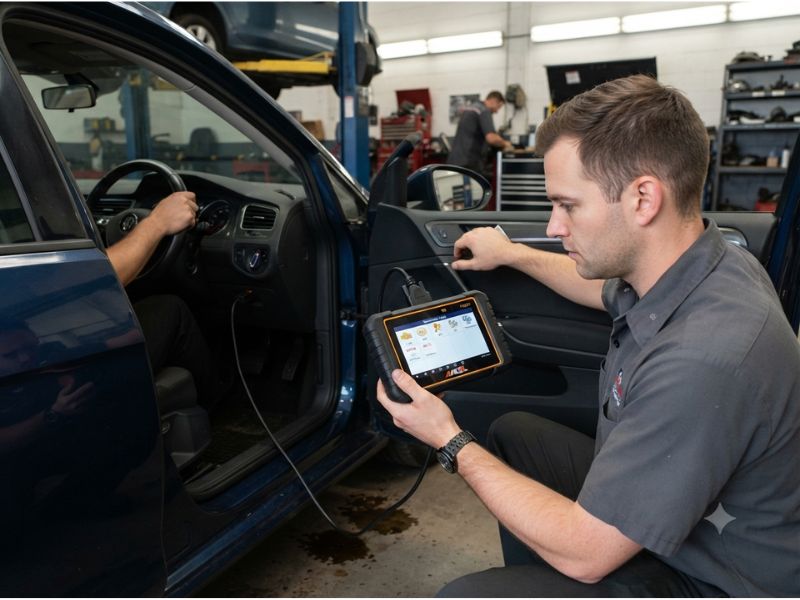
An OBD2 scanner may read transmission codes when the faults are stored in the vehicle’s Powertrain Control Module or are available through the standard OBD2 system.
Many transmission-related diagnostic trouble codes begin with P07, such as:
- P0700
- P0715
- P0720
- P0730
- P0740
- P0750
- P0760
A basic scanner may display some of these codes because they are part of the powertrain diagnostic system.
However, not every transmission fault is stored in the engine computer. Many modern vehicles use a separate Transmission Control Module, commonly called the TCM.
A basic OBD2 code reader may recognize that the transmission module has requested a warning light, but it may not retrieve the detailed fault stored inside that module.
For complete transmission diagnosis, the scanner must support enhanced powertrain or full-module communication for your specific vehicle.
What Is a Transmission Code?
A transmission code is a diagnostic trouble code generated when the vehicle’s computer detects an electrical, hydraulic, mechanical, or communication problem related to the transmission.
Transmission codes can involve:
- Input speed sensors
- Output speed sensors
- Shift solenoids
- Torque converter clutch
- Transmission fluid temperature
- Gear ratio monitoring
- Hydraulic pressure
- Transmission control module communication
- Internal transmission performance
The code does not always identify the exact failed part. It identifies the circuit or operating condition that caused the computer to recognize a problem.
For example, a shift-solenoid code may be caused by a failed solenoid, damaged wiring, low transmission fluid, contaminated fluid, restricted hydraulic passages, or an internal mechanical problem.
Basic OBD2 Reader vs Transmission Scanner
A basic OBD2 reader is primarily designed to retrieve engine and emissions-related codes.
It commonly provides access to:
- Check Engine Light codes
- Generic powertrain faults
- Pending codes
- Permanent codes
- Freeze-frame information
- Emissions readiness monitors
A transmission-capable scanner may provide additional access to:
- Transmission Control Module codes
- Manufacturer-specific transmission faults
- Live transmission data
- Solenoid status
- Gear-command information
- Clutch slip data
- Transmission fluid temperature
- Input and output shaft speeds
- Transmission adaptation values
Some advanced tools also provide bidirectional controls, allowing a technician to activate solenoids or run transmission tests from the scanner.
The fact that a tool is labeled “OBD2 scanner” does not guarantee full transmission coverage.
What Does Code P0700 Mean?
P0700 is one of the most common transmission-related codes.
It generally means the Transmission Control System has requested the Check Engine Light.
P0700 does not identify the exact transmission fault. Instead, it tells you that the TCM has stored one or more additional codes.
A basic reader may show P0700 but fail to display the detailed code responsible for it.
For example, the TCM may contain a code related to:
- Shift solenoid performance
- Transmission fluid pressure
- Input speed sensor
- Output speed sensor
- Torque converter clutch
- Incorrect gear ratio
To identify the actual cause, you need a scanner that can communicate directly with the TCM.
Replacing transmission parts based only on P0700 is not recommended because the code is only a general warning.
Common Transmission Codes an OBD2 Scanner May Read
Transmission codes normally begin with the letter P, which represents the powertrain system.
Common examples include:
P0700 – Transmission Control System Malfunction
This code indicates that the TCM has detected a problem and requested the warning light.
P0715 – Input or Turbine Speed Sensor Circuit
This code relates to the sensor that monitors transmission input shaft speed.
P0720 – Output Speed Sensor Circuit
This code indicates a problem with the transmission output speed signal.
P0730 – Incorrect Gear Ratio
This code means the computer detected that the actual gear ratio does not match the commanded ratio.
P0740 – Torque Converter Clutch Circuit
This code relates to the torque converter clutch control circuit.
P0750 – Shift Solenoid A Malfunction
This code indicates an electrical or performance problem involving one of the transmission shift solenoids.
P0760 – Shift Solenoid C Malfunction
This code relates to another shift-solenoid circuit or performance problem.
Code descriptions can vary slightly between manufacturers, so always check vehicle-specific repair information.
Generic vs Manufacturer-Specific Transmission Codes
Generic OBD2 transmission codes are standardized across many vehicle manufacturers.
These commonly begin with:
- P07
- P08
- P09
A basic scanner may retrieve many generic powertrain codes.
Manufacturer-specific codes often begin with P1, although some manufacturers use other code ranges or module-specific formats.
These codes may provide more precise information about:
- Individual clutch packs
- Pressure control solenoids
- Transmission adaptations
- Mechatronic units
- Dual-clutch transmission faults
- Continuously variable transmission operation
A generic code reader may not recognize these codes or may display only a number without an accurate description.
An enhanced scanner with vehicle-specific software is usually required.
How to Check Whether Your Scanner Reads Transmission Codes
Review the scanner’s specifications before purchasing or using it.
Look for terms such as:
- Transmission diagnostics
- TCM access
- Enhanced powertrain
- Full-system scan
- All-module diagnostics
- Engine and transmission
- Manufacturer-specific codes
A scanner advertised only as a “check engine code reader” may have limited transmission access.
After connecting the tool, examine its diagnostic menu.
A transmission-capable scanner may provide options such as:
Auto Scan: Searches every supported control module.
Control Units: Allows you to choose the transmission module manually.
Powertrain: Includes engine and transmission systems.
TCM: Opens the Transmission Control Module directly.
Full System: Scans engine, transmission, ABS, airbags, body electronics, and other modules.
If the tool only offers “OBD2” or “Engine” menus, it may not support direct TCM access.
How to Read Transmission Codes With an OBD2 Scanner
Park the vehicle safely and apply the parking brake.
Turn the engine off and connect the scanner to the OBD2 port under the driver’s side dashboard.
Turn the ignition to the ON position without starting the engine unless the scanner instructs you otherwise.
Select the correct vehicle year, manufacturer, model, and engine. Some scanners can identify the vehicle automatically through the VIN.
Open the Powertrain, Transmission, TCM, or Full-System menu.
Select Read Codes.
Record:
- Code number
- Code description
- Active or current status
- Stored or history status
- Pending status
- Freeze-frame data
Do not clear the codes until you have saved all available information.
Some transmission faults only occur under specific conditions, so freeze-frame and live data can be valuable during diagnosis.
Why Does My Scanner Show No Transmission Codes?
A scanner may display no codes even when the vehicle has transmission symptoms.
Common reasons include:
The Scanner Cannot Access the TCM
A basic reader may only communicate with the engine computer.
If the fault is stored exclusively in the transmission module, the scanner may not detect it.
No Code Has Been Set Yet
The transmission may have a mechanical or hydraulic issue that has not met the conditions required to store a code.
The Fault Is Intermittent
A temporary sensor or wiring problem may produce symptoms without setting a confirmed code.
The Wrong Module Was Scanned
Selecting only the engine menu may miss faults stored in the TCM.
The Scanner Has Limited Vehicle Coverage
Some scanners support transmission diagnostics on selected makes and models but not all vehicles.
Software Is Outdated
Older scanner software may not communicate with newer transmission modules.
A “No Codes Found” message does not always mean the transmission is healthy.
Can a Bluetooth OBD2 Scanner Read Transmission Codes?
Some Bluetooth OBD2 adapters can read transmission codes, but many inexpensive adapters only access generic engine data.
Transmission access depends on:
- Adapter hardware
- Diagnostic app
- Vehicle protocol
- Manufacturer support
- App subscription level
A general-purpose OBD2 app may display generic P07xx codes stored in the powertrain system.
To access manufacturer-specific TCM codes, you may need a brand-specific app or a professional diagnostic application.
Before purchasing a Bluetooth adapter, confirm that both the adapter and app support transmission diagnostics for your exact vehicle.
Can an OBD2 Scanner Show Transmission Live Data?
A transmission-capable scanner may display live information from the TCM.
Useful transmission data can include:
- Selected gear
- Commanded gear
- Actual gear
- Transmission fluid temperature
- Input shaft speed
- Output shaft speed
- Vehicle speed
- Torque converter slip
- Shift solenoid commands
- Line pressure command
- Brake switch status
- Throttle position
- Transmission range switch position
Live data can help identify problems that a stored code alone cannot confirm.
For example, comparing input and output speed sensor readings can help determine whether a speed sensor, wiring circuit, or internal gear ratio is causing a fault.
Can a Scanner Diagnose Transmission Slipping?
An OBD2 scanner can provide useful information about transmission slipping, but it cannot always confirm the complete mechanical cause.
The scanner may show:
- Incorrect gear ratio codes
- Excessive torque converter slip
- Input and output speed differences
- Pressure-control codes
- Solenoid performance faults
- High transmission temperature
However, slipping can also be caused by:
- Low transmission fluid
- Worn clutches
- Internal seal leakage
- Valve body problems
- Damaged torque converter
- Contaminated fluid
- Hydraulic pressure loss
Mechanical inspection, fluid-pressure testing, and transmission service information may still be required.
Can an OBD2 Scanner Reset Transmission Adaptations?
Some advanced scanners can reset or relearn transmission adaptations, but basic readers cannot.
Modern transmissions learn clutch pressure, shift timing, and driver behavior over time.
After certain repairs, the vehicle may require:
- Transmission adaptation reset
- Clutch relearn
- Shift relearn
- TCM initialization
- Transmission programming
- Solenoid calibration
These are advanced service functions and should not be performed without understanding the required procedure.
Resetting adaptations on a worn or unrepaired transmission may make shifting worse rather than better.
Can You Clear Transmission Codes?
A transmission-capable scanner may clear stored codes, but clearing them does not repair the fault.
If the problem remains, the code will usually return after:
- Starting the engine
- Shifting into gear
- Driving the vehicle
- Completing a transmission self-test
Before clearing the codes, record all information and inspect the transmission system.
Clearing codes may also erase adaptation or freeze-frame information that could help diagnose an intermittent problem.
Avoid clearing transmission codes only to remove the warning light before selling or inspecting the vehicle.
Will Disconnecting the Battery Clear Transmission Codes?
Disconnecting the battery may clear some codes on older vehicles, but it is not a reliable transmission repair method.
Modern control modules often store codes in non-volatile memory.
Battery disconnection may also reset:
- Clock and radio settings
- Engine fuel learning
- Transmission adaptations
- Window settings
- Steering angle data
- Emissions readiness monitors
In some vehicles, resetting transmission adaptations without completing the proper relearn procedure can cause rough or delayed shifting.
Use a compatible scanner and follow the manufacturer’s instructions when clearing codes.
What Warning Lights Can Transmission Problems Trigger?
Transmission faults may turn on several warning lights or messages.
These can include:
- Check Engine Light
- Transmission warning light
- Wrench symbol
- Gearbox warning
- Reduced power message
- Service transmission message
- Overdrive light flashing
- Traction control warning
Some vehicles enter limp mode, also called fail-safe mode, when a serious transmission problem is detected.
Limp mode may lock the transmission into one gear, limit engine power, or prevent certain shifts. This protects the transmission from further damage and allows limited movement to a safe location.
When Should You Stop Driving?
Stop driving or arrange professional help when the vehicle:
- Will not engage a gear
- Slips severely
- Produces grinding noises
- Smells like burned transmission fluid
- Leaks a large amount of fluid
- Overheats
- Shifts violently
- Enters limp mode repeatedly
- Displays a transmission temperature warning
Continuing to drive with low fluid, severe slipping, or overheating can turn a repairable problem into major internal damage.
If the scanner shows a code but the vehicle drives normally, arrange diagnosis soon and avoid heavy towing or aggressive driving until the problem is understood.
Basic Reader or Full-System Scanner: Which Do You Need?
A basic OBD2 reader may be enough when:
- The Check Engine Light is on
- You only need generic powertrain codes
- The code is stored in the PCM
- You need emissions readiness information
An enhanced transmission scanner is better when:
- P0700 appears without additional details
- The vehicle is in limp mode
- Transmission warning lights are on
- You need TCM codes
- You need live transmission data
- The vehicle uses manufacturer-specific systems
- You need relearn or adaptation functions
Always verify vehicle coverage before purchasing a scanner. A tool may support transmission diagnostics for one manufacturer but not another.
Final Thoughts
So, can OBD2 scanner read transmission codes? Many OBD2 scanners can retrieve generic transmission-related powertrain codes, especially common P07xx faults stored in the PCM.
However, a basic code reader may not communicate directly with the Transmission Control Module or retrieve manufacturer-specific faults. When you see P0700, experience limp mode, or need detailed transmission data, use an enhanced or full-system scanner that supports your exact vehicle.
Record every code before clearing it, inspect the complete circuit or system, and remember that a diagnostic code does not automatically identify the failed part. Proper diagnosis may require live data, wiring tests, fluid inspection, hydraulic testing, and manufacturer service information.