You should not add rubbing alcohol or other household alcohol to windshield washer fluid unless your vehicle manufacturer specifically approves that exact mixture. Use automotive washer fluid formulated for your local weather instead.
Across the United States, windshield washer fluid helps drivers clear road salt, dust, bugs, pollen, and grime from the glass. Drivers in northern states may also need strong freeze protection during winter, while those in warmer states often need a formula that removes bugs and road film. When temperatures fall, adding rubbing alcohol may seem like an easy fix, but an improvised mixture can create problems that a proper automotive product is designed to avoid.
The key distinction is that alcohol can be an ingredient in windshield washer fluid without making household rubbing alcohol a suitable additive. commercial products balance cleaning agents, water, and other ingredients to meet specific needs. Adding a separate chemical can change that balance, and the result may not provide the cleaning, freezing protection, or material compatibility you expect. This guide explains the risks, what to use instead, and what to do if alcohol has already entered your washer reservoir.
The safest answer is no, not as a do-it-yourself additive. You should use windshield washer fluid made for vehicles rather than adding household rubbing alcohol to an existing mixture. An automotive washer product is designed for a particular job: it must clean the glass, flow through small spray nozzles, work with the wiper blades, and provide the stated level of cold-weather protection.
Alcohol can lower the freezing point of water, which explains why some winter washer fluids contain alcohol-based ingredients. However, that fact does not establish that adding a separate alcohol product will improve the washer fluid in your car. The original fluid may already contain alcohol, and an extra ingredient can change its performance in ways that are hard to predict without knowing the complete formulation.
The vehicle manufacturer’s instructions should guide fluid selection. Some manuals permit certain alternatives in specific weather conditions, while others give more restrictive instructions. If the manual calls for automotive washer solvent, follow that direction instead of experimenting with household chemicals.
Source: storage.googleapis.com
For everyday driving
Use ready-to-use automotive washer fluid that suits the season and your vehicle.
For freezing weather
Select a winter-rated formula with a freeze-protection temperature appropriate for your local conditions.
For an empty reservoir
Refill with suitable washer fluid rather than making a mixture from household ingredients.
For an existing alcohol mixture
Avoid adding more chemicals. Check the product label and ask a qualified mechanic how to handle the mixture.
Why Does This Question Come Up?
Drivers often ask whether rubbing alcohol can improve windshield washer fluid when they notice ice, weak spray, or poor cleaning during winter. Alcohol is used in some de-icing and cleaning products, so the idea may sound reasonable. The problem is that a chemical’s usefulness in one product does not prove that it is suitable as an additive in another.
The type of alcohol, its concentration, the current washer fluid, and the vehicle’s design all affect the outcome. A household product may also contain water or other ingredients that change its behavior. Without the exact product specifications, a homemade mixture cannot be assumed to work safely.
The main goal
Keep the windshield clear without creating a new problem in the washer system.
The practical solution
Choose a complete automotive formula rather than trying to adjust its chemistry at home.
What Does Alcohol Do in Windshield Washer Fluid?
Alcohol can serve several functions in a formulated washer product, including helping the liquid resist freezing and supporting the removal of certain soils. The exact effect depends on the chemical used and the full formula. Not every product labeled as alcohol has the same properties, so the word alone does not tell you how a mixture will perform.
Commercial windshield washer fluid may contain methanol, ethanol, isopropyl alcohol, or other ingredients, depending on the product and market. These chemicals differ in their properties and hazards. A washer fluid’s stated temperature rating and intended use are more useful for vehicle care than guessing its performance from the presence of alcohol.
A complete washer formulation also has to work with other ingredients. Cleaning agents help loosen dirt, while the overall mixture must remain suitable for the reservoir, pump, hoses, seals, nozzles, windshield, and vehicle finish. Adding a separate chemical can alter the balance, even when the added substance seems familiar.
Source: storage.googleapis.com
Freezing resistance
A properly formulated winter product can remain usable at its stated temperature limit. That limit should be checked on the label.
Cleaning performance
The complete formula is designed to remove road film and other debris without relying on alcohol alone.
System compatibility
Automotive products are made for washer-system use, whereas household alcohol products are not necessarily tested for that purpose.
Is Isopropyl Alcohol the Same as Washer Fluid?
No. Isopropyl alcohol, often called rubbing alcohol, is a chemical used in products such as antiseptics and household cleaners. Windshield washer fluid is a formulated automotive product. Although the two may share an ingredient, they are not equivalent.
Rubbing alcohol is sold in different concentrations, and some products include additional ingredients. Its label may warn that it is flammable and intended only for specified uses. Those directions should not be ignored just because the product is being considered for a car.
Do not assume that a bottle of rubbing alcohol is suitable for pouring into a washer reservoir. If you need winter protection, choose a washer fluid whose label identifies the intended automotive use and the relevant temperature rating.
Household rubbing alcohol
Made for its labeled household or personal-care uses, not automatically for automotive washer systems.
Automotive washer fluid
Formulated to clean vehicle glass and provide the performance described on its label.
Risks of Adding Rubbing Alcohol to Washer Fluid
The main concern is not that every small amount will cause immediate damage. It is that an improvised mixture has unknown performance and compatibility. The risks depend on the product, concentration, amount already in the reservoir, vehicle design, and conditions in which the car is used.
One concern is flammability. Isopropyl alcohol is flammable, and some automotive washer fluids are also flammable because of their ingredients. Keep alcohol products away from sparks, flames, and heat, and never treat the washer reservoir as a place to store or dispose of surplus household chemicals.
Another concern is visibility. A washer fluid must clear the windshield quickly and allow the wipers to remove the loosened dirt. If a mixture smears, leaves residue, or performs poorly in cold weather, the driver’s view may become worse at the moment the washer system is needed most.
There may also be uncertainty about compatibility with rubber or plastic parts, painted surfaces, and other components. Without vehicle-specific and product-specific evidence, it is not possible to claim that every alcohol mixture will damage these parts. It is equally unjustified to assume that every mixture is harmless.
Source: thecarhow.com
Fire risk
Alcohol can be flammable. Keep it away from ignition sources and follow the warnings on its label.
Reduced visibility
An unsuitable mixture may leave streaks, fail to remove road grime, or contribute to freezing problems.
Uncertain compatibility
The effect on seals, hoses, plastics, paint, and the pump cannot be established without the relevant specifications.
Chemical exposure
Household alcohol and washer fluid should not be swallowed or allowed to contact the eyes. Keep both away from children and pets.
Can Alcohol Damage the Washer Pump or Hoses?
It is not accurate to say that every mixture containing alcohol will damage every washer pump or hose. Compatibility depends on the chemical, its concentration, the other ingredients in the fluid, and the materials used in the vehicle. The difficulty is that a homemade mixture has not necessarily been assessed for those conditions.
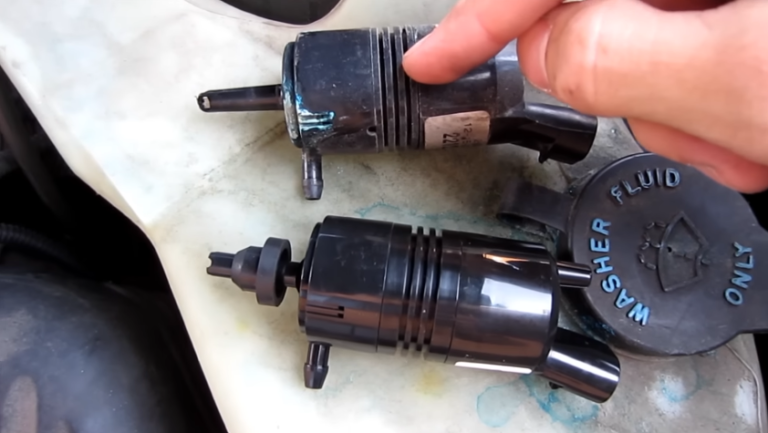
If the washer pump becomes noisy, the spray weakens, or fluid leaks after an unsuitable product was added, stop using the system until the cause is clear. A mechanic can check the reservoir, pump, hoses, and nozzles and advise whether the mixture needs to be removed.
Check the symptoms
Look for leaks, unusual pump sounds, poor spray, or persistent streaking.
Avoid further mixing
Do not add cleaners, solvents, or extra alcohol to try to correct the problem.
Can Alcohol Leave Streaks on the Windshield?
Yes, a poorly matched mixture can leave streaks or fail to remove road film effectively. Streaking can also result from worn wiper blades, oily dirt, a contaminated windshield, or unsuitable washer fluid. It does not prove that alcohol alone caused the problem.
If the windshield remains smeared, avoid driving when your view is impaired. Park in a safe place and clean the glass with a suitable automotive glass cleaner. Replace worn wiper blades when needed and refill the washer system with the recommended product.
If streaks appear
Check the glass, blades, and fluid instead of adding another chemical.
If visibility stays poor
Do not continue driving until you can see the road clearly.
What Should You Use Instead of Alcohol?
Use automotive windshield washer fluid selected for the weather and cleaning needs in your area. This is the most practical way to avoid guessing about freezing resistance, cleaning ability, and material compatibility. Read the label before filling the reservoir, and follow any vehicle-specific instructions in the owner’s manual.
In the United States, climate varies widely. A driver in Minnesota may need a winter formula rated for severe cold, while a driver in Florida may focus more on bug removal and road film. A product that works well in a mild climate may not provide enough protection during a hard freeze elsewhere.
Ready-to-use washer fluid is sold pre-mixed for direct use. Concentrated products must be prepared according to their labels, including any stated water type and dilution instructions. Do not add alcohol to either type unless the vehicle maker and the product manufacturer explicitly approve the exact combination.
Source: thecarhow.com
Winter washer fluid
Choose a formula with a freeze-protection rating suited to the coldest conditions you expect to encounter.
Summer washer fluid
Consider a product intended to remove bugs and seasonal road grime when freezing temperatures are not a concern.
All-season washer fluid
Use the labeled performance range to decide whether it fits your climate and driving conditions.
Concentrated washer fluid
Follow the manufacturer’s exact mixing directions. Do not estimate the dilution or add household chemicals.
How to Choose Fluid for Your Local Weather
Start with the lowest temperatures you expect during the time the fluid will remain in the vehicle. Check the product label for its stated freeze-protection limit and choose a suitable margin for local conditions. Do not assume a product rated for a mild winter will protect the system in a much colder region.
Also consider what accumulates on your windshield. Bug residue, dust, pollen, road salt, and oily film can need different cleaning performance. The right product should match both the climate and the type of dirt you commonly encounter.
Cold northern states
Prioritize an automotive winter formula with an appropriate low-temperature rating.
Warm southern states
Choose a formula that suits local weather and common road grime, while checking for occasional cold snaps.
Mountain and changing climates
Account for sharp temperature changes and conditions along your full route, not only at home.
What to Do If You Already Added Alcohol
If you have already poured household alcohol into the windshield washer reservoir, do not panic, but do not add more. The best next step depends on which product was used, its concentration, how much entered the reservoir, and the vehicle’s instructions. Those details matter more than a generic online mixing ratio.
Read the label on the alcohol product and note the type and concentration. Check the vehicle owner’s manual for washer-fluid requirements, then contact a qualified mechanic or the vehicle manufacturer’s service department if the product or amount is uncertain. Explain what was added so the technician can give advice based on the actual mixture.
Do not try to fix the mixture by adding more alcohol, detergent, vinegar, ammonia-based cleaner, coolant, or another solvent. These additions can introduce further uncertainty. If the windshield is not clearing properly, do not rely on the washer system while driving in conditions where clear visibility is essential.
If there is a leak, unusual pump noise, or a failure to spray, have the system checked before continued use. A technician can determine whether the reservoir needs professional draining and whether the pump, lines, or nozzles need attention. Do not siphon fluid by mouth or handle unknown mixtures casually.
Source: garagesee.com
Step 1: Stop adding chemicals
Do not try to correct an unknown mixture by adding more substances.
Step 2: Identify the product
Keep its container or label available so its ingredients and concentration can be checked.
Step 3: Check the vehicle instructions
Use the owner’s manual to confirm the correct washer fluid and any relevant warnings.
Step 4: Seek qualified advice
Ask a mechanic how to handle the mixture if its suitability is uncertain or the system shows symptoms.
Step 5: Restore proper operation
Use the recommended automotive fluid after the situation has been assessed and any needed service is complete.
What If the Washer Fluid Has Frozen?
If the washer system is frozen, do not keep running the pump in an attempt to force fluid through blocked lines. The reservoir, hoses, or nozzles may be frozen, and continued operation may strain the system. Adding household alcohol is not a reliable way to thaw the entire system because the distribution and temperature of the mixture are unknown.
Move the vehicle to a suitable warmer location if possible, and allow the system to thaw without applying an open flame or unsafe direct heat. Once thawed, have the fluid and system checked as needed. Refill with a winter-rated automotive washer fluid that matches the conditions you expect.
Avoid forced spraying
Do not keep activating a pump that appears blocked by ice.
Thaw safely
Use a suitable warmer location and avoid flames or improvised heating methods.
Prevent a repeat
Choose a washer product with an appropriate stated freeze-protection rating.
Common Mistakes to Avoid
Many washer-fluid problems begin with a reasonable goal but an unsuitable shortcut. Drivers want to save money, remove stubborn grime, or stop freezing in winter. Yet a washer system is part of the equipment that helps a driver maintain a clear view, so the fluid should not be treated as a place to experiment with household chemicals.
The simplest way to avoid trouble is to follow the vehicle manual and the fluid label. If the system does not work as expected, diagnose the cause instead of changing the mixture at random. This also makes it easier for a mechanic to identify the problem if service is needed.
Source: storage.googleapis.com
Assuming every alcohol is the same
Methanol, ethanol, and isopropyl alcohol have different properties and hazards. Household products are not interchangeable with formulated automotive fluid.
Guessing a safe ratio
There is no universal amount of rubbing alcohol that is suitable for every washer reservoir and existing fluid.
Ignoring the temperature rating
A formula suited to mild weather may not protect against the coldest temperatures on your route.
Mixing unrelated cleaners
Do not combine washer fluid with dish soap, vinegar, ammonia-based glass cleaner, coolant, or other chemicals unless the manufacturer explicitly approves the combination.
Using coolant as a substitute
Engine coolant is not washer fluid. It can impair visibility and may harm the vehicle’s finish or washer system.
Driving with a smeared windshield
If glare or streaks make the road hard to see, stop somewhere safe and correct the visibility problem before continuing.
Does Adding More Alcohol Always Improve Freeze Protection?
No universal rule supports that assumption. Freeze protection depends on the type and concentration of the ingredients and the composition of the complete mixture. A higher concentration of one chemical does not automatically produce the best cleaning performance or the safest result in a particular vehicle.
The useful number is the freeze-protection rating stated for the finished automotive product, used within the conditions and instructions on its label. If the existing fluid is not suitable for the expected cold, replace it with a product designed for those conditions rather than trying to reformulate it.
Use a stated rating
Check the finished product’s labeled temperature protection instead of estimating it from an ingredient.
Keep the formula intact
Avoid adding household alcohol or other chemicals to change the product’s stated performance.
A Practical Washer Fluid Decision Guide
Use the table below to match a common situation with a safer next step. It is not a substitute for the owner’s manual, but it helps separate routine maintenance from problems that need further attention. When a chemical has already been added, the correct response depends on the product and amount involved.
Source: storage.googleapis.com
Reservoir is low
Refill with automotive washer fluid suitable for the current season and the vehicle’s requirements.
A freeze is expected
Check the stated temperature rating and use an appropriate winter-rated washer product.
Household alcohol was added
Stop adding chemicals, identify the product, and ask a qualified mechanic if the mixture’s suitability is uncertain.
Fluid sprays but leaves streaks
Check the glass, wiper blades, and product suitability. Do not assume more alcohol will solve the problem.
The pump runs but no fluid appears
The reservoir may be empty, the nozzles may be blocked, or the system may be frozen. Avoid repeatedly running a pump that may be blocked.
Fluid leaks or the pump sounds unusual
Stop using the system until the cause is checked. Seek service if the problem continues.
How to Refill the Reservoir Correctly
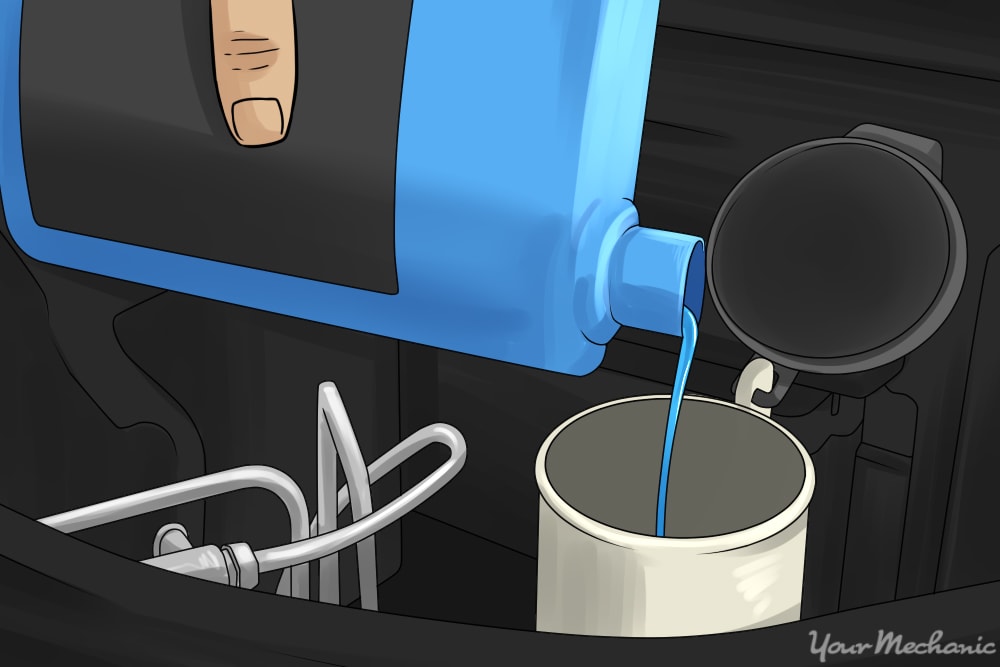
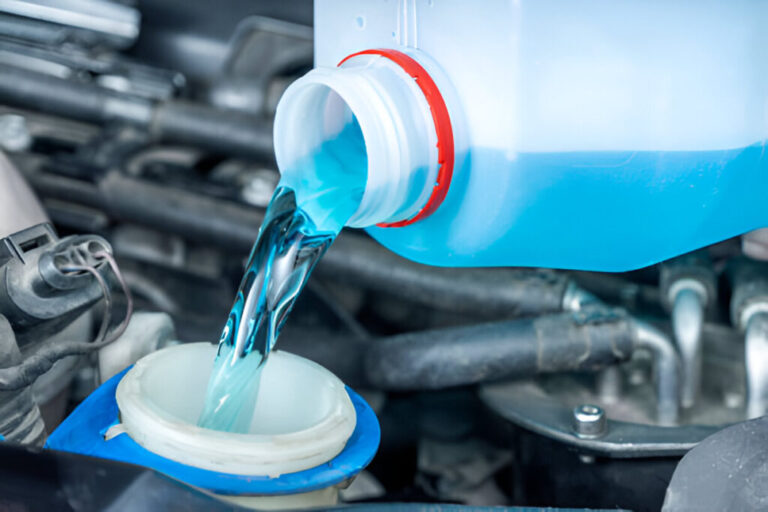
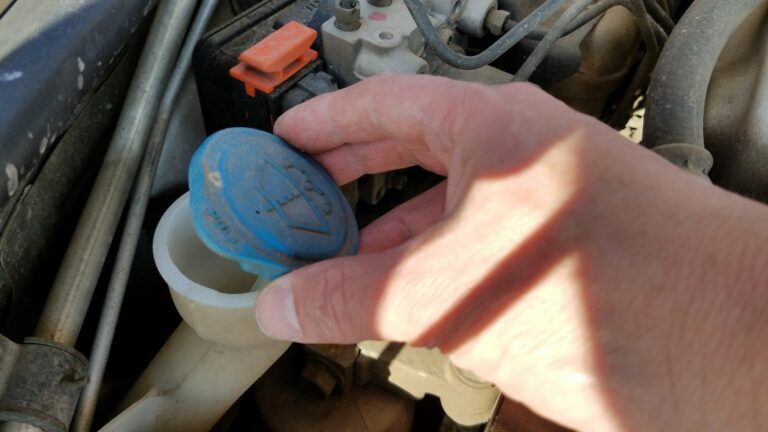
Park the vehicle on a level surface, turn it off, and consult the owner’s manual to locate the washer reservoir. The cap often has a windshield-and-spray symbol. Confirm the reservoir carefully because the coolant reservoir serves a different purpose and must not be confused with it.
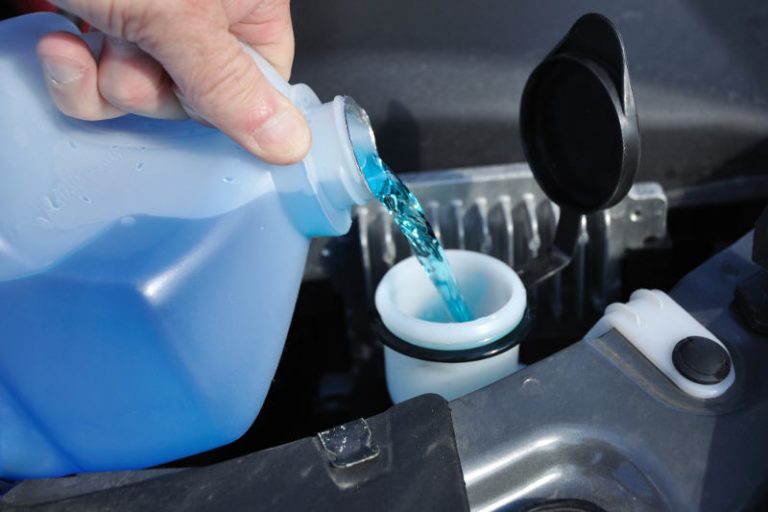
Check the washer-fluid label and any vehicle-specific directions before opening the reservoir. Keep dirt out of the opening, add the recommended product according to its instructions, and secure the cap. Wipe up any spill as directed by the product label.
When it is safe to do so, test the washer system while the vehicle is parked. Check that the spray reaches the windshield and that the wipers clear the glass without leaving a serious smear. If the system does not work correctly, investigate the problem before relying on it during a trip.
Before filling
Confirm the correct reservoir and read the product and vehicle instructions.
While filling
Use the specified automotive fluid and keep dirt and spills under control.
After filling
Secure the cap and check washer operation while parked.
Frequently Asked Questions
Q
Can you add rubbing alcohol to windshield washer fluid in winter?
It is best not to add household rubbing alcohol to washer fluid, even in winter. Use an automotive winter washer fluid with a stated freeze-protection rating that suits the temperatures you expect. If your current mixture has already been altered, check the product and vehicle instructions and seek qualified advice when needed.
Q
Does windshield washer fluid already contain alcohol?
Some windshield washer fluids contain alcohol-based ingredients, but the exact formula varies by product and market. Read the label or product safety information rather than assuming every washer fluid has the same ingredients. The presence of alcohol in a formulated product does not mean that household alcohol should be added to it.
Q
Can you use 70% or 91% isopropyl alcohol in a washer reservoir?
Neither concentration should be treated as a routine washer-fluid additive. Household rubbing alcohol is sold for labeled uses, and its ingredients and hazards may differ from those of automotive washer fluid. Use a product intended for vehicle washer systems instead of selecting a concentration or mixing ratio yourself.
Q
Can alcohol unclog frozen windshield washer nozzles?
Adding household alcohol is not a reliable or recommended way to thaw a frozen washer system. Avoid repeatedly running the pump if the system appears blocked. Let the vehicle thaw in a suitable warmer location, then check the system and use an appropriate winter-rated washer fluid.
Q
What should you do if you accidentally mix rubbing alcohol with washer fluid?
Stop adding chemicals and identify the alcohol product and concentration. Check your owner’s manual and ask a qualified mechanic or the vehicle manufacturer’s service department how to handle the mixture. Do not try to correct it with more alcohol, soap, vinegar, coolant, or another cleaner.
Q
Is alcohol-based windshield washer fluid flammable?
Some washer fluids containing alcohol can be flammable. The risk depends on the specific formulation, so follow the product label and vehicle manual. Keep washer fluid away from flames, sparks, and other ignition sources, and never assume that a liquid used in a car is nonflammable.
Q
Can you use plain water instead of washer fluid?
Some vehicle manuals permit plain water temporarily in warm conditions, but water does not provide the same cleaning performance or freeze protection as a suitable washer product. It can freeze in cold weather and may leave mineral deposits. Follow your owner’s manual and use proper automotive washer fluid when conditions require it.
✦ Wrapping Up
Conclusion
Can you add alcohol to windshield washer fluid? Although alcohol is used in some formulated washer products, adding household rubbing alcohol is not a recommended general practice. The result depends on the type of alcohol, the existing mixture, the vehicle, and the weather, so a universal mixing amount cannot be given safely or reliably.
For everyday cleaning and winter protection, choose automotive washer fluid designed for your climate and follow the instructions on its label. If alcohol has already been added, do not add more chemicals or assume that the mixture is safe. Check the vehicle instructions and consult a qualified mechanic when the product or amount is uncertain.
💡 Key Takeaway
Use the right automotive washer fluid for your weather, check its labeled freeze-protection rating, and avoid household alcohol additives unless the vehicle and product manufacturers explicitly approve the exact mixture.
Learn how to refill windshield washer fluid in a Honda Accord, locate the reservoir, choose the right fluid, avoid common mistakes, and troubleshoot spray problems.