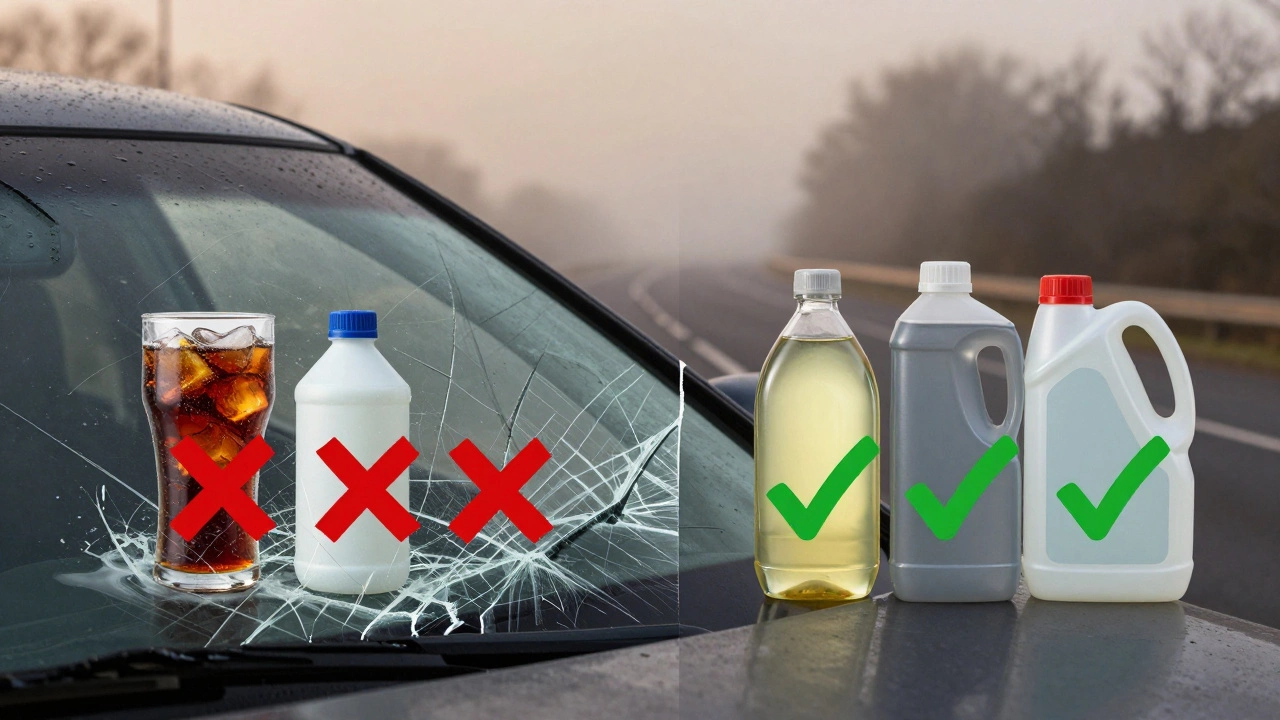
The best substitute for windshield washer fluid is a vehicle-compatible washer fluid rated for your local weather. Distilled water may work briefly in warm weather, but it does not clean as well or protect against freezing. Avoid household cleaners, dish soap, vinegar, alcohol mixtures, and engine fluids in your washer reservoir.
Across the United States, drivers rely on windshield washer fluid to clear road dust, pollen, bug residue, salt, and grime. A dry reservoir can become a problem during a commute, a road trip, or a sudden change in weather. When the fluid runs out, a household product may seem like an easy fix, but the wrong choice can leave streaks, clog washer nozzles, or create a freezing hazard.
The safest response depends on the season, the type of dirt on the glass, and the instructions in your vehicle owner’s manual. A warm day in Florida presents different risks from a winter drive in Minnesota, where water in the washer system can freeze. For most drivers, buying the correct ready-to-use washer fluid is the simplest option. Distilled water is only a limited, temporary choice in suitable warm conditions.
This guide explains which alternatives may work, which products to avoid, and what to do if you have already filled the reservoir with the wrong liquid. It also covers winter protection, cleaning performance, and simple steps to restore a washer system without putting your visibility at risk.
What Can You Use Instead of Windshield Washer Fluid?
The most reliable replacement is another automotive windshield washer fluid that matches your vehicle and climate. If the store is closed and the weather is warm, distilled water may provide limited emergency help. However, no ordinary household liquid matches every cleaning, material-compatibility, and freeze-protection feature of a properly selected automotive washer fluid.
Windshield washer fluid is made to remove common road contaminants while flowing through a small reservoir, pump, hoses, and spray nozzles. Depending on its formula, it may also help loosen insects, reduce streaks, and resist freezing. A substitute must be judged by more than whether it looks clean in a bottle.
Before choosing an alternative, check your owner’s manual and the label on the existing fluid. Some vehicles have specific requirements for washer-system materials, while certain products are concentrates that must be diluted as directed. Do not assume that every blue liquid or every glass cleaner is suitable for an automotive washer system.
Source: canyoumix.com
Best overall option
Use a commercially formulated automotive washer fluid with a temperature rating appropriate for your area.
Limited warm-weather option
Distilled water may help rinse loose dirt for a short time when freezing is not a concern.
Best for winter
Choose a winter-rated automotive washer fluid that remains usable at temperatures below those expected on your route.
Avoid household experiments
Do not mix cleaning products or pour unapproved liquids into the reservoir to create a homemade formula.
Why the Right Fluid Matters
The washer system uses a pump to move liquid from the reservoir through narrow passages and onto the windshield. A fluid that is too thick, creates too much foam, leaves deposits, or freezes may prevent the system from working as intended. Some products can also leave a film that makes glare worse when headlights shine across the glass at night.
The windshield is part of your field of view, so cleaning performance affects more than appearance. A product that seems acceptable while parked may smear dirt across the glass when the vehicle is moving. Clear visibility should take priority over saving a few dollars on an improvised substitute.
Cleaning
The fluid should loosen road film and help the wipers clear the glass without leaving a distracting residue.
Temperature
The formula must suit the lowest temperatures the vehicle may encounter.
Compatibility
The product should be approved for the washer system and its seals, hoses, pump, and other components.
Can You Use Distilled Water Instead of Windshield Washer Fluid?
Distilled water is a limited temporary alternative when temperatures remain safely above freezing and the vehicle manual does not prohibit its use. It can rinse loose dust and light dirt from the windshield, but it lacks the cleaning agents found in purpose-made washer fluid. It also does not provide dependable protection against frost or ice.
Distilled water contains fewer dissolved minerals than ordinary tap water. That makes it less likely to leave mineral deposits as it dries, although it does not prevent every kind of streak or residue. It also does little to remove oily road film, dried insects, or heavy grime on its own.
Treat water as a short-term measure rather than a permanent replacement. Refill the system with suitable automotive washer fluid as soon as practical, particularly before driving through rain, dusty areas, or roads treated with salt.
Source: evpulsecms.com
Distilled Water Versus Tap Water
Distilled water is generally preferable to tap water if a temporary water-only rinse is appropriate. Tap water can contain minerals that may leave deposits over time, especially if the vehicle repeatedly uses water instead of formulated fluid. Water quality varies by location, so the amount of residue cannot be predicted for every household supply.
Neither distilled nor tap water offers the full cleaning performance of automotive washer fluid. Both can freeze, and ice inside the reservoir, hoses, or nozzles can prevent operation or damage components. Do not use water alone when frost or freezing temperatures are possible.
Distilled water
Has a lower mineral content and may be useful for a brief warm-weather rinse.
Tap water
May contain minerals that contribute to deposits and is not a reliable long-term washer fluid.
Either option
Can freeze and does not replace the cleaning additives in a proper washer formula.
When Water Is Not a Safe Choice
Do not use plain water if temperatures may fall to freezing during the time the vehicle is parked or driven. Water can freeze before the driver notices a problem, leaving the washer system unable to clear the windshield when it is needed most. A clear forecast at the start of a trip does not guarantee that the vehicle will remain in warm conditions.
Water is also a poor choice when the windshield has thick insect residue, greasy film, or stubborn road grime. Repeated wiping without enough cleaning power may spread contamination and increase glare. Use an approved cleaner outside the reservoir when suitable, or wash the glass by hand while parked in a safe place.
Avoid freezing conditions
Use a properly rated automotive formula instead of water.
Avoid heavy grime
Clean the glass with a product approved for automotive windshields.
Restore normal protection
Replace the temporary water supply with the correct washer fluid promptly.
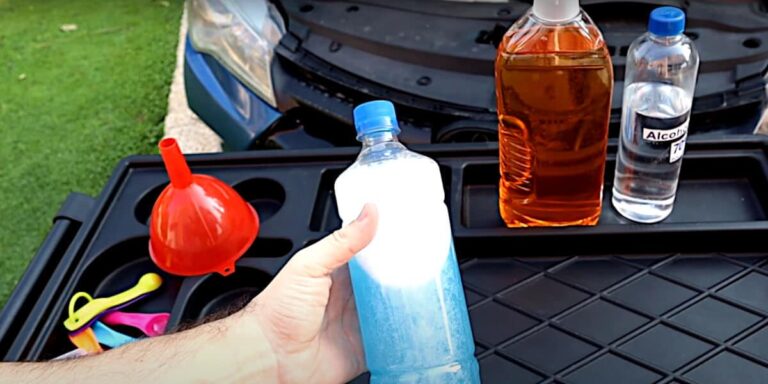
Can You Make Homemade Windshield Washer Fluid?
Homemade windshield washer fluid is not the preferred choice because household recipes often lack verified freeze protection, material compatibility, and consistent cleaning performance. A mixture may appear to work in mild weather but fail when temperatures drop or road grime becomes difficult to remove. Unless the vehicle manufacturer specifically approves a formula, use an automotive product made for the washer system.
Online recipes may suggest combining water with dish soap, vinegar, alcohol, or household glass cleaner. These ingredients have different properties and can introduce risks when placed in a system designed for a specific type of fluid. A recipe that does not state a tested freezing point or confirm compatibility with the vehicle does not provide a dependable safety margin.
A ready-to-use product is often the more practical option because its directions and temperature rating are stated on the label. Concentrates may also be available, but they must be diluted exactly as directed with the recommended water type. Adding extra water to stretch a winter formula can reduce its freeze protection.
Source: minit-tune.com
Why Common DIY Recipes Can Fail
The main issue with homemade mixtures is uncertainty. The final result depends on the exact ingredients, concentration, water quality, ambient temperature, and compatibility with the washer system. Without reliable testing, the mixture’s freezing point and cleaning performance are unknown.
Household products may also create foam, leave streaks, affect rubber components, or cause unwanted residue. Some mixtures can be flammable or release harmful vapors. Combining products without checking their labels can create additional chemical hazards.
No verified freeze rating
A homemade mixture may freeze in the reservoir or spray lines during cold weather.
Uncertain material compatibility
Household formulas may not be suitable for the pump, seals, hoses, paint, or windshield coatings.
Inconsistent cleaning
An improvised mixture may leave streaks or fail to remove oily film and insects.
A Better Way to Save Money
If cost is the main concern, compare the price and intended use of automotive washer fluids rather than experimenting with household chemicals. A basic warm-weather formula may meet the needs of drivers in mild climates, while a winter-rated product is needed where freezing weather is expected. The cheapest bottle is not a good value if its temperature rating does not fit the trip.
Follow the label when using a concentrate. Do not guess at the dilution ratio or add household ingredients to change the formula. If the instructions require a specific water type or minimum concentration, follow those directions.
Check the label
Compare the stated temperature range and instructions before buying.
Use the correct amount
Follow the specified dilution ratio for concentrated products.
Avoid untested mixtures
Do not trade known product specifications for uncertain homemade performance.
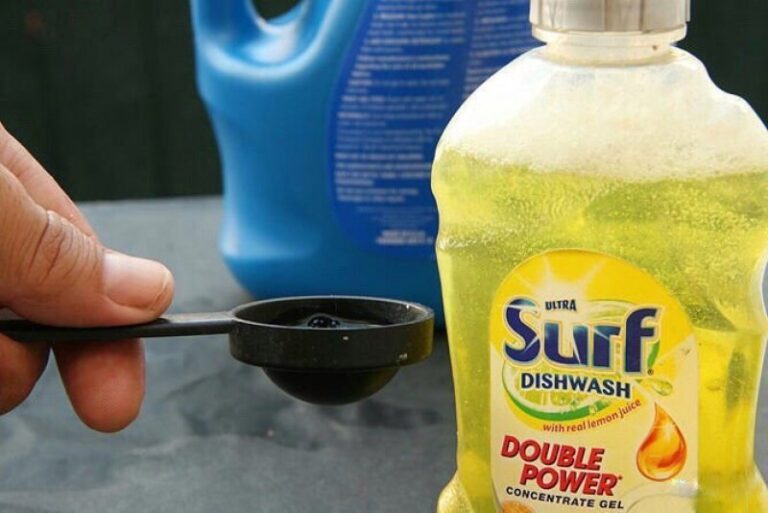
Can You Use Dish Soap Instead of Windshield Washer Fluid?
Dish soap is not a recommended substitute for windshield washer fluid. Although it is designed to remove grease from dishes, that does not make it suitable for a vehicle’s washer pump, spray nozzles, windshield, or surrounding trim. Soap may create excess foam, leave streaks, and interfere with clear vision.
A small amount of soap used in a suitable hand-washing method is different from pouring dish detergent into the washer reservoir. When cleaning a parked vehicle by hand, use an automotive glass cleaner or car-wash product according to its label. Keep cleaning solutions out of the reservoir unless the manufacturer approves them.
If dish soap has already been added, do not keep spraying it across the windshield while driving. Check the vehicle manual and contact a mechanic if the mixture is substantial or the system behaves abnormally. The appropriate response may involve draining and flushing the reservoir and lines.
Source: cdn.itsoverflowing.com
Problems Dish Soap May Cause
Soap can produce foam that makes it harder to judge how well the glass is being cleaned. It may also leave a film that catches light, particularly at night or in direct sunlight. The outcome depends on the product and concentration, so a mixture that seems harmless in a bucket should not be assumed suitable for the washer system.
Residue can also affect the quality of the wiper sweep. If the blades drag, chatter, or smear contamination, visibility may worsen rather than improve. Clean the windshield and wiper blades using an appropriate method instead of relying on an unapproved reservoir mixture.
Foam
Excess suds can interfere with cleaning and make the spray pattern less useful.
Streaks
Soap residue may create glare and leave the glass less clear.
System uncertainty
Household detergent is not formulated or verified for every automotive washer system.
Can You Use Vinegar as a Washer Fluid Substitute?
Vinegar is not a reliable replacement for automotive windshield washer fluid. Its acidity may help with certain deposits during controlled cleaning, but that does not establish that it is safe for a washer pump, seals, hoses, paint, or specialty glass coatings. Household vinegar also lacks a verified automotive freeze rating.
Using vinegar in a bucket or cloth to clean a compatible surface is not the same as sending it through the washer system. Avoid putting vinegar into the reservoir unless the vehicle manufacturer specifically approves that product and use. For normal glass cleaning, choose an automotive glass cleaner with clear usage instructions.
Do not mix vinegar with bleach or cleaners containing bleach. Such combinations can release dangerous chlorine gas. Keep household chemicals separate and follow all product warnings.
Source: johnsportmap.com
Why Vinegar Is a Poor Long-Term Option
The washer system is a network of components designed to move a suitable liquid onto the glass. An acidic household solution has no universal compatibility guarantee for those parts. Repeated exposure may create avoidable risks, and the actual effect depends on the formulation and vehicle materials.
Vinegar also does not provide the balanced cleaning agents and temperature protection of a purpose-made fluid. It may not remove road oil or insect residue effectively. A product designed for automotive glass is the more predictable choice.
No standard automotive rating
Ordinary vinegar does not provide a verified washer-fluid freezing point.
Material concerns
Compatibility with seals, hoses, coatings, and other parts is not guaranteed.
Chemical safety
Never combine vinegar with bleach or bleach-containing products.
Can You Use Windex or Other Household Glass Cleaners?
Household glass cleaners such as Windex should not be poured into the windshield washer reservoir unless the exact product is explicitly approved by the vehicle manufacturer. A household cleaner may be intended for windows and mirrors, but its formula may not be suitable for automotive washer-system components, exterior paint, or particular glass coatings.
Some household glass cleaners contain ingredients that can leave residue or interact poorly with certain surfaces. Products may also differ by version, so the brand name alone is not enough to establish compatibility. Read the label and use the product only for the surfaces and methods specified.
An automotive glass cleaner may be appropriate for manual cleaning if its label permits exterior windshield use. Apply it while the vehicle is parked, use a clean microfiber cloth, and keep the liquid away from hot surfaces. Never substitute a manual cleaning product for a reservoir fluid without explicit approval.
Source: i.ytimg.com
Household Glass Cleaner Versus Automotive Washer Fluid
The two products serve related but different purposes. A household glass cleaner is usually applied directly to a surface and wiped away, while washer fluid must pass through a pump and narrow spray passages before it reaches the windshield. That difference changes what the product needs to do.
Automotive washer fluid is formulated for the intended system and may provide cleaning agents and cold-weather protection. A household product’s ability to clean a mirror does not prove that it will perform properly in a moving vehicle or remain usable during a freeze.
Household glass cleaner
Use only on approved surfaces and according to the product label.
Automotive glass cleaner
Use for hand cleaning when the label confirms suitability for the windshield.
Washer reservoir
Fill only with a suitable automotive washer fluid or another solution explicitly approved for the vehicle.
Can You Use Alcohol, Antifreeze, or Coolant Instead?
Do not use engine antifreeze or coolant as windshield washer fluid. These products are designed for the engine cooling system, not for cleaning the windshield. They can leave an unwanted film, create a serious exposure hazard, and contaminate surfaces or areas where pets and wildlife may come into contact with the liquid.
Alcohol requires a more careful distinction. Certain automotive washer fluids contain alcohol-based ingredients to help lower the freezing point, but that does not mean that adding rubbing alcohol, drinking alcohol, or an improvised alcohol mixture is safe. The final concentration, flammability, material compatibility, and cleaning performance may be uncertain.
Use only an automotive washer product intended for the expected temperatures. Do not try to make an unsuitable mixture winter-ready by adding chemicals. If you need a lower freezing point, buy a formula with a clearly stated rating that meets the conditions in your area.
Source: evpulsecms.com
Why Engine Antifreeze and Coolant Are Unsafe Substitutes
Coolant contains ingredients selected for the engine’s cooling circuit, corrosion control, and heat transfer. Those functions are different from the needs of a windshield washer system. A product that works in a sealed engine circuit is not automatically appropriate for glass, wiper blades, paint, or a washer pump.
Many engine coolants contain ethylene glycol or other substances that can be harmful if swallowed or mishandled. Keep coolant in its intended system, store it securely, and clean up spills according to its safety instructions. If coolant has entered the washer reservoir, avoid spraying it and seek qualified help to remove the contamination.
Engine coolant
Never use it as a windshield washer fluid substitute.
Automotive antifreeze
Do not confuse engine antifreeze with windshield washer fluid formulated for winter.
Homemade alcohol mixtures
Avoid untested combinations because concentration, flammability, and compatibility are uncertain.
Why Winter Washer Fluid Is Different
Winter-rated washer fluid is formulated to remain usable at a stated low temperature. The actual level of protection depends on the specific product and its instructions. The number on the label should guide the choice, not the fluid’s color or a general assumption about the ingredients.
A fluid rated for a mild winter may not be suitable for a severe cold snap. Drivers should consider overnight parking, mountain travel, and temperatures along the entire route. If the reservoir already contains a weaker mixture, adding a small amount of winter fluid may not immediately provide the protection shown on the new bottle.
Check the temperature rating
Choose a product rated below the lowest temperatures you reasonably expect.
Follow dilution directions
Do not dilute a ready-to-use winter product unless its instructions allow it.
Avoid improvised additives
Use the product as labeled rather than adding household alcohol or other chemicals.
Comparison Table: Which Washer Fluid Alternative Is Best?
The table below compares common options by their practical use and main limitations. It is a general guide, not a guarantee for every vehicle or product. The owner’s manual and the specific product label take priority whenever compatibility or temperature protection is uncertain.
Source: davidjelliott.ca
Automotive washer fluid
Best overall. Provides cleaning designed for the washer system, with temperature protection determined by the formula and label.
Distilled water
Limited short-term use in warm conditions. Provides little cleaning power and no dependable protection against freezing.
Tap water
Not a preferred long-term option. May leave mineral deposits and can freeze.
Dish soap
Not recommended for the reservoir. May foam, streak, or leave residue.
Vinegar
Not recommended for the reservoir. Has no verified automotive freeze rating and may raise compatibility concerns.
Household glass cleaner
Not recommended for the reservoir without explicit approval. Manual use depends on the exact product label and surface.
Rubbing alcohol or homemade alcohol mixtures
Avoid improvised use. Concentration, flammability, and compatibility are uncertain.
Engine coolant or antifreeze
Never use as washer fluid. It is made for a different system and may create contamination and exposure hazards.
How to Choose Based on Your Climate
In a warm climate, a standard automotive washer fluid may be adequate for routine cleaning. In areas with frequent insects or heavy road grime, choose a product intended for those conditions. Follow the label rather than assuming all warm-weather formulas clean equally well.
In cold regions, use a winter formula rated for the lowest expected temperature. If you travel between states with different climates, choose according to the coldest conditions along the route rather than the weather at your starting point. This helps reduce the risk of a frozen washer system when visibility matters most.
Warm weather
Use a suitable standard automotive washer fluid; distilled water is only a brief fallback when conditions permit.
Cold weather
Choose a winter-rated formula and preserve its specified concentration.
Mixed weather or long trips
Plan for the coldest conditions expected along the route and during parking.
How to Refill Your Windshield Washer Reservoir Safely
Refilling the reservoir with the correct automotive washer fluid is usually a simple maintenance task. Park on level ground, switch off the engine, and allow hot components to cool before opening the hood. Consult the owner’s manual to locate the washer reservoir and identify any product restrictions.
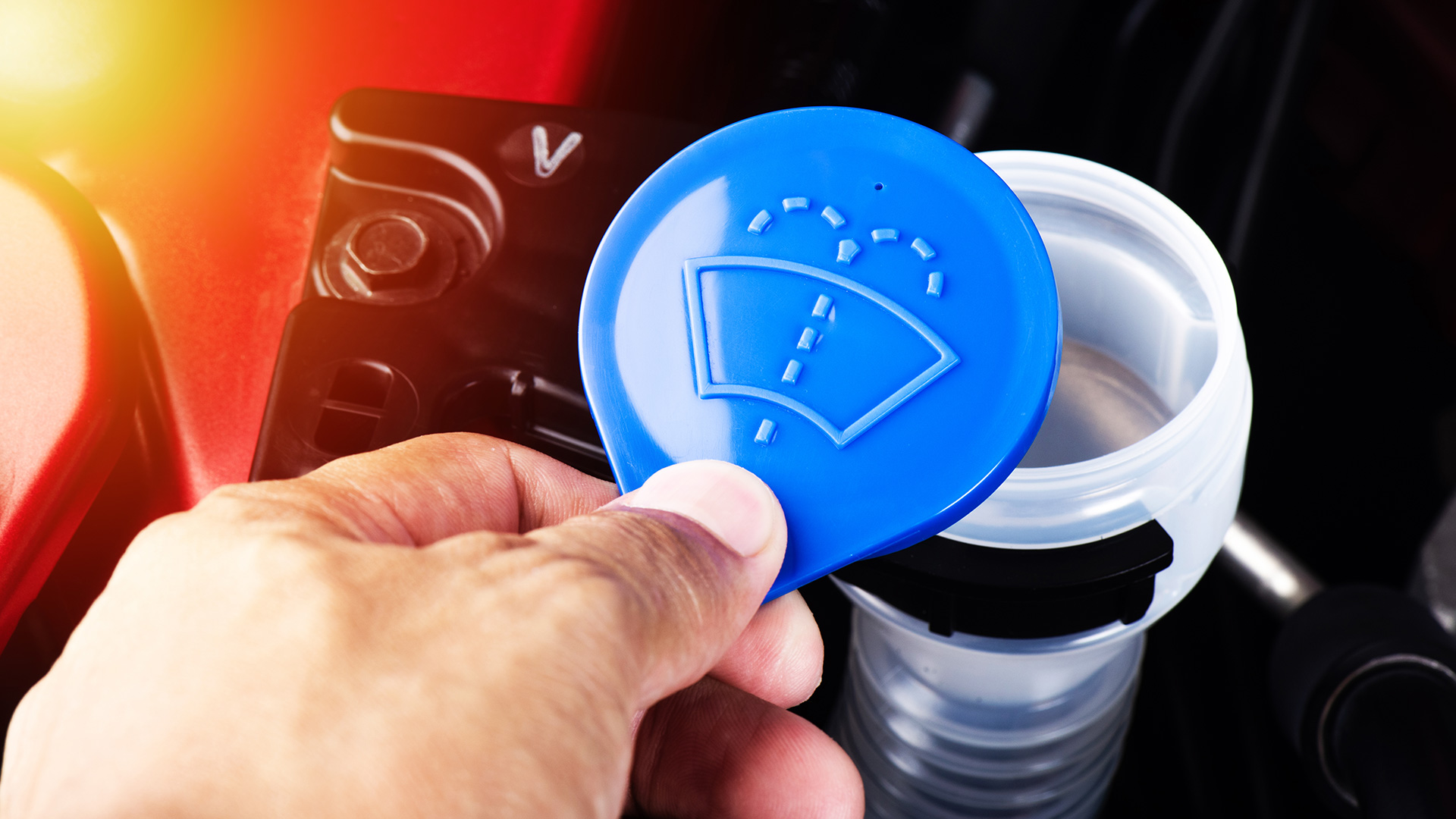
Do not confuse the washer-fluid cap with the engine coolant reservoir, brake-fluid reservoir, or another fluid container. Washer-fluid caps often carry a windshield-and-spray symbol, but designs vary. If you cannot identify the correct reservoir with confidence, stop and consult the manual or a mechanic.
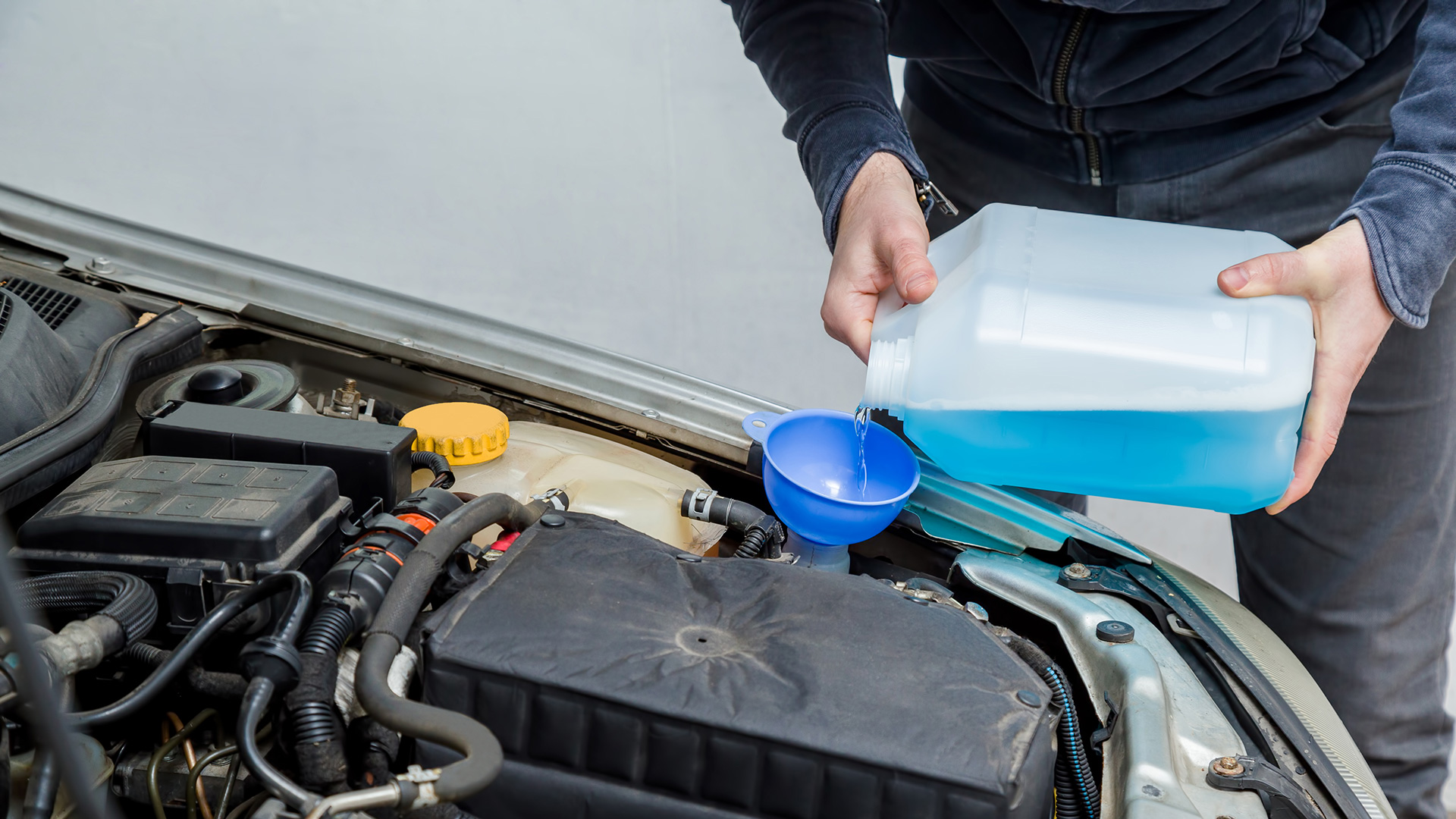
Use a clean funnel if needed, and pour slowly to avoid spills. Keep the fluid away from children and pets, close the cap securely, and wipe up any spilled liquid according to the label. Once the system is filled, test it while parked in a safe place.
Source: northwichtyrescentre.co.uk
Step-by-Step Refill Instructions
Start by checking the product label for compatibility and temperature suitability. If the product is concentrated, prepare it only according to the stated dilution directions. Do not mix it with household cleaners or unknown fluid left in an unmarked container.
Step 1: Park safely
Switch off the vehicle, park on level ground, and keep away from moving traffic.
Step 2: Find the correct reservoir
Use the owner’s manual and the cap symbol to identify the windshield washer reservoir.
Step 3: Check the fluid
Read the label, verify the temperature rating, and follow any dilution instructions.
Step 4: Fill carefully
Add the fluid slowly without overfilling or spilling it onto nearby parts.
Step 5: Close and test
Secure the cap, start the vehicle as appropriate, and test the spray while parked.
What to Do If the Washer System Does Not Work
If the reservoir is full but no fluid sprays, check for a frozen system, an empty or damaged hose, blocked nozzles, a failed pump, or an electrical problem. Listen for the pump when activating the washer control, but do not repeatedly operate it if the system may be frozen. Forcing a frozen system to run can cause further damage.
If the pump runs but fluid does not reach the glass, the cause may be a blockage, leak, or disconnected line. If there is no pump sound, the problem may involve the pump, fuse, wiring, or control circuit. The exact diagnosis depends on the vehicle, so consult the manual or a qualified mechanic when basic checks do not resolve the issue.
No spray in freezing weather
Allow the vehicle and washer system to warm safely; do not pour boiling water onto the windshield or washer components.
Pump runs but no spray
Look for visible leaks or blocked nozzles, and seek service if the cause is unclear.
Pump is silent
Check the manual for basic fuse guidance and arrange professional diagnosis if needed.
Fluid leaves a film
Stop using the unsuitable mixture and clean the glass with an approved product before driving.
What to Do If You Already Used the Wrong Fluid
If you have already poured an unsuitable liquid into the reservoir, avoid spraying it onto the windshield until you know what the liquid is and whether it is appropriate for the system. A small amount of water in warm weather is different from a reservoir containing coolant, a concentrated household cleaner, or an unknown chemical mixture. The next step depends on the substance, amount, and vehicle.
Check the product label and your owner’s manual, then contact a qualified mechanic or vehicle service center if the liquid may be harmful or incompatible. The system may need to be drained and flushed before it is refilled with the correct product. Do not attempt to neutralize the mixture by adding another chemical.
If the fluid has already reached the windshield, stop somewhere safe and clean the glass with an appropriate product before continuing. If the liquid creates glare, persistent smears, or an unusual odor, do not rely on the wipers alone to restore visibility. Use another safe transport option if the windshield cannot be made clear.
Source: evpulsecms.com
If You Added Water
When only water has been added and the weather is safely warm, replace it with suitable washer fluid as soon as practical. Do not wait if temperatures may fall below freezing. Water left in the system can freeze and stop the spray from working.
If freezing is possible or the system already appears frozen, avoid operating the washer pump. Have the vehicle warmed safely or seek service if you suspect damage. Never use an open flame or boiling water to thaw the reservoir, hoses, or windshield.
Warm conditions
Refill with the correct automotive washer fluid promptly.
Possible freezing
Do not operate a suspected frozen system; arrange safe thawing and inspection if needed.
If You Added Soap, Vinegar, or Household Cleaner
Do not keep using the mixture in an attempt to finish the reservoir. Check the exact product ingredients and ask a mechanic whether draining and flushing are required. Different formulas pose different risks, so a universal flush procedure cannot be recommended for every vehicle.
If you experience eye, skin, or breathing irritation from a chemical spill or vapor, move away from the exposure and follow the product safety instructions. If a person or pet may have swallowed coolant or another hazardous automotive chemical, seek urgent professional poison-control or veterinary guidance.
Identify the product
Keep the original container or label available for the mechanic.
Avoid further mixing
Do not add water, alcohol, vinegar, bleach, or another cleaner to try to correct the mixture.
Arrange appropriate service
Have the system assessed before normal use if the product may be incompatible.
If You Added Engine Coolant or an Unknown Chemical
Treat coolant or an unknown chemical in the washer reservoir as a contamination problem. Do not operate the pump, because spraying can spread the substance onto the windshield, paint, nearby surfaces, or areas accessible to pets and wildlife. Contact a mechanic for safe removal and cleaning.
Follow the chemical’s label for spill cleanup and disposal. Do not pour contaminated liquid into a storm drain, onto soil, or into a waterway. If exposure has occurred, use the appropriate poison-control, medical, or veterinary service based on who or what was exposed.
Stop using the washer system
Avoid spraying the contaminated liquid onto the windshield.
Arrange professional removal
Ask a qualified mechanic to determine the proper draining and flushing method.
Prevent further exposure
Secure the product and any spill away from children, pets, and wildlife.
Common Mistakes to Avoid
The most common mistake is choosing a substitute based only on its ability to clean glass. Washer fluid must also work with the vehicle’s pump and plumbing, avoid unwanted residue, and remain usable in the expected weather. A product that works for wiping a kitchen window may not be suitable for an automotive washer system.
Another mistake is assuming that a liquid cannot freeze because it contains a small amount of another ingredient. Freeze protection depends on the actual formula and concentration, not simply on whether alcohol or another additive is present. Follow the stated temperature rating instead of relying on a homemade calculation.
Drivers should also avoid running a washer system when it may be frozen, combining household chemicals, or driving with smeared glass. These shortcuts can turn a small maintenance problem into a visibility or repair issue.
Do not rely on color
Fluid color does not prove its ingredients, quality, compatibility, or freeze rating.
Do not over-dilute winter fluid
Extra water can weaken the product’s stated freeze protection.
Do not mix unknown liquids
Unplanned mixtures may react, create residue, or reduce cleaning performance.
Do not ignore streaks
A film or haze can worsen glare, particularly at night or in rain.
Do not keep driving with poor visibility
Pull over safely if the windshield cannot be cleared well enough to see the road.
When to Ask a Mechanic for Help
Professional help is appropriate when an unsuitable chemical has entered the reservoir, the system may be frozen, a leak appears, or the pump fails after basic checks. A mechanic can determine whether the system needs cleaning, repair, or replacement parts. The correct process varies by vehicle and by the substance involved.
If the windshield cannot be kept clear, do not continue driving merely because the destination is close. Stop at a safe location and arrange help. Visibility is a basic driving requirement, not a maintenance detail that can wait until later.
Chemical contamination
Seek advice if coolant, household cleaner, or an unknown substance entered the reservoir.
Repeated washer failure
Arrange inspection if the pump, nozzles, hoses, or electrical controls do not work.
Unsafe visibility
Do not resume the trip until the windshield can be kept clear safely.
Research Notes and Reader Question Gap Map
This article prioritizes the immediate decision: what to use when the washer reservoir is empty and how to avoid a substitute that could compromise visibility or damage the system. Its main evidence standard is conservative automotive maintenance guidance: use the vehicle manual and product label for compatibility, dilution, and temperature limits, and seek professional help when contamination or mechanical failure is possible.
The supplied image list was used as the permitted image source list. The images are illustrative and are not evidence that a homemade recipe is safe or that a product has been tested. No first-hand vehicle testing is claimed in this article.
A live inspection of competing search pages, current search-result questions, and vehicle-specific manuals was not completed for this draft. The question map below therefore identifies useful inferred next needs rather than presenting them as observed search demand. No search volume, ranking position, or competitor-wide content gap is claimed.
Question: Can distilled water be used temporarily?
Reader stage: immediate decision. Basis: inferred from the main query. Coverage: answered with warm-weather limits, cleaning trade-offs, and freezing risks. Evidence needed for vehicle-specific advice: owner’s manual. Priority: high.
Question: What if the fluid freezes?
Reader stage: troubleshooting. Basis: inferred from the risk of using water or a weak mixture. Coverage: answered with basic precautions and advice to avoid operating a suspected frozen system. Vehicle-specific thawing instructions remain dependent on the manual. Priority: high.
Question: What should I do after adding dish soap or coolant?
Reader stage: after the mistake. Basis: inferred from the potential consequences of an unsuitable substitute. Coverage: answered with stop-use precautions and professional assessment. The exact flushing procedure requires identification of the chemical and vehicle. Priority: high.
Question: Which winter rating should I buy?
Reader stage: product selection. Basis: inferred from regional weather differences. Coverage: answered through the principle of matching the product rating to expected temperatures. A precise recommendation requires local climate data and the actual product label. Priority: high.
Question: Why does washer fluid spray poorly even when the reservoir is full?
Reader stage: troubleshooting after refilling. Basis: inferred from common system symptoms. Coverage: answered with possible blockage, freezing, leakage, pump, and electrical causes. A model-specific diagnosis requires inspection. Priority: medium.
Editorial Scope and Evidence Limits
The article is a central informational guide for the search topic, rather than a product review or a vehicle-specific repair manual. Related questions about choosing a particular brand, comparing current prices, or repairing a specific washer pump would need separate evidence and a narrower scope.
The key recommendation remains the same across the scenarios covered here: use a compatible automotive washer fluid with a suitable temperature rating. Household liquids should not be treated as interchangeable with a product made for the washer system.
Documented general guidance
Use the vehicle manual, product label, and appropriate automotive service advice for compatibility and temperature limits.
Not established by this article
No homemade formula has been independently tested here, and no exact freezing point or component-damage threshold is claimed for an improvised mixture.
Next research step
For vehicle-specific claims, inspect the relevant owner’s manual and product safety documentation before publishing precise instructions.
Frequently Asked Questions
Q
What is the safest substitute for windshield washer fluid?
The safest choice is a compatible automotive windshield washer fluid rated for your local weather. Distilled water may provide a brief rinse in warm conditions, but it lacks the cleaning additives and freeze protection of a suitable washer formula. Check your owner’s manual before using an alternative.
Q
Can I use water instead of windshield washer fluid in summer?
Distilled water may be used temporarily in warm weather if your vehicle manual permits it and freezing is not a concern. It can rinse loose dust but may not remove insects or greasy road film. Replace it with proper washer fluid as soon as practical.
Q
Can I mix water with windshield washer fluid?
Only dilute a washer-fluid concentrate as directed on its label. Do not assume a ready-to-use product can be diluted without reducing its cleaning performance or freeze protection. If the product requires a particular water type, follow that instruction.
Q
Can I use rubbing alcohol to keep washer fluid from freezing?
Do not make an improvised alcohol mixture for the washer reservoir. The concentration, flammability, compatibility, and final freezing point may be uncertain. Choose an automotive winter washer fluid with a stated temperature rating instead.
Q
Can I put Windex or dish soap in the washer reservoir?
Do not put household glass cleaner or dish soap in the reservoir unless the exact product is explicitly approved by the vehicle manufacturer. Such products may cause streaks, foam, residue, or compatibility problems. Use an appropriate automotive washer fluid for the system.
Q
What happens if windshield washer fluid freezes?
Frozen fluid can block the reservoir, hoses, or spray nozzles and may damage components. Do not repeatedly run the washer pump or use an open flame or boiling water to thaw the system. Arrange safe thawing and inspection if the system may have been damaged.
Q
Can engine coolant or antifreeze replace windshield washer fluid?
No. Engine coolant and antifreeze are made for the cooling system, not the windshield washer system. They can contaminate surfaces and create exposure hazards. If either product enters the reservoir, avoid spraying it and ask a mechanic to remove and flush the contamination safely.
Q
What should I do if my windshield washer reservoir is empty while driving?
If the windshield is dirty and you cannot maintain a clear view, pull over at a safe location. Do not pour an unapproved household cleaner into the reservoir as a quick fix. Refill with suitable automotive washer fluid before continuing, or arrange help if visibility cannot be restored.
✦ Wrapping Up
Conclusion
When asking what you can use instead of windshield washer fluid, the most useful answer is to choose a compatible automotive formula rather than experiment with household liquids. Distilled water can provide limited help in warm weather, but it does not offer the cleaning performance or cold-weather protection of proper washer fluid. Dish soap, vinegar, household glass cleaner, improvised alcohol mixtures, coolant, and engine antifreeze should not be used in the reservoir without explicit manufacturer approval.
Weather and visibility should guide the decision. Drivers in freezing regions need a winter-rated formula, while drivers in warmer areas should still choose a product that clears the glass without leaving a distracting film. If an unsuitable substance has already entered the system, stop using it and seek advice about safe removal and flushing.
💡 Key Takeaway
Check your owner’s manual, choose automotive windshield washer fluid rated for the lowest temperatures you expect, and refill the reservoir before your next trip. Use distilled water only as a limited warm-weather fallback when permitted, and never risk clear visibility to save time or money.
Learn how to remove a Nissan Frontier windshield washer nozzle safely, identify the retaining clips, disconnect the washer hose, and troubleshoot common problems.