Windshield washer fluid and deicer are not always the same. Regular washer fluid cleans glass, while deicer helps melt ice. However, winter washer fluid labeled deicer combines cleaning with some ice-melting and freeze protection.
Across the United States, drivers face very different winter weather. A driver in Minnesota may need washer fluid rated for deep freezes, while someone in Georgia may need a formula suited to mild winters and occasional frost. Knowing which product you have can help you keep your windshield clear and your washer system working.
The main source of confusion is the word deicer. It can refer to a spray applied by hand to frozen glass or to winter windshield washer fluid poured into the vehicle’s washer reservoir. These products serve related but different purposes. The label, intended use, and stated temperature rating tell you which one you need.
This guide explains the difference between windshield washer fluid and deicer, whether one can replace the other, and how to choose the right option for your weather. It also covers common mistakes, safe use, and what to do when your washer system freezes.
What Is the Difference Between Windshield Washer Fluid and Deicer?
Windshield washer fluid is a liquid that your vehicle sprays onto the glass through small nozzles. The windshield wipers then spread the liquid and remove loosened dirt. Standard formulas are made to clean road film, dust, and other common deposits, while some blends also help remove bugs or repel water.
Deicer is a product made to help melt or loosen ice. A hand-applied windshield deicer is used on frozen glass before the ice is removed. A deicer washer fluid, by contrast, goes into the washer reservoir and is sprayed onto the windshield using the vehicle’s normal washer system.
The key difference is the intended job. Regular washer fluid focuses on cleaning. Hand-applied deicer focuses on frozen buildup. Deicer washer fluid combines cleaning with winter performance, although its ability to melt ice depends on the formula and conditions.
Source: i.pinimg.com
Regular washer fluid
Best for routine cleaning in weather that stays within the product’s rated temperature range.
Hand-applied windshield deicer
Designed to loosen or melt frost and ice on glass before the driver clears it.
Deicer windshield washer fluid
Designed for the vehicle’s washer reservoir, with cleaning action and added cold-weather performance.
Why the Names Can Be Confusing
A product labeled windshield deicer may be a spray bottle, an aerosol, or a jug of washer fluid. The word alone does not tell you where the product belongs. Read the directions and look for terms such as washer fluid, reservoir, or direct application to glass.
Some manufacturers sell both hand-applied deicer and deicer washer fluid under similar brand names. Similar packaging or wording does not make them interchangeable. Use each product only for the purpose stated on its label.
Check the intended use
Look for clear directions that state whether the product goes into the washer reservoir or directly onto the glass.
Check the temperature rating
A winter washer fluid’s printed rating helps you judge whether it suits the coldest conditions you expect.
How Windshield Washer Fluid and Deicer Work
Washer fluid works by wetting the glass and helping loosen dirt so the wipers can sweep it away. Many formulas contain water, cleaning agents, and a solvent that helps the liquid resist freezing. The exact ingredients vary by product, so the label and safety data sheet are the best sources for details about a particular formula.
Deicer works by helping disrupt the bond between ice and glass. Its ingredients lower the freezing point of the moisture on the surface, allowing the ice to soften or melt. The result depends on the product, the amount of ice, and the temperature.
Winter washer fluid uses a formula designed to remain usable in cold weather. Some products also help loosen light frost or thin ice when sprayed onto the windshield. They are not a reliable replacement for a scraper when a thick layer of ice covers the glass.
Source: mobileimages.lowes.com
Cleaning action
Cleaning agents help loosen dirt and road film so the wipers can remove them.
Freeze protection
The formula helps resist freezing in the reservoir, hoses, and spray nozzles within its rated conditions.
Ice removal
Deicer helps loosen existing ice, but heavy buildup may still need a suitable scraper and time to clear.
Why Temperature Ratings Matter
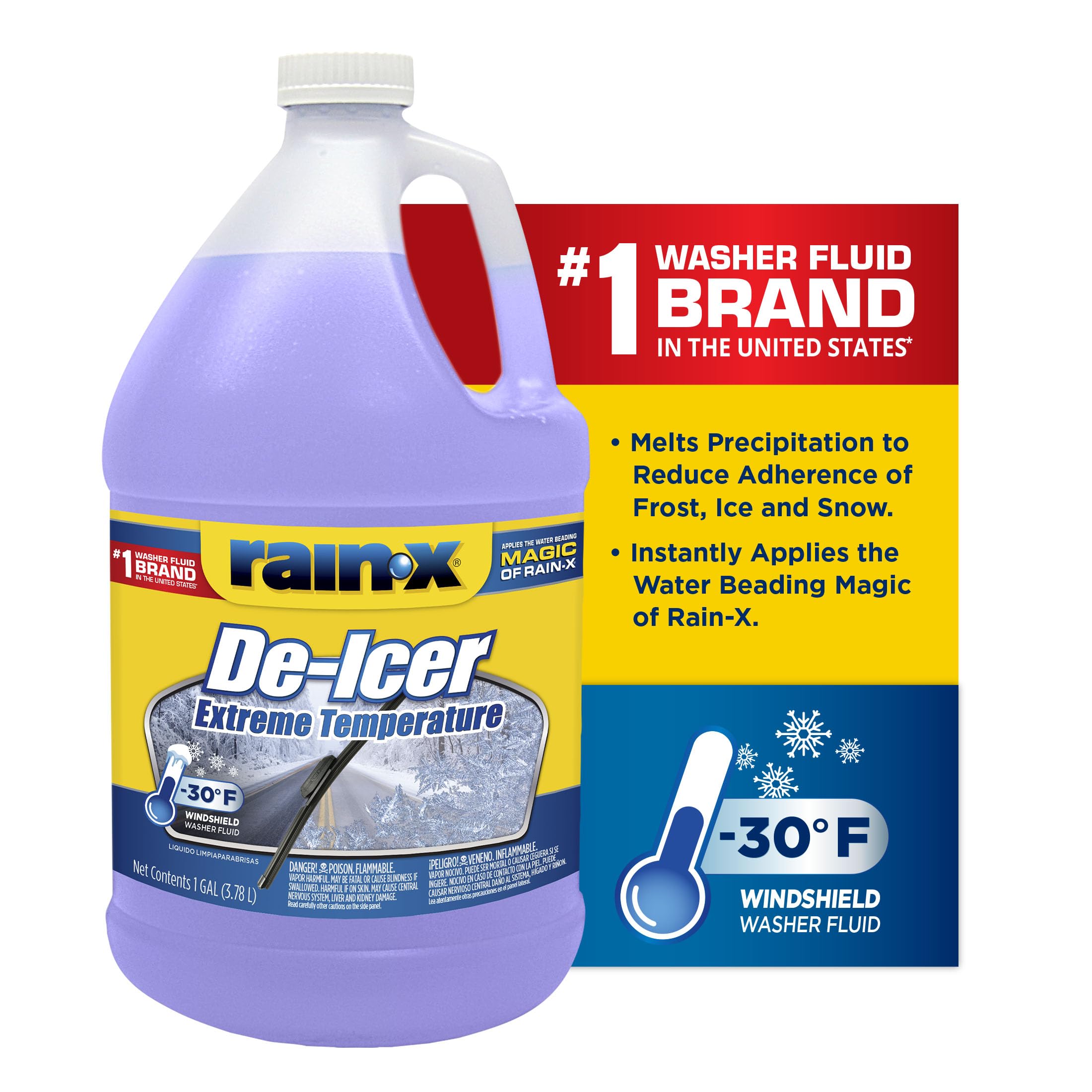
Winter washer fluid often displays a temperature rating in degrees Fahrenheit. For example, a product marked minus 20 degrees Fahrenheit is labeled for cold-weather use down to that stated temperature under its specified conditions. A product marked minus 30 degrees Fahrenheit has a lower stated temperature limit.
These figures are product specifications, not a promise that every vehicle system will perform perfectly in every situation. Old fluid, added water, mixed formulas, and unusually severe conditions can affect performance. For winter driving, choose a suitable premixed product and follow its instructions rather than guessing from its color.
Read the label
Confirm the rated temperature and whether the product is ready to use or requires dilution.
Allow for local weather
Select a rating suited to the coldest temperatures you reasonably expect, not just the usual daytime temperature.
Can You Use Deicer Instead of Windshield Washer Fluid?
You can use deicer in place of regular washer fluid only when the product is specifically labeled as windshield washer fluid and is approved for the vehicle’s washer reservoir. A winter washer fluid with deicing properties is made for that system. A hand-applied deicer is not a suitable substitute unless its manufacturer clearly states otherwise.
Aerosol deicer is designed for direct application to glass. It may have a different concentration, delivery method, and set of ingredients from reservoir fluid. Putting it into the tank can cause unwanted residue, poor spray performance, or compatibility problems with parts of the washer system.
If your regular washer fluid has run out during winter, use a compatible winter washer fluid rather than pouring an unrelated chemical into the reservoir. If no suitable fluid is available, do not rely on an improvised mixture for a winter drive. Arrange a safe way to obtain the correct product before driving in conditions that require clear glass.
Source: carblogindia.com
Safe choice
Use a product clearly labeled as deicer windshield washer fluid and follow its directions.
Avoid
Do not pour hand-applied deicer, household glass cleaner, coolant, or an unknown chemical into the washer tank.
When unsure
Check the product label and vehicle owner’s manual before adding a different fluid.
Can You Use Regular Washer Fluid to Melt Ice?
Regular washer fluid may help loosen a small amount of frost, depending on its formula and the temperature. However, a warm-weather formula may freeze on very cold glass or fail to clear the windshield as expected. It is not designed to replace a dedicated method for removing thick ice.
If the windshield is covered with ice, start the vehicle only in a safe, well-ventilated setting and follow the owner’s manual for the defrost system. Use a suitable ice scraper or a glass-safe deicer as directed. Never use the washer system as the only method for clearing a heavily frozen windshield.
Light frost
A suitable winter washer fluid may help with light frost, but results vary by product and weather.
Thick ice
Use a suitable scraper and an approved deicer, allowing enough time to clear the glass fully.
Can You Use Windshield Washer Fluid Instead of Deicer?
Windshield washer fluid is not the best replacement for a hand-applied deicer when thick ice has bonded to the glass. Washer fluid is designed to be sprayed in small amounts and used with the wipers. A dedicated deicer is designed for direct application to frozen glass, subject to its label directions.
A winter washer fluid may loosen light frost or help prevent moisture from freezing on the windshield during use. Still, its main role is to support visibility while driving, not to remove a thick layer of ice from a parked vehicle. Trying to clear heavy ice with repeated washer sprays can waste fluid and may leave the glass partly blocked.
Never set off until the windshield, side windows, mirrors, lights, and other areas needed for safe visibility are clear. If the washer fluid freezes or the wipers cannot move freely, stop using the system until the cause is addressed.
Source: photos.prontohomedelivery.com
For routine driving
Use washer fluid that suits the weather and the vehicle’s requirements.
For a frozen parked car
Use the vehicle’s defrost system and a glass-safe deicer or scraper as directed.
For heavy ice
Allow enough time to remove the ice instead of depending on washer fluid alone.
Why Hot Water Is Not a Good Shortcut
Pouring hot or boiling water onto a frozen windshield is risky. A sudden temperature change can stress the glass, and the water may refreeze when it meets cold surfaces. Use the vehicle’s defrost system and products intended for automotive glass instead.
Also avoid forcing frozen wiper blades away from the glass or switching them on when they are stuck. Free the blades carefully and check that they can move before using the wipers.
Avoid sudden heat
Do not pour hot water onto frozen automotive glass.
Protect the wipers
Make sure the blades are free of ice before operating them.
How to Choose the Right Windshield Washer Fluid for Winter
Choose washer fluid based on the lowest temperatures you expect, the type of dirt you encounter, and the vehicle maker’s instructions. In colder parts of the United States, a winter formula with a clearly stated low-temperature rating may be essential. In warmer states, an all-season formula may suit normal conditions, but an occasional freeze can still make winter protection useful.
Do not rely on bottle color to identify the fluid. Colors vary by manufacturer and product line, and two liquids with the same color can have different formulas. Read the product label and confirm the temperature rating before you pour anything into the reservoir.
A ready-to-use winter blend is often the simplest option because it avoids dilution errors. Concentrated products can also be useful, but only when the label explains the required mixing ratio and the resulting temperature protection. Adding too much water can weaken freeze resistance.
Source: minit-tune.com
Mild weather
Choose a compatible all-season washer fluid when freezing conditions are not expected and its rating suits the local climate.
Cold winters
Choose winter washer fluid with a temperature rating suited to the coldest expected conditions.
Frequent road salt or slush
Look for a formula intended to clean winter road film and follow the directions for use.
Frequent frost or ice
Consider a deicer washer fluid for the reservoir and keep a separate, approved glass deicer or scraper for parked-car ice.
A Practical Comparison of Common Products
The table below compares common product types by their main purpose. It is a general guide, not a claim that every product in a category has the same ingredients or performance. The exact label takes priority over the category name.
All-season washer fluid
For routine windshield cleaning within the product’s stated temperature range. Its cold-weather protection varies.
Winter washer fluid
For cleaning in cold weather, with a formula designed to resist freezing within its stated limits.
Deicer washer fluid
For reservoir use when cleaning and added ice-melting performance are useful in winter.
Hand-applied deicer
For loosening existing ice on glass before it is cleared. It does not automatically replace washer fluid.
How to Top Up the Washer Reservoir
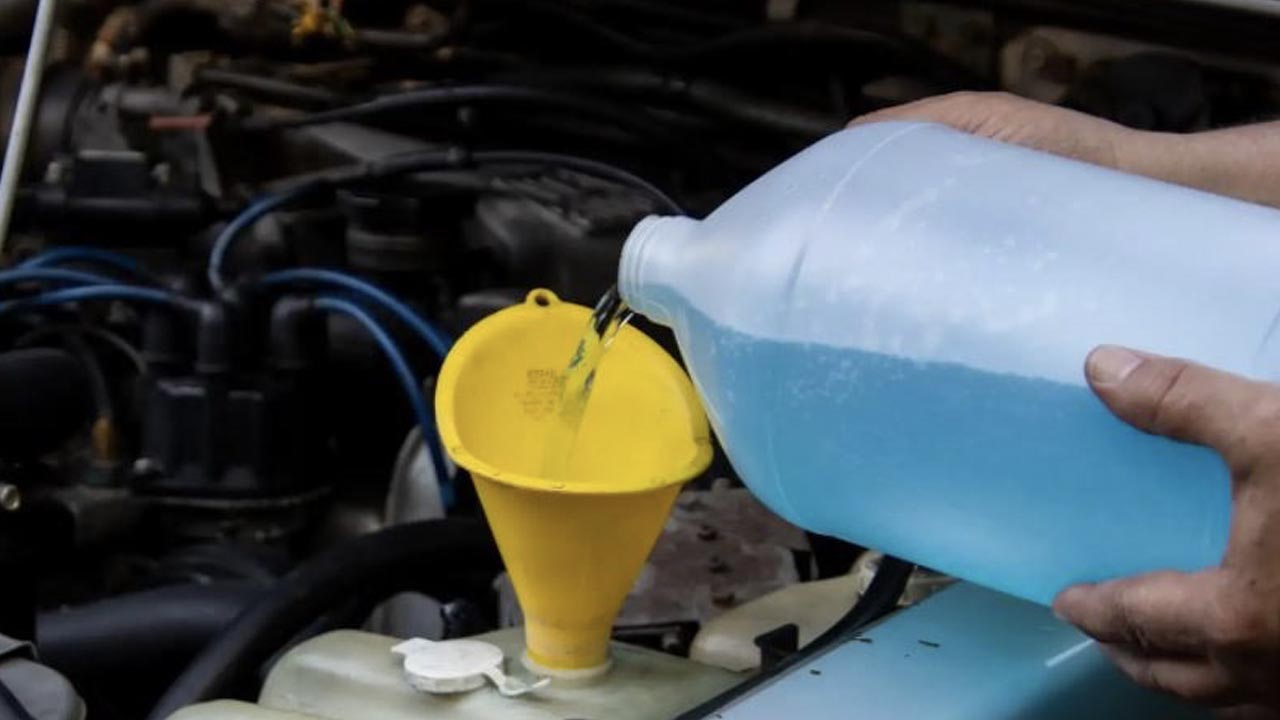
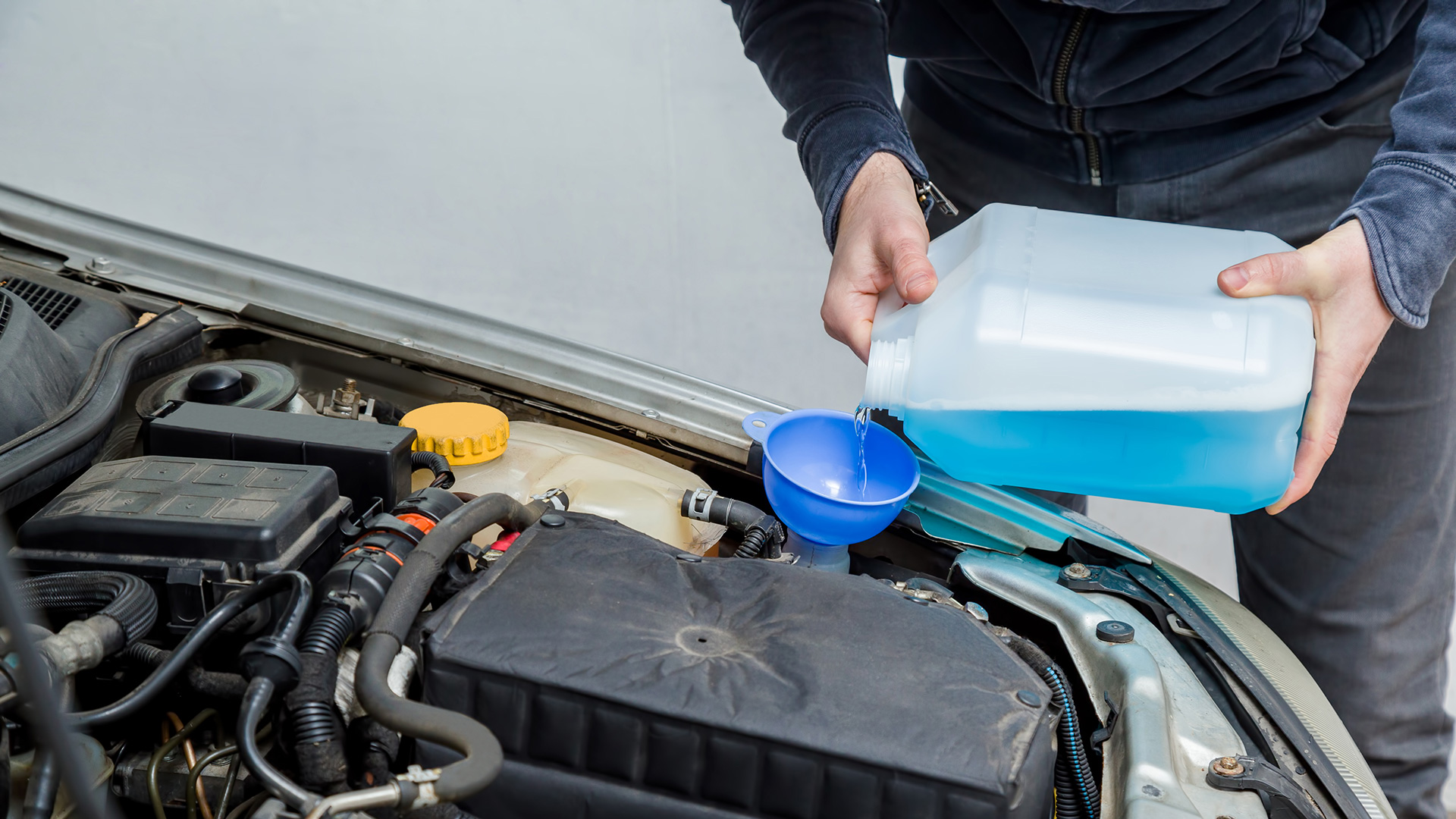
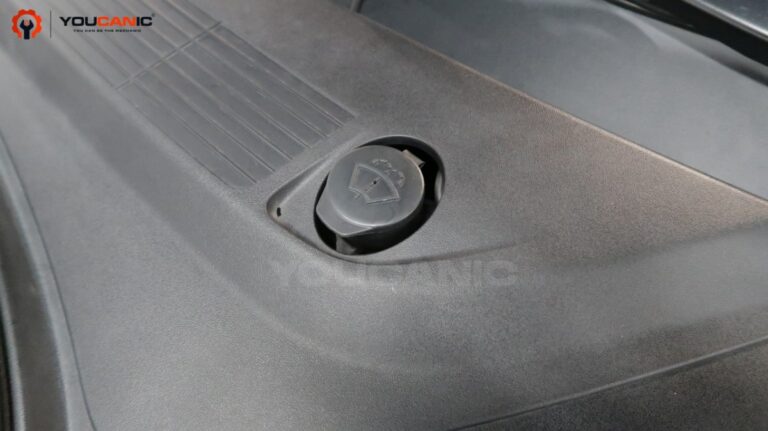
Park on a level surface, switch off the engine, and let hot engine parts cool if needed. Find the washer-fluid reservoir by checking the owner’s manual, then confirm that the cap identifies the correct container. Do not confuse it with the coolant reservoir or another fluid tank.
Read the washer fluid label before opening the container. If the product is premixed, use it as directed. If it is a concentrate, follow the stated dilution instructions and make sure the resulting blend offers suitable freeze protection.
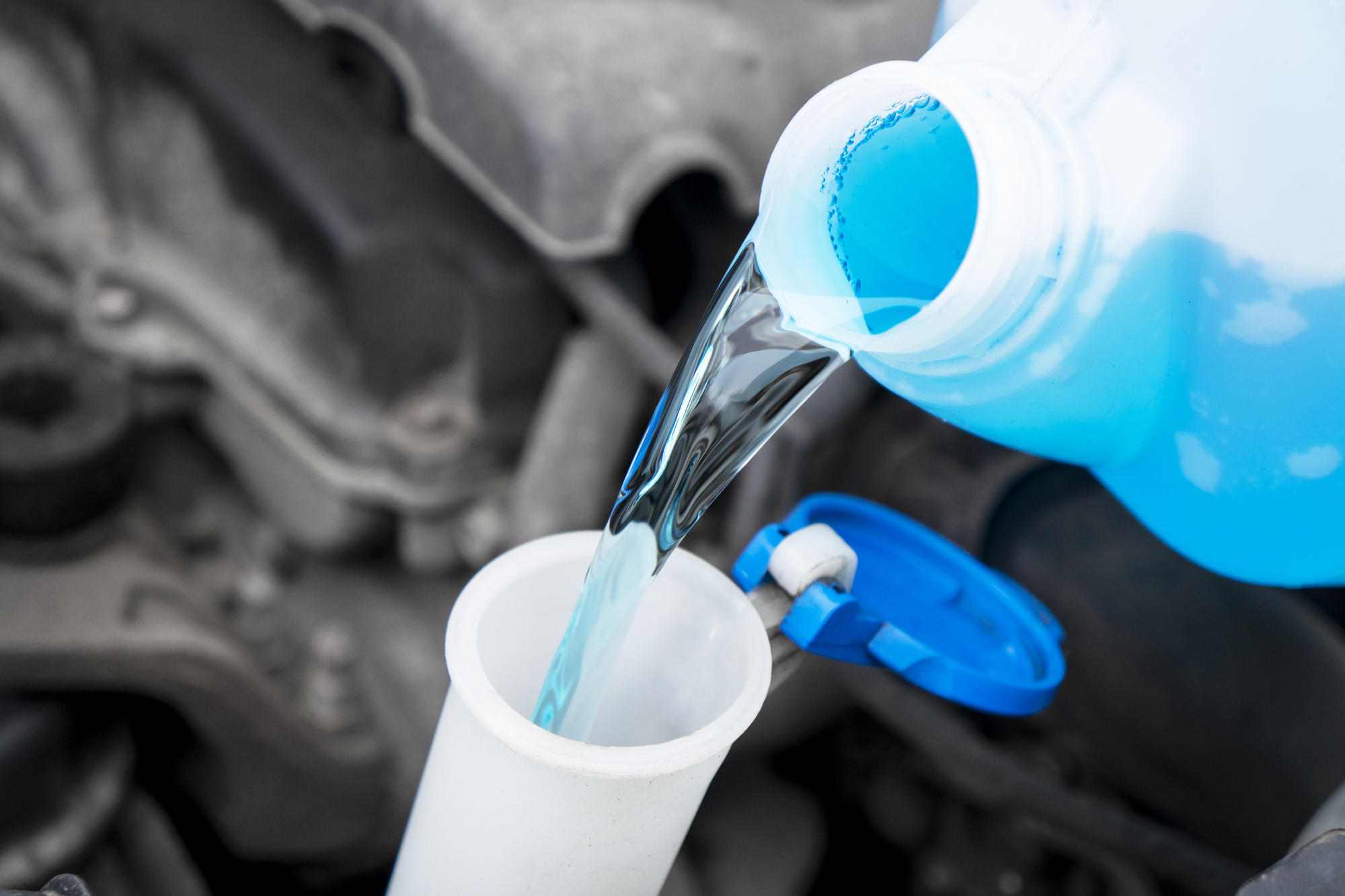
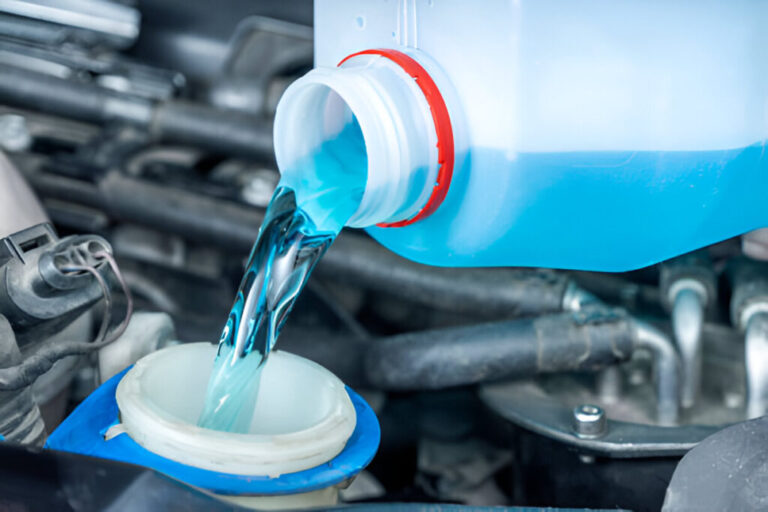
Pour carefully without overfilling or spilling. Close the cap securely and store the container according to its label, away from children and pets. If the fluid will not spray afterward, do not keep running the pump against a possible blockage or frozen line.
Confirm the reservoir
Use the owner’s manual and cap markings to identify the washer-fluid tank.
Use the right blend
Do not dilute premixed products unless the label explicitly directs you to do so.
Test safely
After topping up, test the spray while parked and confirm that the glass clears properly.
Common Mistakes to Avoid When Using Deicer
The biggest mistake is assuming every product with deicer in its name belongs in the washer reservoir. Read the label each time you buy a product, especially when several similar containers sit on the same shelf. A spray intended for direct use on glass should not be treated as reservoir fluid.
Another common error is adding plain water to a winter blend without checking the instructions. Water can raise the mixture’s freezing point and may leave the reservoir, pump, hoses, or nozzles vulnerable to freezing. If you use a concentrate, follow the manufacturer’s specified ratio rather than making an informal mix.
Avoid using household cleaners, dish soap, vinegar, coolant, or other improvised mixtures in the washer system. These products are not universal substitutes for automotive washer fluid and may cause residue, poor visibility, or material compatibility issues. Coolant in particular belongs in the cooling system, not on the windshield.
Do not keep activating a washer pump when nothing sprays. The system may be frozen, empty, blocked, or faulty. Repeated attempts can place extra strain on the pump without solving the cause.
Source: evpulsecms.com
Do not mix blindly
Different washer formulas may not blend as expected, and the final freeze protection may be uncertain.
Do not ignore the label
Follow the specified use, dilution instructions, temperature rating, and safety warnings.
Do not drive with poor visibility
Stop in a safe place if ice, dirt, or a washer-system failure prevents you from seeing clearly.
Keep chemicals secure
Store automotive fluids in their original labeled containers and follow all handling and disposal directions.
What to Do If the Washer Fluid Freezes
If the washer system stops spraying during freezing weather, do not assume the pump has failed. The liquid may have frozen in the reservoir, hoses, or nozzles, especially if the system contains a warm-weather blend or a mixture diluted with water.
Park in a sheltered, warmer location when possible and allow the system to thaw naturally. Follow the owner’s manual and the washer-fluid manufacturer’s guidance. Do not use a flame, boiling water, or an improvised heat source to thaw the tank or lines.
Once the system has thawed, check the fluid level and confirm which product is inside. If the existing fluid is unsuitable for the expected temperatures, arrange to replace it using the method recommended by the vehicle maker or a qualified service professional. If the pump remains silent or the nozzles stay blocked, have the system inspected.
First check
Confirm the reservoir level and whether the temperature may have frozen the fluid.
Then thaw
Use a warmer environment and follow the vehicle manufacturer’s guidance.
Seek help when needed
Have a technician check persistent blockages, leaks, pump faults, or damaged components.
Frequently Asked Questions
Q
Is windshield washer fluid the same as deicer?
No, not in every case. Regular washer fluid is mainly for cleaning glass, while hand-applied deicer is made to loosen or melt existing ice. Deicer windshield washer fluid is a winter formula designed for the reservoir that combines cleaning with added cold-weather performance.
Q
Can I put windshield deicer spray in my washer fluid reservoir?
No, not unless the product label specifically says it is suitable for the washer reservoir. Most hand-applied deicers are designed to be sprayed directly onto glass. Use a washer fluid that is expressly labeled for reservoir use.
Q
Does deicer washer fluid melt thick ice?
Deicer washer fluid may help loosen light frost or thin ice, depending on the product and temperature. It is not a dependable way to remove thick, bonded ice from a parked car. Use the vehicle’s defrost system and a suitable scraper or approved glass deicer as directed.
Q
Can I mix regular washer fluid with deicer washer fluid?
The answer depends on the specific products, and mixing them can make the final freezing point uncertain. For cold weather, avoid guessing about the resulting protection. Follow both labels and the vehicle owner’s manual; using a compatible premixed winter fluid is often the simpler option.
Q
What temperature rating should winter washer fluid have?
Choose a product with a stated temperature rating suited to the coldest weather you expect where you drive. A lower rated temperature can offer more cold-weather protection, but actual performance depends on the formula, correct use, and system condition. Read the container rather than relying on color or a general product name.
Q
Can I use water instead of windshield washer fluid in winter?
Plain water is not a good winter substitute in freezing weather because it can freeze in the reservoir, hoses, or nozzles. Frozen liquid can stop the washers from working and may damage components. Use compatible washer fluid with suitable cold-weather protection.
Q
Why does my washer fluid not spray in cold weather?
The fluid, hoses, or nozzles may have frozen. Other causes include an empty reservoir, blocked nozzles, a damaged hose, a blown fuse, or a faulty pump. Let a possibly frozen system thaw safely, then check the level and product rating. If the problem remains, have the system inspected.
✦ Wrapping Up
Conclusion
Windshield washer fluid and deicer have related purposes, but they are not automatically interchangeable. Regular washer fluid cleans road dirt and grime, while hand-applied deicer helps remove ice already on the glass. Deicer washer fluid is designed for the reservoir and provides cleaning plus added winter performance within its stated limits.
For drivers in the United States, the right choice depends on local temperatures, the product’s rating, and the vehicle manufacturer’s instructions. A suitable winter washer fluid helps keep the system working in cold weather, while a scraper or approved glass deicer handles ice on a parked vehicle. Neither product removes the need to clear the windshield fully before driving.
💡 Key Takeaway
Before your next drive, check the washer-fluid label, confirm its temperature rating, and make sure it is intended for the vehicle’s reservoir. Keep a suitable ice scraper available, and never drive until all required windows and mirrors provide clear visibility.
Can you mix summer and winter windshield washer fluid? Learn the risks, how mixing affects freeze protection, and how to prepare your car for cold weather.