To add windshield washer fluid to a Tesla Model Y, park the vehicle on level ground, open the front trunk, locate the washer fluid reservoir cap, and pour in compatible windshield washer fluid without overfilling it.
For Tesla Model Y owners in the United States, windshield washer fluid is an essential maintenance item for keeping the windshield clear of road grime, dust, pollen, insects, and winter road salt. The reservoir is located beneath the front trunk area, so you do not need to remove the rear cargo floor or access the vehicle from underneath to refill it.
The process is straightforward, but the correct fluid matters. Use a commercially available windshield washer fluid that is suitable for your local climate and follow the instructions in the owner’s manual for your specific Model Y model year. Avoid pouring coolant, engine oil, household glass cleaner, or other automotive fluids into the washer reservoir.
Where Is the Windshield Washer Fluid Reservoir on a Tesla Model Y?
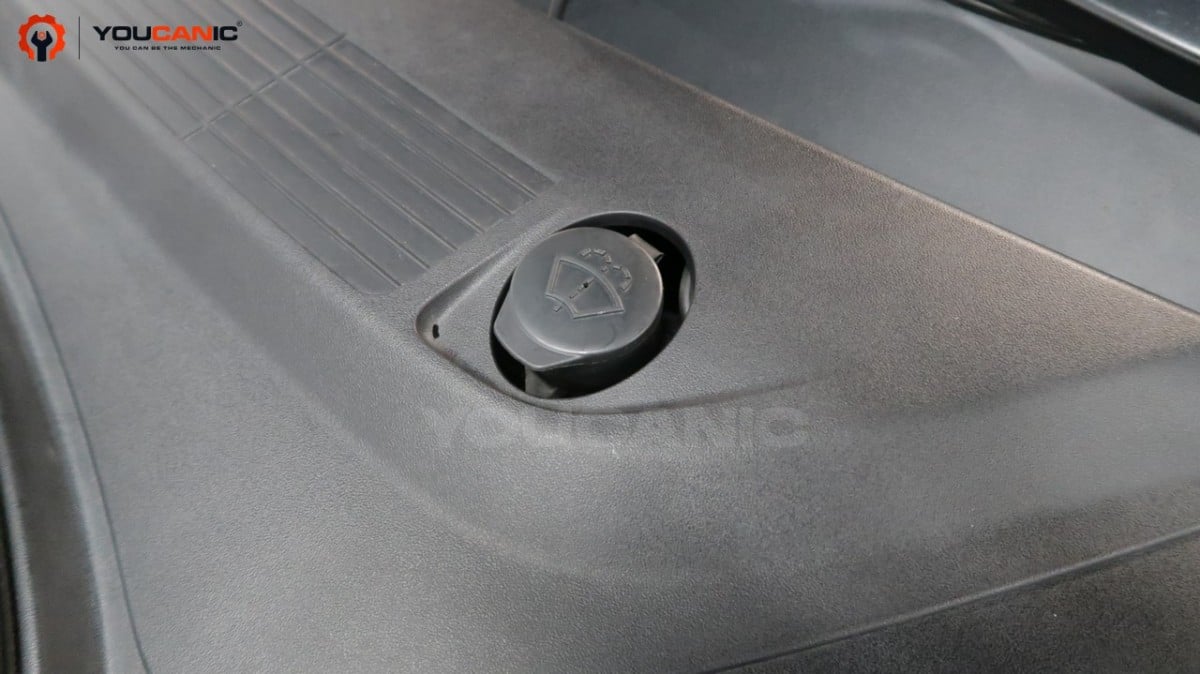
The windshield washer fluid reservoir on a Tesla Model Y is accessed beneath the front trunk, commonly called the frunk. Open the front trunk and look for the washer fluid filler cap in the front compartment. The exact appearance and surrounding trim can vary by model year and production version.
Use the washer fluid symbol or the identification shown in your owner’s manual to confirm the correct filler. Do not open an unidentified cap or assume that every container beneath the front trunk is intended for washer fluid.
If you cannot identify the filler confidently, consult the official Tesla Model Y owner’s manual for your vehicle before adding anything.
Source: youcanic.com
Front trunk access
The washer fluid filler is accessed from the front storage compartment rather than the main cabin or rear cargo area.
Correct cap identification
Confirm the washer fluid symbol and reservoir location in the manual before opening the filler.
Model year differences
Trim panels and component layouts may change, so use instructions that match your specific vehicle.
How to Open the Tesla Model Y Front Trunk
Place the vehicle in Park and make sure it is in a safe location. Open the front trunk using the touchscreen or the Tesla app when supported, or use another opening method specified in your owner’s manual. Keep your hands and clothing clear of moving panels and latch mechanisms.
If you need to remove a cover to see the filler, follow the manual’s instructions. Do not force trim panels or reach into areas containing electrical components.
Park first
Do not attempt to refill the reservoir while driving or while the vehicle is moving.
Keep the compartment clear
Move stored items away from the filler area so they do not obstruct access or spill into the compartment.
How to Add Windshield Washer Fluid to Tesla Model Y
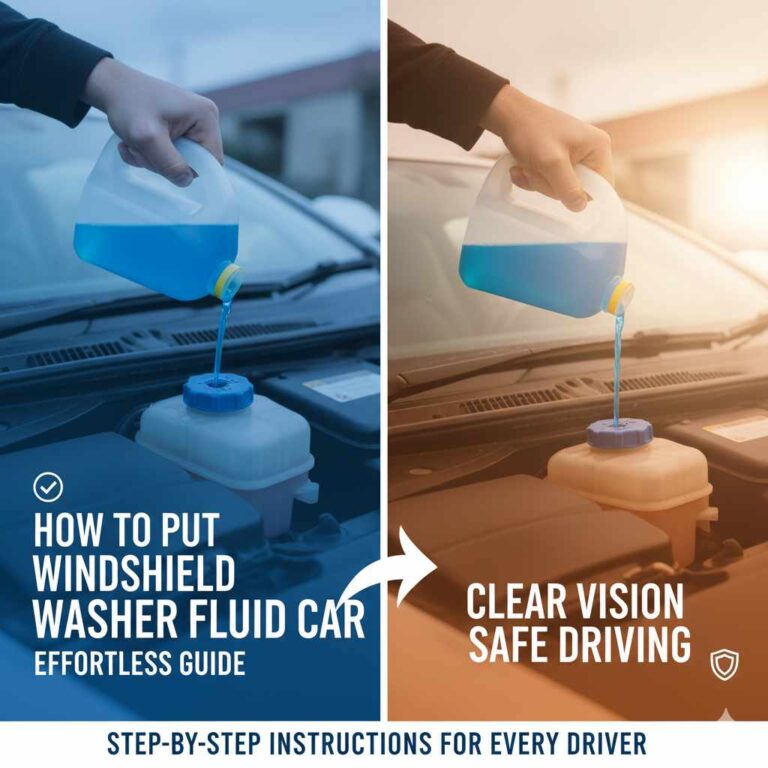
Adding windshield washer fluid to a Tesla Model Y generally takes only a few minutes when the reservoir is accessible. You need compatible washer fluid and, if the bottle has a wide opening, a clean funnel that fits securely. Follow the instructions for your vehicle’s model year if they differ from the general steps below.
Before starting, check that the vehicle is parked on level ground and that the washer fluid filler is clearly identified. Never pour fluid into an unidentified reservoir.
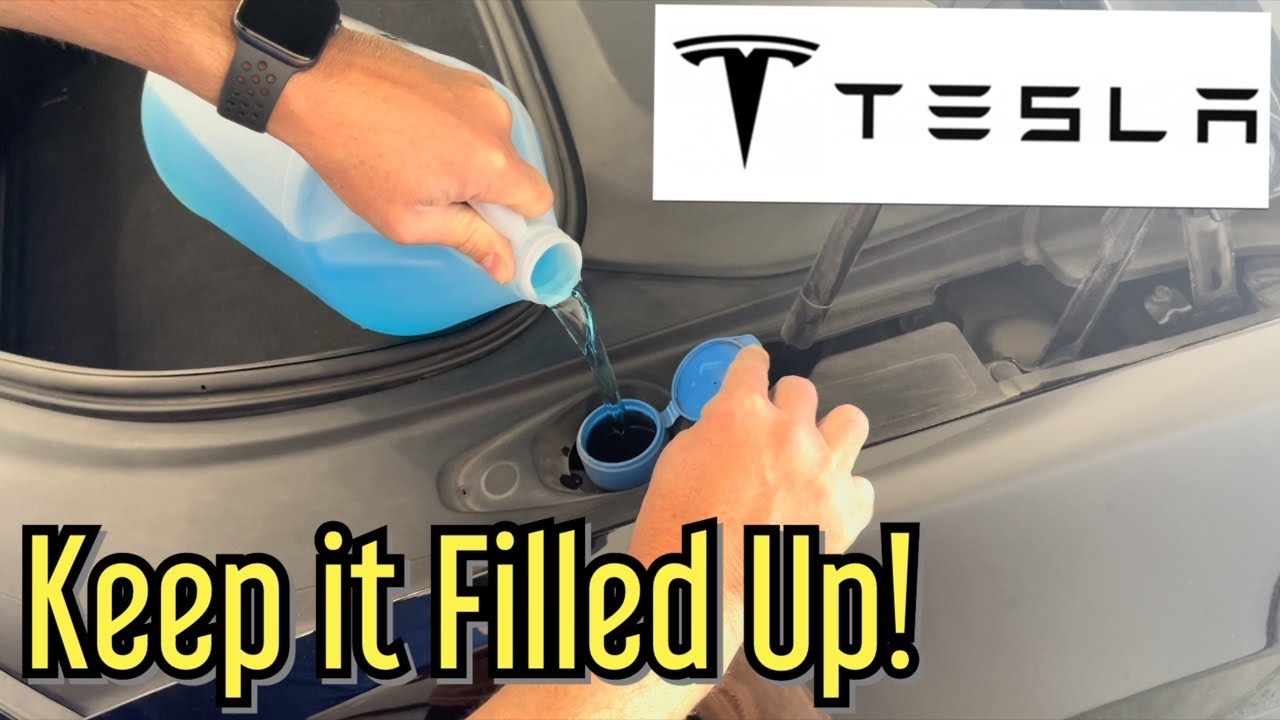
Source: i.ytimg.com
Step 1: Park the vehicle
Put the Tesla Model Y in Park on a level surface. Turn off any functions that could interfere with safe access to the front trunk.
Step 2: Open the front trunk
Use a supported opening method and wait until the front trunk is fully open before working around the compartment.
Step 3: Locate the washer fluid filler
Identify the correct cap using the washer symbol and the instructions in the owner’s manual.
Step 4: Open the cap
Remove the filler cap carefully. Keep dirt, leaves, and debris away from the reservoir opening.
Step 5: Add compatible fluid
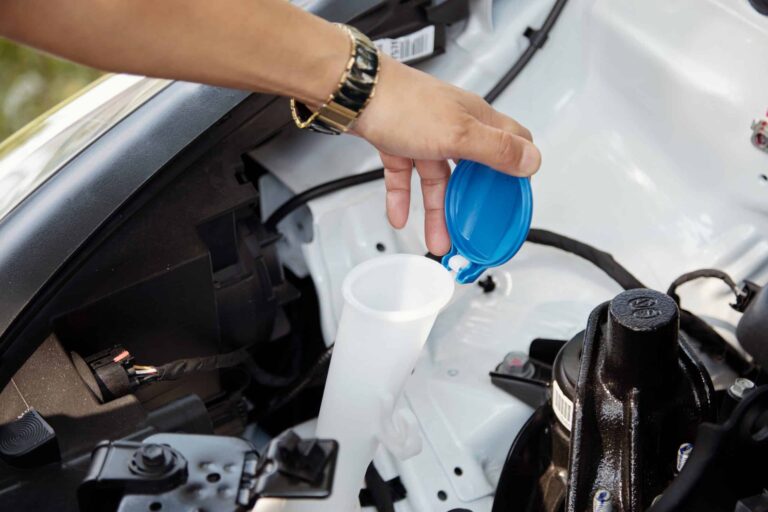
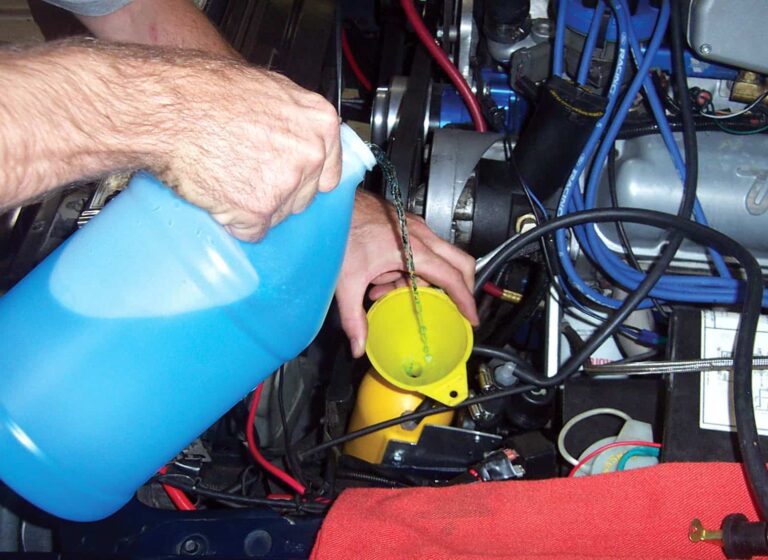
Pour washer fluid slowly into the filler. Use a suitable funnel if needed, and pause periodically to prevent spills and overfilling.
Step 6: Secure the cap
Replace the filler cap securely and wipe away any spilled fluid from accessible surfaces.
Step 7: Test the washers
Close the front trunk as directed by Tesla, then test the windshield washers when the vehicle is safely parked. Confirm that fluid reaches the windshield and the wipers operate normally.
How Much Washer Fluid Should You Add?
Add enough fluid to replenish the reservoir without forcing liquid into the filler or causing it to overflow. The exact capacity can depend on the vehicle version, so check the applicable Tesla owner’s manual rather than relying on a capacity quoted for a different model or year.
If the reservoir is nearly empty, add fluid gradually and watch the filler opening. If the fluid reaches the top or begins to spill, stop pouring. Do not assume that a particular number of bottles is required.
Refill gradually
Pour in small amounts and allow the fluid to settle before adding more.
Avoid overfilling
Stop before the fluid spills from the filler opening.
Check the manual
Use the vehicle-specific reservoir capacity if you need an exact quantity.
How to Confirm the Refill Worked
After closing the filler and front trunk, activate the windshield washer using the vehicle’s supported control. The system should deliver fluid to the windshield so the wipers can clear away dirt. Test only when the vehicle is safely stationary and there is enough visibility to do so.
If the reservoir was empty, the system may need a brief moment to deliver fluid through the lines. Avoid repeatedly operating the washers if no fluid appears, because continued attempts will not resolve a blocked nozzle, disconnected hose, or failed pump.
Fluid reaches the glass
A normal spray pattern indicates that the system is delivering fluid through the washer lines.
Wipers clear the windshield
The wipers should move normally and clear the fluid without unusual noises or persistent streaks caused by contamination.
No leaks or spills
Check the filler area for visible spills and look for signs of leakage if the reservoir becomes empty unusually quickly.
What Windshield Washer Fluid Is Safe for Tesla Model Y?
Choose a commercially available windshield washer fluid intended for automotive washer systems and suitable for the temperatures where you drive. Tesla owners in warmer parts of the United States may use a compatible fluid formulated for normal cleaning conditions, while drivers in areas with freezing winters should select a product with an appropriate freeze-protection rating.
Follow the instructions and compatibility guidance in the Tesla owner’s manual for your particular model year. Do not assume that every washer fluid is suitable for every climate or that a product’s marketing claims replace its stated operating temperature.
Ready-to-use washer fluid can be poured directly into the reservoir. Concentrated products must be diluted exactly as directed by the manufacturer. Using the wrong dilution can reduce cleaning performance or freeze in the reservoir and washer lines.
Source: i.ytimg.com
Summer washer fluid
A suitable summer formulation can help remove everyday road grime, insects, and dust in temperatures above freezing.
Winter washer fluid
Choose a formulation rated for the lowest temperatures reasonably expected during your driving and parking conditions.
Ready-to-use fluid
This type is already mixed and normally does not require additional water.
Concentrated fluid
Dilute it according to the label and confirm that the resulting mixture provides adequate freeze protection.
Can You Use Water Instead of Washer Fluid?
Plain water is not an ideal year-round replacement for automotive windshield washer fluid. It may provide limited rinsing in warm conditions, but it lacks the cleaning agents found in purpose-made formulations and can freeze in cold weather. Freezing can prevent the system from spraying and may damage components.
For routine use, choose a compatible washer fluid. If water has already been added and freezing weather is expected, consult Tesla service guidance for the safest way to correct the mixture rather than operating a potentially frozen system.
Cleaning limitations
Water may not remove oily road film, insects, or other residues as effectively as an appropriate washer fluid.
Freezing risk
Water can freeze in the reservoir, pump, or washer lines when temperatures fall below freezing.
Fluids and Chemicals to Avoid
Do not add engine coolant, brake fluid, engine oil, household detergents, or general-purpose cleaning chemicals to the washer fluid reservoir. These substances are not intended for the washer system and may cause residue, poor visibility, or damage to components.
Avoid mixing products unless both their manufacturers and the vehicle guidance support the combination. If you accidentally add the wrong substance, stop using the washer system and contact Tesla service or a qualified automotive technician for advice.
Engine coolant
Coolant belongs in its designated cooling system and must never be used as windshield washer fluid.
Household glass cleaner
Household products may contain ingredients or concentrations unsuitable for the vehicle’s washer system or exterior materials.
Unknown mixtures
Do not combine incompatible chemicals or guess at a dilution ratio.
Common Problems After Refilling Tesla Model Y Washer Fluid
If the windshield washers do not work after you add fluid, the reservoir may not be the only issue. A blocked nozzle, frozen fluid, a disconnected hose, an electrical fault, or a failed pump can prevent the system from spraying. Check the simple and safe possibilities first.
Do not keep activating the washer control if the pump makes an unusual sound, no fluid appears, or the system may be frozen. Stop and investigate the likely cause before trying again.
Source: i.ytimg.com
The washers spray no fluid
Confirm that the reservoir contains fluid and that the fluid is not frozen. If the problem continues, the pump, hose, nozzle, or electrical circuit may need inspection.
The pump makes noise but fluid does not appear
A blocked nozzle, a disconnected or leaking hose, or frozen fluid may prevent delivery even when the pump runs.
The pump is silent
The cause could involve the control, fuse or circuit protection where applicable, wiring, or pump. Use vehicle-specific service guidance rather than replacing parts without diagnosis.
Fluid leaks from the front compartment
Check for visible spills around the filler. If fluid continues to leak or the reservoir empties quickly, arrange an inspection.
Fluid sprays unevenly
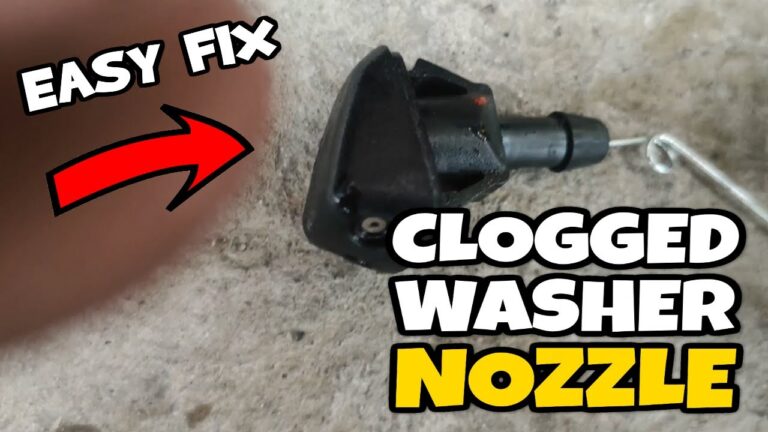
A partially blocked nozzle or a problem in the delivery line may be responsible. Follow Tesla’s cleaning guidance and do not force sharp objects into the nozzles.
What to Do if the Washer Fluid Is Frozen
If the washer system stops working in freezing weather, the fluid or washer lines may have frozen. Do not repeatedly operate the washer pump in an attempt to force the system to work, and do not pour boiling water over the reservoir or surrounding components.
Move the vehicle to a suitable warmer location if it is safe to do so, and allow the system to thaw naturally. Once thawed, use a compatible washer fluid rated for the temperatures you expect. If the system remains inoperative or you suspect damage, contact Tesla service.
Do not force operation
Repeatedly running a washer system that may be frozen will not reliably clear the blockage.
Allow safe thawing
Use a suitable warmer environment and avoid direct high heat around vehicle components.
Prevent recurrence
Choose fluid with sufficient freeze protection for local winter conditions.
When to Contact Tesla Service
Contact Tesla service if the washer system remains inoperative after the reservoir has been filled with suitable fluid, if you find a persistent leak, or if the pump appears to be malfunctioning. A technician can diagnose electrical, pump, hose, and nozzle problems using the correct procedures for your vehicle.
If the windshield becomes dirty and the washers cannot restore visibility, do not continue driving in conditions that prevent you from seeing the road safely. Stop at a safe location and arrange assistance if necessary.
Persistent failure
Seek service when basic checks do not restore normal spraying.
Suspected component damage
Professional diagnosis is appropriate for leaks, pump faults, wiring problems, or damage after freezing.
How Often Should You Refill Tesla Model Y Washer Fluid?
There is no single refill interval that applies to every Tesla Model Y. Washer fluid consumption depends on driving conditions, weather, road contamination, and how frequently you use the washers. Long drives through rain, slush, insects, or road salt can increase consumption.
Check the reservoir when you notice a weaker spray, when preparing for a long trip, and during routine vehicle checks. Refill it before the reservoir runs empty, especially before winter travel or journeys through areas where road grime can quickly reduce visibility.
Do not use a fixed mileage interval as a substitute for checking the fluid level. Washer fluid is consumed as needed, unlike a scheduled replacement item with a universal service interval.
Source: i.ytimg.com
Before long trips
Check that sufficient washer fluid is available for changing road and weather conditions.
During winter
Confirm that the reservoir contains fluid with suitable freeze protection before driving in cold conditions.
When spray performance changes
Check the fluid level and investigate blockages or other faults if refilling does not restore normal operation.
Does Tesla Model Y Display a Low Washer Fluid Warning?
Warning behavior can depend on the vehicle’s model year, configuration, and software. Do not assume that every Tesla Model Y provides the same low-fluid alert or that the absence of a warning means the reservoir is full.
Check the vehicle’s touchscreen notifications and the owner’s manual for the warning behavior supported by your vehicle. A practical approach is to inspect the fluid level directly when the reservoir is accessible.
Check vehicle notifications
Review any displayed washer system messages and follow the recommended action.
Verify the level directly
Do not rely solely on an alert to determine when to refill.
Mistakes to Avoid When Refilling Washer Fluid
The most common refill mistakes involve using the wrong fluid, pouring into the wrong reservoir, ignoring freezing conditions, and overlooking a washer system fault. Taking a moment to identify the filler and check the fluid label helps prevent avoidable problems.
Although washer fluid is a routine maintenance item, the front compartment contains other vehicle components. Keep the work limited to the designated filler and follow Tesla’s instructions for opening and closing the front trunk.
Source: i.ytimg.com
Using the wrong reservoir
Confirm the washer fluid cap before pouring. Never add fluid to an unidentified opening.
Choosing fluid without freeze protection
Use a product rated for expected temperatures, particularly when overnight parking may expose the vehicle to freezing weather.
Overfilling the reservoir
Pour slowly and stop when the reservoir is adequately filled.
Ignoring repeated fluid loss
Frequent refilling may indicate a leak or another problem that requires diagnosis.
Forcing a stuck cap or panel
Follow the owner’s manual instead of applying excessive force that could break a cap or trim component.
Driving with an obstructed windshield
If the washer system cannot maintain safe visibility, stop driving when conditions make it unsafe and arrange assistance.
Frequently Asked Questions
Q
Where do you put windshield washer fluid in a Tesla Model Y?
You add windshield washer fluid through the designated filler beneath the front trunk area. Open the front trunk, identify the washer fluid cap using the owner’s manual, and pour compatible fluid into that opening.
Q
Can I use any windshield washer fluid in a Tesla Model Y?
Use automotive windshield washer fluid that is compatible with your vehicle and suitable for the temperatures where you drive. Check Tesla’s guidance for your model year and select a winter-rated formulation when freezing weather is expected.
Q
How much windshield washer fluid does a Tesla Model Y hold?
The exact capacity should be confirmed in the owner’s manual for your particular Model Y. Add fluid gradually and stop before the reservoir overflows instead of relying on an unverified quantity or number of bottles.
Q
Can I add washer fluid when the Tesla Model Y is on?
The safer approach is to park the vehicle, make sure it cannot move, and follow Tesla’s instructions before opening the front trunk. Do not refill the reservoir while driving or while the front trunk is moving.
Q
Why is my Tesla Model Y washer fluid not spraying after I refill it?
Possible causes include frozen fluid, blocked nozzles, a disconnected or leaking hose, a faulty pump, or an electrical problem. Confirm the reservoir contains compatible liquid and check for obvious issues. If the washers still do not work, stop repeated attempts and arrange service if needed.
Q
Can I mix different brands of windshield washer fluid?
Avoid mixing products unless their manufacturers’ instructions and Tesla’s guidance support the combination. Different formulations may have different dilution requirements or temperature ratings. When compatibility is uncertain, use a suitable single formulation rather than experimenting with mixtures.
Q
How often should I add windshield washer fluid to my Tesla Model Y?
Refill as needed rather than following a universal mileage interval. Consumption varies with weather, road grime, and washer use. Check the level before long trips and during winter preparation.
✦ Wrapping Up
Conclusion
Adding windshield washer fluid to a Tesla Model Y is a simple maintenance task when you use the correct reservoir and a compatible fluid. Park safely, open the front trunk, identify the filler, pour slowly, secure the cap, and test the washers after completing the refill.
Choose fluid according to the temperatures and driving conditions you expect, and consult the owner’s manual for details specific to your model year. If the system still does not spray, fluid leaks repeatedly, or freezing may have damaged components, seek appropriate service rather than continuing to operate a faulty washer system.
💡 Key Takeaway
Before your next drive, check the Tesla Model Y washer fluid level, refill with a compatible climate-appropriate product, and verify that the washers clear the windshield effectively.
Learn how to unclog a windshield washer nozzle using safe cleaning methods, diagnose weak spray, clear debris, and troubleshoot persistent washer problems.