Your windshield washer pump may not be working because of a blown fuse, a failed pump motor, damaged wiring, a loose connector, frozen washer fluid, or a blockage in the fluid system. Check the fluid level and listen for pump noise before replacing any parts.
On American roads, a working windshield washer system helps drivers clear dust, road salt, mud, pollen, and spray from other vehicles. When the windshield gets dirty on an interstate, a country road, or a busy city street, losing washer fluid can make it harder to see the road ahead. A quick check can help you find the cause before the problem gets worse.
The windshield washer pump is a small electric motor that moves fluid from the reservoir through hoses to the spray nozzles. If the pump stays silent, the cause may be electrical or mechanical. If it runs but no fluid reaches the glass, the problem may be a clogged nozzle, a loose hose, a blocked inlet, or frozen fluid rather than a dead pump.
Start with simple checks that do not require taking the car apart. Confirm that the reservoir contains suitable washer fluid, inspect for leaks, and listen near the reservoir while a helper briefly activates the washer control. Use your vehicle owner’s manual for fuse locations and model-specific instructions. If electrical testing or access to the pump requires tools or parts you are not comfortable handling, ask a qualified mechanic to inspect it.
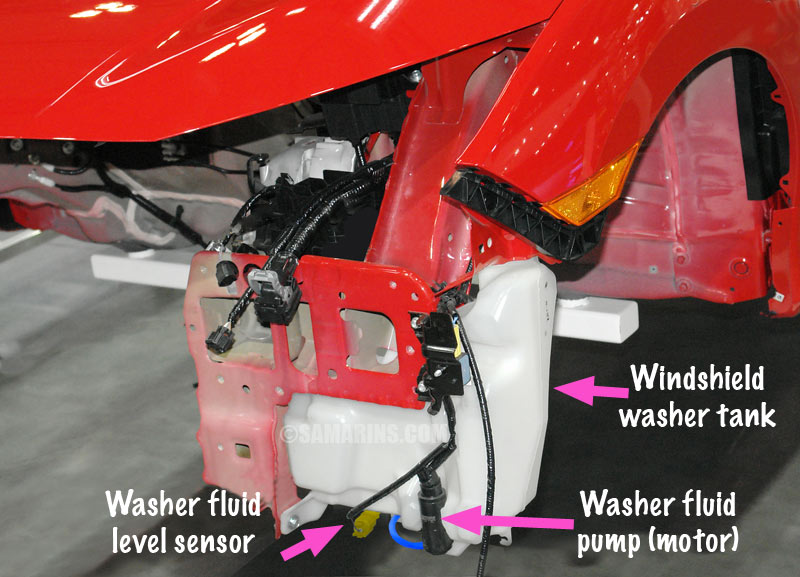
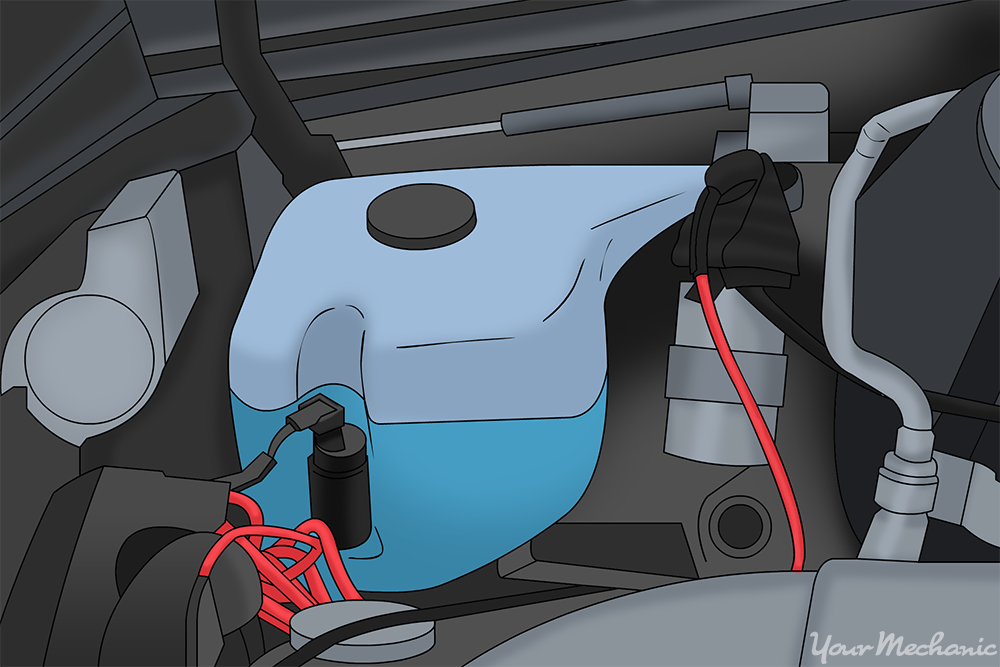
A windshield washer pump draws fluid from the washer reservoir and sends it through small hoses to the nozzles. The nozzles then direct a fine spray or stream onto the windshield. The pump usually sits near the bottom of the reservoir, although its exact location depends on the vehicle.
When you operate the washer control, the vehicle’s electrical system sends a command to run the pump. Depending on the design, the circuit may use a fuse, relay, body control module, or a combination of these parts. The pump needs a sound electrical supply and a clear path for fluid to work as intended.
This matters because several different faults can cause the same complaint. A failed pump can stop all fluid delivery, but a broken hose can send fluid into the engine bay instead. A clogged nozzle can block the spray even when the pump runs normally. Finding the failed part requires checking both the electrical side and the fluid path.
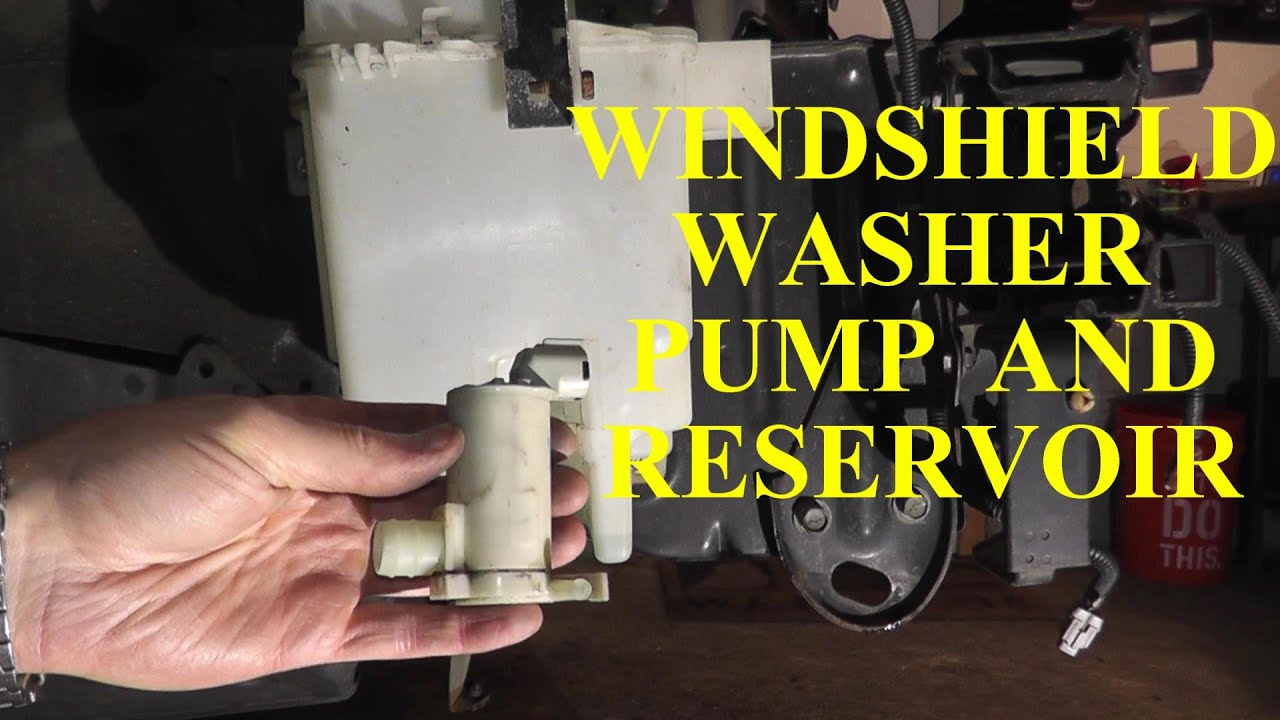
Source: Auto Repair Guys on YouTube
Electrical side
The fuse, wiring, connectors, ground, control switch, and any fitted relay or control module allow the pump to receive power.
Fluid delivery side
The reservoir, pump inlet, filter screen if fitted, hoses, connectors, and nozzles carry fluid to the glass.
Pump motor
The electric motor drives the pump. It may fail, seize, or run without delivering enough fluid.
Why the Front and Rear Washers May Behave Differently
Some vehicles use separate pumps for the front and rear windows. Others use a reversible pump or a shared arrangement that changes the direction of fluid flow. The design affects what a symptom means.
If the rear washer works but the front washer does not, the main power supply may still be working. A blocked front hose, a faulty pump circuit, a failed direction-control function, or a clogged front nozzle may be responsible. Check the vehicle’s service information before assuming that one working washer proves the entire system is healthy.
Front works, rear does not
Inspect the rear hose route, nozzle, and the rear washer’s pump or direction-control circuit.
Rear works, front does not
Check the front fluid path, nozzles, pump operation, and any separate front pump.
Common Reasons Your Windshield Washer Pump Is Not Working
The most common causes include an empty reservoir, a blown fuse, a failed pump motor, a poor electrical connection, frozen fluid, or a blockage. The first useful clue is whether the pump makes a sound when you activate the washer control.
Do not order a replacement pump based only on the lack of spray. A pump can be healthy even when the nozzles are blocked, and a failed fuse can keep a healthy pump from running. Check the simple causes first, then move to electrical testing if needed.
Source: YourMechanic
Empty washer reservoir
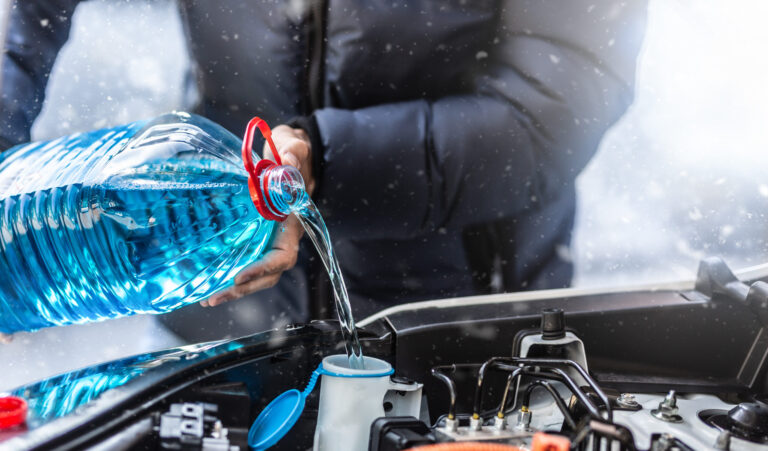
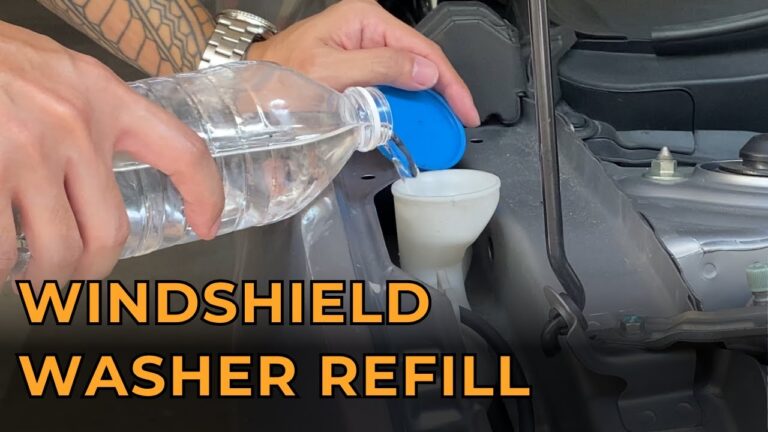
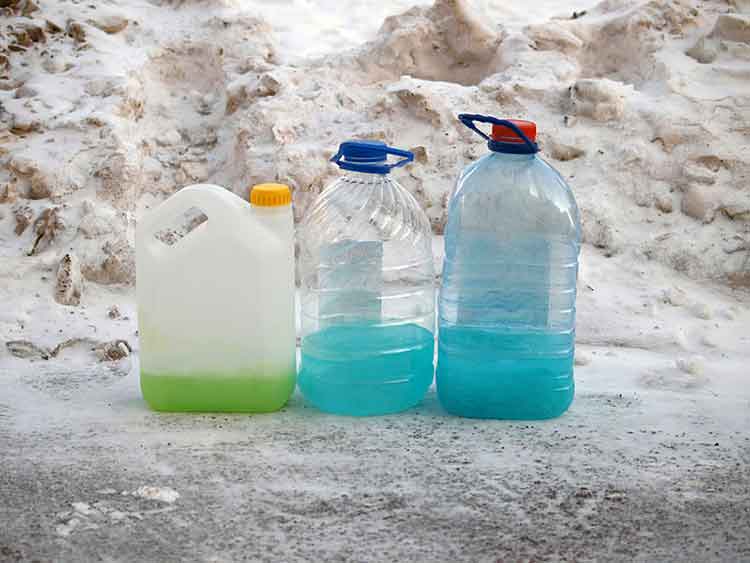
The pump cannot deliver fluid if the tank is empty. Check the level and refill it with washer fluid that suits the expected weather.
Blown washer pump fuse
A blown fuse can interrupt power to the pump. Use the owner’s manual to identify the correct fuse and rating.
Failed pump motor
The motor may wear out, seize, or suffer internal damage. A pump that receives the correct power and ground but does not operate may need replacement.
Loose or corroded connector
Dirt, moisture, corrosion, or a loose plug can interrupt the electrical connection, especially near areas exposed to road spray.
Blocked nozzle or hose
Dirt, debris, mineral deposits, or a kinked hose can reduce or stop fluid flow even when the pump runs.
Frozen washer fluid
Fluid that freezes in the reservoir, pump, or lines may prevent flow and can damage parts if the system is forced to run.
Leaking reservoir or hose
A cracked tank, worn pump seal, loose fitting, or split hose can cause the fluid to escape before it reaches the windshield.
Faulty switch or control circuit
If the washer command does not reach the pump, the fault may lie in the stalk switch, relay, wiring, ground, or vehicle control module.
Can a Bad Washer Pump Make a Humming Noise?
Yes. A humming sound means the motor may be receiving power and attempting to run, but it does not prove that the pump is moving fluid correctly. A damaged pump, blocked inlet, empty tank, frozen fluid, or disconnected hose can produce a similar result.
If you hear humming, first check the reservoir level, fluid condition, visible leaks, hoses, and nozzles. If those checks do not reveal the problem, a mechanic can test pump output and inspect the inlet before recommending replacement.
Normal hum with no spray
Look for an empty tank, a blockage, a disconnected hose, or fluid escaping from a leak.
Grinding or harsh noise
Stop repeated testing and arrange an inspection for internal damage or a seized pump.
How to Troubleshoot a Windshield Washer Pump Step by Step
A clear troubleshooting order helps you avoid replacing good parts. Start with checks that are easy to perform and do not expose you to electrical hazards or moving vehicle parts. Only move to more involved testing when the earlier checks fail to identify the problem.
Park on level ground, switch off the engine, set the parking brake, and allow hot parts to cool before inspecting under the hood. Keep loose clothing and hands away from belts and fans. If the reservoir or pump is hidden behind a wheel liner or bumper, consult the service instructions instead of forcing access.
Source: How to Automotive on YouTube
Step 1: Check the fluid level
Open the hood and locate the washer reservoir using the owner’s manual. Add the correct washer fluid if the tank is low. Do not mistake the washer reservoir for the coolant or brake fluid reservoir.
Step 2: Check the weather
If temperatures are below freezing, consider whether the fluid or lines may be frozen. Do not keep running the pump in an attempt to force frozen fluid through the system.
Step 3: Listen for pump noise
With the vehicle secured and the ignition in the required position, briefly activate the washer control. Ask a helper to listen near the reservoir while you remain in a safe position.
Step 4: Look for leaks
Check for wet areas near the reservoir, pump seal, visible hoses, and hose connections. Fluid dripping below the vehicle after activation may indicate a leak or a disconnected line.
Step 5: Inspect visible hoses and nozzles
Look for kinks, cracks, loose connections, and debris around the spray outlets. Avoid inserting sharp objects into delicate fan-spray nozzles.
Step 6: Check the correct fuse
Use the owner’s manual or fuse-box diagram to identify the washer circuit. Inspect the specified fuse and replace it only with the same rating if it is blown.
Step 7: Arrange electrical testing if needed
If the pump remains silent and the fuse is sound, check the connector, wiring, ground, and control circuit using the vehicle-specific service procedure. Seek professional help if you lack the tools or training.
How to Tell Whether the Pump Is Receiving Power
A qualified person can test the pump connector while the washer command is active. The test must follow the vehicle’s wiring diagram and account for its control system. Some systems use pulse-width control or other designs that make a basic voltage reading less conclusive.
If the correct supply and ground are present under the specified test conditions but the pump does not run, the pump motor is a strong suspect. If power or ground is missing, the fault may be in the fuse circuit, wiring, connector, switch, relay, or control module. A voltage reading by itself does not always prove that the circuit can carry enough current under load.
Do not pierce insulation, short connector pins, or connect battery power directly to an unknown terminal. Incorrect testing can damage electronic modules or create a short circuit. When the service procedure is unclear, have an automotive technician perform the test.
Power and ground are correct, but the pump is silent
The motor may have failed or seized. Confirm the diagnosis before replacing it.
Power or ground is missing
Trace the circuit using the correct diagram and test procedure rather than replacing the pump immediately.
The fuse blows again
Stop replacing fuses. A shorted wire, faulty pump, or other circuit fault needs diagnosis.
What to Do When the Pump Runs but No Fluid Sprays
If the pump makes a normal humming sound but no washer fluid reaches the windshield, focus first on fluid delivery. The pump may be turning while fluid cannot pass through the system. Replacing the motor without checking the hoses and nozzles may leave the original fault in place.
Start by confirming that the reservoir has enough fluid and that the liquid is not frozen. Then look for visible leaks and inspect accessible hoses for damage or loose fittings. If fluid appears around the wheel well or below the reservoir, the pump may be pushing liquid out through a damaged connection rather than toward the windshield.
Source: Ask My Auto on YouTube
Clean clogged nozzles
Use a cleaning method approved for the nozzle design. A soft brush or suitable cleaning tool may help with surface debris. Avoid forcing a pin into a delicate nozzle, which can alter the spray pattern.
Check for a disconnected hose
Inspect accessible hose connections near the hood and reservoir. Reconnect damaged or loose lines only when the fitting and repair method are clear.
Look for a blocked inlet
Debris or a clogged inlet screen can restrict fluid entering the pump. Accessing the screen may require removing the pump and seal, so use model-specific instructions.
Check for frozen fluid
Allow the vehicle and washer system to thaw in a suitable warm place. Use the correct seasonal washer fluid after thawing and inspect for leaks or damage.
Consider a weak pump
If the fluid path is clear and the pump receives proper power but delivers little fluid, a worn pump may need replacement.
How to Separate a Nozzle Problem From a Pump Problem
A nozzle problem often affects one spray outlet while the others still work. A disconnected hose may produce visible fluid under the hood or inside the wheel well. A pump or shared supply problem is more likely when every outlet supplied by that pump stops working, although the vehicle’s design can change these patterns.
A technician can isolate sections of the fluid path and check whether the pump supplies fluid correctly. This helps locate a restriction without guessing. Avoid directing fluid toward electrical parts or your face when a hose is disconnected, and do not run the pump for long periods during a test.
Only one nozzle fails
Inspect that nozzle and its branch hose first.
All nozzles supplied by the pump fail
Check fluid level, freezing, the pump inlet, the main hose, and pump output.
Fluid leaks when the washer is activated
Find the leak at the tank, seal, hose, or connector and repair it before further testing.
How to Check the Washer Pump Fuse and Wiring
A blown fuse can stop the washer pump completely, but a fuse is a protective device rather than a routine repair part. It opens when the current exceeds its designed limit. If a fuse fails, the cause may be a shorted wire, a damaged pump, or another electrical fault.
Find the correct fuse in the vehicle owner’s manual or the fuse-box diagram. Do not assume the washer pump uses the same fuse position or rating across different makes, models, or model years. Some vehicles also combine washer functions with other controls, while others use separate circuits.
Source: DIY Projects on YouTube
Use the correct fuse rating
If the specified fuse is blown, replace it only with the same type and amperage rating. Never install a larger fuse to stop it from blowing.
Inspect the connector
Look for moisture, green or white corrosion, damaged locking tabs, and loose wires. Switch off the vehicle before disconnecting electrical plugs unless the service procedure says otherwise.
Check the wiring and ground
Damaged insulation, broken wires, or a poor ground can prevent the motor from operating. Electrical tests should follow the vehicle’s service information.
Check the switch and control circuit
If the pump has no power despite a sound fuse, the fault may be upstream in the switch, relay, wiring, or body control module.
What If the Washer Fuse Keeps Blowing?
A fuse that fails again soon after replacement points to an unresolved electrical problem. Repeatedly fitting new fuses will not fix a short circuit and may waste time while the underlying fault remains.
A technician may disconnect components as directed by the wiring diagram, inspect the harness, and test the circuit to find the cause. Do not bypass the fuse or use improvised wiring. If the pump or harness is shorted, the faulty part must be repaired or replaced before the system is used again.
One replacement fuse blows immediately
Stop testing and arrange a circuit diagnosis.
The fuse is intact but the pump stays silent
Continue with connector, supply, ground, and control checks.
When Should You Replace a Windshield Washer Pump?
Replace the washer pump when testing confirms that the motor has failed, the pump is damaged or leaking, or it cannot deliver the required fluid despite a clear fluid path and a correct electrical supply. A silent pump alone is not enough evidence because a fuse, connector, switch, or wiring fault can cause the same symptom.
The replacement process varies by vehicle. Some pumps are easy to reach from the engine compartment, while others sit behind a wheel-well liner, bumper cover, or other body panel. Check the service instructions and parts information for the exact vehicle before buying a pump or taking anything apart.
Source: Ask My Auto on YouTube
Confirm the correct part
Match the pump to the vehicle’s year, make, model, engine or trim where relevant, and washer-system configuration. Some cars use separate front and rear pumps.
Inspect the pump seal
The pump may fit into a rubber grommet or seal in the reservoir. A worn or damaged seal can leak even when the motor works.
Check the electrical plug
A new pump will not solve a damaged connector or faulty wiring. Inspect the plug and repair any confirmed electrical issue.
Test after installation
Refill the reservoir with suitable washer fluid, check for leaks, and briefly operate the washer to confirm a steady spray pattern.
Can You Replace the Pump Yourself?
Some washer pump replacements are manageable for people with the right tools, vehicle-specific instructions, and experience with basic car maintenance. Other repairs require removing body panels, working in a cramped wheel well, or handling electrical connectors that need special care.
Do not work beneath a vehicle supported only by a jack. If access requires lifting the car, use the correct support equipment and the manufacturer’s lifting points, or have a repair shop do the work. Avoid removing safety-related components or forcing clips that may break.
A simple accessible pump
A competent DIY repairer may be able to replace it by following the service manual and using the specified seal and installation method.
A hidden or hard-to-reach pump
A repair shop may be the safer and more practical option when access involves substantial trim or body-panel removal.
Windshield Washer Pump Symptoms and Likely Causes
The symptom table below connects common observations to the next useful check. These are diagnostic clues, not final diagnoses. The exact result depends on the vehicle’s wiring, number of pumps, hose layout, and nozzle design.
Use the table to choose the next check rather than replacing the part named in the likely-cause column. Confirm the fault before spending money on a pump, fuse, relay, or control component.
Source: Auto Repair Guys on YouTube
No sound and no spray
Check the fluid level, fuse, connector, wiring, ground, control command, and pump motor.
Humming but no spray
Check for frozen fluid, a blocked inlet, a clogged nozzle, a disconnected hose, or a leak.
Weak or uneven spray
Inspect the nozzle openings, hose condition, fluid level, and pump output.
Fluid leaking below the vehicle
Inspect the reservoir, pump seal, hose joints, and lines for cracks or loose fittings.
Pump works only sometimes
Look for a loose connector, damaged wiring, a failing motor, or an intermittent control fault.
Rear washer works but front washer does not
Check the front fluid path and its pump or control circuit, depending on the vehicle design.
Fuse blows repeatedly
Stop replacing fuses and have the pump circuit checked for a short or damaged component.
How Much Does It Cost to Fix a Washer Pump?
Repair cost depends on the vehicle, the failed part, local labor rates, and how easy the pump is to reach. A simple fuse or hose repair may cost less than replacing a pump hidden behind a wheel liner or bumper. Electrical diagnosis can add labor when the fault lies in the wiring or control circuit.
Ask the repair shop to identify the confirmed cause and separate the diagnostic charge, parts, labor, and any additional repairs in its estimate. Prices vary across the United States, so a single nationwide figure would not reliably describe what a specific driver will pay.
Fuse or loose connection
The repair may be simple if no deeper electrical fault is present.
Blocked nozzle or damaged hose
The cost depends on whether the part can be cleaned or must be replaced and how much access work is needed.
Pump replacement
The estimate depends on pump design, seal requirements, vehicle access, and labor time.
Control module or wiring fault
Diagnosis may take longer because the technician must trace the electrical circuit and confirm the failed component.
Frequently Asked Questions
Q
Why is my windshield washer pump not making any noise?
A silent pump may have a blown fuse, a loose connector, damaged wiring, a poor ground, a faulty washer switch, or a failed motor. First confirm that the reservoir has fluid and that the vehicle is in the correct operating mode for the washer system. If the fuse is sound, a vehicle-specific electrical test can help determine whether power and ground reach the pump.
Q
How do I know if my windshield washer pump is bad?
A pump is more likely to be faulty when it receives the correct electrical supply and ground but does not run, or when it cannot move fluid despite a clear inlet and delivery path. A humming sound without spray does not prove pump failure. Check for a low fluid level, frozen fluid, blocked nozzles, disconnected hoses, and leaks before replacing the motor.
Q
Can a blown fuse stop the windshield washer pump from working?
Yes. If the washer pump fuse opens, the pump may stop operating completely. Find the correct fuse in the owner’s manual and replace it only with the specified rating. If the replacement fuse blows again, stop testing and have the circuit inspected for a short or faulty component.
Q
Why does my windshield washer pump work but no fluid comes out?
The pump may be running while fluid is blocked or leaking before it reaches the glass. Common causes include an empty reservoir, frozen fluid, a clogged inlet, blocked nozzles, a kinked hose, or a disconnected line. Inspect visible hoses and nozzles first. If the fluid path appears clear, have the pump output and inlet checked.
Q
Can cold weather stop a windshield washer pump from working?
Yes. Washer fluid can freeze in the reservoir, pump, or hoses if the mixture does not suit the temperature. Stop operating the pump until the system has thawed in a suitable place. Then check for leaks or damage and refill it with washer fluid rated for the expected weather. Do not use an open flame or excessive heat to thaw the system.
Q
Can I drive with a broken windshield washer pump?
A broken pump can leave you unable to clear dirt, road spray, salt, or other grime from the windshield. Avoid driving when visibility is poor or when the glass cannot be kept clear. Repair the washer system promptly, and do not rely on the wipers alone to clear heavy dirt from dry glass.
Q
Should I replace the washer pump if the fuse is good?
Not yet. A good fuse does not prove that the pump receives power or that the control circuit works. Check the connector, wiring, ground, switch, and any relevant relay or control module. Replace the pump only after testing confirms that it has failed or cannot deliver fluid despite a clear fluid path.
✦ Wrapping Up
Conclusion
If your windshield washer pump is not working, begin with the fluid level, weather conditions, pump sound, visible leaks, and correct fuse. These simple checks can help separate a fluid-delivery problem from an electrical fault. A silent pump and a humming pump point toward different checks, but neither symptom alone confirms that the motor needs replacement.
If basic checks do not solve the problem, test the electrical supply and ground according to the vehicle’s service information. Inspect the hoses and nozzles before installing a new pump, and stop if a fuse blows repeatedly or the repair requires tools and access methods you cannot use safely. A confirmed diagnosis can save money and help restore a clear view of the road.
💡 Key Takeaway
Check the washer fluid first, listen briefly for pump noise, inspect visible hoses for leaks, and verify the correct fuse. If the pump still does not work, confirm its electrical supply and fluid path before replacing parts.
Learn how to refill rear windshield washer fluid in a Toyota Highlander, locate the correct reservoir, choose washer fluid, and troubleshoot spray problems.
Learn how to fold a round windshield sun shade correctly without bending the frame. Follow these simple steps, avoid common mistakes, and store it neatly.