The safest way to unfreeze windshield washer fluid lines is to move the vehicle into a heated garage and let the entire washer system thaw gradually. After it thaws, replace or dilute out the unsuitable fluid with winter-rated washer fluid that protects below the lowest temperatures expected where you drive.
For drivers in colder parts of the United States, including the Upper Midwest, Northeast, Mountain West, Alaska, and other areas that regularly experience temperatures below 32°F, frozen windshield washer lines can become more than an inconvenience. Road salt, slush, and dirty snow can quickly coat a windshield, so losing the washer system at the wrong time can seriously reduce visibility. The problem commonly appears after summer washer fluid, water-diluted fluid, or a winter formula with an inadequate freeze rating has been left in the reservoir during a cold snap.
Learning how to unfreeze windshield washer fluid lines starts with figuring out where the ice actually is. The reservoir may be frozen, a narrow hose may contain an ice plug, or the exposed spray nozzles may simply be blocked. A failed pump, blown fuse, disconnected hose, or clogged nozzle can create similar symptoms. This guide explains how to tell those problems apart, thaw the system without damaging plastic components, restore the correct winter washer mixture, and prevent another freeze during U.S. winter driving.
Windshield washer systems are simple: a small electric pump draws fluid from a reservoir and pushes it through narrow hoses to spray nozzles near the windshield. Because the hoses and nozzles hold only a small volume of fluid and many sections sit close to cold exterior panels, they can freeze quickly when the fluid mixture is not suitable for the temperature.
The most common cause is washer fluid with a freeze rating that is too high for current weather. Summer formulas may offer little cold-weather protection. Water added to the reservoir can also raise the freezing point of an otherwise winter-capable mixture. Even when the reservoir remains partly liquid, a weaker mixture trapped in a narrow hose or nozzle can freeze and stop the entire system from spraying.
Winter washer fluids sold in the United States are commonly labeled with a minimum operating or freeze-protection temperature. The exact rating varies by formulation, so the number printed on the container matters more than the color of the fluid. A driver expecting temperatures near 0°F needs substantially more freeze protection than someone whose winter lows remain around 25°F.
Freezing can occur in several locations at once. That is why warming only the visible spray nozzle may not solve the problem if the reservoir or a hose farther under the hood is still frozen.
Source: hitchesguide.com
Reservoir freeze
A large amount of weak or diluted fluid can turn to slush or ice inside the washer tank, preventing the pump from drawing liquid.
Hose freeze
A narrow section of washer hose can hold a small ice plug that blocks flow even when the reservoir has begun to thaw.
Nozzle freeze
The exposed spray jets can collect ice, snow, or frozen washer residue and become blocked.
Incorrect fluid mixture
Adding water or mixing products can reduce the cold-weather capability of the final mixture.
How to Tell Whether the Washer System Is Actually Frozen
A frozen system usually appears immediately after the vehicle has been exposed to temperatures below the washer fluid’s protection rating. You may hear the washer pump but see no spray, receive only a weak dribble, or notice that one nozzle works while another does not. Visible slush in a translucent reservoir is another strong clue.
However, no spray does not automatically mean frozen lines. If the weather is above freezing or the vehicle has already spent several hours in a warm garage, check for a disconnected hose, clogged nozzle, empty reservoir, electrical fault, or failed pump.
Pump runs with no spray
Possible frozen line, frozen nozzle, empty reservoir, disconnected hose, or blocked pickup.
One nozzle sprays and one does not
The nonworking nozzle or the short branch hose feeding it may be frozen or clogged.
No pump sound
Ice is possible, but a fuse, wiring problem, switch issue, or failed pump should also be considered.
Fluid leaks under the hood
A hose may have separated or cracked, especially after freezing and thawing.
How to Unfreeze Windshield Washer Fluid Lines Step by Step
The best repair method is gradual warming. The objective is to thaw the reservoir, pump area, hoses, and nozzles without creating a large temperature difference that could damage plastic parts or glass. Whenever possible, thaw the whole vehicle rather than attacking a single frozen section with intense heat.
Before starting, park safely, turn off the washer system, and inspect the reservoir if it is visible. Do not keep holding the washer switch while the system is frozen. Brief testing later is sufficient to determine whether flow has returned.
If road grime is making the windshield difficult to see, do not continue driving solely because the wipers still work. Dry wipers often smear salt and grit rather than remove it. Clean the glass manually or wait until the washer system functions properly before continuing.
Source: storage.googleapis.com
Step 1: Stop operating the washer pump
Once you suspect frozen fluid, avoid repeated long attempts to spray. Give the system time to thaw before testing it again.
Step 2: Move the vehicle somewhere warm
Park in a heated garage, service bay, indoor parking structure, or another location above freezing. This allows hidden hose sections and the reservoir to warm gradually.
Step 3: Allow enough time for a full thaw
A lightly frozen nozzle can clear quickly, while a reservoir containing a large block of ice may need several hours. The required time depends on how cold the vehicle became, the amount of frozen fluid, and the temperature of the warm location.
Step 4: Remove exterior ice from the nozzles
Brush away loose snow and ice around the spray jets carefully. Do not force a thick object into the nozzle opening because the jet can be damaged or knocked out of alignment.
Step 5: Inspect the reservoir
When accessible, check whether the fluid is fully liquid. If slush or solid ice remains, continue warming the vehicle.
Step 6: Test the washer briefly
After the system appears thawed, operate the washer in a short burst. Normal spray from all nozzles is the clearest sign that flow has returned.
Step 7: Correct the fluid mixture
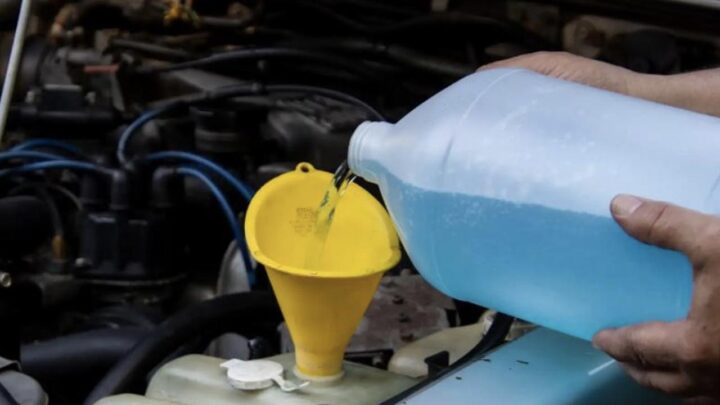
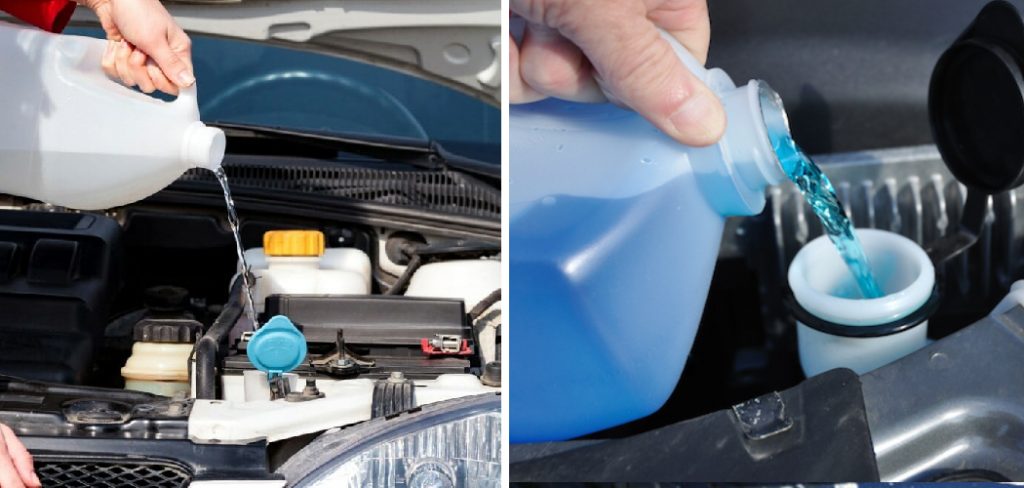
Once thawed, remove unsuitable fluid when practical and refill with a winter-rated product appropriate for local temperatures. Follow the vehicle owner’s manual and the washer fluid manufacturer’s directions.
Can Engine Heat Help Thaw Washer Lines?
Engine heat may gradually warm parts of the washer system, especially hoses routed through the engine compartment, but it is not as predictable as a heated building. Reservoir position and hose routing differ considerably among vehicles, and some washer components remain far from meaningful engine heat.
Never run a vehicle in a closed garage to create heat. Engine exhaust contains carbon monoxide, which can accumulate rapidly in enclosed spaces. If the vehicle is running, it must be in a properly ventilated outdoor location or a facility designed for vehicle exhaust.
Can You Use a Hair Dryer?
Gentle warm air can sometimes help thaw an accessible nozzle or short exposed hose, but it should be used cautiously. Keep the heat moving, avoid concentrating it on one plastic component, protect painted surfaces, and keep electrical appliances away from water and wet ground. A heated garage remains the lower-risk approach.
A high-temperature heat gun is a poor choice for routine thawing because it can soften washer hoses, deform the reservoir, damage paint or trim, and overheat nearby wiring.
What Not to Do When Washer Fluid Is Frozen
Fast thawing is not always safe thawing. Several popular shortcuts introduce more risk than benefit because the washer system contains thin plastic parts and sits close to painted panels, wiring, the windshield, and other temperature-sensitive components.
Boiling water is especially problematic. Pouring very hot water over a cold windshield can subject the glass to rapid temperature change. Hot water can also deform plastic components, and any water that remains around the nozzles can freeze again after the vehicle returns to subfreezing temperatures.
Adding plain water to the reservoir is also counterproductive in freezing weather. It may temporarily melt a small amount of surface ice if warm, but it further dilutes the mixture and leaves the system with less freeze protection after temperatures fall again.
Source: hitchesguide.com
Do not pour boiling water on the windshield
Rapid temperature changes can stress cold automotive glass and may also damage nearby plastic or painted components.
Do not fill the washer reservoir with hot water
Water lowers winter freeze protection and can refreeze inside the reservoir or lines.
Do not use an open flame
Washer fluid can contain alcohol, and engine compartments contain numerous combustible materials. Flames should never be used to thaw the system.
Do not substitute engine coolant
Antifreeze or engine coolant is designed for the cooling system, not for cleaning a windshield. Use only a washer-fluid product approved for the vehicle.
Do not continuously run the pump
If fluid cannot move, repeated operation adds unnecessary load to the pump and will not mechanically force solid ice through the hose.
Do not assume rubbing alcohol is universally safe
Although alcohol lowers the freezing point of water, improvised concentrations may not be compatible with every washer system or produce a predictable freeze rating. A properly formulated winter washer fluid is the safer routine choice.
Why Adding Winter Washer Fluid May Not Immediately Clear Frozen Lines
Pouring cold-weather washer fluid into a partly frozen reservoir can help improve the final mixture after the ice melts, but it does not guarantee an immediate repair. Fluid added to the reservoir cannot reach an ice plug farther along the hose until the pump can move liquid through the system.
For that reason, physical thawing with moderate ambient warmth should come first. Correcting the fluid mixture comes after enough ice has melted for the system to circulate again.
What to Check If the Washer Still Does Not Work After Thawing
If the car has spent several hours above freezing and all visible fluid is liquid, continued failure points toward a mechanical blockage, leak, or electrical problem rather than ice alone. Troubleshoot from the easiest observations to the more involved repairs.
Start by confirming that the reservoir actually contains fluid. Then activate the washer briefly while listening for the pump. A pump that can be heard operating suggests the electrical circuit is at least powering the motor, although it does not prove that the pump is producing adequate pressure.
Next, inspect accessible washer hoses. Look for a line that has slipped off a fitting, a split section of tubing, or fluid leaking underneath the hood. Freezing water expands, so a weak connection can separate as the contents freeze.
If the hoses appear intact, examine the spray nozzles. Dirt, road wax, mineral deposits, ice residue, or debris can restrict the tiny outlet. Use the cleaning method recommended by the vehicle manufacturer. Avoid enlarging the nozzle with oversized pins or drill bits.
Source: hitchesguide.com
Reservoir is empty
Refill with the correct washer fluid and check for leaks if the level dropped unexpectedly.
Pump runs but there is no fluid anywhere
Check for a frozen remnant, disconnected hose, blocked pickup, damaged pump impeller, or a severe restriction.
A localized nozzle blockage or branch-hose problem is more likely than a completely failed pump.
Pump makes no sound
Check the appropriate fuse and consult the owner’s manual for the vehicle-specific washer circuit. If the fuse is intact, electrical diagnosis may be needed.
Fuse repeatedly blows
Stop replacing fuses without diagnosis. A seized pump, damaged wiring, or another electrical fault may be present.
When to Have the Washer System Professionally Inspected
Professional diagnosis is reasonable when a fully thawed washer system remains inoperative, the reservoir is cracked, fluid leaks from a hidden location, the pump fuse repeatedly fails, or access requires removing major trim or body components.
A technician can check electrical power and ground at the pump, measure pump operation, pressure-test the fluid path where appropriate, and inspect hidden hoses or fittings without relying on guesswork.
How to Prevent Windshield Washer Fluid Lines From Freezing Again
Prevention depends mainly on using washer fluid whose freeze protection matches the climate and making the change before severe cold arrives. The label should state the temperature range or freeze protection. Choose a product suitable for temperatures below the realistic winter low where the vehicle will be used, not simply the temperature at the time you fill the reservoir.
This is particularly important for U.S. drivers who travel between climate zones. A vehicle filled with warm-weather washer fluid in Texas, Florida, or Southern California may encounter dramatically colder conditions during a winter trip to Colorado, Minnesota, Wisconsin, Maine, Montana, or another cold-weather state.
If summer fluid is still in the reservoir before winter, adding a small quantity of winter fluid on top may not provide the freeze rating printed on the winter product. The remaining summer mixture dilutes it. For dependable protection, use up or remove most of the warm-weather fluid and refill with the appropriate winter formula.
After refilling, operate the washers long enough to move the new fluid from the reservoir through the hoses and out of the nozzles. Otherwise, the reservoir may contain winter fluid while weaker fluid remains trapped in the lines.
Source: hitchesguide.com
Check the freeze rating
Use the temperature rating on the washer-fluid container and choose protection appropriate for the coldest conditions the vehicle is likely to encounter.
Avoid unnecessary dilution
Adding plain water reduces freeze protection unless the product is specifically a concentrate intended to be mixed according to its instructions.
Winterize before the first hard freeze
Changing fluid before temperatures drop is easier than thawing an already frozen reservoir and lines.
Flush the lines with winter fluid
After refilling, spray enough fluid to replace the old mixture that was left inside the hoses and nozzles.
Keep the reservoir reasonably full
A sufficient supply helps ensure the washer system remains available during winter road-salt and slush conditions.
Follow vehicle-specific guidance
Some manufacturers restrict certain additives or washer-fluid types, so check the owner’s manual when choosing a formulation.
Choosing the Right Winter Washer Fluid in the United States
There is no single temperature rating that is ideal for every U.S. driver. A formula suitable for a relatively mild Pacific Northwest winter may not provide enough protection for North Dakota or interior Alaska. Use the lowest temperatures reasonably expected along your normal routes and winter travel destinations as the practical reference point.
Read the container rather than relying on color or terms such as all-season. Products with similar colors can have different freeze ratings. If a concentrate is used, follow its specified mixing ratio precisely because changing the water-to-concentrate ratio changes freeze protection.
Signs the Washer Lines Have Successfully Thawed
A successful thaw is more than hearing the pump operate. Fluid should reach all intended nozzles with a stable spray pattern, there should be no visible leaks, and the reservoir should contain liquid rather than remaining slush.
Test the system while parked before depending on it in traffic. Activate the washer briefly and confirm that each nozzle sprays the windshield. Inspect the ground and engine compartment for escaping fluid. If the initial spray is weak but improves after a few short cycles, residual slush or air may have been moving through the system.
Once normal operation returns, do not consider the repair complete until the fluid mixture is corrected. If the original fluid froze once and outside temperatures remain similar, it can freeze again after the car is parked.
Source: hitchesguide.com
Normal spray from every nozzle
Consistent spray indicates that the reservoir, pump, lines, and outlets are passing fluid.
No visible slush in the reservoir
Remaining ice means the system has not completely thawed.
No leaks
Dry hose connections and normal reservoir level suggest freezing did not split or disconnect a component.
Correct winter fluid installed
Replacing the freeze-prone mixture reduces the chance of the same problem returning after the next cold soak.
What If the Lines Freeze Again the Same Day?
Repeated freezing shortly after a successful thaw usually means the fluid remaining in the system still lacks sufficient freeze protection. This can happen when only a small amount of winter formula was added to a reservoir full of summer fluid or when old fluid remained in the hoses.
Thaw the system again, remove as much of the weak mixture as practical, refill with an appropriate winter-rated product, and run enough fluid through the nozzles to replace the mixture inside the lines.
Frequently Asked Questions
Q
How long does it take windshield washer fluid lines to thaw?
There is no fixed thawing time. A small ice plug in an exposed nozzle may clear relatively quickly once the vehicle is above freezing, while a reservoir frozen nearly solid can require several hours in a heated garage. The starting temperature, amount of ice, location of the frozen section, and garage temperature all affect the result.
Do not judge the system only by elapsed time. Confirm that the reservoir is liquid and test the washer briefly before assuming the lines are clear.
Q
Can I pour hot water into the windshield washer reservoir?
It is better not to use hot water as a routine thawing method. Water dilutes the washer mixture and reduces its future freeze protection, so the system can freeze again as soon as the vehicle returns to cold weather. Very hot water can also expose cold plastic components to unnecessary thermal stress.
Gradual warming in a heated location followed by replacement with suitable winter washer fluid is the safer approach.
Q
Can frozen windshield washer fluid damage the pump?
Frozen fluid can prevent the pump from moving liquid, and repeatedly operating the washer against a frozen or blocked system can place unnecessary stress on the pump. Ice expansion can also affect reservoirs, hoses, fittings, and other components.
If no fluid sprays during freezing conditions, stop repeatedly operating the switch and thaw the system before further diagnosis.
Q
Why is my washer fluid not spraying even though I hear the pump?
If you hear the pump, fluid may be blocked by a frozen line or nozzle, but other causes include an empty reservoir, disconnected hose, clogged nozzle, damaged pump, blocked pickup, or a leak.
If the vehicle has been fully thawed above freezing and still does not spray, inspect the fluid level, hoses, nozzles, and pump rather than continuing to treat the problem as frozen fluid.
Q
Should I use windshield washer antifreeze or engine antifreeze?
Use windshield washer fluid specifically formulated and labeled for cold-weather windshield cleaning. Do not put engine coolant or cooling-system antifreeze in the washer reservoir. Engine coolant is designed for a different system and is not an appropriate windshield-cleaning fluid.
Check the winter washer fluid’s labeled freeze protection and any restrictions listed in your vehicle owner’s manual.
Q
Can windshield washer nozzles freeze even when the reservoir does not?
Yes. The nozzles are small and exposed to outside air, so a small amount of fluid or moisture at the tip can freeze while the larger volume in the reservoir remains liquid. If only the nozzles are blocked, gradual warming and careful removal of exterior ice may restore the spray.
If the nozzles repeatedly freeze, confirm that properly rated winter fluid has been circulated all the way through the hoses rather than remaining only in the reservoir.
✦ Wrapping Up
Conclusion
The safest answer to how to unfreeze windshield washer fluid lines is gradual, complete warming. Move the vehicle into a heated location whenever possible, allow the reservoir, hoses, pump area, and nozzles to thaw, and avoid repeatedly operating the pump while fluid is still frozen. Skip boiling water, open flames, aggressive heat guns, and improvised fluids that can create additional damage or reduce freeze protection.
After normal spray returns, correct the reason the system froze. Replace weak, diluted, or warm-weather fluid with windshield washer fluid rated for the lowest winter temperatures the vehicle is likely to encounter in the United States, then run the washers long enough to pull that winter mixture through the lines. If a fully thawed system still does not spray, inspect for a clogged nozzle, disconnected hose, leak, fuse problem, or failed pump.
💡 Key Takeaway
Thaw the entire washer system gradually in a warm location, verify that every nozzle sprays without leaks, then refill and flush the system with properly rated winter washer fluid before the vehicle returns to freezing temperatures.
Learn how to fold a round windshield sun shade correctly without bending the frame. Follow these simple steps, avoid common mistakes, and store it neatly.
Learn how to fold a windshield sun shade correctly with simple steps for pop-up, accordion, and umbrella styles, plus storage and troubleshooting tips.