How to Read Car Scanner Codes: Complete Beginner’s Guide
How to read car scanner codes starts with understanding the letters and numbers displayed by an OBD2 scanner. These codes, called Diagnostic Trouble Codes (DTCs), tell you which vehicle system detected a problem and provide a starting point for troubleshooting.
A car scanner does not directly tell you which part has failed. Instead, it identifies the system or condition where the vehicle computer detected an issue. Proper diagnosis requires understanding the code, checking related components, and confirming the actual cause.
The complete details are explained below. You will learn how car scanner codes work, what each letter and number means, how to interpret common codes, and what steps to take after retrieving a fault.
How to Read Car Scanner Codes Step by Step
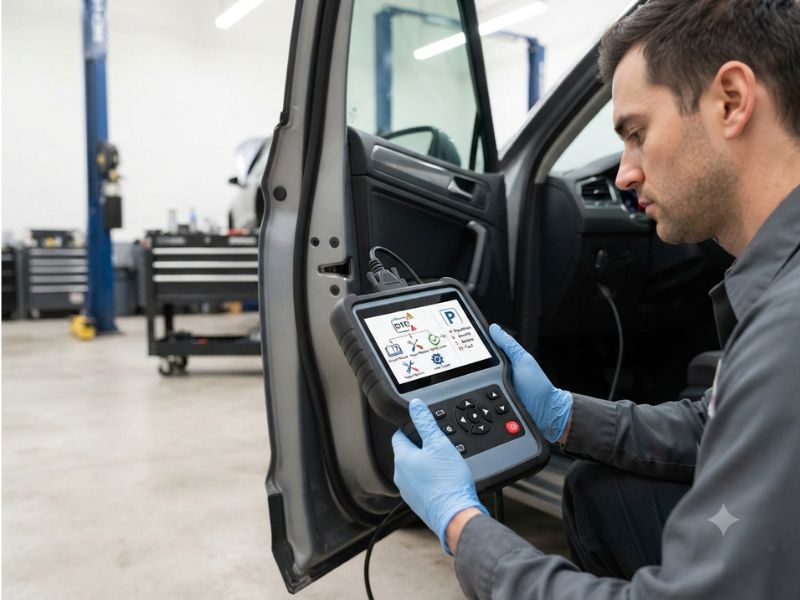
When you connect an OBD2 scanner to your vehicle, it displays one or more diagnostic trouble codes.
A typical code looks like:
P0301
This code contains five characters:
- One letter
- Four numbers
Each character provides information about the problem.
The general process for reading a code is:
- Connect the scanner to the OBD2 port.
- Turn the ignition ON.
- Select “Read Codes” or “Scan.”
- Record all displayed codes.
- Identify the system using the first letter.
- Understand the code description.
- Check possible causes.
- Perform additional testing before replacing parts.
Do not immediately replace a component just because the scanner mentions it. The code identifies a detected condition, not always the failed part.
What Do the Letters in Car Scanner Codes Mean?
The first character of an OBD2 code identifies the main vehicle system involved.
There are four primary categories:
P – Powertrain Codes
Powertrain codes relate to the engine and transmission.
Examples include:
- Engine misfires
- Fuel system problems
- Emissions faults
- Transmission issues
- Sensor problems
Common examples:
- P0300 – Random engine misfire
- P0171 – System too lean
- P0420 – Catalytic converter efficiency issue
- P0700 – Transmission control system fault
Most Check Engine Light problems are P-codes.
B – Body Codes
Body codes relate to vehicle comfort, safety, and interior systems.
Examples include:
- Airbags
- Climate control
- Door modules
- Seat systems
- Interior electronics
A scanner with advanced coverage is usually required to access many B-codes.
C – Chassis Codes
Chassis codes involve systems related to vehicle movement and safety.
Examples include:
- ABS brakes
- Steering
- Suspension systems
- Wheel speed sensors
Common examples:
- C0035 – Wheel speed sensor circuit issue
- C0050 – Steering-related fault
Basic engine scanners may not read chassis codes.
U – Network Communication Codes
U-codes indicate communication problems between vehicle computers.
Modern vehicles contain multiple modules that communicate with each other.
A communication fault may involve:
- Lost module communication
- Wiring problems
- Network faults
- Low battery voltage
Example:
U0100 – Lost communication with ECM/PCM
What Do the Numbers in Scanner Codes Mean?
After the first letter, the numbers provide additional information.
Example:
P0301
Breakdown:
- P = Powertrain
- 0 = Generic OBD2 code
- 3 = Ignition or misfire-related system
- 01 = Specific fault location
The second character tells whether the code is generic or manufacturer-specific.
Second Digit Meaning
0 = Generic standardized code
1 = Manufacturer-specific code
2 and 3 = Additional categories depending on the system
Manufacturer-specific codes may require a vehicle-specific repair manual or advanced scanner.
Generic vs Manufacturer-Specific Codes
Not all scanner codes have the same level of information.
Generic Codes
Generic OBD2 codes are standardized across many vehicles.
Examples:
- P0300
- P0171
- P0420
Most scanners can read these.
Manufacturer-Specific Codes
These codes are created by individual manufacturers.
They may provide more detailed information about:
- Specific sensors
- Transmission systems
- Hybrid systems
- Advanced electronics
A basic scanner may show the number but not provide a complete explanation.
Common Car Scanner Codes Explained
Understanding common codes helps you interpret scanner results.
P0300 – Random/Multiple Cylinder Misfire
This code means the engine computer detected misfires occurring across multiple cylinders.
Possible causes include:
- Worn spark plugs
- Faulty ignition coils
- Fuel injector problems
- Vacuum leaks
- Low compression
- Fuel delivery issues
The code does not mean you should immediately replace the engine or ignition parts.
Testing is required.
P0301–P0308 – Cylinder Misfire Codes
These codes identify a specific cylinder misfire.
Examples:
- P0301 = Cylinder 1 misfire
- P0302 = Cylinder 2 misfire
- P0303 = Cylinder 3 misfire
Possible causes include:
- Bad spark plug
- Failed coil
- Injector problem
- Wiring issue
- Mechanical engine fault
A common diagnostic method is moving ignition components between cylinders and checking whether the code follows the part.
P0171 – System Too Lean
This code means the engine computer believes there is too much air or not enough fuel.
Possible causes:
- Vacuum leak
- Dirty mass airflow sensor
- Weak fuel pump
- Fuel injector issue
- Intake leak
A lean condition does not automatically mean the oxygen sensor is bad.
P0420 – Catalytic Converter Efficiency Below Threshold
This code relates to catalytic converter performance.
Possible causes:
- Weak catalytic converter
- Exhaust leak
- Faulty oxygen sensor
- Engine misfire
- Fuel mixture problems
Replacing the catalytic converter without testing can be expensive and unnecessary.
P0455 – Large EVAP Leak
This code relates to the evaporative emissions system.
Possible causes:
- Loose gas cap
- Cracked vapor hose
- Faulty purge valve
- Damaged EVAP components
Sometimes the repair is simple, but proper testing is needed.
P0700 – Transmission Control System Fault
This code indicates that the transmission computer has detected a problem.
A basic scanner may only show P0700.
A more advanced scanner may be required to access the detailed transmission code stored in the TCM.
Possible transmission issues include:
- Shift solenoids
- Speed sensors
- Fluid pressure problems
- Communication faults
How to Read Stored, Pending, and Permanent Codes
Many scanners display different code categories.
Stored Codes
Stored codes are confirmed faults that caused the warning light.
They usually require attention.
Pending Codes
Pending codes mean the computer detected a possible problem but has not confirmed it yet.
They may disappear if the problem does not happen again.
Permanent Codes
Permanent codes are mainly emissions-related faults.
They remain stored until the vehicle confirms that the problem has been repaired.
A scanner may not be able to erase these manually.
How to Read Freeze-Frame Data
Many advanced scanners display freeze-frame information.
Freeze-frame shows vehicle conditions when the code was triggered.
Information may include:
- Engine RPM
- Vehicle speed
- Coolant temperature
- Fuel trim
- Engine load
- Throttle position
This helps determine when the problem happened.
For example:
A misfire during acceleration may suggest ignition or fuel issues.
A misfire during idle may suggest vacuum leaks or airflow problems.
How to Use Live Data to Understand Codes
Advanced scanners can display real-time sensor information.
Common live data includes:
- Oxygen sensor readings
- Fuel trims
- Engine temperature
- Airflow readings
- Throttle position
- Vehicle speed
Live data helps confirm whether a component is actually operating incorrectly.
For example:
If a coolant sensor shows an unrealistic temperature, the sensor or wiring may have a problem.
If fuel trims are extremely high, the engine may be compensating for a lean condition.
Does a Car Scanner Tell You What Part to Replace?
No.
A scanner provides information, but it does not automatically identify the failed component.
For example:
A code saying “oxygen sensor fault” does not always mean the oxygen sensor is bad.
Possible causes include:
- Wiring damage
- Exhaust leaks
- Fuel problems
- Vacuum leaks
- Sensor failure
A professional diagnosis combines:
- Scanner information
- Visual inspection
- Electrical testing
- Mechanical testing
- Vehicle-specific repair procedures
What Should You Do After Reading a Code?
After retrieving a code:
1. Write Down the Exact Code
Record:
- Code number
- Description
- Stored or pending status
- Freeze-frame information
2. Research the Code Correctly
Use information specific to:
- Vehicle year
- Make
- Model
- Engine
- Transmission
3. Check Common Causes
Look for known issues related to the code.
4. Inspect Before Replacing Parts
Check:
- Wiring
- Connectors
- Hoses
- Fluid levels
- Physical damage
5. Clear Codes Only After Repairs
Clearing codes too early removes valuable diagnostic information.
Why Does the Same Code Keep Coming Back?
If a code returns after clearing, the problem is usually still present.
Common reasons include:
- The repair did not fix the actual cause
- Another component caused the problem
- Wiring damage remains
- The wrong part was replaced
- The vehicle needs a relearn procedure
Repeated codes require deeper testing rather than repeated part replacement.
Can a Scanner Read ABS, Airbag, and Transmission Codes?
It depends on the scanner.
Basic OBD2 readers usually focus on engine and emissions codes.
Advanced scanners may access:
- ABS modules
- Airbag systems
- Transmission modules
- Body control modules
- Parking brake systems
- Steering systems
Before buying a scanner, check whether it supports the systems you need.
Common Mistakes When Reading Car Scanner Codes
Many people make mistakes after scanning their vehicle.
Replacing Parts Immediately
A code does not always mean the listed component failed.
Ignoring Other Codes
Multiple codes together often tell a bigger story.
Clearing Codes Before Recording Them
This removes useful information.
Using Generic Information Only
Manufacturer-specific details can change diagnosis.
Ignoring Symptoms
Scanner data should always be combined with actual vehicle behavior.
Final Thoughts
Learning how to read car scanner codes helps you understand what your vehicle’s computer is reporting. A scanner can identify affected systems, display trouble codes, show useful data, and guide troubleshooting.
However, a code is only the beginning of the diagnostic process. It tells you where to investigate, not always what part to replace.
The best approach is to read the code carefully, understand the system involved, inspect related components, and confirm the real cause before making repairs.