How Much Is a Code Reader for a Car: Complete Information Guide
A code reader for a car typically costs about $20 to $150, although advanced bidirectional scan tools can cost several hundred dollars or more. For basic engine trouble-code checks, most drivers can get useful results from a reader priced between $30 and $80.
Price alone does not determine whether a diagnostic tool is suitable. A low-cost device may read and clear generic check-engine codes, while a more capable scanner can access ABS, airbag, transmission, body-control, and manufacturer-specific systems. Compatibility, software updates, phone requirements, and diagnostic features can matter more than the number on the package.
This guide explains the major price ranges, what each type of code reader can actually do, and when paying more is worthwhile. You will learn how OBD-II compatibility affects your choice, which features deserve attention, what a scan result can and cannot prove, and when a professional diagnosis is safer than replacing parts based on a code.
Typical Code Reader Prices by Type
The simplest way to estimate the cost is to match the reader’s price with its diagnostic coverage. A device designed only to retrieve generic powertrain codes is inexpensive, while a professional scan tool requires more hardware, software, and vehicle-specific coverage.
Basic corded code readers: $20 to $50
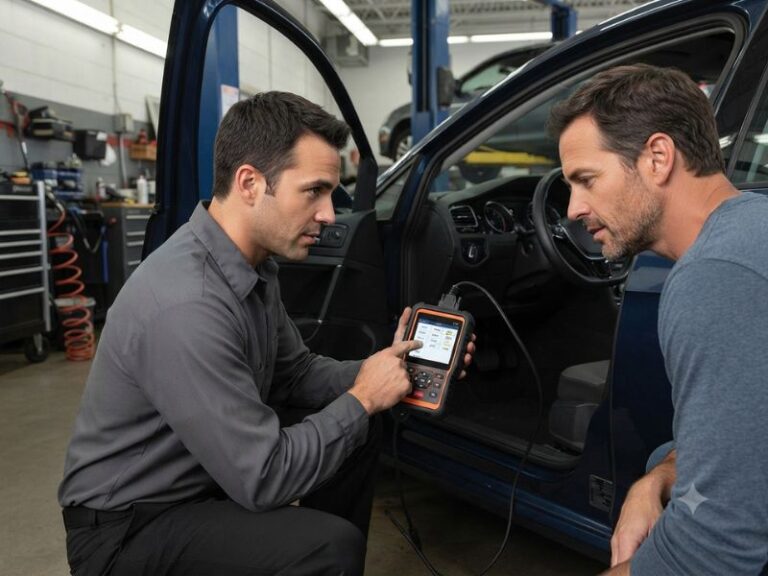
Entry-level corded readers usually plug directly into the vehicle’s OBD-II port. They commonly display generic diagnostic trouble codes, provide a brief description, and allow the user to clear the check-engine light after a repair.
These tools are often sufficient for a vehicle with an illuminated malfunction indicator lamp when the immediate goal is to identify the general system involved. They may show codes such as an oxygen-sensor, misfire, evaporative-emissions, or catalytic-converter-related fault, but they rarely provide enough information to confirm the failed component.
Midrange handheld scanners: $50 to $150
Midrange scanners may show live data, freeze-frame information, emissions-readiness monitors, battery voltage, and manufacturer-specific powertrain codes. Many also offer graphing, code definitions, data recording, or a larger display that makes diagnosis easier.
This range is often the best value for a private vehicle owner who wants more than a one-time code lookup. A midrange scanner can help compare sensor readings, determine whether a vehicle is ready for an emissions test, and avoid replacing parts based only on a generic code description.
Bluetooth and wireless readers: $15 to $100
Wireless adapters connect to a smartphone or tablet through Bluetooth or Wi-Fi. The hardware may cost less than a handheld scanner, but the total cost depends on the mobile app. Some apps are free, while others charge for enhanced functions, vehicle coverage, data logging, or subscription access.
Wireless readers are convenient for casual checks and can display information in a more readable format. However, connection problems, app permissions, weak software support, and poor compatibility can make a very cheap adapter frustrating or unreliable.
Advanced diagnostic scanners: $150 to $600 or more
Advanced consumer and enthusiast tools can access multiple vehicle modules rather than only the engine computer. Depending on the model and vehicle, they may read ABS, airbag, transmission, body, parking-assist, or steering-system codes.
Some support service functions such as electronic parking-brake retraction, battery registration, steering-angle calibration, or oil-service resets. These capabilities vary substantially by make, model, year, and software version, so a high purchase price does not guarantee coverage for every vehicle.
Professional scan tools: $600 to several thousand dollars
Professional equipment is priced for repair shops, mobile technicians, and serious specialists. It may include extensive vehicle coverage, guided tests, wiring information, programming capability, security access, technical data, and frequent software updates.
For occasional household use, this category is rarely economical. A shop-grade tool can still be worthwhile for someone diagnosing many vehicles, but the ongoing cost of subscriptions and updates must be included in the budget.
What Determines the Price of a Car Code Reader?
The cost reflects more than the screen or connector. Manufacturers charge more for broader coverage, faster hardware, better software, and functions that communicate with systems beyond the basic engine computer.
Code coverage and vehicle compatibility
Since 1996, most vehicles sold in the United States have used an OBD-II diagnostic system for emissions-related information. That does not mean every OBD-II reader can communicate with every module in every vehicle.
A basic reader may support generic OBD-II powertrain codes but fail to access manufacturer-specific codes. Before buying, check the reader’s stated coverage for the exact vehicle year, make, model, engine, and intended system.
Live data and diagnostic depth
A code reader that only displays a stored code provides limited evidence. A scanner with live data can show readings from sensors and modules while the engine operates, helping the user evaluate whether values change as expected.
Useful data may include engine speed, coolant temperature, fuel trims, oxygen-sensor activity, throttle position, vehicle speed, and calculated load. Interpreting that information requires some mechanical knowledge, but it can substantially narrow the possible causes.
Bidirectional controls
Bidirectional control allows a scanner to send commands to certain vehicle components. Depending on coverage, a technician might use it to command a cooling fan, fuel pump, relay, solenoid, or actuator for testing.
This is a major step above simply reading a code. It also increases the risk of misuse, because commanding the wrong component or testing a system without proper precautions can cause damage or create a safety issue.
Updates and subscriptions
Some readers include free updates for a limited period. Others require annual software subscriptions for continued access to new vehicle models, enhanced functions, or manufacturer-specific data.
A low-cost tool with expensive recurring fees may cost more over several years than a slightly more expensive device with longer update support. Read the update policy before comparing purchase prices.
What a Cheap Code Reader Can and Cannot Do
A basic reader can retrieve a stored, pending, or permanent diagnostic trouble code from supported systems. It can often clear the check-engine light, display freeze-frame data, and show whether emissions monitors have completed.
That information is useful, but a code is not a diagnosis. For example, an oxygen-sensor-related code may result from a wiring fault, exhaust leak, vacuum problem, fuel-mixture issue, or sensor failure. Replacing the named sensor immediately may waste money and leave the original problem unresolved.
Cheap readers also have important limitations:
- They may not read ABS, airbag, transmission, or body-control codes.
- They may provide vague or incomplete code descriptions.
- They may not display live data or graph sensor readings.
- They may not support newer vehicles or all communication protocols.
- They cannot replace electrical testing, mechanical inspection, or service information.
For a simple check-engine-light investigation, these limitations may be acceptable. For an intermittent fault, no-start condition, safety-system warning, or complex drivability problem, a more capable scanner and additional testing are usually necessary.
Features Worth Paying For
The right features depend on whether the reader is for occasional information or repeated diagnosis. Spending more makes sense when the added function answers a real need rather than simply adding marketing terminology.
Vehicle-specific coverage
Look for explicit coverage of the systems you expect to diagnose. “Full system” may mean access to every module on some vehicles but only engine and transmission information on others.
Coverage can also vary by model year. A tool may support engine codes on a particular vehicle but not airbag codes, service resets, or advanced functions for that same vehicle.
Freeze-frame data and readiness monitors
Freeze-frame data records operating conditions when a fault was stored. Information such as engine temperature, speed, load, and fuel-trim status can help reproduce a problem.
Emissions-readiness monitors show whether the vehicle’s self-tests have completed. Clearing codes or disconnecting the battery usually resets these monitors, so a vehicle may temporarily show no active check-engine light while still not being ready for an emissions inspection.
Clear display and data recording
A readable screen, physical buttons, and the ability to save or record data can be more useful than a long list of advanced claims. Data logging is particularly helpful for intermittent problems that occur during driving.
Wireless models offer convenience, but a corded scanner avoids pairing issues and generally remains ready whenever it is needed. Choose based on the environment in which the device will be used.
Repair information and test guidance
Some higher-priced tools include repair tips, component tests, specifications, or access to technical databases. These features can shorten diagnosis, but they should not be treated as a substitute for accurate service procedures.
Confirm whether the information is stored on the device, included permanently, or available only while a subscription remains active.
When Buying a Code Reader Makes Financial Sense
Buying a reader can be worthwhile if a vehicle is out of warranty, multiple cars are maintained in the household, or the check-engine light appears regularly. Even a basic tool can help distinguish an urgent warning from a problem that may be scheduled for inspection.
It can also help a driver communicate more clearly with a repair shop. Knowing the stored code does not prove the cause, but it gives the owner useful context and may reveal whether a light was recently cleared before a vehicle sale.
Still, the reader should be viewed as an information tool, not a guaranteed repair-cost reducer. Incorrect interpretation can lead to unnecessary sensors, ignition parts, catalytic converters, or control modules being replaced.
How to Use a Code Reader Safely
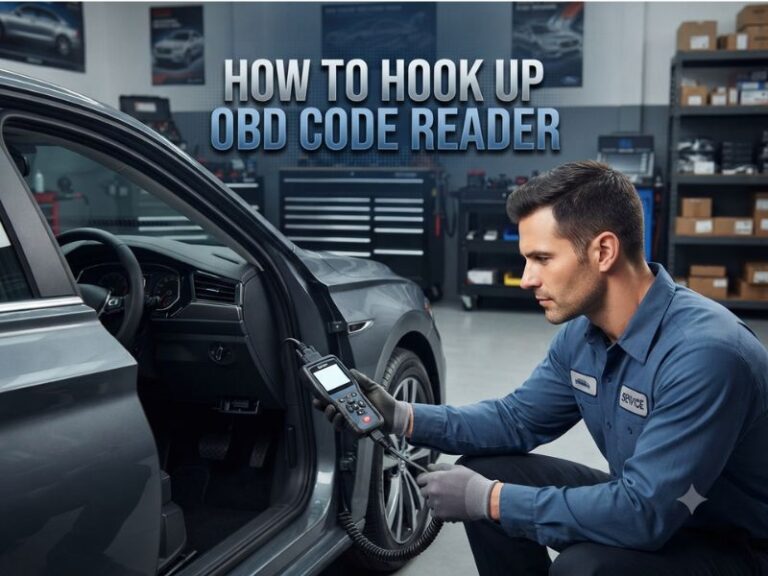
Read the tool’s instructions and locate the diagnostic connector before connecting it. The port is commonly under the dashboard near the steering column, but its position varies.
- Park safely, set the parking brake, and turn the ignition off before connecting the reader unless the instructions specify otherwise.
- Plug the device into the OBD-II port without forcing the connector.
- Turn the ignition on or start the engine as directed by the tool.
- Record stored, pending, and permanent codes before clearing anything.
- Review freeze-frame data and other available information.
- Investigate the likely causes before replacing parts.
- Clear codes only after repairs or when appropriate for testing.
Do not clear a warning simply to make the dashboard appear normal. If the light returns, the underlying fault remains, and clearing it can erase useful diagnostic information.
A flashing check-engine light commonly indicates a severe misfire that may damage the catalytic converter. Reduce driving and seek professional help promptly, particularly if the engine is shaking, losing power, overheating, or producing unusual smells.
Reader Cost Compared With Professional Diagnosis
A basic reader may cost less than a single diagnostic fee, but professional diagnosis includes more than retrieving a code. A technician can inspect wiring, test circuits, verify sensor operation, check mechanical timing or compression, and use manufacturer-specific data.
Professional help is especially appropriate when the warning involves airbags, brakes, steering, high-voltage hybrid components, or a vehicle that is unsafe to drive. These systems can cause injury if tested or repaired incorrectly.
For a recurring engine code, consider the cost of the scanner, updates, required tools, and likely replacement parts. If the fault requires specialized equipment or the vehicle is needed for reliable transportation, paying for a confirmed diagnosis may be less expensive than guessing.
FAQ: Car Code Reader Prices
How much is a code reader for a car?
Most car code readers cost between $20 and $150. Basic OBD-II readers are commonly under $50, midrange scanners often cost $50 to $150, and professional tools can cost several hundred to several thousand dollars.
Is a $20 code reader good enough?
A $20 reader can be adequate for basic engine-code retrieval. It may not access ABS, airbag, transmission, or manufacturer-specific systems, and it may offer little or no live-data capability.
Should I buy a handheld scanner or a Bluetooth adapter?
Choose a handheld scanner for simplicity and a Bluetooth adapter for phone-based convenience. A handheld device avoids app compatibility and pairing issues, while a wireless adapter may offer better graphs and data displays depending on the app.
Can a code reader tell me which part to replace?
A code reader identifies a monitored fault, not necessarily a failed part. Additional inspection and testing are needed because wiring, vacuum leaks, exhaust problems, software issues, and related components can trigger the same code.
Do more expensive scanners work on every car?
No scanner works with every vehicle system automatically. Confirm coverage for the exact year, make, model, engine, and module before purchase, especially when you need ABS, airbag, transmission, or service-reset functions.
Is it safe to clear a check-engine code?
Clearing a code is generally safe, but it erases diagnostic information and resets emissions monitors. Record the codes first, repair the cause, and avoid clearing a flashing warning or a serious drivability problem just to turn the light off.
What is the best price range for a home vehicle
A $50-to-$150 scanner is usually the most practical range for regular household use. It commonly provides live data and better coverage without the subscription expense or complexity of professional equipment.
Conclusion: Choose the Reader for the Job
A car code reader can cost as little as $20, but a dependable home-use scanner commonly falls between $50 and $150. Pay for the coverage and functions you actually need, particularly live data, readiness checks, and access to non-engine modules.
The major limitation is that a trouble code is not proof that a specific part has failed. Record the code, verify compatibility, inspect the likely causes, and seek professional diagnosis when the warning involves a safety system, severe symptoms, or a fault beyond the reader’s capabilities.