What Is Spark Advance on Obd2 Scanner: Practical Guide and Tips
Many drivers, and even some aspiring mechanics, often find themselves scratching their heads when they encounter terms like “spark advance” on their OBD2 scanner. It’s not just a number; it’s a critical piece of information that speaks volumes about your engine’s health and performance. While the scanner provides the data, understanding what that data means in the real world can feel like deciphering a foreign language. The question “what is spark advance on obd2 scanner” becomes clearer once the surrounding conditions and practical details are considered.
The confusion often stems from the technical nature of ignition timing. I know my engines need a spark to run, but the precise moment that spark occurs relative to the piston’s position is far more nuanced than a simple on/off switch. This timing isn’t static; it constantly adjusts based on various engine conditions, and an OBD2 scanner is your window into these dynamic adjustments.
My goal here is to demystify this often-overlooked parameter. I’ll explain exactly what is spark advance on an OBD2 scanner, why it matters, and how you can interpret the readings to gain valuable insights into your vehicle’s operation. By the end of this article, you’ll not only understand the concept but also be better equipped to use your scanner as a diagnostic tool rather than just a code reader.
This guide will help you understand the fundamentals of spark advance, how your engine manages it, and what typical readings look like. I’ll also cover common issues that can affect spark advance and how to interpret unusual values, empowering you to make more informed decisions about your vehicle’s maintenance and potential repairs.
What Is Spark Advance on Obd2 Scanner
At its core, spark advance refers to the timing of the ignition spark relative to the piston’s position in the cylinder. Specifically, it’s the number of degrees the crankshaft rotates before the piston reaches Top Dead Center (TDC) on its compression stroke when the spark plug fires. For example, if your scanner shows “10 degrees spark advance,” it means the spark occurred 10 degrees before TDC.
The reason for this “advance” is simple physics. It takes a tiny but measurable amount of time for the air-fuel mixture to fully ignite and burn. If the spark occurred exactly at TDC, the peak pressure from the combustion wouldn’t happen until the piston was already moving down, reducing efficiency and power. By firing the spark slightly early, the combustion process can reach its peak pressure just as the piston begins its downward power stroke, maximizing the force applied to the piston.
Why Spark Advance Isn’t Fixed
Modern engines don’t use a fixed spark timing. Instead, the Engine Control Unit (ECU) or Powertrain Control Module (PCM) continuously adjusts spark advance based on a multitude of factors. This dynamic adjustment is crucial for optimizing performance, fuel economy, and emissions across varying driving conditions. Key factors influencing spark advance include:
- Engine Speed (RPM): As RPM increases, there’s less time for the combustion process to complete. Therefore, the spark needs to be advanced further to ensure peak pressure occurs at the optimal moment.
- Engine Load: Under heavy load (e.g., accelerating uphill), more fuel and air are entering the cylinders, leading to a denser mixture that burns faster. The ECU might slightly retard the spark (reduce advance) to prevent pre-ignition or knocking. Conversely, under light load, the spark might be advanced more.
- Engine Temperature: A cold engine might require slightly different timing than a fully warmed-up engine.
- Intake Air Temperature: Denser, colder air can affect combustion speed.
- Manifold Absolute Pressure (MAP) or Mass Air Flow (MAF): These sensors provide information about the amount of air entering the engine, which is critical for calculating load.
- Throttle Position: Indicates driver demand for power.
- Knock Sensor Input: This is perhaps one of the most critical inputs. If the knock sensor detects pre-ignition (engine knock or pinging), the ECU will immediately retard the spark timing to prevent engine damage.
The ECU uses complex algorithms and pre-programmed maps to calculate the ideal spark advance for any given set of operating conditions. This constant adjustment is what makes modern engines so efficient and powerful.
Accessing Spark Advance Data with an OBD2 Scanner
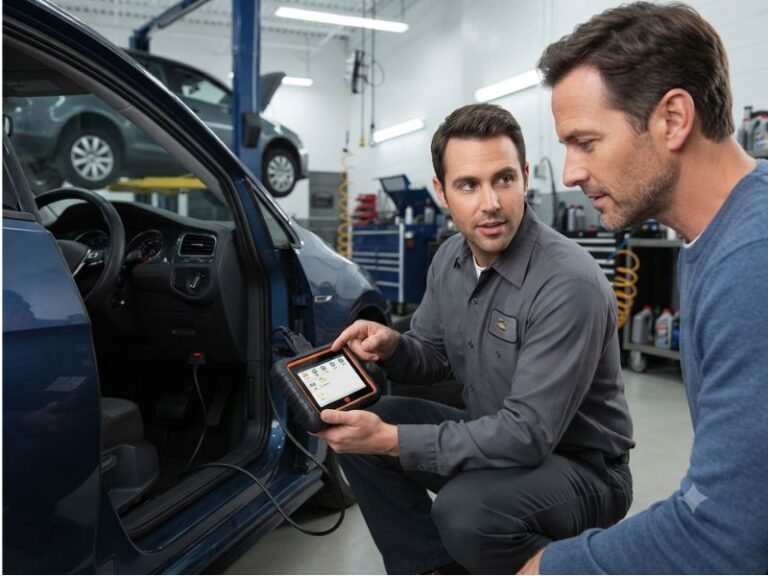
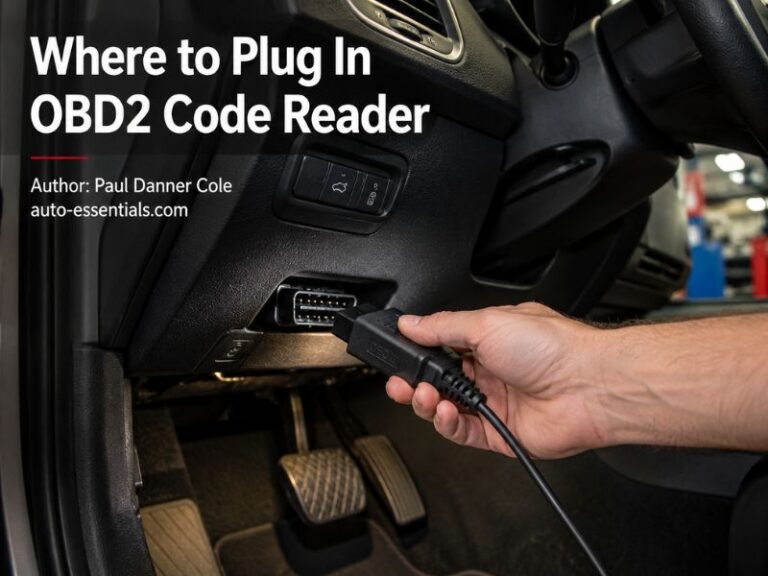
When you connect an OBD2 scanner to your vehicle’s diagnostic port (typically located under the dashboard), you gain access to a wealth of real-time data, including spark advance. The specific parameter you’re looking for might be labeled in various ways, but common terms include:
- “Spark Advance”
- “Ignition Timing Advance”
- “Timing Advance”
- “Ignition Timing”
- “Advance”
The unit of measurement will almost always be in degrees (e.g., 15°, 20°). Most scanners will display this as a live data stream, meaning the value will change as the engine operates. This dynamic display is crucial for understanding how your engine is responding to different conditions.
Interpreting Live Data Readings
Observing spark advance as live data is far more informative than just seeing a static number. Here’s what you might typically see and what it means:
- Idle: At idle, with no load, spark advance values are usually moderate, perhaps ranging from 5° to 20° BTDC (Before Top Dead Center), depending on the engine design and temperature.
- Light Acceleration/Cruising: Under light load and steady cruising, the ECU will typically advance the timing significantly to maximize fuel economy. You might see values anywhere from 25° to 45° BTDC or even higher in some engines.
- Heavy Acceleration/Wide Open Throttle (WOT): When you demand maximum power, the ECU will generally pull back some of the advance (retard the timing) to prevent knocking, especially if using lower octane fuel. Values might drop to 15° to 25° BTDC, or even lower if knock is detected.
- Deceleration/Engine Braking: During deceleration, when the throttle is closed and the engine is being driven by the vehicle’s momentum, spark advance can sometimes be very high or even negative (retarded past TDC) as the ECU tries to manage emissions and engine braking.
It’s important to remember that “normal” values vary significantly between different makes, models, and even engine variants. What’s normal for a naturally aspirated four-cylinder might be very different from a turbocharged V6. My advice is to get familiar with what your specific vehicle’s spark advance looks like when it’s running well. This baseline will be invaluable for diagnosing future issues.
The Role of Knock Sensors and Spark Retard
The knock sensor is a vital component directly influencing spark advance. It’s a piezoelectric microphone that “listens” for the specific frequency associated with engine knock or pre-ignition. Engine knock occurs when the air-fuel mixture ignites prematurely or unevenly, creating multiple flame fronts that collide, producing a characteristic metallic pinging sound. This phenomenon is highly destructive to an engine, capable of causing piston damage, bent connecting rods, and even catastrophic failure.
When the knock sensor detects this tell-tale pinging, it sends a signal to the ECU. In response, the ECU will immediately retard the spark timing, meaning it will fire the spark plug closer to or even slightly after TDC. This action reduces the peak cylinder pressure and temperature, thereby suppressing the knock. This process happens in milliseconds and is often imperceptible to the driver.
Understanding Spark Retard on Your Scanner
Some advanced OBD2 scanners or diagnostic software can display not only the commanded spark advance but also “spark retard” or “knock retard” values. These values indicate how many degrees the ECU has pulled back the timing due to knock detection. For example, if your commanded advance is 30° and your knock retard shows 5°, the actual spark timing is 25°.
Occasional, small amounts of knock retard (e.g., 1-3 degrees) can be normal, especially under heavy load or with lower octane fuel. The ECU is simply doing its job to protect the engine. However, consistently high knock retard values (e.g., 5 degrees or more, or constant retard across various driving conditions) are a red flag. They indicate that the engine is frequently encountering conditions that lead to knock, which could point to underlying problems.
Common Issues Affecting Spark Advance and What They Mean
Unusual spark advance readings on your OBD2 scanner can be symptoms of various engine problems. Here are some common scenarios and what they might indicate:
Consistently Low or Retarded Spark Advance
If your spark advance is consistently lower than expected across various RPMs and loads, or if you see high knock retard values, it could point to several issues:
- Low Octane Fuel: Using fuel with an octane rating lower than what your manufacturer recommends is a primary cause of knock and subsequent spark retard. The ECU pulls timing to prevent damage.
- Carbon Buildup: Excessive carbon deposits on piston tops and cylinder heads can create hot spots, leading to pre-ignition. They also increase the effective compression ratio, making the engine more prone to knock.
- Faulty Knock Sensor: A malfunctioning knock sensor might either falsely detect knock (leading to excessive retard) or fail to detect actual knock (leaving the engine vulnerable to damage).
- Lean Air-Fuel Mixture: A lean mixture (too much air, not enough fuel) burns hotter and can cause knock. This could be due to vacuum leaks, a failing fuel pump, clogged fuel injectors, or a faulty MAF/MAP sensor.
- Overheating Engine: An engine running too hot is more susceptible to knock. Check your coolant levels, thermostat, and cooling fan operation.
- Incorrect Spark Plugs: Using spark plugs with the wrong heat range can lead to hot spots and pre-ignition.
- EGR System Issues: A malfunctioning Exhaust Gas Recirculation (EGR) system can lead to higher combustion temperatures and knock.
- Timing Chain/Belt Issues: While less common to directly affect spark advance readings in real-time without also setting a fault code, a stretched timing chain or incorrectly installed belt could subtly shift mechanical timing, potentially making the engine more prone to knock.
Consistently High or Over-Advanced Spark Advance
While less common as a primary fault, an engine that consistently runs with excessively high spark advance (without corresponding knock retard) can also be problematic:
- Faulty Engine Sensors: A malfunctioning MAF, MAP, or engine temperature sensor could feed incorrect data to the ECU, causing it to command too much advance.
- ECU Malfunction: In rare cases, the ECU itself could be faulty, commanding incorrect timing.
- Modified Tune: If the vehicle has been aftermarket tuned, the spark advance maps might be aggressively set, potentially pushing the engine to its limits or beyond.
My recommendation is always to address any underlying issues causing knock or abnormal timing. Ignoring these signs can lead to significant engine damage over time.
Practical Diagnostic Steps and Tips
When using your OBD2 scanner to investigate spark advance, I suggest a systematic approach:
1. Establish a Baseline
Before you suspect a problem, drive your vehicle with the scanner connected and observe the spark advance values under various conditions: idle, light acceleration, cruising, and heavy acceleration. Note the typical ranges. This baseline is invaluable for future comparisons.
2. Check for Diagnostic Trouble Codes (DTCs) First
Always start by checking for any stored or pending DTCs. Codes related to misfires, O2 sensors, MAF/MAP sensors, or knock sensors can directly explain abnormal spark advance readings.
3. Monitor Other Relevant PIDs (Parameter IDs)
Spark advance doesn’t operate in isolation. When diagnosing, I always monitor it alongside other critical PIDs:
- Engine RPM: To understand the load condition.
- Engine Load: Directly influences commanded advance.
- MAF/MAP Sensor Readings: To verify air intake accuracy.
- O2 Sensor Readings/Fuel Trims: To assess air-fuel mixture.
- Coolant Temperature: Overheating can cause knock.
- Knock Sensor Voltage (if available): Some scanners can show raw knock sensor data.
- Throttle Position Sensor (TPS): Indicates driver demand.
By correlating these values, you can often pinpoint the root cause. For example, if you see high knock retard and your O2 sensors indicate a lean condition, you’d investigate vacuum leaks or fuel delivery issues.
4. Perform Controlled Tests
To isolate conditions, try specific tests:
- Idle Test: Observe advance at a steady idle.
- Snap Throttle Test: Briefly rev the engine in neutral and watch the immediate response of spark advance and any knock retard.
- Road Test: Drive under various loads, including uphill acceleration, and monitor timing.
5. Consider Fuel Octane
If you’re consistently seeing knock retard, try filling up with a higher octane fuel for a tank or two. If the knock retard significantly decreases, it suggests your engine is sensitive to the fuel you were using, or there’s an underlying condition making it prone to knock even with the correct octane.
6. Inspect for Physical Issues
Sometimes, the problem isn’t electronic. Visually inspect for:
- Vacuum Leaks: Listen for hissing sounds, or use a smoke machine.
- Damaged Spark Plugs/Wires: Misfires can sometimes be misinterpreted as knock.
- Exhaust Leaks: Can affect O2 sensor readings and thus fuel trims and timing.
Remember, your OBD2 scanner is a diagnostic aid, not a magic bullet. It provides data that you, as the technician or informed owner, must interpret in context.
Limitations and What Your Scanner Can’t Tell You
While an OBD2 scanner is incredibly powerful, it has limitations regarding spark advance:
- It Shows Commanded, Not Always Actual: Most generic OBD2 scanners display the spark advance value that the ECU is commanding. While this is usually very close to the actual timing, it doesn’t account for mechanical issues like a stretched timing chain that might subtly alter the physical timing without the ECU necessarily knowing it directly (though it might react to resulting knock). More advanced professional scan tools might offer a “crankshaft position sensor offset” or similar parameter that can give insight into mechanical timing.
- No Direct Cause for Knock: The scanner will tell you if there’s knock retard, but it won’t tell you why the knock is occurring. That requires further diagnosis, correlating with other sensor data, and sometimes physical inspection.
- Varying Display Accuracy: The refresh rate and precision of spark advance readings can vary between different scanners. High-end professional tools typically offer faster and more accurate data streams.
- Engine-Specific Norms: As I mentioned, what’s “normal” varies greatly. Without a service manual or prior experience with a specific engine, determining if a value is truly abnormal can be challenging.
For complex or persistent issues, consulting a qualified mechanic with specialized diagnostic equipment and experience is always a wise decision. They can often access manufacturer-specific data and perform tests that generic OBD2 scanners cannot.
Conclusion
Understanding what is spark advance on an OBD2 scanner transforms it from a cryptic number into a powerful diagnostic indicator. It provides a real-time window into how your engine’s brain, the ECU, is constantly optimizing combustion for performance, efficiency, and longevity. By observing spark advance alongside other critical engine parameters, you can gain invaluable insights into your vehicle’s health, identify potential issues like engine knock, and make more informed decisions about maintenance and repairs. My hope is that this guide empowers you to use your OBD2 scanner with greater confidence and understanding, helping you keep your vehicle running smoothly and efficiently. A reliable answer to “what is spark advance on obd2 scanner” comes from applying these points to the specific situation rather than relying on one rule.