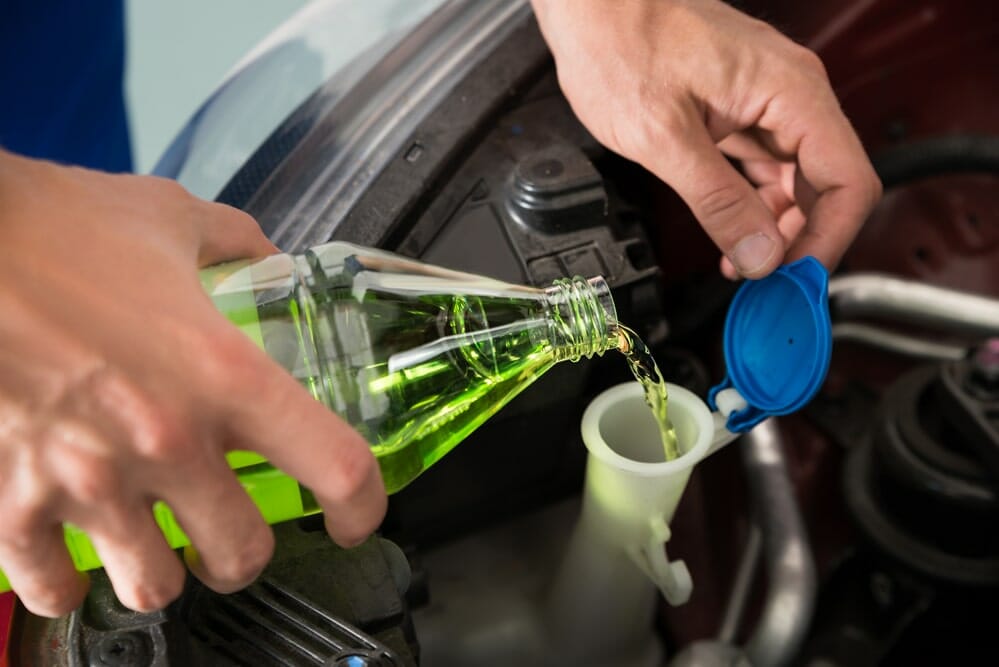
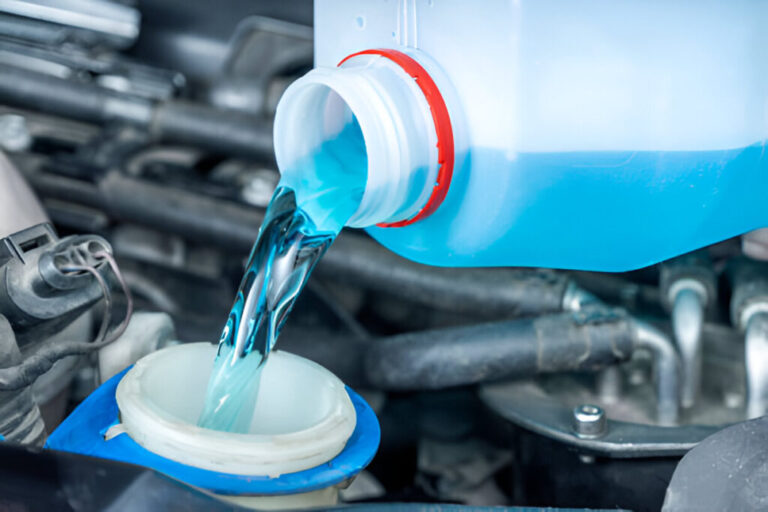
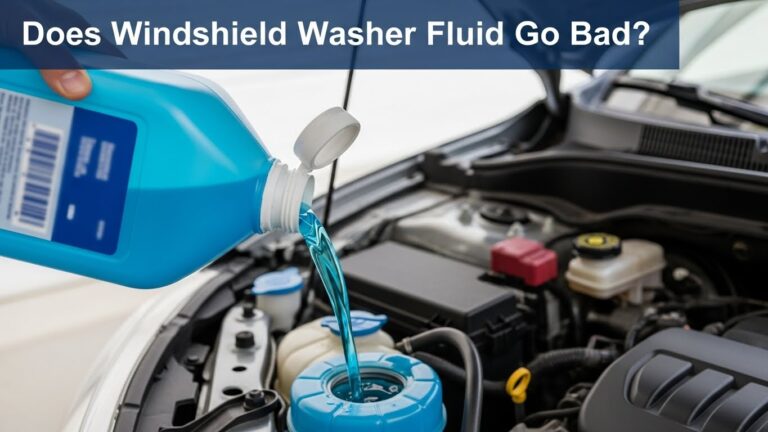
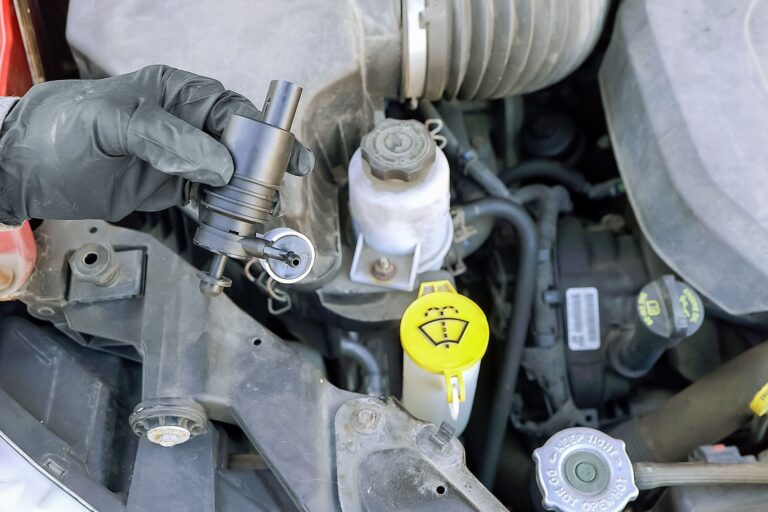
Yes, you can often mix different colors of windshield washer fluid if both products have compatible formulas. However, color alone cannot tell you whether two fluids are safe to combine. Check the labels, cleaning features, and freeze protection before mixing them.
Across the United States, drivers use windshield washer fluid to clear road dust, pollen, bugs, salt, and grime from their windshields. A driver in Florida may need a formula that handles insects and summer dirt, while someone in Minnesota may need strong freeze protection during a cold winter. When a washer fluid bottle runs low, using a different color may seem like a simple way to refill the tank.
The key is to look beyond the color. Blue, green, pink, orange, and other shades can come from dyes added to different products. They do not follow one universal color code, so two bottles with different colors may contain similar formulas, while two bottles with the same color may have different cleaning agents or freeze ratings.
Before combining fluids, read both product labels and check your vehicle owner’s manual for any special requirements. If the products have compatible uses and temperature ratings, mixing them may be fine. If you cannot identify either formula, using one suitable product by itself is the more reliable choice.
Can You Mix Different Colors of Windshield Washer Fluid?
Yes, in many cases, you can mix different colors of windshield washer fluid. The important factor is whether the two products have compatible formulas, not whether their colors match. For example, two ordinary washer fluids designed for everyday glass cleaning may be compatible even if one is blue and the other is green.
However, this is not a guarantee for every product. Washer fluids may contain different cleaning agents, solvents, water, dyes, and other additives. Some are designed for bug removal, while others focus on winter performance, water repellency, or other special features.
If you know that both products are suitable for your vehicle and their labels show compatible uses and temperature ratings, mixing them may be reasonable. If either label is missing or unclear, do not rely on color as proof of compatibility.
For most drivers, the simplest approach is to finish the existing fluid when practical and refill with a suitable replacement. This reduces uncertainty about the final mixture and makes it easier to know which temperature rating and cleaning features to expect.
Source: mycarmakesnoise.com
Usually acceptable
Mixing ordinary washer fluids with compatible ingredients and similar intended uses, provided their labels do not warn against mixing.
Use caution
Combining products with different seasonal ratings, water-repellent additives, concentrated formulas, or specialized cleaning functions.
Avoid unknown mixtures
Do not combine unidentified products or assume that a color change proves the mixture is safe.
Why Color Is Not a Reliable Compatibility Test
Manufacturers may add dye to make washer fluid easier to identify or distinguish from other products. The color is not a standardized measurement of its chemical composition. There is no universal rule that all blue fluids are the same or that green fluid must have a particular freezing point.
A blue summer formula and a blue winter formula may have different performance limits despite looking alike. Likewise, a pink product and a blue product may have compatible everyday cleaning functions if their actual formulations permit mixing.
The bottle label provides more useful information than the shade. Look for the intended season, stated freeze protection, mixing directions, and any special features before adding one product to another.
Look at the label
Check the stated purpose, temperature rating, concentration, and warnings.
Do not judge by appearance
A similar shade does not prove matching ingredients or performance.
What Do Different Windshield Washer Fluid Colors Mean?
Windshield washer fluid comes in several colors, including blue, green, pink, orange, and yellow. These shades may help distinguish products, but they do not provide a dependable way to identify a formula. Manufacturers can use different dyes for products with similar purposes, and products of the same color may perform differently.
A common mistake is to assume that blue fluid is always for summer or that pink fluid is always for winter. These assumptions can lead to poor choices, especially in areas where overnight temperatures fall below freezing. Read the temperature rating and intended use rather than making a decision based on color.
Color also does not tell you whether a product contains a water-repellent ingredient, a concentrated cleaner, or a formula intended for heavy insect residue. Those features depend on the actual product formulation and instructions.
Source: garagesee.com
Blue fluid
Often sold for general windshield cleaning, but its exact cleaning properties and freeze protection vary by product.
Green fluid
May be a standard or specialized formula. The color alone does not establish its intended season or chemical contents.
Pink or orange fluid
May be used for a range of cleaning or seasonal products. Check the label to confirm its intended use.
Yellow fluid
May identify a particular manufacturer’s product, but it does not provide a universal indication of composition.
Can Two Fluids of the Same Color Be Different?
Yes. Two blue washer fluids may have different ingredients, cleaning abilities, and temperature limits. One might be intended for warm weather, while another is formulated for winter driving.
This is why matching colors is not a reliable way to avoid compatibility problems. Compare the information printed on both bottles, even when the fluids look identical.
What Happens When You Mix Different Colors?
When compatible washer fluids mix, the main result may simply be a change in color. Blue and yellow dyes, for example, may produce a greenish appearance, depending on the dyes and their concentrations. The new shade does not prove that the mixture has become harmful or that it will work properly.
The more important issue is how the combined formula performs. If the ingredients are compatible, the fluid may continue to clean the windshield as intended. If the products have different cleaning additives or seasonal properties, the mixture may not deliver the full performance claimed by either original bottle.
There is no single outcome for every combination. The ingredients, amounts, concentration, and intended uses all matter. Without product-specific information, it is not possible to predict the exact freezing point, cleaning ability, or long-term effects of an arbitrary mixture.
A small amount of mixed fluid may appear normal in the reservoir and still have less freeze protection than expected. Appearance alone cannot confirm that the washer pump, lines, and nozzles will remain protected in cold weather.
Source: carfluidpro.com
Color change
The fluid may take on a new shade as the dyes combine. This is not a reliable indicator of chemical compatibility.
Cleaning performance
The mixture may clean normally, but differences in additives can affect the performance of specialized products.
Freeze protection
The final temperature rating may be lower than that of the stronger winter formula.
System behavior
If an unsuitable mixture causes residue or other problems, the spray pattern or cleaning result may suffer. A color change alone does not establish that such a problem exists.
Does Mixing Colors Create a Dangerous Chemical Reaction?
A change in color does not, by itself, mean a dangerous reaction has occurred. However, it is not possible to guarantee that every combination is suitable because washer fluids can use different chemical formulations.
Do not mix unknown automotive chemicals or combine washer fluid with engine coolant, cleaning products, or other liquids. Use products according to their labels, and seek product-specific advice if you have already mixed fluids with uncertain ingredients.
Can You Mix Blue and Green Windshield Washer Fluid?
Blue and green washer fluids can often be mixed if both products are compatible standard formulas. Their different colors alone are not a reason to assume that they will react or damage the washer system.
Before combining them, check whether each product is intended for the same general purpose and whether its label provides suitable temperature protection. If both are ordinary all-season products with compatible instructions, the difference in shade may not matter.
The answer changes when one product has a special purpose. A green formula intended for winter conditions and a blue summer cleaner may have different performance limits. Mixing them without checking their labels can leave you with less protection than you expect.
Source: vehiclefreak.com
When it may be fine
Both products are compatible, ready-to-use washer fluids with suitable temperature ratings and no warnings against mixing.
When to avoid it
One product has an unknown formula, different concentration instructions, or a special feature that the other product may not support.
Can You Mix Pink, Orange, Yellow, or Other Colors?
You may be able to mix pink, orange, yellow, or other shades with another washer fluid, but the same compatibility rules apply. No particular color guarantees that a product is safe to combine with every other formula.
Some washer fluids focus on removing bugs, road film, or mineral deposits. Others may contain water-repellent ingredients or have a concentrated formula that requires dilution. Combining these products may change how well they perform, even if no visible problem occurs.
If the bottle states that the product should not be mixed with other fluids, follow that instruction. If the ingredients and intended use are unclear, avoid mixing and choose a single product that meets your vehicle’s needs.
Source: vehiclefreak.com
Bug-removal formulas
Mixing with a general cleaner may change the concentration of cleaning ingredients and reduce the intended performance.
Water-repellent formulas
Combining a product with a conventional washer fluid may affect its intended coating or water-beading performance.
Concentrated products
Follow the exact dilution instructions. Do not assume that a concentrate can be poured directly into the reservoir or mixed in any proportion.
Can You Mix Summer and Winter Windshield Washer Fluid?
Mixing summer and winter washer fluid is less predictable than mixing two compatible products intended for similar conditions. The biggest concern is freezing. A winter formula may be designed to remain usable at low temperatures, while a summer formula may offer little or no freeze protection.
When you combine these products, the final mixture may not retain the winter fluid’s stated temperature rating. The result depends on the exact formulations and proportions, so you should not estimate the final freezing point by averaging the two ratings.
For drivers in northern states, mountainous areas, and places that experience hard freezes, this matters because frozen washer fluid can block the spray system. Ice may also interfere with the reservoir, pump, hoses, or nozzles. A clear windshield is essential for safe driving, especially when roads are wet, snowy, or covered in salt.
In warmer parts of the United States, summer formulas may be adequate during the hottest months. Even there, an unexpected cold snap can make the wrong fluid choice a problem. Check the local forecast and select a product rated for the lowest temperatures you reasonably expect.
Source: i.ytimg.com
Summer fluid
Often focuses on routine cleaning and bug removal. Its cold-weather protection depends on the specific product.
Winter fluid
Designed to provide freeze protection within its stated operating limits. Read the label to confirm the temperature rating.
All-season fluid
May offer a compromise for changing conditions, but its actual temperature limit still needs to match your climate.
What If Winter Is Approaching?
If cold weather is near and the reservoir contains an unknown mixture, do not assume that adding a little winter fluid will restore its full rated protection. The existing fluid may dilute the new product, and the final temperature performance may be uncertain.
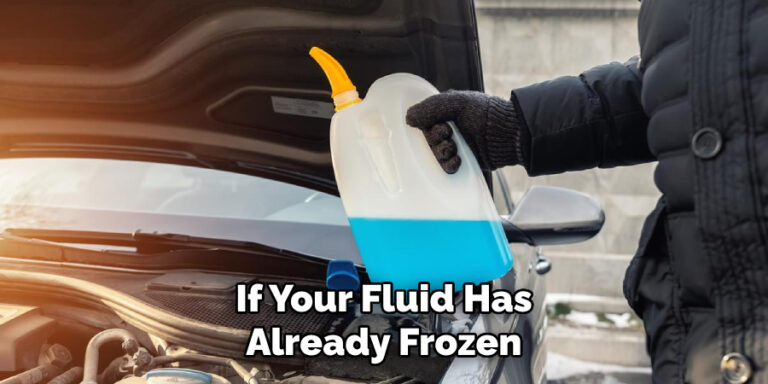
Where practical, have the old mixture removed or use the vehicle’s washer system to reduce the remaining fluid only when conditions are safe and the system is functioning normally. Refill with a suitable winter product according to the manufacturer’s instructions. If the system may already be frozen, do not keep operating the pump.
Check the weather
Use the expected low temperatures to guide your choice of washer fluid.
Use a rated product
Select a winter formula whose stated protection meets the conditions you expect.
Do not force a frozen system
Let the vehicle and washer system thaw safely, and seek service if normal operation does not return.
How to Decide Whether Two Washer Fluids Can Be Mixed
The safest way to assess two washer fluids is to compare their labels before pouring either one into the reservoir. You do not need to identify every chemical ingredient, but you should know each product’s intended use, concentration, and temperature limits.
Start with the vehicle owner’s manual and the product instructions. If the labels conflict or one product warns against mixing, do not combine them. If both products are compatible standard washer fluids, their different colors may not matter.
Do not use a homemade color test or a small jar experiment to prove compatibility. A mixture can look clear and still have unsuitable freeze protection or cleaning performance. Product instructions are more useful than appearance.
Source: budget101.com
Step 1: Identify both products
Read the brand, product name, intended use, and any warnings on each bottle.
Step 2: Compare temperature ratings
Check the stated freeze protection, especially if temperatures near or below freezing are expected.
Step 3: Check special features
Look for bug removal, water repellency, concentrated formulas, or other features that may affect compatibility.
Step 4: Follow mixing instructions
Respect any warnings against mixing and follow dilution directions for concentrates.
Step 5: Choose the lowest-risk option
If compatibility is uncertain, use one known, suitable product rather than making an unknown mixture.
A Practical Compatibility Table
Use this table as a starting point. It describes general situations rather than guaranteeing that specific brands or formulas can be mixed.
Two standard fluids with different colors
Often acceptable when both labels confirm compatible uses and temperature ratings.
Two products with the same color
Still requires a label check because color does not establish matching ingredients.
Summer fluid mixed with winter fluid
Use caution because the final mixture may have less freeze protection than the winter product alone.
Concentrate mixed with ready-to-use fluid
Follow the concentrate’s exact instructions and verify that the combined product is suitable.
Unknown fluid mixed with a known product
Avoid mixing until the unknown product is identified.
Washer fluid mixed with engine coolant
This is not a suitable washer fluid mixture. Do not intentionally combine these automotive fluids.
What If You Already Mixed Different Colors?
If you have already mixed two ordinary washer fluids, do not panic just because the liquid changed color. A different shade alone does not prove that the mixture is harmful. The next step is to check which products were used and whether their labels indicate compatible formulas.
If both products were suitable washer fluids with compatible uses and temperature ratings, you may be able to continue using the mixture. Monitor normal spray performance and make sure the windshield clears properly. If the mixture was intended for summer use but cold weather is approaching, address the temperature rating before a freeze occurs.
If you cannot identify the products, suspect that incompatible chemicals were added, or notice unusual residue or poor spray performance, stop treating the mixture as reliable. Consult the vehicle manual or a qualified service professional about draining and refilling the system.
If the washer pump makes an unusual sound, the spray nozzles remain blocked, or the system does not work after thawing, avoid repeatedly activating the pump. A service professional can inspect the reservoir, hoses, pump, and nozzles for the cause.
Source: garagesee.com
Check the labels
Identify both products and confirm their intended use and temperature limits.
Assess the weather
Make sure the mixture offers suitable freeze protection before driving in cold conditions.
Watch for performance issues
Poor cleaning, blocked spray, or unusual residue calls for further checks rather than repeated pumping.
Seek help when needed
Ask a qualified technician to inspect the system if its contents are uncertain or it does not operate normally.
Should You Drain the Reservoir?
Draining the reservoir is not automatically necessary whenever two colors mix. If the products are known to be compatible and suitable for the current climate, a color change alone is not a reason to remove the fluid.
Draining or flushing may be sensible when the mixture contains an unsuitable product, has uncertain freeze protection, or conflicts with manufacturer instructions. Follow the vehicle service procedure, collect the liquid safely, and dispose of it according to local requirements.
Do not siphon washer fluid by mouth or discharge it onto the ground or into a storm drain. Some formulations contain substances that can be harmful if swallowed or released into the environment.
Common Mistakes to Avoid When Mixing Washer Fluid
Most problems come from guessing what a product contains or overlooking the conditions in which the vehicle will be used. A simple label check can prevent many of these mistakes.
Another common error is assuming that washer fluid and engine coolant serve the same purpose because both products may offer freeze protection. They are designed for different systems and should never be treated as interchangeable.
Source: vehiclefreak.com
Assuming all colors have fixed meanings
There is no universal color code that reliably identifies a washer fluid’s formula or temperature rating.
Mixing by color alone
Two differently colored products may be compatible, while two matching colors may conceal important formula differences.
Ignoring winter conditions
A mixture can have inadequate freeze protection even if it looks normal in the reservoir.
Adding water without checking the label
Water can dilute cleaning agents and reduce freeze protection. Follow the instructions for the exact product.
Adding engine coolant
Engine coolant belongs in the cooling system, not the washer reservoir. If the wrong liquid was added, avoid operating the washer system and obtain appropriate service advice.
Using the washer system when frozen
Repeatedly running a pump against a frozen system may cause damage. Let it thaw safely before checking operation.
How to Choose the Right Washer Fluid for Your Climate
Choose washer fluid based on the weather, driving conditions, and cleaning needs in your part of the United States. A product that works well during a warm Texas summer may not be suitable for a winter trip through Colorado or a cold spell in the Upper Midwest.
Check the product’s stated temperature limit rather than relying on a broad seasonal label. A product marked for winter use can still have a temperature limit that is unsuitable for extreme cold. Allow for the weather you may encounter during the full trip, not just the temperature outside your home.
In warm weather, a standard cleaning formula may be enough for dust, pollen, and insects. In winter, use a product with appropriate freeze protection and follow the label. Where roads are treated with salt or grime, regular cleaning and working wipers help maintain a clear view.
Specialty products can be useful when they meet a clear need, but avoid combining them without checking compatibility. A water-repellent formula, for example, may have instructions that differ from those for a conventional washer fluid.
Source: garagesee.com
Warm climates
Consider a suitable everyday formula that handles the dust, pollen, and insects common in your driving conditions.
Cold climates
Choose a product with a stated freeze rating appropriate for expected low temperatures.
Long road trips
Account for changes in elevation, weather, and road conditions along the route.
Special cleaning needs
Use bug-removal or water-repellent products according to their specific directions.
Frequently Asked Questions
Q
Can you mix blue and green windshield washer fluid?
Yes, blue and green washer fluids can often be mixed if their formulas are compatible and both products are suitable for your climate. Check the labels for intended use, freeze protection, and warnings before combining them. Color alone cannot confirm compatibility.
Q
Does mixing different colors of washer fluid damage your car?
Mixing compatible washer fluids does not automatically damage your car. The main concern is whether the products contain compatible ingredients and provide the needed cleaning and freeze protection. If an unknown or unsuitable liquid was added, consult the owner’s manual or a qualified technician.
Q
Will mixing washer fluid colors change the freezing point?
The final freezing behavior may change when products with different temperature ratings are combined. The exact result depends on their formulas and proportions, so you should not estimate it by averaging the labels. In cold weather, use a known product rated for the conditions you expect.
Q
Can I mix summer and winter windshield washer fluid?
It may be physically possible, but it is not always a good choice. Summer fluid can dilute the freeze protection of winter fluid, leaving the final mixture unsuitable for low temperatures. Follow the labels and use one suitable winter product when freezing weather is expected.
Q
Can I mix different brands of windshield washer fluid if the colors match?
Matching colors do not guarantee that two brands have compatible ingredients. Compare the products’ intended uses, concentration instructions, and temperature ratings. If the labels do not establish compatibility, avoid mixing them.
Q
Can I add water to windshield washer fluid?
Only add water when the product instructions permit it. Some washer fluids are concentrates that require a specific dilution, while ready-to-use products are designed to be used as supplied. Adding water can reduce freeze protection and cleaning performance, especially in cold weather.
Q
What should I do if I accidentally put engine coolant in the washer reservoir?
Do not intentionally operate the washer system with engine coolant in the reservoir. Avoid spraying the mixture onto the windshield, and consult a qualified service professional about removing the wrong fluid and cleaning the system. Keep the product container available so the technician can identify what was added.
✦ Wrapping Up
Conclusion
You can often mix different colors of windshield washer fluid, but color is not the deciding factor. What matters is whether the products have compatible formulas, similar intended uses, and suitable temperature ratings. A change from blue to green or pink does not, by itself, mean the mixture is unsafe.
The greatest concern is mixing products with different seasonal performance, especially when summer fluid is combined with winter fluid before freezing weather. Specialized cleaners and concentrated products also need extra care because their ingredients and instructions may differ.
For the most reliable result, read both labels, check your vehicle owner’s manual, and choose a washer fluid that suits your local climate. If you cannot identify the existing fluid or confirm compatibility, avoid mixing and use a known, suitable product instead.
💡 Key Takeaway
Before adding a different-colored washer fluid, check its intended use, temperature rating, concentration, and mixing warnings. If the products are compatible, mixing may be acceptable; if you are unsure, use one suitable formula and do not rely on color alone.