To unclog a windshield washer hose, check the washer fluid level, inspect the hose for kinks or damage, disconnect an accessible hose section, and gently flush it with clean water. If fluid still does not flow, check the washer nozzle, pump, and connecting fittings before replacing parts.
In the United States, a working windshield washer system is an important part of routine vehicle maintenance because drivers rely on it to clear road grime, dust, salt, pollen, and insect residue. When pressing the washer control produces little fluid or no spray, a blocked hose is one possible cause. However, an empty reservoir, clogged nozzle, disconnected fitting, frozen fluid, or failed pump can produce similar symptoms.
The most effective approach is to diagnose the problem before removing parts. Start with simple visual checks, then test fluid flow at accessible hose connections. Use gentle flushing rather than high-pressure air, sharp objects, or aggressive chemicals that could damage the narrow tubing, fittings, or washer components. Always follow the vehicle manufacturer’s repair instructions when access or component design differs.
How to Tell Whether the Windshield Washer Hose Is Clogged
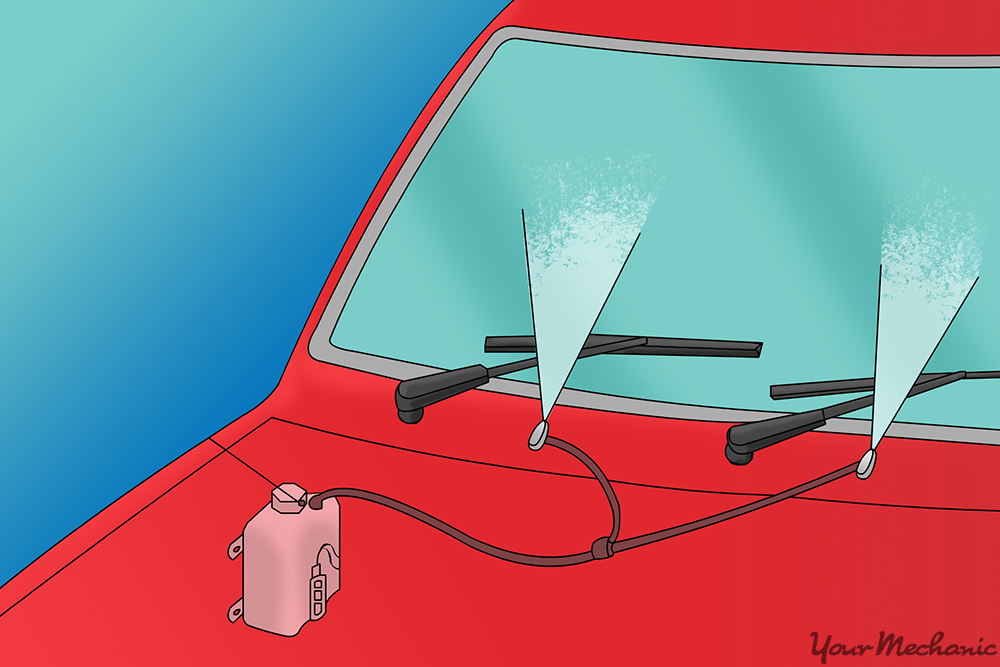
A clogged windshield washer hose commonly causes weak spray, uneven fluid delivery, or no fluid reaching one or both windshield nozzles. These symptoms do not automatically prove that the hose is blocked. Testing the system at a hose connection helps identify where fluid flow stops.
Listen for the washer pump when you activate the control briefly. A humming sound suggests that the pump is attempting to operate, but it does not confirm that the pump produces adequate pressure. Silence can indicate an electrical problem, a failed pump, or a control issue. Some vehicles also have different pump and washer arrangements, so consult the owner’s manual.
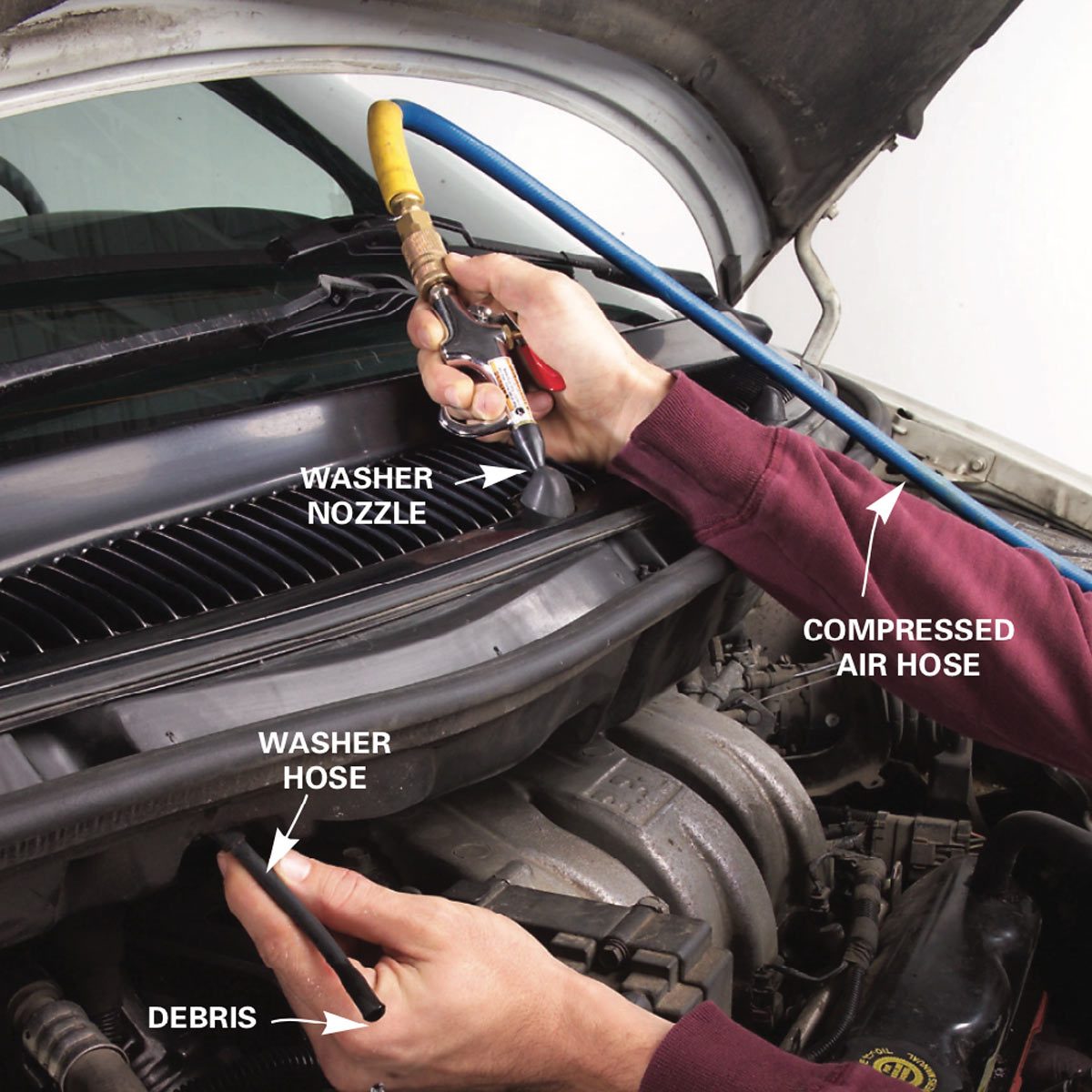
Source: The Family Handyman
No spray from either nozzle
Check the fluid level, freezing conditions, pump operation, reservoir outlet, and main hose before assuming both nozzles are clogged.
Only one nozzle sprays
A blockage in the affected branch hose or nozzle is more likely than a completely failed pump, although splitters and fittings can also restrict flow.
Fluid leaks under the hood
Inspect disconnected fittings, split tubing, and damaged connections. A hose that leaks may deliver too little fluid to the windshield.
Pump runs but no fluid arrives
Check for a blocked pickup, frozen fluid, a disconnected hose, a clogged line, or a weak pump.
Distinguish a Hose Blockage From a Clogged Nozzle
If fluid reaches the hose end near the nozzle but does not spray onto the windshield, the nozzle is a stronger suspect. If no fluid exits the disconnected hose while the pump operates and the reservoir and pump are functioning, investigate the hose or upstream connections. Catch the fluid in a container and avoid directing it toward your face or electrical components.
Fluid flows from the disconnected hose
The upstream supply is working at that test point. Inspect the nozzle and any short hose section beyond the connection.
No fluid flows from the disconnected hose
Check the hose for blockage or pinching, then investigate the pump, reservoir outlet, and upstream tubing.
Tools and Supplies Needed to Unclog a Washer Hose
Most accessible windshield washer hose blockages can be investigated with basic hand tools and simple cleaning supplies. The exact tools depend on whether the hose is exposed under the hood, routed beneath a plastic cowl, or integrated into a more complex washer assembly.
Park on a level surface, switch off the engine, remove the key or disable the vehicle as directed by its manual, and allow hot components to cool. Wear eye protection and gloves when handling washer fluid. Work in a ventilated area and keep collected fluid away from children, pets, and drains.
Source: storage.googleapis.com
Clean water
Use clean, preferably lukewarm water to flush a disconnected hose when the fluid and ambient temperatures allow it.
Small container or absorbent cloths
Catch washer fluid and water to prevent spills around the engine compartment.
Pliers or a suitable trim tool
Use only when needed to release the relevant clamp or remove an access panel without damaging plastic components.
Soft tubing or a compatible syringe
A suitable low-pressure flushing method may help clear loose debris from a detached hose. Do not force fluid into a connected pump or nozzle assembly.
Replacement washer hose and connectors
Keep compatible automotive washer tubing and fittings available if inspection reveals cracks, brittle sections, or broken connectors.
What Not to Use
Avoid high-pressure compressed air, excessive water pressure, metal wires, drills, and harsh solvents. These can split old tubing, enlarge nozzle openings, damage seals, or push debris deeper into the system. Do not use boiling water to thaw frozen components, because sudden heat can damage plastic parts.
Sharp needles
Do not force a needle into a nozzle or hose. Some nozzles have delicate openings or fixed spray patterns that can be damaged.
Household chemical cleaners
Do not pour bleach, drain cleaner, or unapproved solvents into the washer reservoir or hose.
Step-by-Step: How to Unclog a Windshield Washer Hose
The safest general method is to inspect the complete accessible hose route, isolate the suspected blockage, and flush the detached section gently. Vehicle designs differ, so use the service information for your make and model if a connection is difficult to access or removal could damage surrounding parts.
Source: detroitchinatown.org
Step 1: Check the washer fluid reservoir
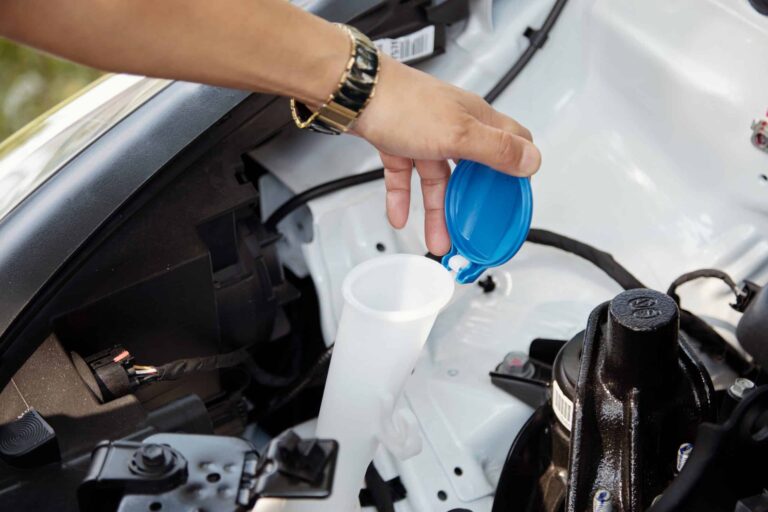
Open the reservoir only when appropriate for the vehicle and confirm that it contains enough washer fluid. Refill with fluid suited to the expected temperatures. If the fluid is frozen, allow the vehicle to thaw safely before testing.
Step 2: Inspect the hose routing
Follow the visible tubing from the reservoir or pump toward the windshield. Look for sharp bends, pinched sections, crushed tubing, disconnected joints, cracks, and signs of leakage.
Step 3: Locate an accessible hose connection
Choose a suitable connection near the suspected blockage, such as a nozzle feed or accessible inline connector. Release the fitting carefully. Do not pull hard on an old plastic connector or remove panels without checking the vehicle’s instructions.
Step 4: Test fluid delivery briefly
Position a container to catch fluid and have an assistant activate the washer control briefly if the vehicle’s instructions permit it. Keep hands, clothing, and tools away from moving wipers and other moving parts. If fluid reaches the test point, the upstream supply is delivering fluid there.
Step 5: Flush the detached hose
If the hose is blocked, disconnect the section at a second accessible point when practical. Direct a gentle flow of clean water through the detached hose in the direction that carries debris out. If needed, reverse the flow gently while the hose remains detached. Stop if the tubing swells, leaks, or resists flushing.
Step 6: Check the fittings and reconnect the hose
Inspect the ends for hardened deposits, cracks, and damaged retaining features. Reconnect the hose securely and ensure that it follows its original route without pinching or rubbing against hot or moving components.
Step 7: Test the windshield washer system
Refill the reservoir as needed and activate the washer briefly. Confirm that fluid reaches the intended windshield areas, that both branches work where applicable, and that no fluid leaks from the hose or fittings.
How to Flush a Hose Without Removing the Entire System
If a short section is accessible, disconnect it at a suitable fitting and flush that section separately over a container. This avoids sending loosened debris into the pump or reservoir. Use only gentle pressure and a compatible flushing method. If the hose cannot be disconnected without damaging the fitting, consult the service manual or have a repair shop perform the procedure.
Use a controlled flow
Water should move through the open hose without forceful pressure. If the blockage remains, inspect the tubing and test another section rather than increasing pressure.
Keep debris out of the system
Flush detached tubing away from the pump and reservoir. Do not push loosened material into connected components.
How to Know the Hose Is Unclogged
A successful repair restores consistent fluid delivery to the windshield, eliminates leaks at the disturbed connections, and allows the wipers to clear the glass effectively. A strong flow from a detached hose is useful evidence, but the final test must be performed with the system fully connected.
Consistent spray
The nozzles deliver fluid to their intended areas without unexpected interruption.
No visible leakage
The hose, connectors, and nearby components remain dry apart from normal fluid residue.
Normal pump behavior
The pump operates as expected without prolonged running or repeated attempts to force fluid through a blocked system.
What If the Windshield Washer Hose Is Still Blocked?
If gentle flushing does not restore flow, stop and identify which part of the system is preventing delivery. A hose may be internally deteriorated, a connector may contain debris, or the problem may be elsewhere. Repeatedly forcing water or compressed air through a resistant line can turn a small fault into a larger repair.
Source: www.youtube.com > Moto Sane
Inspect the washer nozzle
If fluid reaches the nozzle feed, remove and clean the nozzle only as permitted by the manufacturer’s instructions. Replace a damaged or persistently blocked nozzle when cleaning does not restore its intended spray.
Check the pump and reservoir outlet
If the hose is clear but no fluid arrives at its upstream connection, inspect the reservoir outlet, pump inlet, and pump operation. A pump may hum without producing sufficient flow.
Check for freezing
In cold US climates, summer-grade fluid or diluted washer fluid can freeze in the reservoir, pump, hose, or nozzle. Thaw the vehicle in a safe, temperature-controlled location and use appropriate seasonal fluid after the system is clear.
Look for a disconnected or damaged line
Fluid appearing beneath the hood or near the cowl may indicate a loose connection or split hose rather than a blockage.
Replace an internally damaged hose
A hose that has swollen, collapsed, cracked, or become brittle may not recover after flushing. Replace it with tubing that matches the vehicle’s required dimensions, material, and routing.
Can Compressed Air Unclog a Washer Hose?
Compressed air is generally not the first choice for a blocked washer hose. Excessive pressure can separate fittings, split aged tubing, or damage components connected to the line. A gentle water flush through a detached hose is usually a more controlled starting point. If the manufacturer’s service procedure specifically permits compressed air, follow its pressure limits and isolation instructions rather than applying shop air directly.
Use the least force necessary
If the blockage does not clear with a gentle flush, investigate the cause or replace the affected section.
Do not pressurize the assembled system
Avoid applying compressed air to a hose that remains connected to the pump, reservoir, or nozzle unless an approved service procedure explicitly requires it.
Windshield Washer Troubleshooting: Hose, Nozzle, or Pump?
The most useful diagnostic step is to determine whether fluid reaches the hose connection closest to the windshield. This separates a likely downstream problem from a supply-side problem. The table below summarizes common findings and the next check to perform.
Source: storage.googleapis.com
Use These Test Results to Narrow Down the Cause
Treat each observation as a clue rather than a definitive diagnosis. The exact arrangement of pumps, valves, splitters, and hoses varies by vehicle, and some vehicles use a reversible pump or separate circuits for different washer functions.
Pump runs and fluid exits the hose
The supply works at that connection. Inspect the downstream hose section, connector, and nozzle.
Pump runs but no fluid exits the hose
Check for a blocked or frozen upstream line, a restricted reservoir outlet, a clogged pickup, or a weak pump.
Pump is silent
Check the relevant fuse and electrical supply according to the owner’s manual. A failed pump, wiring issue, switch, or control fault may be responsible.
Fluid leaks when the washer is activated
Inspect hose connections, split tubing, and the pump outlet. Repair the leak before judging nozzle performance.
One nozzle works and the other does not
Investigate the nonworking nozzle, its branch hose, and any shared splitter or connector.
When to Replace the Hose Instead of Cleaning It
Cleaning is appropriate when a sound hose contains removable debris. Replacement is more appropriate when the tubing is cracked, swollen, flattened, leaking, permanently restricted, or too brittle to remove safely. Use a vehicle-compatible replacement and preserve the original routing, clips, and connector arrangement.
Replace damaged tubing
A crack or split can prevent adequate pressure from reaching the nozzles even after a blockage is removed.
Replace damaged fittings
Broken connectors may not retain the hose securely and can cause recurring leaks.
Seek professional diagnosis
Use a qualified mechanic when access requires extensive disassembly, electrical diagnosis is necessary, or the pump and hose arrangement is unclear.
Common Mistakes When Unclogging a Washer Hose
Avoid actions that can damage the washer system or create an unnecessary replacement job. A method that appears to clear a blockage may also push debris farther into the system or weaken an old connector.
Source: www.youtube.com > MrBundre
Running the pump repeatedly
Repeatedly activating a pump with no fluid flow can overwork it. Use brief tests and stop when the system does not deliver fluid.
Assuming every blockage is in the hose
An empty reservoir, clogged nozzle, frozen fluid, loose connector, or failed pump can cause similar symptoms.
Forcing a hose off a plastic fitting
Older connectors can become brittle. Release retaining clips carefully and replace damaged fittings rather than securing them with an unreliable improvised repair.
Using excessive pressure
Forceful flushing or unregulated compressed air can split tubing or dislodge connections.
Ignoring seasonal fluid requirements
Use washer fluid appropriate for the expected local temperature. Plain water or summer-grade fluid may freeze in winter conditions.
Testing without checking the final spray
A hose can flow when disconnected but leak or kink after installation. Reconnect everything and verify the actual windshield spray pattern.
Safety Precautions During the Repair
Keep the vehicle stationary while testing the washer system. Do not reach near moving wiper arms, belts, fans, or hot engine parts. Avoid spilling washer fluid, which may contain alcohols or other chemicals. Follow the product label for handling and cleanup, and never mix incompatible cleaning chemicals. If the windshield cannot be cleaned adequately, do not drive until visibility can be maintained safely.
Protect your eyes and skin
Wear suitable protective equipment and wash exposed skin after contact with washer fluid.
Protect electrical components
Keep water and collected fluid away from exposed electrical connectors and control modules.
Know when to stop
If a fitting breaks, access is unsafe, or the cause remains unclear after basic checks, stop and seek repair assistance.
How to Prevent Windshield Washer Hose Blockages
Regular checks can reduce washer system problems and help identify damaged tubing before fluid delivery stops. Most vehicles do not need a special hose-cleaning schedule, but inspecting the system when refilling fluid or performing routine maintenance is useful.
Use washer fluid intended for automotive systems rather than household detergents. Keep the reservoir cap and surrounding area clean, and avoid introducing dirt while refilling. If debris repeatedly blocks the line, investigate the reservoir, pickup, and fluid source instead of repeatedly flushing the same hose.
Source: storage.googleapis.com
Use suitable washer fluid
Choose a product appropriate for the vehicle and local weather, especially where freezing temperatures are possible.
Inspect hoses and fittings periodically
Look for loose joints, rubbing, heat damage, cracks, and brittle plastic connectors.
Address weak spray early
Investigate reduced flow before the system becomes completely inoperative.
Clear exterior nozzle debris carefully
Remove visible dirt using a gentle cleaning method permitted by the manufacturer. Avoid pushing debris into the nozzle opening.
What to Do After the System Has Frozen
Move the vehicle to a safe, warmer location and allow the reservoir, pump, hoses, and nozzles to thaw naturally. Do not use an open flame or boiling water. After thawing, check for leaks and confirm that the tubing has not split. Replace unsuitable fluid with a product rated for the temperatures the vehicle will encounter.
Check the complete fluid path
Freezing can affect more than the visible hose, so verify the reservoir, pump, connectors, and nozzles after thawing.
Check for damage before driving
Confirm that washer fluid reaches the windshield and that leaks have not developed.
Frequently Asked Questions
Q
Can I unclog a windshield washer hose without removing it?
Sometimes. If the blockage is minor and an accessible connection allows a gentle flush, you may be able to restore flow without removing the entire hose. However, flushing a disconnected section is generally easier to control and reduces the chance of pushing debris into the pump or reservoir. If the hose is damaged or inaccessible, follow the service manual or seek professional help.
Q
Why does my windshield washer pump work but no fluid comes out?
A pump that makes noise but delivers no fluid may be dealing with a blocked or frozen hose, an empty reservoir, a restricted reservoir outlet, a disconnected line, or a weak pump. Disconnect an appropriate accessible hose connection and check whether fluid reaches that point. If there is no flow, investigate the upstream supply before focusing on the nozzles.
Q
Can I use a needle to unclog a windshield washer hose?
A needle is not recommended for clearing the hose itself because it can puncture or damage the narrow tubing. It can also damage a delicate nozzle opening or change the spray pattern. Use gentle flushing on a detached hose and clean the nozzle according to the vehicle manufacturer’s instructions.
Q
Will hot water unclog a windshield washer hose?
Clean, lukewarm water may help flush a detached hose when temperatures permit, but boiling water is not appropriate. Extreme heat can damage plastic tubing and connectors. If the system is frozen, allow it to thaw in a warmer environment and inspect for damage before operating the pump.
Q
How can I tell whether the washer hose needs replacement?
Replace the hose if it is cracked, swollen, flattened, leaking, brittle, or persistently blocked after a gentle flush. A damaged connector or retaining clip may also need replacement. Select compatible automotive washer tubing and route it away from hot, sharp, and moving components.
Q
Can a clogged windshield washer hose damage the pump?
A blockage can prevent fluid delivery and may cause problems if the pump is repeatedly operated without adequate fluid flow. The degree of risk depends on the pump design and operating conditions. Avoid prolonged activation when no fluid appears, and diagnose the restriction instead of repeatedly trying to force the system to work.
Q
Why does only one windshield washer nozzle work?
When one nozzle works and the other does not, check the nonworking nozzle, its branch hose, and any splitter or connector supplying it. A blocked nozzle is a common possibility, but a kinked hose or loose fitting can produce the same symptom. Confirm fluid delivery at the affected branch before replacing components.
✦ Wrapping Up
Conclusion
To unclog a windshield washer hose, start by checking the reservoir, hose routing, and visible connections. Test fluid flow at an accessible connection, then gently flush a detached hose with clean water if the evidence points to a blockage. Avoid excessive pressure and sharp tools, and replace tubing or fittings that are damaged rather than trying to force them back into service.
If cleaning does not restore flow, check the nozzle, pump, reservoir outlet, and electrical supply as appropriate. A methodical diagnosis prevents unnecessary parts replacement and helps restore the washer system safely. Confirm that both the spray pattern and hose connections work correctly before returning the vehicle to normal use.
💡 Key Takeaway
Begin with the fluid level and a visual hose inspection. If the pump operates, test an accessible hose connection and gently flush the detached section only when a blockage is indicated. Stop if the tubing is damaged or the diagnosis remains uncertain, and verify leak-free operation before driving.