To fix a windshield washer sprayer, check the washer fluid level, listen for the pump, inspect the hoses for leaks or disconnections, and clean clogged nozzles. Replace a damaged nozzle or faulty pump if cleaning and basic repairs do not restore the spray.
In the United States, a working windshield washer system helps drivers maintain visibility when road salt, dust, pollen, mud, and other debris collect on the windshield. If your car’s washer sprayer stops working, you may be able to restore it with a few basic checks before buying replacement parts. Always park on level ground, switch off the ignition before inspecting components, and consult your vehicle owner’s manual for model-specific instructions.
The most effective repair method depends on the symptom. A completely silent system may indicate an electrical problem or failed washer pump, while a pump that runs without spraying may point to an empty reservoir, clogged nozzle, disconnected hose, or leak. Diagnosing the system in that order helps prevent unnecessary parts replacement and identifies problems that require more involved repairs.
Identify Why the Windshield Washer Sprayer Is Not Working
The quickest way to fix a windshield washer sprayer is to match its behavior to the most likely cause. Before removing parts, activate the washer briefly while the vehicle is parked and observe whether fluid sprays, dribbles, leaks, or fails to appear. Listen for the pump, but do not keep operating it if the reservoir is empty or the pump appears to be struggling.
The following troubleshooting table links common symptoms to practical first checks. These are diagnostic possibilities rather than definitive diagnoses because washer system designs differ among vehicles.
Source: storage.googleapis.com
No spray and no pump sound
Check the reservoir level, washer fuse, electrical connector, and pump circuit. A failed pump is possible, but electrical faults can produce the same symptom.
Pump runs but no fluid reaches the windshield
Look for an empty reservoir, disconnected hose, major leak, clogged nozzle, or a pump that runs without moving fluid.
Weak or uneven spray
Inspect the nozzle openings for contamination and check the hoses for kinks, leaks, or restricted flow.
Fluid leaks under the hood
Inspect the reservoir, pump seal, hose connections, and tubing for cracks or loose fittings.
Only one nozzle works
Check the nonworking nozzle and its branch of the hose system before suspecting the pump, particularly if the other nozzle sprays normally.
Listen for the Washer Pump
The washer pump is usually mounted in or near the fluid reservoir and makes a brief electric motor sound when activated. If you hear it running, the electrical circuit may be functioning, but that does not prove the pump is producing enough pressure or moving fluid. If you hear nothing, check the fuse and relevant electrical connections before concluding that the pump has failed.
Pump sound present
Continue by checking fluid delivery, hoses, and nozzles.
Pump sound absent
Investigate the fuse, wiring, switch input, and pump before replacing any component.
What You Need Before Repairing the Washer Sprayer
Most basic windshield washer sprayer repairs require only a few common tools and supplies. Gather what you need before starting, and check the owner’s manual for access instructions and any special precautions. Some vehicles have washer nozzles that are easy to reach, while others require removing a cowl cover or additional trim.
Source: storage.googleapis.com
Correct windshield washer fluid
Use fluid suitable for your climate and the vehicle manufacturer’s instructions. In freezing weather, choose a product rated for the expected temperatures.
Use a clean cloth and, where appropriate, a soft brush or other nozzle-cleaning tool approved for the vehicle.
Basic hand tools
A screwdriver, pliers, or trim-removal tool may be necessary to access hoses, connectors, or a nozzle, depending on the vehicle.
Protective equipment
Wear safety glasses and gloves when handling washer fluid or working around engine-bay components.
Vehicle service information
Use the owner’s manual or a reliable service procedure to locate the fuse, pump, reservoir, and any hidden hose connections.
Follow Basic Safety Precautions
Park the vehicle on level ground, engage the parking brake, and switch off the ignition before inspecting or disconnecting components. Keep hands and tools away from moving wiper linkages, belts, fans, and hot engine parts. Never open a hot cooling system while searching for a washer system fault, and never confuse the washer reservoir with the coolant reservoir.
Avoid prolonged pump operation
Repeatedly running a pump with an empty reservoir or blocked outlet can overheat or damage it.
Handle washer fluid responsibly
Keep the fluid away from children and pets, avoid skin or eye contact, and follow the product label for cleanup and disposal.
Step 1: Check the Washer Fluid Reservoir
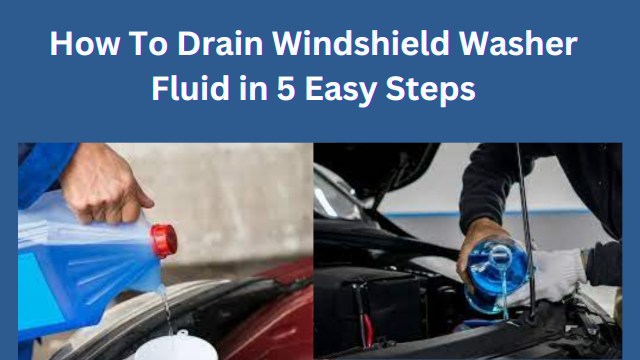
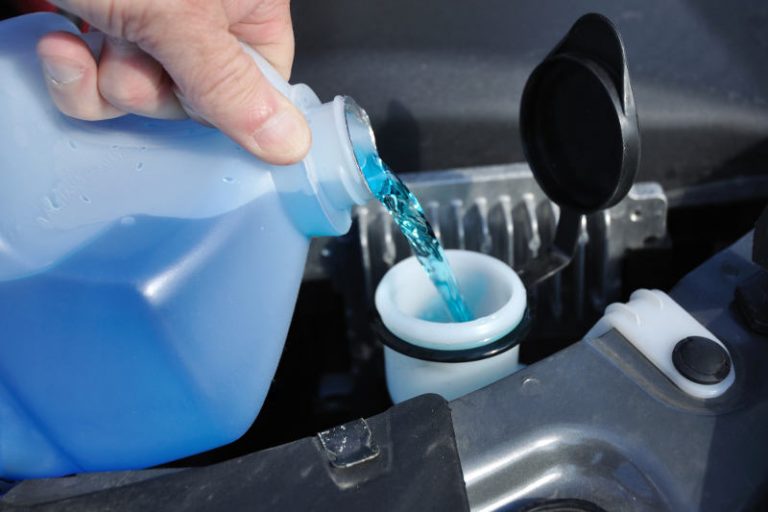
Check the washer fluid reservoir first because an empty or nearly empty tank is one of the simplest causes of a nonworking sprayer. Locate the reservoir using the owner’s manual and inspect its fluid level. The cap often carries a windshield and spray symbol, but the location and appearance vary by model.
If the reservoir is low, refill it with the recommended windshield washer fluid. Do not substitute engine coolant, dish soap, or an unapproved household mixture. In areas that experience freezing temperatures, ordinary water or summer-only fluid may freeze in the reservoir, pump, or hoses and interrupt fluid delivery.
Source: YouTube > The Nate Take
Refill the reservoir
Add the appropriate washer fluid without overfilling the tank, following any level markings or instructions.
Check for visible leaks
Look around the reservoir, pump mounting area, and accessible hoses for wet spots or fluid trails.
Test the spray
With the cap secured and the area clear, activate the washer briefly and check whether fluid reaches the windshield.
What If the Washer Fluid Is Frozen?
If temperatures have dropped below freezing and the system suddenly stops spraying, frozen fluid may be responsible. Move the vehicle to a safely heated location and allow the system to thaw naturally. Do not pour boiling water onto the reservoir or spray nozzles, use an open flame, or repeatedly operate the pump in an attempt to force frozen fluid through the lines. Once thawed, check for leaks and refill with suitable winter washer fluid.
If spraying returns after thawing
Use fluid with an appropriate freezing protection rating and inspect for damage caused by ice expansion.
If the system remains blocked
Inspect the hoses, nozzles, and pump after confirming that the fluid has fully thawed.
Step 2: Clean a Clogged Windshield Washer Nozzle
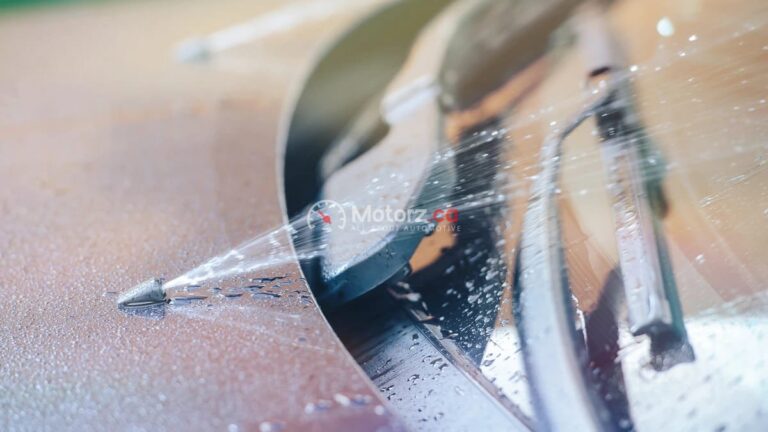
If the reservoir contains fluid and the pump runs, a clogged nozzle is a likely cause of weak or missing spray. Dirt, mineral deposits, dried washer fluid, and other debris can obstruct the small openings. Start with gentle cleaning rather than forcing a sharp object into the nozzle.
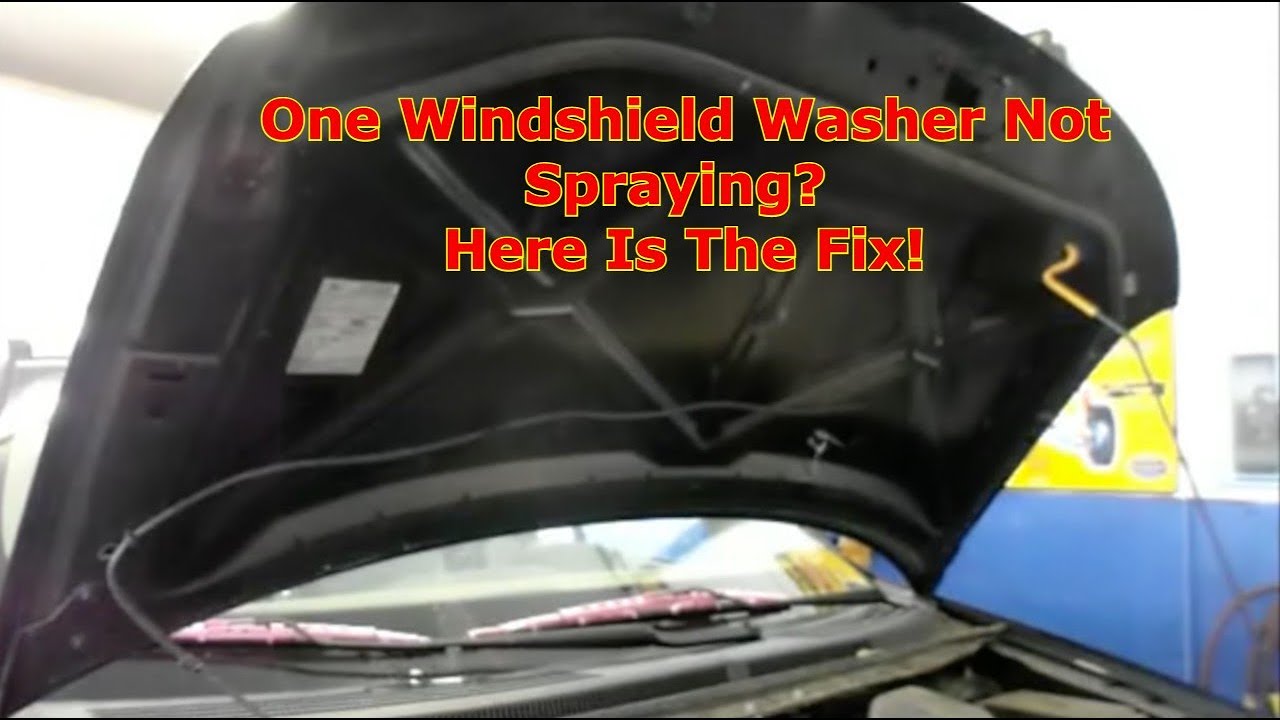
Identify whether the nozzle is mounted on the hood, near the windshield cowl, or integrated into the wiper arm. Some vehicles use adjustable jet nozzles, while others use fixed fan-pattern designs that should not be manually redirected. Follow the manufacturer’s instructions for the specific type.
Source: hitchesguide.com
Clean the nozzle exterior
Wipe away visible dirt with a clean, damp cloth and remove loose debris without pushing it into the opening.
Use an approved cleaning method
If the service instructions permit it, use a soft brush or suitable cleaning tool. Avoid enlarging the opening with a thick needle or damaging the nozzle with excessive force.
Check for remaining blockage
Inspect the nozzle and nearby hose connection for debris, deposits, or signs of damage.
Test the spray pattern
Activate the washer briefly and verify that fluid reaches the intended windshield area.
Should You Use a Pin to Unclog the Nozzle?
A pin or needle is not suitable for every washer nozzle. Some designs have very small calibrated openings, and inserting metal can enlarge, deform, or damage them. If the manufacturer specifically permits careful mechanical cleaning, use only the recommended tool and method. For fixed fan-spray nozzles, cleaning or replacement may be safer than trying to adjust the opening.
If gentle cleaning works
Confirm that both the spray direction and fluid coverage are adequate.
If the nozzle stays blocked
Check the supply hose and consider replacing the nozzle if the blockage cannot be removed safely.
Step 3: Inspect the Washer Hoses and Connections
A disconnected, cracked, kinked, or leaking washer hose can prevent fluid from reaching the nozzle even when the pump works. Inspect the accessible tubing from the reservoir and pump toward the windshield. Follow the hose routing carefully because some vehicles hide sections beneath plastic cowl panels or inside the hood.
Look for damp areas, loose connectors, pinched tubing, and fluid running down the engine bay. If the pump runs but little or no fluid appears at the windshield, a leak or disconnected hose may explain why. Avoid pulling on brittle plastic fittings, which can break during removal.
Source: storage.googleapis.com
Reconnect loose tubing
With the ignition off, push a loose hose onto its proper fitting and secure it according to the vehicle’s service instructions.
Replace damaged sections
Use compatible washer hose and connectors with suitable dimensions and fluid resistance. Do not use a hose that collapses, kinks, or fits loosely.
Remove avoidable kinks
Restore the original routing and keep the hose clear of hinges, sharp edges, and hot or moving components.
Inspect hidden connections
If the leak appears beneath a cowl or hood panel, remove trim only when the correct procedure is available.
How to Check Whether Fluid Reaches the Nozzle
If the hose connection is accessible, inspect it for leaks while keeping your hands away from moving parts. A controlled flow check at a disconnected hose may help isolate a blockage, but only disconnect tubing when the vehicle’s service procedure permits it. Direct the hose into a suitable container and avoid spraying fluid onto electrical components. If fluid flows freely through the supply hose, the nozzle may be restricted; if it does not, investigate the upstream hose, pump, or reservoir outlet.
Fluid flows from the supply hose
Inspect the nozzle and the short hose section leading to it.
No fluid flows from the supply hose
Check for upstream blockage, leaks, frozen fluid, a damaged pump, or an electrical issue affecting pump operation.
Step 4: Check the Washer Pump and Electrical Circuit
If the reservoir is filled, the hoses are intact, and the nozzles are clear, investigate the washer pump and its electrical supply. The pump is an electric motor that moves fluid from the reservoir through the tubing. A failed motor, blown fuse, poor connector, damaged wire, or control problem can prevent it from operating.
Locate the correct fuse using the owner’s manual or fuse-box diagram. Inspect it with the ignition off, following the manufacturer’s procedure. Replace a blown fuse only with one of the specified type and rating. If the replacement fuse blows again, stop replacing fuses and have the short circuit or other electrical fault diagnosed.
Source: storage.googleapis.com
Inspect the pump connector
Look for corrosion, loose terminals, moisture, or damaged wiring. Disconnect electrical components only as directed by the service procedure.
Check the specified fuse
Use the correct fuse location and rating for the vehicle rather than relying on a generic fuse diagram.
Test electrical power when appropriate
A multimeter can help establish whether the pump receives the specified voltage when activated, but the test must account for the vehicle’s circuit design.
Consider pump replacement
If the pump receives the correct power and ground but does not operate or deliver fluid, it may be defective. Confirm the diagnosis before installing a replacement.
When to Replace the Windshield Washer Pump
Replace the pump when testing confirms that it is faulty, not merely because the sprayer is silent. A pump may also run but fail to produce sufficient flow because of internal damage or a blocked inlet. The replacement procedure varies by vehicle and may require access through the engine bay, a wheel-well liner, or another body panel.
Before removing the pump, switch off the ignition and follow any battery-disconnection requirements in the service manual. Capture spilled fluid, protect nearby electrical components, and use a compatible replacement part. After installation, refill the reservoir and check the pump seal and hose connections for leaks.
Correct power and ground, but no operation
The pump motor may have failed and require replacement.
Pump runs but does not move fluid
Check the reservoir outlet, inlet blockage, hose restrictions, and pump condition.
Electrical testing is inconclusive
Seek qualified automotive electrical diagnosis instead of replacing multiple parts by guesswork.
Step 5: Replace a Damaged Windshield Washer Nozzle
If cleaning does not restore the spray and the supply hose delivers fluid correctly, the nozzle may be damaged or internally obstructed. A replacement nozzle must match the vehicle’s design and mounting arrangement. Check the parts information for the exact year, make, model, and trim because similar-looking nozzles may have different connectors or spray patterns.
Allow the engine bay to cool before working near the hood or cowl. Some nozzles release from retaining clips, while others require removing trim or accessing a connection from underneath. Avoid prying against painted surfaces or brittle plastic without the correct removal instructions.
Source: www.youtube.com > Jimthecarguy
Remove the old nozzle
Follow the vehicle-specific procedure to release the retaining clips and disconnect the hose without damaging the fitting.
Compare the replacement
Confirm that the connector, mounting tabs, hose fitting, and nozzle design match the original component.
Install the new nozzle
Reconnect the hose, seat the nozzle securely, and reinstall any trim removed during access.
Test the result
Check for leaks and confirm that fluid sprays onto the intended portion of the windshield.
Why a New Nozzle May Still Spray Incorrectly
A replacement nozzle will not correct a restricted hose, a weak pump, or a low fluid level. Incorrect parts can also produce a mismatched spray pattern. If the new nozzle does not work, verify that the hose supplies fluid and that the part is correct before attempting further adjustment. Do not force a fixed-pattern nozzle to move in a direction its design does not allow.
Weak spray from both nozzles
Investigate a shared supply problem, including the pump, reservoir outlet, or common hose.
Weak spray from one nozzle
Recheck that nozzle, its connector, and its individual hose branch.
Common Windshield Washer Sprayer Repair Mistakes
Avoid replacing parts before confirming the cause of the failure. A clogged nozzle, empty reservoir, or loose hose can imitate a bad pump, and an electrical fault can make a functioning pump appear defective. A short diagnostic sequence is usually more useful than repeatedly activating the washer or changing components without testing.
Several shortcuts can create additional damage or leave the system unreliable. Use the correct fluid, preserve the original hose routing, and follow the vehicle-specific service procedure when removing components.
Source: YouTube
Using an oversized needle
Forcing a large needle into a nozzle can enlarge the opening or damage its internal spray geometry.
Running the pump repeatedly while empty
Extended operation without fluid can overheat or damage the pump.
Installing an incorrect fuse
A fuse with an incorrect rating can compromise circuit protection. Always use the specified rating.
Ignoring a leaking hose
A nozzle may remain dry if fluid escapes from a disconnected or cracked hose upstream.
Using unsuitable fluid
Household detergents or water may cause foaming, deposits, freezing, or compatibility problems.
Adjusting a fixed fan nozzle
Some nozzle designs cannot be mechanically aimed. Check the service information before trying to change the spray direction.
When Professional Repair Is the Better Option
Seek qualified automotive help if the washer fuse repeatedly blows, wiring is damaged, the pump circuit requires advanced testing, or the system remains inoperative after basic checks. Professional service is also appropriate when the repair requires extensive trim removal or when a vehicle has an integrated washer system with model-specific controls.
Do not drive in conditions where dirt, road spray, or other contamination prevents safe visibility if the washer system is not working. Repair the system before continuing or arrange another safe way to reach a repair facility.
Electrical fault persists
A technician can trace the circuit and test the pump, wiring, connectors, and controls.
Reservoir or mounting area is damaged
A cracked tank, inaccessible leak, or broken mounting point may require more extensive disassembly.
How to Confirm the Windshield Washer Sprayer Is Fixed
After completing the repair, test the washer system with the vehicle parked in a safe location. Make sure the reservoir contains the correct fluid, all disconnected hoses and electrical connectors are secured, and any removed covers are properly reinstalled.
Activate the washer briefly and observe the entire spray pattern. Fluid should reach the intended windshield area without leaking beneath the hood or pooling around the reservoir. Operate the wipers as needed to confirm that the washer fluid helps clear the glass rather than leaving large untreated areas.
Source: storage.googleapis.com
Check the spray pattern
Confirm that fluid reaches the windshield rather than spraying over the roof, hood, or outside the glass.
Inspect for leaks
Check the reservoir, pump seal, hose connections, and nozzle fittings after the test.
Listen for abnormal pump noise
Stop testing if the pump makes unusual noises, struggles, or runs without delivering fluid.
Verify normal wiper operation
Make sure the wipers clear the wetted area properly and that no trim or hose interferes with their movement.
What to Do If the Repair Does Not Work
Return to the diagnostic sequence instead of replacing another component immediately. If both nozzles remain dry, check the fluid supply, pump operation, and common hose. If only one nozzle fails, focus on that nozzle and its branch of the tubing. If the pump remains silent, check the specified fuse, wiring, connector, and pump circuit.
Both nozzles fail
Prioritize the reservoir, pump, electrical supply, and shared tubing.
One nozzle fails
Prioritize the individual nozzle, its hose, and its connector.
Fluid leaks after repair
Recheck the disturbed hose connections, pump seal, and reservoir fittings.
Windshield Washer Sprayer Repair Cost and Time
The cost and time needed to fix a windshield washer sprayer depend on the failed component, the vehicle’s design, local labor rates, and whether diagnosis requires electrical testing or trim removal. Refilling the reservoir or cleaning an accessible nozzle may cost very little, while a pump replacement or difficult-to-access leak can require more time and parts.
Treat the following comparison as a guide to repair complexity, not a quoted price or guaranteed completion time. Obtain a vehicle-specific estimate if you need a reliable total cost.
Source: hitchesguide.com
Refilling washer fluid
Usually the simplest remedy when the reservoir is empty and no other fault exists.
Cleaning a clogged nozzle
Often a straightforward repair when the nozzle is accessible and the blockage can be removed safely.
Repairing a hose or connector
Cost depends on the location of the leak, the amount of tubing needed, and access to the damaged section.
Replacing a nozzle
The parts cost and labor depend on the nozzle type, mounting arrangement, and trim removal requirements.
Replacing a pump or diagnosing wiring
May cost more because access, electrical testing, and component removal can increase labor.
How to Avoid Unnecessary Repair Costs
Start with the free or low-cost checks: verify the fluid level, inspect accessible hoses, and listen for the pump. If the system still fails, ask a repair shop to diagnose the fault before authorizing parts replacement. Providing the technician with the exact symptom, such as one nozzle failing or both nozzles remaining dry, can help narrow the inspection.
Describe the symptoms clearly
Report whether the pump runs, whether either nozzle sprays, and whether you see fluid leaking.
Confirm parts compatibility
Use the vehicle identification number or exact vehicle details when checking replacement components.
Frequently Asked Questions
Q
Why is my windshield washer sprayer not spraying even though it has fluid?
Possible causes include clogged nozzles, a disconnected or leaking hose, frozen fluid, a blocked reservoir outlet, a weak pump, or an electrical fault. Listen for the pump and inspect the accessible tubing before deciding which component needs repair. If the pump is silent, investigate its electrical supply; if it runs, focus first on fluid delivery.
Q
How do I unclog a windshield washer nozzle without damaging it?
Wipe away visible debris and use a soft brush or manufacturer-approved cleaning tool. Avoid forcing a thick needle or other sharp object into the opening because some nozzles have precisely shaped spray passages. If gentle cleaning fails, check the hose for a blockage and replace the nozzle if necessary.
Q
Can I use water instead of windshield washer fluid?
Water may seem suitable in warm conditions, but it lacks the cleaning additives found in proper washer fluid and can freeze in cold weather. Use washer fluid that meets the vehicle manufacturer’s recommendations and provides appropriate protection for local temperatures. Avoid household cleaning products that may foam, leave residue, or damage system components.
Q
Why does one windshield washer nozzle work while the other does not?
When one nozzle sprays normally, the pump and at least part of the shared fluid supply are probably functioning. The nonworking nozzle may be clogged, damaged, disconnected, or supplied by a restricted hose branch. Inspect that nozzle and its tubing first before replacing the pump.
Q
How can I tell if my windshield washer pump has failed?
A silent pump may be faulty, but a blown fuse, poor connection, damaged wire, or control problem can produce the same symptom. A pump that runs without moving fluid may have an internal fault or an obstructed inlet. Confirm the fluid supply and test the electrical circuit according to the vehicle’s service information before replacing the pump.
Q
Can a windshield washer sprayer be repaired at home?
Many basic problems can be addressed at home, including refilling the reservoir, cleaning an accessible nozzle, reconnecting a loose hose, or replacing a straightforward nozzle assembly. Pump replacement and electrical diagnosis may require additional tools and vehicle-specific instructions. Stop if the repair involves damaged wiring, repeated fuse failures, difficult disassembly, or uncertainty about safe access.
Q
Why does my windshield washer sprayer have low pressure?
Low spray pressure can result from a partially clogged nozzle, restricted hose, leaking connection, low fluid level, or a worn pump. Check for visible leaks and kinks, then clean the nozzle using an approved method. If the problem affects both nozzles, investigate the common supply and pump before replacing individual nozzles.
✦ Wrapping Up
Conclusion
Fixing a windshield washer sprayer starts with identifying where fluid delivery stops. Check the reservoir and fluid condition, listen for the pump, clean a clogged nozzle carefully, and inspect the hoses and connectors for leaks or restrictions. If these checks do not solve the problem, investigate the pump’s electrical circuit or replace a component only after confirming that it is defective.
Once the repair is complete, test the spray pattern, check for leaks, and confirm that the wipers clear the windshield effectively. A properly working washer system supports safe visibility in changing American road and weather conditions, so address persistent faults before driving when the windshield cannot be kept clear.
💡 Key Takeaway
Start by checking the fluid level and listening for the pump. If the pump runs, inspect the nozzles and hoses; if it does not, check the specified fuse and electrical connections before considering pump replacement.
Learn how to wash inside car windshield glass without streaks using microfiber towels, a suitable glass cleaner, and simple steps for a clear driving view.