What Is Obd2 Scanner — A Clear Definition with Real Examples
An OBD2 scanner is a device that connects to a vehicle’s onboard diagnostics system to read trouble codes, view sensor data, and help identify problems reported by the engine and other modules. It does not repair the vehicle or automatically prove which part has failed. This article explains what the scanner measures, what its codes mean, where it can help, and when a professional diagnosis is still necessary.
A warning light can disappear after a problem seems to stop, yet the vehicle may still have a stored fault or an emissions issue that needs attention. The practical uncertainty is usually not whether a scanner can display a code, but whether that code identifies the failed component, how serious the issue is, and what action should follow.
The sections below clarify the OBD2 port, diagnostic trouble codes, live data, emissions readiness, scanner types, and safe testing steps. By the end, you will be able to decide whether a basic code reader is enough for a quick check, whether a more capable scan tool is justified, and when the results should be confirmed by a qualified technician.
What an OBD2 Scanner Does
An OBD2 scanner communicates with a vehicle’s onboard diagnostics system, commonly called OBD2 or OBD-II in the United States. The system monitors electronic controls and emissions-related components, then stores a diagnostic trouble code when it detects a condition outside an expected range.
Most scanners can retrieve codes, clear codes, and display basic vehicle information. More capable tools can show live data, run selected system tests, access manufacturer-specific modules, and provide service functions such as electronic parking-brake retraction or battery registration on supported vehicles.
The device itself is not a mechanical tester. It cannot directly measure compression, inspect a vacuum leak, confirm a damaged wire, or determine whether a component is physically broken. Instead, it provides electronic information that helps narrow the diagnostic process.
Where the Scanner Connects
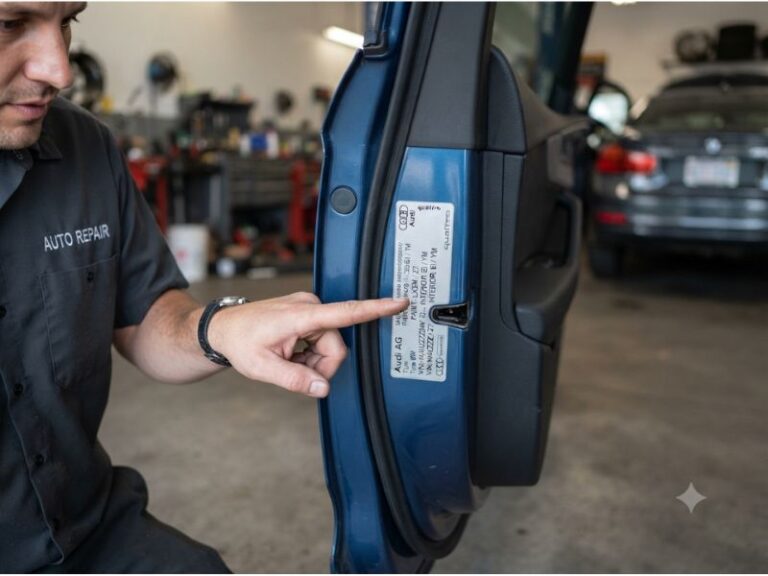
Most vehicles sold in the United States from the 1996 model year onward use a standardized 16-pin OBD2 connector, although access and supported functions vary by vehicle. The port is usually beneath the dashboard near the steering column, but it may be behind a small cover or lower trim panel.
After the scanner is plugged in, the vehicle supplies power through the connector. The tool then communicates with one or more control modules using the vehicle’s supported communication protocol. Some scanners connect directly to a phone through Bluetooth or Wi-Fi, while handheld models include their own screen.
A scanner that powers on but cannot communicate may indicate an incorrect ignition position, a blown diagnostic-port fuse, a communication fault, or an incompatibility between the tool and the vehicle. It is not automatically proof that the vehicle’s main computer has failed.
What the Codes Mean
Diagnostic trouble codes usually contain one letter followed by four numbers, such as P0301 or P0420. The first letter identifies the general system:
- P refers to powertrain systems, including the engine, transmission, and emissions controls.
- B refers to body systems, such as airbags, power seats, or climate-control functions.
- C refers to chassis systems, including some steering, suspension, and brake-related controls.
- U refers to network or communication problems between electronic modules.
The first number after the letter generally indicates whether the code follows a standardized generic definition or a manufacturer-specific definition. The remaining numbers identify the monitored condition, but their meaning depends on the vehicle and control module.
For example, P0301 commonly indicates a detected misfire in cylinder 1. That code does not necessarily mean the cylinder itself is defective. Possible causes include a worn spark plug, an ignition-coil problem, a fuel-delivery issue, an intake leak, low compression, or a wiring fault.
Similarly, an oxygen-sensor code may be caused by the sensor, but it can also result from an exhaust leak, fuel-mixture problem, wiring damage, or an issue elsewhere in the emissions system. A code is best treated as a starting point for diagnosis, not a parts-ordering instruction.
Check-Engine Lights and Stored Information
When the check-engine light is illuminated, the vehicle has detected a condition that may affect emissions, engine operation, or both. A scanner can often show whether the code is current, pending, or stored from an earlier event.
A pending code means the vehicle noticed a problem but may not yet have met the conditions required to turn on the warning light. A confirmed or stored code generally means the fault was detected consistently enough to be recorded. Some tools also display freeze-frame data, which captures operating conditions when the fault occurred.
Freeze-frame information may include engine speed, coolant temperature, vehicle speed, throttle position, and fuel-trim values. This context can help show whether the problem appeared during a cold start, acceleration, cruising, or another specific condition.
A flashing check-engine light deserves special caution because it can indicate an active misfire capable of damaging the catalytic converter. Avoid aggressive driving and arrange prompt diagnosis. A steady light may still represent a significant problem, but the vehicle’s behavior and other warning indicators determine how urgently it should be checked.
What Live Data Can Reveal
Live data is a stream of readings sent by vehicle sensors and control modules while the engine is running or the ignition is on. Depending on the vehicle and scan tool, readings may include coolant temperature, engine speed, throttle position, oxygen-sensor activity, fuel trims, manifold pressure, and battery or charging voltage.
These values can help compare actual operation with expected behavior. For instance, an engine that reports an implausible coolant temperature when cold may have a sensor or wiring issue. Fuel-trim data that stays highly positive can suggest that the engine computer is adding fuel to compensate for a lean condition, although the underlying cause still requires testing.
Live data is more useful when viewed as a pattern rather than as one isolated number. Values change with engine temperature, load, altitude, and operating conditions, so a reading that appears unusual without context may be normal.
Readiness Monitors and Emissions Testing
OBD2 systems run self-checks called readiness monitors. These monitors evaluate systems such as the oxygen sensors, catalytic converter, evaporative-emissions system, exhaust-gas recirculation system, and misfire detection system when the vehicle is driven under suitable conditions.
A scanner can show whether monitors are ready, incomplete, or unsupported. This information is especially relevant before an emissions inspection. Clearing codes or disconnecting the battery usually resets emissions monitors to incomplete, and the vehicle may need a specific driving cycle before they run again.
An erased code is not the same as a repaired vehicle. If the underlying fault remains, the warning light may return after the relevant monitor completes. Inspection requirements differ by state, so a scanner can provide useful status information but cannot guarantee that a vehicle will pass a local emissions test.
Basic Code Readers Versus Advanced Scan Tools
A basic code reader is designed primarily to retrieve and clear generic powertrain codes. It may be sufficient for checking why the check-engine light is on, viewing a small amount of live data, and deciding whether immediate professional help is needed.
A more advanced scan tool may access transmission, airbag, anti-lock brake, body, and manufacturer-specific modules. It may also display enhanced codes, perform active tests, reset service indicators, calibrate sensors, or support bidirectional controls.
Bluetooth adapters that use a smartphone app can be convenient and inexpensive, but quality varies. Some adapters provide limited data, lose communication, or depend heavily on app compatibility. A handheld tool can be simpler for occasional use, while a capable professional tool may require subscriptions, software updates, or vehicle-specific coverage.
Before buying or borrowing a scanner, check whether it supports the vehicle’s model year and the systems that need testing. “OBD2 compatible” often means only generic engine and emissions access, not complete access to every electronic module.
How to Use a Scanner Safely
Reading a code is generally straightforward, but safe use requires more than plugging in the device. Follow the tool’s instructions and avoid distracting yourself while driving unless the tool is specifically designed for safe data logging by another person.
- Park safely, set the parking brake, and switch the ignition off before connecting the tool unless its instructions state otherwise.
- Locate the OBD2 port and connect the scanner without forcing the plug.
- Turn the ignition to the required position. Some scans require the engine off; others require it to be running.
- Record all codes and available freeze-frame information before clearing anything.
- Research or interpret the code in the context of the vehicle’s symptoms and other data.
- Repair the confirmed cause, then clear the code only when appropriate and retest the vehicle.
Do not unplug a scan tool while it is performing a module update or special programming function. Interrupting certain procedures can create communication problems or leave a control module in an unusable state.
Use extra care around airbags, high-voltage hybrid systems, and electric vehicles. A standard OBD2 scanner does not make high-voltage systems safe to service, and it may not support their specialized diagnostic procedures.
Why Clearing a Code Is Not a Repair
Most scanners include a “clear codes” function, but using it removes valuable diagnostic evidence. It may also turn off the warning light temporarily without correcting the condition that caused it.
Clearing codes can reset fuel-trim learning and readiness monitors. If the vehicle is being evaluated for an emissions inspection, clearing the codes shortly beforehand may leave the monitors incomplete and create an inspection problem.
It is reasonable to clear a code after a verified repair or when instructed as part of a controlled diagnostic procedure. If the light returns, the recurrence is useful information because it shows that the vehicle detected the condition again.
When a Scanner Cannot Provide the Answer
Electronic diagnosis often requires additional tools and measurements. A misfire code may require an ignition test, fuel-pressure test, injector evaluation, or compression test. An evaporative-emissions code may require a smoke test to locate a small leak that the scanner cannot see.
Communication codes may require wiring diagrams, voltage checks, network testing, and careful inspection of connectors. A scanner can identify that modules are not communicating, but it usually cannot determine whether the cause is a damaged wire, low battery voltage, corrosion, a failed module, or a configuration issue.
Seek professional help when the vehicle has a flashing check-engine light, severe shaking, stalling, overheating, loss of braking or steering assistance, airbag warnings, or high-voltage system concerns. A code reader is useful for information, but it should not replace safety judgment or qualified testing.
Frequently Asked Questions About OBD2 Scanners
What is an OBD2 scanner used for?
An OBD2 scanner is used to read vehicle fault codes and diagnostic information. Depending on the model, it can also display live sensor data, show freeze-frame details, check emissions readiness monitors, and access additional control modules.
Can an OBD2 scanner tell me exactly what part
No, a code usually identifies a monitored condition rather than a guaranteed failed part. The code should be combined with symptoms, visual inspection, live data, and electrical or mechanical tests before replacing components.
Will an OBD2 scanner work on every car?
Most U.S.-market passenger vehicles from 1996 and newer support standardized OBD2 engine and emissions diagnostics. Older vehicles, imported models, heavy-duty vehicles, and manufacturer-specific systems may require different coverage or a specialized tool.
Can an OBD2 scanner clear the check-engine light?
Many scanners can clear diagnostic trouble codes and turn off the light temporarily. Clearing the code does not fix the fault, and the light can return when the vehicle repeats the test that detected the problem.
Does an OBD2 scanner check airbags and ABS?
Only scanners with the appropriate module coverage can check systems such as airbags or ABS. A basic engine code reader may not communicate with those modules even though it connects to the same diagnostic port.
Can a scanner confirm that a car will pass emissions
A scanner can show emissions readiness status but cannot guarantee a passing result. The vehicle must have the required monitors complete, meet applicable fault-code rules, and satisfy the inspection requirements in its state.
Is it safe to drive after reading a code?
Safety depends on the warning light, symptoms, and vehicle behavior, not the scanner alone. Stop driving and seek prompt help for a flashing check-engine light, severe power loss, overheating, unusual noises, or warnings involving brakes, steering, airbags, or high-voltage systems.
Conclusion: Use the Code as the Beginning of Diagnosis
An OBD2 scanner connects to a vehicle’s diagnostic system to retrieve trouble codes, monitor electronic data, and check emissions readiness. Its most important limitation is that a code points to a detected condition, not necessarily a failed part or complete repair plan.
Record the code and freeze-frame information before clearing anything, consider the vehicle’s symptoms, and use additional testing when the cause is not clear. For serious drivability, safety, network, or high-voltage problems, the useful next step is a qualified diagnosis rather than continued parts replacement.