What Obd2 Scanner Should I Buy: How It Works and Why It Matters
A good OBD2 scanner depends on what you need it to do. For basic check-engine-light diagnosis, buy a reliable code reader that shows generic and manufacturer-specific powertrain codes; for deeper troubleshooting, choose a bidirectional scan tool with live data, system coverage, and service functions.
This article explains the practical differences between inexpensive code readers, midrange scanners, and professional-level tools, along with the limits that can make a scanner seem less useful than expected. It also covers compatibility, code types, live data, wireless connections, repair features, and the safety situations in which a scan tool should not replace a qualified technician.
The goal is to identify what you are trying to accomplish before paying for features you may never use. You will learn how to separate a harmless warning caused by a loose gas cap from symptoms that indicate a real mechanical or safety problem, compare the most important scanner capabilities, and choose a tool that fits your vehicle, budget, and confidence level.
What an OBD2 Scanner Actually Does
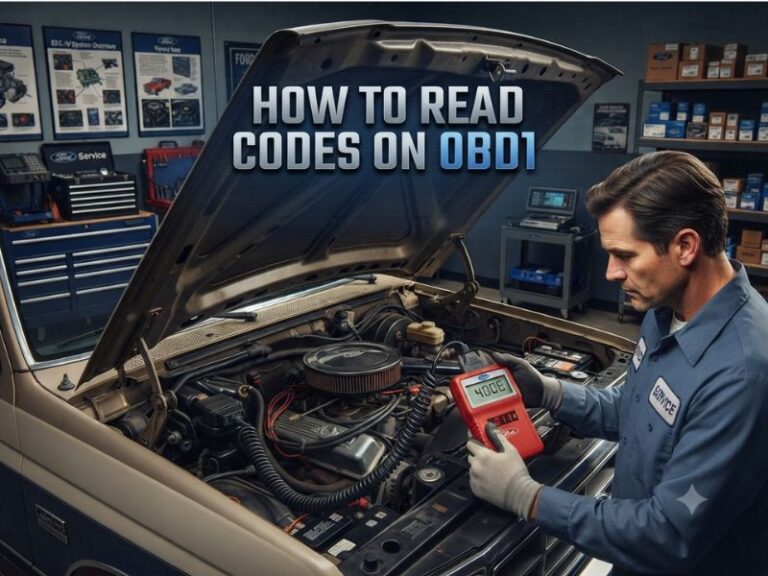
An OBD2 scanner communicates with a vehicle’s onboard diagnostics system. In most gasoline-powered cars and light trucks sold in the United States since the 1996 model year, the diagnostic port is located beneath the dashboard near the steering column.
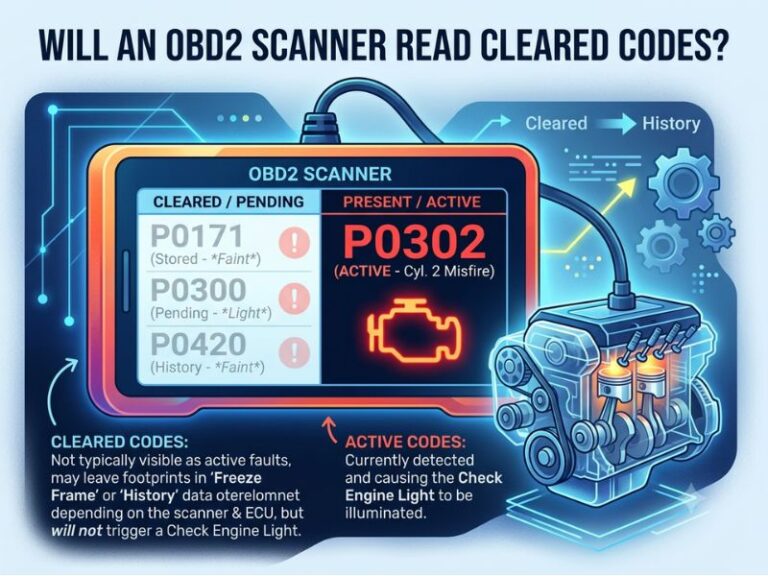
The scanner retrieves diagnostic trouble codes, commonly called DTCs, stored by the vehicle’s computers. These codes identify a detected condition, such as an engine misfire, oxygen-sensor fault, evaporative-emissions leak, or communication problem.
A code is not a complete diagnosis. It usually points to a system or symptom rather than naming the exact part that failed, so a scanner should be treated as a troubleshooting starting point rather than an automatic parts-buying guide.
Basic tools may only read and erase generic powertrain codes. More capable models can display manufacturer-specific codes, freeze-frame information, live sensor readings, readiness monitors, and faults from systems such as the transmission, airbag, anti-lock brakes, and body control modules.
Choose the Scanner by Your Main Job
The best purchase becomes clearer when the intended use is specific. A driver who occasionally checks a warning light needs a very different tool from someone diagnosing intermittent electrical faults or performing maintenance on multiple vehicles.
For a check-engine light
A basic wired OBD2 code reader is usually enough to retrieve engine and emissions codes. Look for a clear display, plain-language code definitions, freeze-frame data, and the ability to show whether emissions monitors are ready.
This category is appropriate for identifying whether a warning may involve a loose fuel cap, an emissions leak, a sensor circuit, or a misfire. It is not usually sufficient for diagnosing airbag, ABS, transmission, or advanced driver-assistance faults.
For home repair and live diagnosis
A midrange scanner is a better choice if you perform your own maintenance. It should show live data, including engine speed, coolant temperature, fuel trims, oxygen-sensor activity, throttle position, and sometimes transmission information.
Live data helps compare what the vehicle is reporting with what should be happening. For example, fuel-trim readings can support an investigation into a vacuum leak, while coolant-temperature data can reveal a sensor that reports an implausibly cold or hot engine.
For several vehicles or advanced troubleshooting
A higher-level scan tool may be worthwhile for a serious DIY mechanic, small repair business, or household with multiple vehicle brands. Important features can include full-system scanning, bidirectional controls, active tests, service resets, coding, and module information.
Bidirectional control allows the scanner to send commands to certain vehicle components, such as operating a cooling fan, fuel pump, solenoid, or window motor. That capability can save diagnostic time, but it also increases the risk of activating a component incorrectly.
OBD2 Features That Matter Most
Feature lists can be confusing because manufacturers use different names for similar functions. Focus on the functions that support your actual repair decisions instead of choosing a tool solely because it advertises the largest number of resets.
Code coverage
Confirm whether the tool reads only OBD2 emissions codes or also accesses enhanced manufacturer codes. Standard OBD2 generally focuses on the engine and emissions system, while enhanced coverage may reach the transmission, ABS, airbag, body, and other modules.
Coverage can vary by vehicle year, model, engine, and region. A scanner that works deeply on one brand may provide only basic engine access on another, so compatibility should be checked against the exact vehicle rather than the brand name alone.
Live data and graphing
Live data is more useful when the scanner can display multiple parameters together and graph changes over time. Graphing can make a fluctuating sensor signal, unstable engine speed, or changing fuel trim easier to interpret than a list of rapidly changing numbers.
However, live data does not prove that a component is good or bad. A faulty sensor, wiring problem, vacuum leak, or control-module issue can produce similar readings, which is why electrical testing and mechanical checks may still be necessary.
Freeze-frame and readiness monitors
Freeze-frame data records operating conditions when a fault was stored. Engine speed, load, coolant temperature, and vehicle speed can help determine whether a fault appeared during a cold start, acceleration, cruising, or another specific condition.
Readiness monitors indicate whether the vehicle has completed its emissions self-tests. Clearing codes or disconnecting the battery can reset these monitors to incomplete, so a scanner that displays monitor status is useful before emissions testing or after repairs.
Erase and reset functions
Nearly every code reader can erase diagnostic codes, but clearing a code does not repair the cause. The warning may return immediately, after a drive cycle, or only when the vehicle encounters the same operating conditions again.
Service resets, battery registration, steering-angle calibration, and electronic parking-brake functions are different from simply erasing a check-engine code. These functions may require specific vehicle coverage and should be used only when the related maintenance or repair has actually been completed.
Connection type and ease of use
A wired scanner is simple, generally stable, and ready to use without pairing. A wireless Bluetooth or Wi-Fi adapter can be convenient with a phone or tablet, but the experience depends on the app, operating-system compatibility, permissions, and the quality of the vehicle connection.
For occasional use, a dedicated handheld unit may be less frustrating than managing an adapter and subscription. For frequent diagnosis, an app-based setup can offer better graphing, repair information, data storage, and updates if those services are reliable and reasonably priced.
How Much Scanner Should You Buy?
A low-cost reader can make sense when the goal is simply to read and research a check-engine code. It should still provide the code number, a useful description, basic readiness information, and a clear method for saving or recording results before codes are erased.
A midrange tool is often the practical choice for vehicle owners who want to inspect live data and perform more informed troubleshooting. It typically offers better display quality, more complete code descriptions, and wider system access without the cost or complexity of a professional platform.
Professional-grade scanners may include extensive vehicle coverage, frequent software updates, guided tests, programming-related functions, and technical data. These tools can be valuable, but their cost may not be justified if they will be used only once or twice a year.
Also consider ongoing expenses. Some scanners require paid annual updates, vehicle-specific software packages, cloud services, or subscriptions for advanced functions, while others provide a useful feature set with occasional optional updates.
Important Compatibility Checks Before Buying
Start with the vehicle’s year, make, model, engine, and transmission. If you need ABS, airbag, transmission, or body-module access, verify those systems specifically; do not assume that a product labeled “full system” covers every function on every vehicle.
Check whether the scanner supports the vehicle’s communication protocols and whether special cables or adapters are needed. A standard 16-pin port does not guarantee identical diagnostic access across all vehicles, especially on older, newer, hybrid, or electric models.
Hybrid and electric vehicles can require additional high-voltage and battery-system coverage. A general engine scanner may read standard emissions information while offering little or no useful access to the propulsion battery, inverter, charging system, or isolation faults.
Software support also matters. A scanner with outdated coverage may connect successfully but miss newer modules, service functions, or manufacturer-specific codes. Compatibility claims should be read as vehicle-specific capabilities, not universal promises.
Using a Scanner Without Misdiagnosing the Vehicle
Before connecting the tool, park safely, switch off unnecessary accessories, and locate the diagnostic port. Follow the scanner’s instructions for ignition position, since some tools require the ignition on with the engine off before communication begins.
Record stored and pending codes, freeze-frame data, and monitor status before clearing anything. If the vehicle is running poorly, also note symptoms such as rough idle, loss of power, unusual noise, smoke, hard starting, or changes in fuel economy.
- Connect the scanner securely and identify all stored and pending codes.
- Write down the codes and operating conditions before clearing them.
- Inspect obvious causes, such as loose connectors, damaged wiring, low fluid, or a loose fuel cap.
- Use service information and appropriate tests to confirm the suspected cause.
- Repair the verified problem, then clear codes only when appropriate.
- Complete a drive cycle and rescan to confirm that the fault has not returned.
Do not replace a part solely because its name appears in a code description. A code for an oxygen-sensor circuit, for example, can result from a failed sensor, damaged wiring, an exhaust leak, a power-supply problem, or an engine condition that causes an abnormal reading.
When a Scanner Is Not Enough
Some problems require tools that an OBD2 scanner cannot replace. A multimeter, test light, fuel-pressure gauge, compression tester, smoke machine, or oscilloscope may be needed to confirm the underlying fault.
Mechanical symptoms deserve equal attention. A scanner may report a misfire, but it cannot by itself distinguish among an ignition problem, injector issue, vacuum leak, low compression, or valve-train failure.
Take immediate action if the check-engine light is flashing, the engine is losing power, the vehicle is overheating, the brakes feel abnormal, or there is smoke, a fuel smell, or a serious change in steering or handling. Continuing to drive can damage the catalytic converter or create a safety hazard.
Airbag and high-voltage hybrid systems require particular caution. Do not probe airbag circuits or work around high-voltage components based only on scanner instructions; use qualified professional service when the repair involves stored crash data, restraint systems, or energized battery equipment.
FAQ: Choosing an OBD2 Scanner
What OBD2 scanner should I buy for occasional check-engine-light use?
Buy a dependable basic code reader with freeze-frame and readiness-monitor features. It should read and record engine codes clearly, explain that codes are starting points, and avoid locking essential functions behind an expensive subscription.
Can an inexpensive OBD2 scanner read ABS and airbag codes?
Usually not, unless the product specifically lists those systems for your vehicle. Many inexpensive readers support only standard engine and emissions diagnostics, while ABS and airbag access requires enhanced vehicle coverage.
Is a Bluetooth OBD2 adapter better than a handheld scanner?
Neither is automatically better; the best choice depends on how you use it. Bluetooth adapters can provide strong graphing and data storage through an app, while handheld units are often quicker for occasional checks and do not depend on phone compatibility or wireless pairing.
Do I need bidirectional control for home vehicle repairs?
Most vehicle owners do not need bidirectional control for routine code reading. It becomes useful when you need to command a component for an active test, but it should be used carefully because an incorrect command can activate a system under unsafe conditions.
Will an OBD2 scanner tell me exactly which part
No, a trouble code identifies a detected fault or affected system rather than proving a failed part. Confirm the diagnosis with visual inspection, electrical testing, mechanical checks, and the vehicle’s symptoms before purchasing replacement parts.
Can I use the same scanner on every car?
A standard scanner may read basic emissions data from many compatible vehicles, but advanced functions vary widely. Verify coverage for each year, make, model, engine, and module you intend to diagnose, especially for hybrids, newer vehicles, and full-system repairs.
Should I erase a check-engine code after reading it?
Do not erase it until the code and freeze-frame information have been recorded and the cause has been investigated. Clearing codes can remove useful evidence and reset emissions readiness monitors, which may also affect the vehicle’s preparation for an emissions inspection.
Make the Purchase Fit the Diagnosis
The right OBD2 scanner is the least expensive tool that provides the coverage and information your repairs actually require. Choose a basic reader for occasional engine-code checks, a midrange scanner for live-data troubleshooting, or a broader professional tool when full-system access and active tests justify the cost.
The major limitation is that a code is not a diagnosis, and a scanner cannot replace safety judgment or mechanical testing. Before buying, confirm exact vehicle compatibility, review update costs, and choose a tool that lets you save the original data; then use the first scan to guide testing rather than dictate a parts replacement.