What Is Stft B1 on Obd2 Scanner: Clear Answers and Key Facts
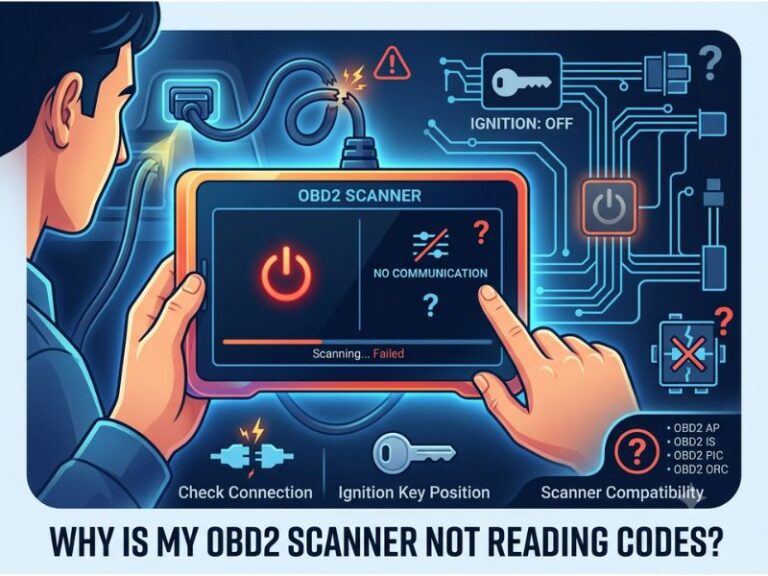
You’re driving along, minding your own business, when suddenly that dreaded “Check Engine” light illuminates on your dashboard. Your heart sinks a little, knowing it’s time to connect your trusty OBD2 scanner. As you scroll through the live data, amidst a flurry of numbers and acronyms, you might encounter something like “STFT B1” and wonder what on earth it means. Is it good? Is it bad? More importantly, what does it tell you about your engine’s health? The question “what is stft b1 on obd2 scanner” becomes clearer once the surrounding conditions and practical details are considered.
That little abbreviation, STFT B1, holds a crucial piece of information about how your engine is managing its fuel. It’s not just a random code; it’s a real-time snapshot of your vehicle’s intricate fuel delivery system making immediate adjustments. Understanding it can be the difference between a quick fix and a costly repair down the line.
My goal here is to demystify this common OBD2 scanner reading. I’ll explain exactly what is STFT B1 on an OBD2 scanner, why it matters, and what typical readings indicate. By the time you finish reading, you’ll have a much clearer picture of your engine’s fuel trim, empowering you to interpret your scanner data with confidence and take appropriate action.
Understanding Fuel Trim: The Engine’s Balancing Act
Before I dive into STFT B1 specifically, it’s essential to grasp the concept of “fuel trim.” Think of your engine as a chef trying to cook a perfect meal. The “air” is one ingredient, and the “fuel” is another. For optimal performance, efficiency, and emissions, there needs to be a very precise ratio of air to fuel – this is known as the stoichiometric ratio, typically around 14.7 parts of air to 1 part of fuel for gasoline engines.
Your vehicle’s Engine Control Unit (ECU) or Powertrain Control Module (PCM) constantly monitors the exhaust gases using oxygen sensors (O2 sensors). Based on what these sensors report, the ECU adjusts the amount of fuel injected into the engine cylinders to maintain that ideal air-fuel ratio. This continuous adjustment process is what I call “fuel trim.”
Why Fuel Trim is So Important
Maintaining the correct air-fuel ratio is critical for several reasons:
- Engine Performance: Too much fuel (rich mixture) can cause sluggishness, while too little fuel (lean mixture) can lead to misfires and lack of power.
- Fuel Efficiency: An optimized ratio ensures your engine isn’t wasting fuel.
- Emissions Control: The catalytic converter, which reduces harmful emissions, relies on a precise air-fuel ratio to function effectively.
- Engine Longevity: Running too rich can foul spark plugs and damage the catalytic converter, while running too lean can cause excessive heat and damage engine components.
What is STFT B1 on OBD2 Scanner? Decoding the Acronym
Now, let’s break down the specific term: STFT B1. Each part of this abbreviation provides a vital clue about the data you’re seeing on your OBD2 scanner.
STFT: Short Term Fuel Trim
STFT stands for Short Term Fuel Trim. This is the ECU’s immediate, rapid-fire adjustment to the fuel delivery. Imagine it as a quick, real-time correction. The oxygen sensors in your exhaust system are constantly sending signals to the ECU about the oxygen content in the exhaust gas. If the ECU detects too much oxygen (indicating a lean mixture), it will increase fuel injection. If it detects too little oxygen (indicating a rich mixture), it will decrease fuel injection.
These adjustments happen many times per second. STFT is highly dynamic and fluctuates constantly as driving conditions change (e.g., accelerating, decelerating, idling). It’s the ECU’s way of fine-tuning the air-fuel mixture to keep it as close to the ideal stoichiometric ratio as possible in the moment.
B1: Bank 1
The “B1” in STFT B1 refers to Bank 1. Many modern engines, especially V6, V8, and V10 engines, have two banks of cylinders. Bank 1 is always the side of the engine that contains cylinder #1. On inline engines (like most 4-cylinder engines), there’s only one bank, so you’ll typically only see “Bank 1” readings.
If your vehicle has a V-configuration engine, you’ll also see “Bank 2” readings (e.g., STFT B2, LTFT B2). Bank 2 is the opposite side of the engine from Bank 1. Having separate readings for each bank allows the ECU to make independent fuel adjustments for each side of the engine, which is crucial for identifying issues specific to one bank.
Putting It Together: What is STFT B1 on OBD2 Scanner?
Therefore, when you see “STFT B1” on your OBD2 scanner, you are looking at the immediate, real-time fuel adjustments being made by the Engine Control Unit for the first bank of cylinders in your engine. It’s a direct indicator of how the ECU is trying to correct the air-fuel mixture on that specific side of the engine based on what its oxygen sensors are reporting.
Interpreting STFT B1 Readings: What the Numbers Mean
STFT values are typically displayed as percentages. The percentage indicates how much the ECU is adding or subtracting fuel from its base fuel map. The ideal STFT reading, when the engine is running perfectly, is 0%.
The “Perfect” 0% STFT
A reading of 0% means the ECU is not making any short-term adjustments; the air-fuel mixture is already spot-on according to the oxygen sensors. In reality, STFT will almost always fluctuate around 0% (e.g., -5% to +5%) as the engine makes constant, tiny corrections. This fluctuation is normal and expected.
Positive STFT Values: +1% to +25% (or higher)
A positive STFT value (e.g., +5%, +10%, +20%) means the ECU is adding fuel to the mixture. This indicates that the engine is running lean, meaning there’s too much air or not enough fuel. The ECU is trying to compensate by injecting more fuel to bring the air-fuel ratio back to the ideal.
Common causes of positive STFT (lean condition):
- Vacuum leaks: Unmetered air entering the engine after the Mass Air Flow (MAF) sensor.
- Low fuel pressure/clogged fuel filter: Not enough fuel reaching the injectors.
- Clogged fuel injectors: Injectors not delivering enough fuel.
- Weak fuel pump: Inadequate fuel delivery.
- Exhaust leaks before the O2 sensor: Oxygen sensor detects excess oxygen, thinking the mixture is lean.
- Faulty MAF sensor: Reporting less airflow than is actually entering the engine.
Negative STFT Values: -1% to -25% (or lower)
A negative STFT value (e.g., -5%, -10%, -20%) means the ECU is subtracting fuel from the mixture. This indicates that the engine is running rich, meaning there’s too much fuel or not enough air. The ECU is trying to compensate by reducing fuel injection to lean out the mixture.
Common causes of negative STFT (rich condition):
- Leaky fuel injectors: Injectors delivering too much fuel.
- High fuel pressure: Fuel pressure regulator failure.
- Faulty MAF sensor: Reporting more airflow than is actually entering the engine.
- Clogged air filter: Restricting airflow.
- Faulty oxygen sensor (rarely): Incorrectly reporting a lean condition, causing the ECU to add too much fuel.
- EVAP system issues: Purge valve stuck open.
What Constitutes a “Problem” Reading?
While some fluctuation is normal, consistently high positive or negative STFT values (generally exceeding +/- 10% to 15% for extended periods, especially at idle and cruise) are usually indicative of an underlying issue. If STFT B1 consistently stays above +10% or below -10%, it’s a strong signal that your engine is struggling to maintain the correct air-fuel ratio and needs attention.
The Relationship Between STFT and LTFT
STFT (Short Term Fuel Trim) doesn’t work in isolation. It’s closely related to LTFT (Long Term Fuel Trim). Think of STFT as the immediate, reactive adjustments, and LTFT as the learned, adaptive adjustments.
LTFT: Long Term Fuel Trim
LTFT is the ECU’s more permanent adjustment to the fuel map. If the STFT consistently shows that the engine needs to add fuel (positive STFT) or subtract fuel (negative STFT) over a period, the ECU will “learn” this correction and incorporate it into its long-term fuel strategy. This reduces the amount of work STFT has to do.
For example, if the engine consistently runs lean due to a small vacuum leak, the STFT will constantly be positive. Over time, the ECU will increase the LTFT value to compensate for this persistent lean condition. Once LTFT has adjusted, STFT will then fluctuate around 0% again, but now from a new, adjusted baseline.
How They Work Together
When diagnosing issues, it’s crucial to look at both STFT B1 and LTFT B1 together. They provide a comprehensive picture of your engine’s fuel management:
- STFT B1 fluctuating around 0% with LTFT B1 also near 0%: Ideal. The engine is running perfectly.
- STFT B1 consistently high positive, LTFT B1 also high positive: Indicates a persistent lean condition that the ECU is trying hard to correct.
- STFT B1 consistently high negative, LTFT B1 also high negative: Indicates a persistent rich condition that the ECU is trying hard to correct.
- STFT B1 fluctuating wildly while LTFT B1 is stable: Could indicate an intermittent issue or a rapidly changing condition the ECU is struggling to keep up with.
Many OBD2 scanners will display both STFT and LTFT for Bank 1 (and Bank 2 if applicable) simultaneously, allowing for a holistic diagnosis.
Practical Steps for Diagnosing Fuel Trim Issues
When you see concerning STFT B1 readings, don’t panic. Use your OBD2 scanner as a diagnostic tool. Here’s a general approach I recommend:
1. Observe Under Different Conditions
STFT B1 values change with engine load and RPM. Observe the readings:
- At idle: Look for vacuum leaks, which often have a greater impact at idle.
- At steady cruise (e.g., 40-60 mph): This helps identify issues that are more prevalent under light load.
- Under acceleration: Problems with fuel delivery (pump, injectors) or MAF sensor can become more apparent under heavy load.
If STFT B1 is high positive at idle but normal at higher RPMs, a vacuum leak is a strong suspect. If it’s high positive at all RPMs, it points more towards a general lean condition like low fuel pressure or a faulty MAF sensor.
2. Check for Related Diagnostic Trouble Codes (DTCs)
While fuel trim numbers give you live data, don’t forget to check for stored or pending DTCs. Codes like P0171 (System Too Lean Bank 1) or P0172 (System Too Rich Bank 1) directly correlate with fuel trim issues and can help narrow down the problem area.
3. Inspect Common Culprits
Based on whether STFT B1 is positive (lean) or negative (rich), start checking the most common causes:
For Positive STFT B1 (Lean Condition):
- Vacuum Leaks: Listen for hissing sounds. Use a smoke machine if available, or carefully spray unlit propane/carb cleaner around vacuum lines and intake manifold gaskets (engine running, be cautious of flammables near hot engine parts). A change in idle RPM indicates a leak.
- MAF Sensor: Clean the MAF sensor with specialized MAF cleaner. If readings are still erratic or consistently off, consider replacement.
- Fuel Pressure: Test fuel pressure at the rail with a gauge. Compare to manufacturer specifications.
- Oxygen Sensors: While less common for lean conditions, a failing O2 sensor can sometimes give false readings. Look at the O2 sensor voltage readings on your scanner; they should fluctuate rapidly.
- Exhaust Leaks: Check for leaks before the upstream O2 sensor.
For Negative STFT B1 (Rich Condition):
- Fuel Injectors: Check for leaky injectors. A cylinder contribution test or simply listening for consistent injector clicks can sometimes help.
- Fuel Pressure Regulator: Test fuel pressure. A faulty regulator can cause excessively high pressure.
- MAF Sensor: Again, a faulty MAF sensor reporting too much air can cause the ECU to inject too much fuel.
- Air Filter: A severely clogged air filter can restrict airflow, leading to a rich condition.
- EVAP Purge Valve: A purge valve stuck open can allow too much fuel vapor into the intake, causing a rich condition.
4. Clear Codes and Retest
After making a repair or adjustment, clear any stored DTCs and drive the vehicle. Monitor the STFT B1 and LTFT B1 readings to see if they return to normal ranges. It may take some driving cycles for the LTFT to fully relearn and stabilize.
When to Seek Professional Help
While understanding STFT B1 empowers you to do some initial diagnostics, not every issue is a DIY fix. If you’ve checked the common culprits and the fuel trim numbers remain problematic, or if you’re uncomfortable with any diagnostic steps, it’s always wise to consult a qualified mechanic. They have specialized tools and expertise to pinpoint complex issues, especially those involving internal engine components or advanced sensor diagnostics.
Ignoring persistent fuel trim issues can lead to more severe problems, including catalytic converter damage (which is very expensive to replace), reduced fuel economy, and overall poor engine performance. Early diagnosis and repair are key to maintaining your vehicle’s health and avoiding larger bills down the road.
Conclusion
The “Check Engine” light can be intimidating, but with the right knowledge, your OBD2 scanner becomes a powerful ally. Understanding what is STFT B1 on an OBD2 scanner provides a critical window into your engine’s fuel management system. It’s the ECU’s immediate feedback on how well it’s maintaining that delicate air-fuel balance. By monitoring STFT B1 alongside LTFT B1 and observing its behavior under different driving conditions, you can gain valuable insights into potential issues like vacuum leaks, fuel delivery problems, or sensor malfunctions. This knowledge not only helps you diagnose problems but also empowers you to make informed decisions about your vehicle’s maintenance and repairs, ultimately saving you time and money. A reliable answer to “what is stft b1 on obd2 scanner” comes from applying these points to the specific situation rather than relying on one rule.