In the United States, a full windshield replacement commonly costs about $250 to $1,500 or more, although the final bill depends heavily on the vehicle, glass type, built-in technology, labor, location, and whether ADAS calibration is required.
For a US driver trying to determine how much does it cost to replace a windshield, there is no single nationwide price that applies to every vehicle. A relatively simple windshield on an older sedan may fall near the lower end of the range, while a newer SUV, pickup, electric vehicle, luxury model, or vehicle with a windshield-mounted camera can cost substantially more. Current US automotive guidance places many full replacements within roughly the $250 to $1,500-plus range, with specialized vehicles sometimes exceeding it.
The glass itself is only part of the bill. Modern windshields may contain rain sensors, heating elements, acoustic layers, antennas, head-up display areas, camera brackets, and other features. If a forward-facing camera is mounted behind the windshield, replacement may also require advanced driver assistance system calibration. That additional procedure can add hundreds of dollars to the job.
This guide explains the normal US price range, what changes the estimate, how OEM and aftermarket glass differ, when calibration matters, how insurance may affect your out-of-pocket cost, and how to compare quotes without overlooking important services.
How Much Does It Cost to Replace a Windshield in the US?
For most US vehicles, budgeting about $250 to $1,500 or more for a complete windshield replacement is a reasonable starting point. The lower end generally applies to simpler vehicles using readily available glass without camera calibration or expensive integrated features. The upper end becomes more common when the windshield is specialized or when the vehicle uses advanced driver assistance technology.
A straightforward replacement on an older economy car may cost only a few hundred dollars. A newer crossover or pickup with a windshield-mounted safety camera can move into the middle or upper part of the range once calibration is included. Luxury vehicles, rare windshields, head-up display glass, specialty heated glass, or difficult-to-source OEM components can push the total beyond $1,500.
These figures should be treated as national planning ranges rather than fixed prices. Auto glass pricing varies by ZIP code, vehicle identification number, glass availability, labor market, service provider, and the exact equipment installed on the vehicle. Two vehicles with the same model name can even require different windshields because of different trim levels and option packages.
Source: autoglassestimator.com
Basic older vehicle
A simple windshield without advanced electronics may often fall around the lower few hundred dollars, depending on glass availability and local labor.
Typical newer vehicle
A modern sedan, SUV, or pickup with sensors or a forward camera may cost several hundred dollars more once the correct glass and required calibration are included.
High-technology or luxury vehicle
Vehicles with head-up displays, acoustic laminated glass, infrared coatings, heating, specialty cameras, or expensive OEM glass can reach $1,000 to $1,500 or more.
A Practical Example of How the Total Can Change
Consider a hypothetical vehicle with a $450 installed windshield price. If no calibration is required, the total may remain close to that amount, aside from taxes or minor shop fees. If the same vehicle requires a forward-camera calibration costing roughly $300 to $400, the overall job could approach $750 to $850. If OEM glass is also required and costs more than the aftermarket alternative, the total can rise again.
This is why comparing only the advertised glass price can be misleading. The useful number is the complete installed price for your exact VIN, including every procedure needed to return the vehicle to normal operation.
What Determines Windshield Replacement Cost?
The biggest cost differences come from the exact windshield specification and the equipment attached to or operating through the glass. Modern windshields increasingly function as part of the vehicle’s safety and electronics systems rather than as a simple transparent panel.
When requesting a quote, providing the vehicle year, make, model, trim, and VIN helps the installer identify the correct windshield. The VIN is especially useful because a model may have several glass configurations based on factory options.
Source: carfromjapan.com
Vehicle make and model
Common windshields with strong parts availability tend to cost less than rare, luxury, specialty, or recently introduced glass.
Glass technology
Acoustic layers, solar coatings, antennas, heating elements, rain sensors, head-up display areas, and camera mounts can increase the cost of the windshield.
ADAS calibration
Vehicles with cameras used for lane assistance, automatic emergency braking, adaptive cruise functions, or related systems may require calibration after the windshield is installed.
OEM versus aftermarket glass
Original equipment glass can cost more, while compatible aftermarket glass may reduce the price when its specifications are suitable for the vehicle.
Labor and location
Labor rates and operating costs vary across US cities and regions, so identical vehicles may receive different estimates in different markets.
Mobile versus shop service
Some providers include mobile installation, while others may charge differently depending on whether the replacement occurs at your home, workplace, or a dedicated facility.
Additional parts
Moldings, clips, trim, camera brackets, sensor components, or damaged surrounding parts can add to the final invoice.
Why Newer Vehicles Often Cost More
A major reason newer vehicles can be more expensive is the increasing use of windshield-mounted driver-assistance cameras. The camera may look through a precisely defined area of the glass. Changing the windshield can alter its position or optical path enough that calibration is required.
National automotive research has found that transferring and calibrating a windshield-mounted camera can add several hundred dollars to a repair. That extra expense is separate from the basic glass and installation charge.
OEM vs. Aftermarket Windshield Cost
OEM and aftermarket windshields can both be appropriate in different situations, but they are not automatically interchangeable for every vehicle. OEM means the glass meets the vehicle manufacturer’s original part specification and is supplied through the manufacturer’s approved parts channel. Aftermarket glass is produced by another supplier for compatible applications.
Aftermarket glass is often less expensive, which can make it attractive for vehicles without unusual optical, sensor, or display requirements. However, price alone should not determine the choice. The replacement must have the correct dimensions, curvature, tint band, sensor mounts, coatings, acoustic properties, and other features required by your vehicle.
Some automakers specify OEM or particular replacement glass requirements for vehicles using windshield-mounted cameras or head-up displays. A technically compatible aftermarket windshield can still be suitable for many vehicles, but the installer should verify compatibility for your exact configuration.
Source: hollywoodcarglass.com
Choose by specification, not logo alone
The glass must match the vehicle’s required features, optical characteristics, brackets, sensors, and safety-system needs.
Ask about the price difference
Request separate OEM and aftermarket estimates when both are approved options so you can see the real difference in installed cost.
Check insurance requirements
Some policies limit reimbursement for OEM parts unless OEM coverage was purchased or the manufacturer specifically requires the part.
Consider lease requirements
Drivers with leased vehicles should review lease terms before selecting replacement glass if the agreement contains parts requirements.
When Paying More for OEM Glass May Make Sense
OEM glass may be worth considering when the manufacturer specifies it for camera performance, a head-up display, a specialized coating, or another feature that depends on exact optical characteristics. It can also simplify the decision when the aftermarket options available for a particular vehicle do not reproduce all original features.
That does not mean OEM glass is universally necessary. For many vehicles, a properly specified aftermarket windshield installed correctly can be a practical option. Ask the shop to explain why it recommends one type over the other for your exact vehicle rather than relying on a general claim that one category is always better.
How Much Does ADAS Calibration Add to Windshield Replacement?
ADAS calibration can add several hundred dollars to the cost of a windshield replacement. US automotive research has reported a typical windshield-camera transfer and calibration cost around $360 in studied applications, although the actual amount varies by vehicle, system, equipment, and calibration method.
ADAS stands for advanced driver assistance systems. A camera mounted near the rearview mirror may support functions such as lane departure warning, lane keeping assistance, forward collision warning, automatic emergency braking, traffic-sign recognition, or adaptive cruise control. If the windshield is replaced, the camera’s relationship to the road can change.
Calibration tells the vehicle where the camera or sensor is positioned so the associated systems can interpret their surroundings correctly. Some vehicles require static calibration with targets and specialized equipment in a controlled workspace. Others require dynamic calibration while the vehicle is driven according to a defined procedure. Certain vehicles require both.
Source: duransautoglass.com
Static calibration
The vehicle is positioned according to manufacturer specifications and calibrated using targets or specialized equipment.
Dynamic calibration
The calibration procedure uses a controlled road drive while diagnostic equipment monitors the system.
Combined calibration
Some vehicles require both static and dynamic procedures before the system is considered correctly calibrated.
Can You Skip Calibration to Save Money?
If the vehicle manufacturer requires calibration after windshield replacement, it should be treated as part of the replacement rather than an optional upgrade. A camera that appears physically intact can still require recalibration because its viewing angle may have changed slightly.
Before accepting a quote, ask whether your vehicle has a windshield-mounted camera and whether calibration is required by the manufacturer’s service procedure. Also ask whether the shop performs calibration itself or sends the vehicle to another facility. The written estimate should make the calibration charge clear.
Does Car Insurance Cover Windshield Replacement?
Comprehensive auto insurance often covers windshield damage caused by events such as road debris, hail, falling objects, vandalism, or similar non-collision events, subject to the policy’s terms. If the windshield is damaged in a collision, collision coverage or another driver’s liability coverage may apply instead, depending on the circumstances.
Your out-of-pocket cost can therefore be much lower than the retail replacement price. If a replacement costs $900 and your applicable comprehensive deductible is $500, a covered claim could leave you responsible for the $500 deductible while the insurer handles the remaining covered amount. With a $100 deductible, your portion could instead be $100. These examples assume the claim is covered and the quoted work is approved.
Some US policies and state rules provide special glass deductibles, reduced deductibles, or zero-deductible glass coverage. Because rules and policy options differ, check your current declarations page or contact your insurer before authorizing the replacement if you plan to make a claim.
Source: soldierglass.com
Compare the quote with your deductible
If the entire replacement costs less than or only slightly more than your deductible, filing a claim may provide little immediate reimbursement.
Confirm glass coverage
Do not assume every policy provides the same windshield benefits. Verify comprehensive coverage, glass endorsements, deductibles, and claim requirements.
Ask about OEM coverage
If you want OEM glass, determine whether the insurer pays for it on your vehicle or whether you would owe the difference.
Include calibration
When ADAS calibration is required, make sure the insurer and installer account for it in the claim estimate.
When Paying Out of Pocket May Be Simpler
Paying directly can be straightforward when the replacement price is below your deductible or when you do not carry applicable physical-damage coverage. It can also make quote comparison easier because you can ask several shops for complete cash prices.
Insurance decisions depend on your policy, deductible, claim circumstances, and state rules. Ask the insurer what the covered amount would be before assuming that a claim will eliminate the windshield expense.
Repair or Replace: Which One Do You Actually Need?
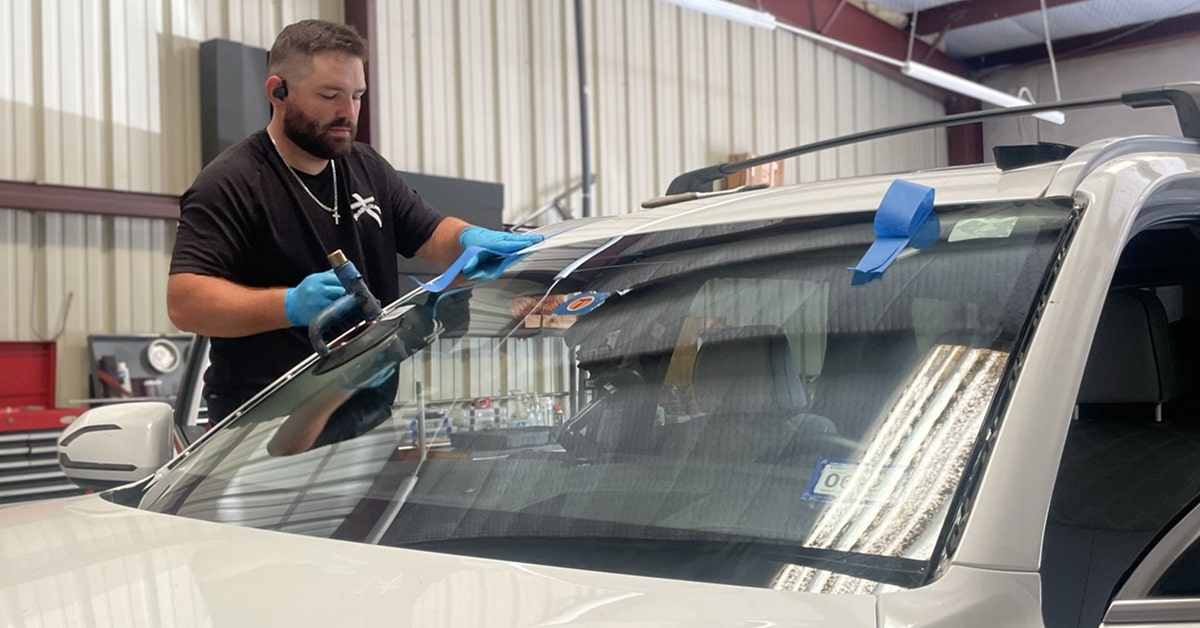
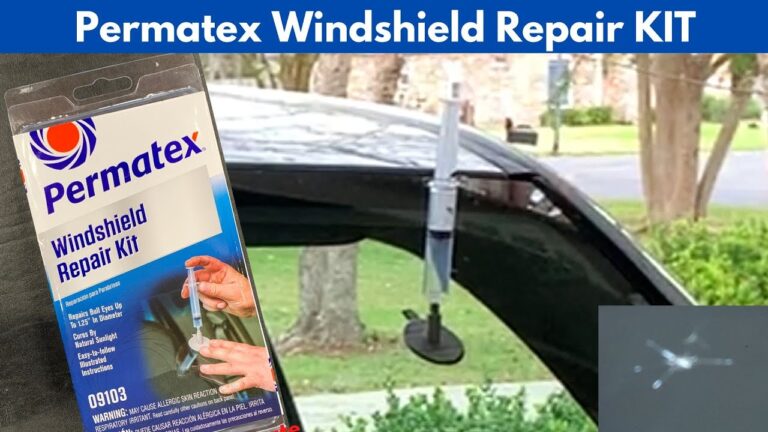
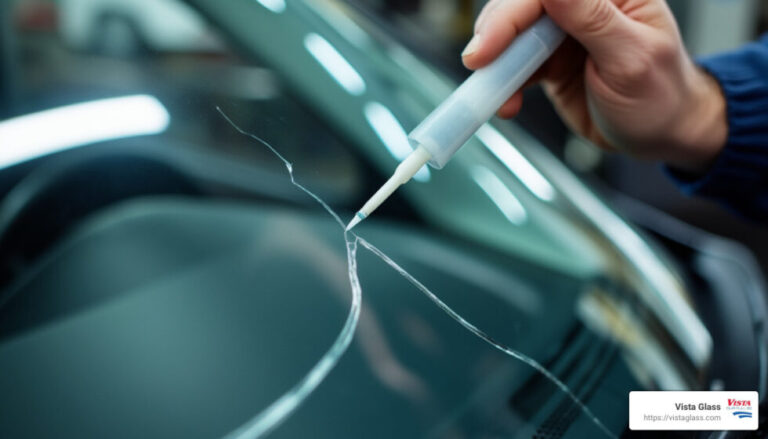
Not every damaged windshield needs to be replaced. Small chips and some short cracks can sometimes be repaired, which usually costs much less than installing an entire windshield. Whether repair is appropriate depends on the damage size, depth, shape, position, contamination, and the repair standards used by the shop.
Damage that is large, spreading, deeply penetrates the laminated glass, interferes with the driver’s view, reaches a critical edge area, or affects a camera’s viewing zone may make replacement more appropriate. A trained auto glass technician should inspect the damage rather than relying only on a simple size rule.
Repairing a suitable chip early can prevent dirt and moisture from entering the damaged area and may reduce the chance of the crack spreading. Once a crack expands significantly, replacement is often the remaining practical option.
Source: fastglassinc.com
Consider repair first for minor damage
Small localized chips or limited cracks may be repairable when they meet accepted repair criteria.
Replacement becomes more likely with extensive damage
Long cracks, multiple impact areas, severe edge damage, or damage affecting visibility may require a complete windshield.
Do not ignore spreading damage
Temperature changes, road vibration, body flex, and additional impacts can turn a small damaged area into a larger crack.
How to Get an Accurate Windshield Replacement Quote
Start with the vehicle year, make, model, trim, and VIN. Tell the shop whether the windshield has a camera near the rearview mirror, rain sensor, heating, antenna, acoustic marking, head-up display, or other visible equipment. A VIN-based glass lookup can reduce the risk of receiving a quote for the wrong windshield.
Ask for a complete installed price rather than only the glass price. The estimate should clarify the windshield brand or type, labor, adhesive, moldings or clips, mobile-service charges, taxes, disposal fees, and ADAS calibration when applicable.
Comparing two or three complete quotes is more useful than selecting the lowest advertised number. A $450 estimate that excludes a $350 calibration is not actually cheaper than a $700 estimate that already includes the required calibration.
Provide the VIN
This helps the installer identify the correct glass configuration and factory options.
Ask whether calibration is included
Get the answer in writing if the vehicle has a windshield-mounted camera.
Confirm glass type
Find out whether the estimate uses OEM, OEM-equivalent, or aftermarket glass and whether all original functions are retained.
Ask about workmanship coverage
Understand what the shop will do if the replacement develops an installation-related water leak, wind noise, molding problem, or similar defect.
Follow the safe drive-away time
After installation, wait for the adhesive cure period specified by the technician before driving the vehicle.
Frequently Asked Questions
Q
How long does windshield replacement take?
The physical replacement commonly takes around an hour for many vehicles, but the complete appointment can take longer if trim removal, difficult cleanup, sensor work, or ADAS calibration is needed. You also need to allow time for the urethane adhesive to reach its specified safe drive-away strength.
Do not assume you can drive immediately after the technician finishes. Follow the installer’s stated safe drive-away time because adhesive systems, temperature, humidity, and vehicle requirements can affect curing.
Q
Why does my windshield replacement quote exceed $1,000?
A quote over $1,000 can be reasonable when the vehicle uses expensive OEM glass, head-up display technology, acoustic glass, heating elements, special coatings, embedded electronics, difficult-to-source parts, or windshield-mounted ADAS cameras.
Ask for an itemized estimate so you can see how much comes from the glass, labor, calibration, moldings, taxes, and additional parts. That will show whether the high total is primarily caused by the windshield itself or by the technology surrounding it.
Q
Does every windshield replacement need ADAS calibration?
No. Vehicles without windshield-related cameras or sensors generally do not need camera calibration simply because the glass was replaced. However, many newer vehicles with forward-facing cameras do require calibration according to manufacturer procedures.
The correct answer is vehicle-specific. A qualified installer should identify your equipment by VIN and confirm the manufacturer’s procedure before the work begins.
Q
Will a cheaper aftermarket windshield save money?
It can. Aftermarket glass is often less expensive than OEM glass, but the savings matter only if the windshield correctly supports your vehicle’s required features. The glass should match the necessary sensor mounts, coatings, tint, acoustic characteristics, display requirements, and optical specifications.
Ask the installer to explain the exact aftermarket glass being offered and whether it meets the requirements of your model. If your manufacturer specifies particular glass for a camera or head-up display system, that requirement should guide the decision.
Q
What should I check after a new windshield is installed?
Inspect the glass for obvious distortion, scratches, chips, uneven trim, loose moldings, or visible installation problems. After the safe drive-away period, watch for unusual wind noise or water leakage. If an ADAS camera was calibrated, confirm that the calibration was completed successfully and that no related warning lights remain.
If anything appears wrong, contact the installer promptly rather than attempting to reseal or adjust the windshield yourself.
✦ Wrapping Up
Conclusion
So, how much does it cost to replace a windshield in the United States? A practical national estimate is roughly $250 to $1,500 or more for a complete replacement. Older vehicles with simple glass are usually toward the lower end, while newer vehicles with ADAS cameras, head-up displays, acoustic glass, heating, specialty coatings, or OEM requirements can cost substantially more.
The most useful estimate is not a generic nationwide average but a complete VIN-specific quote. Make sure it identifies the glass type, installation labor, required moldings or hardware, ADAS calibration, mobile-service charges, taxes, and any other fees. If insurance may apply, compare the total price with your deductible and verify your glass coverage before authorizing work.
A windshield is also part of the vehicle’s safety system, so correct installation matters as much as price. Choose an installer that can provide the correct glass, follow the vehicle manufacturer’s procedures, perform or arrange required calibration, and specify the safe drive-away time after installation.
💡 Key Takeaway
Get two or three VIN-based quotes that include the complete installed windshield price and any required ADAS calibration, then compare those totals with your insurance deductible before deciding how to pay.