To refill windshield washer fluid, park safely, turn off the vehicle, open the hood, find the washer-fluid reservoir, remove its cap, pour in the correct washer fluid until the reservoir is appropriately filled, replace the cap, and test the washers.
For drivers in the United States, keeping the windshield washer reservoir filled is a small maintenance task that can make a noticeable difference in everyday visibility. Bugs on summer highways, pollen in spring, dusty roads, rain residue, and winter road salt can quickly coat the windshield. A properly operating washer system lets you clear that contamination without stopping to clean the glass by hand.
Learning how to refill windshield washer fluid does not require special mechanical experience, and most vehicles can be topped off in only a few minutes. The important parts are identifying the correct reservoir, choosing washer fluid suitable for your local U.S. climate, avoiding other under-hood reservoirs, and checking the system afterward. This guide walks through the entire process, explains what type of fluid to use, covers common mistakes, and shows what to check if the washers still do not spray after the reservoir has been filled.
What You Need Before Refilling Windshield Washer Fluid
The basic job requires very little equipment. In most cases, all you need is the correct windshield washer fluid and access to the washer-fluid reservoir under the hood. A funnel is optional but useful when the reservoir opening is narrow or difficult to reach.
Check the washer-fluid container before pouring. Some products are ready to use, while concentrated formulas must be mixed according to the manufacturer’s directions. Using concentrate without the required dilution can produce an unnecessarily strong mixture, while adding too much water can reduce freezing protection.
If temperatures in your part of the United States can fall below freezing, choose a winter-rated formula whose stated freeze protection is appropriate for expected conditions. Plain water is a poor substitute in freezing weather because it can freeze inside the reservoir, pump, hoses, or nozzles.
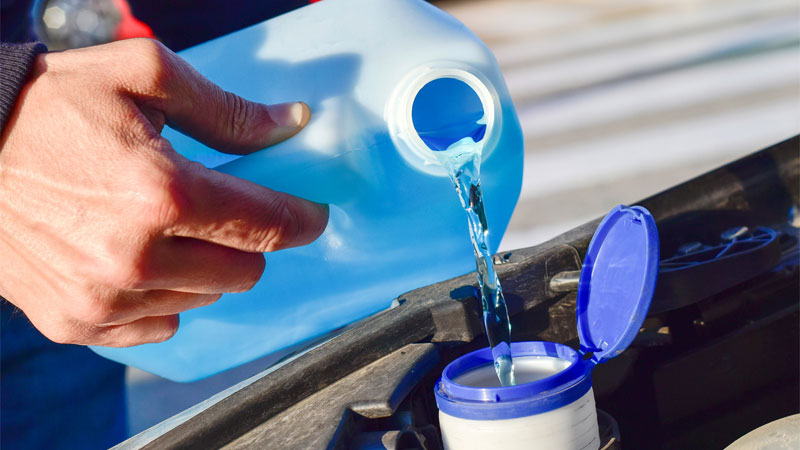
Source: practicalmechanic.com
Windshield washer fluid
Use a ready-to-use or correctly diluted automotive washer-fluid formula suitable for the season.
Funnel
Optional, but helpful for preventing spills around a small reservoir opening.
Clean cloth or paper towel
Useful for wiping spills and cleaning dirt around the reservoir cap before opening it.
Owner’s manual
Helpful when the reservoir location or recommended fluid specification is unclear.
Should the Engine Be Cool?
The washer reservoir itself normally does not require a cold engine for filling, but working around a stopped and reasonably cool vehicle is safer because nearby engine components can become very hot. Park on a stable surface, switch the vehicle off, set the parking brake, and avoid touching hot components.
How to Find the Windshield Washer Fluid Reservoir
Open the hood and look for a plastic reservoir with a cap showing a windshield symbol with spray or water lines above it. The symbol is usually a more reliable identifier than cap color because cap colors vary among manufacturers.
On many passenger cars, SUVs, and pickup trucks, the washer-fluid filler neck is positioned near one side or front corner of the engine compartment. The main tank may be visible, partially hidden, or mounted lower in the engine bay. Some vehicles have a long filler neck leading down to the reservoir.
Do not pour fluid into a reservoir unless you are sure it belongs to the windshield washer system. Under the hood you may also see coolant, brake fluid, engine oil, and other service points. Putting washer fluid into the wrong system can create a much more serious maintenance problem.
If you cannot identify the washer reservoir confidently, check the vehicle owner’s manual. Vehicle-specific instructions are particularly useful for models with unusually packaged engine compartments.
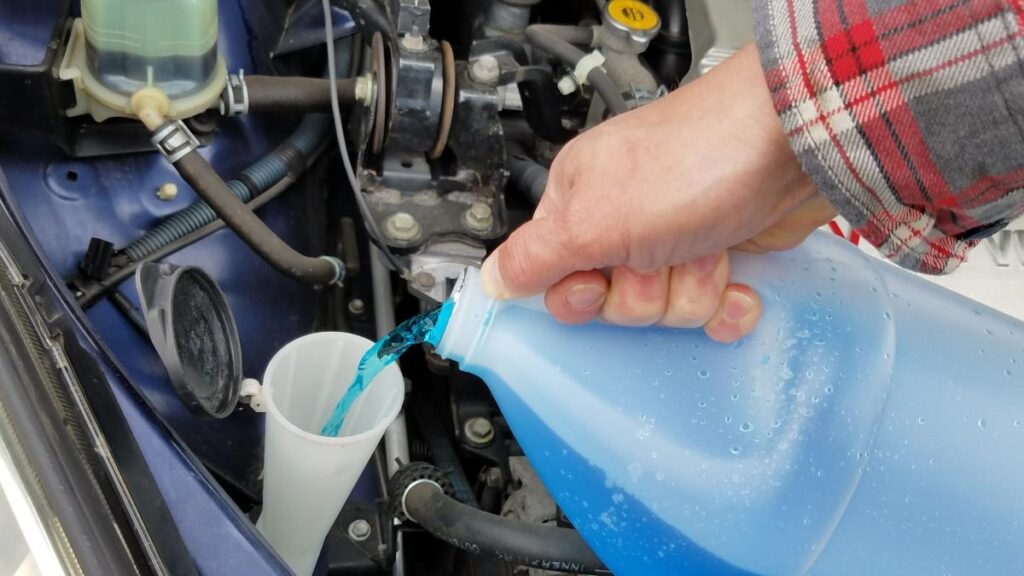
Source: carblogindia.com
Look for the washer symbol
The typical icon resembles a windshield with liquid spraying toward it.
Do not rely on color alone
Blue caps are common, but manufacturers do not universally use the same cap color.
Confirm before opening
Read nearby labels or check the owner’s manual when identification is uncertain.
What Does the Washer Reservoir Look Like?
The reservoir is usually made from translucent or light-colored plastic so the fluid level may be visible through the tank. Depending on the vehicle, however, you may see only the filler neck and cap from above.
How to Refill Windshield Washer Fluid Step by Step
Once you have correctly identified the reservoir and have the appropriate fluid, refilling is straightforward. Work carefully so dirt does not fall into the reservoir and washer fluid does not spill over nearby components.
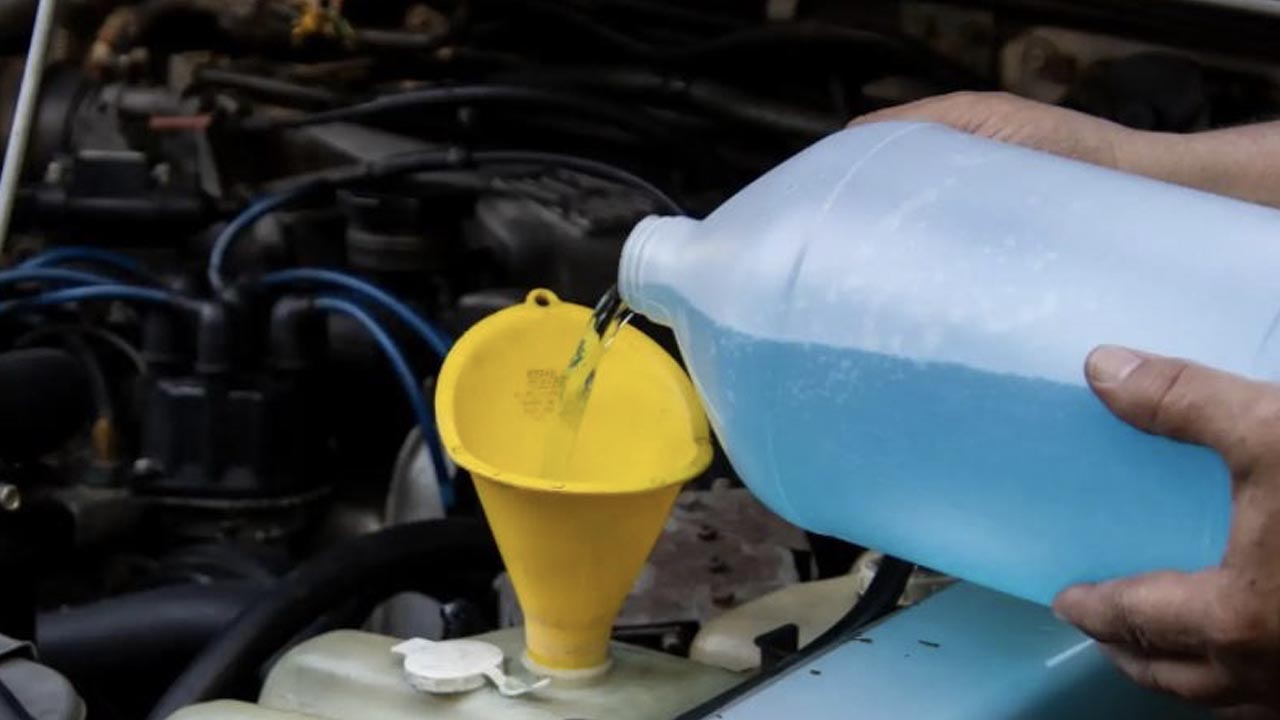
Source: dubizzle.com
Step 1: Park safely
Park on level ground when practical, switch off the vehicle, set the parking brake, and open the hood.
Step 2: Locate the reservoir
Find the washer-fluid filler cap using the windshield-and-spray symbol.
Step 3: Clean around the cap
Remove loose dust, leaves, or grime around the opening so contamination does not fall into the reservoir.
Step 4: Open the cap
Flip, pull, or unscrew the cap according to its design. Do not force it if it does not move normally.
Step 5: Check the existing fluid level
If the reservoir is translucent, inspect the level from outside. Some vehicles provide level markings, while others do not.
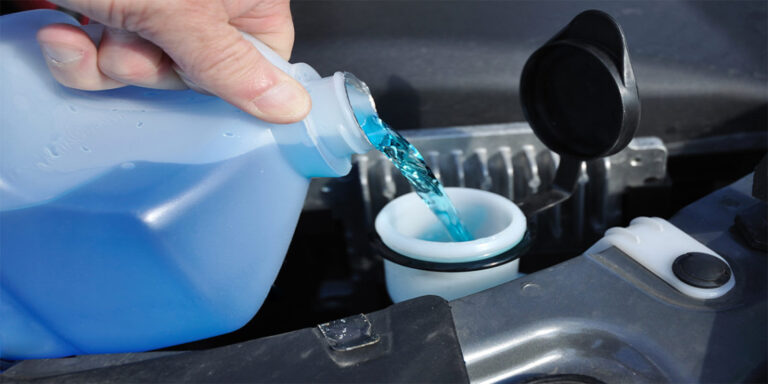
Step 6: Pour in washer fluid
Pour slowly into the filler neck. A clean funnel can help prevent spills if the opening is small.
Step 7: Stop at the appropriate level
Follow any visible maximum marking. When no marking is provided, avoid deliberately overfilling or forcing additional fluid into a full filler neck.
Step 8: Replace the cap
Secure the cap so dirt and debris cannot easily enter the reservoir.
Step 9: Close the hood
Make sure the hood is properly latched before driving.
Step 10: Test the washers
Operate the washer control briefly and verify that fluid sprays onto the windshield and the wipers clear it normally.
How Do You Know the Refill Worked?
A successful refill should provide a consistent spray from the washer nozzles when the control is activated. The windshield should receive enough fluid for the wipers to move smoothly over the wet glass instead of scraping across a dry surface.
If the reservoir had been completely empty, it may take a few short washer activations for the pump to move fluid through the hoses and reach the nozzles. Avoid holding the washer control continuously for an excessive period.
What Type of Windshield Washer Fluid Should You Use?
Choose an automotive windshield washer fluid that matches the weather and driving conditions where the vehicle is used. General-purpose formulas are suitable for many situations, while specialized products are available for cold temperatures, bugs, road grime, and other seasonal conditions.
For much of the northern United States and higher-elevation areas, freeze protection deserves particular attention during fall and winter. Read the temperature information on the washer-fluid container and choose a formula appropriate for the lowest temperatures you reasonably expect.
Drivers in warmer areas may prioritize cleaning performance for insects, dust, pollen, or oily road film. Whatever formula you select, follow its label directions rather than assuming every washer product is used the same way.
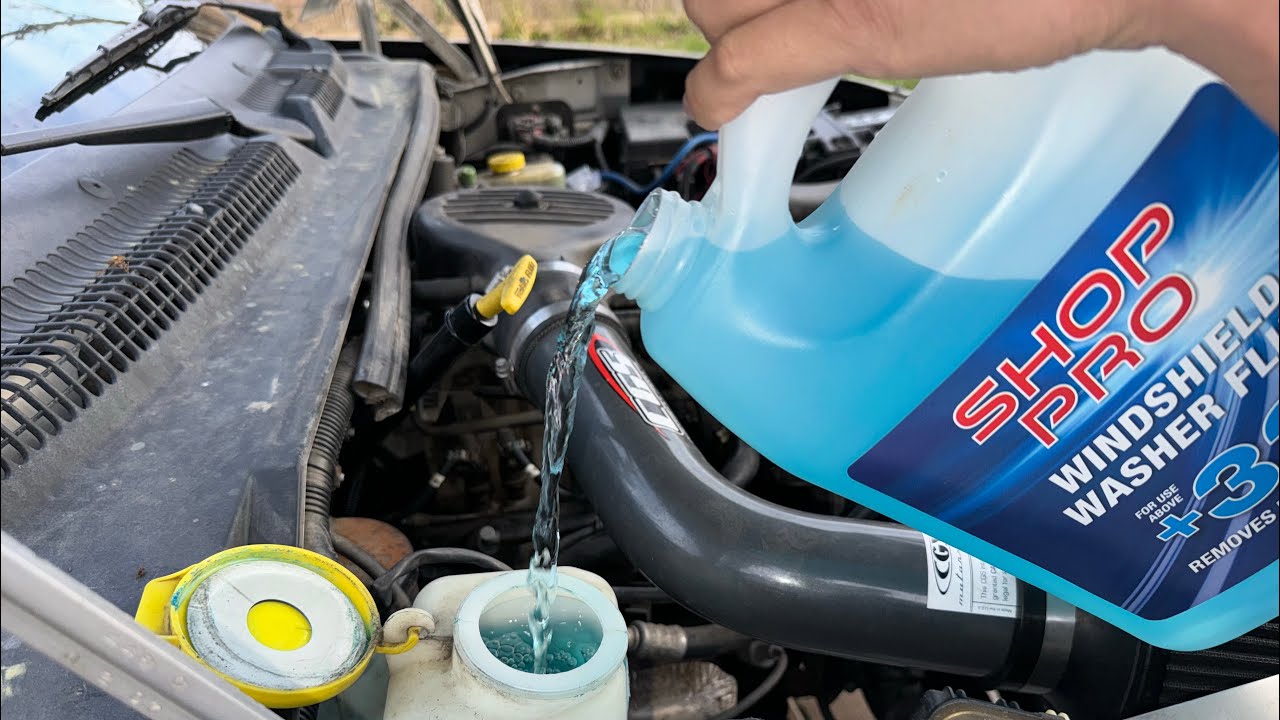
Source: youtube.com
All-season fluid
Designed for general windshield cleaning across a range of everyday conditions.
Winter washer fluid
Formulated to remain usable at lower temperatures, with freeze protection varying by product.
Bug-removing fluid
Designed to help loosen insect residue and warm-weather grime.
Concentrated formula
Requires preparation according to its mixing directions before or during use, depending on the product.
Can You Use Water Instead of Windshield Washer Fluid?
Plain water may wet the windshield, but it does not provide the same cleaning or cold-weather characteristics as purpose-made automotive washer fluid. More importantly, water can freeze when temperatures drop below 32 degrees Fahrenheit, potentially preventing the system from operating and placing components at risk.
For routine U.S. driving, particularly where freezing weather is possible, properly formulated washer fluid is the safer practical choice.
Can Different Washer Fluids Be Mixed?
Topping off one conventional washer fluid with another is sometimes possible, but formulations differ. Mixing products can alter freeze protection or other intended characteristics. When cold-weather performance matters, the simplest approach is to follow the vehicle guidance and the fluid manufacturer’s directions.
Common Mistakes to Avoid When Refilling Washer Fluid
The refill itself is simple, but a few mistakes can create unnecessary problems. The most serious is pouring washer fluid into the wrong reservoir. Always verify the washer symbol before adding anything.
Another common problem is choosing fluid without considering freezing temperatures. A mixture that performs adequately in summer may not be appropriate during a cold U.S. winter. Seasonal preparation is especially useful before the first hard freeze.
Keep the filler area clean as well. Dirt introduced into the reservoir can contribute to nozzle or filter restrictions later.
Using the wrong reservoir
Never add washer fluid to the coolant expansion tank, brake-fluid reservoir, engine-oil opening, or another under-hood service point.
Using plain water in freezing weather
Water can freeze and stop the washer system from operating.
Ignoring concentrate instructions
Mix concentrated fluid exactly as its manufacturer directs.
Pouring into a dirty opening
Clean loose debris from around the cap before removing it.
Overfilling carelessly
Respect a maximum-level mark when provided and stop when the reservoir is appropriately full.
Running the pump dry repeatedly
If the reservoir is empty, refill it rather than repeatedly operating a washer pump that has no fluid to move.
What to Do If the Washer Fluid Still Does Not Spray
A full reservoir does not guarantee that the complete washer system is working. If you refill the tank and little or no fluid reaches the windshield, begin with simple observations before replacing parts.
Activate the washer briefly and listen for the pump. A humming or buzzing sound can indicate that the pump is receiving power, although it does not prove that fluid is moving correctly. No sound may point toward an electrical issue, a pump problem, or another system-specific fault.
Look underneath the vehicle and around the reservoir for leaking fluid. Also inspect any visible washer hoses for disconnection, cracking, or obvious damage. If one nozzle sprays and another does not, a blocked nozzle or hose becomes more likely than an empty reservoir.
During freezing weather, fluid that lacks sufficient freeze protection may freeze in the tank, lines, or nozzles. Do not pour boiling water onto frozen automotive components. Move the vehicle to an appropriately warmer environment when practical and follow manufacturer guidance.
If the reservoir repeatedly empties, the pump does not operate, wiring or fuses require diagnosis, or accessing the system requires removing components you are not comfortable handling, professional service is reasonable.
No spray and reservoir is empty again
Check for an obvious reservoir, hose, connection, or pump-area leak.
Pump sound but no spray
Consider a clogged nozzle, restricted hose, disconnected line, frozen fluid, or a pump that runs without producing adequate flow.
No pump sound
An electrical fault, fuse issue, switch problem, wiring fault, or failed pump may require diagnosis.
Weak or uneven spray
Inspect nozzle openings and visible hoses before assuming the entire system has failed.
When Should You Get Professional Help?
Seek professional diagnosis when washer fluid has accidentally been added to another vehicle system, when a significant leak cannot be located, when electrical testing is needed, or when repair access exceeds your comfort level. Correcting a wrong-fluid mistake can require system-specific procedures, so avoid operating the affected system unnecessarily until appropriate guidance is available.
How Often Should You Check Windshield Washer Fluid?
There is no single refill interval that fits every driver because washer-fluid consumption depends on weather, mileage, road conditions, vehicle design, and how often the washers are used. A practical approach is to check the reservoir periodically and before situations in which good windshield cleaning will be especially important.
For U.S. drivers, useful times to check include before a long road trip, before winter weather, after periods of heavy bug exposure, during pollen season, and whenever the washer output becomes noticeably weaker or stops because the reservoir is low.
Many newer vehicles provide a low washer-fluid warning, but not every model does. Even when a warning system is present, a quick physical check during routine under-hood maintenance can prevent an empty reservoir from becoming a surprise during a dirty or wet drive.
Before long trips
Top off the reservoir so windshield cleaning is available throughout the drive.
Before winter
Confirm both the fluid level and adequate freeze protection for expected temperatures.
During bug and pollen seasons
Check more frequently if the washers are being used often.
After a low-fluid warning
Refill promptly instead of continuing to operate the system while empty.
A Simple Washer Fluid Refill Checklist
For future refills, the entire process can be reduced to a short sequence: verify the reservoir, verify the fluid, fill carefully, secure the cap, and test the system. Those checks address the most common points where a simple maintenance task can go wrong.
Confirm
Identify the windshield washer reservoir by its symbol or vehicle documentation.
Choose
Select washer fluid appropriate for the vehicle, product directions, season, and local temperatures.
Fill
Pour slowly until the reservoir reaches its appropriate level.
Secure
Close the reservoir cap and make sure the hood is properly latched.
Test
Operate the windshield washers briefly and confirm normal spray.
Frequently Asked Questions
Q
Can I refill windshield washer fluid myself?
Yes. On most vehicles, refilling windshield washer fluid is a basic maintenance task that owners can perform themselves. The main precaution is correctly identifying the washer-fluid reservoir before pouring.
Q
Do I need to empty the old washer fluid before adding new fluid?
Normally, you can top off the existing washer fluid without draining the reservoir. Draining may make sense when the existing mixture is unsuitable for expected freezing temperatures, contaminated, or otherwise incompatible with the intended replacement fluid.
Q
How much windshield washer fluid does a car hold?
Capacity varies significantly among vehicles, so there is no universal amount. Consult the owner’s manual or vehicle service information when you need the exact reservoir capacity. For a routine top-off, add fluid carefully until the indicated full level is reached.
Q
Why is my windshield washer fluid disappearing quickly?
Frequent washer use can naturally lower the level, but a reservoir that empties unusually quickly may have a leak. Inspect the reservoir area, pump connection, visible hoses, and the ground beneath the vehicle for signs of escaping fluid.
Q
What happens if I accidentally put windshield washer fluid in the coolant reservoir?
Do not treat the mistake as a normal washer-fluid refill. Avoid driving or operating the affected system unnecessarily and obtain vehicle-specific guidance or professional service. The appropriate correction depends on what fluid was added, how much entered the system, and whether the vehicle has been operated since the mistake.
✦ Wrapping Up
Conclusion
Knowing how to refill windshield washer fluid gives you an easy way to maintain clear windshield visibility throughout changing U.S. driving conditions. The job comes down to safely locating the correct reservoir, choosing washer fluid appropriate for the season, pouring it carefully, securing the cap, and checking that the system sprays normally.
Make the washer-fluid level part of routine vehicle checks, especially before road trips and cold weather. If refilling does not restore washer operation, move from the simple causes to the more involved ones: inspect the fluid level, look for leaks or disconnected hoses, consider frozen fluid or blocked nozzles, and have the pump or electrical system diagnosed when necessary.
💡 Key Takeaway
Open the hood, identify the reservoir by the windshield-spray symbol, add climate-appropriate washer fluid to the proper level, secure the cap, and test the washers before your next drive.