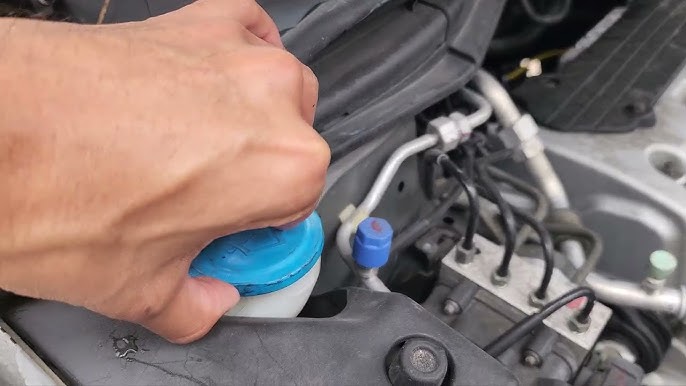
The safest way to defrost a windshield washer reservoir is to move the vehicle into a heated garage or another above-freezing location and let the frozen fluid thaw gradually. Once thawed, remove or dilute the weak washer fluid with winter-rated windshield washer fluid, then operate the washers long enough to move the protected mixture through the hoses and nozzles.
Across much of the United States, a windshield washer system can freeze when temperatures drop below the protection level of the fluid in the reservoir. The problem is especially common after a driver uses summer washer fluid, heavily diluted winter fluid, or plain water and then encounters a sudden cold snap. Northern states and higher-elevation areas can experience temperatures low enough to freeze mixtures that work perfectly well during milder weather.
A frozen reservoir should be treated gently. Repeatedly activating the washer switch while the fluid is frozen can place unnecessary strain on the washer pump, and pouring boiling or very hot water onto a cold plastic reservoir can subject it to rapid temperature change. Gradual warming is the safer approach. This guide explains how to defrost windshield washer reservoir fluid, check whether the reservoir, hoses, nozzles, or pump are still frozen, replace the weak mixture, and prevent the same problem during the next freeze.
A windshield washer reservoir freezes when the liquid inside reaches a temperature below its effective freezing point. Plain water freezes at 32 degrees Fahrenheit, while properly formulated winter windshield washer fluid remains liquid at substantially lower temperatures. The exact protection level varies by product, so the temperature rating printed on the container matters.
Freezing frequently occurs when summer washer fluid is still in the vehicle when winter arrives. Another common cause is adding too much water to concentrated or premixed fluid. Even if the reservoir itself does not freeze completely, fluid trapped in narrow hoses and spray nozzles can freeze sooner because those components are more exposed to outside air.
The reservoir may therefore thaw before the rest of the washer system. If you can see liquid in the tank but nothing reaches the windshield, the obstruction may be in a hose or nozzle rather than the reservoir.
Source: storables.com
Summer washer fluid
Some warm-weather formulas are not designed for sustained subfreezing temperatures.
Too much water
Diluting washer fluid beyond the manufacturer’s instructions raises the temperature at which the mixture can freeze.
Sudden temperature drop
A mixture suitable for mild winter weather may freeze during an unusually severe cold snap.
Residual weak fluid
Old liquid can remain in hoses even after stronger winter fluid has been added to the reservoir.
How to Tell Whether the Washer Reservoir Is Frozen
Open the hood with the vehicle parked safely and inspect the washer reservoir if it is visible. Ice, slush, or a solid-looking mass inside the translucent tank strongly suggests freezing. Some reservoirs are hidden behind body panels, so you may only be able to inspect the filler neck.
Another clue is a washer system that worked normally before a freezing night but suddenly produces no spray. Do not assume immediately that the pump has failed. Frozen fluid, lines, or nozzles can create nearly identical symptoms.
Visible ice
Ice or slush inside the reservoir is direct evidence that the fluid has partially or completely frozen.
No spray after a freeze
A sudden loss of washer spray following very cold weather points toward a frozen system.
Pump noise but no fluid
This can indicate a frozen or blocked line, although other restrictions or leaks can cause the same symptom.
How to Defrost Windshield Washer Reservoir Step by Step
The best method is gradual warming. You usually do not need to remove the reservoir, dismantle the washer system, or add unusual chemicals. Your goal is to bring the frozen liquid above its freezing point without damaging the tank, pump, hoses, wiring, or nearby vehicle components.
Before starting, park the vehicle securely, switch off unnecessary electrical accessories, and avoid operating the washers until enough thawing has occurred. If the reservoir is cracked, leaking, or visibly distorted, plan to have the damage repaired instead of simply refilling it.
Source: storage.googleapis.com
What you may need
A heated or above-freezing parking area, winter-rated windshield washer fluid, a clean funnel, absorbent towels, and basic hand protection.
Best environment
An enclosed garage that stays safely above 32 degrees Fahrenheit allows the system to thaw gradually.
Step 1: Move the Vehicle Somewhere Warm
Park the vehicle in a heated garage if one is available. Ambient warmth will gradually warm the reservoir, pump, hoses, and nozzles together. This is preferable to rapidly heating one small part of the system.
Depending on how cold the vehicle is, how much fluid is frozen, and where the reservoir is mounted, thawing can take considerably longer than simply melting surface frost from the windshield. A tank filled with solid ice will naturally require more warming than one containing only a thin layer of slush.
Step 2: Allow the Frozen Fluid to Thaw Gradually
Check the reservoir periodically rather than repeatedly activating the washer switch. Once visible ice becomes liquid or slush, the system is progressing normally.
Avoid using an open flame, torch, heat gun, or other concentrated high-temperature source around the reservoir. Washer fluids can contain alcohol, and engine compartments also contain wiring, plastics, fuel-system components, and other materials that should not be exposed to uncontrolled heat.
Step 3: Remove Weak Fluid If Practical
Once the reservoir has thawed, replacing as much of the weak mixture as practical provides better protection than simply topping off a nearly full tank. The appropriate removal method depends on the vehicle. Some reservoirs are accessible enough for safe extraction, while others are buried behind body panels.
If the reservoir is difficult to access, do not dismantle major components simply to empty it unless you have the appropriate service information and mechanical experience. Diluting the remaining weak mixture with correctly rated winter washer fluid may be sufficient when only a small amount remains.
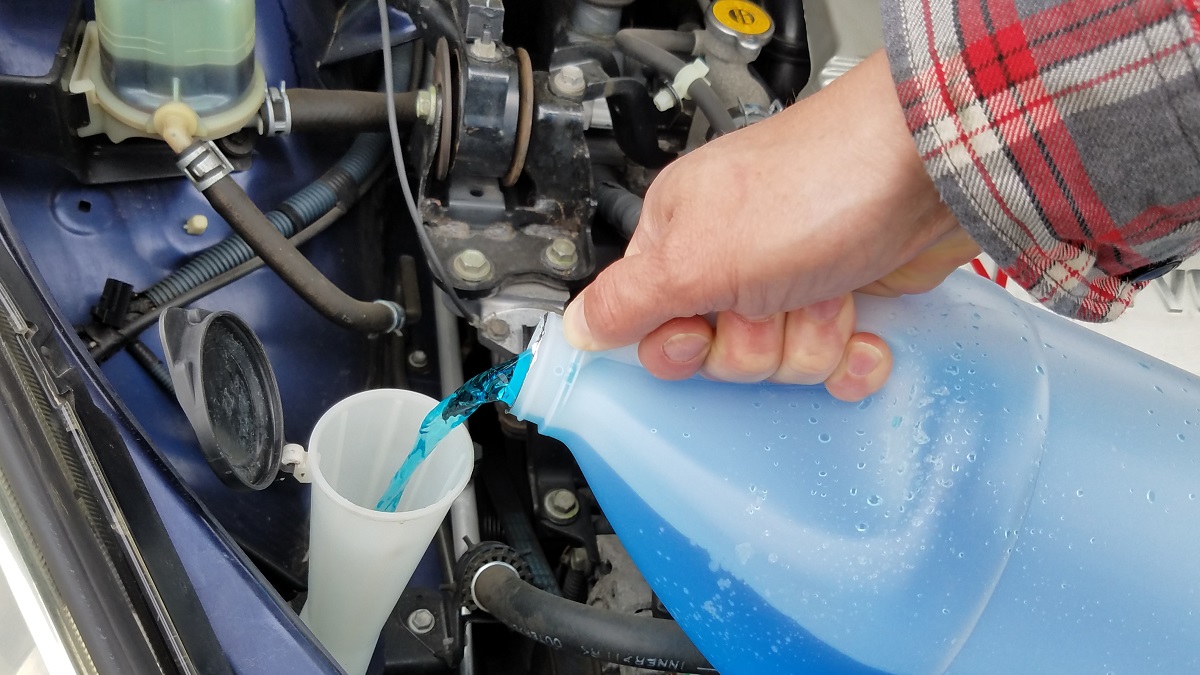
Step 4: Refill With Proper Winter Washer Fluid
Use automotive windshield washer fluid whose stated freeze protection is suitable for the temperatures expected where you drive. Follow the product instructions and your vehicle owner’s manual. Premixed products normally should not be diluted unless the label specifically permits it.
Do not substitute engine coolant for windshield washer fluid. Engine coolant is designed for the cooling system, not for cleaning a windshield, and vehicle manufacturers warn against using it in washer reservoirs.
Step 5: Flush the Protected Fluid Through the Lines
After the reservoir and lines have thawed and the tank contains suitable winter fluid, briefly operate the washers. The windshield should be adequately wet so the wipers are not dragged across dry glass.
The purpose is to move the cold-weather washer mixture through the pump, hoses, and nozzles. Otherwise, weaker fluid may remain trapped in the lines and freeze again even though the reservoir contains winter fluid.
What Not to Do With a Frozen Washer Reservoir
Several shortcuts can create more trouble than the original freeze. The reservoir is commonly made from molded plastic, and the washer system includes a small electric pump, narrow hoses, fittings, and spray nozzles. Treating those components aggressively is unnecessary.
The most important rule is not to force a system that is still frozen. If the pump cannot move liquid, repeatedly holding the washer control does not speed thawing.
Source: youtube.com
Do not pour boiling water into the reservoir
Rapid heating can stress cold plastic, and adding water also weakens the freeze protection of the remaining washer fluid.
Do not repeatedly operate the frozen pump
If the fluid cannot move, continued pump operation is unnecessary and may strain the washer system.
Do not use engine coolant
Coolant is not windshield washer fluid and should not be poured into the washer reservoir.
Do not use an open flame
A flame is unsafe around automotive fluids, plastics, wiring, and other engine-compartment components.
Do not assume the pump has failed immediately
Frozen lines and nozzles can prevent spray even after the fluid inside the reservoir begins to thaw.
What If the Reservoir Thaws but the Washers Still Do Not Spray?
A liquid reservoir does not prove that the entire washer system has thawed. Narrow washer hoses and exposed nozzles may remain frozen after the larger tank has returned to liquid. Give the complete vehicle additional time in an above-freezing environment before diagnosing an electrical or mechanical failure.
Once everything has had adequate time to thaw, test the system briefly. Pay attention to whether you hear the pump and whether any fluid appears at either nozzle.
No spray but pump can be heard
Check for remaining ice in the lines or nozzles, a disconnected hose, a kink, or another blockage.
Fluid sprays weakly
Partially frozen or restricted nozzles and hoses may reduce flow.
No pump sound after complete thawing
A fuse, electrical connection, switch, wiring issue, or failed washer pump may need diagnosis.
Fluid leaks under the vehicle
Inspect for a cracked reservoir, damaged pump seal, or split and disconnected hose.
Frozen Washer Nozzles
Washer nozzles are exposed to winter air and can remain blocked by ice even after the reservoir has thawed. Allowing the vehicle to warm fully is the safest first step. Some vehicles also use heated washer nozzles, but availability and operation vary by model.
If a nozzle remains blocked in warm conditions, dirt or debris may be responsible rather than ice. Consult the owner’s manual before attempting to clean or adjust the nozzle because designs differ.
Frozen Washer Hoses
Small-diameter hoses can retain weak fluid that freezes even after stronger winter fluid has been poured into the tank. This is why flushing the new mixture through the system before severe weather is useful.
If the vehicle has been fully warmed and a line still does not pass fluid, inspect accessible sections for kinks, disconnections, leaks, or damage instead of continuing to run the pump.
How to Prevent the Washer Reservoir From Freezing Again
Prevention mainly comes down to using washer fluid whose freeze protection matches winter conditions and making sure that fluid reaches every part of the washer system. This is especially relevant for drivers in colder parts of the United States, including the Upper Midwest, Northeast, Rocky Mountain region, Alaska, and other locations where temperatures can fall well below freezing.
Read the temperature rating on the washer fluid container instead of assuming every blue washer fluid has the same winter performance. Products intended primarily for warm weather may not provide the protection needed during severe freezes.
Switch before the first hard freeze
Do not wait until the reservoir is already frozen to replace warm-weather washer fluid.
Check the temperature rating
Choose a formulation with freeze protection appropriate for realistic local winter lows.
Avoid unnecessary dilution
Adding water to a premixed winter formula can significantly reduce its cold-weather protection.
Flush the lines
Operate the washers after changing fluids so winter-rated liquid reaches the hoses and nozzles.
Keep extra winter fluid available
A sealed container stored according to its label can be useful during long winter driving periods.
Should You Add Water to Winter Washer Fluid?
Do not add water to a premixed winter washer fluid unless its manufacturer specifically instructs you to do so. Dilution raises the freezing point and may turn a mixture that was suitable for extreme cold into one that freezes during ordinary winter temperatures.
Concentrated washer products are different. If the product is specifically sold as a concentrate, mix it only according to the label and choose the concentration appropriate for the temperatures you expect.
How Long Does a Frozen Washer Reservoir Take to Thaw?
There is no universal thawing time. A small amount of slush in a reservoir warms much faster than a tank frozen solid after hours of extreme cold. Reservoir size, starting temperature, garage temperature, vehicle construction, airflow, and the composition of the frozen fluid all affect the process.
Use the condition of the system rather than a fixed number of minutes as your guide. The reservoir should contain free-flowing liquid, the hoses should no longer contain ice, and the nozzles should spray normally before the system is considered fully restored.
If the vehicle has remained in a genuinely above-freezing environment long enough for the engine compartment and washer components to warm thoroughly but the system still will not operate, freezing may no longer be the main problem.
Signs the Washer System Has Fully Thawed
Look for liquid rather than ice or slush in the visible portion of the reservoir. Then perform a brief functional test. A healthy thawed system should deliver washer fluid through the nozzles without unusual leakage.
After successful operation, use enough winter-rated fluid to ensure the remaining mixture provides suitable freeze protection.
Free-flowing reservoir fluid
The visible liquid is no longer solid or heavily slushed.
Normal spray pattern
Fluid reaches the windshield from the expected nozzles.
No unexpected leaks
The reservoir, pump area, and accessible hoses stay dry during operation.
When a Frozen Reservoir May Have Caused Damage
Water expands when it freezes, so a severely frozen washer system can reveal leaks after thawing. Damage is not guaranteed, but a reservoir, fitting, pump seal, or hose that was stressed by ice may begin leaking once the liquid melts.
Check under the vehicle and around accessible washer components after refilling. If the reservoir loses fluid rapidly without using the washers, locate the leak before repeatedly topping it off.
A professional inspection is sensible when the reservoir is buried behind panels, the washer pump remains silent after complete thawing, electrical diagnosis is needed, or removing the reservoir requires components you are not comfortable handling.
Cracked reservoir
A visible split or rapid fluid loss after thawing may require reservoir replacement.
Damaged hose or fitting
Fluid leaking only while the washers operate can indicate a disconnected, split, or damaged line.
Pump problem
If the entire system is thawed and the pump remains inoperative, electrical or pump diagnosis may be needed.
Repeated freezing
If proper winter-rated fluid repeatedly freezes, verify the product rating, dilution, and whether old weak fluid remains elsewhere in the system.
Frequently Asked Questions
Q
Can I pour hot water into a frozen windshield washer reservoir?
Avoid pouring boiling or very hot water into a frozen washer reservoir. Rapid temperature change can stress cold plastic, and the added water will also reduce the freeze protection of the washer fluid. Gradual warming in an above-freezing location is a safer method.
Q
Can I run the windshield washer pump while the fluid is frozen?
Avoid repeatedly operating the pump when you know the reservoir or lines are frozen. The pump cannot move solid fluid, so continued activation does not thaw the system and may place unnecessary strain on it. Wait until the system has thawed before testing it briefly.
Q
Why is my washer reservoir liquid but the nozzles still do not spray?
The reservoir can thaw before the smaller hoses and exposed spray nozzles. Weak fluid remaining in those areas may still be frozen. Give the complete vehicle more time to warm. If everything is fully thawed and there is still no spray, check for a blocked nozzle, disconnected or kinked hose, leak, electrical problem, or failed pump.
Q
Can windshield washer fluid freeze even if it is labeled for winter?
Yes. Every winter washer fluid has a temperature range or freeze-protection rating. Temperatures below that rating can cause freezing or slushing. The protection can also be reduced when winter fluid is mixed with a large amount of water or weaker summer fluid already in the reservoir and hoses.
Q
Should I completely empty summer washer fluid before adding winter fluid?
Removing most of the summer fluid provides more predictable freeze protection, particularly before very cold weather. At minimum, reduce the amount of weak fluid and refill with an appropriately rated product. Then operate the washers long enough for the winter mixture to travel through the lines and nozzles.
✦ Wrapping Up
Conclusion
Knowing how to defrost windshield washer reservoir fluid is mostly about using controlled, gradual warmth. Move the vehicle to an above-freezing location, allow the reservoir and washer lines to thaw, avoid repeatedly running a frozen pump, and never try to accelerate the job with boiling water or an open flame.
Once the system is liquid again, correct the condition that caused the freeze. Replace weak or heavily diluted fluid with winter-rated windshield washer fluid suited to your local U.S. temperatures and run it through the hoses and nozzles. If the system remains inoperative or leaks after a complete thaw, inspect for a damaged reservoir, hose, fitting, fuse, electrical connection, or washer pump before assuming the problem is still ice.
💡 Key Takeaway
Thaw the system gradually in a warm location, replace weak fluid with properly rated winter washer fluid, flush it through the washer lines, and investigate leaks or pump problems if normal spray does not return.