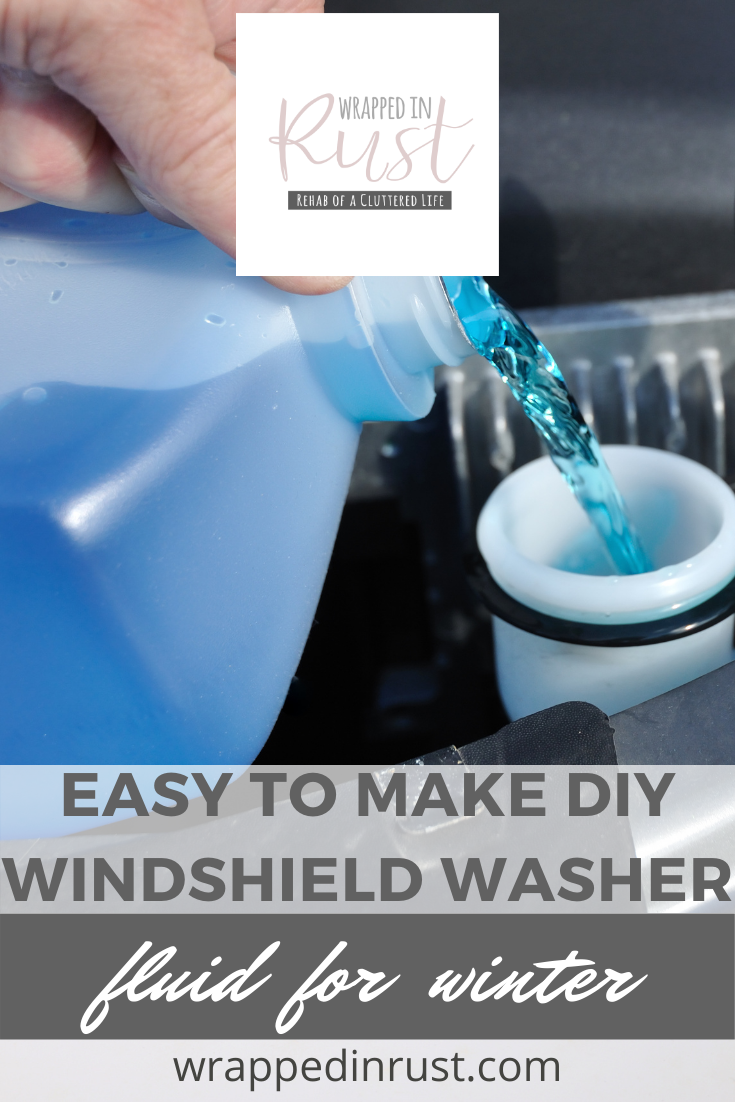
To keep windshield washer fluid from freezing, use a winter-rated washer fluid with a freeze-protection temperature below the coldest weather you expect, remove or use up summer fluid before winter, and run the winter mixture through the reservoir, hoses, and nozzles.
For drivers in the United States, preventing frozen windshield washer fluid becomes especially important once winter temperatures start dropping below 32°F. A mild winter in parts of the South may only bring occasional freezes, while drivers in the Upper Midwest, Northeast, Rocky Mountains, Alaska, and other cold regions can face temperatures well below 0°F. The right washer fluid therefore depends on where you drive, not simply on whether a bottle says all-season or winter on the front.
The most reliable approach is to check the temperature rating printed on the washer-fluid container and choose a formula that remains usable below the lowest temperature you reasonably expect. Just as important, do not dilute winter washer fluid with plain water unless the manufacturer specifically provides dilution instructions. Water or leftover summer fluid can raise the freezing point of the mixture and leave the reservoir, hoses, or spray nozzles vulnerable during a cold snap.
This guide explains how to keep windshield washer fluid from freezing, how to prepare the entire washer system for winter, what temperature rating to choose, what not to put in the reservoir, how to recognize a frozen system, and how to thaw it safely if freezing has already occurred.
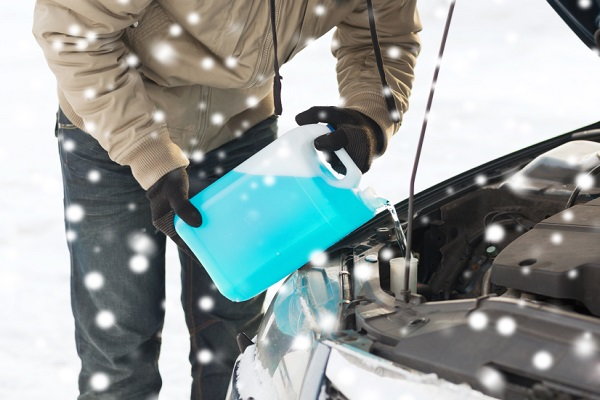
The best way to prevent windshield washer fluid from freezing is to winterize the system before sustained freezing weather arrives. That means choosing an appropriately rated fluid, reducing the amount of weaker fluid already in the reservoir, filling with the winter formula, and circulating it through the complete washer system.
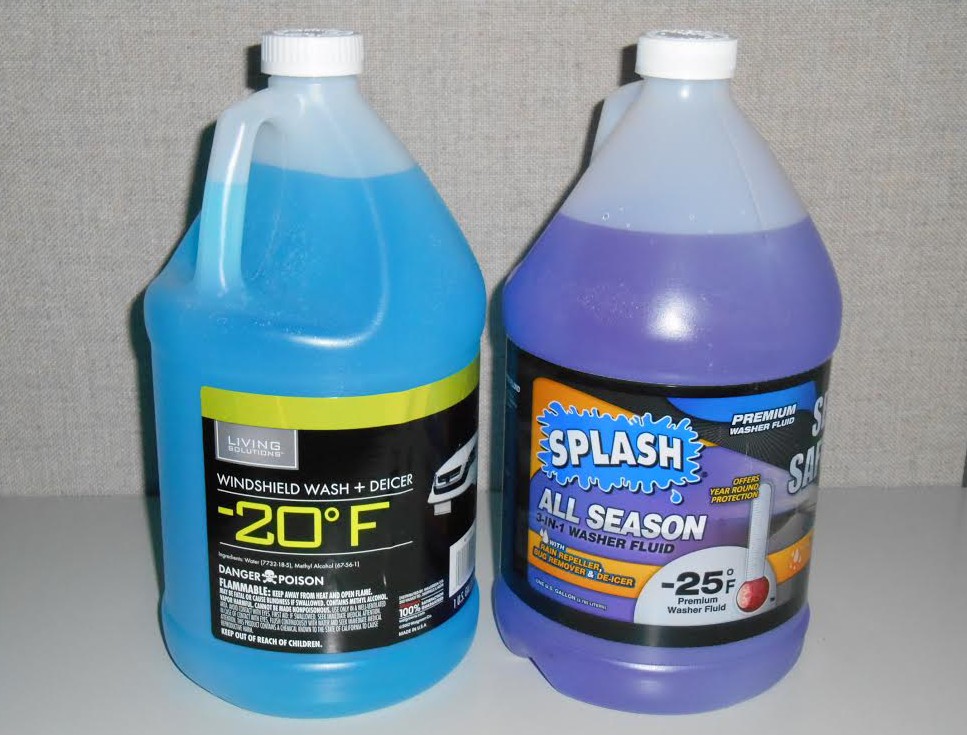
Do not assume every blue washer fluid has the same freeze protection. Formulas differ substantially. Some warm-weather products focus on bugs and road film, while cold-weather blends contain ingredients that lower the freezing point. The bottle’s stated temperature rating is the useful specification.
For example, if your area may reach -5°F, a formula rated only for 20°F would not provide sufficient protection. A fluid rated to -20°F would offer a more appropriate margin. Drivers traveling between climates should choose for the coldest conditions expected during the trip.
Source: servicecomplex10.pythonanywhere.com
Check the forecast range
Identify the lowest temperatures normally expected where you live and anywhere you plan to drive.
Read the bottle rating
Choose washer fluid rated for temperatures below your expected winter minimum.
Remove weaker fluid
Use up or drain as much summer fluid or plain water as practical before adding winter fluid.
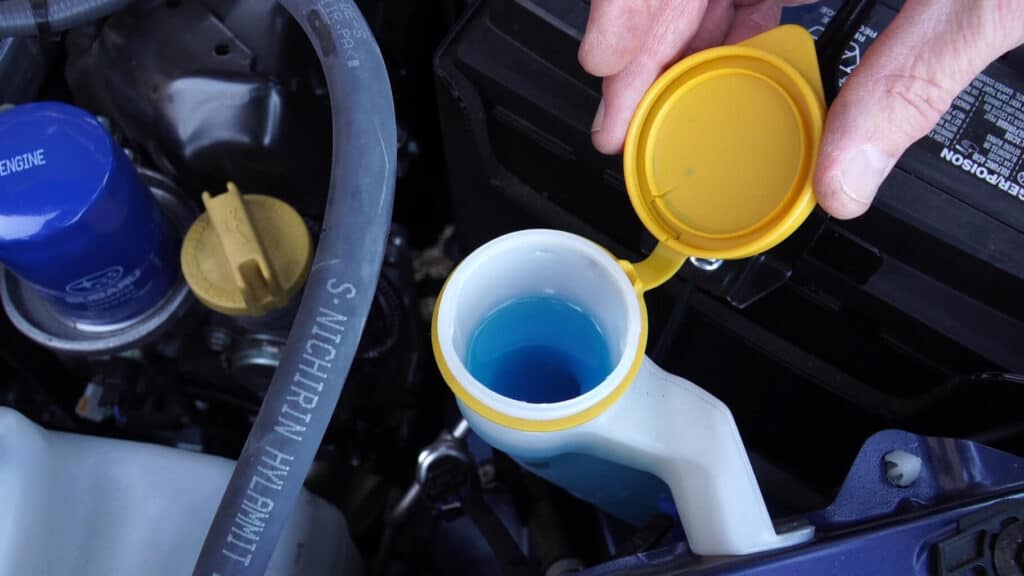
Fill the reservoir
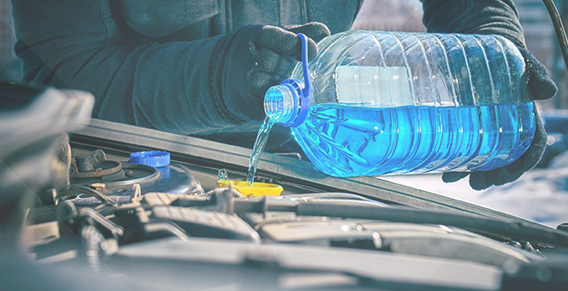
Add the winter-ready product according to its label and your vehicle owner’s manual.
Prime the complete system
Operate the washer several times so winter fluid reaches the hoses and nozzles instead of protecting only the reservoir.
Step 1: Choose a Fluid Rated for Your Winter Temperatures
Look for the freeze-protection rating on the container. Winter washer fluids sold in colder U.S. markets are commonly available with protection extending well below 32°F, and some products are formulated for temperatures around -20°F, -30°F, or lower. Exact performance varies by formula, so use the product label rather than assuming a universal rating.
A useful rule is to select a rating comfortably below the coldest temperature you expect. Weather can fall below seasonal averages, and dilution from old fluid may reduce the protection of the final mixture.
Step 2: Reduce Summer Fluid Before Refilling
If your reservoir is full of summer bug wash, water, or a weak all-season product, adding a small amount of winter fluid may not provide the protection stated on the new bottle. The remaining liquid dilutes the cold-weather formula.
Use the existing washer fluid until the reservoir is nearly empty when conditions still allow safe operation, or remove it using an appropriate method for your vehicle. Avoid intentionally running the washer pump dry for an extended period.
Step 3: Run Winter Fluid Through the Lines and Nozzles
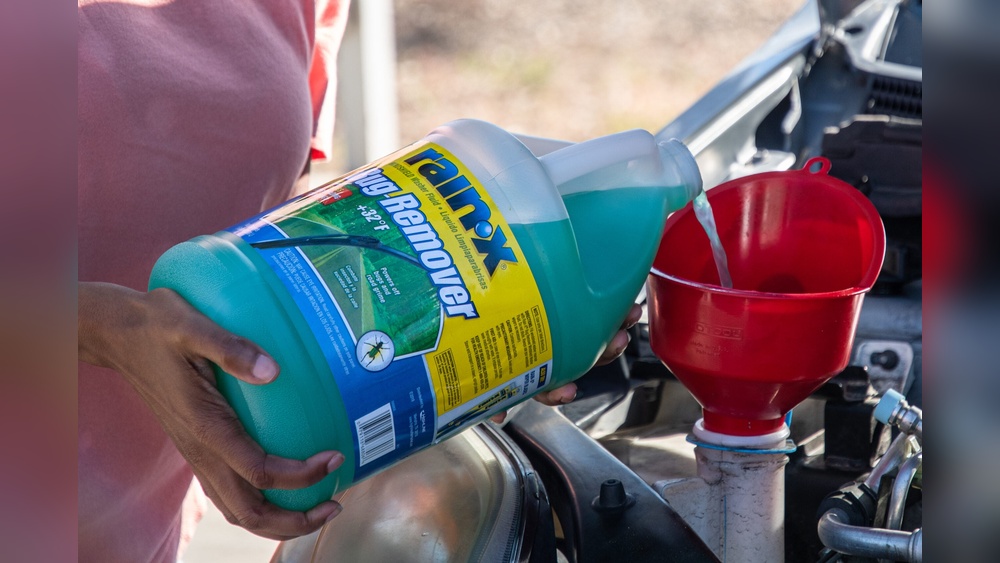
Once the reservoir contains winter fluid, operate the washers several times until you are confident the new mixture has reached the spray nozzles. This step matters because old fluid can remain trapped in the hoses even when the reservoir has been refilled.
A reservoir that stays liquid does little good if a short section of hose or the nozzle itself is still filled with a higher-freezing-point mixture.
What Temperature Rating Should You Choose?
Choose a washer-fluid freeze rating based on the lowest temperature the vehicle may encounter, including overnight parking and travel to colder regions. There is no single winter rating that is ideal for every U.S. driver.
A driver in coastal Georgia may have different needs from someone in Minnesota, North Dakota, Colorado, Maine, or Alaska. Likewise, a California driver heading into the Sierra Nevada may need stronger freeze protection than the fluid commonly stocked in a warmer low-elevation area.
California is a particularly useful example because washer-fluid formulations available at retail can vary by region due to state limits on volatile organic compounds. Drivers traveling from warmer areas into freezing conditions should pay close attention to the label instead of assuming the locally stocked ready-to-use fluid is suitable for mountain temperatures.
Source: jeepinside.com
Temperatures usually stay above 32°F
Freeze protection may not be a daily concern, but consider winter fluid before traveling into colder weather.
Occasional temperatures from about 10°F to 32°F
Use a winter or all-season formula whose printed freeze rating is below the expected minimum.
Regular temperatures near or below 0°F
Choose a stronger winter formula with a substantially lower stated freeze rating.
Extreme subzero conditions
Use a product specifically rated for those conditions and follow the manufacturer’s instructions without unauthorized dilution.
Why the Label Matters More Than the Color
Washer-fluid color is not a dependable temperature specification. Blue, orange, purple, or other colors can represent different formulations depending on the manufacturer. Read the freeze-protection rating and usage directions instead.
Terms such as all-season, de-icer, bug wash, and winter formula can help identify a product category, but the numerical temperature rating provides the information needed for cold-weather selection.
Premixed Fluid Versus Concentrate
Premixed washer fluid is designed to be poured into the reservoir as sold. Concentrated fluid must be mixed according to the manufacturer’s directions. If a concentrate provides different ratios for different temperature ranges, use the ratio specified for the conditions you expect.
Guessing a dilution ratio can leave the mixture with inadequate freeze protection. Adding extra water to a ready-to-use winter formula can cause the same problem.
Why Windshield Washer Fluid Freezes
Windshield washer fluid freezes when the temperature falls below the freezing point of the particular mixture in the vehicle. Because many formulations are water based, their resistance to freezing depends heavily on the concentration and type of cold-weather ingredients they contain.
Winter formulas commonly use alcohol-based ingredients to lower the mixture’s freezing point. Increasing water content through dilution generally moves the freezing point upward, which is why topping a winter product with tap water can create problems that were not present with the original formula.
Freezing can occur in more than one place. The reservoir may remain partially liquid while exposed nozzles freeze, or a small amount of weak fluid inside a hose can create a blockage even when the main tank contains winter fluid.
Source: vautobasics.com
Summer washer fluid
A warm-weather formula may not contain enough freeze protection for winter conditions.
Added plain water
Water can significantly reduce cold-weather performance, depending on how much is added.
Residual weak fluid
Old fluid left in the reservoir or lines can dilute newly added winter fluid.
Exposed nozzles
Small spray openings are exposed to cold air, snow, moisture, and ice and can become blocked independently.
Can Wind Chill Make Washer Fluid Freeze Below Its Rated Temperature?
Wind can make exposed components lose heat more quickly, but ordinary wind chill does not make an object become colder than the actual ambient air temperature. If the outdoor temperature is 10°F, a stationary vehicle component exposed long enough to the air will approach about 10°F rather than the much lower human wind-chill value shown in a weather report.
Airflow while driving can still speed heat loss and can contribute to rapid cooling of droplets on the windshield. For choosing washer fluid, use actual expected air temperatures rather than human wind-chill numbers.
What Not to Put in a Windshield Washer Reservoir
Use fluid specifically intended for automotive windshield washer systems unless your vehicle manufacturer states otherwise. Improvised substitutes can create freezing, visibility, material-compatibility, corrosion, flammability, or toxicity problems.
Engine antifreeze is a particularly important substance to avoid. Coolant is formulated for the engine cooling system, not for spraying across automotive glass. Do not confuse windshield washer antifreeze or de-icing washer fluid with engine coolant.
Homemade washer-fluid recipes are widely circulated online, but their freezing points and compatibility can vary considerably depending on the ingredients and proportions. A commercially formulated winter washer fluid with a stated temperature rating provides a much clearer basis for determining whether the system is protected.
Source: pitstoparabia.com
Plain water
It can freeze around 32°F and provides inadequate winter protection.
Engine coolant
Automotive antifreeze or coolant belongs in the cooling system, not the windshield washer reservoir.
Salt water
Salt is not an appropriate washer-fluid substitute and can contribute to corrosion and residue.
Unverified household mixtures
Their freezing behavior, cleaning performance, flammability, paint compatibility, and effects on rubber and plastic may be uncertain.
Should You Add Rubbing Alcohol to Washer Fluid?
Alcohol can lower the freezing point of a water mixture, which explains why alcohol-based ingredients are used in many commercial winter washer fluids. That does not mean an arbitrary amount of household rubbing alcohol should be added to every vehicle’s reservoir.
Changing the formulation yourself removes the certainty provided by the product’s tested mixing instructions and printed freeze rating. The simpler approach is to buy a washer fluid formulated and labeled for the required temperature.
Washer Fluid Safety
Some windshield washer fluids contain methanol or other alcohols that can be toxic if swallowed and harmful with inappropriate exposure. Store washer fluid in its original labeled container, keep it away from children and pets, avoid transferring it into beverage containers, and follow the safety instructions on the product label.
Clean spills appropriately and avoid leaving open containers where animals could reach them. Never taste or siphon washer fluid by mouth.
What to Do If Your Windshield Washer Fluid Is Already Frozen
If the washers stop spraying during freezing weather, do not continuously hold the washer control while the system is blocked. A frozen reservoir, hose, or nozzle prevents normal fluid movement, and repeatedly operating the pump does not solve the ice blockage.
First confirm that freezing is plausible. Look for fluid in the reservoir, check for obvious ice around the spray nozzles, and listen briefly for the pump. If the reservoir contains liquid but the pump is completely silent, the problem may be electrical or mechanical rather than frozen fluid.
The safest general thawing method is gradual warming. Parking the vehicle in a garage where the temperature rises above freezing can thaw the reservoir, hoses, and nozzles without exposing plastic parts or glass to extreme temperature changes.
Once the system has thawed, remove or use up the weak mixture, refill it with properly rated winter washer fluid, and operate the washers until the new fluid reaches the nozzles.
Source: doityourself.com
Move the vehicle somewhere warmer
A heated or above-freezing garage allows the complete washer system to thaw gradually.
Give the system time to thaw
The reservoir may take longer to warm than exposed nozzles, especially if a large volume has frozen.
Check for leaks afterward
Freezing and expansion can reveal damage to a reservoir, hose, fitting, or other component.
Replace the weak mixture
After thawing, use winter-rated fluid appropriate for the temperatures you expect.
Do Not Pour Boiling Water on the Windshield or Washer System
Avoid using boiling water to thaw frozen washer nozzles or a windshield. Sudden temperature differences can stress cold glass, while excessive heat can also damage nearby plastic and rubber components.
Gradual warming is preferable. If ice around a nozzle needs attention, warm surroundings and the vehicle’s normal defroster system are safer starting points than extreme heat.
When a Frozen Washer System Needs Repair
After thawing, inspect the system if the reservoir suddenly loses fluid, liquid appears under the vehicle, the pump operates but nothing reaches the windshield, or the pump no longer operates. Ice expansion can expose an already weak reservoir, hose, fitting, or pump problem.
If you cannot identify the fault safely, a qualified repair shop can pressure-check the system, inspect the washer pump and hoses, and determine whether a component needs replacement.
How to Prevent the Nozzles and Lines From Freezing
Protecting the reservoir is only part of winterizing a windshield washer system. The same cold-weather fluid needs to reach the hoses and spray nozzles, where small passages make even a limited amount of ice enough to stop the spray.
After changing to winter fluid, activate the washers until fresh fluid has traveled through the system. Doing this before the first hard freeze is much easier than trying to purge summer fluid after a line is already blocked.
Keeping snow and ice cleared from the area around the washer nozzles can also help. Some vehicles position nozzles on the hood, while others integrate them into the cowl or wiper arms. Consult the owner’s manual if their location is not obvious.
Source: hitchesguide.com
Circulate the winter fluid
Do not stop after filling the reservoir; make sure the stronger mixture reaches the nozzles.
Clear external ice
Remove snow and ice around exposed nozzles without forcing sharp objects into the spray openings.
Use sheltered parking when practical
A garage can reduce exposure to extreme overnight cold, although proper winter fluid remains the primary protection.
Keep the reservoir adequately filled
Winter road salt and slush can require frequent windshield cleaning, so check the fluid level regularly.
Signs the System Is Properly Winterized
A properly prepared system should produce a consistent spray from the appropriate nozzles during temperatures that remain within the fluid’s stated operating range. The pump should sound normal, fluid should reach the windshield promptly, and there should be no visible leakage around the reservoir or under the vehicle.
If the spray becomes weak only during very cold weather, investigate partial nozzle icing, a weak mixture, or a developing mechanical restriction before assuming the reservoir itself has frozen.
A Simple U.S. Fall Maintenance Routine
Drivers in freeze-prone parts of the United States can make washer-fluid preparation part of routine fall maintenance. Before the first sustained freezes, check the washer-fluid rating, switch from summer fluid if necessary, test the spray pattern, inspect the wiper blades, and verify that the windshield defroster works properly.
This preparation is especially valuable before interstate holiday travel because a car filled for mild weather may encounter dramatically colder temperatures several hundred miles away.
Frequently Asked Questions
Q
At what temperature does windshield washer fluid freeze?
There is no single freezing temperature for all windshield washer fluids. A water-heavy warm-weather formula can freeze near the freezing point of water, while winter formulas can remain usable at temperatures well below 0°F. Check the freeze-protection temperature printed on the specific product you are using.
Q
Can I mix winter windshield washer fluid with regular washer fluid?
The fluids may physically mix, but combining a winter formula with a weaker warm-weather product can reduce the final mixture’s freeze protection. If dependable subfreezing performance is needed, remove or use up most of the old fluid before filling with the appropriately rated winter formula.
Q
Can I add water to winter windshield washer fluid?
Do not add water to a ready-to-use winter formula unless the manufacturer specifically says it can be diluted. Additional water raises the mixture’s freezing point. If you are using a concentrate, follow the exact dilution chart on the product label for the temperature range you need.
Q
Why is my washer fluid not spraying even though the reservoir is not frozen?
The nozzles or hoses may be frozen even when the reservoir remains liquid. Other possibilities include clogged nozzles, an empty reservoir, a disconnected or damaged hose, a blown fuse, wiring trouble, or a failed washer pump. Diagnose those possibilities if the problem remains after the vehicle and washer system are fully thawed.
Q
Does parking in a garage keep washer fluid from freezing?
A garage can help if it keeps the vehicle warmer than the outdoor temperature, and a heated garage can thaw an already frozen system. However, garage parking should not replace correctly rated winter washer fluid because the vehicle may spend many hours outside while you work, shop, travel, or park overnight away from home.
✦ Wrapping Up
Conclusion
Learning how to keep windshield washer fluid from freezing comes down to preparing the entire washer system for the lowest temperatures your vehicle is likely to encounter. Choose a winter-rated fluid using the temperature specification on the label, minimize dilution from leftover summer fluid or water, and circulate the new mixture through the hoses and nozzles before freezing weather arrives.
For U.S. drivers, the correct level of protection varies widely by region and travel plans. A formula that works through a mild Southern winter may be inadequate during a trip to the Upper Midwest, Northeast, Rocky Mountains, or another area experiencing severe subzero weather. Recheck the fluid rating whenever colder travel is planned.
If your washer system has already frozen, thaw it gradually rather than using extreme heat or repeatedly running the pump. After it begins working again, replace the weak mixture with appropriately rated fluid and inspect for leaks or other damage.
💡 Key Takeaway
Before the next freeze, check the temperature rating on your current washer fluid, switch to a winter formula rated below your expected minimum temperature, and spray enough fluid to move the winter mixture all the way through the hoses and nozzles.
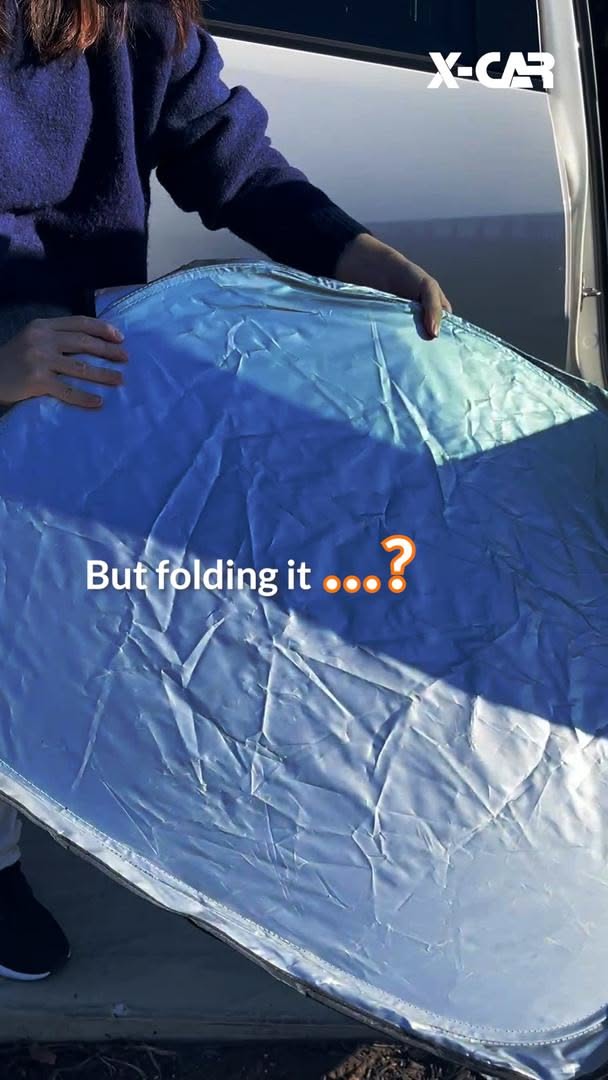
Learn how to fold a windshield sun shade correctly with simple steps for pop-up, accordion, and umbrella styles, plus storage and troubleshooting tips.