To wash the inside of a car windshield, wipe away loose dust with a clean microfiber towel, apply an automotive glass cleaner to a separate towel, clean the glass in overlapping passes, and buff it dry with another lint-free microfiber cloth. Work in the shade on cool glass to reduce streaks and glare.
For drivers across the United States, a clean windshield is essential for seeing the road clearly in bright sunshine, at night, and during rain. Interior glass gradually collects dust, fingerprints, airborne oils, and residue from dashboard materials. This film can scatter light and create distracting glare, particularly when headlights shine through the windshield after dark.
The most reliable approach is to use clean microfiber towels and a glass cleaner labeled as safe for automotive interior glass. Apply the cleaner to the towel rather than spraying directly toward the windshield, dashboard electronics, or defroster openings. Gentle wiping, controlled product use, and a final dry buff help remove residue without leaving streaks.
The inside of a windshield can be awkward to reach because of the dashboard and the steep angle of the glass. A dedicated windshield cleaning tool with a pivoting head can make the lower corners and areas near the dashboard easier to reach. Avoid abrasive pads, household cleaners that are not approved for the surface, and excessive pressure that could damage nearby trim or accessories.
What You Need to Clean the Inside of a Car Windshield
Gather your supplies before starting so you can clean the entire windshield without switching between unsuitable cloths or letting cleaner dry unevenly. Most interior windshield cleaning jobs require only a few inexpensive items.
Use products intended for automotive glass and materials. Some windshields have aftermarket tint, special coatings, or nearby plastic surfaces that may react poorly to certain chemicals. Check the vehicle manual and product labels when compatibility is uncertain.
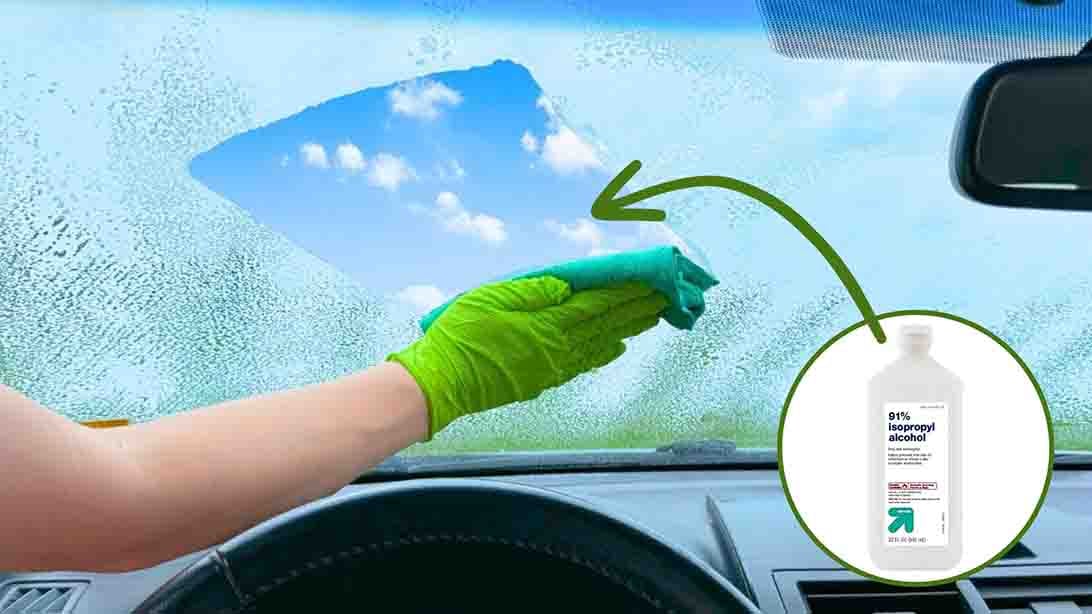
Source: www.youtube.com > Clean That Up
Two or three clean microfiber towels
Use one towel to remove loose dust, another to spread the cleaner, and a third dry towel to buff the glass. Clean towels help prevent dirt and detergent residue from being transferred back onto the windshield.
Automotive glass cleaner
Choose a product labeled for interior automotive glass. If the windshield has aftermarket tint or a special coating, verify compatibility before use.
Distilled water
Distilled water can help with light residue when used sparingly on a suitable microfiber towel. It may leave fewer mineral deposits than hard tap water, but it will not reliably dissolve every oily film.
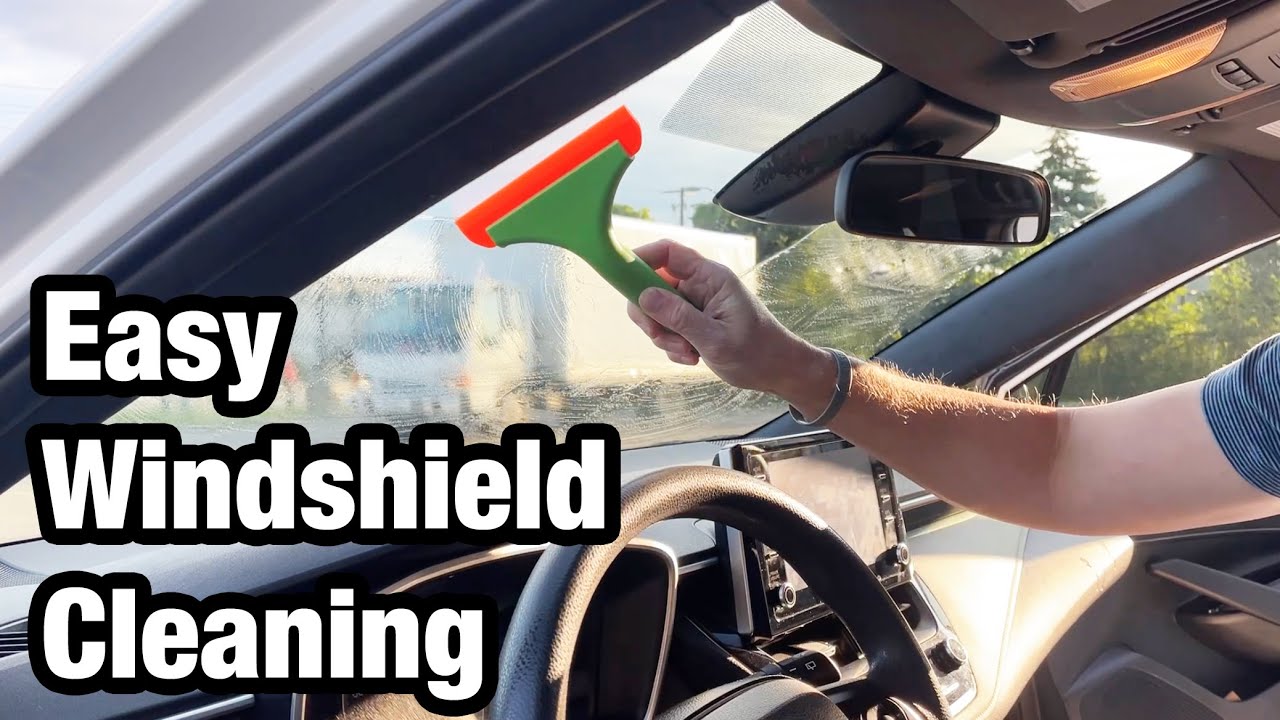
Windshield cleaning tool
A tool with a flat, pivoting head and a washable microfiber cover can improve reach on the lower windshield and near the dashboard. It is optional if you can reach the glass safely by hand.
Soft detailing brush
A soft brush can loosen dust around the windshield edges and dashboard seams before wiping. Keep the brush away from delicate screens and avoid pushing debris into vents.
Can You Use Household Glass Cleaner?
Some household glass cleaners are suitable for automotive glass, but others may contain ingredients or additives that leave residue or are incompatible with tint, coatings, or nearby interior materials. Check the label instead of assuming that every product marketed for windows is appropriate for a vehicle.
Avoid abrasive powders, rough scouring pads, and cleaners not approved for the surface. Never mix cleaning chemicals. If you prefer a homemade approach, use a small amount of distilled water on a microfiber towel for light dust and water-soluble residue, then use a compatible automotive glass cleaner when oily film remains.
Check tint compatibility
If aftermarket film extends onto the windshield, follow the film manufacturer’s cleaning instructions and use an approved product.
Avoid unnecessary additives
Waxes, oily dressings, and some household cleaning products can leave films that are difficult to remove and may increase glare.
How to Wash Inside Car Windshield Step by Step
The best way to clean interior windshield glass is to remove loose dust first, use a small amount of suitable cleaner, and finish with a separate dry towel. This sequence reduces smearing and helps prevent dirt from spreading across the glass.
Park on a level surface in a safe location, switch off the engine, and allow the windshield to cool. Avoid cleaning while driving or when the vehicle is positioned where you could be struck by traffic.
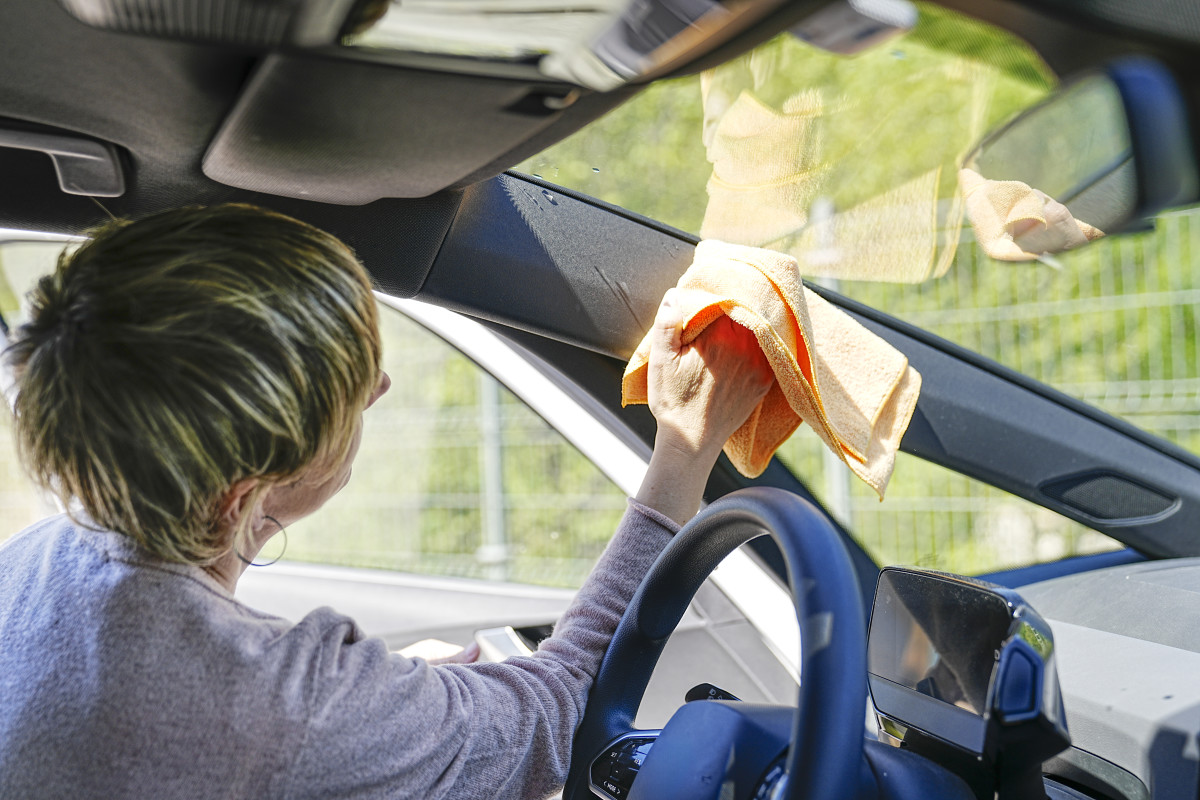
Source: ca.pinterest.com
Step 1: Remove loose dust
Gently wipe the interior glass with a clean, dry microfiber towel. Start near the top and work downward. If the glass is heavily dusty, shake out or replace the towel rather than dragging accumulated grit across the surface.
Step 2: Protect the dashboard
Place a clean towel along the dashboard below the area you are cleaning. This helps catch drips and protects plastic, leather, and electronic controls from cleaner.
Step 3: Apply cleaner to the cloth
Spray a small amount of automotive glass cleaner onto the microfiber towel, away from the dashboard and electronics. The cloth should be lightly damp, not dripping wet.
Step 4: Clean the upper windshield
Reach the top of the glass carefully and wipe in overlapping horizontal or vertical passes. Use light, even pressure rather than scrubbing aggressively.
Step 5: Work across the middle and lower glass
Continue section by section, refreshing the towel surface when it becomes dirty. Use a windshield cleaning tool if necessary, and take care not to press hard against the dashboard or damage trim.
Step 6: Buff the windshield dry
Use a second clean, dry microfiber towel to remove remaining moisture and cleaner residue. Turn the towel frequently so that a clean side contacts the glass.
Step 7: Inspect the result
Look across the windshield from the driver’s seat and from another angle outside the vehicle. Check for streaks, fingerprints, missed edges, and a hazy film that becomes visible under different lighting.
The Best Wiping Pattern for Streak-Free Glass
Use consistent, overlapping strokes instead of random circular rubbing. Horizontal passes can help you cover the glass evenly, while vertical passes can make missed areas easier to identify. The exact direction matters less than using a clean towel, applying the cleaner evenly, and removing the remaining residue.
For easier inspection, use one wiping direction on the inside and a different direction on the outside if you are also cleaning the exterior. If a streak remains, this approach can help you identify which surface needs another pass.
Use light pressure
Excessive pressure can make the task uncomfortable and may put unnecessary force on nearby trim or accessories.
Change towel surfaces often
A saturated or dirty towel can spread oils instead of removing them. Fold the microfiber cloth into sections and switch to a clean section as needed.
How to Reach the Bottom Corners
The lower windshield is often the hardest area to clean because the dashboard limits hand movement. Sit or kneel in a stable position outside the vehicle where practical, and avoid leaning heavily on the steering wheel, dashboard, or windshield.
A dedicated windshield cleaning tool can help reach the lower corners. Secure its microfiber cover properly and use gentle strokes. If the tool catches on trim or cannot reach an edge safely, clean the accessible area by hand rather than forcing it into place.
Clean in small sections
Short, controlled passes give you better control around the dashboard and windshield edges.
Keep the cloth lightly damp
Excess liquid can drip into defroster openings, electronic components, or seams between the windshield and dashboard.
How to Remove Greasy Film From the Inside Windshield
A greasy windshield film usually requires more than dry dusting because oily residue does not lift easily with a dry cloth alone. Interior plastics, dashboard treatments, fingerprints, smoke, and other airborne contaminants can contribute to the buildup.
Start with a compatible automotive glass cleaner and a clean microfiber towel. Apply the cleaner to the cloth, work across a small section, and buff with a separate dry towel before moving on. If the film remains, repeat with fresh towel surfaces rather than soaking the glass or scrubbing with an abrasive material.
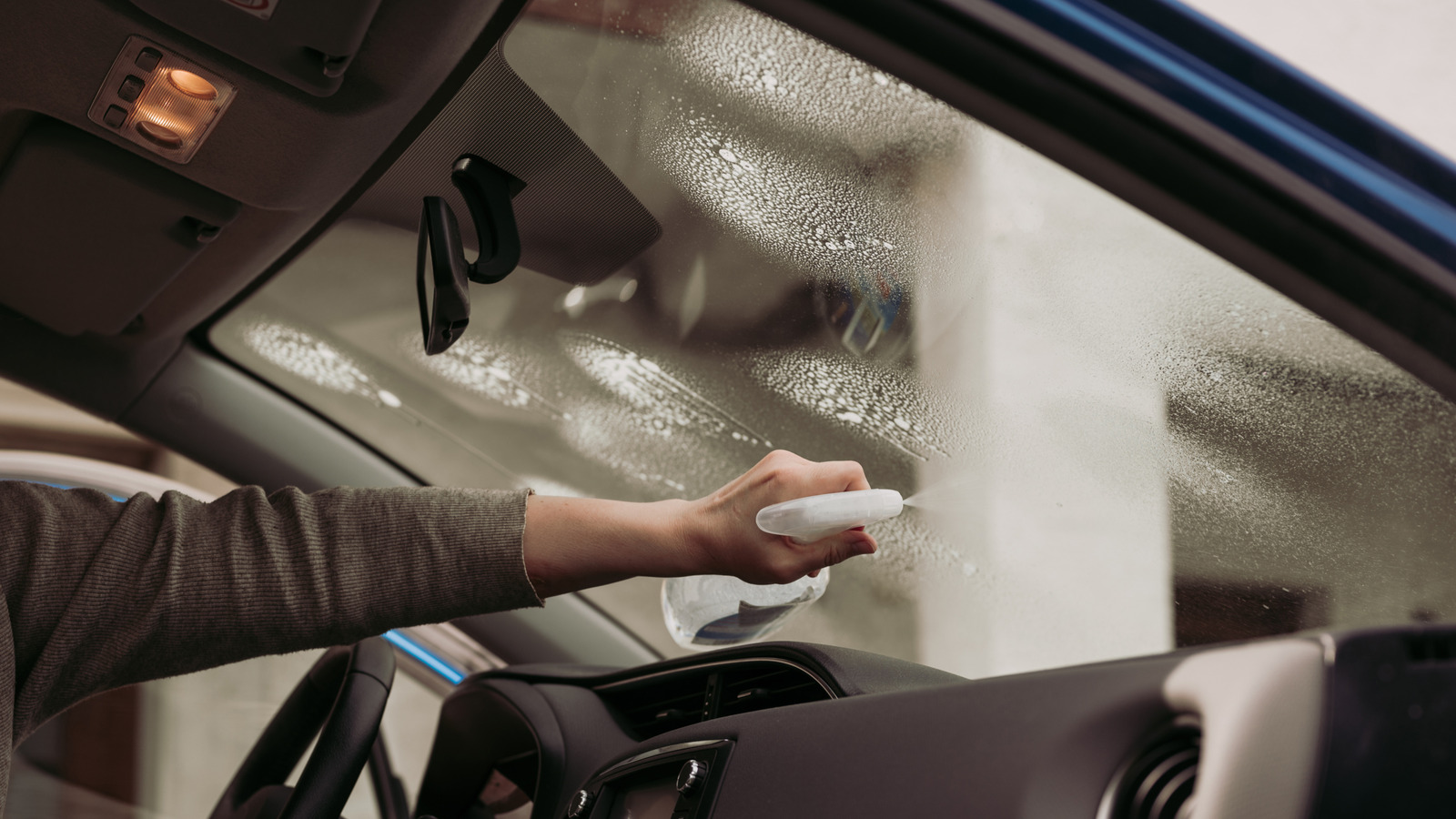
Source: www.autoblog.com
Avoid adding dashboard dressing near the glass
Some interior protectants can transfer to the windshield. Apply these products carefully and follow their directions to prevent overspray or residue on glass.
Replace contaminated towels
A towel used on oily dashboards or other interior surfaces may transfer residue back onto the windshield. Use dedicated glass-cleaning towels.
Check the cleaner label
If one cleaning product leaves a persistent film, verify that it is suitable for interior automotive glass and does not contain unwanted polishing or protective additives.
Why Does the Windshield Look Hazy Again?
A haze that returns soon after cleaning may indicate leftover cleaner, a contaminated towel, continuing interior outgassing, smoke residue, or material from dashboard products. In a vehicle with heavy smoke exposure or substantial residue, several gentle cleaning passes may be necessary.
If the glass looks clean when parked but glare remains unusually strong at night, check both the inside and outside surfaces. Exterior contamination, fine scratches, pitting, and reflections can also affect visibility. Cleaning cannot correct physical damage to the glass.
Use less product
Too much cleaner can leave residue and increase the amount of buffing needed.
Clean the outside too
A clean interior surface cannot compensate for dirt, water spots, or road film on the exterior windshield.
How to Clean the Inside Windshield Without Streaks
Streak-free results depend on three main factors: a clean cloth, a suitable amount of cleaner, and enough dry buffing to remove residue. Direct sunlight or a hot windshield can make cleaner evaporate before you finish wiping, leaving visible marks.
Whenever possible, park in a shaded area and let the glass cool before starting. Use separate towels for cleaning and drying, and do not keep wiping with a cloth that has become wet or greasy.
Source: www.youtube.com
Work on cool glass
A cool windshield gives you more time to spread and remove the cleaner evenly. Follow the cleaner manufacturer’s temperature guidance.
Use a lint-free microfiber towel
A clean, low-lint cloth reduces fibers and smears that can remain visible in sunlight.
Avoid excessive moisture
Lightly dampen the towel instead of saturating the windshield. This reduces drips and makes drying easier.
Finish with a dry buff
Use a fresh towel to remove the thin residue left after cleaning. Inspect the surface before deciding whether another pass is needed.
Should You Use Paper Towels?
Microfiber towels are generally the more practical choice for interior windshield cleaning because they can lift residue and are reusable when properly washed. Some paper towels leave lint or break down when wet, while others may work adequately for a particular cleaner and glass surface.
If you use paper towels, choose a product that does not shed heavily, check for fibers, and avoid rubbing abrasive debris across the glass. A clean microfiber towel usually makes the final buff easier.
Wash microfiber separately when practical
Follow the towel manufacturer’s care instructions. Avoid fabric softener if the towel manufacturer advises against it, because residue can reduce absorbency and leave streaks.
Keep glass towels separate
Do not reuse towels that have collected wax, polish, grease, or interior dressing without properly washing them.
Common Windshield Cleaning Mistakes to Avoid
The most common mistakes are using dirty towels, applying too much cleaner, working on hot glass, and allowing liquid to run into the dashboard. These habits can leave streaks, spread contamination, or damage nearby interior materials.
Clean gently and follow the instructions for both the vehicle and cleaning product. If the windshield has an aftermarket coating or tint, do not assume that a method suitable for ordinary glass is automatically suitable for that material.
Source: detroitchinatown.org
Spraying cleaner directly at the windshield
Overspray can reach the dashboard, instrument cluster, infotainment display, or defroster openings. Spraying the towel instead gives you more control over the amount used.
Using abrasive materials
Scouring pads, rough sponges, and abrasive powders can scratch glass or nearby surfaces. Use a soft microfiber cloth.
Cleaning with a dirty cloth
Previously used towels can spread oils, lint, and dirt. Start with a clean towel and change it when necessary.
Mixing cleaning chemicals
Never combine household cleaners or chemical products. Unintended mixtures may create hazardous fumes or damage surfaces.
Ignoring persistent glare
If glare remains after cleaning both sides, inspect for scratches, chips, pitting, or other glass damage. Arrange professional assessment if damage interferes with safe visibility.
What If the Windshield Has Aftermarket Tint?
Check the tint film manufacturer’s instructions before using a cleaner or tool near a tinted windshield. Some vehicles have tinted areas, coatings, or aftermarket film that require specific cleaning methods.
Use a soft cloth and a compatible product, avoid abrasive tools, and do not scrape the film. If the film is peeling, bubbling, or damaged, contact the installer rather than trying to remove or repair it with strong chemicals.
Confirm compatibility first
A product labeled for ordinary glass may not be approved for every film or coating.
Avoid sharp edges
Metal blades and hard plastic tools can damage film, seals, and nearby trim.
How Often Should You Clean the Inside of Your Windshield?
Clean the interior windshield whenever dust, fingerprints, haze, or glare begins to affect visibility. The ideal interval depends on driving conditions, smoking or vaping inside the vehicle, how often passengers touch the glass, and whether interior products leave residue.
For routine maintenance, inspect the glass during regular vehicle cleaning and perform a full cleaning when a visible film develops. Vehicles used frequently, exposed to smoke, or parked in dusty environments may need more frequent attention than vehicles used occasionally.
Source: creator.caffeindicator.com
Check the windshield before night driving
Headlights from oncoming traffic can make interior haze more noticeable. Clean the glass if smears or glare interfere with your view.
Inspect after using interior protectants
If you apply dashboard products, check for overspray or residue on the windshield and remove it with a compatible glass cleaner.
Maintain clean towels
Wash and store microfiber towels so they remain free of grit, detergent residue, and oily contamination.
How to Tell Whether the Windshield Is Actually Clean
A clean windshield should not show obvious fingerprints, oily streaks, lint, or uneven patches when viewed from several angles. Inspect the glass in indirect daylight and, if safe, check it from the driver’s seat under lighting that reveals remaining smudges.
Do not judge the result solely by how the glass looks from outside. The driver’s view is what matters. If visibility is still impaired, clean the other surface and investigate damage or persistent contamination before driving in difficult conditions.
Look for smears at an angle
Changing your viewing angle helps reveal residue that may be hard to see straight on.
Check the driver’s main field of view
Give particular attention to the area directly ahead of the driver, where streaks and haze can be distracting.
Frequently Asked Questions
Q
What is the best thing to clean the inside of a car windshield with?
A clean microfiber towel and an automotive glass cleaner approved for interior use are a reliable combination. Use a second dry microfiber towel to buff away residue. Check the product label if your vehicle has aftermarket tint or special glass coatings.
Q
Can I use vinegar to clean the inside of my windshield?
A diluted vinegar solution is sometimes used for light mineral residue, but it is not necessary for routine interior glass cleaning and may be unsuitable for nearby trim, tint, coatings, or other materials. A compatible automotive glass cleaner is the more straightforward option. Never mix vinegar with bleach or other cleaning chemicals.
Q
Why does the inside of my windshield get cloudy?
Cloudiness can come from dust, fingerprints, airborne oils, smoke, dashboard protectants, or residue from previous cleaning. Temperature changes and condensation can also create temporary fog. If the haze returns quickly, use clean towels, reduce excess cleaner, and check whether interior products are transferring residue to the glass.
Q
Can I clean the inside windshield with just water?
Distilled water on a clean microfiber towel can remove loose dust and some water-soluble residue. It may not remove greasy film or oily fingerprints effectively. If haze remains, use an automotive glass cleaner compatible with your windshield and interior materials.
Q
How do I clean the inside windshield without reaching across the dashboard?
Use a dedicated windshield cleaning tool with a pivoting head and a clean microfiber cover. Apply cleaner to the cover sparingly, then work in small, overlapping sections. Avoid forcing the tool into tight spaces or pressing against delicate trim and electronic controls.
Q
Is it safe to clean the windshield in direct sunlight?
It is usually easier to get streak-free results when the glass is cool and the vehicle is parked in the shade. Heat can cause cleaner to evaporate before you finish wiping. If shade is unavailable, wait for the glass to cool and follow the product’s temperature instructions.
Q
How can I remove stubborn haze that does not disappear after cleaning?
Use a fresh microfiber towel and a compatible automotive glass cleaner, working on a small section before buffing it dry. Check both sides of the windshield because exterior road film can resemble interior haze. If the problem persists, inspect for scratches, pitting, coating damage, or other defects that cleaning cannot correct.
✦ Wrapping Up
Conclusion
Learning how to wash inside car windshield glass properly does not require expensive equipment. A suitable automotive glass cleaner, clean microfiber towels, careful wiping, and a final dry buff are usually enough to remove everyday dust, fingerprints, and oily film. Working on cool glass and protecting the dashboard also makes the process easier and reduces the chance of streaks or accidental damage.
If the windshield still looks hazy after a careful cleaning, check both the interior and exterior surfaces, replace contaminated towels, and verify that the cleaner is compatible with the glass and any tint or coatings. Persistent glare caused by damaged glass requires a different solution than ordinary dirt.
💡 Key Takeaway
Park in the shade, gather two or three clean microfiber towels and a compatible automotive glass cleaner, wipe away dust, clean the windshield in overlapping passes, and buff it completely dry. Inspect the driver’s field of view before driving.
Learn how to check windshield washer fluid in a Tesla, recognize low-fluid symptoms, inspect the reservoir, and refill it safely with compatible washer fluid.