Can You Read Codes Without Check Engine Light on Practical Guide
Yes, you can often read stored diagnostic trouble codes even when the check engine light is off. An OBD-II scanner may find a pending code, history code, or permanent code that is no longer triggering the warning light.
A scan can reveal a problem that happened briefly, was repaired but not cleared, or has not yet occurred often enough to turn the light on. For example, a loose fuel cap, intermittent sensor signal, temporary misfire, or battery-voltage drop may leave information in the vehicle computer after the dashboard appears normal. However, not every scanner displays every type of code, and a code’s presence does not automatically prove that the related part has failed.
This guide explains what an unlit check engine light means, which codes may still be stored, how to scan the vehicle correctly, and why a basic code reader may show less information than a professional diagnostic tool. You will also learn when a scan is useful, when clearing codes can make diagnosis harder, how recently disconnected batteries affect results, and when a mechanic should investigate a safety-critical symptom instead of relying on a code reader.
Why a Vehicle Can Store Codes With No
The engine control module, often called the ECM or PCM, monitors sensors, actuators, emissions systems, and operating conditions. If a monitored value moves outside its expected range, the computer records information about the event and decides whether the malfunction indicator lamp, commonly called the check engine light, should turn on.
That decision depends on the fault’s severity, duration, and repetition. A brief irregularity may be recorded as a pending trouble code without immediately switching on the lamp. If the same fault happens again during a later drive cycle, the code may become confirmed and the light may illuminate.
A vehicle may also contain a history code after the condition has stopped occurring. The light can turn off automatically after several successful drive cycles, while some diagnostic information remains available until it is cleared or replaced by newer data.
Some vehicles retain a permanent code even after the active fault is repaired and the light is no longer on. Permanent codes are designed to verify that emissions-related repairs have actually worked. They generally cannot be erased simply by using a scan tool; the vehicle must complete its self-tests and confirm the repair.
What Types of Codes a Scanner May Find
Not all codes have the same meaning or status. Understanding the category helps prevent an unnecessary parts replacement based on a single scan result.
- Pending codes: The computer noticed a possible fault, but the required conditions for a confirmed code or warning light have not been met.
- Stored or confirmed codes: The computer has verified the fault according to its monitoring rules. The light may be on, or it may have turned off after later successful drive cycles.
- History codes: The fault occurred previously and may no longer be active. Availability depends on the vehicle and scan tool.
- Permanent codes: Emissions-related records that require successful onboard testing before they disappear.
- Manufacturer-specific codes: Information that may concern transmission, airbag, body, all-wheel-drive, or other modules beyond the basic engine system.
A basic OBD-II reader often accesses emissions-related powertrain codes, usually beginning with the letter P. It may not communicate with the transmission control module, airbag module, body control module, or advanced manufacturer-specific systems.
For that reason, a scan showing “no codes” does not always mean the vehicle has no stored faults. It may mean only that the reader found nothing in the systems it can access.
How to Scan a Car When the Light Is Off
Use a scanner that supports the vehicle’s model year and the systems you want to check. Most passenger vehicles sold in the United States from the 1996 model year onward use standardized OBD-II diagnostic communication for emissions-related systems, although the available data and connector location can vary.
- Park safely, set the parking brake, and turn the ignition off.
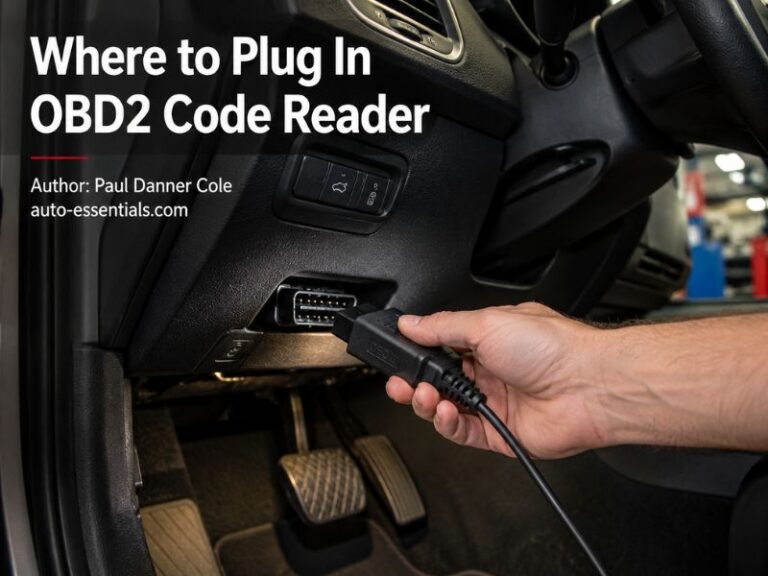
- Find the 16-pin diagnostic connector, usually beneath the dashboard near the steering column.
- Plug in the scanner without forcing the connector.
- Turn the ignition to the on position without starting the engine, unless the tool’s instructions say otherwise.
- Allow the scanner to identify the vehicle and select the menu for diagnostic trouble codes.
- Check for stored, pending, permanent, and sometimes history codes.
- Write down the exact code numbers and descriptions before taking any further action.
Some scan tools show freeze-frame data, which records engine speed, temperature, load, and other conditions when a fault was detected. That information can be more valuable than the code description because it helps show whether the problem happened during a cold start, highway driving, acceleration, or another specific condition.
Do not start by clearing the codes. Erasing them can remove useful evidence, reset readiness monitors, and make an intermittent problem harder to reproduce. Save the results first, including the code status and any available freeze-frame information.
What “No Codes Found” Really Means
If the scanner reports no codes while the check engine light is off, the result may be completely normal. The fault may have been too minor to record, the computer may have erased an old code, or the issue may not involve a system monitored through standard OBD-II diagnostics.
The vehicle could also have a symptom caused by a mechanical problem rather than an electronic fault. Worn suspension parts, low tire pressure, a restricted exhaust, vacuum leaks, poor fuel quality, or a failing mechanical component may not produce a code immediately.
Scanner compatibility is another limitation. A low-cost reader may not display pending or permanent codes, may lack enhanced manufacturer data, or may not communicate with all control modules. A professional scan tool can perform a broader full-module scan and may provide live sensor data, bidirectional tests, and manufacturer-specific descriptions.
Before concluding that nothing is wrong, confirm that the scanner completed its scan and that the diagnostic connector has power. A damaged connector, blown fuse, communication problem, or incompatible tool can produce an incomplete result.
When a Code Can Exist Without Turning On the Light
Emission-monitoring systems usually apply specific rules before activating the warning lamp. The computer may need to see the fault under particular temperature, speed, load, or operating conditions. A single event may therefore create a pending record but not a dashboard warning.
Intermittent problems are especially likely to behave this way. A sensor connector with a loose terminal, a wire damaged by vibration, or a small evaporative-emissions leak may work normally most of the time. The computer can document the abnormal event even though the condition is not currently present.
A recent repair can also explain the mismatch. If a defective component was replaced but the code was not manually cleared, the vehicle may retain a history or permanent record while its self-tests verify that the system now works.
Battery service creates another complication. Disconnecting or replacing a battery can erase ordinary stored codes and reset the emissions readiness monitors, but it does not necessarily remove every permanent code. It can also make the vehicle appear clean simply because there has not been enough driving for the monitors to run again.
How to Interpret a Code Without Replacing Parts
A diagnostic code identifies a detected condition or circuit, not always a failed component. For example, an oxygen-sensor code may result from an exhaust leak, wiring problem, fuel mixture issue, or sensor failure. Replacing the sensor immediately may not solve the underlying problem.
Start by recording the code, status, mileage, and freeze-frame conditions. Then inspect related wiring, connectors, hoses, fuses, fluid levels, and obvious signs of damage before testing components.
Live data can help distinguish an active problem from an old event. A technician may compare sensor readings, fuel trims, engine temperature, misfire counters, charging voltage, and other values while the engine is cold, idling, accelerating, or operating at steady speed.
The best next step depends on the code and the symptom. A code involving an evaporative leak may call for a smoke test, while a misfire code may require ignition, injector, compression, and wiring checks. A communication code may point toward voltage, grounds, network wiring, or a module issue rather than an engine part.
Should You Clear Codes When the Light Is Off?
Usually, do not clear a code until you have documented it and considered why it appeared. Clearing it removes diagnostic history and resets many emissions monitors, which can temporarily hide the problem without repairing it.
After a legitimate repair, clearing codes may be appropriate if the service procedure calls for it. The vehicle must then be driven through the conditions needed to run its monitors. A scan can confirm whether the code returns and whether the monitors have completed.
Clearing codes is not the same as fixing a fault. If the condition remains, the code and warning light may return. If the issue is intermittent, it may take days or several drive cycles to reappear.
When a Professional Diagnosis Is Safer
A code reader is useful for information, but it cannot replace testing when the vehicle has serious symptoms. Arrange prompt professional diagnosis for a flashing check engine light, severe shaking, loss of power, stalling in traffic, overheating, fuel leakage, smoke, unusual burning odors, or loud mechanical noise.
A flashing engine light commonly indicates a severe misfire that can damage the catalytic converter. Continuing to drive may increase repair costs, even if the light later turns off.
Seek help when the vehicle has warning lights for the oil-pressure system, brake system, charging system, airbag, or temperature system. Those warnings may involve immediate safety or engine-damage risks and are not answered by a basic engine-code scan.
Professional help is also sensible when a code returns repeatedly, when several modules report communication faults, or when the vehicle has a persistent symptom but no codes. In those cases, proper electrical testing, pressure testing, waveform analysis, or mechanical inspection may be necessary.
Frequently Asked Questions
Can you read codes without check engine light on?
Yes, a scanner can often read pending, stored, history, or permanent codes while the check engine light is off. The result depends on what the vehicle has recorded and whether the scanner can access the relevant module and code type.
Will an OBD-II scanner show a code that is not
Many scanners show pending or stored codes even when the fault is not currently active. Basic readers may not display history records, permanent codes, or information from non-engine modules.
Why does my car have no light but a code?
The fault may have happened briefly, failed only once, or stopped occurring during later drive cycles. The computer can retain the record after the warning light turns off automatically, especially when the condition was intermittent or emissions-related.
Can a code be stored after the problem is fixed?
Yes, a history or permanent code can remain after a repair. Some records disappear after successful self-tests, while permanent emissions codes generally require the vehicle to verify the repair through its onboard monitors.
Does disconnecting the battery erase diagnostic codes?
Disconnecting the battery may erase ordinary stored codes and reset readiness monitors, but it is not a reliable way to remove every code. It can also eliminate useful diagnostic evidence and make the vehicle temporarily appear free of faults.
Can a cheap code reader miss a problem?
Yes, an inexpensive reader may miss manufacturer-specific codes or faults stored in other control modules. It may also provide limited live data and may not support pending or permanent-code displays.
Should I drive the car after finding a code
Driving may be reasonable if the vehicle runs normally and the code is minor, but serious symptoms require stopping and getting help. Record the code first, avoid clearing it, and have recurring faults diagnosed rather than waiting for the light to return.
Practical Takeaway
You can often read diagnostic codes with no check engine light because the computer may retain pending, history, or permanent information after a fault stops occurring. A “no codes” result is limited by the scanner’s capabilities and does not rule out mechanical, intermittent, or non-engine problems.
Scan before clearing anything, save the exact code and freeze-frame data, and treat the code as a starting point for testing rather than proof that a part has failed. If the vehicle is flashing a warning, running badly, overheating, losing power, or showing another serious system warning, stop driving and arrange professional diagnosis.