How to Read Car Codes Without Scan Tool: Complete Guide
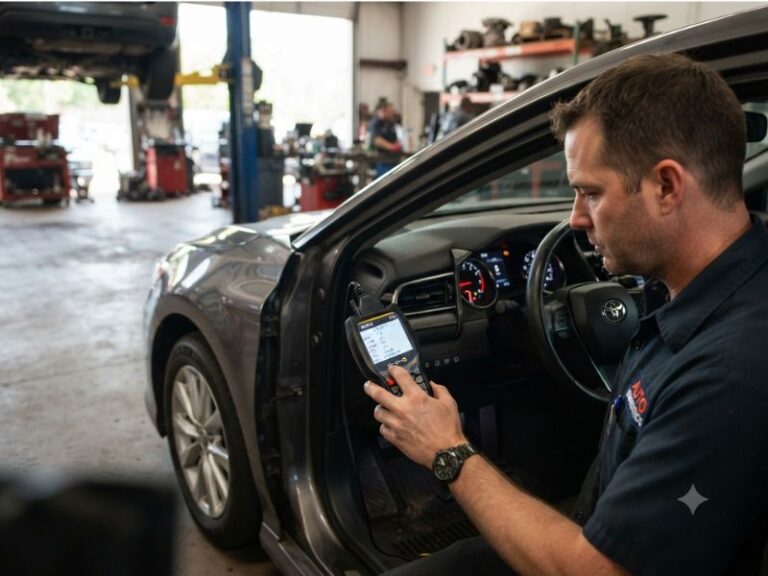
How to read car codes without scan tool is possible on some older vehicles by using manual diagnostic methods such as jumper wires, dashboard flash codes, and built-in self-diagnostic systems. However, modern vehicles usually require an OBD2 scanner because most newer computers store trouble codes electronically.
The complete details are explained below. You will learn how to check car codes without a scanner, which vehicles support manual code reading, how flash codes work, what tools you may need, and why some vehicles cannot be diagnosed without a scan tool.
Can You Read Car Codes Without a Scan Tool?
Yes, but it depends on the vehicle’s age, manufacturer, and diagnostic system.
Older vehicles often included built-in methods for retrieving trouble codes without a professional scanner. These systems allowed owners and technicians to access stored faults using simple procedures.
Common methods include:
- Reading dashboard warning light flashes
- Using a jumper wire on diagnostic terminals
- Counting check engine light patterns
- Using ignition key cycles
- Checking manufacturer-specific diagnostic modes
However, most vehicles manufactured after the mid-1990s use OBD2 systems, which require electronic communication through a diagnostic connector.
Modern vehicles store information inside control modules that usually cannot be accessed without a compatible scanner.
How Do Car Codes Work?
Before learning manual methods, it helps to understand what a car code means.
A vehicle computer monitors different systems, including:
- Engine sensors
- Fuel system
- Ignition system
- Transmission
- Emissions equipment
- Safety systems
When the computer detects a problem, it stores a Diagnostic Trouble Code (DTC).
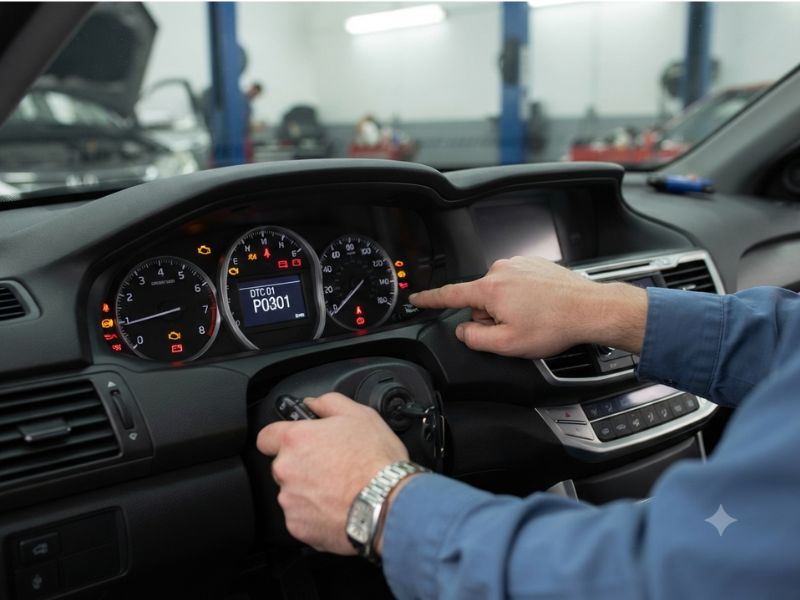
A typical code looks like:
P0301
The code tells you:
- The system affected
- The type of problem detected
- The general area requiring inspection
For example:
P0301 = Cylinder 1 Misfire Detected
This does not always mean the cylinder itself is damaged. Possible causes include:
- Spark plug problem
- Ignition coil failure
- Fuel injector issue
- Vacuum leak
- Wiring problem
- Low compression
The code gives you a starting point, not a guaranteed repair.
Method 1: Reading Check Engine Light Flash Codes
Some older vehicles can display trouble codes through the Check Engine Light.
Instead of using a scanner, the vehicle flashes the warning light in a pattern.
You count the flashes to determine the code.
For example:
- Two flashes
- Pause
- Three flashes
may represent code 23.
The exact meaning depends on the manufacturer.
This method was common on many older vehicles before OBD2 became standard.
Brands that used flash-code systems include:
- Honda
- Toyota
- Nissan
- GM
- Chrysler
- Ford
Each manufacturer used different procedures and code meanings.
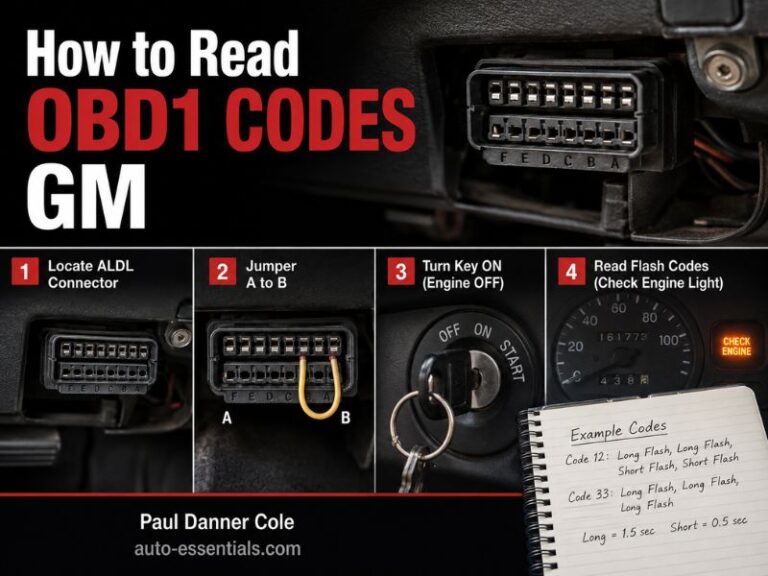
Method 2: Using a Jumper Wire to Retrieve Codes
Some older vehicles allow you to activate diagnostic mode using a jumper wire.
The process generally involves:
- Locate the diagnostic connector.
- Identify the correct terminals.
- Connect the terminals using a jumper wire.
- Turn the ignition ON.
- Watch the warning light flashes.
- Record the flash pattern.
The vehicle then displays stored trouble codes through the dashboard light.
This method was common on some OBD1 systems.
However, connecting the wrong terminals can damage electrical components.
Always confirm the correct procedure for your exact vehicle before attempting this method.
Method 3: Using the Ignition Key Cycle Method
Some Chrysler and Jeep vehicles allow limited code retrieval through the ignition switch.
A common procedure involves:
- Insert the key.
- Turn the ignition ON and OFF several times.
- Leave the ignition in the ON position.
- Watch the Check Engine Light.
- Count the flashes.
The vehicle may display stored trouble codes.
The exact sequence depends on the model year.
This method generally works only on certain older vehicles.
Method 4: Reading Codes Through the Dashboard Display
Some vehicles can display diagnostic information through the instrument cluster.
Examples may include:
- Odometer displays
- Information screens
- Warning light patterns
Certain manufacturers included built-in diagnostic modes accessible through buttons or key combinations.
These features vary significantly.
Modern vehicles usually require a scanner because many modules no longer provide visible flash-code outputs.
How to Read OBD1 Codes Without a Scanner
OBD1 systems were used before standardized OBD2.
Many OBD1 vehicles allow manual code retrieval.
The general process:
- Find the diagnostic connector.
- Locate the correct terminals.
- Activate diagnostic mode.
- Turn ignition ON.
- Count warning light flashes.
- Match the pattern to the manufacturer code list.
Examples:
Honda OBD1
Many Honda vehicles allow the Check Engine Light to flash codes after connecting diagnostic terminals.
The flashes represent two-digit trouble codes.
Example:
- Long flash = first digit
- Short flashes = second digit
Toyota OBD1
Toyota vehicles often use diagnostic terminals labeled TE1 and E1.
When placed into diagnostic mode, the Check Engine Light flashes stored codes.
GM OBD1
GM vehicles commonly use an Assembly Line Diagnostic Link (ALDL) connector.
A jumper between specific terminals can activate flash codes.
Ford OBD1
Ford vehicles may use separate diagnostic connectors.
Code retrieval often requires activating the self-test system and counting flashes or meter movements.
Always verify the exact procedure for your vehicle.
How to Read Car Codes Without Scanner on Newer Vehicles
For most vehicles built after 1996, reading codes without a scanner is much more difficult.
Modern vehicles use:
- OBD2 communication protocols
- Multiple control modules
- Digital data networks
- Manufacturer-specific systems
A warning light may indicate a problem, but the vehicle usually will not display the actual code without a diagnostic tool.
Some exceptions exist, but they are limited.
Modern systems often require:
- OBD2 scanner
- Manufacturer diagnostic software
- Professional scan equipment
Can You Use a Paperclip to Read Car Codes?
Some older vehicles use a paperclip or jumper wire method to activate diagnostic modes.
This was common with certain OBD1 vehicles.
However, this technique is risky if done incorrectly.
Problems can occur if:
- The wrong terminals are connected
- The diagnostic connector is misidentified
- The vehicle does not support the procedure
A simple mistake can damage electronic modules.
A proper jumper wire or diagnostic tool is safer than using random metal objects.
Can You Read ABS Codes Without a Scanner?
Usually, no.
ABS systems are controlled by separate modules and generally require a scanner.
Older vehicles may have manual ABS diagnostic procedures, but most modern vehicles do not provide flash codes.
ABS faults require access to:
- Wheel speed sensors
- ABS control module
- Brake pressure sensors
- Hydraulic system
A basic engine code method usually cannot access ABS problems.
Can You Read Airbag Codes Without a Scanner?
Usually not.
Airbag systems use specialized safety modules.
Most vehicles require an SRS-compatible scanner to retrieve:
- Airbag faults
- Seat belt pretensioner issues
- Impact sensor problems
- Occupancy sensor faults
Attempting to test airbag circuits without proper procedures can be dangerous.
Always follow manufacturer safety instructions.
Can You Read Transmission Codes Without a Scanner?
Most modern transmission codes require a scanner.
Some older vehicles may display transmission-related codes manually, but most newer vehicles store detailed information inside the Transmission Control Module.
A scanner may be needed to access:
- Shift solenoid faults
- Speed sensor codes
- Pressure problems
- Gear ratio errors
- TCM communication faults
A simple Check Engine Light flash method may not reveal detailed transmission information.
How Accurate Are Manual Code Reading Methods?
Manual methods can be accurate when performed correctly.
However, they have limitations.
They may only provide:
- Basic fault codes
- Limited system information
- No live data
- No freeze-frame information
A scanner can provide much more information, including:
- Sensor readings
- Fuel trims
- Engine temperature data
- Module communication
- Pending codes
- Permanent codes
For serious problems, scanner-based diagnosis is usually more effective.
What Can You Learn From a Car Code Without a Scanner?
Without a scanner, you may identify:
- Which system has a stored fault
- The general trouble code
- The affected area
But you usually cannot see:
- Live sensor values
- Exact failure conditions
- Freeze-frame data
- Module communication problems
- Advanced system faults
Manual code reading is mainly useful for older vehicles.
Why Is a Scan Tool Better?
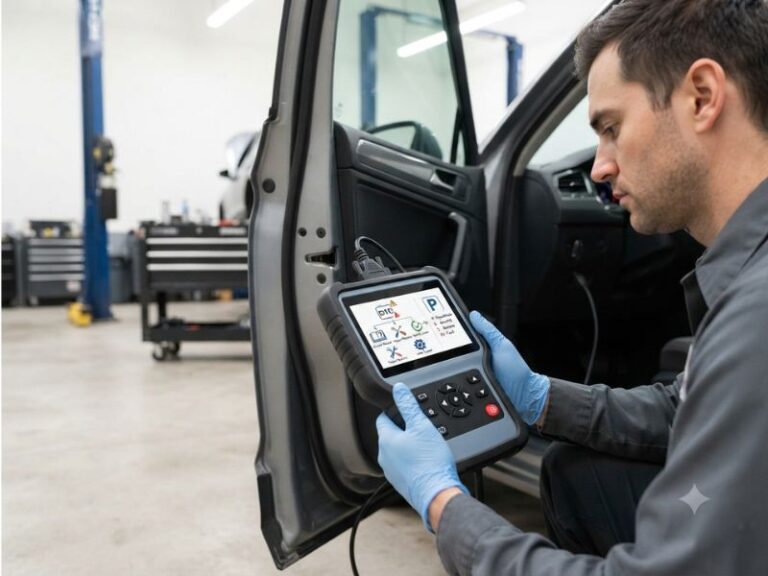
A modern scan tool provides deeper information.
Advantages include:
Faster Diagnosis
A scanner retrieves codes instantly.
More System Access
Advanced tools can access:
- Engine
- Transmission
- ABS
- Airbag
- Body modules
Live Data
You can monitor sensors while the vehicle runs.
Advanced Functions
Some scanners can perform:
- Reset procedures
- Sensor relearns
- Calibration
- Active tests
Better Accuracy
A scanner reduces guesswork by providing detailed information.
Should You Buy an OBD2 Scanner?
For most modern vehicle owners, buying a basic OBD2 scanner is worthwhile.
Benefits include:
- Checking warning lights
- Understanding repair problems
- Avoiding unnecessary trips
- Monitoring vehicle health
- Preparing for mechanic visits
Basic scanners are affordable and useful for common engine problems.
If you want to diagnose ABS, transmission, or airbag systems, choose a full-system scanner with those features.
Final Thoughts
So, how to read car codes without scan tool depends mainly on the vehicle’s diagnostic system. Older OBD1 vehicles often allow manual code retrieval through flash patterns, jumper methods, or ignition procedures.
Modern OBD2 vehicles usually require a scanner because their computers store detailed digital information that cannot be accessed manually.
Manual methods can help identify basic problems on older cars, but an OBD2 scanner provides faster, safer, and more complete diagnostic information for most vehicles.