How to Read Car Glass Code: Complete Window Marking Guide
How to read car glass code helps you understand the information printed on your vehicle windows and windshield. These markings can reveal important details about the glass manufacturer, safety standards, production dates, vehicle compatibility, and replacement requirements.
The complete details are explained below. You will learn where to find car glass codes, what each symbol means, how to read windshield markings, and how these codes help when replacing damaged automotive glass.
What Is a Car Glass Code?
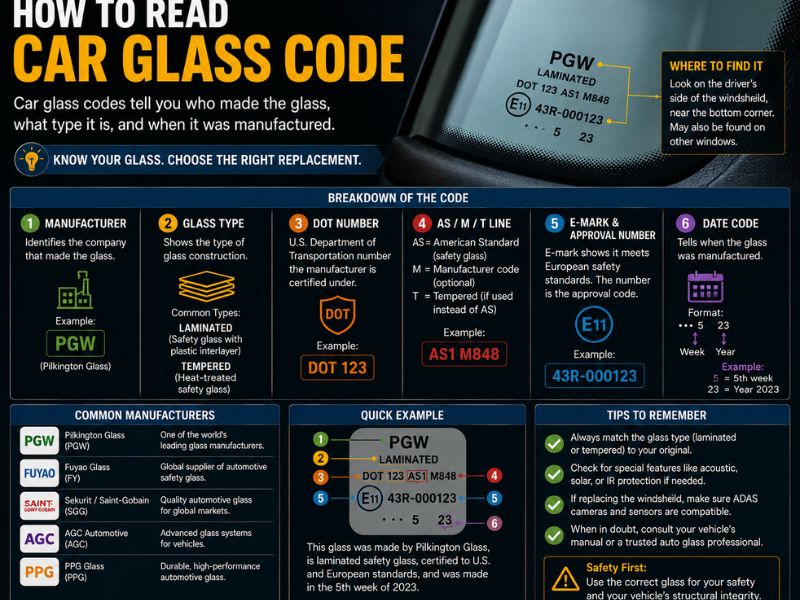
A car glass code is a series of letters, numbers, and symbols printed or etched onto vehicle glass.
This marking is commonly called:
- Glass identification code
- Windshield code
- Automotive glass marking
- DOT glass code
- Manufacturer code
The information is usually found in a small corner of the windshield or side window.
Car glass codes help identify:
- Glass manufacturer
- Safety certification
- Production information
- Glass type
- Vehicle application
- Manufacturing standards
Unlike a VIN, which identifies the entire vehicle, a glass code identifies the characteristics and origin of the glass itself.
Where Can You Find the Car Glass Code?
The glass code is usually located in one of the lower corners of the windshield.
Common locations include:
- Bottom driver-side corner
- Bottom passenger-side corner
- Side window corner
- Rear window corner
- Near the windshield edge
The marking may appear as a small printed label or permanent engraving.
Because automotive glass markings are often small, you may need to look closely or use a flashlight to read them.
The code may include:
- Company logos
- DOT numbers
- Letters
- Numbers
- Certification symbols
What Information Does a Car Glass Code Tell You?
A car glass code can provide several types of information.
Depending on the manufacturer and region, it may identify:
- Glass manufacturer
- Country of production
- Safety approval
- Glass type
- Manufacturing date
- Tempered or laminated glass
- Replacement specifications
However, not every marking reveals every detail.
Some codes are mainly used by manufacturers and regulators rather than consumers.
Understanding the DOT Number on Car Glass
One of the most common markings on automotive glass is the DOT number.
Example:
DOT 459
The DOT number identifies the glass manufacturer approved by the U.S. Department of Transportation.
The number tells you which company produced the glass.
It does not identify:
- Vehicle model
- Glass size
- Production date
- Replacement cost
The DOT code is mainly a manufacturer identification number.
How to Read the Safety Marking on Car Glass
Automotive glass must meet specific safety standards.
Many windshields include markings such as:
AS1
AS2
AS3
These classifications describe the type of glass and where it can legally be used.
AS1 Glass
AS1 is the highest safety classification.
It is commonly used for:
- Windshields
- Driver visibility areas
AS1 glass allows high light transmission and meets strict safety requirements.
AS2 Glass
AS2 glass has lower light transmission requirements.
It is commonly used for:
- Side windows
- Rear windows
AS3 Glass
AS3 glass allows darker tint levels.
It may be used in certain vehicle areas where visibility requirements are different.
The exact legal use depends on local regulations.
What Does the E Mark Mean on Car Glass?
Many vehicles sold outside North America have an E mark.
Example:
E4
The E mark indicates that the glass meets European safety regulations.
The number after the E identifies the country that approved the glass.
Examples:
- E1 = Germany
- E2 = France
- E4 = Netherlands
- E11 = United Kingdom
The E mark confirms that the glass has passed required safety testing.
What Does the DOT and E Mark Together Mean?
A windshield may contain both:
- DOT certification
- E-mark approval
This means the glass has been certified under multiple regulatory systems.
For example, imported vehicles may use glass approved for both:
- U.S. safety standards
- European regulations
These markings help confirm that the glass meets required safety specifications.
How to Read the Manufacturing Date Code on Car Glass
Many automotive glass manufacturers include a production date code.
The format varies between companies.
A date code may appear as:
- Dots and numbers
- Letters and numbers
- Small symbols
- Calendar-style markings
For example, some manufacturers use dots to represent months or years.
A common interpretation method:
- Number = year
- Dots = month
However, there is no single universal system used by every glass manufacturer.
The exact meaning depends on the glass company.
Can You Find the Vehicle Year From the Glass Code?
Sometimes, but not always.
Some glass date codes can indicate when the glass was manufactured.
For example, if a windshield was produced shortly before the vehicle assembly date, it may provide clues about the vehicle’s production period.
However, glass may be replaced during the vehicle’s lifetime.
A newer windshield does not necessarily mean the vehicle is newer.
The glass code alone should not be used to determine a vehicle’s model year.
The VIN remains the most accurate source for vehicle identification.
What Does Tempered and Laminated Glass Mean?
Car glass codes may identify the type of glass used.
Laminated Glass
Windshields are usually made from laminated glass.
Laminated glass consists of:
- Two glass layers
- A plastic inner layer
The design helps prevent the windshield from breaking into dangerous pieces during impact.
Benefits include:
- Better safety
- Reduced injury risk
- Improved sound insulation
Tempered Glass
Side and rear windows are commonly made from tempered glass.
Tempered glass is heat-treated to increase strength.
When broken, it typically breaks into many small pieces rather than sharp shards.
The glass type marking helps technicians identify the correct replacement.
How Glass Codes Help When Replacing a Windshield
A glass code helps confirm whether a replacement windshield matches the original specifications.
Important factors include:
- Vehicle make and model
- Glass type
- Safety certification
- Sensor compatibility
- Tint shade
- Acoustic features
- Heating elements
Modern windshields may include advanced features such as:
- Rain sensors
- Camera mounting areas
- Lane-assist systems
- Heads-up display
- Acoustic layers
- Solar coatings
A replacement windshield must support these features.
The glass code can help identify the correct version.
Does the Glass Code Match the VIN?
No.
The glass code and VIN serve different purposes.
VIN
The Vehicle Identification Number identifies:
- Vehicle manufacturer
- Model
- Year
- Engine
- Production details
Glass Code
The glass code identifies:
- Glass manufacturer
- Certification
- Production information
- Glass specifications
The VIN tells you what vehicle you have.
The glass code tells you information about the window itself.
Can an OBD2 Scanner Read Car Glass Codes?
No.
An OBD2 scanner cannot read automotive glass codes.
OBD2 scanners are designed to communicate with electronic vehicle systems, including:
- Engine control modules
- Transmission systems
- ABS
- Airbags
- Emissions systems
Glass codes are physically printed or etched onto the glass and are not stored in vehicle computers.
To identify glass information, you must inspect the marking directly or use manufacturer records.
Can Car Glass Codes Reveal If a Windshield Is Original?
Sometimes.
Glass markings can provide clues about whether a windshield may be original.
You can compare:
- Glass manufacturer
- Production date
- Vehicle production date
- Manufacturer logo
For example, if the vehicle was built in 2020 but the windshield date code indicates 2024, the windshield was likely replaced.
However, glass replacement history cannot always be confirmed from codes alone.
What Are OEM and Aftermarket Glass Codes?
Automotive glass can be classified as:
OEM Glass
Original Equipment Manufacturer glass is produced to the vehicle manufacturer’s original specifications.
Benefits:
- Exact fit
- Original markings
- Factory features
- Correct sensor compatibility
Aftermarket Glass
Aftermarket glass is produced by other manufacturers.
It may meet safety standards but can vary in:
- Thickness
- Optical quality
- Sound insulation
- Sensor compatibility
The glass code can help identify whether a piece matches the original specifications.
Common Mistakes When Reading Car Glass Codes
Many people misunderstand glass markings.
Confusing DOT Numbers With Vehicle Codes
The DOT number identifies the glass manufacturer, not the vehicle.
Assuming Every Number Is a Date
Some numbers are certification or production identifiers.
Using Glass Codes Instead of VIN
Glass markings do not replace vehicle identification.
Ignoring Advanced Features
Modern windshields may require calibration after replacement.
Assuming Any Windshield Fits
Even similar vehicles may use different glass versions.
How to Check a Windshield Before Replacement
Before replacing automotive glass, check:
- Vehicle year
- Make and model
- VIN
- Existing glass markings
- Sensor locations
- Tint specifications
- Heating features
- Camera systems
Provide this information to a glass supplier or installer.
Using the correct glass ensures proper fit, safety, and functionality.
Final Thoughts
So, how to read car glass code starts with understanding the markings printed on your windshield or windows. These codes provide information about the glass manufacturer, safety certification, production details, and glass specifications.
Car glass codes are useful when identifying replacement windows, checking manufacturing information, and confirming safety standards. However, they do not replace the VIN and cannot provide complete vehicle history.
Always verify the glass code along with your vehicle details before ordering replacement automotive glass.